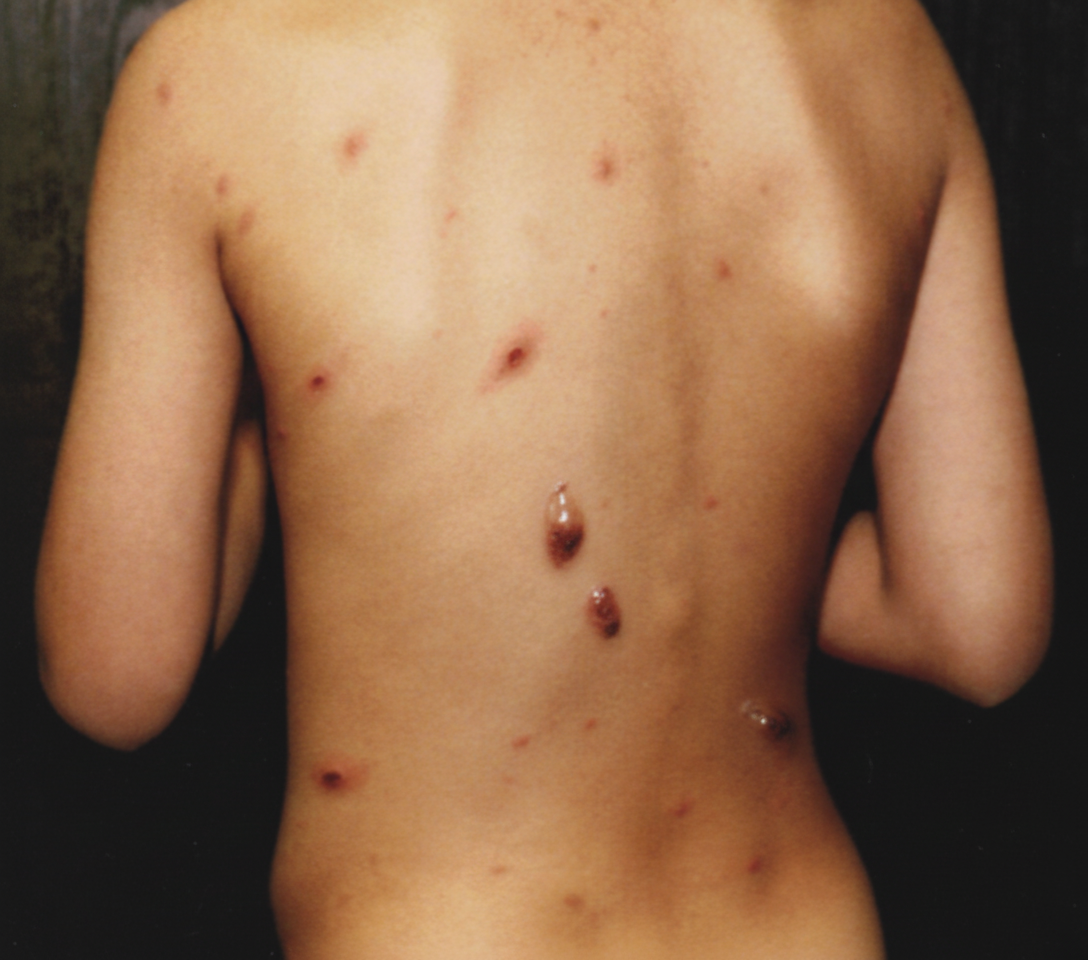
Papulovesicular oral lesions are seen in which condition?
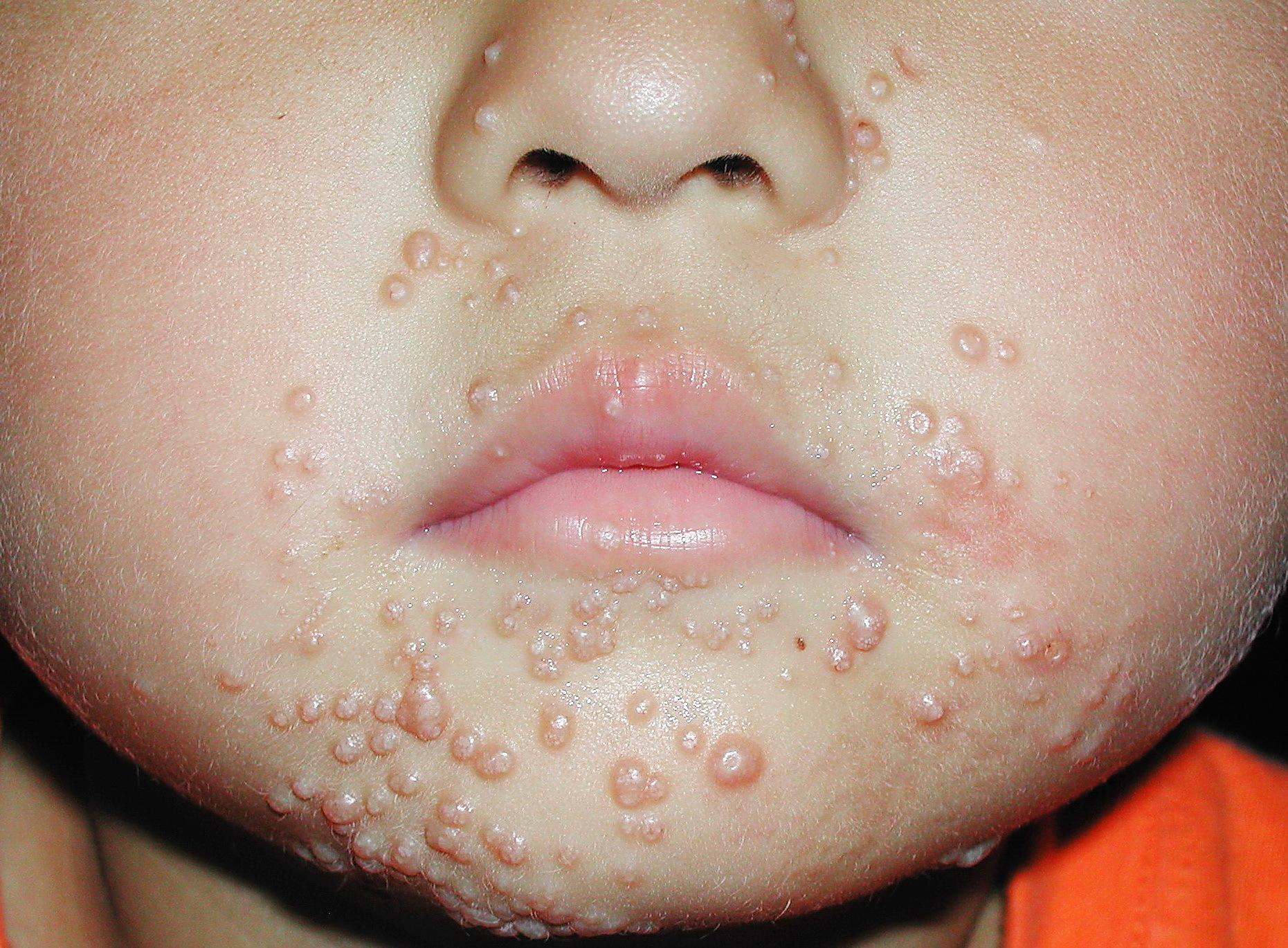
A 3-year-old female child develops umbilicated nodules over the face following a trivial viral infection. What is the probable diagnosis?
HPV types 6 and 11 are associated with genital warts. What is their oncogenic risk?
Genital Warts are seen in:
All of the following are true regarding viral warts except:
Cervical warts are seen with which HPV types?
The Buschke-Ollendroff sign is seen in which stage of syphilis?
Which of the following viruses is NOT implicated in the causation of Hand, Foot, and Mouth disease?
What is the most common cause of erythema multiforme?
Microscopy of a Tzank smear from a patient presenting with a shin vesicle showed giant cells. What is the causative agent?
Explanation: **Explanation:** The correct answer is **Herpangina**. This condition is primarily caused by **Coxsackievirus A** (and occasionally Coxsackievirus B or Echoviruses). It is characterized by the sudden onset of fever, sore throat, and the pathognomonic finding of small **papulovesicular lesions** (1–2 mm) that rapidly ulcerate. These lesions are specifically localized to the **posterior oropharynx**, including the anterior tonsillar pillars, soft palate, and uvula. **Analysis of Options:** * **Measles (Rubeola):** Characterized by **Koplik spots**, which are bluish-white specks on an erythematous base found on the buccal mucosa opposite the lower molars. They are macules, not vesicles. * **Rubella (German Measles):** Associated with **Forchheimer spots**, which are small, red petechiae on the soft palate. These are vascular changes, not vesicular lesions. * **Hand, Foot, and Mouth Disease (HFMD):** While also caused by Coxsackievirus A16 and featuring oral vesicles, the question asks for the condition defined by these lesions. In HFMD, vesicles are typically found on the **buccal mucosa and tongue** (anterior oral cavity), accompanied by a characteristic rash on the palms and soles. **High-Yield Clinical Pearls for NEET-PG:** * **Herpangina vs. HFMD:** Herpangina involves the **posterior** pharynx; HFMD involves the **anterior** mouth plus extremities. * **Etiology:** Both are Enteroviruses, most commonly **Coxsackievirus A**. * **Differential Diagnosis:** Unlike Herpetic Gingivostomatitis (HSV-1), Herpangina does **not** involve the gums (gingiva) and lacks the diffuse swelling seen in primary herpes. * **Seasonality:** These infections typically peak in summer and autumn months.
Explanation: **Explanation:** The clinical presentation of **umbilicated nodules** (pearly, flesh-colored papules with a central dimple) is the classic hallmark of **Molluscum contagiosum**. **1. Why Molluscum contagiosum is correct:** It is caused by the **Molluscum Contagiosum Virus (MCV)**, a member of the **Poxviridae** family. It typically affects children (via direct contact) and sexually active adults. The characteristic "umbilication" represents the central viral core. In children, it often follows a period of mild immunosuppression or skin barrier breakdown (like a viral prodrome or atopic dermatitis). **2. Why other options are incorrect:** * **Lichen planus:** Presents as the "6 Ps": Purple, Planar (flat-topped), Polygonal, Pruritic, Papules, and Plaques. It features **Wickham striae**, not umbilication. * **Chicken Pox (Varicella):** Characterized by a pleomorphic rash (macules, papules, and vesicles in different stages) described as **"dewdrops on a rose petal."** While vesicles may crust, they are not persistent umbilicated nodules. * **Scabies:** Caused by *Sarcoptes scabiei*, presenting with intense nocturnal itching and **burrows** in web spaces. It does not present with umbilicated nodules. **Clinical Pearls for NEET-PG:** * **Histopathology:** Look for **Henderson-Paterson bodies** (large, intracytoplasmic eosinophilic inclusion bodies). * **In Adults:** If extensive molluscum is seen on the face of an adult, always screen for **HIV/Immunosuppression**. * **Treatment:** Usually self-limiting, but can be treated with curettage, cryotherapy, or expression of the central curd-like core.
Explanation: **Explanation:** Human Papillomavirus (HPV) is a double-stranded DNA virus that exhibits tissue tropism for squamous epithelium. HPV types are classified into **Low-risk** and **High-risk** based on their potential to cause malignant transformation (oncogenicity). **Why Option B is Correct:** HPV types **6 and 11** are the most common causes of **Condyloma Acuminatum (Genital Warts)**. These types are classified as **Low-risk** because they primarily cause benign proliferative lesions. While they lead to significant morbidity due to their infectious nature and recurrence, they rarely integrate their DNA into the host genome, which is a prerequisite for malignant progression. **Analysis of Incorrect Options:** * **Option A (High):** High-risk HPV types include **16, 18, 31, 33, and 45**. These are strongly associated with Cervical Intraepithelial Neoplasia (CIN), cervical cancer, and oropharyngeal cancers due to the action of E6 and E7 oncoproteins which inhibit p53 and Rb tumor suppressor proteins, respectively. * **Option C (Nil):** While the risk is low, it is not "nil." In rare clinical scenarios, such as **Buschke-Löwenstein tumors** (giant condyloma acuminatum), these types can show locally aggressive behavior. * **Option D (Variable):** The oncogenic potential is not variable; it is a fixed characteristic of the specific viral genotype. **High-Yield Clinical Pearls for NEET-PG:** * **Most common HPV types in Genital Warts:** 6 and 11. * **Most common HPV types in Cervical Cancer:** 16 and 18. * **HPV 1 & 2:** Associated with Palmoplantar warts (Verruca vulgaris). * **HPV 5 & 8:** Associated with **Epidermodysplasia Verruciformis** and increased risk of Squamous Cell Carcinoma (SCC). * **Histopathology Hallmark:** **Koilocytes** (cells with perinuclear halo and wrinkled "raisinoid" nuclei).
Explanation: **Explanation:** **Genital Warts (Condyloma Acuminata)** are caused by the Human Papillomavirus (HPV), most commonly types 6 and 11. **Why Buschke-Lowenstein Tumour is correct:** The **Buschke-Lowenstein Tumour**, also known as **Giant Condyloma Acuminatum**, is a rare, large, cauliflower-like growth that represents a locally aggressive variant of genital warts. While it is histologically benign (it does not metastasize), it is characterized by massive size, deep local infiltration into underlying tissues, and a high rate of recurrence. It is strongly associated with HPV types 6 and 11. **Why other options are incorrect:** * **Syphilis:** Primary syphilis presents as a painless **chancre**. Secondary syphilis presents with **Condyloma Lata**, which are flat, moist, highly infectious papules. These should not be confused with the "acuminate" (pointed/warty) appearance of genital warts. * **Leprosy:** Caused by *Mycobacterium leprae*, it primarily affects the skin and peripheral nerves, presenting as hypopigmented patches or nodules (lepromas), not warty genital lesions. * **TB (Tuberculosis):** Cutaneous TB (like Lupus Vulgaris or Tuberculosis Verrucosa Cutis) presents with apple-jelly nodules or verrucous plaques, but it is not a cause of genital warts. **High-Yield Clinical Pearls for NEET-PG:** * **Causative Agent:** HPV 6, 11 (Low risk); HPV 16, 18 (High risk for malignancy). * **Histopathology:** Look for **Koilocytes** (cells with perinuclear halo and wrinkled "raisinoid" nuclei). * **Treatment of choice:** Podophyllin, Imiquimod, or Cryotherapy. * **Buschke-Lowenstein:** Despite its aggressive local behavior, it is considered a **Verrucous Carcinoma**.
Explanation: **Explanation:** Viral warts (Verrucae) are benign proliferations of the skin and mucosa caused by the **Human Papillomavirus (HPV)**. **Why Option D is the correct answer (The False Statement):** Verruca vulgaris (common warts) is primarily associated with **HPV types 2, 4, and 1**. While HPV 7 is indeed a cause of warts, it is specifically associated with **"Butcher’s warts"** (found in individuals who handle raw meat/poultry), not the typical presentation of Verruca vulgaris. **Analysis of other options:** * **Option A (Basophilic stippling):** Histopathology of warts often shows prominent keratohyalin granules and viral inclusion bodies, which appear as basophilic stippling within the cells. * **Option B (Koilocytes):** These are the hallmark histological feature of HPV infection. Koilocytes are squamous epithelial cells with perinuclear halos and shrunken, "raisin-like" pyknotic nuclei. * **Option C (Spontaneous regression):** In children, approximately two-thirds of warts resolve spontaneously within two years due to the development of cell-mediated immunity. **High-Yield Clinical Pearls for NEET-PG:** * **Verruca Plana (Flat warts):** Associated with HPV 3 and 10. * **Plantar Warts (Myrmecia):** Associated with HPV 1. * **Condyloma Acuminata (Anogenital):** HPV 6 and 11 (Low risk); HPV 16 and 18 (High risk for malignancy). * **Auspitz Sign vs. Warts:** While Psoriasis shows Auspitz sign, paring a wart reveals **punctate bleeding points** (thrombosed capillaries), which is a diagnostic clinical sign.
Explanation: **Explanation:** Human Papillomavirus (HPV) is a DNA virus with over 200 genotypes, each showing tissue-specific tropism. Cervical warts (Condyloma acuminata) are primarily caused by **"Low-Risk" HPV types 6 and 11**. These types are responsible for approximately 90% of all genital warts in both males and females. While they cause significant morbidity due to their proliferative nature, they have a low potential for malignant transformation compared to "High-Risk" types (16 and 18). **Analysis of Options:** * **Option B (6, 11):** Correct. These are the classic causes of anogenital warts (Condyloma acuminata) and laryngeal papillomas. * **Option A (11, 13):** Incorrect. While 11 causes warts, HPV 13 (along with HPV 32) is specifically associated with **Heck’s disease** (Focal Epithelial Hyperplasia) in the oral mucosa. * **Option C (17, 18):** Incorrect. HPV 18 is a "High-Risk" type strongly associated with **Cervical Cancer** and Squamous Intraepithelial Lesions (SIL), rather than benign warts. * **Option D (5, 8):** Incorrect. These types are associated with **Epidermodysplasia Verruciformis** and carry a high risk of progressing to Squamous Cell Carcinoma (SCC) in sun-exposed areas. **High-Yield Clinical Pearls for NEET-PG:** * **Most common HPV types in Cervical Cancer:** 16 (most common) and 18. * **Common Warts (Verruca Vulgaris):** HPV 2 and 4. * **Plantar Warts (Verruca Plantaris):** HPV 1. * **Plane Warts (Verruca Plana):** HPV 3 and 10. * **Butcher’s Warts:** HPV 7. * **Histology Hallmark:** **Koilocytes** (keratinocytes with pyknotic nuclei and perinuclear halo).
Explanation: **Explanation:** The **Buschke-Ollendorff sign** (also known as the "probe sign") is a classic clinical finding in **Secondary Syphilis**. It refers to the elicitation of exquisite, deep-seated tenderness when a papular syphilitic lesion (syphilid) is pressed with a blunt probe or a pinhead. This occurs because the inflammatory infiltrate in secondary syphilis is often dense and located deep within the dermis, putting pressure on local nerve endings. **Analysis of Options:** * **Secondary Syphilis (Correct):** This stage is the "Great Imitator," characterized by generalized lymphadenopathy and polymorphic skin eruptions. The Buschke-Ollendorff sign is specifically associated with the papular lesions of this stage. * **Primary Syphilis:** Characterized by the **Chancre** (a painless, indurated ulcer). Since the hallmark of primary syphilis is painlessness, this sign is absent. * **Tertiary Syphilis:** Characterized by **Gummas** (granulomatous nodules) or cardiovascular/neurosyphilis. While gummas can be destructive, they do not typically exhibit this specific probe tenderness. * **Congenital Syphilis:** Presents with features like snuffles, Hutchinson’s triad, or Mulberry molars, but the Buschke-Ollendorff sign is not a diagnostic feature here. **High-Yield Clinical Pearls for NEET-PG:** * **Ollendorff’s Sign vs. Buschke-Ollendorff Syndrome:** Do not confuse this sign with *Buschke-Ollendorff Syndrome*, which is a genetic connective tissue disorder characterized by dermatofibrosis lenticularis disseminata and osteopoikilosis. * **Other signs in Secondary Syphilis:** Look for **Biett’s Collarette** (a ring of scales around papules) and **Condyloma Lata** (highly infectious moist papules in intertriginous areas). * **Palm/Sole involvement:** Secondary syphilis is a top differential for any maculopapular rash involving the palms and soles.
Explanation: **Explanation:** Hand, Foot, and Mouth Disease (HFMD) is a common viral illness primarily affecting children, characterized by a vesicular eruption on the palms, soles, and oral mucosa. It is caused by viruses belonging to the **Genus Enterovirus** (Family Picornaviridae). **Why Coxsackie B4 is the correct answer:** While **Coxsackievirus Group A** and **Enterovirus 71** are the classic causative agents of HFMD, **Coxsackievirus Group B** is generally not associated with this specific clinical syndrome. Coxsackie B viruses are more commonly implicated in conditions like pleurodynia (Bornholm disease), myocarditis, pericarditis, and pancreatitis. **Analysis of Incorrect Options:** * **Coxsackie A16:** This is the **most common** cause of HFMD worldwide. It typically presents as a mild, self-limiting illness. * **Coxsackie A5 (and A7, A9, A10):** These are less common but well-documented serotypes of the Coxsackie A group that can cause sporadic cases or small outbreaks of HFMD. * **Human Enterovirus 71 (EV-71):** This is a significant pathogen in HFMD, particularly in the Asia-Pacific region. It is high-yield because it is associated with **severe neurological complications** (like aseptic meningitis or encephalomyelitis) and pulmonary edema. **High-Yield Clinical Pearls for NEET-PG:** * **Transmission:** Fecal-oral route and respiratory droplets. * **Morphology:** Characteristically "elliptical" or "football-shaped" vesicles on an erythematous base. * **Atypical HFMD:** Often caused by **Coxsackie A6**, presenting with more widespread lesions, bullae, and subsequent nail shedding (onychomadesis). * **Differential Diagnosis:** Herpangina (also caused by Coxsackie A), which presents with posterior pharyngeal ulcers but *without* the skin rash on hands and feet.
Explanation: **Explanation:** **Erythema Multiforme (EM)** is an acute, self-limiting Type IV hypersensitivity reaction. The most common trigger, accounting for up to 90% of cases, is an infection. 1. **Why Herpes Simplex Virus (HSV) is correct:** HSV (specifically HSV-1) is the **most common cause** of Erythema Multiforme Minor. Viral DNA fragments are transported to the skin by circulating mononuclear cells, triggering a T-cell mediated immune response against keratinocytes. Recurrent EM is almost always associated with recurrent HSV outbreaks. 2. **Analysis of Incorrect Options:** * **Mycoplasma pneumoniae:** This is the most common **bacterial** cause of EM. It is more frequently associated with **EM Major** (involving mucosal surfaces) and is a common trigger in the pediatric population, but it is less frequent than HSV overall. * **Varicella zoster virus & Influenza virus:** While many viruses can theoretically trigger EM, these are rare causes and do not represent the primary epidemiological driver of the disease. **Clinical Pearls for NEET-PG:** * **Morphology:** The hallmark lesion is the **"Target" or "Iris" lesion**, consisting of three concentric zones: a dusky central disk (sometimes blistered), a pale edematous ring, and an erythematous outer halo. * **Distribution:** Lesions typically appear symmetrically on the **acral extremities** (palms and soles). * **EM Minor vs. Major:** EM Minor involves little to no mucosal involvement; EM Major involves at least two mucosal surfaces (usually oral) and systemic symptoms. * **Drug Triggers:** While infections are the primary cause, drugs (NSAIDs, Sulfonamides, Antiepileptics) are the second most common trigger.
Explanation: **Explanation:** The presence of **multinucleated giant cells** on a Tzanck smear is a hallmark diagnostic finding for infections caused by the **Herpesviridae** family, specifically Herpes Simplex Virus (HSV-1, HSV-2) and **Varicella-Zoster Virus (VZV)**. The Tzanck smear is performed by scraping the base of a freshly opened vesicle. Under the microscope (stained with Giemsa or Wright stain), one observes "Tzanck cells," which are large, multinucleated keratinocytes formed by the fusion of infected cells (syncytia) and characteristic "ground-glass" nuclei with peripheral chromatin condensation. **Analysis of Options:** * **Varicella Zoster (Correct):** As a member of the Alpha-herpesvirinae subfamily, it typically presents with vesicular eruptions (Chickenpox or Shingles) and shows positive Tzanck smear findings. * **Vaccinia Virus:** A Poxvirus used in smallpox vaccines. It produces **Guarnieri bodies** (intracytoplasmic eosinophilic inclusions), not multinucleated giant cells. * **Tuberculosis:** Cutaneous TB (like Lupus Vulgaris) shows granulomatous inflammation with Langhans giant cells on histopathology, but it does not present with acute vesicles or a positive Tzanck smear. * **Molluscum Contagiosum:** Caused by a Poxvirus, it presents with umbilicated papules. Microscopy reveals **Henderson-Paterson bodies** (large, intracytoplasmic viral inclusion bodies). **NEET-PG High-Yield Pearls:** 1. **Tzanck Smear Mnemonic:** Remember **"3H"** – **H**SV, **H**ZV, and **H**ailey-Hailey disease/Pemphigus (acantholytic cells). 2. **Inclusion Bodies:** HSV/VZV show **Cowdry Type A** intranuclear inclusions. 3. **Limitation:** A Tzanck smear can identify a Herpes group infection but **cannot differentiate** between HSV-1, HSV-2, and VZV. Viral culture or PCR is required for specific typing.
Herpes Simplex Virus Infections
Practice Questions
Varicella-Zoster Virus Infections
Practice Questions
Human Papillomavirus Infections
Practice Questions
Molluscum Contagiosum
Practice Questions
Viral Exanthems
Practice Questions
Hand, Foot, and Mouth Disease
Practice Questions
Orf and Milker's Nodule
Practice Questions
Cytomegalovirus Cutaneous Manifestations
Practice Questions
Epstein-Barr Virus Manifestations
Practice Questions
Poxvirus Infections
Practice Questions
HIV-Related Dermatoses
Practice Questions
Viral Infections in Immunocompromised Hosts
Practice Questions
Get full access to all questions, explanations, and performance tracking.
Start For Free