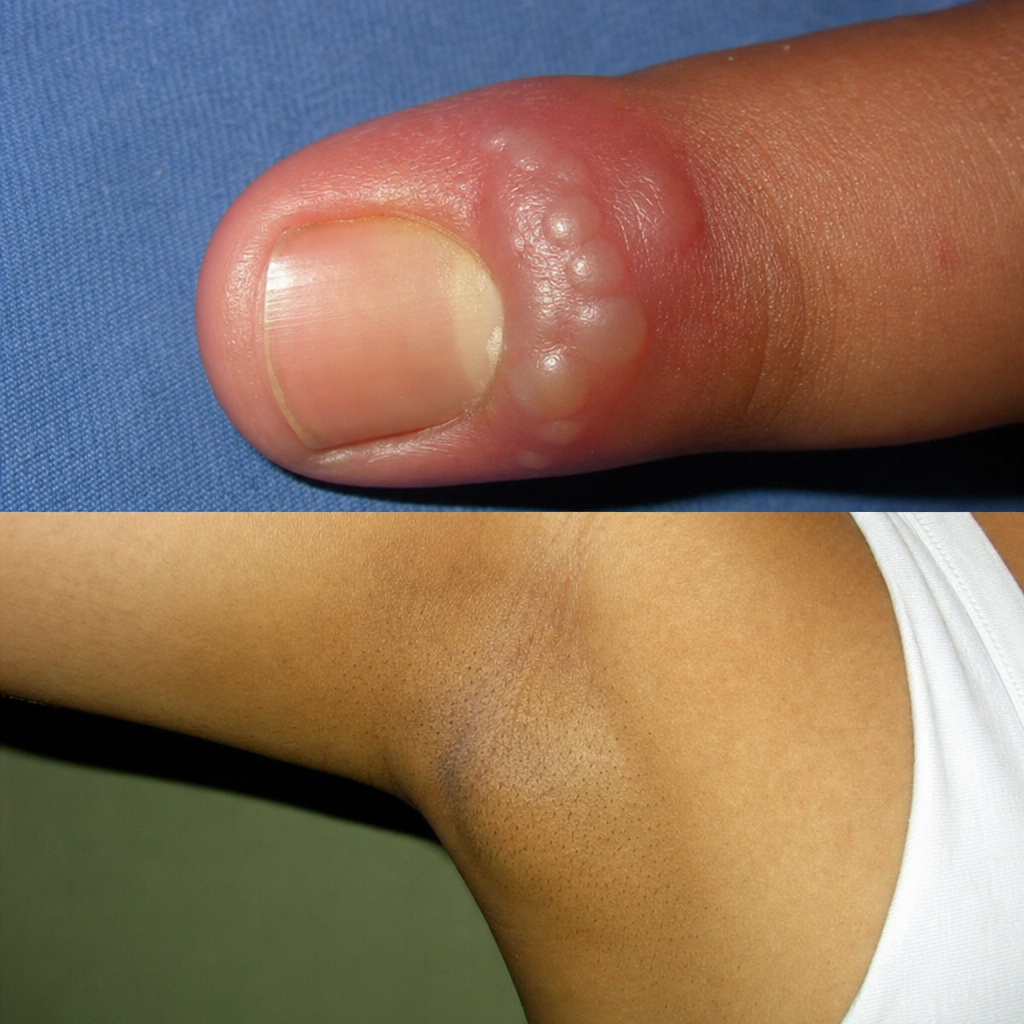
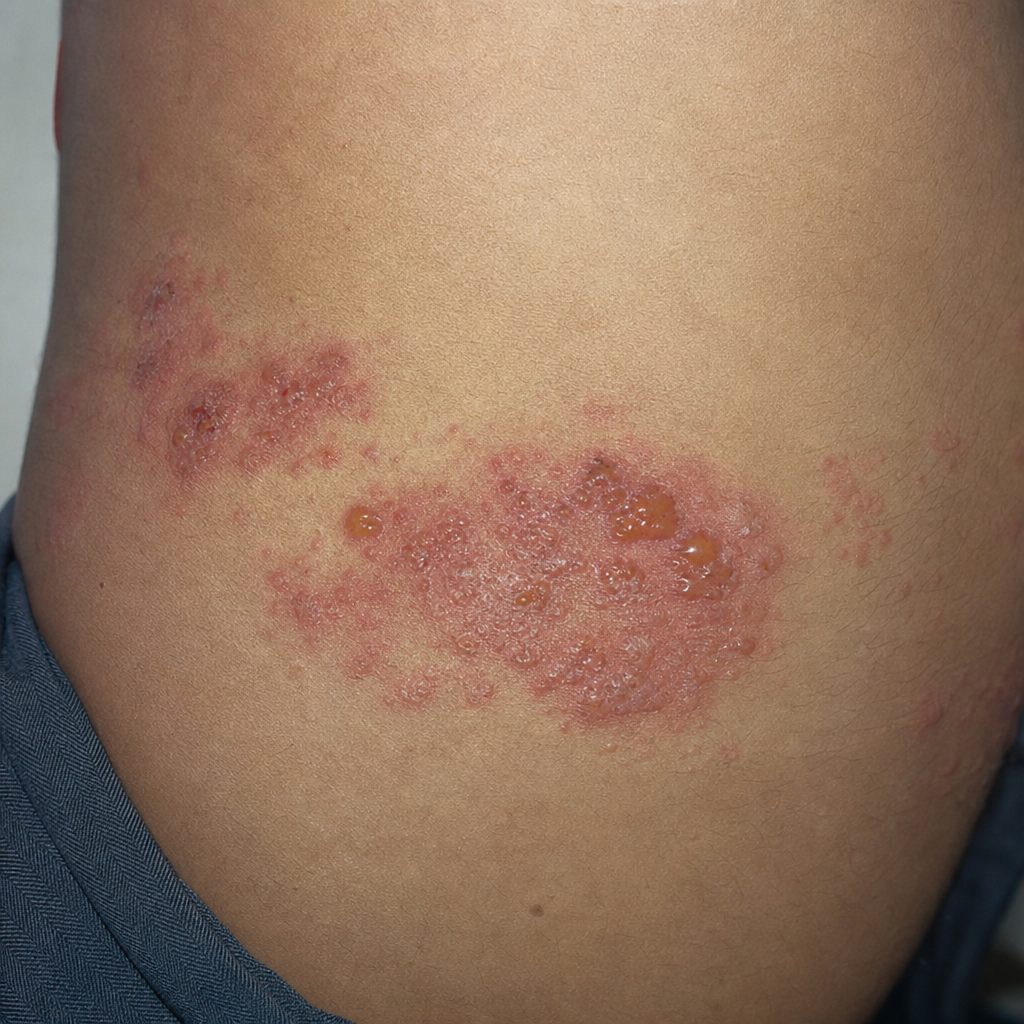
Which drug is used in the treatment of genital herpes infection?
A 25-year-old female with a history of multiple contacts presents with a growth on the vulva. What is the probable diagnosis?
Which of the following statements is FALSE regarding Herpes virus infections?
A child presents with an exophytic growth on the lower lip characterized by finger-like projections and hyperkeratosis. Similar growth is observed on the dorsal surface of the left thumb, which is shorter than the right thumb. What is the most likely diagnosis?
Which of the following is a characteristic feature of Borderline leprosy?
Which viral association is found in pityriasis rosea?
A 28-year-old woman presents with a "growth" in her genital area, first noticed 3 weeks ago and seemingly grown since then. She has hypothyroidism managed with thyroid hormone replacement. Examination reveals two non-tender, 6 mm, well-circumscribed, flesh-colored, papillated, oval lesions on the labia majora, with no ulceration, erythema, purulence, or inguinal lymphadenopathy. What is the most likely diagnosis?
Spontaneous remission is most frequent with which of the following conditions?
A 19-year-old girl presents with a painless ulcer in the labia majora with everted margins. What is the most likely causative organism?
Which of the following is NOT true about Condyloma acuminata?
Explanation: **Explanation:** **Acyclovir** is the correct answer as it is the gold-standard antiviral treatment for infections caused by the **Herpes Simplex Virus (HSV-1 and HSV-2)**, including genital herpes. It is a guanosine analogue that selectively inhibits viral DNA polymerase. In the presence of the viral enzyme **thymidine kinase**, acyclovir is phosphorylated into its active form, which then terminates the viral DNA chain, preventing replication. **Why the other options are incorrect:** * **Zidovudine (AZT), Stavudine (d4T), and Lamivudine (3TC):** These drugs belong to the **Nucleoside Reverse Transcriptase Inhibitor (NRTI)** class. They are specifically used in the management of **HIV/AIDS** (Human Immunodeficiency Virus). While they also inhibit DNA synthesis, they target the reverse transcriptase enzyme of retroviruses and have no clinical efficacy against the Herpesviridae family. **Clinical Pearls for NEET-PG:** * **Drug of Choice:** Oral Acyclovir is the drug of choice for the first episode of genital herpes. For recurrent episodes, **Valacyclovir** (a prodrug with better bioavailability) or Famciclovir are often preferred due to more convenient dosing. * **Mechanism of Resistance:** Resistance to acyclovir usually occurs due to a mutation or deficiency in the viral **thymidine kinase** enzyme. In such cases, **Foscarnet** or **Cidofovir** are used as second-line agents. * **Pregnancy:** Acyclovir is considered safe for use during pregnancy to prevent neonatal herpes transmission. * **Tzanck Smear:** A high-yield diagnostic finding for herpes is the presence of **multinucleated giant cells** with Cowdry Type A inclusion bodies.
Explanation: ***Condyloma acuminata*** - Vulvar growth in a sexually active female with **multiple contacts** strongly suggests **HPV infection** causing genital warts. - **Condyloma acuminata** are **cauliflower-like growths** on genital/perianal areas caused by **HPV types 6 and 11**. *Verruca plana* - These are **flat warts** typically found on the **face, hands, and shins**, not on genital areas. - Caused by **HPV types 3, 10, and 28**, which have different tissue tropism than genital HPV types. *Verruca vulgaris* - **Common warts** that occur on **hands and fingers**, rarely affecting genital regions. - Present as **rough, hyperkeratotic papules** with a different morphology than genital warts. *Condyloma lata* - These are **flat, moist lesions** associated with **secondary syphilis** caused by **Treponema pallidum**. - Would be accompanied by other **systemic symptoms** of syphilis and positive **RPR/VDRL** serology.
Explanation: ### Explanation **Why Option C is the Correct (False) Statement:** In Herpes Simplex Virus (HSV) keratitis, **topical steroids are strictly contraindicated** during the stage of **acute dendritic ulcers**. Steroids promote viral replication and inhibit epithelial healing, which can lead to the enlargement of the ulcer into a "geographic ulcer" and potentially result in corneal perforation. Steroids are only considered in later stages of disciform keratitis (immune-mediated) under strict antiviral cover. **Analysis of Other Options:** * **Option A:** Primary HSV-1 infection most commonly manifests as **acute herpetic gingivostomatitis**, especially in children. It presents with high fever, lymphadenopathy, and painful vesicles on the oral mucosa and gums. * **Option B:** **Herpes Gladiatorum** is a cutaneous HSV-1 infection seen in athletes involved in contact sports like wrestling. It occurs due to skin-to-skin contact, typically presenting on the face, neck, and arms. * **Option D:** **Topical Acyclovir** is highly specific because it is a prodrug that requires phosphorylation by the viral enzyme **thymidine kinase** to become active. This ensures the drug primarily affects virus-infected cells while sparing healthy host cells. **Clinical Pearls for NEET-PG:** * **Tzanck Smear:** The classic bedside diagnostic test showing **multinucleated giant cells** and **acantholytic cells** (also seen in Varicella and Herpes Zoster). * **Cowdry Type A bodies:** Eosinophilic intranuclear inclusion bodies are a hallmark histological finding. * **Eczema Herpeticum (Kaposi Varicelliform Eruption):** A medical emergency where HSV infects pre-existing skin conditions like atopic dermatitis. * **Drug of Choice:** Oral or IV **Acyclovir** is the mainstay of treatment. For acyclovir-resistant cases (often in HIV patients), **Foscarnet** is used.
Explanation: ### Explanation **Correct Answer: C. Papilloma (Verruca Vulgaris)** The clinical presentation describes a classic case of **Verruca Vulgaris (Common Wart)**. The "finger-like projections" and "hyperkeratosis" are hallmark features of a viral papilloma caused by **Human Papillomavirus (HPV)**. The key diagnostic clue in this question is the presence of a similar lesion on the **thumb**. This demonstrates the phenomenon of **autoinoculation**, where the virus is transferred from one site (the thumb) to another (the lip) through direct contact, often due to thumb-sucking or nail-biting in children. The mention of the thumb being "shorter" suggests a chronic habit or local growth interference, further supporting the diagnosis of a common wart. **Analysis of Incorrect Options:** * **A. Squamous cell carcinoma (SCC):** While SCC can be exophytic, it typically presents in older adults with risk factors like UV exposure or tobacco use. It is highly unlikely in a child and does not explain the synchronous thumb lesion. * **B. Acantholysis:** This is a histological term referring to the loss of intercellular connections (e.g., in Pemphigus). It is a microscopic finding, not a clinical diagnosis for an exophytic growth. * **C. Verrucous carcinoma:** This is a low-grade variant of SCC (Ackerman’s tumor). While it appears "wart-like," it is usually a large, locally invasive malodorous mass found in the oral cavity of elderly tobacco chewers. **High-Yield Clinical Pearls for NEET-PG:** * **HPV Types:** Verruca vulgaris is most commonly associated with **HPV types 2 and 4**. * **Histology:** Look for **koilocytes** (keratinocytes with pyknotic nuclei and perinuclear halos) and "tiered" parakeratosis. * **Koebner Phenomenon:** Warts can show a pseudo-Koebner phenomenon (linear spread due to trauma/scratching). * **Treatment:** First-line treatments include topical salicylic acid or cryotherapy with liquid nitrogen.
Explanation: **Explanation:** The **Inverted Saucer Appearance** is a pathognomonic clinical feature of **Borderline Tuberculoid (BT)** or **Borderline Borderline (BB)** leprosy. This refers to a characteristic plaque where the center is elevated and erythematous, while the edges slope outwards, resembling an upside-down saucer. This occurs due to the immunological instability of the borderline spectrum, where the body attempts to contain the infection, leading to localized inflammation and edema within the lesion. **Analysis of Incorrect Options:** * **B. Erythema Nodosum Leprosum (ENL):** This is a Type 2 Lepra Reaction, which is classically seen in **Lepromatous Leprosy (LL)** or occasionally in Borderline Lepromatous (BL) cases, but not typically in the pure borderline spectrum. * **C. Hypopigmented plaques all over the body:** While hypopigmented patches occur in leprosy, "all over the body" (generalized, symmetrical distribution) is a hallmark of **Lepromatous Leprosy (LL)**. Borderline lesions are usually asymmetrical and fewer in number. * **D. Glove and stocking sensory symptoms:** This pattern of distal, symmetrical sensory loss is characteristic of **Lepromatous Leprosy (LL)** due to diffuse nerve involvement. In Borderline leprosy, nerve involvement is typically asymmetrical and localized to specific nerve trunks. **High-Yield Clinical Pearls for NEET-PG:** * **Punch-out lesions:** Another term for the appearance of BB leprosy where the central area looks "punched out" but is actually a zone of clearing. * **Immune Status:** Borderline leprosy is the most **immunologically unstable** form; it can "upgrade" toward the Tuberculoid pole or "downgrade" toward the Lepromatous pole. * **Satellite Lesions:** Small clinical lesions found near a larger plaque, highly suggestive of **Borderline Tuberculoid (BT)** leprosy.
Explanation: ### Explanation **Pityriasis Rosea (PR)** is an acute, self-limiting papulosquamous disorder. The correct answer is **HHV-7** (and to a lesser extent HHV-6) because these viruses are implicated in the pathogenesis through systemic reactivation rather than a primary infection. #### Why HHV-7 is Correct: Current medical literature and PCR studies consistently show the presence of **Human Herpesvirus 7 (HHV-7)** and **HHV-6** DNA in the plasma and skin lesions of PR patients. The condition often follows a prodromal viral illness, and the seasonal clustering of cases further supports this viral etiology. #### Why Other Options are Incorrect: * **B. CMV (HHV-5):** Cytomegalovirus typically causes infectious mononucleosis-like syndromes or retinitis/colitis in immunocompromised patients; it has no established link to PR. * **C. Varicella Zoster (HHV-3):** Causes Chickenpox and Herpes Zoster (Shingles), characterized by dermatomal vesicular eruptions, unlike the scaly plaques of PR. * **D. EBV (HHV-4):** Epstein-Barr Virus is associated with Infectious Mononucleosis, Oral Hairy Leukoplakia, and certain lymphomas, but not PR. #### High-Yield Clinical Pearls for NEET-PG: * **Herald Patch:** The initial lesion; a large, erythematous, scaly plaque (2–10 cm) usually on the trunk. * **Christmas Tree Pattern:** Secondary eruption follows skin cleavage lines (Langer’s lines). * **Collarette of Scale:** Fine peripheral scaling with the free edge pointing inwards. * **Hanging Curtain Sign:** When the skin is stretched across the long axis of the lesion, the scales fold like a curtain. * **Management:** Usually reassurance (self-limiting in 6–8 weeks). Acyclovir may be used in severe cases to reduce duration.
Explanation: **Explanation:** The clinical presentation is classic for **Condyloma acuminatum** (Anogenital warts), caused by Human Papillomavirus (HPV), typically types 6 and 11. The key diagnostic features here are the **flesh-colored, papillated (verrucous), and non-tender** nature of the lesions. Unlike inflammatory or malignant growths, these are well-circumscribed and lack secondary changes like ulceration or lymphadenopathy. **Analysis of Options:** * **Condyloma (Correct):** These are benign epithelial proliferations. The "papillated" or cauliflower-like surface is a hallmark of HPV infection. They are typically asymptomatic but can enlarge during pregnancy or immunosuppression. * **Chancre (Incorrect):** This is the primary lesion of Syphilis. It is typically a **painless, indurated ulcer** with a clean base, not a papillated growth. * **Herpes (Incorrect):** Genital Herpes (HSV-2) presents as **painful, grouped vesicles** on an erythematous base that quickly rupture to form shallow erosions. The absence of pain and ulceration in this patient rules it out. * **Squamous Cell Carcinoma (Incorrect):** While SCC can appear verrucous, it usually presents in older patients, grows slowly over months/years, and often shows signs of induration, friability, or ulceration. **NEET-PG High-Yield Pearls:** * **Histopathology:** Look for **Koilocytes** (keratinocytes with perinuclear halo and wrinkled "raisinoid" nuclei). * **Treatment of Choice:** Podophyllotoxin, Imiquimod (topical), or Cryotherapy/Electrocautery. * **Condyloma Lata vs. Acuminata:** Do not confuse these. *Condyloma lata* are flat, moist, highly infectious lesions of **Secondary Syphilis**, whereas *Condyloma acuminata* are the warty lesions of **HPV**.
Explanation: **Explanation:** **Herpes gestationis** (now more commonly known as **Pemphigoid Gestationis**) is a rare, autoimmune bullous dermatosis of pregnancy. Despite its name, it is not caused by a virus but is related to Bullous Pemphigoid. The hallmark of this condition is its **spontaneous remission** shortly after delivery (usually within weeks to months), although flares can occur immediately postpartum. Because it is triggered by the hormonal and immunological changes of pregnancy, the resolution of the pregnant state typically leads to the resolution of the disease. **Analysis of Incorrect Options:** * **A & B (Herpes labialis/genitalis):** These are caused by the Herpes Simplex Virus (HSV-1 and HSV-2). These viruses establish **latency** in the sensory nerve ganglia (trigeminal or sacral). While the active lesions heal, the infection is lifelong and characterized by periodic **recurrences** rather than permanent spontaneous remission. * **C (Herpetic chancroid):** This is a confusing term often used to describe a primary HSV infection presenting with painful ulcers. Like other HSV infections, it carries the risk of latency and recurrence. **High-Yield Clinical Pearls for NEET-PG:** * **Target Antigen:** The NC16A domain of **BP180** (Type XVII Collagen). * **Clinical Feature:** Intensely pruritic urticarial plaques and vesicles, typically starting in the **periumbilical region** (unlike PEP/PUPPP which spares the umbilicus). * **Immunofluorescence (DIF):** Linear deposition of **C3** (and sometimes IgG) along the basement membrane zone. * **Association:** It is associated with HLA-DR3 and HLA-DR4. It may recur in subsequent pregnancies or with oral contraceptive use.
Explanation: ### Explanation The clinical presentation described—a **painless ulcer with everted margins** on the genitalia—is the classic description of a **Hard Chancre**, the hallmark of **Primary Syphilis**. **1. Why Treponema pallidum is correct:** *Treponema pallidum* is the causative spirochete of syphilis. The primary stage manifests as a solitary, indurated (firm), and painless ulcer. A key diagnostic feature is the **everted (rolled-out) margins** and a clean base. Because the lesion is painless and often associated with non-tender regional lymphadenopathy, patients may delay seeking treatment. **2. Why the other options are incorrect:** * **Chlamydia:** Specifically, the L1-L3 serovars cause *Lymphogranuloma Venereum (LGV)*. This typically presents with a transient, small, painless papule or shallow erosion that heals quickly, followed by painful, suppurative inguinal lymphadenopathy (the "Bubo" and "Groove sign"). * **Neisseria gonorrhoeae:** This organism primarily causes urethritis or cervicitis characterized by purulent discharge, not a discrete genital ulcer. * **Herpes simplex virus (HSV):** Genital herpes presents as **painful**, multiple, superficial vesicles on an erythematous base that rupture to form "punched-out" erosions. They are never indurated or everted. **High-Yield Clinical Pearls for NEET-PG:** * **Painful vs. Painless:** Remember the mnemonic **"S is for Soft and Sore"**—*Haemophilus ducreyi* (Chancroid) causes a painful, soft chancre. Syphilis is a **Hard, painless** chancre. * **Dark-field Microscopy:** This is the gold standard for visualizing motile spirochetes from the chancre exudate. * **Treatment:** Intramuscular **Benzathine Penicillin G** (2.4 million units) remains the drug of choice for primary syphilis. * **Differential:** If the ulcer was painless but "beefy red" and bled on touch, consider *Donovanosis* (Granuloma inguinale).
Explanation: **Explanation:** **Condyloma acuminata**, commonly known as anogenital warts, is a viral infection caused by the **Human Papillomavirus (HPV)**, primarily types 6 and 11. **Why Option D is the correct answer:** The use of **oral contraceptives (OCPs) does not reduce the risk** of Condyloma acuminata. In fact, some studies suggest that long-term OCP use may slightly increase the risk of cervical dysplasia and the persistence of HPV infection because OCPs do not provide a physical barrier against skin-to-skin contact. Only barrier methods (like condoms) offer partial protection, though they are not 100% effective as the virus can reside on uncovered scrotal or perineal skin. **Analysis of Incorrect Options:** * **Option A:** True. It is caused by HPV. Types 6 and 11 are "low-risk" types responsible for 90% of warts, while types 16 and 18 are "high-risk." * **Option B:** True. It is the most common viral sexually transmitted infection (STI) worldwide. * **Option C:** True. While types 6 and 11 are low-risk, co-infection with high-risk types (16, 18) can lead to squamous cell carcinoma (precancerous/cancerous transformation), particularly in the cervix, anus, or vulva. **High-Yield Clinical Pearls for NEET-PG:** * **Morphology:** Presents as "cauliflower-like" fleshy growths. * **Diagnosis:** Primarily clinical. **Acetowhitening** (application of 5% acetic acid) can help visualize subclinical lesions. * **Histopathology:** Characterized by **Koilocytes** (squamous epithelial cells with perinuclear halo and wrinkled "raisinoid" nuclei). * **Treatment:** Medical (Podophyllin, Imiquimod) or Surgical (Cryotherapy, Electrocautery, CO2 Laser). * **Prevention:** The Quadrivalent/Nonavalent HPV vaccine is highly effective.
Herpes Simplex Virus Infections
Practice Questions
Varicella-Zoster Virus Infections
Practice Questions
Human Papillomavirus Infections
Practice Questions
Molluscum Contagiosum
Practice Questions
Viral Exanthems
Practice Questions
Hand, Foot, and Mouth Disease
Practice Questions
Orf and Milker's Nodule
Practice Questions
Cytomegalovirus Cutaneous Manifestations
Practice Questions
Epstein-Barr Virus Manifestations
Practice Questions
Poxvirus Infections
Practice Questions
HIV-Related Dermatoses
Practice Questions
Viral Infections in Immunocompromised Hosts
Practice Questions
Get full access to all questions, explanations, and performance tracking.
Start For Free