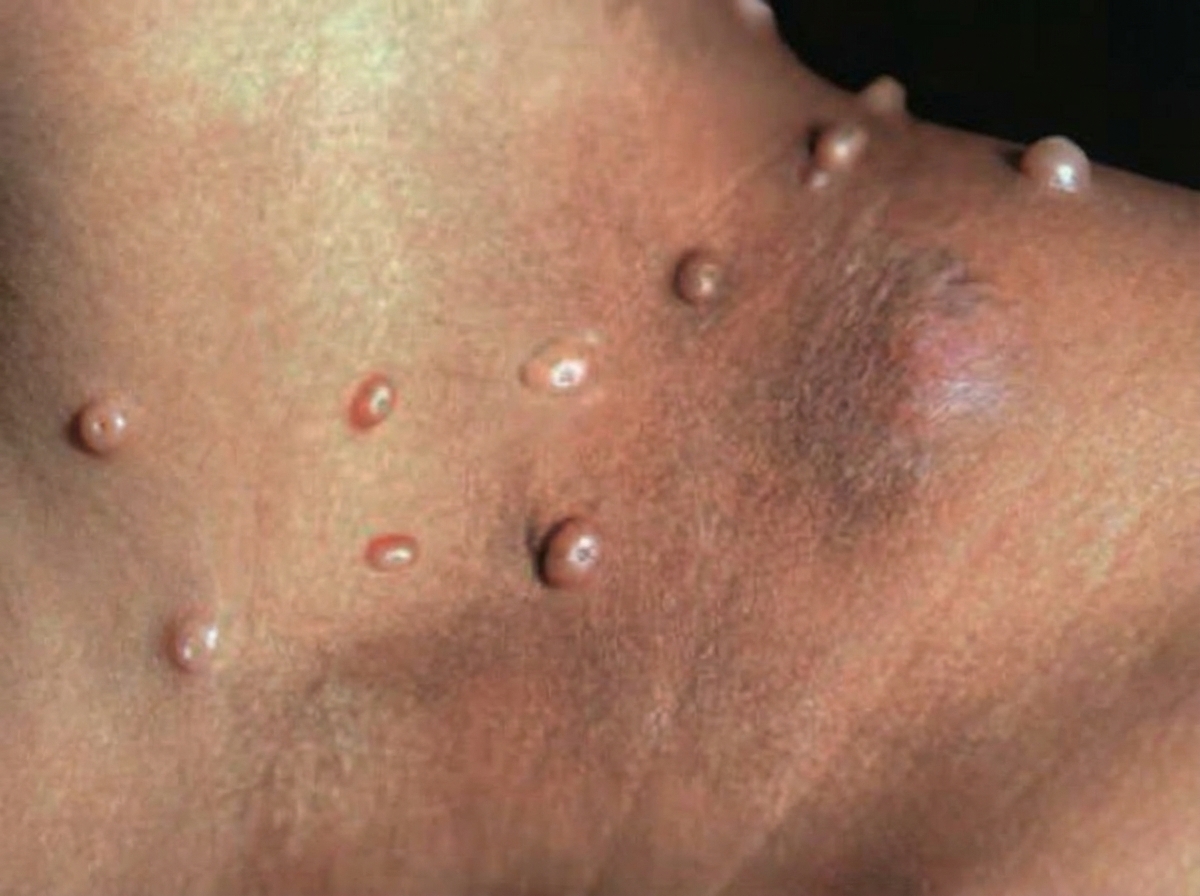
Target lesions are characteristic of which of the following conditions?
Behcet’s syndrome is characterized by which of the following?
Post-herpetic neuralgia is typically seen after how much time?
Which of the following stages of syphilis is associated with primary bullous lesions?
Flat wart is caused by which HPV types?
Shingles occurs
Slapped-cheek appearance is seen in which of the following viral infections?
Which of the following statements is true regarding common skin conditions?
Ballooning is characteristic of which of the following conditions?
Oral hairy leukoplakia is most commonly associated with which condition?
Explanation: **Explanation:** **Erythema Multiforme (EM)** is a hypersensitivity reaction most commonly triggered by infections, particularly **Herpes Simplex Virus (HSV)**. The hallmark clinical feature is the **Target (Iris) Lesion**. A classic target lesion consists of three concentric zones: 1. A dusky, central disk (sometimes with a vesicle or bulla). 2. A pale, edematous intermediate ring. 3. An erythematous outer halo. These lesions are typically distributed symmetrically on the acral extremities (palms and soles). **Analysis of Incorrect Options:** * **Erythema Marginatum:** Seen in Acute Rheumatic Fever. It presents as evanescent, pink, ring-like (annular) patches with elevated borders and central clearing, primarily on the trunk. * **Lichen Planus:** Characterized by the "6 Ps" (Planar, Purple, Polygonal, Pruritic, Papules, and Plaques). It features **Wickham striae** (white lacy patterns) rather than target lesions. * **Psoriasis:** Presents as well-demarcated erythematous plaques with silvery-white scales. Key signs include the **Auspitz sign** and **Koebner phenomenon**. **High-Yield Clinical Pearls for NEET-PG:** * **Most common trigger for EM Minor:** Herpes Simplex Virus (HSV-1 and HSV-2). * **Most common trigger for EM Major:** *Mycoplasma pneumoniae*. * **EM vs. SJS/TEN:** EM is now considered a distinct condition from Stevens-Johnson Syndrome (SJS). SJS/TEN are primarily drug-induced and involve significant mucosal sloughing, whereas EM is usually post-infectious. * **Atypical Target Lesions:** These have only two zones and are more characteristic of SJS.
Explanation: **Explanation:** Behcet’s syndrome is a chronic, multisystem, inflammatory disorder characterized by **recurrent systemic vasculitis**. The diagnosis is primarily clinical, based on the **International Study Group (ISG) criteria**, which require the presence of recurrent oral aphthous ulcers plus at least two other systemic features. 1. **Why Option C is Correct:** Behcet’s syndrome is a "triple symptom complex." * **Recurrent Oral and Genital Ulcers:** Oral ulcers are the hallmark (present in >95% of cases). Genital ulcers are similar but often deeper and leave scars. * **Eye Lesions:** Uveitis (both anterior and posterior) is a major cause of morbidity and can lead to blindness. Hypopyon (pus in the anterior chamber) is a classic finding. * **Skin Lesions:** Common manifestations include **Erythema Nodosum**, pseudofolliculitis, and acneiform eruptions. * Since both A and B are core components of the diagnostic criteria, "All of the above" is the correct choice. 2. **Why other options are incorrect:** Options A and B are individual components of the syndrome but do not represent the complete clinical picture. Selecting only one would be incomplete. **High-Yield Clinical Pearls for NEET-PG:** * **Pathergy Test:** A unique diagnostic test where a sterile needle prick results in a papule or pustule within 24–48 hours. It is highly specific for Behcet’s. * **HLA Association:** Strongly associated with **HLA-B51**. * **Neurological Involvement:** Known as "Neuro-Behcet’s," it can present with meningoencephalitis or stroke-like symptoms. * **Treatment:** Colchicine is the first-line treatment for mucocutaneous lesions; systemic steroids and immunosuppressants (Azathioprine, TNF-alpha inhibitors) are used for ocular or systemic involvement.
Explanation: **Explanation:** **Post-herpetic Neuralgia (PHN)** is the most common complication of Herpes Zoster (Shingles). It is defined as pain that persists or develops in the same dermatomal distribution **after the crusting of the skin lesions** or, more standardly, **beyond 30 days (4 weeks)** from the initial onset of the rash. 1. **Why 4 weeks is correct:** The timeline of Herpes Zoster typically involves a prodromal phase, followed by a vesicular eruption that crusts over within 7–10 days. Healing usually occurs within 2–4 weeks. Pain persisting beyond this 4-week (30-day) window indicates that the nerve damage (neuritis) caused by the Varicella-Zoster Virus (VZV) has transitioned from acute/subacute phase to a chronic neuropathic state, meeting the diagnostic criteria for PHN. 2. **Why other options are incorrect:** * **1 and 2 weeks:** During this period, the patient is still in the **acute phase** of the infection. Pain at this stage is expected and is termed "acute herpetic neuralgia." * **3 weeks:** While pain may still be present, it is considered "subacute herpetic neuralgia." The formal definition for "Post-herpetic" status requires the 4-week threshold. **Clinical Pearls for NEET-PG:** * **Risk Factors:** The most significant risk factor for PHN is **increasing age** (>50 years) and the severity of the initial rash/pain. * **Pathophysiology:** Caused by inflammation and damage to the dorsal root ganglion and peripheral nerves. * **Treatment of Choice:** First-line agents include **Gabapentin, Pregabalin**, and Tricyclic Antidepressants (Amitriptyline). * **Prevention:** The **Zoster vaccine** (Recombinant/Shingrix) significantly reduces the incidence of PHN in the elderly.
Explanation: **Explanation:** The correct answer is **D. Congenital syphilis**. **Why Congenital Syphilis is Correct:** Syphilis is generally a "non-vesiculobullous" disease in adults. However, **Congenital Syphilis** is a notable exception. It is the only stage where primary bullous lesions, known as **Syphilitic Pemphigus**, occur. These are typically present at birth or appear within the first few weeks of life. The bullae are usually found on the palms and soles, are filled with serous or hemorrhagic fluid, and contain a high concentration of *Treponema pallidum*, making them highly infectious. **Why Other Options are Incorrect:** * **Primary Syphilis:** Characterized by a **Chancre**—a solitary, painless, indurated ulcer with a clean base and regional lymphadenopathy. It does not present with bullae. * **Secondary Syphilis:** Known as the "Great Imitator," it presents with a generalized maculopapular rash (including palms and soles), condyloma lata, and mucous patches. While it can be polymorphic, it **never** presents with vesicles or bullae in adults. * **Tertiary Syphilis:** Characterized by **Gummas** (chronic granulomatous lesions) and cardiovascular or neurological involvement. Bullous lesions are not a feature. **High-Yield Clinical Pearls for NEET-PG:** * **Syphilitic Pemphigus:** Always suspect congenital syphilis if a neonate presents with bullae on the palms and soles. * **Hutchinson’s Triad (Late Congenital Syphilis):** Interstitial keratitis, Hutchinson teeth (notched incisors), and Eighth nerve deafness. * **Drug of Choice:** Parenteral **Penicillin G** remains the gold standard for all stages of syphilis. * **Screening vs. Confirmatory:** VDRL/RPR are used for screening and monitoring treatment response, while TPHA/FTA-ABS are specific treponemal tests used for confirmation.
Explanation: **Explanation:** **Flat warts (Verruca plana)** are benign epithelial proliferations caused by the **Human Papillomavirus (HPV)**. The correct answer is **Option B (3, 10)** because these specific genotypes have a high tropism for the superficial dermis, leading to the characteristic smooth, flat-topped, flesh-colored to brownish papules typically seen on the face, neck, and dorsum of the hands. **Analysis of Options:** * **A (6, 11):** These are the "low-risk" types primarily responsible for **Anogenital warts (Condyloma acuminata)** and laryngeal papillomas. * **C (16, 18):** These are "high-risk" oncogenic types. They are the leading cause of **Cervical Cancer**, as well as other anogenital and oropharyngeal malignancies. * **D (5, 8):** These types are associated with **Epidermodysplasia Verruciformis (EV)**. In these patients, HPV 5 and 8 carry a high risk of progressing to Squamous Cell Carcinoma (SCC) in sun-exposed areas. **High-Yield Clinical Pearls for NEET-PG:** 1. **Koebner Phenomenon:** Flat warts frequently exhibit linear distribution due to autoinoculation following scratching or trauma. 2. **Histopathology:** Look for "Koilocytes" (keratinocytes with pyknotic nuclei and perinuclear halos) in the upper epidermis. 3. **Common Wart (Verruca Vulgaris):** Most commonly caused by **HPV types 1, 2, and 4**. 4. **Palmar/Plantar Warts (Myrmecia):** Primarily caused by **HPV type 1**. 5. **Butcher’s Warts:** Associated with **HPV type 7**.
Explanation: **Explanation:** **Shingles (Herpes Zoster)** is caused by the reactivation of the **Varicella-Zoster Virus (VZV)**, which remains latent in the sensory dorsal root ganglia after a primary chickenpox infection. **Why Option B is Correct:** The hallmark of Shingles is its **unilateral** distribution. When the virus reactivates, it travels down a single sensory nerve to the skin, resulting in a painful, vesicular eruption strictly confined to the **dermatome** supplied by that specific nerve. It characteristically does not cross the midline. **Why Other Options are Incorrect:** * **Option A (Primary infection):** Shingles is a **secondary** (reactivation) infection. The primary infection with VZV manifests as Varicella (Chickenpox). * **Option C (Movable tissues):** This is a clinical feature often associated with Aphthous ulcers (which occur on non-keratinized, movable mucosa). Shingles occurs on both fixed and movable skin/mucosa following a dermatomal path. * **Option D (Bilaterally):** Shingles is rarely bilateral. If a dermatomal rash is bilateral or disseminated, it strongly suggests underlying **immunosuppression** (e.g., HIV/AIDS or malignancy). **High-Yield Clinical Pearls for NEET-PG:** * **Tzanck Smear:** Shows **Multinucleated Giant Cells** (common to HSV and VZV). * **Hutchinson’s Sign:** Vesicles on the tip of the nose indicating involvement of the nasociliary branch of the ophthalmic nerve; predicts a high risk of ocular complications. * **Ramsay Hunt Syndrome:** Triad of facial palsy, external auditory canal vesicles, and tinnitus/vertigo (involvement of Geniculate Ganglion). * **Post-Herpetic Neuralgia (PHN):** The most common complication, defined as pain persisting >90 days after the rash onset. * **Treatment:** Oral Acyclovir, Valacyclovir, or Famciclovir (ideally started within 72 hours).
Explanation: **Explanation:** **Parvovirus B19 (Correct Answer):** The "slapped-cheek" appearance is the pathognomonic clinical feature of **Erythema Infectiosum**, also known as **Fifth Disease**, caused by Parvovirus B19. The rash typically presents in three stages: 1. **Stage 1:** Erythematous, edematous plaques on the cheeks (slapped-cheek) with perioral sparing. 2. **Stage 2:** A reticulate or "lace-like" erythematous maculopapular rash on the trunk and extremities. 3. **Stage 3:** Recurrence of the rash triggered by sunlight, heat, or stress. **Incorrect Options:** * **Epstein-Barr Virus (EBV) / HHV-4:** EBV causes Infectious Mononucleosis. While it can cause a non-specific rash, it is classically associated with a **maculopapular drug eruption** following the administration of Ampicillin or Amoxicillin. * **Human Herpesvirus 6 (HHV-6):** This is the causative agent of **Roseola Infantum (Exanthem Subitum)**. It is characterized by high fever that subsides abruptly, followed by the appearance of a rose-pink morbilliform rash (fever ends before the rash begins). **Clinical Pearls for NEET-PG:** * **Target Cells:** Parvovirus B19 infects and lyses **erythroid progenitor cells** (P-antigen is the receptor). * **Hematologic Complication:** It can cause **Aplastic Crisis** in patients with chronic hemolytic anemias (e.g., Sickle Cell Anemia, Hereditary Spherocytosis). * **Pregnancy:** Infection during pregnancy can lead to **Hydrops Fetalis** due to severe fetal anemia. * **Adults:** In adults, it often presents as **symmetrical arthralgia** (small joints of hands/feet) rather than the classic rash. * **Gloves and Socks Syndrome:** A variant presentation characterized by painful erythema and edema of the hands and feet.
Explanation: **Explanation:** **1. Why Option A is Correct:** Viral warts (Verrucae) are caused by the **Human Papillomavirus (HPV)**. A hallmark of these lesions is their high rate of **spontaneous resolution**. Approximately 60–70% of warts resolve on their own within two years due to the host's cell-mediated immune response. This is a crucial clinical point because it justifies a "watchful waiting" approach in asymptomatic patients, especially children. **2. Why Other Options are Incorrect:** * **Option B:** While surgical excision is not the *first-line* treatment for plantar warts (due to the risk of painful scarring on weight-bearing surfaces), it is **not contraindicated**. Refractory cases may be treated with blunt curettage or electrosurgery. * **Option C:** Calluses are formed due to **chronic friction or pressure**, which can be related to footwear, gait abnormalities, or orthopedic deformities, not just occupational factors. * **Option D:** Corns (Clavus) are **mechanical hyperkeratotic lesions** caused by localized pressure. They are not viral. Warts, conversely, are viral and show "punctate hemorrhages" (seeds) when pared, which distinguishes them from corns. **Clinical Pearls for NEET-PG:** * **Auspitz Sign vs. Warts:** Paring a wart reveals **thrombosed capillaries** (black dots), whereas scraping psoriasis reveals Auspitz sign. * **Koebner Phenomenon:** Warts can show the Koebner phenomenon (isomorphic response), where lesions appear along the line of trauma. * **HPV Types:** HPV 1 (Plantar warts), HPV 2 & 4 (Common warts), HPV 6 & 11 (Anogenital warts/Condyloma acuminata). * **Histopathology:** Look for **Koilocytes** (vacuolated cells with pyknotic nuclei) in the granular layer.
Explanation: **Explanation:** **Ballooning degeneration** is a characteristic histopathological feature of viral infections caused by the Herpes family of viruses, including **Herpes zoster**, Herpes simplex, and Varicella. It refers to the marked swelling and rounding of keratinocytes due to intracellular edema. These "ballooned" cells often lose their intercellular attachments (acantholysis), leading to the formation of intraepidermal vesicles. Additionally, these cells may undergo nuclear division without cytoplasmic division, resulting in **multinucleated giant cells** (Tzanck cells). **Analysis of Incorrect Options:** * **B. Pemphigus:** While Pemphigus involves **acantholysis** (loss of cell-to-cell adhesion), the mechanism is immunological (IgG antibodies against desmogleins) rather than viral-induced ballooning. It typically shows a "row of tombstone" appearance on the basal layer. * **C. Pemphigoid:** Bullous pemphigoid is characterized by **subepidermal blisters** due to the destruction of the basement membrane zone (hemidesmosomes). It does not involve ballooning or acantholysis. * **D. Insect bite:** These typically present with dermal edema, eosinophilic infiltrates, and sometimes "spongiosis" (intercellular edema), but not the specific ballooning degeneration seen in viral infections. **NEET-PG High-Yield Pearls:** * **Tzanck Smear:** A rapid bedside test for Herpes zoster/simplex. Look for multinucleated giant cells and ballooning cells. * **Inclusion Bodies:** In Herpes, look for **Lipschütz bodies** (eosinophilic intranuclear inclusions). * **Ballooning vs. Spongiosis:** Ballooning is *intracellular* edema (viral), whereas spongiosis is *intercellular* edema (eczema/dermatitis). * **Other conditions with ballooning:** Hand-foot-mouth disease (Coxsackievirus) and Orf.
Explanation: **Explanation:** **Oral Hairy Leukoplakia (OHL)** is a white, corrugated (hair-like) patch typically found on the lateral borders of the tongue. It is caused by the **Epstein-Barr Virus (EBV)**. **1. Why HIV-AIDS is the correct answer:** While EBV is the causative agent, OHL occurs almost exclusively in states of profound secondary immunosuppression. It is considered a **pathognomonic clinical marker for HIV infection** and often serves as an early sign of progression to AIDS. It signifies a significant drop in CD4+ T-cell counts (usually below 200-300 cells/mm³). **2. Why other options are incorrect:** * **Carcinoma of the tongue:** Unlike OHL, squamous cell carcinoma usually presents as a persistent ulcer or indurated plaque and is not caused by EBV. OHL itself is **not** a premalignant condition. * **Oral candidiasis:** While also common in HIV, candidiasis (thrush) presents as creamy white patches that **can be scraped off**, leaving an erythematous base. OHL **cannot** be scraped off. * **Infectious mononucleosis:** Although caused by EBV in immunocompetent individuals, it typically presents with fever, lymphadenopathy, and pharyngitis, rather than OHL. **High-Yield Clinical Pearls for NEET-PG:** * **Etiology:** EBV (Human Herpesvirus 4). * **Clinical Feature:** Vertical white ridges on the **lateral tongue** that do not scrape off. * **Histopathology:** Characterized by hyperkeratosis, acanthosis, and **"balloon cells"** (koilocytosis-like cells) in the upper stratum spinosum. * **Prognostic Value:** Its presence in an undiagnosed patient is a strong indication for HIV testing. It does not require specific treatment unless for cosmetic reasons (Acyclovir or Podophyllin may be used).
Herpes Simplex Virus Infections
Practice Questions
Varicella-Zoster Virus Infections
Practice Questions
Human Papillomavirus Infections
Practice Questions
Molluscum Contagiosum
Practice Questions
Viral Exanthems
Practice Questions
Hand, Foot, and Mouth Disease
Practice Questions
Orf and Milker's Nodule
Practice Questions
Cytomegalovirus Cutaneous Manifestations
Practice Questions
Epstein-Barr Virus Manifestations
Practice Questions
Poxvirus Infections
Practice Questions
HIV-Related Dermatoses
Practice Questions
Viral Infections in Immunocompromised Hosts
Practice Questions
Get full access to all questions, explanations, and performance tracking.
Start For Free