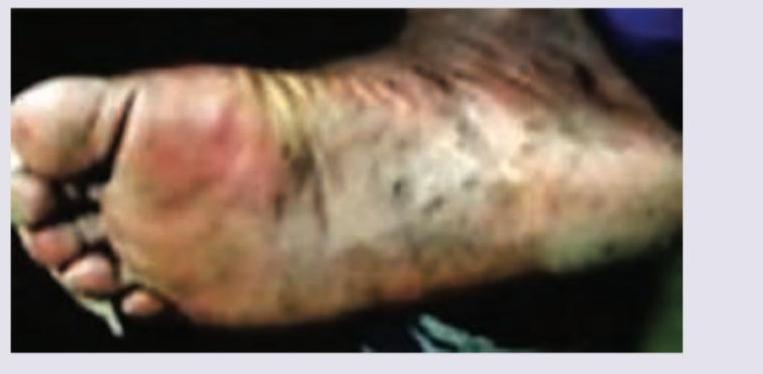
A 48-year-old male presents with a three-month history of non-itchy, generalized papulo-nodular lesions. Physical examination reveals no other abnormalities. Slit smear from a nodule is negative for acid-fast bacilli (AFB). Blood VDRL is reactive at a 1:2 dilution. What is the most likely diagnosis?
Erythema nodosum leprosum is seen in a 16-year-old boy. This is a feature of which of the following types of leprosy?
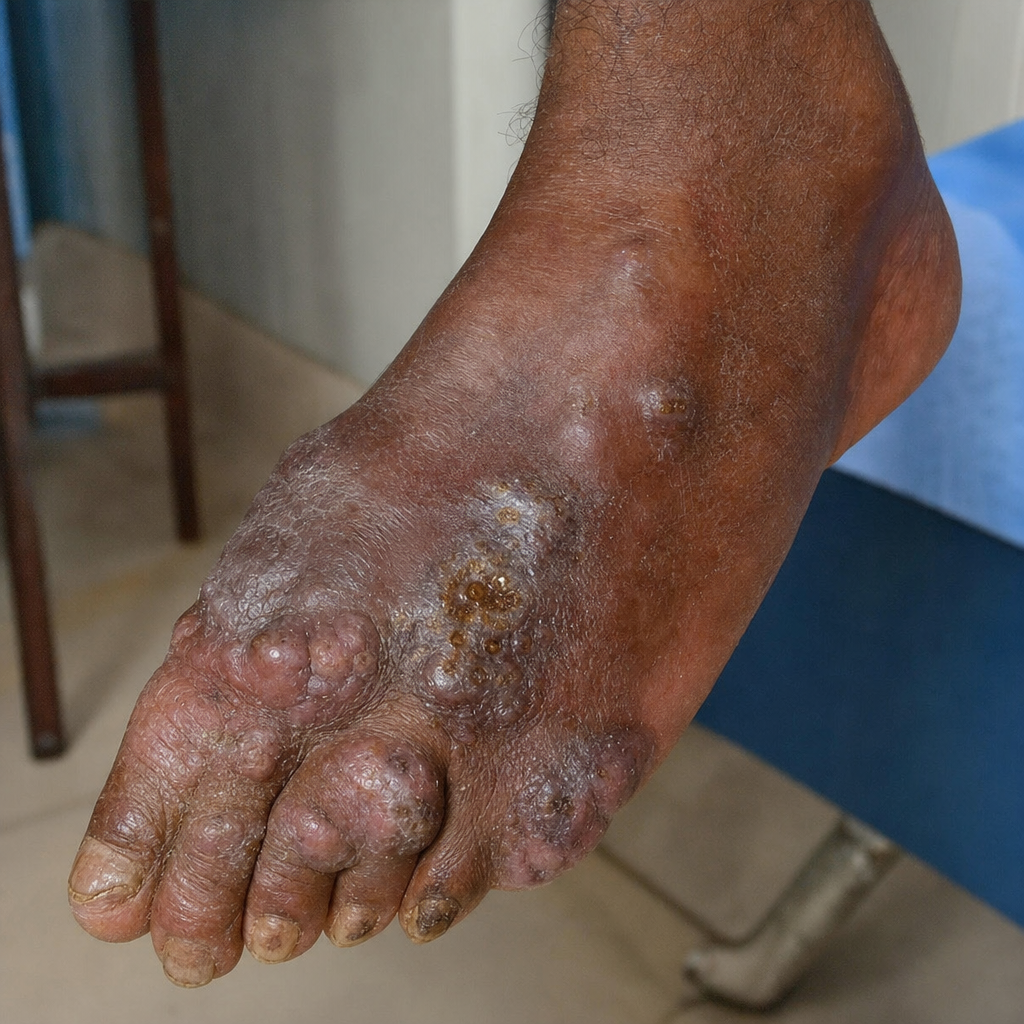
Which of the following statements about mycetoma is false?
A 27-year-old patient was diagnosed to have borderline leprosy and started on multidrug therapy for multibacillary leprosy. Six weeks later, he developed pain in the nerves and redness and swelling of the skin lesions. The management of his illness should include all of the following, except?
In Hansen's disease, which nerve is commonly affected at the elbow?
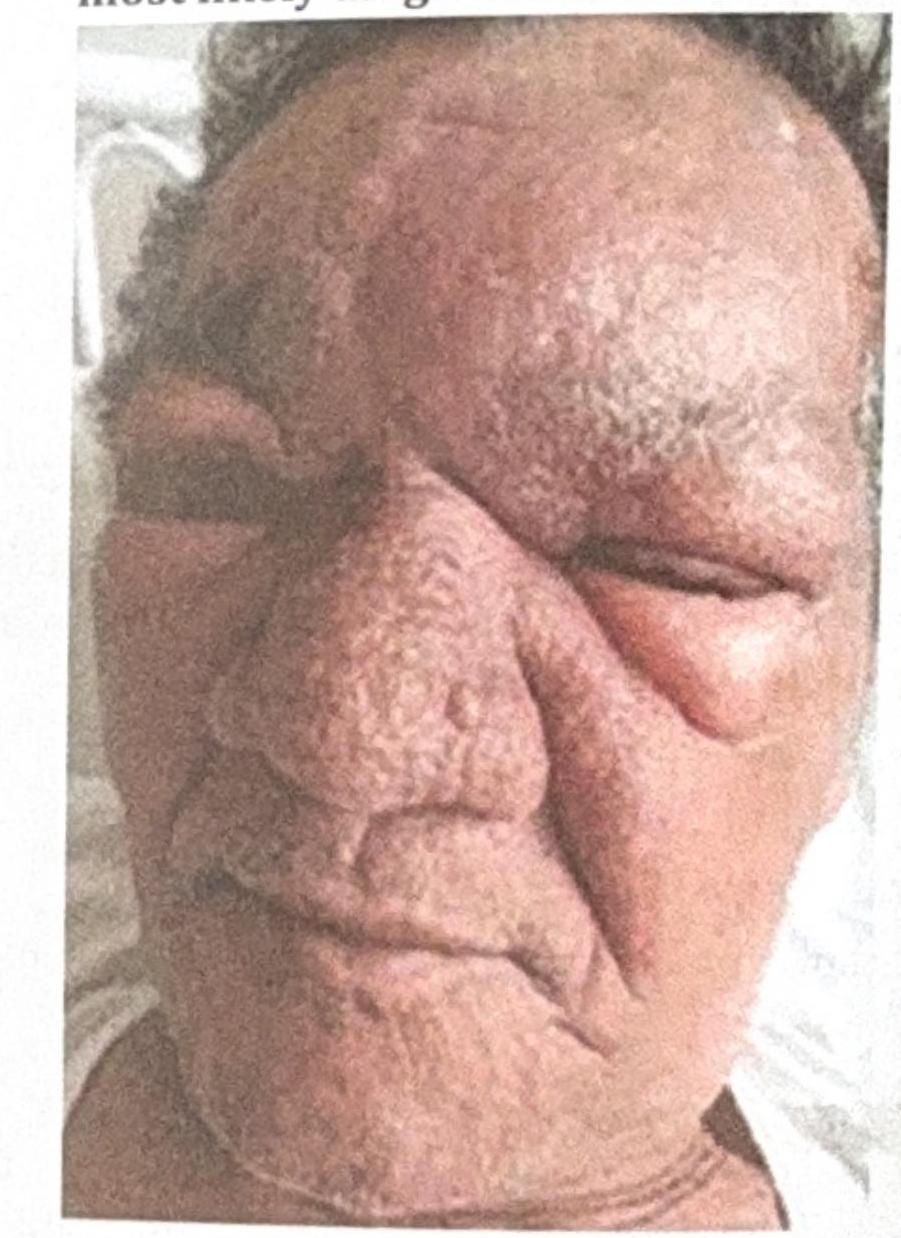
Which of the following are clinical features of lepromatous leprosy?
A patient with leprosy presents with clumsiness of the hand due to ulnar nerve involvement. Palsy of which muscle group would cause this clumsiness?
A 20-year-old male from Jaipur presents with an erythematous lesion on his cheek with central crusting. What is the likely diagnosis?
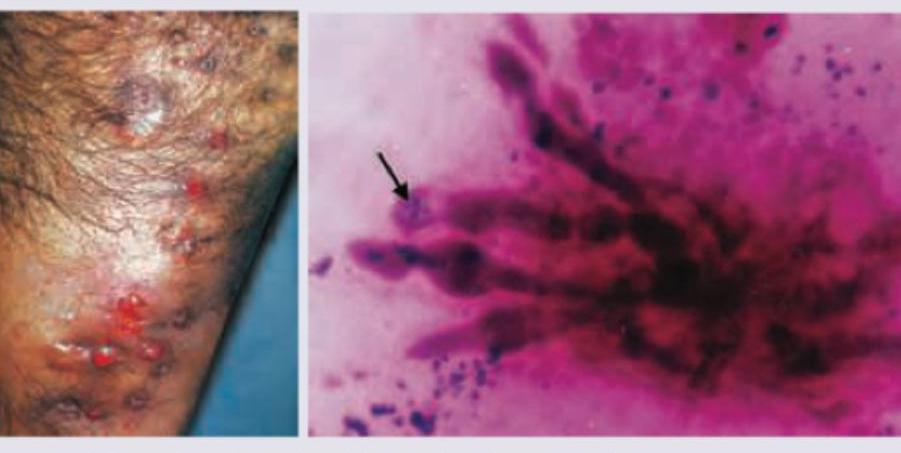
Which of the following is characteristic of donovanosis?
The inguinal region shown in the image is characteristic of which of the following conditions?

Explanation: **Explanation:** The clinical presentation of generalized, non-itchy papulo-nodular lesions in an adult, combined with a reactive VDRL, is classic for **Secondary Syphilis**. Known as the "Great Imitator," secondary syphilis typically presents with a polymorphic rash (macular, papular, or nodular) that characteristically involves the palms and soles. A VDRL titer of 1:2, while low, is significant in the context of suggestive clinical lesions. **Why the other options are incorrect:** * **Lepromatous Leprosy:** While it presents with generalized nodules, the **negative slit skin smear (SSS)** for Acid-Fast Bacilli (AFB) effectively rules this out, as lepromatous leprosy (multibacillary) would show a high bacterial index. * **Post Kala-Azar Dermal Leishmaniasis (PKDL):** This typically presents with hypopigmented macules, malar erythema, or nodules following an episode of Visceral Leishmaniasis. It would not cause a reactive VDRL. * **Drug Eruption:** These are usually acute in onset, often pruritic (itchy), and temporally related to drug intake. They do not explain the reactive syphilis serology. **High-Yield Clinical Pearls for NEET-PG:** * **Secondary Syphilis:** Always look for involvement of palms and soles, generalized lymphadenopathy (epitrochlear), and "moth-eaten" alopecia. * **Prozone Phenomenon:** In secondary syphilis, very high antibody titers can sometimes cause a false-negative VDRL result; the serum must be diluted to get a positive result. * **VDRL vs. TPHA:** VDRL is a non-specific screening test (titer reflects disease activity), while TPHA/FTA-ABS are specific treponemal tests that remain positive for life.
Explanation: **Explanation:** **Erythema Nodosum Leprosum (ENL)**, also known as a **Type 2 Lepra Reaction**, is a classic example of a **Type III hypersensitivity reaction** (immune-complex mediated). It occurs due to the deposition of antigen-antibody complexes in tissues, leading to systemic inflammation. 1. **Why Lepromatous (Option A) is correct:** ENL occurs almost exclusively in patients with a high bacterial load (multibacillary) and high humoral (antibody) response. It is most commonly seen in **Lepromatous Leprosy (LL)** and sometimes in **Borderline Lepromatous (BL)** leprosy. It is triggered by the rapid killing of *M. leprae* (often after starting MDT), which releases large amounts of fragmented bacterial antigens into the bloodstream. 2. **Why other options are incorrect:** * **Tuberculoid (TT) and Borderline Tuberculoid (BT):** These are paucibacillary forms with high cell-mediated immunity (CMI) and very low bacterial load. Type 2 reactions (ENL) do not occur here; instead, these patients are prone to **Type 1 Lepra Reactions** (Delayed Hypersensitivity). * **Borderline (BB):** While borderline cases can shift, ENL is specifically associated with the "lepromatous end" of the spectrum where the bacillary index is high. **Clinical Pearls for NEET-PG:** * **Clinical Features:** Characterized by sudden onset of tender, evanescent, erythematous nodules, high-grade fever, malaise, and systemic involvement (neuritis, orchitis, iridocyclitis, and glomerulonephritis). * **Drug of Choice:** **Thalidomide** is the most effective treatment for ENL. Systemic corticosteroids and Clofazimine are also used. * **Timing:** Unlike Type 1 reactions (which occur early), ENL typically occurs later in the course of treatment.
Explanation: ### **Explanation: Mycetoma** **1. Why Option D is the Correct Answer (False Statement):** Mycetoma is **not uncommon** in India. In fact, India is part of the global "Mycetoma Belt" (along with Sudan, Mexico, and Venezuela). It is an endemic chronic granulomatous infection frequently seen in the tropical and subtropical regions of India, particularly among rural laborers and farmers in states like Rajasthan, Tamil Nadu, and West Bengal. **2. Analysis of Incorrect Options (True Statements):** * **Option A:** While the foot is the most common site (Madura foot), mycetoma can affect any part of the body exposed to soil, including the **lower extremities, upper extremities (hands/shoulders), and the back**. * **Option B:** Mycetoma is classified into two types based on the causative agent: **Actinomycetoma** (caused by filamentous bacteria like *Nocardia* and *Actinomadura*) and **Eumycetoma** (caused by true fungi like *Madurella mycetomatis*). * **Option C:** Diagnosis is primarily clinical, characterized by the **triad of tumefaction (swelling), draining sinuses, and the presence of grains**. Examining the pus or discharge for these characteristic grains (color, size, and consistency) is a crucial diagnostic step. **3. High-Yield Clinical Pearls for NEET-PG:** * **The Triad:** Localized swelling + Multiple discharging sinuses + Grains. * **Grains as Clues:** * **Yellow/White grains:** Usually Actinomycetoma (e.g., *Nocardia*). * **Black grains:** Usually Eumycetoma (e.g., *Madurella*). * **Red grains:** Pathognomonic for *Actinomadura pelletieri*. * **Radiology:** The **"Dot-in-circle" sign** on MRI is a highly specific diagnostic feature. * **Treatment:** Actinomycetoma responds well to antibiotics (e.g., **Welsh Regime**: Amikacin + Cotrimoxazole), whereas Eumycetoma requires long-term antifungals (Itraconazole) and often surgical debridement.
Explanation: ### **Explanation** The clinical presentation describes a **Type 1 Lepra Reaction (Reversal Reaction)**. This is a delayed hypersensitivity (Type IV) reaction occurring in borderline cases (BT, BB, BL) due to an increase in cell-mediated immunity. It typically presents with acute inflammation of existing skin lesions (erythema, edema) and neuritis (nerve pain and tenderness). #### **Why "Stop anti-leprosy drugs" is the Correct Answer (The "Except" Option):** In both Type 1 and Type 2 lepra reactions, **Multidrug Therapy (MDT) must never be stopped.** The reaction is an immunological phenomenon, not a drug allergy or a sign of treatment failure. Stopping MDT would allow the *M. leprae* bacilli to multiply, potentially worsening the patient's long-term prognosis and increasing the risk of drug resistance. #### **Why the Other Options are Incorrect (Standard Management):** * **Systemic Corticosteroids (Option B):** These are the **drug of choice** for Type 1 reactions, especially when there is nerve involvement (neuritis). They suppress the exaggerated immune response and prevent permanent nerve damage. * **Rest to the affected limbs (Option C):** Splinting or resting the limb involved by an inflamed nerve is essential to prevent further mechanical trauma and permanent paralysis. * **Analgesics (Option D):** Used as supportive therapy to manage the acute pain associated with neuritis and skin inflammation. --- ### **NEET-PG High-Yield Pearls** * **Type 1 Reaction:** Seen in Borderline leprosy; characterized by "upgrading" (moving toward TT) or "downgrading" (moving toward LL) of immunity. * **Type 2 Reaction (ENL):** A Type III hypersensitivity (immune-complex mediated) seen in BL and LL. Presents with tender evanescent nodules, fever, and systemic features. * **Drug of Choice for Type 2:** Thalidomide (if not contraindicated) or high-dose steroids. * **Golden Rule:** **Never stop MDT during any lepra reaction.**
Explanation: **Explanation:** **Hansen’s Disease (Leprosy)** is a chronic infectious disease caused by *Mycobacterium leprae*, which has a unique predilection for peripheral nerves. The bacteria prefer cooler temperatures, which is why they primarily affect superficial nerve trunks located near the skin surface. **Why the Ulnar Nerve is Correct:** The **ulnar nerve** is the most commonly affected peripheral nerve in leprosy. At the elbow, it passes through the **cubital tunnel** (behind the medial epicondyle), where it is superficial and subject to lower temperatures. This environment facilitates the proliferation of *M. leprae*, leading to nerve thickening (neuritis) and subsequent motor/sensory loss. Involvement here typically results in a "Claw Hand" deformity (specifically the ring and little fingers). **Analysis of Incorrect Options:** * **Median Nerve:** While frequently involved in leprosy, it is typically affected at the **wrist** (within the carpal tunnel), not the elbow. Its involvement leads to "Ape Thumb" deformity. * **Radial Nerve:** This nerve is less commonly affected than the ulnar or median nerves. When involved, it usually occurs in the **radial groove** of the humerus, leading to "Wrist Drop." * **Musculocutaneous Nerve:** This nerve is rarely involved in leprosy as it is deeply situated within the musculature of the arm. **High-Yield Clinical Pearls for NEET-PG:** * **Most common nerve involved in Leprosy:** Ulnar nerve. * **Most common nerve involved in the Lower Limb:** Common Peroneal Nerve (leads to Foot Drop). * **Nerve thickening:** Always palpate the nerve proximal to the site of entrapment (e.g., palpate the ulnar nerve just above the medial epicondyle). * **Facial Nerve:** The most common cranial nerve involved, leading to Lagophthalmos. * **Great Auricular Nerve:** Often visibly thickened in the neck; it is a purely sensory nerve.
Explanation: In Lepromatous Leprosy (LL), the cell-mediated immunity (CMI) is severely depressed, leading to uncontrolled multiplication of *Mycobacterium leprae* and widespread systemic involvement. **Explanation of Clinical Features:** * **Leonine Facies:** This is a hallmark of advanced LL. It results from diffuse infiltration of the facial skin by lepromas, leading to thickening of the forehead, prominence of the supraorbital ridges, and pendulous earlobes, giving the patient a "lion-like" appearance. * **Loss of Libido and Impotence:** Unlike Tuberculoid leprosy, LL involves internal organs. The bacilli directly invade the testes (orchitis), leading to testicular atrophy. This results in primary hypogonadism, causing loss of libido, impotence, and gynecomastia. * **Saddle Nose:** The bacilli frequently involve the nasal mucosa and the cartilaginous septum. Chronic inflammation leads to perforation of the nasal septum and collapse of the nasal bridge, resulting in the characteristic "saddle nose" deformity. **Why "All the above" is correct:** Since LL is a multi-systemic disease characterized by high bacillary load (multibacillary), it manifests through cutaneous infiltration (Leonine facies), mucosal destruction (Saddle nose), and endocrine dysfunction (Impotence). **High-Yield Clinical Pearls for NEET-PG:** * **Madarosis:** Loss of the lateral one-third of the eyebrows is a classic early sign of LL. * **Glove and Stocking Anesthesia:** LL presents with symmetrical sensory loss in the distal extremities. * **Bacteriological Index (BI):** In LL, the BI is typically high (4+ to 6+). * **Lepromin Test:** Always **negative** in Lepromatous Leprosy due to the absence of CMI. * **Histopathology:** Shows a "Grenz Zone" (a subepidermal clear zone) and Virchow cells (foamy macrophages).
Explanation: **Explanation:** In leprosy (Hansen’s disease), the **ulnar nerve** is the most commonly involved peripheral nerve. Clumsiness of the hand in ulnar nerve palsy is primarily due to the paralysis of the **interosseous muscles** (both dorsal and palmar) and the **medial two lumbricals**. These muscles are responsible for the fine, coordinated movements of the fingers. Loss of the interossei leads to a loss of finger abduction/adduction and a weakened "precision grip," resulting in the characteristic clumsiness. **Analysis of Options:** * **Interosseous muscles (Correct):** Supplied by the deep branch of the ulnar nerve. Their paralysis leads to "guttering" (atrophy of intermetacarpal spaces) and loss of fine motor control. * **Extensor carpi ulnaris (Incorrect):** This muscle is supplied by the **posterior interosseous nerve** (a branch of the radial nerve). Its involvement would affect wrist extension and ulnar deviation, not intrinsic hand coordination. * **Abductor pollicis brevis & Opponens pollicis (Incorrect):** These are muscles of the thenar eminence, which are supplied by the **median nerve**. Their involvement would lead to "Ape thumb deformity" rather than ulnar-related clumsiness. **High-Yield Clinical Pearls for NEET-PG:** * **Ulnar Claw Hand:** Characterized by hyperextension at the MCP joints and flexion at the IP joints of the 4th and 5th digits. * **Froment’s Sign:** A positive test indicates ulnar nerve palsy due to paralysis of the **Adductor pollicis** (the patient flexes the thumb IP joint using the median nerve-supplied FPL to grip paper). * **Nerve Thickening:** In leprosy, the ulnar nerve is typically palpated just above the medial epicondyle of the humerus. * **Ulnar Paradox:** A high ulnar nerve lesion (at the elbow) results in a *less* prominent clawing than a low lesion (at the wrist) because the medial half of the FDP is also paralyzed.
Explanation: ### **Explanation** **Correct Answer: D. Cutaneous Leishmaniasis** **Medical Concept:** The diagnosis is based on the classic clinical presentation and geographical context. Jaipur (Rajasthan) is a known endemic belt for **Cutaneous Leishmaniasis (CL)** in India, caused primarily by *Leishmania tropica*. The typical lesion starts as a papule that evolves into a "volcano-like" ulcer or an erythematous plaque with **central crusting** (often called the "Oriental Sore"). The presence of a chronic, painless, crusted lesion on exposed areas like the cheek in a young patient from an endemic zone is highly suggestive of CL. **Why other options are incorrect:** * **A. Systemic Lupus Erythematosus (SLE):** While SLE presents with a malar rash, it is typically a transient or persistent photosensitive erythema (butterfly distribution) without central crusting or ulceration. * **B. Lupus Vulgaris:** This is a form of cutaneous tuberculosis. It typically presents as "apple-jelly" nodules on diascopy and progresses slowly with peripheral expansion and central scarring, rather than acute crusting. * **C. Chilblain:** These are localized inflammatory lesions (perniosis) resulting from exposure to cold. They usually occur on acral areas (fingers/toes) and are unlikely to present as a solitary crusted cheek lesion in the climate of Jaipur. **NEET-PG High-Yield Pearls:** * **Vector:** Sandfly (*Phlebotomus papatasi*). * **Diagnosis:** Skin smear (Giemsa stain) shows **LD bodies** (Amastigote form) within macrophages. * **Leishmanin (Montenegro) Test:** Positive in Cutaneous Leishmaniasis but **negative** in Visceral Leishmaniasis (Kala-azar). * **Treatment of Choice:** Sodium Stibogluconate (Pentavalent antimonials) or Miltefosine. * **Key Sign:** "Volcano sign" (ulcer with raised dusky red borders).
Explanation: **Donovanosis (Granuloma Inguinale)** is a chronic, progressive bacterial infection caused by the intracellular Gram-negative organism *Klebsiella granulomatis*. ### **Explanation of Options** * **A. Pseudolymphadenopathy (Correct):** This is the hallmark of donovanosis. Unlike other STIs, the infection does not involve the regional lymph nodes. Instead, it causes subcutaneous granulation tissue to build up in the inguinal region, creating a bulge that mimics a bubo. This is termed a **"pseudobubo."** * **B. Penicillin is used for treatment:** Penicillin is ineffective. The WHO and CDC recommend **Azithromycin** (1g weekly or 500mg daily) for at least 3 weeks or until lesions have completely healed. * **C. Painful ulcer:** Donovanosis is classically characterized by **painless**, beefy-red, friable (bleeds easily on touch) ulcers with rolled-out edges. Pain only occurs if there is secondary bacterial infection. * **D. Suppurative lymphadenopathy:** This is characteristic of *Lymphogranuloma Venereum (LGV)* or *Chancroid*. In Donovanosis, there is no true lymphadenopathy. ### **High-Yield Clinical Pearls for NEET-PG** * **Causative Agent:** *Klebsiella granulomatis* (formerly *Calymmatobacterium granulomatis*). * **Diagnosis:** Identification of **Donovan Bodies** (safety-pin appearance) within large mononuclear cells (macrophages) on a Giemsa or Wright stain of a tissue smear. * **Clinical Appearance:** "Beefy red" granulation tissue; highly vascular; often described as "serpiginous" ulcers. * **Key Differentiator:** It is one of the few causes of **painless** genital ulcers (alongside primary Syphilis), but unlike Syphilis, the base is highly vascular and bleeds easily.
Explanation: ***Lymphogranuloma venereum*** - The **inguinal groove sign (Greenblatt's sign)** - bilateral inguinal and femoral lymphadenopathy separated by the inguinal ligament - is **pathognomonic** for LGV. - Caused by **Chlamydia trachomatis serovars L1-L3**, it presents with painful, matted lymph nodes that may rupture and form **buboes**. *Chancroid* - Caused by **Haemophilus ducreyi**, typically presents with **painful genital ulcers** and **unilateral inguinal lymphadenopathy**. - Lymph nodes are usually **suppurative** but do not show the characteristic groove sign seen in LGV. *Syphilis* - Primary syphilis causes a **painless chancre** with **painless, non-suppurative lymphadenopathy** that is typically **bilateral but not matted**. - The **inguinal groove sign is absent** in syphilis, and lymph nodes remain discrete and non-tender. *Granuloma inguinale* - Caused by **Klebsiella pneumoniae subsp. pneumoniae**, it presents with **chronic, progressive genital ulceration** without significant lymphadenopathy. - **Pseudobuboes** (subcutaneous granulomatous nodules) may occur but **true lymphadenopathy is rare**, making the groove sign absent.
Cutaneous Leishmaniasis
Practice Questions
Leprosy
Practice Questions
Tropical Ulcers
Practice Questions
Onchocerciasis
Practice Questions
Filariasis
Practice Questions
Tropical Mycoses
Practice Questions
Cutaneous Larva Migrans
Practice Questions
Tungiasis
Practice Questions
Myiasis
Practice Questions
Cutaneous Manifestations of Malaria
Practice Questions
Dengue and Other Viral Hemorrhagic Fevers
Practice Questions
Global Health Perspectives in Dermatology
Practice Questions
Get full access to all questions, explanations, and performance tracking.
Start For Free