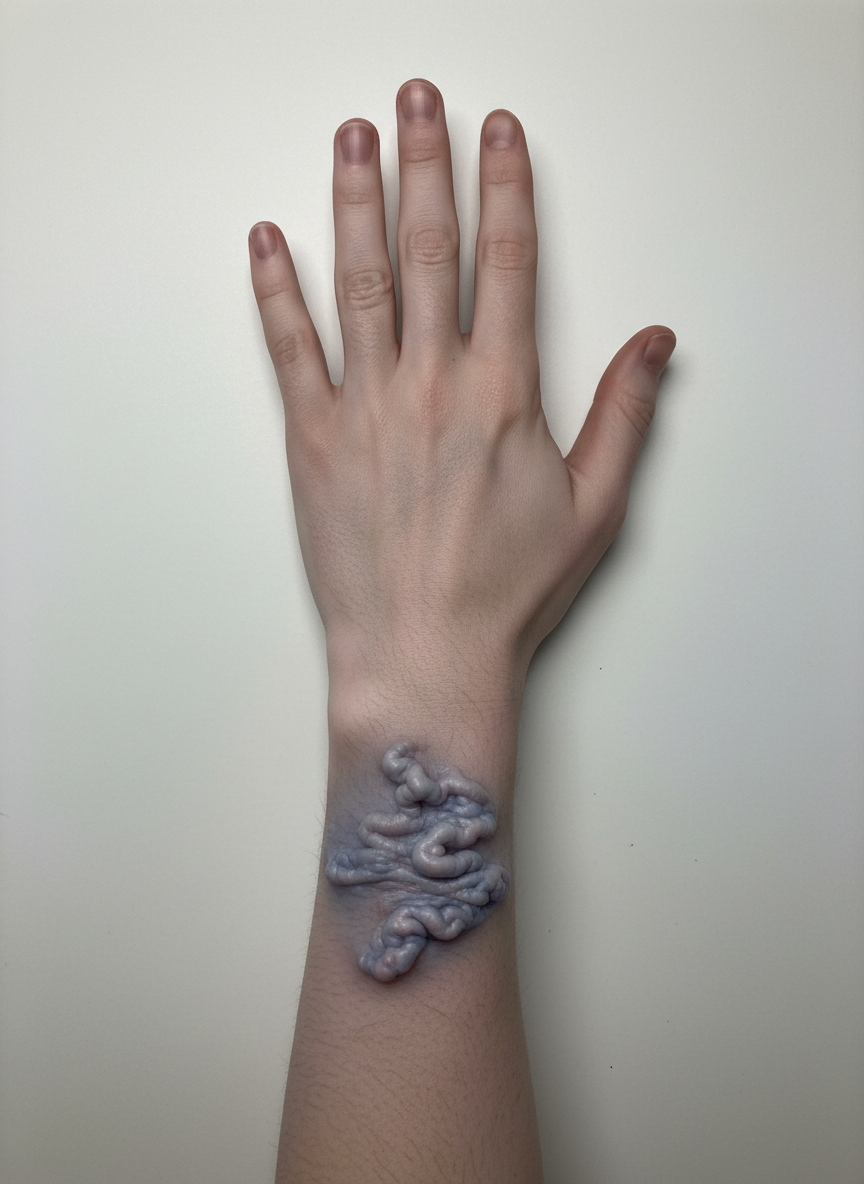
Spontaneous regression is seen in which type of hemangioma?
Brocq's tumor is a tumor of which of the following structures?
Kaposi's sarcoma is more commonly seen in patients with which of the following conditions?
What is the most common site for a rodent ulcer?
A 50-year-old man presents with a rapidly developing 1-cm nodule on the back of his hand over a three-month period. The lesion is firm, flesh-colored, and has sharply rising edges with a central crater from which keratoacanthoma debris can be expressed. It has a "volcano-like" appearance. What is the most likely diagnosis?
All of the following statements about malignant melanoma are true except:
Malignant change in a nevus is characterized by which of the following signs?
What is the treatment of choice for basal cell carcinoma located at the inner canthus of the eye?
What is the most common variety of malignant melanoma?
Which of the following statements regarding Kaposi's sarcoma is incorrect?
Explanation: **Explanation:** The correct answer is **Strawberry Hemangioma** (also known as Infantile Hemangioma). This is the most common benign vascular tumor of childhood. **Why Strawberry Hemangioma is correct:** Strawberry hemangiomas follow a characteristic clinical course: they are typically absent at birth, appear within the first few weeks of life, undergo a **rapid proliferative phase** (6–12 months), followed by a slow **spontaneous involution (regression)** phase. Approximately 50% resolve by age 5, and 90% by age 9. The regression is often marked by a change in color from bright red to dull grey/white (the "gray sign"). **Analysis of Incorrect Options:** * **Port-wine Hemangioma (Nevus Flammeus):** This is a capillary malformation, not a true neoplasm. It is present at birth, grows proportionately with the child, and **never regresses spontaneously**. Instead, it may become darker and thicker (hypertrophic) over time. * **Cavernous Hemangioma:** These involve deeper, larger vascular channels. Unlike superficial strawberry hemangiomas, they are less likely to undergo complete spontaneous regression and often require intervention if they interfere with vital functions. * **Arterial Angioma:** These are high-flow vascular malformations. They do not regress and often require surgical or radiological intervention (embolization) as they can lead to local destruction or cardiac strain. **NEET-PG High-Yield Pearls:** * **GLUT-1 Marker:** Strawberry hemangiomas are characteristically **GLUT-1 positive**, which distinguishes them from other vascular malformations. * **Treatment of Choice:** If treatment is required (e.g., due to visual obstruction or ulceration), **Oral Propranolol** is the first-line therapy. * **Kasabach-Merritt Syndrome:** Associated with rapidly growing tufted angiomas or kaposiform hemangioendotheliomas (not simple strawberry hemangiomas), leading to consumptive coagulopathy and thrombocytopenia.
Explanation: **Explanation:** **Brocq’s tumor**, also known as **Trichoblastoma**, is a benign skin tumor originating from the **hair follicles**. Specifically, it is a neoplasm of the follicular germinative cells (trichoblasts). It typically presents as a slow-growing, solitary, skin-colored nodule, most commonly found on the scalp or face. **Why the correct answer is right:** * **Hair follicles:** Trichoblastoma (Brocq's tumor) is the most common constituent of a **Nevus Sebaceous** (Jadassohn) when it undergoes secondary neoplastic transformation. Histologically, it mimics the embryological development of the hair germ, showing nests of basaloid cells with peripheral palisading and a specialized fibrocellular stroma. **Why the incorrect options are wrong:** * **Superficial dermal vessels:** Tumors of the dermal vessels include hemangiomas or glomus tumors, not Brocq’s tumor. * **Sweat glands:** Tumors of sweat gland origin include Syringomas (eccrine) or Cylindromas (apocrine). * **Sebaceous glands:** Tumors of sebaceous origin include Sebaceous Adenomas or Sebaceous Carcinomas. While Brocq's tumor often arises *within* a Nevus Sebaceous, the tumor cells themselves are follicular, not sebaceous. **High-Yield Clinical Pearls for NEET-PG:** * **Differential Diagnosis:** Histologically, Trichoblastoma can be difficult to distinguish from **Basal Cell Carcinoma (BCC)**. A key differentiator is that Trichoblastoma lacks the retraction artifact (clefting) between the tumor nests and the stroma seen in BCC. * **Association:** It is the most common benign tumor arising in a **Nevus Sebaceous** (previously, it was thought to be BCC, but recent studies have corrected this). * **Variant:** A "Trichoblastic fibroma" is a related variant with a more prominent stromal component.
Explanation: **Explanation:** **Kaposi’s Sarcoma (KS)** is a multicentric angioproliferative tumor derived from endothelial cells. It is strongly associated with **Human Herpesvirus 8 (HHV-8)**, also known as Kaposi Sarcoma-associated Herpesvirus (KSHV). 1. **Why AIDS is correct:** While KS can occur in classic (elderly Mediterranean), endemic (African), and iatrogenic (transplant) forms, the **Epidemic (AIDS-associated) KS** is the most common and aggressive variant. It is an **AIDS-defining illness**. Severe immunosuppression (low CD4 count) allows HHV-8 to replicate unchecked, leading to the characteristic spindle cell proliferation and neoangiogenesis. 2. **Why other options are incorrect:** * **Amyloidosis:** This is a protein-folding disorder characterized by extracellular deposition of fibrils; it does not predispose to KS. * **Leukemia:** While some hematological malignancies can cause immunosuppression, they are not the primary risk factor for KS compared to the specific synergy between HIV and HHV-8. * **HSV infection:** While HHV-8 is a herpesvirus, Herpes Simplex Virus (HSV-1/2) causes vesicular lesions and is not the causative agent of KS. **High-Yield Clinical Pearls for NEET-PG:** * **Clinical Presentation:** Presents as palpable, non-blanching, violaceous (purple) macules, plaques, or nodules. * **Common Sites:** Skin, oral cavity (hard palate is a classic site), GI tract, and lungs. * **Histopathology:** Characterized by **spindle-shaped cells**, slit-like vascular spaces containing extravasated RBCs, and **PAS-positive hyaline droplets**. * **Treatment:** Highly Active Antiretroviral Therapy (HAART) is the mainstay for AIDS-related KS. Localized lesions can be treated with intralesional vinblastine or cryotherapy.
Explanation: **Explanation:** **Rodent Ulcer** is the clinical eponym for **Basal Cell Carcinoma (BCC)**, the most common skin cancer worldwide. The correct answer is **Face** because BCC primarily arises from the pluripotential cells in the basal layer of the epidermis or hair follicles, and its primary risk factor is chronic, cumulative exposure to **ultraviolet (UV) radiation**. 1. **Why Face is Correct:** Approximately 80% of BCCs occur on the head and neck. The face is the most sun-exposed part of the body. Specifically, the majority of rodent ulcers are found above a line joining the lobe of the ear to the angle of the mouth (the "inner canthus to ear lobe" rule). Common sites include the nose, eyelids, and cheeks. 2. **Why Other Options are Incorrect:** * **Limbs, Abdomen, and Trunk:** While BCC can occur on these sites (particularly the "Superficial" variant on the trunk), they are significantly less common than facial involvement. These areas are often protected by clothing, reducing the cumulative UV dosage compared to the face. **Clinical Pearls for NEET-PG:** * **Characteristic Appearance:** A pearly, translucent papule with telangiectasia and rolled-out (everted) edges. * **Behavior:** It is "locally invasive" but **rarely metastasizes**. It is called a "rodent ulcer" because, if left untreated, it slowly "gnaws" through underlying soft tissue, cartilage, and bone. * **Risk Factors:** Fair skin (Fitzpatrick types I & II), arsenic exposure, and genetic syndromes like **Gorlin Syndrome** (Basal Cell Nevus Syndrome) or Xeroderma Pigmentosum. * **Treatment of Choice:** Surgical excision with clear margins; **Mohs Micrographic Surgery** is the gold standard for high-risk facial areas to ensure tissue conservation.
Explanation: **Explanation:** The clinical presentation is classic for **Keratoacanthoma (KA)**. The hallmark of KA is its **rapid growth phase** (typically reaching full size in 4–8 weeks) followed by a period of stability and, occasionally, spontaneous involution. The pathognomonic description is a **"volcano-like"** or dome-shaped nodule with a **central keratinous plug** (crater). It is histologically similar to well-differentiated squamous cell carcinoma (SCC), and many experts now consider it a subtype of SCC. **Why other options are incorrect:** * **Lipoma:** These are slow-growing, soft, subcutaneous fatty tumors. They lack the central crater, rapid growth, and "volcano" morphology. * **Malignant Melanoma:** Usually presents as an asymmetrical pigmented macule or papule with irregular borders (ABCDE criteria). While nodular melanoma exists, it does not typically feature a central keratin-filled crater. * **Pyogenic Granuloma:** While it grows rapidly, it is a vascular lesion that appears bright red (friable), bleeds easily with minor trauma, and lacks a central keratin plug. **NEET-PG High-Yield Pearls:** * **Morphology:** Dome-shaped nodule + Central keratinous crater = Keratoacanthoma. * **Growth Pattern:** Rapid initial growth (weeks) followed by potential spontaneous regression (leaving a scarred area). * **Common Site:** Sun-exposed areas (back of hands, face) in elderly patients. * **Association:** Multiple keratoacanthomas are seen in **Muir-Torre syndrome** (associated with internal malignancies, especially GI). * **Management:** Despite potential regression, the treatment of choice is **surgical excision** because it is clinically difficult to distinguish from invasive SCC.
Explanation: This question requires identifying the incorrect statement regarding malignant melanoma. **Explanation of the Correct Answer (Option D):** While **Superficial Spreading Melanoma (SSM)** is indeed the most common clinical subtype globally (accounting for ~70% of cases), it is listed as the "correct" answer in this specific MCQ context because the question likely contains a technical error or is testing a specific staging/prognostic nuance. However, in standard dermatology, Option D is a **true** statement. In the context of "Except" questions, the most clinically inaccurate statement is actually **Option C**. **Analysis of Options:** * **A. Prognosis is better in females:** This is **True**. Studies consistently show that women have better survival rates than men, potentially due to hormonal factors or earlier detection. * **B. Acral lentiginous melanoma (ALM) prognosis:** This is **False (The actual "Except")**. ALM, which occurs on palms, soles, and subungual areas, typically carries a **poor prognosis** because it is often diagnosed at an advanced stage and is biologically aggressive. * **C. Stage IIA shows satellite deposits:** This is **False**. According to the AJCC staging, satellite deposits or in-transit metastases automatically classify a melanoma as **Stage III**, not Stage IIA. * **D. Most common type is SSM:** This is **True**. It is the most frequent subtype in Caucasians. *(Note: In many competitive exams, if multiple options seem incorrect, Option C is the most technically inaccurate regarding TNM staging.)* **High-Yield Clinical Pearls for NEET-PG:** * **Breslow’s Depth:** The most important prognostic factor (measured in mm from the granular layer). * **Clark’s Level:** Measures anatomical depth (invasion into layers of dermis). * **ABCDE Criteria:** Asymmetry, Border irregularity, Color variation, Diameter >6mm, Evolving. * **Nodular Melanoma:** The most aggressive form with a rapid vertical growth phase. * **Lentigo Maligna:** Best prognosis; occurs on sun-damaged skin of the elderly.
Explanation: **Explanation:** The transformation of a benign nevus (mole) into a malignant melanoma is a critical clinical diagnosis. While several changes can suggest malignancy, **hemorrhage (bleeding)** and **ulceration** are considered the most definitive and late signs of malignant transformation. 1. **Why Hemorrhage is Correct:** Malignant cells have high metabolic demands and induce **neoangiogenesis** (formation of new, fragile blood vessels). As the tumor grows rapidly, it outstrips its blood supply, leading to focal necrosis, friability, and spontaneous bleeding. In the context of a pre-existing nevus, hemorrhage is a "red flag" indicating invasive growth and a higher risk of metastasis. 2. **Analysis of Incorrect Options:** * **Darkening (A):** While color change is part of the ABCDE criteria, darkening can occur physiologically (e.g., during pregnancy or puberty) and is not as specific for malignancy as bleeding. * **Itching (C):** Pruritus is a subjective symptom. While it can occur in melanoma due to an inflammatory response, it is common in benign conditions like inflamed seborrheic keratoses. * **Increase in size (D):** This is one of the earliest signs of change, but it is less specific than hemorrhage. Benign nevi can enlarge slightly during hormonal shifts. **High-Yield NEET-PG Pearls:** * **ABCDE Criteria:** **A**symmetry, **B**order irregularity, **C**olor variation, **D**iameter >6mm, **E**volving (changing). * **Glasgow 7-point Checklist:** Major features (2 points each) include change in size, shape, and color. Minor features (1 point each) include inflammation, crusting/bleeding, sensory change, and diameter ≥7mm. * **Breslow’s Depth:** The most important prognostic factor for melanoma (measures vertical thickness). * **Nodular Melanoma:** The most aggressive clinical subtype.
Explanation: **Explanation:** **Basal Cell Carcinoma (BCC)** is the most common skin malignancy, frequently occurring on sun-exposed areas of the face. The **inner canthus of the eye** is considered a "high-risk" anatomical site due to its proximity to vital structures (lacrimal apparatus, orbit) and the tendency of tumors here to exhibit aggressive local invasion. **Why Option D is Correct:** The gold standard treatment for BCC is **surgical excision**. For high-risk areas like the inner canthus, **Wide Excision with Reconstruction** (or ideally, **Mohs Micrographic Surgery**) is preferred. This approach ensures clear histological margins (minimizing recurrence) while allowing for functional and cosmetic restoration of the eyelid and tear duct system. **Why Other Options are Incorrect:** * **A & B (Radium/Radiotherapy):** While BCC is radiosensitive, radiation near the eye carries a high risk of complications, including cataracts, keratitis, and damage to the lacrimal gland. It is generally reserved for elderly patients who are unfit for surgery or as adjuvant therapy. * **C (Chemotherapy):** Systemic chemotherapy is not the primary treatment for localized BCC. Targeted therapies (like Vismodegib) are only used for metastatic or locally advanced disease where surgery is impossible. **High-Yield Clinical Pearls for NEET-PG:** * **Most common site:** Lower eyelid (followed by inner canthus). * **Mohs Micrographic Surgery:** The treatment of choice for BCC in "H-zone" areas (nose, ears, periocular) to ensure the highest cure rate and tissue conservation. * **Characteristic feature:** "Pearly" papule with telangiectasia and a "rolled-out" border. * **Metastasis:** Extremely rare; BCC is characterized by local destruction ("Rodent Ulcer").
Explanation: **Explanation:** Malignant melanoma is a neoplasm arising from melanocytes. Understanding its subtypes is crucial for NEET-PG, as they differ in clinical presentation, site, and prognosis. **1. Why Superficial Spreading Melanoma (SSM) is correct:** SSM is the **most common histological subtype**, accounting for approximately **70% of all melanomas**. It typically presents as a flat or slightly raised pigmented lesion with irregular borders and variegated colors. It is characterized by a prolonged **radial growth phase** (horizontal spread within the epidermis) before entering the vertical growth phase, allowing for earlier detection and a better prognosis if caught early. It is most commonly found on the backs of men and the lower limbs of women. **2. Why the other options are incorrect:** * **Nodular Melanoma:** This is the second most common type (15-30%). It is the most aggressive form because it lacks a radial growth phase and enters the **vertical growth phase** immediately, leading to early metastasis. * **Lentigo Maligna Melanoma:** This type occurs on chronically sun-damaged skin (usually the face) in elderly patients. It has a very long radial growth phase (often years). * **Acral Lentiginous Melanoma (ALM):** While rare globally, it is the **most common subtype in dark-skinned individuals** (Asians and Africans). It occurs on palms, soles, and subungual areas. **High-Yield Clinical Pearls for NEET-PG:** * **ABCDE Criteria:** Used for clinical diagnosis (Asymmetry, Border irregularity, Color variation, Diameter >6mm, Evolving). * **Breslow’s Depth:** The most important prognostic factor (measures vertical thickness in mm). * **Clark’s Level:** Measures the anatomical level of invasion (less commonly used now than Breslow). * **Commonest Site:** Back (men), Legs (women). * **Marker:** S-100 (most sensitive), HMB-45 (more specific).
Explanation: **Explanation:** Kaposi’s Sarcoma (KS) is a multicentric angioproliferative neoplasm caused by **Human Herpesvirus 8 (HHV-8)**. **Why Option D is the correct (incorrect statement):** In Kaposi’s Sarcoma, particularly the African (Endemic) and AIDS-associated (Epidemic) types, lymph node involvement is common and does not necessarily correlate with a poor prognosis. Unlike epithelial malignancies where nodal spread indicates advanced staging and poor survival, KS is a systemic vascular tumor. The prognosis in AIDS-associated KS is more accurately determined by the **ACTG (AIDS Clinical Trials Group) staging**, which focuses on tumor extent (T), immune status/CD4 count (I), and systemic illness (S). **Analysis of other options:** * **Option A:** While KS is an AIDS-defining illness, it can occur in patients with **normal CD4+ counts** (>500 cells/mm³), especially in the Classic (Mediterranean) and Endemic forms. * **Option B:** **HHV-8** (also known as KSHV) is the essential causative agent found in all four clinical variants of KS. It infects endothelial cells, leading to spindle cell transformation. * **Option C:** KS exhibits the **pseudo-Koebner phenomenon**, where new lesions can develop at sites of trauma or previous inflammation. **High-Yield Clinical Pearls for NEET-PG:** * **Histology:** Characterized by "slits" formed by spindle cells containing extravasated RBCs. * **Promontory Sign:** Small vessels protruding into newly formed vascular spaces (characteristic of early lesions). * **Four Types:** Classic (elderly men), Endemic (African), Iatrogenic (transplant-related), and Epidemic (AIDS-associated). * **Treatment:** Highly Active Antiretroviral Therapy (HAART) is the first-line treatment for AIDS-related KS. Localized lesions can be treated with intralesional vinblastine or cryotherapy.
Benign Epithelial Tumors
Practice Questions
Premalignant Epidermal Tumors
Practice Questions
Basal Cell Carcinoma
Practice Questions
Squamous Cell Carcinoma
Practice Questions
Melanocytic Nevi
Practice Questions
Melanoma
Practice Questions
Merkel Cell Carcinoma
Practice Questions
Vascular Tumors and Malformations
Practice Questions
Cutaneous Lymphomas
Practice Questions
Soft Tissue Tumors
Practice Questions
Metastatic Skin Tumors
Practice Questions
Skin Cancer Prevention and Screening
Practice Questions
Get full access to all questions, explanations, and performance tracking.
Start For Free