A 38-year-old man presents with a solitary, firm, raised, reddish nodule on his back that has gradually increased in size over the past 8 months. Which condition is most likely?
A 55-year-old male presents with an ulcerative lesion on his leg that does not heal despite treatment. Which condition should be considered?
What is the most common type of cutaneous mastocytosis?
Acral lentiginous type of malignant melanoma occurs in -
Visual examination is used as a screening test for skin cancer in adults. Among the following skin lesions/cancers, which is considered most important to detect through this visual screening method?
What is the color of tuberous sclerosis lesions when examined under a Wood's lamp?
A male patient presented with a 0.3 cm nodule on the left nasolabial fold. A pathological examination revealed a basaloid appearance with peripheral palisading. What is the most likely diagnosis?
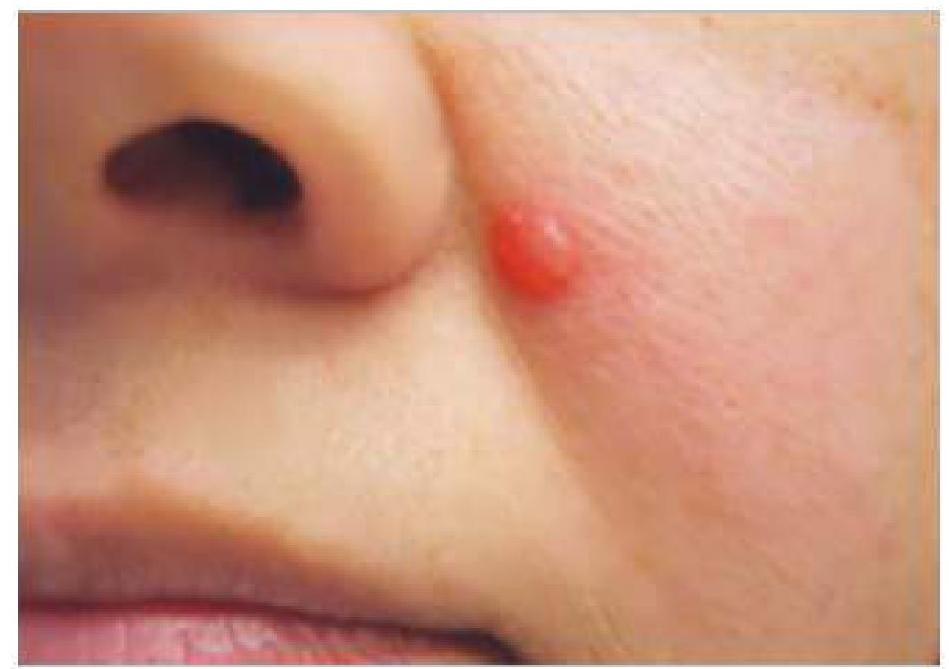
Elderly man with a long-standing mole on his face that is increasing in size and showing an irregular border. Diagnosis:
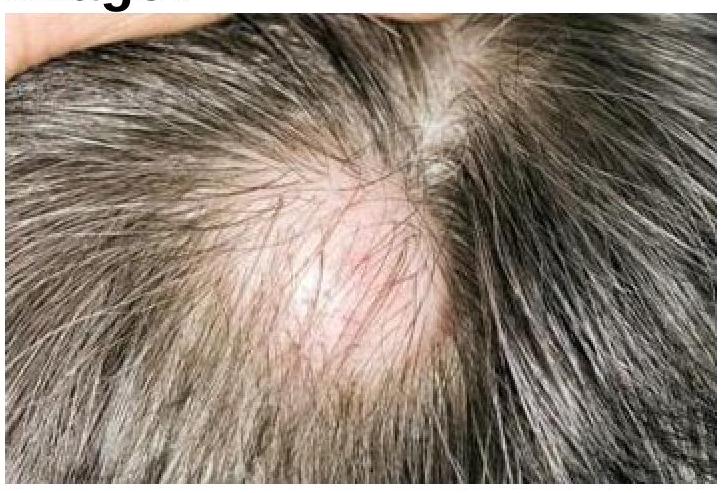
Identify the condition shown in the image.
Which of the following is the MOST significant risk factor for cutaneous lymphoma?
Explanation: ***Squamous cell carcinoma*** - The key feature here is a **solitary, firm, raised, reddish nodule** with **progressive growth over 8 months** in a 38-year-old man. - While SCC classically presents with **scaling and crusting**, it can also present as a **firm, reddish nodule**, especially in early stages before surface changes develop. - The **persistent and progressive enlargement** over 8 months is a red flag suggesting **malignant potential** rather than a benign process. - SCC on the trunk, though less common than sun-exposed areas, does occur and requires high clinical suspicion for any progressively growing nodule. - **Any persistently growing nodule warrants biopsy** to rule out malignancy, with SCC being a primary differential. *Dermatofibroma* - A **dermatofibroma** is typically a **small, firm, reddish-brown nodule** that exhibits the **"dimple sign"** when squeezed laterally. - While it can be firm and reddish, dermatofibromas typically **stabilize in size** after initial formation or grow very slowly. - The **progressive enlargement over 8 months** is atypical for dermatofibroma and raises concern for malignancy instead. - Dermatofibromas are benign and rarely show continued growth beyond a few months. *Basal cell carcinoma* - **Basal cell carcinoma (BCC)** typically presents as a **pearly or translucent nodule** with **telangiectatic vessels** and a rolled border. - BCC can occur on the trunk but usually has characteristic features like a **pearly appearance** or **central ulceration**. - The description of a **"reddish nodule"** without pearly quality or telangiectasias makes BCC less likely than SCC. - BCC grows more slowly than SCC in most cases. *Mycosis fungoides* - **Mycosis fungoides** is a cutaneous T-cell lymphoma that typically progresses through stages: **patches → plaques → tumors**. - It usually presents with **multiple lesions** with eczema-like appearance, scaling, and often with **pruritus**. - A **solitary nodule** as the initial presentation without preceding patches or plaques is uncommon. - The 8-month timeline with a single lesion is inconsistent with the typical evolution of mycosis fungoides.
Explanation: ***Marjolin's ulcer*** - An **unhealing ulcerative lesion** on the leg, especially in an older individual that **does not heal despite treatment**, raises strong suspicion for **Marjolin's ulcer** (squamous cell carcinoma arising in a chronic wound, burn scar, or chronic ulcer). - This represents **malignant transformation** of chronically inflamed tissue and is a classic teaching point for non-healing leg ulcers. - Any chronic non-healing ulcer warrants a **biopsy** to rule out malignancy. - Key features: long-standing wound, raised/everted edges, increased pain, and resistance to standard wound care. *Chronic venous insufficiency* - Leads to **venous stasis ulcers**, typically around the **medial malleolus**, which can be slow-healing. - Associated with varicose veins, leg edema, hemosiderin pigmentation, and lipodermatosclerosis. - While venous ulcers can be difficult to heal, they usually show **some response** to compression therapy and wound care, unlike the scenario described. *Diabetic ulcer* - Common in patients with **diabetes mellitus**, often located on the **plantar surface of the foot** or at pressure points. - Associated with peripheral neuropathy and peripheral arterial disease. - While diabetic ulcers can be difficult to heal, the **leg location** (rather than foot) and lack of specific mention of diabetes makes this less likely to be the primary diagnosis. *Pressure ulcer* - Occur over **bony prominences** (sacrum, heels, greater trochanter) due to prolonged pressure in bedridden or immobile patients. - A non-healing lesion on the leg without mention of immobility or specific location over a pressure point makes this diagnosis less probable. - These typically respond to pressure relief measures.
Explanation: ***Urticaria pigmentosa*** - This is the **most common form** of cutaneous mastocytosis, especially in children, accounting for approximately 80% of cases. - It presents as multiple small, tan to reddish-brown macules or papules that **urticate** (swell and itch) upon rubbing (**Darier's sign**). *Solitary mastocytoma* - This is the **second most common** variant, typically presenting as a single nodule or plaque, often appearing in infancy. - While common in infants, it is not as prevalent as generalized urticaria pigmentosa. *Telangiectasia macularis eruptiva perstans* - This is a rare form of cutaneous mastocytosis characterized by persistent telangiectatic macules, more common in adults. - It does not involve the widespread urticarial lesions seen in the most common variant. *Diffuse erythrodermic mastocytosis* - This is a **very rare and severe** form, often presenting in infancy with widespread erythroderma and blistering. - It is associated with a higher risk of systemic involvement and is not the most common presentation.
Explanation: ***Palms, soles, and nail beds*** - **Acral lentiginous melanoma** specifically occurs on the **palms, soles, and under the nails (nail beds)**, often presenting as a dark streak or lesion. - It is a subtype of melanoma that is **not related to sun exposure** and is more common in individuals with darker skin tones. *Facial regions* - Melanomas on facial regions are often **lentigo maligna melanoma**, which typically develops in chronically **sun-damaged skin**. - This subtype presents as a slow-growing, flat, and irregularly pigmented lesion on the face of older individuals. *Nuchal areas* - The nuchal area (back of the neck) can be affected by various types of melanoma, but it is not a characteristic location for **acral lentiginous melanoma**. - Melanomas here are often related to **intermittent sun exposure** or can be **superficial spreading melanoma**. *Sun-exposed skin areas* - While most melanomas (e.g., superficial spreading melanoma and nodular melanoma) are associated with **sun exposure**, acral lentiginous melanoma is a notable exception. - Melanomas in sun-exposed areas typically present on the trunk, head, and extremities, but not specifically on the palms, soles, or nail beds.
Explanation: ***Melanoma*** - **Melanoma** is the most aggressive and life-threatening form of skin cancer, with a high metastatic potential if not detected early. - Visual screening is crucial for identifying suspicious lesions (e.g., asymmetrical, irregular borders, varied color, large diameter, evolving) to facilitate early diagnosis and intervention, which significantly improves prognosis. *Basal cell carcinoma* - **Basal cell carcinoma (BCC)** is the most common type of skin cancer but generally grows slowly and rarely metastasizes, making it less urgent for early detection through mass screening compared to melanoma. - While visual screening can detect BCC, its slower progression means that delays in detection typically have less severe consequences than with melanoma. *Squamous cell carcinoma* - **Squamous cell carcinoma (SCC)** is the second most common skin cancer, with a higher metastatic potential than BCC but generally lower than melanoma. - Although important to detect, SCC often progresses over a longer period than melanoma, making early detection via visual screening critical but not as immediately life-saving on a population scale as it is for melanoma. *Actinic keratosis* - **Actinic keratosis (AK)** is a pre-cancerous lesion that can progress to squamous cell carcinoma, but most AKs do not become cancerous. - While visual screening can identify AKs, they are not cancer themselves, and their detection is geared towards prevention rather than immediate cancer treatment, making them less critical for initial screening focus compared to melanoma.
Explanation: ***Milky white appearance*** - Under a Wood's lamp, the **hypopigmented lesions** (ash-leaf spots) of **tuberous sclerosis** appear as a **milky white or chalky white color** due to the lack of melanin. - This accentuation by the Wood's lamp makes the often subtle lesions more visible, aiding in diagnosis. - "Milky white" is the **classic descriptor** used in medical literature for tuberous sclerosis lesions. *Bright greenish hue* - A **bright greenish hue** is typically associated with fungal infections like **tinea capitis** caused by *Microsporum* species, not tuberous sclerosis. - The fluorescence is due to metabolic byproducts of the fungi. *Golden yellowish tint* - A **golden yellowish tint** can be seen in certain bacterial infections, such as those caused by *Corynebacterium minutissimum* in **erythrasma**. - This is not characteristic of melanin deficiency as seen in tuberous sclerosis. *Blue-white glow* - While **hypopigmented lesions in general** (including vitiligo) may appear bright or enhanced under Wood's lamp, the **classic and preferred clinical descriptor** for tuberous sclerosis ash-leaf spots is specifically **"milky white" or "chalky white"**. - The distinction is based on **standard medical terminology** rather than visual color difference, as hypopigmented conditions show similar enhancement patterns. - Tuberous sclerosis is diagnosed based on **characteristic leaf-shaped morphology, distribution, and associated systemic features**, not just Wood's lamp appearance alone.
Explanation: ***Basal cell carcinoma*** - The description of a **basaloid appearance with peripheral palisading** on pathological examination is a classic histological feature of basal cell carcinoma (BCC). - BCC commonly presents as a nodule on sun-exposed areas like the **nasolabial fold** and is the most common skin cancer. *Melanoma* - Melanoma is characterized by the **malignant proliferation of melanocytes** and histologically shows atypical melanocytes with pagetoid spread or nest formation. - While it can appear as a nodule, the described **basaloid appearance with peripheral palisading** is not characteristic of melanoma. *Squamous cell carcinoma* - Squamous cell carcinoma typically shows **atypical keratinocytes** with keratinization, intercellular bridges, and sometimes desmoplasia. - It usually presents as an **erythematous, scaly patch** or nodule, often with ulceration, and the described histology does not match. *Nevus* - A nevus (mole) is a benign proliferation of melanocytes, showing **uniform nests of melanocytes** with maturation as they descend into the dermis. - The term **basaloid appearance** refers to cells resembling basal keratinocytes, which is not typical for a nevus.
Explanation: ***Lentigo maligna*** - This type of melanoma commonly affects **elderly individuals** and presents as a **slowly enlarging, irregularly bordered, flat or slightly raised pigmented lesion** on sun-exposed areas like the face. - It often has a **long radial growth phase** before progressing to invasive lentigo maligna melanoma. *Superficial spreading melanoma* - While common, it typically presents on the **trunk or extremities** and has a faster growth rate compared to lentigo maligna. - It often appears as a **flat, asymmetrical lesion with varied colors and irregular borders**, but the age and location details point away from this. *Nodular melanoma* - This is an **aggressive form** that grows vertically from the start, presenting as a **dark, raised, often ulcerated nodule** and typically has a shorter history of rapid growth. - It lacks the characteristic long-standing, flat growth pattern described in the elderly patient's face. *Acral melanoma* - This rare type occurs on the **palms, soles, or under the nails (subungual)**, not typically on the face. - It often appears as a **pigmented streak or patch** in these acral locations.
Explanation: ***Sebaceous cyst*** - The image indicates a **well-demarcated, raised lesion** within the scalp, covered by normal skin and surrounded by hair. This appearance is characteristic of a sebaceous cyst (also known as an epidermal or pilar cyst). - Sebaceous cysts are common, benign cysts filled with **keratin** and cellular debris, often arising from hair follicles, and are frequently found on the scalp, face, neck, and trunk. *Alopecia areata* - Alopecia areata typically presents as **smooth, circular patches of complete hair loss** without inflammation or scaling, often described as having "exclamation mark" hairs at the periphery. - The image shows a raised, somewhat erythematous lesion rather than a completely smooth patch of hair loss. *Trichotillomania* - Trichotillomania is a **hair-pulling disorder** that results in irregular patches of hair loss with hairs of varying lengths, often with stubble or broken hairs. - The patches can look bizarre and are usually characterized by hair breakage, not a well-defined raised lesion as seen here. *Tinea capitis* - Tinea capitis is a **fungal infection of the scalp** characterized by scaling, erythema, pruritus, and often broken hairs (black dots). It can also cause pustules and kerions (inflammatory boggy masses). - While it causes hair loss, the primary lesion is usually inflammatory and scaly, rather than a single, raised, non-inflammatory mass.
Explanation: ***Weakened immune system*** - A **compromised immune system** (e.g., due to HIV/AIDS, organ transplantation, or immunosuppressive therapy) is the **most significant** risk factor for developing cutaneous lymphomas. - Immunosuppression impairs immune surveillance, allowing malignant lymphocyte proliferation in the skin. - **HIV-infected patients** have a significantly higher risk of developing both Hodgkin and non-Hodgkin lymphomas, including cutaneous variants. - **Organ transplant recipients** on chronic immunosuppressive therapy show markedly increased risk. *Older age* - While **older age** is indeed a risk factor (mycosis fungoides typically presents in the 5th-6th decade), it is a **demographic association** rather than a directly modifiable or mechanistic risk factor. - Age-related risk is less pronounced compared to the dramatically elevated risk seen with immunosuppression. *Male gender* - **Male gender** is associated with higher incidence of cutaneous T-cell lymphoma (approximately 2:1 male:female ratio), making it a recognized epidemiologic risk factor. - However, the **magnitude of risk** is modest compared to immunosuppression, which can increase risk several-fold. *Chronic skin conditions* - While some **chronic inflammatory skin conditions** may rarely be associated with lymphoma development, they are **not established primary risk factors** for the heterogeneous group of cutaneous lymphomas. - The pathogenesis of cutaneous lymphomas primarily involves **lymphocyte dysregulation**, not chronic keratinocyte inflammation.
Benign Epithelial Tumors
Practice Questions
Premalignant Epidermal Tumors
Practice Questions
Basal Cell Carcinoma
Practice Questions
Squamous Cell Carcinoma
Practice Questions
Melanocytic Nevi
Practice Questions
Melanoma
Practice Questions
Merkel Cell Carcinoma
Practice Questions
Vascular Tumors and Malformations
Practice Questions
Cutaneous Lymphomas
Practice Questions
Soft Tissue Tumors
Practice Questions
Metastatic Skin Tumors
Practice Questions
Skin Cancer Prevention and Screening
Practice Questions
Get full access to all questions, explanations, and performance tracking.
Start For Free