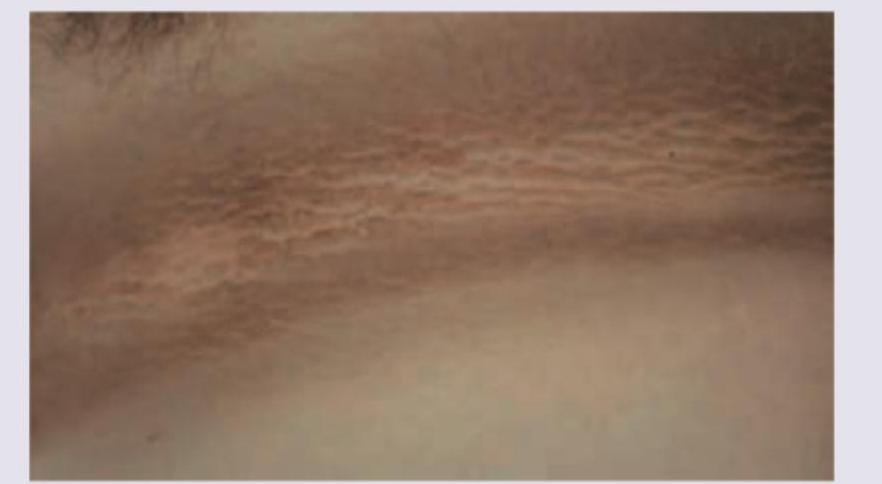
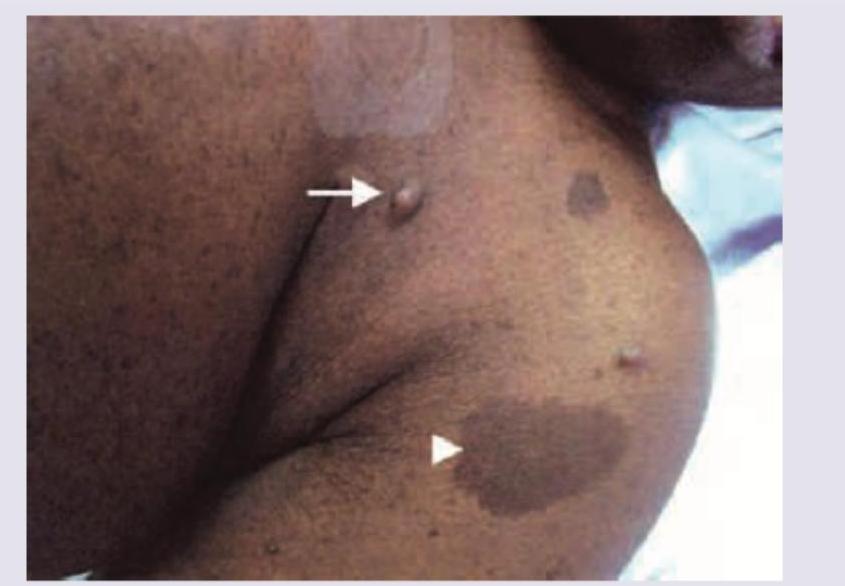
Hyperkeratosis of the palms and soles is seen in which of the following conditions?
A 40-year-old man presents with a single erythematous plaque on the penis. Histologic examination reveals dysplastic cells throughout the epidermis. Which of the following statements about the disease is FALSE?
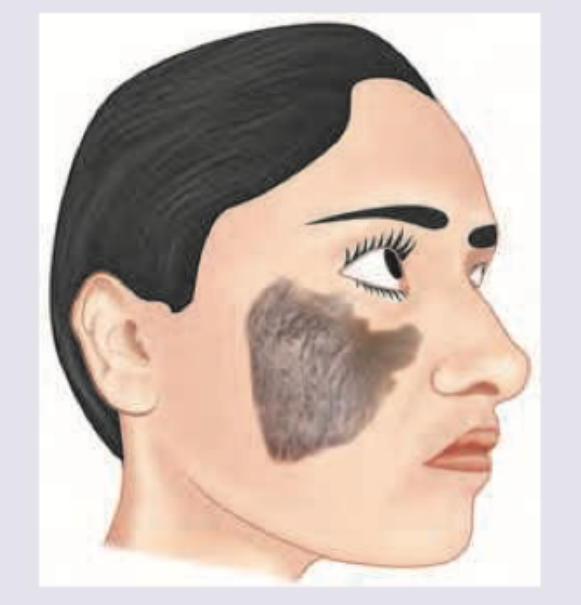
Acanthosis nigricans is most commonly associated with carcinoma of which organ?
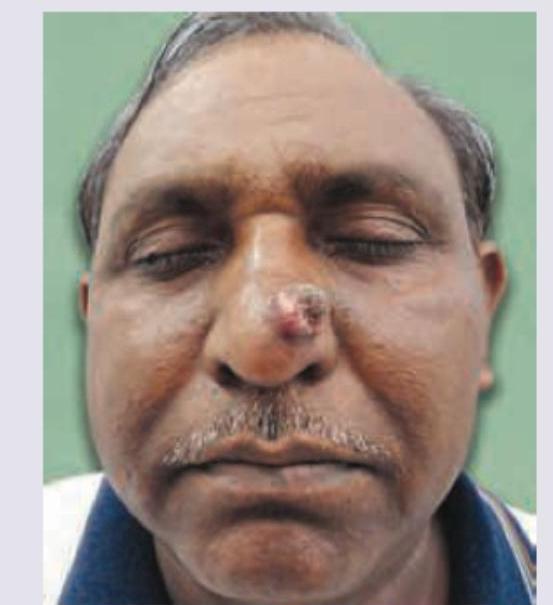
Which of the following is a clinical feature often associated with a tumour?
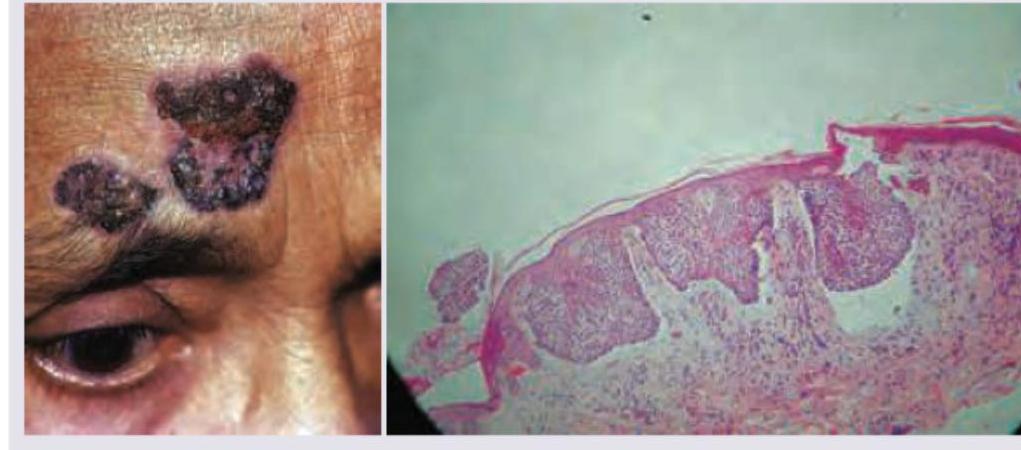
Mycosis fungoides mainly affects which type of cell?
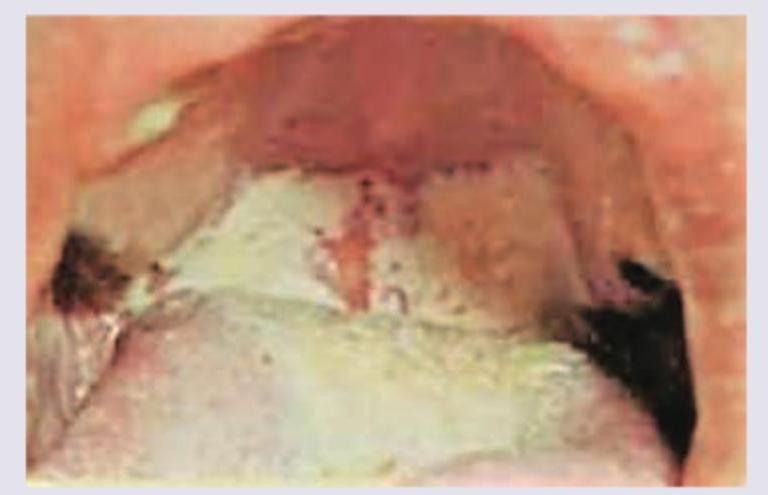
Malignant form of intraoral acanthosis nigricans is associated with which of the following?
Which of the following tumors is not caused by PUVA therapy?
All are true about squamous cell carcinoma of the skin except?
Multiple odontogenic keratocysts are associated with which of the following conditions?
Which of the following is NOT a premalignant skin lesion?
Explanation: **Explanation:** The correct answer is **Carcinoma of the esophagus**. This clinical association refers to **Howel-Evans Syndrome** (also known as Tylosis with Esophageal Carcinoma). **1. Why Carcinoma of the Esophagus is correct:** Howel-Evans syndrome is an autosomal dominant condition characterized by focal palmoplantar keratoderma (thickening of the skin on palms and soles) and a significantly high lifetime risk (up to 95%) of developing **Squamous Cell Carcinoma of the esophagus**. It is caused by mutations in the **RHBDF2 gene** on chromosome 17q25. In these patients, hyperkeratosis typically appears in childhood (age 5–15), followed by the development of esophageal cancer in the fourth or fifth decade of life. **2. Why other options are incorrect:** * **A. Carcinoma of the colon:** While colon cancer is associated with cutaneous markers like *Gardner Syndrome* (epidermoid cysts) or *Muir-Torre Syndrome* (sebaceous tumors), it is not classically linked with palmoplantar hyperkeratosis. * **B. Hepatoma:** Liver cancer is not associated with tylosis. Cutaneous markers of liver disease include spider nevi and palmar erythema, but not hyperkeratosis. * **C. Adenocarcinoma of the lung:** Lung cancer can be associated with *Bazex Syndrome* (acrokeratosis paraneoplastica), which presents with psoriasiform plaques on acral parts, but the specific association with hereditary palmoplantar keratoderma is unique to esophageal SCC. **3. NEET-PG High-Yield Pearls:** * **Tylosis:** Another name for palmoplantar keratoderma. * **Tripe Palms:** A different paraneoplastic syndrome (velvety hyperkeratosis of palms) most commonly associated with **Gastric Carcinoma** (if palms only) or **Lung Carcinoma** (if palms + acanthosis nigricans). * **Bazex Syndrome:** Associated with upper aerodigestive tract cancers. * **Leser-Trélat Sign:** Sudden eruption of multiple seborrheic keratoses, associated with internal malignancy (most commonly GI adenocarcinomas).
Explanation: **Diagnosis: Erythroplasia of Queyrat (Squamous Cell Carcinoma in situ of the Penis)** The clinical presentation of a solitary erythematous plaque on the glans penis or prepuce in an uncircumcised male, combined with histology showing full-thickness epidermal dysplasia, confirms a diagnosis of **Erythroplasia of Queyrat (EQ)**. **Explanation of the Correct Answer:** * **Option C is FALSE:** While Erythroplasia of Queyrat is a precursor to invasive squamous cell carcinoma (SCC), the rate of transformation is relatively low, occurring in approximately **10%** of cases. Therefore, saying transformation is "common" is clinically inaccurate. **Analysis of Incorrect Options:** * **Option A (True):** By definition, "in situ" carcinoma means the dysplastic cells are confined to the epidermis and have **not** breached the basement membrane. * **Option B (True):** This condition typically affects older, uncircumcised males. Chronic irritation, accumulation of smegma, and lack of hygiene are significant risk factors. * **Option D (True):** There is a strong oncogenic association with **High-Risk HPV (types 16 and 18)**, which integrate into the host genome and inactivate tumor suppressor genes (p53 and Rb). **High-Yield NEET-PG Pearls:** * **Bowen’s Disease vs. Erythroplasia of Queyrat:** Both are SCC in situ. Bowen’s disease occurs on keratinized skin (scaly plaque), while EQ occurs on mucosal/glans surfaces (velvety red plaque). * **Bowenoid Papulosis:** Presents as multiple pigmented papules; histologically similar to SCC in situ but clinically benign and rarely progresses to malignancy. * **Histology:** Look for "windblown appearance" (disordered maturation), pleomorphic nuclei, and frequent mitoses. * **Treatment of choice:** Mohs micrographic surgery or topical 5-Fluorouracil/Imiquimod.
Explanation: **Explanation:** Acanthosis Nigricans (AN) is a dermatological marker characterized by hyperpigmented, velvety plaques in intertriginous areas. While most commonly associated with insulin resistance (Type 2 Diabetes, PCOS), **Malignant Acanthosis Nigricans** is a classic paraneoplastic syndrome. **Why Bronchus is the Correct Answer:** In the context of internal malignancies, Acanthosis Nigricans is most frequently associated with **adenocarcinomas of the gastrointestinal tract**, with the **Stomach** being the single most common site (approx. 55-60%). However, when evaluating the provided options, **Bronchus (Lung)** is the most frequent site among the choices listed. Malignant AN is often triggered by the secretion of Transforming Growth Factor-alpha (TGF-α) by the tumor, which stimulates epidermal keratinocytes and fibroblasts. **Analysis of Incorrect Options:** * **B. Breast:** While breast cancer can occasionally present with paraneoplastic skin changes, it is significantly less common than GI or respiratory tract malignancies in the context of AN. * **C. Colon:** Though a GI malignancy, colon cancer is less frequently associated with AN compared to gastric or bronchial carcinomas. * **D. Testis:** Testicular tumors are rarely associated with AN; they are more commonly linked to other paraneoplastic phenomena or hormonal changes. **High-Yield Clinical Pearls for NEET-PG:** * **Malignant AN vs. Benign AN:** Malignant AN usually has a sudden onset, rapid progression, involvement of atypical sites (palms/soles—"Tripe Palms"), and is more extensive. * **Tripe Palms:** If seen with AN, it strongly suggests **Gastric Carcinoma**. If seen alone, it suggests **Bronchogenic Carcinoma**. * **Leser-Trélat Sign:** The sudden eruption of multiple seborrheic keratoses, often seen alongside malignant AN, indicating internal malignancy (usually GI).
Explanation: **Explanation:** The correct answer is **Hypertrophic osteoarthropathy (HOA)**. This clinical syndrome is a well-recognized **paraneoplastic phenomenon**, most commonly associated with intrathoracic malignancies, particularly **Bronchogenic Carcinoma** (especially non-small cell lung cancer). **1. Why Hypertrophic Osteoarthropathy is correct:** HOA is characterized by a triad of digital clubbing, periostitis of distal long bones, and symmetrical arthritis. In the context of internal malignancy, it is termed "Secondary HOA." Its presence often precedes the diagnosis of an underlying tumor, making it a crucial clinical marker for systemic screening. **2. Analysis of Incorrect Options:** * **Gottron’s Papules (Option A):** These are pathognomonic violaceous papules over the bony prominences (MCP, PIP joints). While they are a feature of **Dermatomyositis**, the papules themselves are a primary cutaneous sign of the autoimmune disease, not a direct feature of a tumor. * **Dermatomyositis (Option D):** While Dermatomyositis is indeed associated with internal malignancy (paraneoplastic), it is a **disease entity** rather than a specific clinical feature. The question asks for a "clinical feature," making HOA a more specific answer in many standardized contexts. * **Acanthosis Nigricans (Option B):** While "Malignant Acanthosis Nigricans" exists (associated with gastric adenocarcinoma), the vast majority of cases are "Benign AN" associated with insulin resistance, obesity, and PCOS. Therefore, it is less specifically linked to tumors than HOA. **Clinical Pearls for NEET-PG:** * **Most common tumor associated with HOA:** Bronchogenic Carcinoma. * **Malignant Acanthosis Nigricans:** Characterized by sudden onset, rapid spread, and involvement of palms/soles (Tripe palms). * **Dermatomyositis & Cancer:** Approximately 20-25% of adult cases are paraneoplastic; common sites include ovary, lung, and GI tract. * **Leser-Trélat Sign:** Sudden eruption of multiple Seborrheic Keratoses, associated with internal malignancy (usually GI).
Explanation: **Explanation:** **Mycosis Fungoides (MF)** is the most common form of **Cutaneous T-Cell Lymphoma (CTCL)**. It is a primary cutaneous malignancy characterized by the clonal proliferation of skin-homing **CD4+ T helper cells**. The disease typically follows a chronic, indolent course, progressing through three classic clinical stages: Patch, Plaque, and Tumor. * **Why T cells is correct:** The malignant cells in MF are mature, memory T lymphocytes (specifically **CD4+ phenotype**) that express cutaneous lymphocyte antigen (CLA). These cells infiltrate the epidermis, a phenomenon known as **epidermotropism**, often forming pathognomonic clusters called **Pautrier’s microabscesses**. * **Why other options are incorrect:** * **B-cells & Plasma cells:** While B-cell lymphomas can occur in the skin (e.g., Marginal zone lymphoma), MF is strictly a T-cell malignancy. Plasma cell dyscrasias (like Multiple Myeloma) involve the bone marrow and antibody production, not primary skin infiltration. * **Macrophages:** These are myeloid-derived phagocytic cells. While they may be present in the inflammatory infiltrate of various skin lesions, they are not the neoplastic component of MF. **High-Yield Clinical Pearls for NEET-PG:** 1. **Sezary Syndrome:** The leukemic (systemic) variant of MF characterized by the triad of erythroderma, lymphadenopathy, and circulating atypical T cells (**Sezary cells** with "cerebriform" nuclei). 2. **Histology:** Look for "haloed" lymphocytes and **Pautrier’s microabscesses** (intraepidermal collections of T cells). 3. **Clinical Sign:** "Bathing suit distribution" (lesions often appear in non-sun-exposed areas). 4. **Immunophenotype:** Usually **CD3+, CD4+, and CD8-**. Loss of normal T-cell markers like CD7 is a diagnostic clue.
Explanation: **Explanation:** **Acanthosis Nigricans (AN)** is a dermatosis characterized by hyperpigmented, velvety plaques typically found in intertriginous areas. While most cases are benign (associated with insulin resistance and obesity), the **malignant form** is a classic paraneoplastic syndrome. **1. Why Option A is Correct:** Malignant Acanthosis Nigricans is strongly associated with **internal malignancies**, most commonly **adenocarcinomas of the gastrointestinal tract** (stomach cancer accounts for ~60% of cases). The sudden onset, rapid progression, and involvement of atypical sites like the **oral mucosa**, palms (tripe palms), or soles are hallmarks of malignancy. Intraoral involvement manifests as fine, verrucous, or papillomatous growths on the tongue and lips, which are rarely seen in the benign form. **2. Why Other Options are Incorrect:** * **Option B & C:** The term "external malignancy" refers to primary skin cancers (like BCC or SCC). While skin cancers exist, malignant AN is specifically triggered by systemic growth factors (like TGF-alpha) secreted by **visceral (internal)** tumors. It is not a reaction to primary external skin tumors. * **Option D:** Incorrect as the association with internal malignancy is a well-established medical fact. **Clinical Pearls for NEET-PG:** * **Most common site of malignancy:** Stomach (Adenocarcinoma). * **Tripe Palms:** Velvety thickening of palmar ridges; if present with AN, it highly suggests internal cancer (Lung or Stomach). * **Leser-Trélat Sign:** Sudden eruption of multiple seborrheic keratoses; often co-exists with malignant AN. * **Key Difference:** Unlike benign AN, the malignant form is usually not associated with obesity and appears in older individuals.
Explanation: **Explanation:** PUVA (Psoralen + Ultraviolet A) therapy is a potent photochemotherapy used for various dermatological conditions. However, it is well-documented to be **carcinogenic** due to its ability to cause direct DNA damage (photo-adducts) and localized immunosuppression. **Why Cutaneous T-cell Lymphoma (CTCL) is the correct answer:** CTCL (such as Mycosis Fungoides) is **not caused** by PUVA; rather, PUVA is a primary **treatment modality** for early-stage CTCL. PUVA works by inducing apoptosis in malignant T-cells within the skin. It does not have a causal relationship with the development of lymphoid malignancies. **Analysis of Incorrect Options:** * **Squamous Cell Carcinoma (SCC):** This is the **most common** skin cancer associated with long-term PUVA therapy. The risk is dose-dependent and significantly increases after 200–250 treatments. * **Basal Cell Carcinoma (BCC):** While less common than SCC in the context of PUVA, the risk of BCC is still significantly elevated in patients receiving high cumulative doses of UVA. * **Melanoma:** Long-term follow-up studies (notably the 1975 PUVA Follow-up Study) have shown an increased risk of malignant melanoma, particularly 15 or more years after the first exposure to PUVA. **High-Yield Clinical Pearls for NEET-PG:** * **SCC vs. BCC Ratio:** In the general population, BCC is more common than SCC. However, in patients treated with **PUVA or Arsenic**, this ratio is **reversed** (SCC becomes more common than BCC). * **PUVA Lentigines:** These are distinct, stellate-shaped hyperpigmented macules that appear in PUVA-treated areas and serve as a marker of high cumulative UV exposure. * **Action Spectrum:** PUVA primarily uses UVA (320–400 nm), whereas UVB (290–320 nm) is used in Narrowband-UVB therapy.
Explanation: ### Explanation **Correct Answer: C. Hematogenous spread is common and occurs early.** **Why Option C is the Correct Answer (The False Statement):** Squamous Cell Carcinoma (SCC) of the skin primarily spreads via **lymphatic channels** to regional lymph nodes. While metastasis can occur, it is generally late and relatively uncommon (occurring in about 2–5% of cases, though higher in high-risk sites). **Hematogenous (blood-borne) spread is rare** and typically occurs only in very advanced, neglected cases. This distinguishes it from other aggressive tumors where early blood-borne metastasis is a hallmark. **Analysis of Other Options:** * **Option A (True):** When SCC arises in a site of chronic inflammation, such as a burn scar, chronic osteomyelitis sinus, or vaccination scar, it is specifically termed a **Marjolin’s ulcer**. These are often more aggressive than UV-induced SCC. * **Option B (True):** Radiotherapy is a recognized treatment modality for SCC, especially in patients who are poor surgical candidates, for tumors in locations where surgery would be disfiguring, or as adjuvant therapy for high-risk lesions. * **Option D (True):** Chronic irritation is a major risk factor. SCC frequently develops in chronic ulcers (e.g., venous stasis ulcers) or areas of long-standing discoid lupus erythematosus (DLE). **High-Yield Clinical Pearls for NEET-PG:** * **Precursor Lesions:** Actinic keratosis (most common) and Bowen’s disease (SCC in-situ). * **Risk Factors:** UV radiation (most common), arsenic exposure, immunosuppression, and HPV (types 16, 18). * **Histopathology:** Characterized by **keratin pearls** and intercellular bridges (desmosomes). * **Keratoacanthoma:** A rapidly growing variant of SCC that may undergo spontaneous regression. * **Marjolin’s Ulcer:** Characteristically lacks a sensory nerve supply (painless) and has a higher metastatic potential than standard SCC.
Explanation: **Explanation:** **Gorlin-Goltz Syndrome (Nevoid Basal Cell Carcinoma Syndrome)** is an autosomal dominant disorder caused by a mutation in the **PTCH1 gene** on chromosome 9q. The presence of **multiple Odontogenic Keratocysts (OKCs)** of the jaw is a major diagnostic criterion, often appearing in the first two decades of life. These cysts are frequently the first clinical sign of the syndrome. **Why other options are incorrect:** * **Gardner’s Syndrome:** A variant of Familial Adenomatous Polyposis (FAP) characterized by intestinal polyps, **osteomas** (especially of the mandible), and soft tissue tumors (desmoids/epidermoid cysts). It does not typically feature OKCs. * **Goldenhar’s Syndrome (Oculo-Auriculo-Vertebral Dysplasia):** A developmental anomaly involving the first and second branchial arches. Key features include hemifacial microsomia, epibulbar dermoids, and preauricular tags. * **Grinspan Syndrome:** A clinical triad consisting of **Lichen Planus, Diabetes Mellitus, and Hypertension**. It is not associated with jaw cysts. **High-Yield Clinical Pearls for NEET-PG:** * **Gorlin-Goltz Triad:** Multiple Basal Cell Carcinomas (BCCs), Multiple OKCs, and skeletal anomalies (e.g., **bifid ribs**, ectopic calcification of the falx cerebri). * **Dermatological hallmark:** Palmar and plantar pits (shallow depressions in the stratum corneum). * **Radiology:** "Lacy" or lamellar calcification of the falx cerebri is a classic sign. * **Inheritance:** Autosomal Dominant; PTCH1 gene is a tumor suppressor gene in the Hedgehog signaling pathway.
Explanation: **Explanation:** The correct answer is **D. Miliaria**. **Miliaria** (commonly known as prickly heat) is a benign, transient inflammatory condition caused by the obstruction of sweat ducts and the subsequent leakage of sweat into different layers of the skin. It is categorized into *crystallina, rubra, and profunda* based on the level of obstruction. It has **no malignant potential** and is not associated with cellular dysplasia. **Analysis of Premalignant Options:** * **Bowen’s Disease:** This is defined as **Squamous Cell Carcinoma (SCC) in situ**. It involves full-thickness dysplasia of the epidermis without invasion through the basement membrane. If left untreated, it can progress to invasive SCC. * **Actinic Keratoses (Solar Keratoses):** These are the most common premalignant skin lesions. They occur on sun-damaged skin and represent early, intraepidermal proliferation of atypical keratinocytes. They are considered precursors to SCC. * **Discoid Lupus Erythematosus (DLE):** While primarily an autoimmune connective tissue disorder, chronic DLE lesions (especially on the scalp or lips) involve persistent inflammation and scarring. Long-standing DLE carries a risk of developing **Squamous Cell Carcinoma** within the chronic scars. **High-Yield Clinical Pearls for NEET-PG:** * **Other Premalignant Lesions:** Leukoplakia, Erythroplasia of Queyrat, Xeroderma Pigmentosum, and Arsenic Keratosis. * **Marjolin’s Ulcer:** This refers to an aggressive SCC arising in areas of chronic scarring, such as old burn scars or chronic DLE lesions. * **Actinic Cheilitis:** A variant of actinic keratosis occurring on the lips (usually the lower lip).
Benign Epithelial Tumors
Practice Questions
Premalignant Epidermal Tumors
Practice Questions
Basal Cell Carcinoma
Practice Questions
Squamous Cell Carcinoma
Practice Questions
Melanocytic Nevi
Practice Questions
Melanoma
Practice Questions
Merkel Cell Carcinoma
Practice Questions
Vascular Tumors and Malformations
Practice Questions
Cutaneous Lymphomas
Practice Questions
Soft Tissue Tumors
Practice Questions
Metastatic Skin Tumors
Practice Questions
Skin Cancer Prevention and Screening
Practice Questions
Get full access to all questions, explanations, and performance tracking.
Start For Free