Blue rubber bleb nevus syndrome is a?
Which of the following is a precancerous condition of the skin?
What is the treatment of choice for melanoma?
Which of the following is NOT a premalignant condition?
Which of the following statements about squamous cell carcinoma are true?
Which of the following statements is untrue regarding malignant melanoma?
Basal cell carcinoma commonly spreads by?
Carcinoma developed in a scar is called:
A 50-year-old fair-skinned male presented with an elevated plaque and an ulcerated, hyperpigmented nodule with variegation of color on his back, which has been progressively increasing in size. A biopsy of the skin lesion was performed. Which of the following antibodies can be tested for this condition?
Which type of malignant melanoma exists solely in the vertical growth phase?
Explanation: **Explanation:** **Blue Rubber Bleb Nevus Syndrome (BRBNS)**, also known as Bean Syndrome, is a rare systemic neurocutaneous disorder characterized by multiple cutaneous and visceral vascular malformations. **Why Option D is Correct:** The lesions in BRBNS are histologically **venous malformations**. They appear as soft, compressible, blue-to-purple "rubber-like" blebs or nodules. These are not true hemangiomas (which proliferate) but rather structural malformations of the veins that are present at birth or appear in early childhood and increase in size and number over time. **Why Other Options are Incorrect:** * **A. Mycotic infection:** This refers to fungal infections (e.g., Tinea, Candidiasis). BRBNS is a vascular developmental anomaly, not an infectious process. * **B. Malignant melanoma:** This is a malignancy of melanocytes. While both can appear dark/pigmented, BRBNS lesions are vascular, soft, and blanchable, unlike the solid, irregular growth of melanoma. * **C. Arterial malformation:** BRBNS specifically involves the low-pressure venous system. Arterial malformations typically present with pulsations or bruits, which are absent in BRBNS. **High-Yield Clinical Pearls for NEET-PG:** * **Gastrointestinal Involvement:** The most critical systemic site is the **GI tract** (especially the small intestine), which can lead to chronic occult GI bleeding and iron-deficiency anemia. * **Triad:** Cutaneous venous malformations, GI tract venous malformations, and iron-deficiency anemia. * **Nocturnal Pain:** Lesions can sometimes be painful, characteristically increasing at night. * **Inheritance:** Most cases are sporadic, but autosomal dominant inheritance associated with **TEK gene** mutations has been reported.
Explanation: **Explanation:** **Bowen disease** is the correct answer because it represents **Squamous Cell Carcinoma (SCC) in situ**. This means malignant keratinocytes are confined to the epidermis and have not yet breached the dermo-epidermal junction. If left untreated, approximately 3–5% of cases progress to invasive Squamous Cell Carcinoma, making it a classic precancerous condition. Clinically, it presents as a slow-growing, well-demarcated, erythematous scaly plaque, often mimicking eczema or psoriasis. **Analysis of Incorrect Options:** * **Seborrhoeic keratosis:** This is a common **benign** epidermal tumor ("stucco keratosis"). It has no malignant potential. A sudden eruption of multiple seborrheic keratoses (Leser-Trélat sign) can, however, be a paraneoplastic sign of internal malignancy (usually GI adenocarcinoma). * **Leprosy:** This is a chronic infectious disease caused by *Mycobacterium leprae*. While chronic trophic ulcers in leprosy can rarely undergo malignant transformation (Marjolin’s ulcer), the disease itself is inflammatory/infectious, not precancerous. * **Psoriasis:** This is a chronic T-cell mediated inflammatory autoimmune condition. There is no inherent increased risk of skin cancer from the disease itself, though long-term PUVA therapy used to treat it can increase SCC risk. **High-Yield Clinical Pearls for NEET-PG:** * **Other Precancerous Conditions:** Actinic keratosis (most common), Erythroplasia of Queyrat (Bowen’s of the glans penis), and Leukoplakia. * **Histology of Bowen’s:** Shows "windblown appearance" (loss of polarity), full-thickness atypia, and dyskeratotic cells. * **Arsenic Exposure:** Chronic arsenic ingestion is a known risk factor for developing multiple lesions of Bowen disease on non-sun-exposed areas.
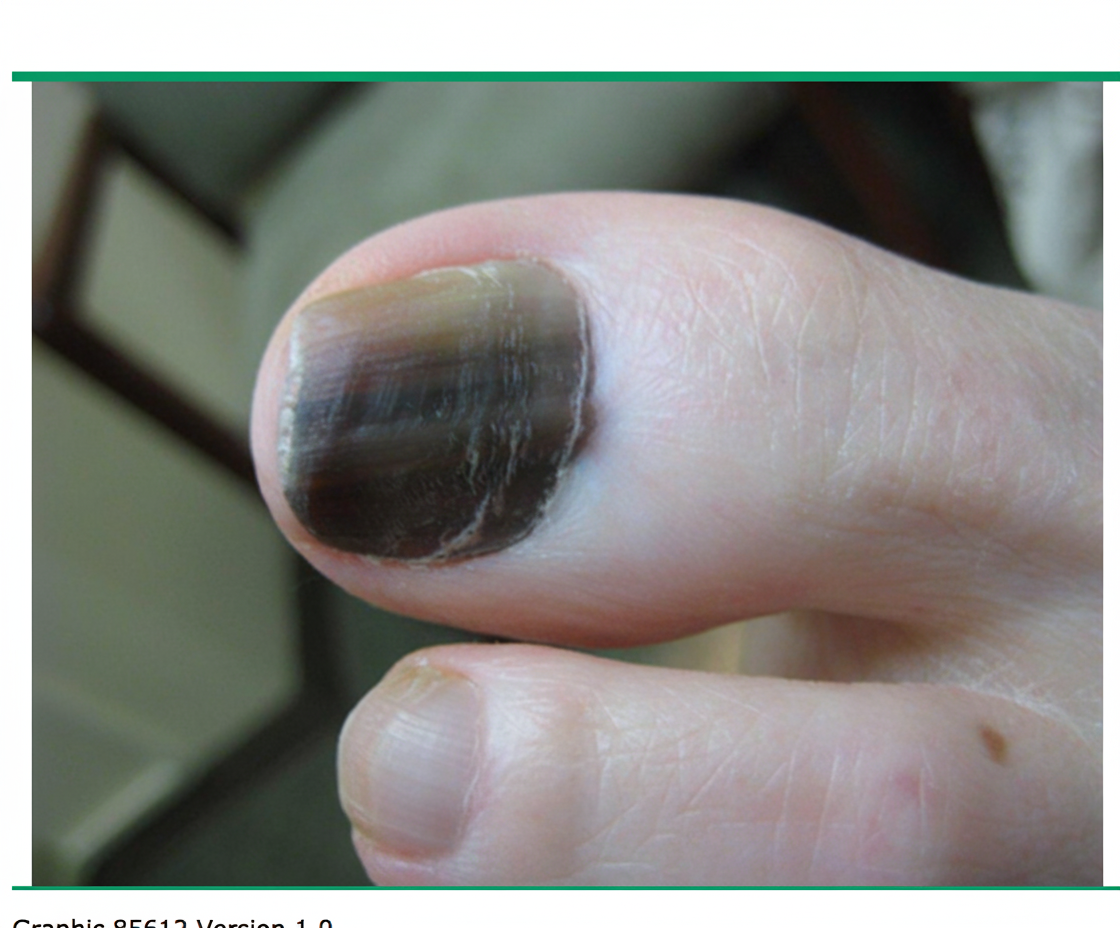
Explanation: **Explanation:** **Surgical excision** is the gold standard and primary treatment of choice for localized melanoma. The definitive management involves wide local excision with specific safety margins determined by the **Breslow thickness** (the most important prognostic factor). For example, a melanoma in situ requires a 0.5–1 cm margin, while lesions >2 mm thick require a 2 cm margin. Early surgical intervention is curative in the majority of cases before the tumor metastasizes. **Why other options are incorrect:** * **Chemotherapy (A):** Melanoma is notoriously chemo-resistant. While agents like Dacarbazine were used historically, they are no longer first-line. Modern management of advanced disease has shifted toward **Immunotherapy** (Pembrolizumab, Nivolumab) and **Targeted therapy** (BRAF/MEK inhibitors). * **Radiotherapy (C):** Melanoma is considered a radio-resistant tumor. Radiotherapy is generally reserved for palliative care (e.g., brain or bone metastasis) or as adjuvant therapy in specific high-risk nodal cases, but it is never the primary treatment of choice. * **Surgery and Chemotherapy (D):** While surgery is correct, the addition of routine chemotherapy does not improve survival outcomes for localized melanoma and is not the standard of care. **Clinical Pearls for NEET-PG:** * **Breslow’s Depth:** The most important prognostic factor (measured from the granular layer to the deepest tumor cell). * **Sentinel Lymph Node Biopsy (SLNB):** Indicated for tumors ≥0.8 mm thick or those with ulceration to check for early nodal spread. * **ABCDE Criteria:** Used for clinical diagnosis (Asymmetry, Border irregularity, Color variation, Diameter >6mm, Evolving). * **Commonest Site:** In males, the back; in females, the lower legs. * **Acral Lentiginous Melanoma:** The most common subtype in Asians and dark-skinned individuals (found on palms, soles, and subungual areas).
Explanation: **Explanation:** The correct answer is **Zinc deficiency**. In dermatology, a premalignant condition is a state or lesion that has a significantly increased risk of progressing to invasive squamous cell carcinoma (SCC) or other skin malignancies. **1. Why Zinc Deficiency is the correct answer:** Zinc deficiency manifests clinically as **Acrodermatitis Enteropathica**. It is characterized by the triad of periorificial and acral dermatitis, alopecia, and diarrhea. While it causes significant morbidity and skin breakdown, it is a nutritional/metabolic disorder and does **not** carry a risk of malignant transformation. **2. Analysis of Incorrect Options:** * **Arsenic Poisoning:** Chronic arsenic exposure leads to "arsenical keratoses" (typically on palms and soles) and multiple Bowen’s disease lesions. It is a well-known precursor to invasive SCC and Basal Cell Carcinoma (BCC). * **Ultraviolet (UV) Radiation:** Chronic UV exposure (especially UVB) causes DNA damage and mutations in the p53 tumor suppressor gene. it leads to **Actinic Keratosis**, which is the most common premalignant lesion in light-skinned individuals. * **Bowen’s Disease:** This is defined as **Squamous Cell Carcinoma in-situ**. It involves the full thickness of the epidermis but has not yet breached the dermo-epidermal junction. If left untreated, roughly 3-5% of cases progress to invasive SCC. **Clinical Pearls for NEET-PG:** * **Other Premalignant Conditions:** Xeroderma Pigmentosum, Erythroplasia of Queyrat (Bowen’s of the glans penis), Leukoplakia, and PUVA therapy. * **Acrodermatitis Enteropathica:** Look for the "vesiculobullous and eczematous" lesions around the mouth, anus, and eyes in infants. * **High-Yield Association:** Arsenic exposure is also associated with internal malignancies (lung, bladder, and liver angiosarcoma).
Explanation: **Explanation:** **1. Why Option A is correct:** In the general population, Basal Cell Carcinoma (BCC) is the most common skin cancer. However, in **organ transplant recipients** (on long-term immunosuppression), the incidence of skin cancers increases significantly, and the **ratio flips**. Squamous Cell Carcinoma (SCC) becomes the most common skin malignancy, occurring 65–250 times more frequently than in the general population. This is primarily due to the loss of immune surveillance against UV-induced mutations and oncogenic viruses (like HPV). **2. Why the other options are incorrect:** * **Option B:** In the general population, **BCC is more common than SCC** (approximate ratio of 4:1). SCC is the second most common. * **Option C:** SCC does not occur only in the skin. It can arise from any **stratified squamous epithelium**, including the oral cavity, esophagus, lungs, and cervix. * **Option D:** While SCC has a higher metastatic potential than BCC (which rarely metastasizes), the statement is incomplete or less "uniquely true" compared to Option A in the context of standard dermatological teaching. While metastasis often involves regional lymph nodes, the defining epidemiological hallmark for exams is its prevalence in transplant patients. **Clinical Pearls for NEET-PG:** * **Precursor Lesion:** Actinic Keratosis is the most common precursor for SCC. * **Marjolin’s Ulcer:** A high-yield term referring to SCC arising in chronic wounds, scars, or burn sites; these are typically more aggressive. * **Histology:** Look for **"Keratin Pearls"** and intercellular bridges (desmosomes). * **Risk Factors:** UV radiation (most common), HPV (types 16, 18), arsenic exposure, and chronic inflammation.
Explanation: ### Explanation **1. Why Option A is the Correct (Untrue) Statement:** Malignant melanoma does **not** occur with equal frequency in both sexes. Epidemiological data consistently shows a **higher incidence in males** compared to females. Furthermore, the prognosis is generally worse in men, while women tend to have better survival rates and more frequent occurrences on the lower extremities. **2. Analysis of Other Options:** * **Option B (Rare in children):** This is a **true** statement. Pediatric melanoma accounts for only about 1% of all melanoma cases. Most cases occur in adults, with the median age of diagnosis being around 65. * **Option C (Palate is the most common intraoral site):** This is **true**. While mucosal melanoma is rare, when it occurs in the oral cavity, the **hard palate** and the maxillary gingiva are the most frequent sites. * **Option D (Is very painful):** This is a **true** clinical feature of advanced or metastatic melanoma. While early-stage melanomas are often asymptomatic (painless), advanced lesions, especially those that ulcerate or involve nerve endings, can become significantly painful. **3. High-Yield Clinical Pearls for NEET-PG:** * **ABCDE Criteria:** Used for clinical diagnosis (**A**symmetry, **B**order irregularity, **C**olor variation, **D**iameter >6mm, **E**volving). * **Prognostic Factors:** The most important prognostic factor for stage I and II melanoma is the **Breslow Thickness** (measured in mm from the granular layer to the deepest tumor cell). * **Commonest Subtype:** **Superficial Spreading Melanoma** is the most common overall. * **Acral Lentiginous Melanoma:** The most common subtype in dark-skinned individuals (occurs on palms, soles, and subungual areas). * **Genetic Marker:** **BRAF V600E** mutation is the most common genetic alteration in cutaneous melanoma.
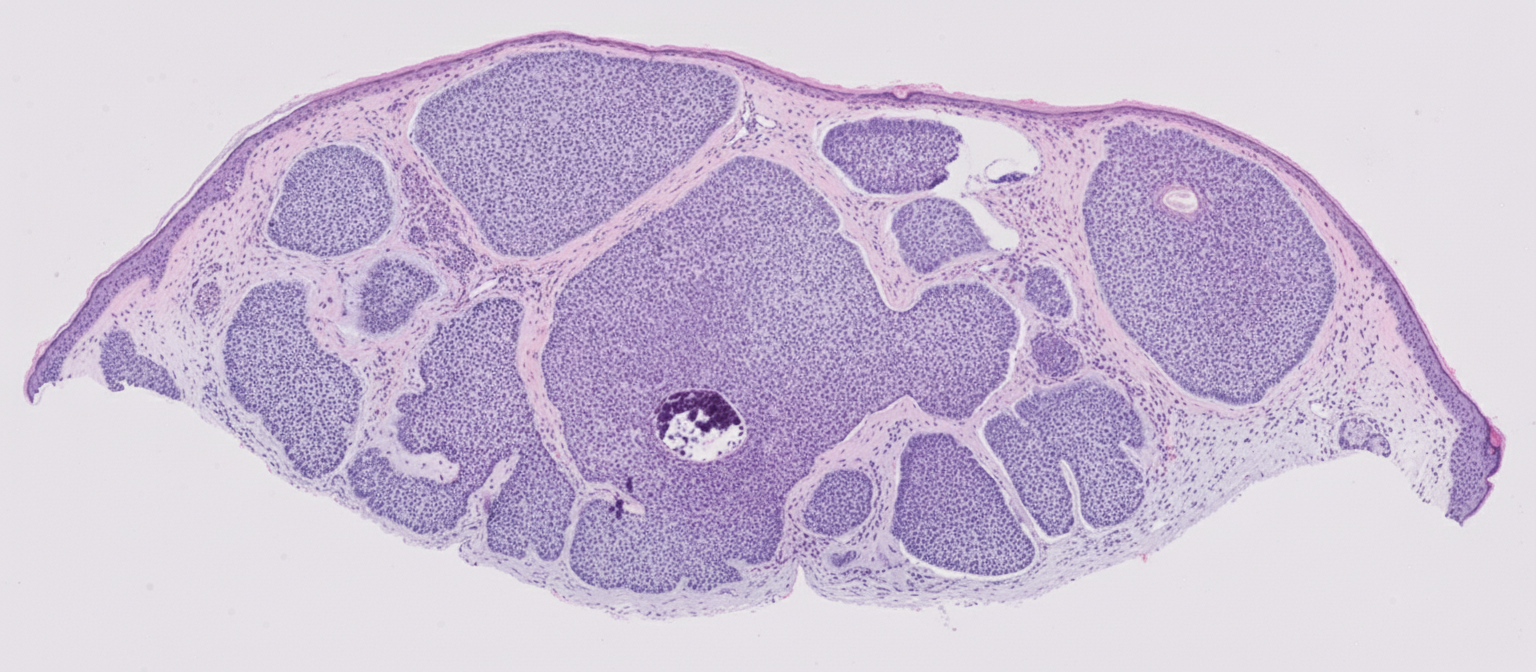
Explanation: **Explanation:** **Basal Cell Carcinoma (BCC)** is the most common skin cancer globally. It arises from the non-keratinizing cells of the basal layer of the epidermis. 1. **Why Direct Spread is Correct:** BCC is characterized by **slow, progressive local invasion**. It spreads by infiltrating surrounding tissues (skin, subcutaneous fat, muscle, and even bone) through "finger-like" projections. This destructive local behavior is why it is colloquially termed a **"Rodent Ulcer"**—it appears as if a rodent has gnawed through the tissue. 2. **Why Other Options are Incorrect:** * **Lymphatic and Haematogenous Spread:** These are extremely rare in BCC (occurring in <0.1% of cases). BCC lacks the inherent biological aggressiveness to easily penetrate vessel walls or survive in the circulation. If metastasis does occur, it usually involves very large, neglected tumors or specific aggressive subtypes, but it is never the "common" mode of spread. * **All the above:** Since distant metastasis is an exception rather than the rule, this option is incorrect. **High-Yield Clinical Pearls for NEET-PG:** * **Most Common Site:** Face, specifically above the line joining the lobe of the ear to the angle of the mouth (inner canthus and nose are frequent sites). * **Risk Factor:** Chronic UV light exposure is the primary trigger. * **Clinical Hallmark:** A pearly, translucent papule with telangiectasia and rolled-out borders. * **Histopathology:** Shows **Peripheral Palisading** (nuclei at the edge of tumor nests align vertically) and **Retraction Artifacts**. * **Prognosis:** Excellent, as it rarely metastasizes, though it can cause significant local morbidity if left untreated.
Explanation: ### Explanation **Correct Answer: D. Marjolin's ulcer** **Why it is correct:** A **Marjolin’s ulcer** refers to a malignancy arising in areas of chronic inflammation, long-standing scars, or non-healing wounds. While it most commonly develops in **old burn scars** (cicatrix), it can also occur in chronic osteomyelitis sinuses, venous stasis ulcers, and vaccination scars. Pathologically, the vast majority (approx. 80%) are **Squamous Cell Carcinomas (SCC)**. The underlying mechanism involves constant tissue irritation and poor lymphatic drainage in scar tissue, which leads to malignant transformation over a long latent period (average 25–30 years). **Why other options are incorrect:** * **A. Sarcoma:** These are malignant tumors arising from mesenchymal tissues (connective tissue, bone, muscle). While some sarcomas (like Dermatofibrosarcoma Protuberans) occur in the skin, they are not the characteristic malignancy associated with chronic scars. * **B. Adenocarcinoma:** This is a malignancy of glandular epithelium. It is typically found in organs like the breast, colon, or prostate, rather than in cutaneous scar tissue. * **C. Dermoid tumor:** This usually refers to a dermoid cyst, which is a benign developmental choristoma containing adnexal structures (hair, sebaceous glands). It is congenital and not an acquired malignancy of scars. **High-Yield Clinical Pearls for NEET-PG:** * **Most common site:** Lower limbs (due to frequency of chronic ulcers/burns). * **Character:** Marjolin’s ulcers are typically **more aggressive** and have a higher rate of metastasis compared to SCC arising from sun-damaged skin. * **Latent Period:** The "Acute" form occurs within 1 year; the "Chronic" form (more common) takes decades. * **Diagnosis:** Requires a wedge biopsy from the ulcer edge. * **Treatment of choice:** Wide local excision (usually with 2 cm margins) or amputation.
Explanation: **Explanation:** The clinical presentation of an elevated, ulcerated, hyperpigmented nodule with color variegation in a fair-skinned individual is highly suggestive of **Malignant Melanoma**. However, the correct answer provided is **Anti-Cytokeratin antibody**, which suggests the question is testing the **differential diagnosis** or the exclusion of epithelial tumors. **1. Why Anti-Cytokeratin is the Correct Answer (in this context):** While the clinical features point toward Melanoma, the question asks which antibody can be tested for "this condition." In dermatopathology, **Cytokeratin (CK)** is the hallmark marker for **Carcinomas** (like Squamous Cell Carcinoma or Basal Cell Carcinoma). If the lesion were a pigmented BCC or SCC, CK would be positive. Conversely, in the context of Malignant Melanoma, **Cytokeratin is typically negative**. It is used to differentiate spindle cell melanoma from sarcomatoid carcinoma. **2. Analysis of Incorrect Options:** * **Options A, B, and C (S100, HMB45, Melan-A):** These are all **positive markers** for Malignant Melanoma. * **S100:** Highly sensitive but low specificity (also positive in neural tumors). * **HMB45 & Melan-A (MART-1):** Highly specific markers for melanocytic differentiation. * *Note:* If the question intended to identify the lesion as Melanoma, A, B, and C would all be technically correct. The selection of D suggests a focus on ruling out epithelial mimics. **3. Clinical Pearls for NEET-PG:** * **ABCDE Criteria for Melanoma:** **A**symmetry, **B**order irregularity, **C**olor variegation, **D**iameter >6mm, **E**volving. * **Breslow’s Depth:** The most important prognostic factor (measured from the granular layer to the deepest tumor cell). * **IHC Markers for Melanoma:** S100 (Screening), HMB-45 (Specific), SOX-10 (Most sensitive/specific modern marker). * **CK20:** Specifically used to identify **Merkel Cell Carcinoma** (Perinuclear dot-like staining).
Explanation: **Explanation:** In malignant melanoma, growth typically occurs in two phases: the **Radial Growth Phase (RGP)**, where cells spread horizontally within the epidermis and superficial dermis, and the **Vertical Growth Phase (VGP)**, where cells penetrate deep into the dermis, increasing the risk of metastasis. **Nodular Melanoma (Option B)** is unique because it lacks an identifiable radial growth phase. From its clinical onset, it exists solely in the **vertical growth phase**. This explains its aggressive nature, as it rapidly invades deeper tissues, presenting as a rapidly enlarging, dark, dome-shaped nodule. It accounts for approximately 15% of all melanomas but is responsible for a disproportionate number of melanoma deaths. **Analysis of Incorrect Options:** * **Follicular, Granular, and Hyperplastic Melanoma (Options A, C, D):** These are not standard clinical classifications of malignant melanoma. The four major clinicopathological types are Superficial Spreading (most common), Nodular, Lentigo Maligna, and Acral Lentiginous melanoma. While "follicular" or "granular" variants may exist histologically, they do not define a growth phase pattern in the context of this classic medical concept. **High-Yield Clinical Pearls for NEET-PG:** * **Superficial Spreading Melanoma:** The most common type overall; it has a prolonged radial growth phase (months to years) before entering the vertical phase. * **Breslow’s Depth:** The most important prognostic factor in melanoma, measuring the vertical thickness from the granular layer to the deepest tumor cell. * **ABCDE Criteria:** Asymmetry, Border irregularity, Color variegation, Diameter (>6mm), and Evolving. * **Commonest Site:** Back in men; lower limbs in women.
Benign Epithelial Tumors
Practice Questions
Premalignant Epidermal Tumors
Practice Questions
Basal Cell Carcinoma
Practice Questions
Squamous Cell Carcinoma
Practice Questions
Melanocytic Nevi
Practice Questions
Melanoma
Practice Questions
Merkel Cell Carcinoma
Practice Questions
Vascular Tumors and Malformations
Practice Questions
Cutaneous Lymphomas
Practice Questions
Soft Tissue Tumors
Practice Questions
Metastatic Skin Tumors
Practice Questions
Skin Cancer Prevention and Screening
Practice Questions
Get full access to all questions, explanations, and performance tracking.
Start For Free