Which syndrome is characterized by a port wine stain?
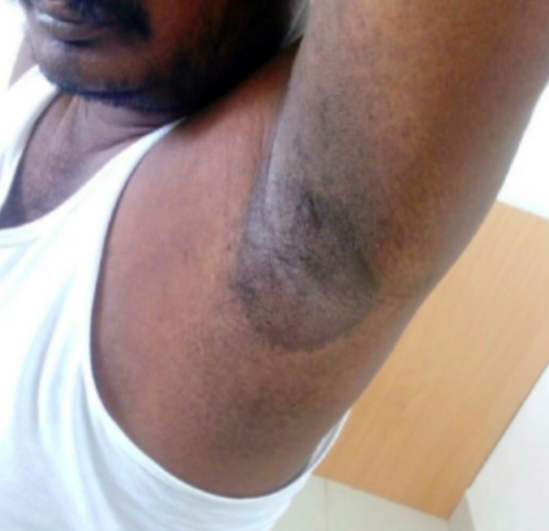
Which of the following conditions presents with hyperpigmented lesions?
A 19-year-old girl presents with light brown pigmentation over the malar eminence. What is the likely diagnosis?
Ash leaf macules are characteristic of which of the following conditions?
Acanthosis nigricans can occur due to which of the following mechanisms?
Which of the following is a differential diagnosis of congenital disorders of pigmentation?
Which of the following conditions is not a cause of hypopigmentation?
Which of the following is NOT true about acanthosis nigricans?
Which of the following is NOT a cause of a localized hypopigmented macule or patch?
Which of the following is false regarding acanthosis nigricans?
Explanation: **Explanation:** **Sturge-Weber Syndrome (SWS)**, also known as encephalotrigeminal angiomatosis, is a neurocutaneous disorder characterized by a **Port-Wine Stain (PWS)**. A PWS is a congenital capillary malformation (nevus flammeus) that typically presents as a blanchable, pink-to-purple macule. In SWS, the PWS classically involves the ophthalmic (V1) and maxillary (V2) distributions of the trigeminal nerve. The underlying pathology involves a somatic mutation in the **GNAQ gene**, leading to malformed capillary-sized blood vessels in the skin, brain, and eyes. **Analysis of Incorrect Options:** * **Peutz-Jeghers Syndrome:** Characterized by hamartomatous gastrointestinal polyps and **mucocutaneous lentigines** (hyperpigmented macules), typically found on the lips and buccal mucosa, not vascular malformations. * **Albright’s Syndrome (McCune-Albright):** Defined by the triad of polyostotic fibrous dysplasia, precocious puberty, and **Café-au-lait macules** (classically described as having "Coast of Maine" irregular borders). * **Lymphangioma:** This is a malformation of the lymphatic system (e.g., Lymphangioma circumscriptum), presenting as "frog-spawn" vesicles, rather than a capillary port-wine stain. **Clinical Pearls for NEET-PG:** * **The SWS Triad:** 1. Facial Port-Wine Stain; 2. Leptomeningeal angiomatosis (causing seizures and "tram-track" calcifications on CT); 3. Glaucoma. * **Rule of Thumb:** A facial PWS involving the upper eyelid (V1 distribution) carries the highest risk for associated CNS involvement. * **Treatment:** Pulsed Dye Laser (PDL) is the gold standard for treating the cutaneous port-wine stain.
Explanation: **Explanation:** The core concept in this question is distinguishing between **hypermelanosis** (increased pigment), **hypomelanosis** (decreased pigment), and **vascular anomalies** (mimicking pigment loss). **1. Why Melanoma is Correct:** Melanoma is a malignant neoplasm arising from **melanocytes**. It typically presents as a **hyperpigmented** lesion (macule, papule, or nodule) due to the uncontrolled proliferation of pigment-producing cells and excessive melanin synthesis. It often follows the **ABCDE** criteria (Asymmetry, Border irregularity, Color variegation, Diameter >6mm, and Evolution). **2. Why Other Options are Incorrect:** * **Pityriasis alba:** This is a common, benign condition (often associated with atopy) characterized by **hypopigmented**, ill-defined, slightly scaly patches, usually on the face of children. It represents a decrease in melanin, not an increase. * **Nevus anaemicus:** This is a congenital **vascular anomaly**, not a pigmentary disorder. The skin appears pale (hypochromic) due to localized hypersensitivity to catecholamines, leading to permanent vasoconstriction. It is a "pharmacological" white patch, as the number of melanocytes is actually normal. **High-Yield Clinical Pearls for NEET-PG:** * **Wood’s Lamp Examination:** Used to differentiate epidermal vs. dermal pigmentation. Epidermal pigment (like melasma) accentuates under Wood’s lamp, whereas dermal pigment does not. * **Nevus Anaemicus vs. Nevus Depigmentosus:** On diascopy (pressing a glass slide), the pale patch of *Nevus anaemicus* blends with the surrounding blanched skin, whereas *Nevus depigmentosus* remains visible. * **Melanoma Markers:** S-100 (most sensitive), HMB-45, and Melan-A (more specific) are key immunohistochemical markers used in diagnosis.
Explanation: ### Explanation **Correct Answer: C. Melasma** **Clinical Reasoning:** Melasma is a common acquired hypermelanosis characterized by symmetrical, light-to-dark brown macules and patches with irregular borders. It typically affects sun-exposed areas of the face, most commonly the **malar eminence** (cheeks), forehead, and upper lip. It is significantly more common in females of reproductive age and is exacerbated by UV radiation and hormonal influences (estrogen/progesterone). **Why other options are incorrect:** * **A. Chloasma:** While often used interchangeably with melasma, "chloasma" specifically refers to the "mask of pregnancy." Since the question does not specify pregnancy, **Melasma** is the more accurate, general clinical term. * **B. Systemic Lupus Erythematosus (SLE):** SLE presents with a "malar rash" (butterfly rash), but this is typically **erythematous** (red), inflammatory, and often spares the nasolabial folds. It is not a primary pigmentary disorder. * **D. Melanoma:** This is a malignant neoplasm of melanocytes. It typically presents as an asymmetrical, variegated, enlarging nodule or plaque with irregular borders (ABCDE criteria), rather than diffuse macular pigmentation over the malar area. **High-Yield Pearls for NEET-PG:** * **Patterns of Melasma:** Centrofacial (most common), Malar, and Mandibular. * **Wood’s Lamp Examination:** Used to determine the depth of pigment. * *Epidermal:* Pigment becomes more prominent. * *Dermal:* Pigment becomes less prominent. * **First-line Treatment:** Kligman’s Formula (Triple Combination Therapy): Hydroquinone + Tretinoin + Topical Steroid (e.g., Fluocinolone acetonide). * **Histopathology:** Shows increased melanin in the epidermis/dermis and solar elastosis.
Explanation: **Explanation:** **Bourneville disease**, also known as **Tuberous Sclerosis Complex (TSC)**, is an autosomal dominant neurocutaneous syndrome. **Ash leaf macules** (hypopigmented macules) are the earliest cutaneous sign of TSC, often present at birth or in early infancy. They are best visualized using a **Wood’s lamp**, which accentuates the contrast between the hypopigmented lesion and normal skin. These macules are typically lanceolate (shaped like the leaf of a mountain ash tree) and occur due to a reduction in melanocyte function and melanosome size. **Analysis of Incorrect Options:** * **A. Von Recklinghausen disease (Neurofibromatosis Type 1):** Characterized by *Café-au-lait* macules (hyperpigmented), Lisch nodules, and neurofibromas, rather than hypopigmented macules. * **C. Von Hippel-Lindau disease:** A multisystem disorder characterized by hemangioblastomas of the retina and CNS, and renal cell carcinoma. It lacks specific diagnostic pigmentary skin macules. * **D. Sturge-Weber syndrome:** Characterized by a **Port-wine stain** (Nevus Flammeus) in the distribution of the trigeminal nerve, along with leptomeningeal angiomas and glaucoma. **High-Yield Clinical Pearls for TSC:** 1. **Vogt’s Triad:** Adenoma sebaceum (facial angiofibromas), mental retardation, and seizures (present in only ~30% of cases). 2. **Other Skin Findings:** Shagreen patches (connective tissue nevi), Periungual fibromas (**Koenen tumors**), and Confetti-like macules. 3. **Genetics:** Mutations in **TSC1** (Hamartin) or **TSC2** (Tuberin) genes. 4. **Internal Organs:** Cardiac rhabdomyomas (often regress) and Renal Angiomyolipomas (AML).
Explanation: **Explanation:** **Acanthosis Nigricans (AN)** is a common dermatological condition characterized by hyperpigmented, velvety plaques, typically found in intertriginous areas like the neck and axilla. **Why Option C is correct:** The primary histopathological feature of Acanthosis Nigricans is **hyperkeratosis** (thickening of the stratum corneum) and **papillomatosis** (undulation of the dermal papillae). Despite its name, "acanthosis" (thickening of the stratum spinosum) is actually minimal or absent in this condition. The dark, "pigmented" appearance is not due to increased melanin, but rather a visual effect caused by the thickened, folded epidermis (hyperkeratosis). **Why other options are incorrect:** * **Option A:** While growth factors (like IGF-1) stimulate the epidermis, the hallmark is the accumulation of keratinocytes at the surface (hyperkeratosis) rather than a simple increase in basal cell multiplication. * **Option B:** Cornification is a normal physiological process of keratinocyte maturation. In AN, this process is exaggerated or altered leading to hyperkeratosis, but "cornification of basal cells" is not a recognized pathological mechanism. **High-Yield Clinical Pearls for NEET-PG:** * **Pathogenesis:** Driven by the stimulation of **Insulin-like Growth Factor (IGF-1) receptors** or **Fibroblast Growth Factor Receptors (FGFR)** on keratinocytes and fibroblasts. * **Associations:** * **Type 1 (Hereditary):** Benign. * **Type 2 (Endocrine):** Most common; associated with **Insulin Resistance**, PCOS, and Diabetes. * **Type 3 (Obesity):** Pseudo-acanthosis nigricans. * **Type 4 (Drug-induced):** Nicotinic acid, systemic corticosteroids, OCPs. * **Type 5 (Malignant):** Sudden onset, extensive involvement; most commonly associated with **Gastric Adenocarcinoma**. * **Triad of Malignant AN:** Acanthosis nigricans + Tripe palms + Leser-Trélat sign.
Explanation: **Explanation:** The correct answer is **D. All the above**. Congenital disorders of pigmentation encompass a broad spectrum of genetic conditions characterized by the absence, reduction, or abnormal distribution of melanocytes or melanin from birth. * **Teitz Syndrome:** This is a rare autosomal dominant condition caused by mutations in the **MITF gene**. It presents with generalized hypopigmentation (albinoid-like appearance) and profound congenital sensorineural hearing loss. * **Piebaldism:** This is an autosomal dominant disorder of melanocyte migration and development (mutation in the **KIT proto-oncogene**). It is characterized by a stable, congenital **white forelock** and symmetric depigmented patches (leukoderma) on the forehead, trunk, and extremities, typically sparing the hands, feet, and back. * **Tuberous Sclerosis Complex (TSC):** While primarily a neurocutaneous syndrome, its earliest cutaneous sign is often congenital. **Ash-leaf spots** (hypopigmented macules) are present at birth or in early infancy in over 90% of patients. Other pigmentary findings include "confetti" lesions. **High-Yield Clinical Pearls for NEET-PG:** 1. **Piebaldism vs. Vitiligo:** Piebaldism is congenital and static, whereas Vitiligo is usually acquired and progressive. 2. **Waardenburg Syndrome:** Often confused with Teitz syndrome; it also features a white forelock and deafness but includes **dystopia canthorum** (lateral displacement of inner canthi), which is absent in Teitz. 3. **Wood’s Lamp:** Essential for identifying ash-leaf spots in fair-skinned infants suspected of Tuberous Sclerosis. 4. **Vogt-Koyanagi-Harada (VKH) Syndrome:** An important differential for *acquired* pigmentary loss associated with systemic (auditory/neurological) symptoms.
Explanation: **Explanation:** The correct answer is **None of the above** because all three conditions listed (Leprosy, Pinta, and Syphilis) are well-recognized causes of cutaneous hypopigmentation. 1. **Leprosy (Hansen’s Disease):** This is the most common cause of hypopigmented patches in India. In Tuberculoid (TT) and Borderline Tuberculoid (BT) leprosy, the patches are typically anesthetic, hairless, and hypopigmented due to the destruction of melanocytes and interference with melanin transfer. 2. **Pinta:** Caused by *Treponema carateum*, this non-venereal treponematosis progresses through stages. The late (tertiary) stage is characterized by "dyschromic" changes, where patients develop extensive areas of vitiligo-like achromic or hypopigmented macules. 3. **Syphilis:** Secondary syphilis can present with the **"Necklace of Venus" (Leukoderma syphiliticum)**. These are small, circular, hypopigmented macules typically located on the sides of the neck. **Clinical Pearls for NEET-PG:** * **Differential Diagnosis of Hypopigmentation:** Always differentiate based on sensation. If the patch is anesthetic, think **Leprosy**. If it has fine scales and is asymptomatic, think **Pityriasis versicolor** or **Pityriasis alba**. * **Pinta vs. Yaws/Syphilis:** Pinta is the only treponematosis that is strictly cutaneous and does not affect internal organs, but it causes the most striking pigmentary changes. * **Vogt-Koyanagi-Harada (VKH) Syndrome:** Another high-yield cause of hypopigmentation (vitiligo) associated with poliosis, uveitis, and auditory symptoms.
Explanation: **Explanation:** Acanthosis Nigricans (AN) is a common dermatosis characterized by hyperpigmented, velvety, verrucous plaques. **Why Option B is the correct answer (False statement):** While AN is a hallmark of Polycystic Ovarian Disease (PCOD), it is strongly associated with **obesity and insulin resistance**, not normal weight. In PCOD, hyperinsulinemia stimulates insulin-like growth factor (IGF-1) receptors on keratinocytes and fibroblasts, leading to epidermal proliferation. While "lean PCOS" exists, AN is significantly more prevalent in those with an elevated BMI. **Analysis of other options:** * **Option A:** AN is the most reliable cutaneous marker for **insulin resistance** and hyperinsulinemia. It is frequently seen in Type 2 Diabetes Mellitus and Metabolic Syndrome. * **Option C:** The classic distribution of AN is **intertriginous/flexural areas**, most commonly the axillae, back of the neck (nape), groin, and waistline. * **Option D:** **Malignant Acanthosis Nigricans** is a paraneoplastic syndrome, most commonly associated with **Gastric Adenocarcinoma**. It usually presents with rapid onset, extensive involvement, and "tripe palms." **High-Yield Clinical Pearls for NEET-PG:** * **Histopathology:** Shows hyperkeratosis and papillomatosis. Interestingly, "acanthosis" (thickening of the stratum spinosum) is actually minimal despite the name. * **Tripe Palms:** Rugose appearance of palms; if seen with AN, it highly suggests internal malignancy (Lung or Gastric). * **Pseudo-acanthosis nigricans:** The term used when AN is specifically caused by obesity. * **Drug-induced AN:** Can be caused by Nicotinic acid, systemic corticosteroids, and OCPs.
Explanation: **Explanation:** The core concept of this question lies in distinguishing between **hypopigmentation** (loss of pigment) and **hyperpigmentation** (increase in pigment). **Why Freckle is the correct answer:** A **Freckle (Ephelis)** is a small, well-demarcated **hyperpigmented** macule. Pathologically, it is characterized by an increase in melanin production by a normal number of melanocytes (induced by UV exposure). Since the question asks for a cause of a *hypopigmented* lesion, a freckle—being dark—is the outlier. **Analysis of Incorrect Options:** * **Vitiligo:** An acquired autoimmune destruction of melanocytes resulting in "chalky white" depigmented macules and patches. It is a classic cause of localized hypopigmentation. * **Piebaldism:** A rare autosomal dominant congenital condition caused by mutations in the *c-kit* proto-oncogene. It presents as stable, localized areas of leukoderma (hypopigmentation), typically featuring a characteristic **white forelock**. * **Pityriasis alba:** A common manifestation of atopic dermatitis, presenting as ill-defined, scaly, hypopigmented patches, usually on the face of children. **High-Yield Clinical Pearls for NEET-PG:** 1. **Wood’s Lamp Examination:** Vitiligo shows a "bright blue-white" fluorescence, whereas Pityriasis alba does not fluoresce significantly. 2. **Melanocyte Count:** In **Vitiligo**, melanocytes are absent. In **Albinism**, melanocytes are present but melanin synthesis is defective (tyrosinase deficiency). In **Freckles**, the number of melanocytes is normal, but melanin is increased. 3. **Lentigo vs. Freckle:** Unlike freckles, Lentigines do not darken with sun exposure and show an *increased* number of melanocytes at the dermo-epidermal junction.
Explanation: **Explanation:** Acanthosis Nigricans (AN) is a common dermatological marker characterized by velvety, hyperpigmented, and verrucous plaques, typically involving intertriginous areas like the axilla and neck. **Why Option C is the correct (False) statement:** Acanthosis nigricans is **not** a confirmatory sign of malignancy. While it can be associated with internal cancers (Malignant Acanthosis Nigricans), it is far more commonly associated with benign conditions such as obesity, insulin resistance, and polycystic ovary syndrome (PCOS). Therefore, its presence is a clinical clue that necessitates further investigation, but it is not diagnostic of cancer on its own. **Analysis of other options:** * **Option A:** It can be a **prognostic indicator**. In malignant AN, the severity and extent of the skin lesions often parallel the course of the underlying tumor. Improvement in the skin may indicate successful treatment, while a flare-up may signal recurrence. * **Option B:** This describes the classic **morphology**. The "velvety" texture is due to epidermal papillomatosis and hyperkeratosis. * **Option C:** **Gastric adenocarcinoma** is indeed the most common malignancy associated with the sudden, explosive onset of malignant AN. **High-Yield Clinical Pearls for NEET-PG:** * **Tripe Palms:** Rugose hyperkeratosis of the palms; often associated with malignant AN (usually lung or gastric cancer). * **Sign of Leser-Trélat:** Sudden eruption of multiple seborrheic keratoses; often co-exists with malignant AN. * **Histopathology:** Shows hyperkeratosis and papillomatosis. Interestingly, "acanthosis" (thickening of the stratum spinosum) is actually minimal despite the name. * **Drug-induced AN:** Can be caused by Nicotinic acid, systemic corticosteroids, and OCPs.
Melanocyte Biology
Practice Questions
Vitiligo
Practice Questions
Melasma
Practice Questions
Post-inflammatory Hyperpigmentation
Practice Questions
Post-inflammatory Hypopigmentation
Practice Questions
Albinism
Practice Questions
Drug-Induced Pigmentary Changes
Practice Questions
Pityriasis Alba
Practice Questions
Pigmentary Demarcation Lines
Practice Questions
Nevi of Ota and Ito
Practice Questions
Management of Hyperpigmentation
Practice Questions
Management of Hypopigmentation
Practice Questions
Get full access to all questions, explanations, and performance tracking.
Start For Free