All of the following drugs cause amorphous whorl like corneal deposits except:
Which drug is most likely to induce photosensitivity?
A 17 year old girl had been taking a drug for the treatment of acne for the last 2 years, which has led to pigmentation. Which drug could it be?
A patient with TB on DOTS develops orange-red discoloration of urine and tears. Which drug is responsible?
Krukenberg's spindle seen in patients with pigmentary glaucoma refers to deposition of pigment on
Dermatological manifestation of which of the following diseases?
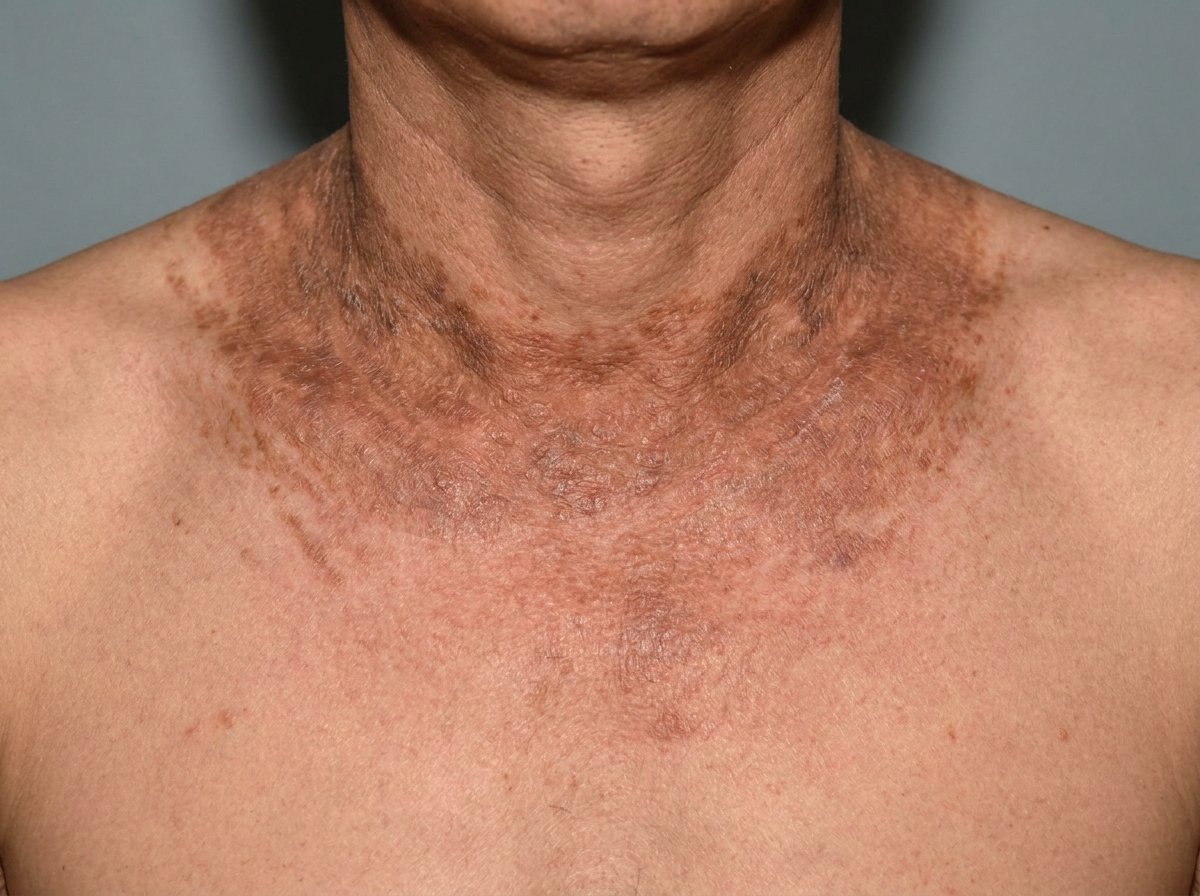
Which of the following is not true about hydroquinone?
Cutis marmorata occurs due to exposure to –
What is the most common association with Acanthosis nigricans?
Defect seen in Vitiligo is:
Explanation: ***Indomethacin*** - While indomethacin can cause various ocular side effects, **corneal deposits** are not typically described as the **amorphous whorl-like type** seen with the other listed drugs. - Ocular side effects of indomethacin more commonly include **corneal opacities** and **retinal changes** but not the specific **"cornea verticillata"** pattern. *Chlorpromazine* - **Chlorpromazine** can cause **corneal and lenticular deposits**, but these are typically described as **fine granular or stellate deposits** rather than the classic whorl pattern. - While these deposits can accumulate in the corneal epithelium, they do not characteristically present with the **"cornea verticillata"** (whorl keratopathy) pattern seen with amiodarone and chloroquine. - The deposits are generally benign but can lead to visual disturbances. *Amiodarone* - **Amiodarone** is a classic cause of **cornea verticillata**, or **whorl keratopathy**, with amorphous, whorl-like deposits in the corneal epithelium. - These deposits occur in **>90% of patients** on long-term therapy and are typically benign and rarely affect vision. - The whorl pattern is highly characteristic and reversible upon drug discontinuation. *Chloroquine* - **Chloroquine** (and hydroxychloroquine) commonly causes **corneal deposits** known as **cornea verticillata**, which appear as gray-brown, whorl-like opacities in the corneal epithelium. - While these deposits are usually asymptomatic, high doses or prolonged use can lead to visual blurring or halos. - The whorl pattern is a characteristic finding with this class of drugs.
Explanation: ***Tetracycline*** - **Tetracyclines** are well-known to cause **photosensitivity reactions**, leading to exaggerated sunburns, rashes, or skin discoloration upon sun exposure. - This adverse effect is thought to be due to an interaction between the drug and UV light, leading to the formation of reactive oxygen species and subsequent cell damage. *Metronidazole* - While metronidazole can cause a variety of side effects, significant **photosensitivity** is generally not considered a common or prominent adverse reaction. - It is often associated with a **disulfiram-like reaction** when consumed with alcohol, as well as gastrointestinal upset and a metallic taste. *Ivermectin* - **Ivermectin** is primarily used as an antiparasitic agent and is not typically associated with **photosensitivity** as a common side effect. - Its main adverse effects are usually related to the Mazzotti reaction during treatment of onchocerciasis or other systemic symptoms like dizziness or nausea. *Fluconazole* - **Fluconazole**, an antifungal medication, has a relatively low incidence of causing **photosensitivity** compared to other drug classes. - Common side effects include gastrointestinal disturbances, headache, and elevated liver enzymes, but severe phototoxic reactions are rare.
Explanation: ***Minocycline*** - **Minocycline** is a **tetracycline** antibiotic commonly used for acne and is notorious for causing various forms of **pigmentation**, including blue-gray discoloration of the skin, scars, and teeth, especially with long-term use. - This pigmentation is due to the formation of **insoluble chelates** of minocycline with iron and melanin within tissues. *Doxycycline* - While also a **tetracycline**, **doxycycline** is less commonly associated with significant **skin pigmentation** compared to minocycline at standard acne treatment doses. - Its side effect profile for pigmentation usually involves **photosensitivity** or **tooth discoloration** in children, not generally diffuse skin discoloration in adolescents. *Clindamycin* - **Clindamycin** is a **lincosamide antibiotic** primarily used topically or orally for acne, but it does not cause **pigmentation** as a known side effect. - Its main systemic side effect concern is **Clostridioides difficile-associated diarrhea (CDAD)**. *Azithromycin* - **Azithromycin** is a **macrolide antibiotic** and is not typically associated with **skin pigmentation** as a side effect. - It is sometimes used for acne, but its side effects are primarily **gastrointestinal** (nausea, vomiting, diarrhea).
Explanation: ***Rifampicin*** - **Rifampicin** is well-known for causing **orange-red discoloration** of urine, sweat, tears, and other body fluids due to its intrinsic color. - This side effect is benign and does not indicate liver damage or other serious toxicity, but patients should be informed about it. *Ethambutol* - **Ethambutol** is primarily associated with **optic neuritis**, leading to decreased visual acuity and red-green color blindness. - It does not cause discoloration of body fluids. *Pyrazinamide* - **Pyrazinamide** is commonly associated with **hepatotoxicity** and **hyperuricemia**, which can lead to gout. - It does not cause discoloration of body fluids. *Isoniazid* - **Isoniazid** is known to cause **peripheral neuropathy** (prevented by pyridoxine supplementation) and **hepatotoxicity**. - It does not cause discoloration of body fluids.
Explanation: ***Back of cornea*** - **Krukenberg's spindle** is a classic sign of **pigment dispersion syndrome** and subsequent pigmentary glaucoma. - It results from the deposition of **pigment granules** on the **endothelium of the central posterior cornea**, forming a **vertical spindle-shaped pattern**. - This is a pathognomonic finding that helps distinguish pigmentary glaucoma from other forms of glaucoma. *Incorrect: Trabecular meshwork* - While **pigment deposition** on the trabecular meshwork is crucial in pigmentary glaucoma, leading to **increased outflow resistance** and elevated intraocular pressure, the term **Krukenberg's spindle** specifically refers to pigment on the corneal endothelium. - Pigment on the trabecular meshwork appears as **increased pigmentation of the angle** on gonioscopy, sometimes described as **Scheie's stripe** or **Sampaolesi's line**. *Incorrect: Anterior surface of the lens* - Pigment can deposit on the **anterior lens capsule** in pigment dispersion syndrome, appearing as fine dusting. - However, this deposition is **not referred to as Krukenberg's spindle**, which is specific to the posterior corneal surface. *Incorrect: Posterior surface of iris* - In pigment dispersion syndrome, **pigment is released FROM the posterior iris** due to mechanical rubbing against zonular fibers, creating **radial transillumination defects**. - However, Krukenberg's spindle refers to where pigment is **deposited** (corneal endothelium), not where it originates from.
Explanation: ***Pellagra*** - The image shows a classic "butterfly" rash on the face, specifically a photosensitive dermatitis, which is a hallmark of **pellagra**. - Pellagra is caused by a deficiency of **niacin (vitamin B3)**, characterized by the "3 D's": **dermatitis**, **diarrhea**, and **dementia**. *Photo dermatitis* - While pellagra often presents with photosensitive dermatitis, "photo dermatitis" is a general term for **skin inflammation caused by light exposure** and not a specific disease itself. - It could be caused by various factors, including medication, immune reactions, or other underlying conditions, but the pattern seen here is highly suggestive of pellagra. *Acrodermatitis enteropathica* - This condition is a **hereditary zinc deficiency** that typically presents with a periorificial and acral dermatitis. - The skin lesions are typically **vesicular-pustular or eczematous** and do not usually have the distinct butterfly pattern of photosensitive dermatitis seen in the image. *Vitamin B deficiency* - While pellagra is a vitamin B **(niacin, B3)** deficiency, this option is too broad. - Other vitamin B deficiencies, such as **riboflavin (B2)** or **pyridoxine (B6)** deficiency, have different dermatological manifestations like angular cheilitis, glossitis, or seborrheic dermatitis, but not the characteristic facial rash seen here.
Explanation: ***It should not be used for melasma or chloasma of pregnancy*** - This statement is **NOT TRUE** - hydroquinone is actually a **first-line treatment for melasma** including chloasma (melasma of pregnancy) - Hydroquinone 2-4% is one of the **most effective topical agents** for treating melasma and is widely recommended in dermatological guidelines - While hydroquinone use during **active pregnancy** is approached with caution (FDA Category C), it is definitely indicated for treating melasma/chloasma **after pregnancy** and for general melasma in non-pregnant patients - The condition (melasma/chloasma) is appropriately treated with hydroquinone; only the **timing during pregnancy** requires consideration *Response is incomplete and pigmentation may recur* - This is a **TRUE statement** about hydroquinone therapy - Treatment response is often **incomplete** with partial lightening of hyperpigmentation - **Recurrence is common** after discontinuation, especially with continued sun exposure or hormonal triggers - Maintenance therapy is often needed to sustain results *It inhibits tyrosinase* - This is a **TRUE statement** - hydroquinone's primary mechanism of action - Acts as a **competitive inhibitor of tyrosinase**, the rate-limiting enzyme in melanin synthesis - This inhibition reduces melanin production in melanocytes, leading to depigmentation *It requires prescription strength concentrations above 2%* - This is a **TRUE statement** in most countries including India and the USA - Hydroquinone concentrations **≤2%** are available over-the-counter (OTC) - Concentrations **>2% (typically 3-4%)** require a prescription - Higher concentrations provide greater efficacy but also increased risk of side effects like ochronosis
Explanation: ***Cold temperature*** - **Cutis marmorata** is a physiological response to **cold temperatures**, characterized by a mottled, reticulated vascular pattern on the skin. - This occurs due to **vasoconstriction** of the small arteries and arterioles, alongside **vasodilation** of the venules, creating the characteristic marbled appearance. *Dust* - Exposure to **dust** typically causes **irritation**, allergic reactions, or respiratory issues, such as **dermatitis**, **contact urticaria**, or **asthma**. - It does not directly lead to the characteristic vascular changes seen in cutis marmorata. *Hot temperature* - **Hot temperatures** generally cause **vasodilation** in the skin to facilitate **heat dissipation**, leading to redness and warmth. - This is the opposite physiological response to cutis marmorata, which involves vasoconstriction. *Humidity* - **Humidity** primarily affects **skin hydration** and the rate of perspiration, potentially exacerbating certain skin conditions like **eczema** or **fungal infections**. - High or low humidity does not directly induce the vascular changes that result in cutis marmorata.
Explanation: **Explanation:** **Acanthosis Nigricans (AN)** is a common dermatological condition characterized by hyperpigmented, velvety plaques, typically found in intertriginous areas like the axilla and neck. **Why Obesity is the Correct Answer:** Obesity is the **most common** association and cause of Acanthosis Nigricans (Pseudo-acanthosis nigricans). The underlying mechanism is **Insulin Resistance**. In obese individuals, high levels of circulating insulin bind to **Insulin-like Growth Factor-1 (IGF-1) receptors** on keratinocytes and fibroblasts. This stimulates excessive proliferation of these cells, leading to the characteristic epidermal thickening and hyperpigmentation. **Analysis of Incorrect Options:** * **Diabetes Mellitus (B):** While AN is a strong cutaneous marker for Type 2 Diabetes, it usually precedes the clinical onset of diabetes. Obesity remains the primary driver and more frequent association. * **Hypertension (A) & Hypothyroidism (D):** These are often part of the "Metabolic Syndrome" or associated endocrinopathies (like PCOS), but they are not the primary or most common cause of the skin changes seen in AN. **High-Yield Clinical Pearls for NEET-PG:** * **Malignant Acanthosis Nigricans:** If AN appears suddenly, is very extensive, or involves the palms (**Tripe Palms**) and oral mucosa, it is highly suggestive of internal malignancy, most commonly **Gastric Adenocarcinoma**. * **Histopathology:** Shows hyperkeratosis and papillomatosis. Note that "acanthosis" (thickening of the stratum spinosum) is actually minimal despite the name. * **Common Sites:** Neck (most common), axilla, groins, and knuckles. * **Drug-induced AN:** Can be caused by Nicotinic acid, systemic corticosteroids, and OCPs.
Explanation: **Explanation:** **Vitiligo** is an acquired, chronic pigmentary disorder characterized by the selective destruction of melanocytes. **1. Why Option B is correct:** The hallmark of vitiligo is the **complete absence of functional melanocytes** in the affected skin. This is primarily due to an autoimmune-mediated destruction where T-cells target melanocyte-specific antigens. Histopathologically, a skin biopsy of a stable vitiligo lesion shows a total lack of melanocytes (DOPA-negative) and a consequent absence of melanin in the epidermis. **2. Why other options are incorrect:** * **Option A (Absent melanosomes):** This is seen in **Chediak-Higashi syndrome** or specific trafficking defects. In vitiligo, the "factory" (melanocyte) is gone, so melanosomes are naturally absent, but the primary defect is the cell loss itself. * **Option C (Reduction in melanin synthesis):** This describes **Albinism**, where melanocytes are present in normal numbers, but there is a genetic defect in the enzyme tyrosinase, leading to decreased melanin production. * **Option D (Reduction in number of melanocytes):** This describes **Nevus Depigmentosus** or **Pityriasis Alba**, where melanocytes are present but decreased in number or activity. In vitiligo, the loss is absolute in the lesion. **High-Yield Clinical Pearls for NEET-PG:** * **Most common association:** Autoimmune thyroid disease (Hashimoto’s). * **Koebner Phenomenon:** Vitiligo is Koebner positive (new lesions at sites of trauma). * **Segmental Vitiligo:** Does not follow the Koebner phenomenon and has a dermatomal distribution. * **Treatment of Choice:** Narrowband UVB (NB-UVB) is the gold standard for generalized vitiligo. * **Wood’s Lamp:** Lesions show a characteristic **"milky white"** fluorescence.
Get full access to all questions, explanations, and performance tracking.
Start For Free