What is the most common association with Acanthosis nigricans?
Defect seen in Vitiligo is:
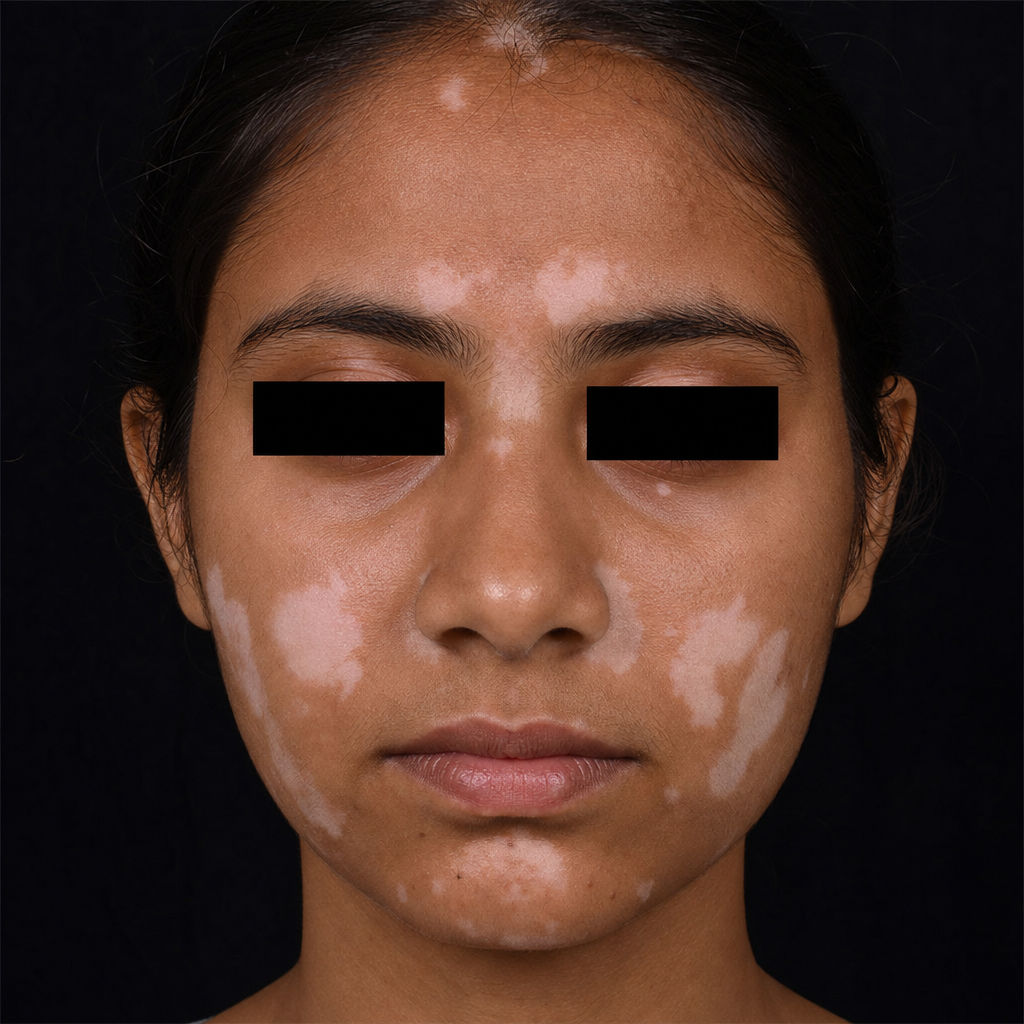
An increased incidence of vitiligo is found in association with which of the following conditions?
A 'silver tattoo' is due to deposition of which substance in the oral mucosa?
Fine reticular pigmentation with palmar pits is seen in which of the following conditions?
A child presents with a 2x2 cm depigmented macule with irregular margins over the forehead and glabella. There is a white forelock over the forehead since birth. What is the most likely diagnosis?
A 21-year-old lady on oral contraceptive pills presents with light brown pigmentation of the malar eminences. What is the likely diagnosis?
Idiopathic guttate hypomelanosis usually occurs over which area of the body?
What concentration of hydroquinone is recommended for treating melasma?
A 59-year-old woman presents with increasing skin pigmentation. Physical examination shows hyperkeratosis and hyperpigmentation of the axilla, neck, flexures, and anogenital region. Endocrinologic studies reveal normal serum levels of adrenal corticosteroids and glucocorticoids. If this patient's skin pigmentation represents a paraneoplastic syndrome, the primary tumor would most likely be found in which of the following anatomic locations?
Explanation: **Explanation:** **Acanthosis Nigricans (AN)** is a common dermatological condition characterized by hyperpigmented, velvety plaques, typically found in intertriginous areas like the axilla and neck. **Why Obesity is the Correct Answer:** Obesity is the **most common** association and cause of Acanthosis Nigricans (Pseudo-acanthosis nigricans). The underlying mechanism is **Insulin Resistance**. In obese individuals, high levels of circulating insulin bind to **Insulin-like Growth Factor-1 (IGF-1) receptors** on keratinocytes and fibroblasts. This stimulates excessive proliferation of these cells, leading to the characteristic epidermal thickening and hyperpigmentation. **Analysis of Incorrect Options:** * **Diabetes Mellitus (B):** While AN is a strong cutaneous marker for Type 2 Diabetes, it usually precedes the clinical onset of diabetes. Obesity remains the primary driver and more frequent association. * **Hypertension (A) & Hypothyroidism (D):** These are often part of the "Metabolic Syndrome" or associated endocrinopathies (like PCOS), but they are not the primary or most common cause of the skin changes seen in AN. **High-Yield Clinical Pearls for NEET-PG:** * **Malignant Acanthosis Nigricans:** If AN appears suddenly, is very extensive, or involves the palms (**Tripe Palms**) and oral mucosa, it is highly suggestive of internal malignancy, most commonly **Gastric Adenocarcinoma**. * **Histopathology:** Shows hyperkeratosis and papillomatosis. Note that "acanthosis" (thickening of the stratum spinosum) is actually minimal despite the name. * **Common Sites:** Neck (most common), axilla, groins, and knuckles. * **Drug-induced AN:** Can be caused by Nicotinic acid, systemic corticosteroids, and OCPs.
Explanation: **Explanation:** **Vitiligo** is an acquired, chronic pigmentary disorder characterized by the selective destruction of melanocytes. **1. Why Option B is correct:** The hallmark of vitiligo is the **complete absence of functional melanocytes** in the affected skin. This is primarily due to an autoimmune-mediated destruction where T-cells target melanocyte-specific antigens. Histopathologically, a skin biopsy of a stable vitiligo lesion shows a total lack of melanocytes (DOPA-negative) and a consequent absence of melanin in the epidermis. **2. Why other options are incorrect:** * **Option A (Absent melanosomes):** This is seen in **Chediak-Higashi syndrome** or specific trafficking defects. In vitiligo, the "factory" (melanocyte) is gone, so melanosomes are naturally absent, but the primary defect is the cell loss itself. * **Option C (Reduction in melanin synthesis):** This describes **Albinism**, where melanocytes are present in normal numbers, but there is a genetic defect in the enzyme tyrosinase, leading to decreased melanin production. * **Option D (Reduction in number of melanocytes):** This describes **Nevus Depigmentosus** or **Pityriasis Alba**, where melanocytes are present but decreased in number or activity. In vitiligo, the loss is absolute in the lesion. **High-Yield Clinical Pearls for NEET-PG:** * **Most common association:** Autoimmune thyroid disease (Hashimoto’s). * **Koebner Phenomenon:** Vitiligo is Koebner positive (new lesions at sites of trauma). * **Segmental Vitiligo:** Does not follow the Koebner phenomenon and has a dermatomal distribution. * **Treatment of Choice:** Narrowband UVB (NB-UVB) is the gold standard for generalized vitiligo. * **Wood’s Lamp:** Lesions show a characteristic **"milky white"** fluorescence.
Explanation: **Explanation:** **Vitiligo** is a chronic autoimmune skin disorder characterized by the destruction of melanocytes. The key medical concept to understand for NEET-PG is that vitiligo is frequently associated with other **organ-specific autoimmune disorders**. **1. Why Diabetes Mellitus is correct:** Vitiligo is part of a spectrum of autoimmune polyendocrine syndromes. There is a statistically significant association between vitiligo and **Type 1 Diabetes Mellitus** (and occasionally Type 2) due to shared genetic susceptibility and autoimmune pathways. Other common associations include: * **Thyroid disorders** (most common association, especially Hashimoto’s thyroiditis). * Pernicious anemia. * Addison’s disease. * Alopecia areata. **2. Why the other options are incorrect:** * **Psoriasis (A):** While both are T-cell mediated inflammatory skin diseases, psoriasis is not classically associated with the systemic autoimmune cluster seen in vitiligo. * **Nutritional deficiency (B):** Vitiligo is an autoimmune process, not a nutritional one. While some studies suggest low Vitamin B12 or Vitamin D levels in vitiligo patients, deficiency is not a causative or strongly associated factor. * **Old age (C):** Vitiligo typically has an early onset; 50% of cases begin before age 20. It is not a degenerative condition of aging. **High-Yield Clinical Pearls for NEET-PG:** * **Most common association:** Thyroid dysfunction (check TSH in vitiligo patients). * **Koebner Phenomenon:** Vitiligo shows positivity (depigmentation at sites of trauma). * **Vogt-Koyanagi-Harada Syndrome:** Vitiligo associated with uveitis, meningitis, and auditory symptoms. * **Treatment of choice:** Narrowband UVB (NB-UVB) is the gold standard for generalized vitiligo.
Explanation: **Explanation:** The correct answer is **A. Silver amalgam in mucosa.** An **amalgam tattoo** (often referred to as a "silver tattoo") is a common iatrogenic lesion caused by the accidental implantation of dental restorative material into the oral soft tissues. This typically occurs during the placement or removal of silver amalgam fillings, or during endodontic procedures (like an apicoectomy). **Why Option A is correct:** The "tattoo" effect occurs when silver particles from the amalgam are embedded into the **lamina propria** of the oral mucosa. Once in the tissue, the silver salts stain the reticulin fibers of the basement membrane and blood vessel walls, resulting in a localized, asymptomatic, slate-grey to bluish-black macule. **Why other options are incorrect:** * **Options B, C, and D:** While amalgam is used to restore dentin and enamel, and may occasionally come into contact with bone during surgery, the clinical term "silver tattoo" specifically refers to the visible **mucosal pigmentation**. Pigmentation within the hard tissues (bone, dentin, enamel) does not manifest as a "tattoo" because these tissues are not superficial or translucent enough to show the characteristic localized blue-grey discoloration seen on the surface of the gums or cheeks. **High-Yield Clinical Pearls for NEET-PG:** * **Most Common Site:** The gingiva and alveolar mucosa are the most frequent sites. * **Radiology:** On a periapical X-ray, radiopaque (white) speckles may be visible at the site of the tattoo if the fragments are large enough. * **Differential Diagnosis:** It is crucial to differentiate an amalgam tattoo from a **malignant melanoma**. If the lesion is expanding or lacks a history of dental work, a biopsy is mandatory. * **Histology:** Characterized by black, granular deposits along collagen fibers and around small blood vessels.
Explanation: **Explanation:** **Dowling-Degos Disease (DDD)** is an autosomal dominant genodermatosis characterized by a defect in the **KRT5 gene** (Keratin 5). The hallmark clinical presentation is **fine, reticulate (lace-like) hyperpigmentation** that typically begins in the axillae and groin and later spreads to other flexures. A diagnostic clinical clue for DDD is the presence of **pitted perioral scars** and **comedo-like lesions** (dark keratinous plugs) on the neck and back, along with **palmar pits**. Histologically, it shows "antler-like" or "filiform" downward extensions of the epidermis with hyperpigmentation of the tips. **Why the other options are incorrect:** * **Rothmund-Thomson Syndrome:** Characterized by **poikiloderma** (atrophy, telangiectasia, and mottled pigmentation) starting on the cheeks, associated with juvenile cataracts and skeletal abnormalities. * **Cockayne Syndrome:** A DNA repair defect presenting with **cachectic dwarfism**, "bird-like" facies, and extreme photosensitivity, but lacks reticulate pigmentation or palmar pits. * **Bloom Syndrome:** Features a characteristic **malar "butterfly" rash** (photosensitive telangiectatic erythema) and proportional short stature due to chromosomal instability (BLM gene). **High-Yield Clinical Pearls for NEET-PG:** * **Reticulate Pigmentation Spectrum:** If the question mentions reticulate pigmentation *plus* hypopigmented macules and nail dystrophy, think of **Dyskeratosis Congenita**. * **Kitamura Reticulate Acropigmentation:** Similar to DDD but involves the **dorsum of hands and feet** (acral distribution) and is associated with the *ADAM10* gene. * **Palmar Pits Triad:** Always remember the three major causes of palmar pits: **Dowling-Degos Disease**, **Gorlin Syndrome** (Basal Cell Nevus Syndrome), and **Darier Disease**.
Explanation: **Explanation:** The clinical presentation of a **congenital depigmented macule** associated with a **white forelock (poliosis)** is the classic hallmark of **Piebaldism**. **1. Why Piebaldism is Correct:** Piebaldism is an autosomal dominant disorder caused by a mutation in the **KIT proto-oncogene**, which leads to defective migration and differentiation of melanoblasts from the neural crest to the skin during embryogenesis. Key features include: * **Congenital presence:** Present since birth (unlike vitiligo). * **White Forelock:** Occurs in 80-90% of cases, typically in a triangular or diamond shape. * **Distribution:** Depigmented patches usually involve the central forehead, trunk, and extremities, often with "islands" of normal pigmentation within the patches. **2. Why Other Options are Incorrect:** * **Dermatitis:** This is an inflammatory skin condition characterized by erythema, scaling, and itching. While post-inflammatory hypopigmentation can occur, it is not congenital and does not present with a white forelock. * **Vitiligo:** This is an acquired autoimmune destruction of melanocytes. It typically appears later in life, is progressive, and lacks the stable, congenital pattern seen here. * **Nevus of Ito:** This is a dermal melanocytosis presenting as a **bluish-gray hyperpigmented** patch (not depigmented) along the distribution of the posterior supraclavicular and lateral cutaneous brachial nerves. **Clinical Pearls for NEET-PG:** * **Differential Diagnosis:** Always differentiate Piebaldism from **Waardenburg Syndrome**, which also features a white forelock but includes systemic findings like sensorineural deafness and heterochromia iridis. * **Stability:** Unlike Vitiligo, the patches in Piebaldism are stable and do not change significantly in size throughout life. * **Histopathology:** Shows a complete absence of melanocytes in the depigmented areas.
Explanation: **Explanation:** The clinical presentation of light brown pigmentation over the malar eminences in a young female taking oral contraceptive pills (OCPs) is a classic description of **Melasma**. **Why Melasma is correct:** Melasma (also known as chloasma or the "mask of pregnancy") is an acquired hypermelanosis characterized by symmetrical, irregular, light-to-dark brown macules and patches on sun-exposed areas, most commonly the face (malar, centrofacial, and mandibular patterns). It is primarily driven by **estrogen and progesterone**, which stimulate melanogenesis. Common triggers include pregnancy, OCP use, and UV radiation. **Why the other options are incorrect:** * **Haemochromatosis:** Presents with generalized "bronze" skin pigmentation due to iron deposition, often associated with systemic features like diabetes and cirrhosis, rather than localized facial patches. * **Systemic Lupus Erythematosus (SLE):** Characterized by a "malar rash" (butterfly rash) that is typically **erythematous (red)**, inflammatory, and spares the nasolabial folds. It is not a brown pigmentary disorder. * **Melanoma:** This is a malignant tumor of melanocytes. It usually presents as an asymmetrical, irregular, enlarging pigmented lesion (ABCDE criteria) rather than diffuse, symmetrical patches. **High-Yield Clinical Pearls for NEET-PG:** * **Wood’s Lamp Examination:** Used to determine the depth of pigment. **Epidermal** melasma enhances under Wood’s lamp, while **dermal** melasma does not. * **Treatment:** The gold standard is **Kligman’s Formula** (Triple Combination Therapy): Hydroquinone (lightening agent), Tretinoin (exfoliant), and a mild Corticosteroid (anti-inflammatory). * **Prevention:** Strict photoprotection (broad-spectrum sunscreen) is the most critical step in management.
Explanation: **Explanation:** **Idiopathic Guttate Hypomelanosis (IGH)** is a common, benign, acquired leukoderma characterized by multiple, discrete, round or oval, porcelain-white macules (usually 2–5 mm in diameter). 1. **Why Option A is correct:** The pathogenesis of IGH is linked to **chronic cumulative sun exposure** and the natural aging process of melanocytes. Consequently, it most frequently occurs on **sun-exposed areas**, specifically the **anterior aspects of the legs (shins)** and the **dorsal/anterior aspects of the forearms**. The lesions are asymptomatic and do not coalesce. 2. **Why other options are incorrect:** * **Option B (Face and ears):** While these are sun-exposed areas, IGH paradoxically spares the face in the vast majority of cases. Facial hypopigmentation is more characteristic of *Pityriasis alba* or *Vitiligo*. * **Option C (Flexural regions):** Flexural areas (axilla, groin) are sun-protected. Disorders like *Acanthosis nigricans* (hyperpigmentation) or *Candidiasis* occur here, not IGH. * **Option D (Extensor surfaces):** While forearms are extensor surfaces, the term "anterior legs and forearms" is the more specific clinical description used in standard dermatological textbooks (like Fitzpatrick) to describe the classic distribution of IGH. **High-Yield Clinical Pearls for NEET-PG:** * **Morphology:** "Guttate" means drop-like. The macules have sharply defined borders. * **Histopathology:** Shows hyperkeratosis, a flattened dermo-epidermal junction, and a **reduction/absence of melanin** in the basal layer with a decreased number of melanocytes. * **Differential Diagnosis:** Must be distinguished from *Vitiligo* (which shows total loss of pigment and often involves periorificial areas) and *Tinea versicolor* (which has fine scaling/positive KOH mount). * **Treatment:** Usually not required (benign). Options include topical retinoids, cryotherapy, or localized dermabrasion for cosmetic concerns.
Explanation: **Explanation:** Hydroquinone (HQ) is considered the "gold standard" topical therapy for melasma. It acts as a tyrosinase inhibitor, preventing the conversion of L-dopa to melanin. **1. Why 2% to 5% is correct:** The therapeutic window for hydroquinone in clinical practice is typically **2% to 5%**. * **2% concentration** is often available over-the-counter (in some regions) or used for sensitive skin, providing a balance between efficacy and safety. * **4% to 5% concentrations** are the most common prescription strengths (often used in Kligman’s Formula) as they provide maximum depigmenting efficacy. Increasing the concentration beyond 5% significantly raises the risk of severe side effects without a proportional increase in clinical benefit. **2. Analysis of incorrect options:** * **1% to 2% (Options A & B):** While 2% is used, 1% is generally considered sub-therapeutic for significant melasma and is rarely used as a standalone treatment in clinical dermatology. * **10% (Option D):** This is a dangerously high concentration. High strengths of HQ are associated with a high risk of **Exogenous Ochronosis** (asymptomatic blue-black hyperpigmentation) and permanent "confetti-like" depigmentation. **3. Clinical Pearls for NEET-PG:** * **Mechanism of Action:** Inhibition of tyrosinase enzyme. * **Kligman’s Triad (Modified):** Hydroquinone (4%) + Tretinoin (0.05%) + Fluocinolone acetonide (0.01%). This is the most effective treatment for melasma. * **Side Effects:** Contact dermatitis, post-inflammatory hyperpigmentation, and the most high-yield side effect: **Exogenous Ochronosis** (seen with prolonged use or high concentrations). * **Duration:** It is usually recommended to limit use to 3–6 months to prevent complications.
Explanation: ### Explanation **Diagnosis: Acanthosis Nigricans (Malignant Type)** The clinical presentation of symmetrical, velvety hyperpigmentation and hyperkeratosis in intertriginous areas (axilla, neck, flexures) is characteristic of **Acanthosis Nigricans (AN)**. While AN is most commonly associated with insulin resistance and obesity (Pseudo-acanthosis nigricans), its sudden onset in an older, non-obese patient—especially when extensive—strongly suggests a **paraneoplastic syndrome**. **1. Why the Stomach is Correct:** Malignant Acanthosis Nigricans is most frequently associated with **intra-abdominal adenocarcinomas**. Among these, **Gastric Adenocarcinoma** is the most common primary tumor (accounting for approximately 55–60% of cases). The pathogenesis involves the secretion of Transforming Growth Factor-alpha (TGF-α) by the tumor, which stimulates Epidermal Growth Factor (EGF) receptors, leading to epidermal proliferation. **2. Why Other Options are Incorrect:** * **Bladder and Cervix:** While malignancies in these areas can occasionally trigger paraneoplastic signs, they are significantly less common than gastrointestinal or hepatic malignancies in the context of AN. * **Esophagus:** Squamous cell carcinoma of the esophagus is more typically associated with **Tylosis** (palmar-plantar keratoderma) rather than Acanthosis Nigricans. **3. NEET-PG High-Yield Pearls:** * **Tripe Palms:** Rugose, velvety thickening of the palms; often co-exists with malignant AN. If seen alone, it is highly associated with **Lung Cancer**; if seen with AN, it points to **Gastric Cancer**. * **Leser-Trélat Sign:** The sudden eruption of multiple seborrheic keratoses; often occurs alongside malignant AN, signaling an underlying GI malignancy. * **Benign vs. Malignant AN:** Benign AN is usually gradual and associated with endocrine disorders (PCOS, Diabetes). Malignant AN is characterized by rapid onset, extensive involvement, and involvement of mucosa or palms/soles.
Explanation: ### Explanation The clinical presentation of very pale skin, white hair, pink irises (transillumination), and early-onset squamous cell carcinomas (SCC) is diagnostic of **Oculocutaneous Albinism (OCA)**. **1. Why Aromatic Amino Acids is Correct:** OCA is most commonly caused by a deficiency or defect in the enzyme **tyrosinase**. Tyrosinase is the rate-limiting enzyme in melanogenesis, responsible for converting **Tyrosine** into DOPA and subsequently into melanin. Tyrosine is an **aromatic amino acid**. Without functional tyrosinase, melanocytes cannot produce melanin, leading to a total lack of pigment in the skin, hair, and eyes. This lack of protective melanin results in extreme photosensitivity and a high risk of UV-induced skin cancers (SCC and BCC) at a young age. **2. Why Incorrect Options are Wrong:** * **B. Branched-chain amino acids (Leucine, Isoleucine, Valine):** Defects here lead to **Maple Syrup Urine Disease (MSUD)**, characterized by neurological deterioration and a burnt-sugar odor in urine, not pigmentary disorders. * **C. Glycolipids:** Disorders of glycolipid metabolism (e.g., Gaucher or Fabry disease) are **Lysosomal Storage Diseases**, typically presenting with organomegaly and neurological or renal issues. * **D. Glycoproteins:** Defects in glycoprotein metabolism or transport (e.g., I-cell disease) lead to skeletal abnormalities and developmental delays. **3. NEET-PG High-Yield Pearls:** * **Inheritance:** Most forms of OCA are **Autosomal Recessive**. * **Melanocyte Count:** In Albinism, the **number of melanocytes is normal**, but melanin production is absent. (Contrast this with Vitiligo, where melanocytes are destroyed). * **Visual Acuity:** Patients often have nystagmus and reduced visual acuity due to foveal hypoplasia. * **Chediak-Higashi Syndrome:** A related condition featuring partial albinism, giant lysosomal granules, and recurrent infections.
Explanation: **Explanation:** Congenital disorders of pigmentation are a diverse group of genetic conditions characterized by localized or generalized loss of pigment (hypomelanosis/leukoderma) present at or shortly after birth. **1. Why "All the above" is correct:** All three conditions listed are classic examples of congenital hypopigmentary disorders, though they differ in their genetic etiology and associated systemic features: * **Teitz Syndrome (Option A):** An autosomal dominant condition caused by mutations in the **MITF gene**. It is characterized by generalized hypopigmentation (albinoid-like appearance) and profound congenital sensorineural hearing loss. * **Piebaldism (Option B):** An autosomal dominant disorder caused by mutations in the **KIT proto-oncogene**. It presents as stable, localized areas of leukoderma, most characteristically a **white forelock** (poliosis) and depigmented patches on the forehead, trunk, and extremities with islands of hyperpigmentation within them. * **Tuberous Sclerosis Complex (Option C):** A neurocutaneous syndrome (phakomatosis) where the earliest cutaneous sign is often the **Ash-leaf spot** (hypopigmented macule). These are present at birth or in early infancy and are best visualized using a Wood’s lamp. **Clinical Pearls for NEET-PG:** * **Piebaldism vs. Vitiligo:** Piebaldism is congenital and static, whereas Vitiligo is acquired and progressive. * **Waardenburg Syndrome:** Often confused with Teitz syndrome; it also features a white forelock and deafness but includes **dystopia canthorum** (lateral displacement of inner canthi), which is absent in Teitz syndrome. * **Vogt-Koyanagi-Harada (VKH) Syndrome:** An important differential for *acquired* leukoderma associated with uveitis and auditory symptoms. * **Ash-leaf spots:** To be clinically significant for TSC, usually three or more macules (at least 5mm in diameter) are required.
Explanation: ### Explanation **Nevus depigmentosus** is the correct answer because it is a congenital, non-progressive **hypopigmented** (not truly depigmented) macule or patch. The underlying medical concept is a functional defect in melanocytes; while the number of melanocytes is usually normal, there is a decrease in the synthesis and transfer of melanosomes to keratinocytes. Clinically, it presents as a "stable" pale patch that does not change in size relative to body growth and does not have the chalky-white appearance of vitiligo. **Why the other options are incorrect:** * **Nevus of Ota:** This is a dermal melanocytosis characterized by **hyperpigmentation**. It presents as a blue-grey patch typically following the distribution of the ophthalmic (V1) and maxillary (V2) branches of the trigeminal nerve. It often involves the sclera. * **Nevus of Ito:** Similar to Nevus of Ota, this is a **hyperpigmented** blue-grey lesion, but it occurs in the distribution of the posterior supraclavicular and lateral cutaneous brachial nerves (shoulder, supraclavicular, and scapular areas). * **All of the above:** This is incorrect because Ota and Ito are hyperpigmentary disorders, whereas the question asks for a hypo-depigmented lesion. **NEET-PG High-Yield Pearls:** * **Wood’s Lamp:** Nevus depigmentosus shows an "off-white" fluorescence, whereas Vitiligo shows a "bright, chalky-white" fluorescence. * **Differential Diagnosis:** Unlike **Nevus anemicus** (a vascular anomaly), Nevus depigmentosus does *not* show erythema when rubbed (negative Darier-like sign) and remains pale under diascopy. * **Stability:** Nevus depigmentosus is permanent and stable, unlike **Tinea versicolor** (fungal) or **Pityriasis alba** (eczematous), which are transient.
Explanation: **Explanation:** **Peutz-Jeghers Syndrome (PJS)** is an autosomal dominant disorder caused by a mutation in the **STK11 (LKB1)** gene. It is classically characterized by the triad of mucocutaneous hyperpigmentation, gastrointestinal hamartomatous polyposis, and an increased risk of visceral malignancies. 1. **Why Option A is Correct:** The hallmark dermatological finding is **multiple brown to bluish-black macules** (lentigines). These are typically 1–5 mm in size and occur most characteristically on the **lips and buccal mucosa** (90% of cases). They also appear on the palms, soles, and periorbital areas. Unlike common freckles, these mucosal lesions do not fade with sun exposure. 2. **Why Incorrect Options are Wrong:** * **Option B:** "Coffee-colored" (Café-au-lait) spots are characteristic of Neurofibromatosis Type 1 or McCune-Albright syndrome, not PJS. * **Option C:** Creamy or hypopigmented patches (like ash-leaf spots) are seen in Tuberous Sclerosis. * **Option D:** The pigmentation in PJS is never solitary; it is always multifocal and widespread across the affected mucosal and cutaneous surfaces. **High-Yield Clinical Pearls for NEET-PG:** * **Inheritance:** Autosomal Dominant; Gene: **STK11** on Chromosome 19p. * **GI Findings:** Multiple **hamartomatous polyps** (most common in the small intestine). These can lead to **intussusception** (lead point) or GI bleeding. * **Malignancy Risk:** Significantly increased risk of colorectal, pancreatic, breast, and ovarian (Sertoli cell tumors) cancers. * **Differentiating Point:** Freckles (Ephelides) spare the mucosa; PJS lentigines involve the **buccal mucosa**.
Explanation: **Explanation:** **Xanthomas** are localized deposits of lipids (primarily cholesterol) within the skin, tendons, or subcutaneous tissues. They occur when circulating lipids leak from capillaries into the dermis and are subsequently engulfed by dermal macrophages, transforming them into characteristic **foam cells**. **Why Hyperlipidemia is correct:** The primary underlying cause of xanthomas is an alteration in lipid metabolism. They are most commonly associated with **Hyperlipidemias** (both primary/familial and secondary). When serum lipid levels are chronically elevated, lipids accumulate in the extravascular space, leading to the clinical manifestation of various types of xanthomas (e.g., Eruptive, Tuberous, Tendinous, or Xanthelasma). **Why other options are incorrect:** * **Diabetes:** While uncontrolled diabetes can lead to *secondary* hypertriglyceridemia (which then causes eruptive xanthomas), diabetes itself is not the direct pathophysiological cause of the lipid deposits. * **Hypertension:** There is no direct causal link between high blood pressure and the deposition of lipids in the skin. * **Immunoglobulins:** While Plane Xanthomas can rarely be associated with monoclonal gammopathies (multiple myeloma), hyperlipidemia remains the classic and most frequent association tested in exams. **High-Yield Clinical Pearls for NEET-PG:** 1. **Xanthelasma Palpebrarum:** The most common type; occurs on eyelids. 50% of patients have normal lipid levels. 2. **Eruptive Xanthomas:** Associated with severe **Hypertriglyceridemia** (Types I, IV, V). Appear as sudden crops of yellow papules on an erythematous base. 3. **Tendinous Xanthomas:** Most commonly involve the **Achilles tendon**; strongly associated with Familial Hypercholesterolemia (Type IIa). 4. **Palmar Xanthomas (Xanthoma Striatum Palmare):** Pathognomonic for **Dysbetalipoproteinemia (Type III)**.
Explanation: ### Explanation The correct answer is **Cushing’s Syndrome**. **1. Why Cushing’s Syndrome is the correct answer:** Hyperpigmentation in endocrine disorders is primarily driven by an excess of **ACTH (Adrenocorticotropic Hormone)**. ACTH shares a common precursor molecule with **alpha-MSH (Melanocyte Stimulating Hormone)** called Pro-opiomelanocortin (POMC). In **Cushing’s Syndrome** (specifically the adrenal-dependent type), there is an excess of cortisol which provides negative feedback to the pituitary, leading to **decreased ACTH levels**. Therefore, hyperpigmentation is typically absent. *Note:* In Cushing’s *Disease* (pituitary tumor), ACTH is high, but the term "Cushing’s Syndrome" in exams generally refers to the clinical state of hypercortisolism where skin thinning and striae are more prominent than pigmentation. **2. Analysis of Incorrect Options:** * **Addison’s Disease:** Primary adrenal insufficiency leads to a loss of negative feedback, causing a massive compensatory increase in **ACTH/POMC**, resulting in characteristic generalized hyperpigmentation (especially in palmar creases and buccal mucosa). * **Peutz-Jeghers Syndrome:** An autosomal dominant condition characterized by hamartomatous GI polyps and **mucocutaneous lentigines** (hyperpigmented macules) on the lips and oral mucosa. * **Albright Syndrome (McCune-Albright):** Characterized by the triad of polyostotic fibrous dysplasia, precocious puberty, and **Café-au-lait macules**. These macules are classic examples of localized hyperpigmentation (often described as having "Coast of Maine" borders). **3. Clinical Pearls for NEET-PG:** * **Nelson’s Syndrome:** Rapidly progressive hyperpigmentation following bilateral adrenalectomy due to an enlarging ACTH-secreting pituitary adenoma. * **Coast of Maine vs. Coast of California:** McCune-Albright has irregular borders (Maine), while Neurofibromatosis Type 1 has smooth borders (California). * **Laugier-Hunziker Syndrome:** A key differential for Peutz-Jeghers; it presents with similar mucosal pigmentation but **without** systemic polyposis.
Explanation: **Explanation:** The correct diagnosis is **Nevus achromicus** (also known as Nevus depigmentosus). **1. Why Nevus achromicus is correct:** Nevus achromicus is a congenital, non-progressive pigmentary anomaly characterized by a **solitary, well-defined hypopigmented patch**. It is typically present at birth or appears in early infancy. The underlying pathology is not a loss of melanocytes, but rather **functional defects in melanocytes** or a failure in the transfer of melanosomes to keratinocytes. A key diagnostic feature is that the patch remains stable in size relative to the child's growth and does not disappear spontaneously. **2. Why other options are incorrect:** * **Piebaldism:** This is an autosomal dominant condition characterized by a **white forelock** (poliosis) and stable, symmetrical **depigmented** (not hypopigmented) patches, usually on the forehead, trunk, or extremities. It is caused by mutations in the *KIT* proto-oncogene. * **Albinism:** This is a genetic disorder resulting in a generalized lack of pigment in the skin, hair, and eyes (Oculocutaneous Albinism). It is **diffuse**, not a solitary patch. * **Acral vitiligo:** Vitiligo is an acquired autoimmune destruction of melanocytes. It typically presents later in life (rarely at birth) as "chalky white" **depigmented** macules, specifically involving the distal fingers and periorificial areas in the acral variant. **Clinical Pearls for NEET-PG:** * **Wood’s Lamp:** In Nevus achromicus, the patch is hypopigmented (off-white), whereas in Vitiligo, it shows "bright blue-white" fluorescence due to total depigmentation. * **Nevus Anemicus vs. Achromicus:** To differentiate, stroke the lesion. Nevus achromicus will show a red flush (erythema), whereas **Nevus anemicus** (a vascular anomaly) will not redden because the pale appearance is due to localized hypersensitivity to catecholamines, not a lack of pigment. * **Vogt-Koyanagi-Harada Syndrome:** Often tested alongside pigmentary disorders; it involves vitiligo, poliosis, uveitis, and auditory symptoms.
Explanation: **Explanation:** **Vitiligo** is the correct answer because Psoralens (such as 8-Methoxypsoralen or Trimethylpsoralen) are the mainstay of **PUVA therapy** (Psoralen + Ultraviolet A). Psoralens are photosensitizing agents that, when activated by UVA light, stimulate melanocyte proliferation and migration from the hair follicle reservoir to the depigmented skin, leading to repigmentation. **Analysis of Options:** * **Pemphigus:** This is an autoimmune blistering disorder treated primarily with systemic corticosteroids and immunosuppressants (e.g., Azathioprine, Rituximab). Phototherapy is generally avoided as it can occasionally trigger flares. * **Pityriasis alba:** This is a mild form of eczematous dermatitis characterized by hypopigmented patches, usually in children. It is self-limiting and treated with emollients or low-potency topical steroids, not systemic phototherapy. * **Ichthyosis:** This refers to a group of genetic keratinization disorders (e.g., Ichthyosis vulgaris). Treatment focuses on keratolytics (salicylic acid), emollients, and oral retinoids (Acitretin), rather than psoralens. **High-Yield Clinical Pearls for NEET-PG:** * **Mechanism of Action:** Psoralens intercalate into DNA; upon UVA exposure, they form DNA adducts (monoadducts and cross-links), inhibiting DNA synthesis and modulating the local immune response. * **PUVA vs. NBUVB:** While PUVA was the gold standard, **Narrowband UVB (311 nm)** is now the first-line phototherapy for vitiligo due to its better safety profile and lack of need for systemic psoralens. * **Side Effects:** Acute side effects of PUVA include nausea, erythema (burns), and pruritus. Long-term risks include premature skin aging and an increased risk of Non-Melanoma Skin Cancer (NMSC).
Explanation: ### Explanation **Correct Answer: D. Melasma** **Why it is correct:** Melasma (also known as chloasma or the "mask of pregnancy") is a common acquired pigmentary disorder characterized by symmetric, light-to-dark brown macules and patches on sun-exposed areas, most commonly the face (malar, centrofacial, and mandibular patterns). The pathogenesis involves a combination of **genetic predisposition, UV radiation, and hormonal influences**. Estrogen and progesterone (found in pregnancy and oral contraceptives) stimulate melanocytes to produce excess melanin, leading to the characteristic hyperpigmentation. **Why the other options are incorrect:** * **A. Melanoma:** This is a malignant neoplasm of melanocytes. It typically presents as an asymmetrical, irregular lesion with variegated colors (ABCDE criteria), rather than symmetric facial patches. * **B. Cafe-au-lait spots:** These are well-demarcated, tan-colored birthmarks. They are usually congenital or appear in early childhood and are strongly associated with genetic syndromes like Neurofibromatosis Type 1, not hormonal changes in adulthood. * **C. Freckle (Ephelis):** These are small (1–2 mm), tan-to-brown macules that darken with sun exposure but are not typically associated with pregnancy or OCP use. Histologically, they show increased melanin but a *normal* number of melanocytes, whereas melasma often shows increased melanocyte activity. **High-Yield Clinical Pearls for NEET-PG:** * **Wood’s Lamp Examination:** Used to determine the depth of pigment. **Epidermal melasma** (most common) accentuates under Wood’s lamp, while **dermal melasma** does not. * **Treatment Gold Standard:** **Kligman’s Formula** (Triple Combination Therapy) consisting of Hydroquinone (4%), Tretinoin (0.05%), and a mild corticosteroid (e.g., Fluocinolone acetonide). * **Prevention:** Strict photoprotection (broad-spectrum sunscreen) is the most critical step in management.
Explanation: ### Explanation The clinical presentation of **thickened, hyperpigmented, velvety lesions** in intertriginous areas like the axillae and neck is the hallmark of **Acanthosis Nigricans (AN)**. **Why Insulin Resistance is Correct:** The primary underlying mechanism for benign AN is **hyperinsulinemia** associated with **Insulin Resistance**. High levels of circulating insulin cross-react with **Insulin-like Growth Factor-1 (IGF-1) receptors** on keratinocytes and dermal fibroblasts. This stimulates cellular proliferation, leading to the characteristic epidermal thickening (acanthosis) and velvety texture. It is commonly seen in Type 2 Diabetes Mellitus, PCOS, and obesity. **Why Other Options are Incorrect:** * **A. Frequent wearing of velvet clothes:** This is a distractor. The term "velvety" describes the clinical texture of the skin due to papillomatosis and acanthosis; it is not caused by external fabric contact. * **B. Systemic lupus erythematosus (SLE):** SLE typically presents with photosensitive rashes (malar rash) or discoid plaques, not velvety hyperpigmentation. * **C. Tuberculosis:** While some dermatological conditions like Lupus Vulgaris are associated with TB, Acanthosis Nigricans has no direct etiologic link to mycobacterial infections. **High-Yield Clinical Pearls for NEET-PG:** * **Malignant Acanthosis Nigricans:** If AN appears suddenly, is very extensive, or involves the palms ("Tripe palms") and oral mucosa, it is highly suggestive of an internal malignancy, most commonly **Gastric Adenocarcinoma**. * **Common Sites:** Posterior neck (most common), axillae, groin, and knuckles. * **Histopathology:** Shows hyperkeratosis and papillomatosis. Interestingly, despite the dark appearance, there is minimal increase in melanocytes; the color is due to the thickened epidermis. * **Drug-induced AN:** Can be caused by Nicotinic acid, systemic corticosteroids, and OCPs.
Explanation: **Explanation:** **Melasma** (also known as chloasma or the "mask of pregnancy") is an acquired hypermelanosis characterized by symmetric, brown-to-grayish macules and patches. It is most commonly seen on the **face**, which is the correct answer. The underlying medical concept involves a combination of **genetic predisposition**, **hormonal influences** (increased estrogen, progesterone, and melanocyte-stimulating hormone during pregnancy), and **UV radiation**. The face is the primary site because it has a higher density of melanocytes and receives the most chronic sun exposure, which triggers melanogenesis. **Analysis of Options:** * **A. Breast & C. Abdomen:** While pregnancy causes physiological hyperpigmentation in these areas (e.g., darkening of the areola/nipples and the formation of **Linea Nigra** on the abdomen), this is distinct from Melasma. * **D. Limbs:** Extrafacial melasma (e.g., on the forearms) is rare and usually occurs in postmenopausal women rather than during pregnancy. **Clinical Pearls for NEET-PG:** * **Patterns of Melasma:** The most common pattern is **Centrofacial** (forehead, nose, cheeks, upper lip), followed by Malar and Mandibular. * **Wood’s Lamp Examination:** Used to determine the depth of pigment. **Epidermal** melasma enhances under Wood's lamp (easier to treat), while **Dermal** melasma does not. * **Treatment:** The gold standard is **Kligman’s Formula** (Triple Combination Therapy: Hydroquinone + Tretinoin + Fluocinolone acetonide). * **Differential Diagnosis:** Must be distinguished from *Acanthosis Nigricans* (velvety plaques on the neck/axilla) and *Lichen Planus Pigmentosus*.
Explanation: **Explanation:** The patient is presenting with **Chemical Leucoderma** (also known as Contact Vitiligo), a condition characterized by acquired hypopigmentation due to exposure to specific melanotoxic chemicals. **Why Para tertiary butylphenol (PTBP) is correct:** PTBP is the most common cause of bindi-induced depigmentation. It is a chemical used as an adhesive or antioxidant in the manufacture of rubber and plastic bindis. PTBP is structurally similar to **Tyrosine** (the precursor of melanin). It acts as a competitive inhibitor of the enzyme tyrosinase and induces oxidative stress, leading to the selective destruction of melanocytes. **Analysis of Incorrect Options:** * **Hydroquinone (A):** While used as a skin-lightening agent, it typically causes reversible lightening or, in high concentrations, exogenous ochronosis (bluish-black pigmentation). It is not the primary adhesive component in bindis. * **Ester metabolite of hydroquinone (B):** Specifically, **Monobenzyl ether of hydroquinone (MBEH)** is a potent depigmenting agent, but it is primarily found in rubber gloves and certain industrial dyes, not typically in bindi adhesives. * **Para tertiary butyl catechol (C):** This is a related chemical used in the manufacture of resins and plastics, but it is a less common cause of bindi-induced leucoderma compared to PTBP. **Clinical Pearls for NEET-PG:** * **Common Sources of PTBP:** Bindi adhesives, rubber footwear (causing foot depigmentation), watch straps, and condoms. * **Differential Diagnosis:** Must be distinguished from Vitiligo. Unlike Vitiligo, Chemical Leucoderma often shows "confetti-like" macules at the periphery and is localized to the site of contact. * **Management:** Immediate cessation of the offending agent. Topical steroids or calcineurin inhibitors may help in repigmentation.
Explanation: **Explanation:** The correct answer is **Para tertiary butyl phenol (PTBP)**. This condition is known as **Chemical Leucoderma** (or Contact Vitiligo). **Why PTBP is correct:** PTBP is a common antioxidant and adhesive used in the manufacturing of **bindis**, rubber, and adhesives. In the Indian context, "Bindi-induced depigmentation" is a classic clinical presentation. PTBP acts as a potent melanocytotoxin; it is structurally similar to tyrosine and competes for the enzyme tyrosinase, leading to the selective destruction of melanocytes and subsequent hypopigmented or depigmented patches at the site of contact (typically the central forehead). **Analysis of Incorrect Options:** * **A. Hydroquinone:** Primarily used as a skin-lightening agent for melasma. While it can cause "confetti-like" depigmentation if used in high concentrations, it is not the primary cause of bindi-induced leucoderma. * **B. Ether metabolite of hydroquinone (Monobenzyl ether of hydroquinone):** This is a potent permanent depigmenting agent used to treat extensive vitiligo (depigmentation therapy). It causes systemic depigmentation, not localized bindi-pattern lesions. * **C. Para tertiary butyl catechol:** Used in the production of resins and plastics. While it can cause chemical leucoderma, it is less commonly associated with bindi adhesives compared to PTBP. **High-Yield Clinical Pearls for NEET-PG:** * **Common Culprits:** PTBP (Bindis), Monobenzyl ether of hydroquinone (Rubber gloves/condoms), and P-phenylenediamine (Hair dyes). * **Clinical Feature:** Unlike Vitiligo, chemical leucoderma often shows "confetti-like" macules at the periphery and lacks the Koebner phenomenon. * **Diagnosis:** Primarily clinical; Patch testing with PTBP (1% in petrolatum) can confirm the sensitivity. * **Treatment:** Immediate cessation of the offending agent; topical steroids or calcineurin inhibitors may help in repigmentation.
Explanation: **Explanation:** Vitiligo is a common, acquired pigmentary disorder characterized by the autoimmune destruction of melanocytes. The key medical concept to remember for NEET-PG is that **vitiligo is frequently part of a polyautoimmune syndrome.** **Why Diabetes Mellitus is correct:** Vitiligo is strongly associated with other organ-specific autoimmune diseases. **Type 1 Diabetes Mellitus** is a well-documented association due to shared genetic susceptibility and common autoimmune pathways. Patients with vitiligo have a higher prevalence of thyroid disorders (most common), Type 1 DM, Addison’s disease, and Pernicious anemia. **Analysis of Incorrect Options:** * **Celiac Sprue:** While an autoimmune condition, it is not classically or frequently associated with vitiligo compared to endocrine autoimmune disorders. * **Polycystic Ovarian Disease (PCOS):** This is a metabolic and hormonal disorder, not an autoimmune destruction of tissue, and has no established link with vitiligo. * **Alpha-1 Antitrypsin Deficiency:** This is a genetic protein deficiency affecting the lungs and liver; it does not share an autoimmune pathophysiology with vitiligo. **High-Yield Clinical Pearls for NEET-PG:** * **Most common association:** Hashimoto’s thyroiditis (Autoimmune Thyroid Disease) is the #1 association. * **Vogt-Koyanagi-Harada (VKH) Syndrome:** A multisystem disorder involving vitiligo, poliosis, uveitis, and auditory symptoms. * **Koebner Phenomenon:** Vitiligo exhibits this (development of lesions at sites of trauma), similar to Psoriasis and Lichen Planus. * **Treatment of Choice:** Narrowband UVB (NB-UVB) is currently the gold standard for generalized vitiligo.
Explanation: **Explanation:** **Acanthosis Nigricans (AN)** is a clinical marker characterized by hyperpigmented, velvety, and papillomatous plaques, most commonly found in intertriginous areas like the axilla and neck. **1. Why Option C is Correct:** The pathogenesis of AN involves the stimulation of **Insulin-like Growth Factor (IGF-1) receptors** or **Fibroblast Growth Factor Receptors (FGFR)** on keratinocytes and fibroblasts, leading to epidermal proliferation. * **Obesity and Insulin Resistance:** These are the most common causes (Type II AN). High levels of circulating insulin cross-react with IGF-1 receptors. * **Carcinoma of the stomach:** This is the classic association for **Malignant Acanthosis Nigricans**. It is a paraneoplastic syndrome caused by the secretion of Transforming Growth Factor-alpha (TGF-α) by the tumor, which acts on Epidermal Growth Factor Receptors (EGFR). **2. Why Other Options are Incorrect:** * **Options A & B:** These are incomplete. While gastric cancer is associated, AN is far more frequently seen in metabolic conditions like obesity. * **Hemochromatosis (Options B & D):** This condition causes generalized "bronzing" of the skin due to melanin and iron deposition, but it is **not** typically associated with the velvety plaques of acanthosis nigricans. **Clinical Pearls for NEET-PG:** * **Malignant AN:** Usually sudden onset, extensive, and involves unconventional sites like the palms (**Tripe palms**) or oral mucosa. Gastric adenocarcinoma is the most common underlying malignancy. * **Sign of Leser-Trélat:** The sudden eruption of multiple seborrheic keratoses, often associated with malignant AN. * **Drug-induced AN:** Can be caused by Nicotinic acid, systemic corticosteroids, and OCPs. * **Histopathology:** Shows hyperkeratosis and papillomatosis; surprisingly, "acanthosis" (thickening of the stratum spinosum) is often minimal despite the name.
Explanation: **Explanation:** **Chloasma** (also known as Melasma) is the correct answer because it is a common, acquired hyperpigmentation disorder frequently associated with pregnancy, often referred to as the **"Mask of Pregnancy."** **Why Chloasma is correct:** During pregnancy, elevated levels of estrogen, progesterone, and melanocyte-stimulating hormone (MSH) trigger increased melanin production. This results in symmetrical, brownish macules and patches typically distributed over the malar area, forehead, and upper lip. While it can occur in non-pregnant women (often due to OCP use), its high prevalence during gestation makes it a hallmark physiological skin change of pregnancy. **Why other options are incorrect:** * **Vitiligo:** This is an autoimmune destruction of melanocytes leading to depigmented white patches. It is not caused by pregnancy, though pregnancy-related stress can occasionally trigger flares in predisposed individuals. * **Pemphigus:** This is a group of rare, life-threatening autoimmune blistering diseases (e.g., Pemphigus Vulgaris). While "Pemphigoid Gestationis" is a specific pregnancy-related bullous disorder, classic Pemphigus is not a characteristic lesion of pregnancy. * **Tinea:** This refers to fungal infections (dermatophytosis). While pregnant women may be more susceptible to infections due to altered immunity, it is an infectious pathology, not a characteristic physiological or hormonal change of pregnancy. **High-Yield Clinical Pearls for NEET-PG:** * **Distribution:** The most common pattern of Chloasma is **Centrofacial**. * **Wood’s Lamp Examination:** Used to determine the depth of pigment (Epidermal vs. Dermal). Epidermal pigment enhances under Wood's lamp and responds better to treatment. * **Management:** First-line treatment is sun protection and **Kligman’s Formula** (Hydroquinone + Tretinoin + Corticosteroid). * **Other Pregnancy Changes:** Linea nigra, striae gravidarum, and spider angiomas are other high-yield physiological skin markers.
Explanation: **Explanation:** **Acanthosis Nigricans (AN)** is a clinical sign characterized by hyperpigmented, velvety, and verrucous plaques, most commonly involving intertriginous areas like the axilla, neck, and groin. **Why Malignancy is the Correct Answer:** While AN is most commonly associated with insulin resistance and obesity (Pseudo-AN), its sudden onset in an **elderly patient** is a classic "red flag" for **Malignant Acanthosis Nigricans**. This is a paraneoplastic syndrome, most frequently associated with **adenocarcinomas of the gastrointestinal tract** (specifically the stomach in 55-60% of cases). The pathogenesis involves tumor-secreted growth factors, such as Transforming Growth Factor-alpha (TGF-α), which stimulate epidermal keratinocytes and fibroblasts. **Analysis of Incorrect Options:** * **A. A skin disorder:** While AN manifests on the skin, it is primarily a cutaneous marker of an underlying systemic condition (metabolic or neoplastic) rather than a primary skin disease. * **C. Senile brain disease:** There is no established clinical association between AN and neurodegenerative or senile brain diseases. * **D. Individuals of African descent:** While AN is more easily visible or prevalent in darker skin phototypes due to increased melanin, it is not "usually" found exclusively in this group, nor does this explain its clinical significance in an elderly patient. **High-Yield Clinical Pearls for NEET-PG:** * **Tripe Palms:** Rugose, velvety thickening of the palms; often occurs alongside malignant AN. If seen alone, it is highly associated with **lung cancer**; if seen with AN, it points to **gastric cancer**. * **Leser-Trélat Sign:** Sudden eruption of multiple seborrheic keratoses; another paraneoplastic sign often associated with internal malignancy and AN. * **Drug-induced AN:** Can be caused by systemic corticosteroids, nicotinic acid, and oral contraceptives.
Explanation: **Explanation:** **Vitiligo** is an acquired pigmentary disorder characterized by the autoimmune destruction of melanocytes. When it affects the **vulva**, it is often part of generalized vitiligo or occurs as a localized mucosal variant. **Why PUVA therapy is the correct answer:** Psoralen plus Ultraviolet A (PUVA) therapy remains a gold-standard treatment for extensive or localized vitiligo. In the context of vulvar involvement, **topical PUVA** (applying psoralen locally followed by UVA exposure) or systemic PUVA is highly effective. It works by stimulating the proliferation and migration of melanocytes from the hair follicle reservoirs to the depigmented skin. While topical steroids are often used first-line for small areas, PUVA is historically recognized in academic texts and exams as a definitive "best" treatment for achieving repigmentation in resistant or specific anatomical sites. **Why other options are incorrect:** * **Corticosteroids:** While topical corticosteroids are commonly used for localized vitiligo, long-term use on the vulva is discouraged due to the high risk of **mucosal atrophy**, striae, and increased systemic absorption through the thin genital skin. * **Coal tar:** This is primarily used in the treatment of psoriasis and chronic eczema. It has no established role in the repigmentation process of vitiligo and can cause irritant dermatitis. * **All of the above:** Since coal tar is ineffective and steroids have significant local contraindications for long-term vulvar use, this option is incorrect. **High-Yield Clinical Pearls for NEET-PG:** * **First-line for localized vitiligo:** Topical Corticosteroids or Calcineurin inhibitors (Tacrolimus). * **Stable Vitiligo (not responding to medical therapy):** Surgical options like **Suction Blister Grafting** or **Melanocyte Transfer (NCES)** are preferred. * **Depigmentation therapy:** If vitiligo covers >80% of the body, **Monobenzyl ether of hydroquinone (MBEH)** is used to remove remaining pigment. * **Koebner Phenomenon:** Vitiligo exhibits this (development of lesions at sites of trauma).
Explanation: **Explanation:** The correct answer is **Para-tetra-butyl phenol (PTBP)**. This condition is known as **Chemical Leucoderma** (or Contact Vitiligo). **Why PTBP is the correct answer:** PTBP is a common antioxidant used in the manufacturing of adhesives, rubber, and plastics. In the clinical context of a forehead lesion, it is most frequently associated with the adhesive used in **bindis** (worn by women on the forehead). PTBP acts as a potent melanocytotoxin; it is structurally similar to tyrosine and competitively inhibits tyrosinase, leading to the selective destruction of melanocytes and resulting in well-demarcated hypopigmented or depigmented patches. **Analysis of Incorrect Options:** * **A. Hydroquinone:** Used as a skin-lightening agent. While it can cause "confetti-like" hypopigmentation if used in high concentrations, its most notorious side effect is **Exogenous Ochronosis** (bluish-black discoloration). * **B. Monobenzyl ether of hydroquinone (MBEH):** A potent depigmenting agent used medically only to permanently depigment remaining skin in universal vitiligo. It causes irreversible depigmentation at the site of application and distant sites. * **C. Para-tetra-butyl catechol:** Also a cause of chemical leucoderma, but it is primarily found in industrial settings (e.g., synthetic resins, paints) rather than common cosmetic items like bindi adhesives. **High-Yield Clinical Pearls for NEET-PG:** * **Common Culprits:** PTBP (bindis, watch straps, footwear), Monobenzyl ether of hydroquinone (rubber gloves), and PPD (hair dyes). * **Distinguishing Feature:** Unlike Vitiligo Vulgaris, Chemical Leucoderma is usually localized to the site of contact and lacks the "Koebner phenomenon" in its classic form. * **Occupational Link:** Always consider chemical leucoderma in workers in the rubber or plastic industries.
Explanation: ### Explanation The clinical triad of **mucocutaneous pigmentation**, **gastrointestinal polyposis**, and **anemia** is classic for **Peutz-Jeghers Syndrome (PJS)**. **1. Why Peutz-Jeghers Syndrome is correct:** PJS is an autosomal dominant disorder caused by a mutation in the **STK11 (LKB1)** gene. * **Pigmentation:** Characterized by dark brown to blue-black macules typically found on the lips, buccal mucosa (most specific), palms, and soles. Unlike common freckles, these do not fade with sun exposure. * **Systemic Features:** Patients develop hamartomatous polyps throughout the GI tract (most commonly the small intestine). These polyps often bleed, leading to **chronic iron-deficiency anemia**, or cause intussusception, which presents as **abdominal pain**. **2. Why the other options are incorrect:** * **Albright’s Syndrome (McCune-Albright):** Characterized by large, irregular "Cafe-au-lait" spots (Coast of Maine borders), polyostotic fibrous dysplasia, and precocious puberty. It does not involve mucosal pigmentation or GI polyps. * **Cushing’s Syndrome:** Presents with systemic features like weight gain, striae, and hypertension. While hyperpigmentation can occur in ACTH-dependent cases (Addisonian type), it lacks the specific palm/sole/mucosal macules and GI symptoms. * **Incontinentia Pigmenti:** An X-linked dominant condition seen almost exclusively in females. It follows four stages (vesicular, verrucous, hyperpigmented, and atrophic) following the Lines of Blaschko. It does not present with GI polyps or anemia. **Clinical Pearls for NEET-PG:** * **Most common site for PJS polyps:** Small intestine (Jejunum). * **Most common complication:** Intussusception. * **Cancer Risk:** PJS carries a significantly increased risk of GI and extra-intestinal malignancies (breast, pancreas, ovary, and testis). * **Differentiating Tip:** PJS macules on the lips/mucosa are a high-yield "spot diagnosis" in exams.
Explanation: ### Explanation **Diagnosis: Chloasma (Melasma)** The clinical presentation of symmetric, asymptomatic brownish pigmentation on the bridge of the nose and cheeks (malar distribution) in a pregnant female, exacerbated by sun exposure, is classic for **Chloasma**. 1. **Why Chloasma is correct:** Also known as the "mask of pregnancy," Chloasma is an acquired hypermelanosis. It is driven by hormonal changes (increased estrogen, progesterone, and MSH) and triggered by UV radiation. The absence of itching or pain distinguishes it from inflammatory conditions. 2. **Why other options are incorrect:** * **Photodermatitis:** This typically presents with inflammatory signs like erythema, itching, or scaling following sun exposure, rather than isolated hyperpigmentation. * **Systemic Lupus Erythematosus (SLE):** While SLE features a malar "butterfly" rash, it is typically an erythematous (red), often raised rash that spares the nasolabial folds and is usually accompanied by systemic symptoms (fever, joint pain). * **Acne Rosacea:** This presents with erythema, telangiectasia, papules, and pustules. It is a vascular and inflammatory disorder, not a primary pigmentary one. **High-Yield Clinical Pearls for NEET-PG:** * **Patterns:** Melasma has three clinical patterns: Centrofacial (most common), Malar, and Mandibular. * **Wood’s Lamp Examination:** Used to determine the depth of pigment. **Epidermal** type shows enhancement under Wood's lamp (responds best to treatment), while **Dermal** type does not enhance. * **Treatment:** The gold standard is **Kligman’s Formula** (Triple Combination Therapy): Hydroquinone (lightening agent), Tretinoin (exfoliant), and a Corticosteroid (anti-inflammatory). * **Prevention:** Strict photoprotection (broad-spectrum sunscreens) is the most critical step in management.
Explanation: **Explanation:** Cafe au lait macules (CALMs) are well-circumscribed, hyperpigmented, light-brown macules or patches caused by an increased concentration of melanin within the epidermis (melanocytes and keratinocytes). While they can occur sporadically in the general population, multiple CALMs are a hallmark of several multisystem genetic disorders. * **Neurofibromatosis Type 1 (NF-1):** This is the most common association. According to the NIH diagnostic criteria, **6 or more CALMs** (measuring >5 mm in prepubertal and >15 mm in postpubertal individuals) are required for diagnosis. They are typically "Coast of California" (smooth) borders. * **McCune-Albright Syndrome:** Characterized by the triad of polyostotic fibrous dysplasia, precocious puberty, and CALMs. These macules are often large, unilateral, and have irregular "Coast of Maine" borders. * **Bloom Syndrome:** An autosomal recessive chromosomal instability disorder characterized by short stature, photosensitivity, and telangiectatic erythema. CALMs are a recognized cutaneous feature of this syndrome. **Clinical Pearls for NEET-PG:** 1. **Coast of California vs. Maine:** Smooth borders (NF-1) vs. Irregular/jagged borders (McCune-Albright). 2. **Crowe’s Sign:** Axillary or inguinal freckling, a pathognomonic sign for NF-1. 3. **Other Associations:** CALMs are also seen in **Legius Syndrome** (SPRED1 mutation), **Fanconi Anemia**, **Tuberous Sclerosis** (rarely), and **Ataxia-telangiectasia**. 4. **Histology:** Increased melanin in the basal layer; giant melanosomes (macromelanosomes) are specifically seen in NF-1.
Explanation: The key to answering this question lies in distinguishing between **hypopigmentation** (reduced melanin) and **depigmentation** (total loss of melanin). ### **Explanation of the Correct Answer** **B. Pityriasis versicolor:** This is a superficial fungal infection caused by the yeast *Malassezia furfur*. The organism produces **azelaic acid**, which competitively inhibits tyrosinase (the enzyme responsible for melanin synthesis). This leads to a reduction in melanin production, resulting in **hypopigmented** macules with fine scaling (branny desquamation). ### **Analysis of Incorrect Options** * **A. Vitiligo:** This is characterized by **depigmentation**, not hypopigmentation. It involves the complete autoimmune destruction of melanocytes, resulting in "milky white" patches. * **C. Lichen planus:** This typically presents as "purple, polygonal, pruritic, planar papules." It often leads to **post-inflammatory hyperpigmentation** (darkening) due to pigmentary incontinence. * **D. Melasma:** This is a common acquired **hyperpigmentation** disorder, usually appearing as symmetrical brown patches on the face, often associated with UV exposure and hormonal changes (pregnancy/OCPs). ### **NEET-PG High-Yield Pearls** * **Wood’s Lamp:** Pityriasis versicolor shows a characteristic **yellowish-gold (coppery)** fluorescence. * **Microscopy:** KOH mount reveals the classic **"Spaghetti and Meatballs"** appearance (hyphae and spores). * **Sign:** **Besnier’s sign** (or Scratch sign) is positive in Pityriasis versicolor—scaling becomes more apparent upon scratching the lesion. * **Treatment:** Topical antifungals (Ketoconazole shampoo) are first-line; oral Fluconazole/Itraconazole for extensive cases.
Explanation: ### Explanation **Correct Answer: C. Chloasma** **Clinical Reasoning:** The patient presents with the classic **"butterfly distribution"** (malar rash) of hyperpigmented brown macules over the bridge of the nose and cheeks. **Chloasma** (also known as Melasma) is an acquired hypermelanosis characterized by symmetric, ill-defined, light-to-dark brown patches on sun-exposed areas of the face. It is most common in women of reproductive age and is significantly exacerbated by **UV light exposure** and hormonal changes (e.g., pregnancy or OCP use). **Why other options are incorrect:** * **A. Systemic Lupus Erythematosus (SLE):** While SLE also presents with a malar rash, it is typically an **erythematous (red)**, inflammatory, and often edematous rash that spares the nasolabial folds. The question specifies "brown macular lesions," which points toward pigmentation rather than inflammation. * **B. Acne Rosacea:** This presents with persistent facial flushing, telangiectasia, papules, and pustules. It is an inflammatory vascular condition, not a primary pigmentary disorder. * **C. Photodermatitis:** This is a broad term for skin reactions to light. It usually presents as an acute eczematous eruption (itching, redness, scaling, or blistering) rather than stable brown macular pigmentation. **High-Yield Pearls for NEET-PG:** * **Patterns of Melasma:** Centrofacial (most common), Malar, and Mandibular. * **Wood’s Lamp Examination:** Used to determine the depth of pigment. **Epidermal** type enhances under Wood's lamp, while **Dermal** type does not. * **Treatment Gold Standard:** **Kligman’s Formula** (Triple Combination Therapy): Hydroquinone + Tretinoin + Topical Steroid (e.g., Fluocinolone). * **Differential Diagnosis:** Always differentiate from **Lichen Planus Pigmentosus (LPP)**, which presents with slate-grey pigmentation and is not restricted to the malar area.
Explanation: **Explanation:** **Sturge-Weber Syndrome (SWS)**, also known as encephalotrigeminal angiomatosis, is a neurocutaneous disorder characterized by a **Port-Wine Stain (PWS)**. A PWS is a congenital capillary malformation (nevus flammeus) that typically presents as a blanchable, pink-to-purple macule. In SWS, the PWS classically involves the ophthalmic (V1) and maxillary (V2) distributions of the trigeminal nerve. The underlying pathology involves a somatic mutation in the **GNAQ gene**, leading to malformed capillary-sized blood vessels in the skin, brain, and eyes. **Analysis of Incorrect Options:** * **Peutz-Jeghers Syndrome:** Characterized by hamartomatous gastrointestinal polyps and **mucocutaneous lentigines** (hyperpigmented macules), typically found on the lips and buccal mucosa, not vascular malformations. * **Albright’s Syndrome (McCune-Albright):** Defined by the triad of polyostotic fibrous dysplasia, precocious puberty, and **Café-au-lait macules** (classically described as having "Coast of Maine" irregular borders). * **Lymphangioma:** This is a malformation of the lymphatic system (e.g., Lymphangioma circumscriptum), presenting as "frog-spawn" vesicles, rather than a capillary port-wine stain. **Clinical Pearls for NEET-PG:** * **The SWS Triad:** 1. Facial Port-Wine Stain; 2. Leptomeningeal angiomatosis (causing seizures and "tram-track" calcifications on CT); 3. Glaucoma. * **Rule of Thumb:** A facial PWS involving the upper eyelid (V1 distribution) carries the highest risk for associated CNS involvement. * **Treatment:** Pulsed Dye Laser (PDL) is the gold standard for treating the cutaneous port-wine stain.
Explanation: **Explanation:** The core concept in this question is distinguishing between **hypermelanosis** (increased pigment), **hypomelanosis** (decreased pigment), and **vascular anomalies** (mimicking pigment loss). **1. Why Melanoma is Correct:** Melanoma is a malignant neoplasm arising from **melanocytes**. It typically presents as a **hyperpigmented** lesion (macule, papule, or nodule) due to the uncontrolled proliferation of pigment-producing cells and excessive melanin synthesis. It often follows the **ABCDE** criteria (Asymmetry, Border irregularity, Color variegation, Diameter >6mm, and Evolution). **2. Why Other Options are Incorrect:** * **Pityriasis alba:** This is a common, benign condition (often associated with atopy) characterized by **hypopigmented**, ill-defined, slightly scaly patches, usually on the face of children. It represents a decrease in melanin, not an increase. * **Nevus anaemicus:** This is a congenital **vascular anomaly**, not a pigmentary disorder. The skin appears pale (hypochromic) due to localized hypersensitivity to catecholamines, leading to permanent vasoconstriction. It is a "pharmacological" white patch, as the number of melanocytes is actually normal. **High-Yield Clinical Pearls for NEET-PG:** * **Wood’s Lamp Examination:** Used to differentiate epidermal vs. dermal pigmentation. Epidermal pigment (like melasma) accentuates under Wood’s lamp, whereas dermal pigment does not. * **Nevus Anaemicus vs. Nevus Depigmentosus:** On diascopy (pressing a glass slide), the pale patch of *Nevus anaemicus* blends with the surrounding blanched skin, whereas *Nevus depigmentosus* remains visible. * **Melanoma Markers:** S-100 (most sensitive), HMB-45, and Melan-A (more specific) are key immunohistochemical markers used in diagnosis.
Explanation: ### Explanation **Correct Answer: C. Melasma** **Clinical Reasoning:** Melasma is a common acquired hypermelanosis characterized by symmetrical, light-to-dark brown macules and patches with irregular borders. It typically affects sun-exposed areas of the face, most commonly the **malar eminence** (cheeks), forehead, and upper lip. It is significantly more common in females of reproductive age and is exacerbated by UV radiation and hormonal influences (estrogen/progesterone). **Why other options are incorrect:** * **A. Chloasma:** While often used interchangeably with melasma, "chloasma" specifically refers to the "mask of pregnancy." Since the question does not specify pregnancy, **Melasma** is the more accurate, general clinical term. * **B. Systemic Lupus Erythematosus (SLE):** SLE presents with a "malar rash" (butterfly rash), but this is typically **erythematous** (red), inflammatory, and often spares the nasolabial folds. It is not a primary pigmentary disorder. * **D. Melanoma:** This is a malignant neoplasm of melanocytes. It typically presents as an asymmetrical, variegated, enlarging nodule or plaque with irregular borders (ABCDE criteria), rather than diffuse macular pigmentation over the malar area. **High-Yield Pearls for NEET-PG:** * **Patterns of Melasma:** Centrofacial (most common), Malar, and Mandibular. * **Wood’s Lamp Examination:** Used to determine the depth of pigment. * *Epidermal:* Pigment becomes more prominent. * *Dermal:* Pigment becomes less prominent. * **First-line Treatment:** Kligman’s Formula (Triple Combination Therapy): Hydroquinone + Tretinoin + Topical Steroid (e.g., Fluocinolone acetonide). * **Histopathology:** Shows increased melanin in the epidermis/dermis and solar elastosis.
Explanation: **Explanation:** **Bourneville disease**, also known as **Tuberous Sclerosis Complex (TSC)**, is an autosomal dominant neurocutaneous syndrome. **Ash leaf macules** (hypopigmented macules) are the earliest cutaneous sign of TSC, often present at birth or in early infancy. They are best visualized using a **Wood’s lamp**, which accentuates the contrast between the hypopigmented lesion and normal skin. These macules are typically lanceolate (shaped like the leaf of a mountain ash tree) and occur due to a reduction in melanocyte function and melanosome size. **Analysis of Incorrect Options:** * **A. Von Recklinghausen disease (Neurofibromatosis Type 1):** Characterized by *Café-au-lait* macules (hyperpigmented), Lisch nodules, and neurofibromas, rather than hypopigmented macules. * **C. Von Hippel-Lindau disease:** A multisystem disorder characterized by hemangioblastomas of the retina and CNS, and renal cell carcinoma. It lacks specific diagnostic pigmentary skin macules. * **D. Sturge-Weber syndrome:** Characterized by a **Port-wine stain** (Nevus Flammeus) in the distribution of the trigeminal nerve, along with leptomeningeal angiomas and glaucoma. **High-Yield Clinical Pearls for TSC:** 1. **Vogt’s Triad:** Adenoma sebaceum (facial angiofibromas), mental retardation, and seizures (present in only ~30% of cases). 2. **Other Skin Findings:** Shagreen patches (connective tissue nevi), Periungual fibromas (**Koenen tumors**), and Confetti-like macules. 3. **Genetics:** Mutations in **TSC1** (Hamartin) or **TSC2** (Tuberin) genes. 4. **Internal Organs:** Cardiac rhabdomyomas (often regress) and Renal Angiomyolipomas (AML).
Explanation: **Explanation:** **Acanthosis Nigricans (AN)** is a common dermatological condition characterized by hyperpigmented, velvety plaques, typically found in intertriginous areas like the neck and axilla. **Why Option C is correct:** The primary histopathological feature of Acanthosis Nigricans is **hyperkeratosis** (thickening of the stratum corneum) and **papillomatosis** (undulation of the dermal papillae). Despite its name, "acanthosis" (thickening of the stratum spinosum) is actually minimal or absent in this condition. The dark, "pigmented" appearance is not due to increased melanin, but rather a visual effect caused by the thickened, folded epidermis (hyperkeratosis). **Why other options are incorrect:** * **Option A:** While growth factors (like IGF-1) stimulate the epidermis, the hallmark is the accumulation of keratinocytes at the surface (hyperkeratosis) rather than a simple increase in basal cell multiplication. * **Option B:** Cornification is a normal physiological process of keratinocyte maturation. In AN, this process is exaggerated or altered leading to hyperkeratosis, but "cornification of basal cells" is not a recognized pathological mechanism. **High-Yield Clinical Pearls for NEET-PG:** * **Pathogenesis:** Driven by the stimulation of **Insulin-like Growth Factor (IGF-1) receptors** or **Fibroblast Growth Factor Receptors (FGFR)** on keratinocytes and fibroblasts. * **Associations:** * **Type 1 (Hereditary):** Benign. * **Type 2 (Endocrine):** Most common; associated with **Insulin Resistance**, PCOS, and Diabetes. * **Type 3 (Obesity):** Pseudo-acanthosis nigricans. * **Type 4 (Drug-induced):** Nicotinic acid, systemic corticosteroids, OCPs. * **Type 5 (Malignant):** Sudden onset, extensive involvement; most commonly associated with **Gastric Adenocarcinoma**. * **Triad of Malignant AN:** Acanthosis nigricans + Tripe palms + Leser-Trélat sign.
Explanation: **Explanation:** The correct answer is **D. All the above**. Congenital disorders of pigmentation encompass a broad spectrum of genetic conditions characterized by the absence, reduction, or abnormal distribution of melanocytes or melanin from birth. * **Teitz Syndrome:** This is a rare autosomal dominant condition caused by mutations in the **MITF gene**. It presents with generalized hypopigmentation (albinoid-like appearance) and profound congenital sensorineural hearing loss. * **Piebaldism:** This is an autosomal dominant disorder of melanocyte migration and development (mutation in the **KIT proto-oncogene**). It is characterized by a stable, congenital **white forelock** and symmetric depigmented patches (leukoderma) on the forehead, trunk, and extremities, typically sparing the hands, feet, and back. * **Tuberous Sclerosis Complex (TSC):** While primarily a neurocutaneous syndrome, its earliest cutaneous sign is often congenital. **Ash-leaf spots** (hypopigmented macules) are present at birth or in early infancy in over 90% of patients. Other pigmentary findings include "confetti" lesions. **High-Yield Clinical Pearls for NEET-PG:** 1. **Piebaldism vs. Vitiligo:** Piebaldism is congenital and static, whereas Vitiligo is usually acquired and progressive. 2. **Waardenburg Syndrome:** Often confused with Teitz syndrome; it also features a white forelock and deafness but includes **dystopia canthorum** (lateral displacement of inner canthi), which is absent in Teitz. 3. **Wood’s Lamp:** Essential for identifying ash-leaf spots in fair-skinned infants suspected of Tuberous Sclerosis. 4. **Vogt-Koyanagi-Harada (VKH) Syndrome:** An important differential for *acquired* pigmentary loss associated with systemic (auditory/neurological) symptoms.
Explanation: **Explanation:** The correct answer is **None of the above** because all three conditions listed (Leprosy, Pinta, and Syphilis) are well-recognized causes of cutaneous hypopigmentation. 1. **Leprosy (Hansen’s Disease):** This is the most common cause of hypopigmented patches in India. In Tuberculoid (TT) and Borderline Tuberculoid (BT) leprosy, the patches are typically anesthetic, hairless, and hypopigmented due to the destruction of melanocytes and interference with melanin transfer. 2. **Pinta:** Caused by *Treponema carateum*, this non-venereal treponematosis progresses through stages. The late (tertiary) stage is characterized by "dyschromic" changes, where patients develop extensive areas of vitiligo-like achromic or hypopigmented macules. 3. **Syphilis:** Secondary syphilis can present with the **"Necklace of Venus" (Leukoderma syphiliticum)**. These are small, circular, hypopigmented macules typically located on the sides of the neck. **Clinical Pearls for NEET-PG:** * **Differential Diagnosis of Hypopigmentation:** Always differentiate based on sensation. If the patch is anesthetic, think **Leprosy**. If it has fine scales and is asymptomatic, think **Pityriasis versicolor** or **Pityriasis alba**. * **Pinta vs. Yaws/Syphilis:** Pinta is the only treponematosis that is strictly cutaneous and does not affect internal organs, but it causes the most striking pigmentary changes. * **Vogt-Koyanagi-Harada (VKH) Syndrome:** Another high-yield cause of hypopigmentation (vitiligo) associated with poliosis, uveitis, and auditory symptoms.
Explanation: **Explanation:** Acanthosis Nigricans (AN) is a common dermatosis characterized by hyperpigmented, velvety, verrucous plaques. **Why Option B is the correct answer (False statement):** While AN is a hallmark of Polycystic Ovarian Disease (PCOD), it is strongly associated with **obesity and insulin resistance**, not normal weight. In PCOD, hyperinsulinemia stimulates insulin-like growth factor (IGF-1) receptors on keratinocytes and fibroblasts, leading to epidermal proliferation. While "lean PCOS" exists, AN is significantly more prevalent in those with an elevated BMI. **Analysis of other options:** * **Option A:** AN is the most reliable cutaneous marker for **insulin resistance** and hyperinsulinemia. It is frequently seen in Type 2 Diabetes Mellitus and Metabolic Syndrome. * **Option C:** The classic distribution of AN is **intertriginous/flexural areas**, most commonly the axillae, back of the neck (nape), groin, and waistline. * **Option D:** **Malignant Acanthosis Nigricans** is a paraneoplastic syndrome, most commonly associated with **Gastric Adenocarcinoma**. It usually presents with rapid onset, extensive involvement, and "tripe palms." **High-Yield Clinical Pearls for NEET-PG:** * **Histopathology:** Shows hyperkeratosis and papillomatosis. Interestingly, "acanthosis" (thickening of the stratum spinosum) is actually minimal despite the name. * **Tripe Palms:** Rugose appearance of palms; if seen with AN, it highly suggests internal malignancy (Lung or Gastric). * **Pseudo-acanthosis nigricans:** The term used when AN is specifically caused by obesity. * **Drug-induced AN:** Can be caused by Nicotinic acid, systemic corticosteroids, and OCPs.
Explanation: **Explanation:** The core concept of this question lies in distinguishing between **hypopigmentation** (loss of pigment) and **hyperpigmentation** (increase in pigment). **Why Freckle is the correct answer:** A **Freckle (Ephelis)** is a small, well-demarcated **hyperpigmented** macule. Pathologically, it is characterized by an increase in melanin production by a normal number of melanocytes (induced by UV exposure). Since the question asks for a cause of a *hypopigmented* lesion, a freckle—being dark—is the outlier. **Analysis of Incorrect Options:** * **Vitiligo:** An acquired autoimmune destruction of melanocytes resulting in "chalky white" depigmented macules and patches. It is a classic cause of localized hypopigmentation. * **Piebaldism:** A rare autosomal dominant congenital condition caused by mutations in the *c-kit* proto-oncogene. It presents as stable, localized areas of leukoderma (hypopigmentation), typically featuring a characteristic **white forelock**. * **Pityriasis alba:** A common manifestation of atopic dermatitis, presenting as ill-defined, scaly, hypopigmented patches, usually on the face of children. **High-Yield Clinical Pearls for NEET-PG:** 1. **Wood’s Lamp Examination:** Vitiligo shows a "bright blue-white" fluorescence, whereas Pityriasis alba does not fluoresce significantly. 2. **Melanocyte Count:** In **Vitiligo**, melanocytes are absent. In **Albinism**, melanocytes are present but melanin synthesis is defective (tyrosinase deficiency). In **Freckles**, the number of melanocytes is normal, but melanin is increased. 3. **Lentigo vs. Freckle:** Unlike freckles, Lentigines do not darken with sun exposure and show an *increased* number of melanocytes at the dermo-epidermal junction.
Explanation: **Acanthosis Nigricans (AN)** is a clinical marker characterized by hyperpigmented, velvety, and verrucous plaques, most commonly found in intertriginous areas like the axilla, neck, and groin. The underlying pathophysiology involves the stimulation of **Insulin-like Growth Factor (IGF) receptors** on keratinocytes and fibroblasts, leading to epidermal proliferation. ### **Explanation of Options:** * **Diabetes Mellitus (Option C):** This is the most common association. Hyperinsulinemia (seen in Type 2 DM and Insulin Resistance) leads to high levels of circulating insulin, which cross-reacts with IGF-1 receptors, triggering skin thickening. * **Hypothyroidism (Option B):** AN is frequently associated with various endocrinopathies, including hypothyroidism, PCOS, Cushing’s syndrome, and acromegaly, often mediated through metabolic syndrome and insulin resistance. * **Gastrointestinal Tract Cancer (Option A):** This represents **Malignant Acanthosis Nigricans**. It is a paraneoplastic syndrome most commonly associated with **Gastric Adenocarcinoma**. In these cases, the tumor secretes Transforming Growth Factor-alpha (TGF-α), which stimulates epidermal growth. ### **Clinical Pearls for NEET-PG:** 1. **Malignant vs. Benign:** Malignant AN is characterized by sudden onset, rapid progression, extensive involvement (including palms/soles), and the **Tripe Palms** sign (pachydermatoglyphy). 2. **Most Common Site:** The posterior neck is the most frequent site of involvement. 3. **Histopathology:** Despite the name, the primary feature is **papillomatosis** and hyperkeratosis; true acanthosis (thickening of the stratum spinosum) is often minimal. 4. **Pseudo-acanthosis nigricans:** This term is used when the condition is associated specifically with **obesity**.
Explanation: **Explanation:** **Café-au-lait macules (CALMs)** are flat, hyperpigmented, well-circumscribed macules or patches with a characteristic "coffee with milk" color. They result from an increased concentration of melanin and giant melanosomes (macromelanosomes) within melanocytes and keratinocytes. **Why "All of the above" is correct:** CALMs are a hallmark feature of several multisystem genetic disorders: * **Neurofibromatosis Type 1 (Von Recklinghausen’s Disease):** This is the most common association. Diagnostic criteria require ≥6 CALMs (>5mm in prepubertal and >15mm in postpubertal individuals). They typically have smooth "Coast of California" borders. * **McCune-Albright Syndrome:** Characterized by polyostotic fibrous dysplasia, precocious puberty, and large, unilateral CALMs that often have irregular "Coast of Maine" borders. * **Bloom’s Syndrome:** An autosomal recessive chromosomal instability disorder characterized by short stature, photosensitivity, and CALMs. **Clinical Pearls for NEET-PG:** 1. **Crowe’s Sign:** Axillary or inguinal freckling (small CALMs in skin folds) is highly specific for Neurofibromatosis Type 1. 2. **Differential Diagnosis:** CALMs are also seen in **Fanconi Anemia**, **Tuberous Sclerosis** (rarely, though Ash-leaf spots are more common), **Ataxia-telangiectasia**, and **Noonan Syndrome**. 3. **Histology:** While CALMs in NF1 show macromelanosomes, this is not exclusive to NF1 and can be seen in other conditions. 4. **Isolated CALMs:** 1–3 CALMs can be found in up to 10–20% of the normal healthy population; clinical significance arises when they are multiple or associated with other systemic features.
Explanation: **Explanation:** **Café au lait macules (CALMs)** are flat, hyperpigmented, well-circumscribed skin lesions that resemble the color of "coffee with milk." They are caused by an increased concentration of melanin and giant melanosomes (macromelanosomes) within melanocytes and keratinocytes. **Why "All of the above" is correct:** * **Neurofibromatosis (NF):** CALMs are the earliest clinical sign of NF. According to the NIH diagnostic criteria for **NF-1**, a patient must have $\geq 6$ CALMs measuring $>5\text{ mm}$ in prepubertal or $>15\text{ mm}$ in postpubertal individuals. * **Von Recklinghausen Disease:** This is simply the eponymous name for **Neurofibromatosis Type 1 (NF-1)**. Therefore, options A and B refer to the same clinical entity. * **Albright’s Syndrome (McCune-Albright Syndrome):** This triad consists of Polyostotic fibrous dysplasia, precocious puberty, and CALMs. **Clinical Pearls for NEET-PG:** 1. **Coast of California vs. Coast of Maine:** * In **NF-1**, CALMs typically have smooth, regular borders (**Coast of California**). * In **McCune-Albright Syndrome**, CALMs are often larger, unilateral, and have jagged, irregular borders (**Coast of Maine**). 2. **Crowe’s Sign:** Axillary or inguinal freckling (small CALMs in skin folds) is a highly specific diagnostic sign for NF-1. 3. **Other Associations:** CALMs are also seen in Tuberous Sclerosis, Fanconi Anemia, Bloom Syndrome, and Ataxia-Telangiectasia. 4. **Histology:** Look for **giant melanosomes** on electron microscopy, especially in NF-1.
Explanation: **Explanation:** Acanthosis Nigricans (AN) is a common dermatological marker characterized by velvety, hyperpigmented, and verrucous plaques, typically involving intertriginous areas like the axilla and neck. **Why Option C is the correct (False) statement:** Acanthosis nigricans is **not** a confirmatory sign of malignancy. While it can be associated with internal cancers (Malignant Acanthosis Nigricans), it is far more commonly associated with benign conditions such as obesity, insulin resistance, and polycystic ovary syndrome (PCOS). Therefore, its presence is a clinical clue that necessitates further investigation, but it is not diagnostic of cancer on its own. **Analysis of other options:** * **Option A:** It can be a **prognostic indicator**. In malignant AN, the severity and extent of the skin lesions often parallel the course of the underlying tumor. Improvement in the skin may indicate successful treatment, while a flare-up may signal recurrence. * **Option B:** This describes the classic **morphology**. The "velvety" texture is due to epidermal papillomatosis and hyperkeratosis. * **Option C:** **Gastric adenocarcinoma** is indeed the most common malignancy associated with the sudden, explosive onset of malignant AN. **High-Yield Clinical Pearls for NEET-PG:** * **Tripe Palms:** Rugose hyperkeratosis of the palms; often associated with malignant AN (usually lung or gastric cancer). * **Sign of Leser-Trélat:** Sudden eruption of multiple seborrheic keratoses; often co-exists with malignant AN. * **Histopathology:** Shows hyperkeratosis and papillomatosis. Interestingly, "acanthosis" (thickening of the stratum spinosum) is actually minimal despite the name. * **Drug-induced AN:** Can be caused by Nicotinic acid, systemic corticosteroids, and OCPs.
Explanation: **Explanation:** Vitiligo is an acquired pigmentary disorder characterized by the destruction of melanocytes. Understanding the prognostic factors and treatment modalities is crucial for NEET-PG. **Why Option D is the Correct Answer (The False Statement):** **Leukotrichia** refers to the whitening of hair within a vitiligo patch. Melanocyte reservoirs are located in the **outer root sheath of hair follicles**. When these reservoirs are destroyed, the hair turns white, and there are no remaining melanocytes to repigment the skin. Therefore, leukotrichia is a **poor prognostic sign** and often indicates that the lesion will be resistant to medical therapy, potentially requiring surgical intervention. **Analysis of Other Options:** * **Option A:** Genetic predisposition is well-established. About 20-30% of patients have a positive family history, and it is associated with specific HLA types (e.g., HLA-DR4, DQB1) and other autoimmune conditions. * **Option B:** **Narrow-band UVB (311 nm)** is currently the gold standard for generalized vitiligo. It is highly effective, has fewer side effects than PUVA, and stimulates the migration of melanocytes from the hair follicle. * **Option C:** Topical corticosteroids (high potency) or Calcineurin inhibitors (Tacrolimus) are the first-line treatments for **localized vitiligo**, especially in new-onset cases. **High-Yield Clinical Pearls for NEET-PG:** * **Koebner Phenomenon:** Development of vitiligo at sites of trauma (Common in Type B/Generalized Vitiligo). * **Segmental Vitiligo:** Usually has an early onset, follows a dermatomal pattern, and does not typically show the Koebner phenomenon. * **Most Common Site:** Periorificial areas (mouth, eyes) and tips of fingers/toes (Acrofacial). * **Sites with Poor Prognosis:** Mucosa, fingertips (glabrous skin lacking hair follicles), and areas with leukotrichia.
Explanation: **Explanation:** **Riehl’s melanosis**, also known as **pigmented contact dermatitis**, is a type of dermal hyperpigmentation resulting from a repeated, low-grade allergic contact dermatitis. The correct answer is **Face and Neck** because these areas are most frequently exposed to the causative agents—specifically **fragrances, coal tar dyes, and preservatives** found in cosmetics, perfumes, and hair dyes. * **Why Option A is correct:** The condition typically presents as a diffuse, reticulate (net-like) grayish-brown pigmentation. It predominantly affects the forehead, zygomatic regions, temples, and the sides of the neck. The distribution follows the pattern of cosmetic application or "photo-aggravation" where UV light enhances the inflammatory response. * **Why Options B, C, and D are incorrect:** While contact dermatitis can occur anywhere, Riehl’s melanosis is specifically defined by its facial/cervical distribution related to cosmetic allergens. The trunk and extremities are less common sites for the specific allergens (like textile dyes) that cause this classic "melanosis" pattern, and the palms are generally spared due to the thick stratum corneum. **Clinical Pearls for NEET-PG:** * **Histopathology:** Characterized by **liquefactive degeneration of the basal layer** and numerous **melanophages** in the upper dermis (pigmentary incontinence). * **Patch Testing:** This is the gold standard for diagnosis to identify the specific allergen (often Fragrance Mix or Paraphenylenediamine). * **Differential Diagnosis:** Must be distinguished from **Lichen Planus Pigmentosus (LPP)**; however, Riehl’s is specifically linked to contact allergens, whereas LPP is an idiopathic variant of Lichen Planus.
Explanation: **Explanation:** Vitiligo is an acquired pigmentary disorder characterized by the destruction of melanocytes. When it involves the genital area, such as the vulva, it can cause significant psychological distress and requires a multi-modal treatment approach. **Why "All of the above" is correct:** The management of vulvar vitiligo involves both medical and phototherapeutic interventions: * **Topical Steroids (Option B):** These are the **first-line treatment** for localized vitiligo. They act by suppressing the immune-mediated destruction of melanocytes. Low-to-medium potency steroids are preferred for the vulvar region to minimize the risk of skin atrophy. * **PUVA therapy (Option A):** Psoralen plus Ultraviolet A (PUVA) is an effective second-line treatment. It stimulates the migration and proliferation of melanocytes from the hair follicle reservoir. While Narrowband UVB (NBUVB) is now more common, PUVA remains a documented and effective option for recalcitrant cases. * **Coal tar preparations (Option C):** Although less commonly used today than calcineurin inhibitors, coal tar has historically been used in combination with UV light (Goeckerman-like regimens) to stimulate repigmentation and modulate the local immune response. **Clinical Pearls for NEET-PG:** * **First-line for sensitive areas:** Topical Calcineurin Inhibitors (Tacrolimus/Pimecrolimus) are often preferred over steroids for the vulva to avoid steroid-induced atrophy. * **Differential Diagnosis:** Always rule out **Lichen Sclerosus** (which presents with "parchment-like" skin and itching) and **Extramammary Paget’s Disease** in elderly patients. * **Koebner Phenomenon:** Vitiligo can develop at sites of trauma or friction (common in the genital area). * **Associated Conditions:** Screen for autoimmune thyroid disease, as it is the most common systemic association with vitiligo.
Explanation: **Explanation:** **Wood’s Lamp Examination** is a high-yield diagnostic tool in dermatology that uses long-wave ultraviolet light (365 nm). The appearance of specific colors under this lamp helps differentiate various pigmentary and infectious disorders. **1. Why Vitiligo is the Correct Answer:** In **Vitiligo**, there is a complete absence of epidermal melanocytes. Melanin normally absorbs UV light; without it, the light penetrates deeper and is reflected by dermal collagen. This results in a sharp, bright **ivory-white or milky-white fluorescence**. Wood’s lamp is particularly useful in identifying subclinical patches in fair-skinned individuals and differentiating vitiligo from other hypopigmented disorders. **2. Analysis of Incorrect Options:** * **Pityriasis versicolor:** Caused by *Malassezia* species, it typically shows a **yellowish or golden-yellow** fluorescence. * **Tinea capitis:** Specifically types caused by *Microsporum* species (e.g., *M. audouinii*) show a **bright green or blue-green** fluorescence. Note: *Trichophyton tonsurans* (the most common cause) does not fluoresce. * **Erythrasma:** Caused by *Corynebacterium minutissimum*, it produces porphyrins that result in a characteristic **coral-red** fluorescence. **Clinical Pearls for NEET-PG:** * **Pseudomonas infection:** Shows **apple-green** fluorescence (due to pyoverdin). * **Porphyria Cutanea Tarda:** Urine shows **pink-orange/red** fluorescence. * **Melasma:** Wood’s lamp helps determine depth; **epidermal** type becomes more prominent, while **dermal** type becomes less apparent under the lamp. * **Ash-leaf spots (Tuberous Sclerosis):** Show a dull white (hypopigmented) appearance, but not the brilliant "milky" glow of vitiligo.
Explanation: ### Explanation **Correct Answer: A. Chloasma (Melasma)** **Concept:** Chloasma, commonly known as melasma, is an acquired hypermelanosis characterized by symmetrical, brownish macules and patches on sun-exposed areas, most typically the **bridge of the nose and cheeks** (malar distribution). It is significantly exacerbated by **UV radiation**, which stimulates melanocytes to produce excess melanin. While it can occur in anyone, it is most frequently seen in women due to hormonal influences (pregnancy, oral contraceptives). **Analysis of Incorrect Options:** * **B. Systemic Lupus Erythematosus (SLE):** While SLE presents with a "butterfly rash" on the nose and cheeks, it is typically an **erythematous (red)**, inflammatory, and often scaly rash, rather than pure pigmentation. It is also associated with systemic features like joint pain or renal involvement. * **C. Photodermatitis:** This is an umbrella term for skin reactions to light. It usually presents as an **acute inflammatory response** (redness, itching, vesicles, or scaling) rather than localized, stable brown pigmentation on the malar area. * **D. Rosacea:** This is a chronic inflammatory condition characterized by **facial flushing, telangiectasia, papules, and pustules**. While triggered by sunlight, it presents with redness and vascular changes rather than hyperpigmentation. **High-Yield Clinical Pearls for NEET-PG:** * **Patterns of Melasma:** Centrofacial (most common), Malar, and Mandibular. * **Wood’s Lamp Examination:** Used to determine the depth of pigment. **Epidermal** type enhances under Wood's lamp, while **Dermal** type does not. * **Treatment Gold Standard:** **Kligman’s Formula** (Triple Combination Therapy): Hydroquinone + Tretinoin + Topical Steroid (e.g., Fluocinolone). * **Differential Diagnosis:** Always differentiate from **Ochronosis** (side effect of long-term hydroquinone) which shows "sooty" pigmentation.
Explanation: **Explanation:** **Vitiligo** is an acquired pigmentary disorder characterized by the autoimmune destruction of melanocytes. The primary goal of treatment is to arrest the progression of the disease and induce repigmentation. **Why PUVA is the Correct Answer:** **PUVA (Psoralen plus Ultraviolet A)** has historically been the mainstay of treatment for generalized vitiligo. Psoralens (like 8-methoxypsoralen) act as photosensitizers that, when activated by UVA light, stimulate the proliferation and migration of melanocytes from the hair follicle reservoir to the depigmented skin. While **Narrowband UVB (NB-UVB)** is now often preferred in clinical practice due to a better safety profile, PUVA remains a classic, standard answer for exams regarding the stimulation of melanogenesis in extensive vitiligo. **Analysis of Incorrect Options:** * **B. Imiquimod:** This is an immune response modifier used for viral warts and basal cell carcinoma. It can actually *induce* vitiligo-like depigmentation as a side effect. * **C. Acyclovir:** This is an antiviral medication used for Herpes group viruses; it has no role in treating pigmentary disorders. * **D. Coal tar:** This is a keratoplastic agent used primarily in Psoriasis and Eczema to reduce inflammation and scaling. **High-Yield Clinical Pearls for NEET-PG:** * **First-line for localized vitiligo:** Topical corticosteroids or Calcineurin inhibitors (Tacrolimus). * **Gold standard for generalized vitiligo:** NB-UVB (311 nm) is currently preferred over PUVA as it does not require systemic drugs and has fewer side effects. * **Koebner Phenomenon:** Vitiligo exhibits this (new lesions appearing at sites of trauma). * **Surgical option:** For stable vitiligo (no new lesions for 6–12 months), **Punch grafting** or **Melanocyte transfer** are effective.
Explanation: **Explanation:** The correct answer is **D (Most common pigmented lesion)**. While café-au-lait macules (CALMs) are common, the most common pigmented lesions in humans are **melanocytic nevi (moles)** or **ephelides (freckles)**, depending on the population and sun exposure. **Why Option D is incorrect (and thus the right answer):** CALMs are present in about 10-20% of the normal population. They are significant clinical markers, but they do not hold the title of the "most common" pigmented lesion. **Analysis of other options:** * **A. Larger size:** Unlike freckles (which are 1-3 mm), CALMs are typically larger, ranging from 0.5 cm to over 20 cm. * **B. Arise independent of sun exposure:** This is a key diagnostic feature. Unlike freckles, which darken and increase in number with UV light, CALMs are present at birth or early childhood and do not change with sun exposure. * **C. Contain aggregates of melanosomes:** Histologically, CALMs show increased melanin content in basal keratinocytes and **giant melanosomes (macromelanosomes)**, particularly when associated with Neurofibromatosis Type 1 (NF-1). **High-Yield Clinical Pearls for NEET-PG:** * **NF-1 Criteria:** 6 or more CALMs (>5mm in prepubertal; >15mm in postpubertal individuals) is a major diagnostic criterion. * **Coast of California:** Smooth borders (seen in NF-1). * **Coast of Maine:** Irregular, "jagged" borders (seen in **McCune-Albright Syndrome**). * **Differential Diagnosis:** CALMs are also seen in Legius syndrome, Noonan syndrome, and Fanconi anemia.
Explanation: **Explanation:** The correct answer is **Nifedipine**. **1. Why Nifedipine is correct:** Nifedipine is a Calcium Channel Blocker (CCB) primarily associated with **Gingival Hyperplasia** (overgrowth), not hyperpigmentation. While it affects the oral cavity, it does not stimulate melanocytes or lead to the deposition of pigments in the oral mucosa. **2. Analysis of incorrect options:** * **Zidovudine (AZT):** This antiretroviral drug is a classic cause of hyperpigmentation. It can cause diffuse or longitudinal melanonychia (nails) and bluish-black pigmentation of the oral mucosa and skin. * **Minocycline:** A tetracycline derivative known for causing "slate-gray" pigmentation. It can affect the skin, nails, bones, sclera, and specifically the oral mucosa (often involving the hard palate or gingiva). * **Oral Contraceptives (OCPs):** Estrogen and progesterone can stimulate melanogenesis. While more commonly associated with Melasma (facial pigmentation), OCPs are a documented cause of drug-induced oral mucosal hyperpigmentation. **3. High-Yield Clinical Pearls for NEET-PG:** * **Drug-induced Gingival Hyperplasia:** Remember the mnemonic **"P-C-P"** (Phenytoin, Cyclosporine, and Panipidine/Nifedipine). * **Other drugs causing Oral Pigmentation:** Antimalarials (Chloroquine/Hydroxychloroquine – often on the hard palate), Cytotoxic drugs (Cyclophosphamide, Doxorubicin), and Heavy metals (Lead/Bismuth – "Lead lines" at the gingival margin). * **Laugier-Hunziker Syndrome:** A key differential for oral pigmentation; it presents with mucosal lentigines and longitudinal melanonychia but is *idiopathic* (not drug-induced).
Explanation: **Explanation:** **Incontinentia Pigmenti (IP)**, also known as Bloch-Sulzberger syndrome, is an **X-linked dominant** genodermatosis caused by a mutation in the **IKBKG (NEMO) gene**. It is typically lethal in males in utero. The skin lesions characteristically follow the **Lines of Blaschko**, reflecting functional mosaicism due to X-inactivation (Lyonization). IP progresses through four distinct clinical stages: 1. **Vesicular stage:** Linear vesicles (present at birth/infancy). 2. **Verrucous stage:** Hyperkeratotic warty plaques. 3. **Hyperpigmented stage:** Swirl-like or "splashed paint" hyperpigmentation along Blaschko lines (the stage described in the question). 4. **Atrophic/Hypopigmented stage:** Linear dermal atrophy. **Why other options are incorrect:** * **Hypomelanosis of Ito:** Presents as **hypopigmented** (not hyperpigmented) whorls along the lines of Blaschko. It is often referred to as the "negative" of IP. * **LEOPARD syndrome:** An autosomal dominant condition (RASopathy) characterized by multiple lentigines (scattered, not along Blaschko lines), ECG conduction defects, Ocular hypertelorism, Pulmonic stenosis, Abnormal genitalia, Retardation of growth, and Deafness. * **Pseudoxanthoma elasticum:** An autosomal recessive disorder of connective tissue (ABCC6 gene) presenting with "plucked chicken skin" appearance on flexures and angioid streaks in the retina. **High-Yield Clinical Pearls for NEET-PG:** * **Histology of IP:** Characterized by "pigmentary incontinence" (melanin dropping into the dermis) and eosinophilic spongiosis in the first stage. * **Associated findings:** Peg-shaped teeth (hypodontia), cicatricial alopecia, and CNS/ocular abnormalities. * **Inheritance:** If a question mentions "X-linked dominant" and "lethal in males," IP should be your first thought.
Explanation: **Explanation:** **Riehl’s Melanosis**, also known as Pigmented Contact Dermatitis, is a type of non-eczematous contact dermatitis characterized by rapid, diffuse, or reticulate grey-brown hyperpigmentation. 1. **Why Option A is Correct:** The condition is primarily caused by a **Type IV hypersensitivity reaction** to allergens found in cosmetics, fragrances, and hair dyes (most commonly **aniline dyes** and **benzyl salicylate**). Since these products are applied to the face and neck, these areas are the primary sites of involvement. The pigmentation is most prominent on the forehead, zygomatic area, and temples, often extending down the lateral aspects of the neck. 2. **Why Other Options are Incorrect:** * **Trunk and Extremities (B & C):** While generalized contact dermatitis can occur anywhere, Riehl’s melanosis is specifically associated with facial cosmetics and hair products, making the trunk and limbs unlikely primary sites. * **Palms (D):** The thick stratum corneum of the palms makes them resistant to this type of pigmentary reaction; furthermore, cosmetics are rarely applied or left to sit on the palms. **High-Yield Clinical Pearls for NEET-PG:** * **Etiology:** Look for a history of using "cheap" cosmetics or hair dyes containing **Coal tar derivatives** or **Paraphenylenediamine (PPD)**. * **Histopathology:** Shows **liquefactive degeneration of the basal layer** and significant **pigmentary incontinence** (melanin dropping into the dermis), which explains why the pigmentation is so persistent. * **Differential Diagnosis:** Must be distinguished from Lichen Planus Pigmentosus (LPP), which typically presents with larger, oval macules and may involve flexures.
Explanation: **Explanation:** **Vitiligo** is an acquired, chronic pigmentary disorder characterized by the selective destruction of melanocytes. **1. Why the correct answer is right:** The hallmark of vitiligo is the **complete absence of functional melanocytes** in the epidermis of the affected skin. This is primarily due to an autoimmune-mediated destruction where cytotoxic T-cells target melanocyte antigens. Histologically, when a biopsy is taken from a stable vitiligo patch and stained with specialized stains (like Fontana-Masson or immunohistochemistry using MART-1/HMB-45), there is a total lack of melanocytes and melanin pigment in the basal layer. **2. Why the incorrect options are wrong:** * **Option A & B:** These describe functional or structural defects (like in Albinism or Chédiak-Higashi syndrome) where melanocytes are present but fail to produce or transfer melanin. In vitiligo, the "factory" (melanocyte) itself is destroyed, not just the "product" (melanin). * **Option D:** A "reduction" in melanocytes is characteristic of **Pityriasis alba** or **Post-inflammatory hypopigmentation**. In vitiligo, the loss is absolute in the depigmented patch. **3. High-Yield Clinical Pearls for NEET-PG:** * **Wood’s Lamp:** Vitiligo shows a characteristic **"milky-white" fluorescence**. * **Koebner Phenomenon:** Development of vitiligo at sites of trauma (Common in Type B/Generalized vitiligo). * **Leucotrichia:** Presence of white hair within a vitiligo patch. It indicates the destruction of the melanocyte reservoir in the hair follicle and suggests a poor prognosis for medical repigmentation. * **Associated Conditions:** Most commonly associated with **Autoimmune Thyroiditis** (Hashimoto's).
Explanation: ### Explanation **Pityriasis alba** is the most probable diagnosis based on the classic clinical triad: **faintly hypopigmented macules**, **fine scaling**, and occurrence in a **child** (usually 3–16 years old). It is considered a minor feature of atopic dermatitis. The lesions are typically asymptomatic and most commonly involve the face (cheeks). The scaling is more prominent in winter, while the hypopigmentation becomes more noticeable in summer due to tanning of the surrounding skin. **Why other options are incorrect:** * **Pityriasis versicolor:** Caused by *Malassezia furfur*, it typically affects the trunk (seborrheic areas) in young adults. While it presents with fine scales (Cheadle’s/V-sign), facial involvement is rare in children unless they are immunocompromised. * **Indeterminate leprosy:** Presents as a single or few hypopigmented macules with **loss of sensation** or hair. It lacks the fine "powdery" scaling characteristic of Pityriasis alba. * **Acrofacial vitiligo:** Characterized by **depigmented** (chalky white) macules rather than hypopigmented ones. Vitiligo has well-defined borders, no scaling, and typically involves periorificial areas (mouth, eyes) and fingertips. **High-Yield Clinical Pearls for NEET-PG:** * **Etiology:** Often associated with **Atopy** and xerosis. * **Histopathology:** Shows hyperkeratosis, parakeratosis, and decreased melanin in the basal layer. * **Treatment:** Reassurance, emollients, and sun protection. Low-potency topical steroids or calcineurin inhibitors (Tacrolimus) may be used for inflammation. * **Differentiating Scale:** Pityriasis alba has fine, adherent scales; Pityriasis versicolor has "branny" (furfuraceous) scales visible on scraping.
Explanation: **Explanation:** **Xanthelasma palpebrarum** is the most common clinical variant of xanthoma, characterized by localized lipid deposits in the eyelids. 1. **Why Option A is the Correct Answer (The Exception):** Xanthelasma typically presents as soft, velvety, yellow-orange plaques that classically begin at the **medial (inner) canthus** of the eye, most commonly on the upper eyelid. They tend to spread symmetrically. The statement that they occur on the **lateral side** is clinically incorrect, making it the "except" choice. 2. **Analysis of Other Options:** * **Option B (Middle-aged women):** This is a true clinical demographic. While it can occur at any age, the peak incidence is in the 4th and 5th decades, with a slight female preponderance. * **Option C (Creamy yellow in color):** This is the hallmark appearance. The color is due to the accumulation of "foam cells" (lipid-laden macrophages) in the upper dermis. * **Option D (Associated with diabetes):** This is true. While 50% of patients are normolipemic, xanthelasma is frequently associated with secondary hyperlipidemias seen in **Diabetes Mellitus**, biliary cirrhosis, and hypothyroidism, as well as primary dyslipidemias (Type II and IV). **High-Yield Clinical Pearls for NEET-PG:** * **Histopathology:** Look for **Foam cells** (Touton giant cells are more characteristic of Juvenile Xanthogranuloma but can be seen in other xanthomas). * **Systemic Link:** In young patients, xanthelasma is a strong predictor of underlying hyperlipidemia and increased risk of **atherosclerotic cardiovascular disease**. * **Treatment:** Primarily cosmetic; options include surgical excision, TCA cauterization, or CO2 laser ablation. However, recurrence is common (up to 40%).
Explanation: ### Explanation The clinical presentation describes **Chemical Leucoderma** (contact depigmentation). The forehead is a classic site for this condition due to the use of **bindis** or adhesive tapes. **Why Para-tertiary butylphenol (PTBP) is correct:** PTBP is a phenolic compound commonly used as an adhesive in bindis, watch straps, and footwear. It is structurally similar to **tyrosine**, the precursor of melanin. PTBP acts as a melanocytotoxic agent by competing with tyrosine for the enzyme tyrosinase, leading to the selective destruction of melanocytes and subsequent depigmentation. In India, "Bindi-mark depigmentation" on the forehead is the most common presentation of PTBP-induced leucoderma. **Analysis of Incorrect Options:** * **Hydroquinone (A):** Used therapeutically to treat hyperpigmentation (melasma). While it inhibits tyrosinase, it rarely causes permanent depigmentation unless used in very high concentrations (causing "confetti-like" depigmentation). * **Ether metabolite of hydroquinone (B):** Specifically, Monobenzyl ether of hydroquinone (MBEH) is a potent depigmenting agent, but it is typically used to permanently depigment remaining skin in universal vitiligo, not found in bindi adhesives. * **Para-tertiary butyl catechol (C):** This is a related phenolic compound found in hair dyes and rubber chemicals, but PTBP is the specific culprit associated with bindi adhesives and forehead lesions. **High-Yield Clinical Pearls for NEET-PG:** * **Common Culprits:** PTBP (bindis/adhesives), Monobenzyl ether of hydroquinone (rubber gloves/condoms), and PPD (hair dyes). * **Distinguishing Feature:** Unlike Vitiligo, chemical leucoderma usually lacks the "Koebner phenomenon" and is localized to the site of contact. * **Occupational Link:** Often seen in workers in the rubber, plastic, and leather industries.
Explanation: **Explanation:** The patient is presenting with **Chemical Leucoderma** (contact vitiligo). The classic clinical presentation of a hypopigmented patch on the center of the forehead is typically caused by the adhesive used in **bindis**. **Why Option D is correct:** **Para-tertiary butyl phenol (PTBP)** is a common antioxidant used in adhesives, rubbers, and resins. In the context of the forehead, it is the primary allergen/toxin found in the adhesive backing of **bindis**. PTBP is selectively toxic to melanocytes; it induces oxidative stress and triggers an inflammatory response that leads to the destruction of melanocytes, resulting in depigmentation. **Why other options are incorrect:** * **A & B (Hydroquinone/Ether metabolite):** Hydroquinone is a gold-standard skin-lightening agent used to treat hyperpigmentation (like melasma). While it can cause "confetti-like" depigmentation if used in high concentrations, it is not the causative agent in bindi-induced leucoderma. * **C (Para-tertiary butyl catechol):** This is a related chemical used in the manufacturing of plastics and rubber (often found in watchstraps or footwear), but PTBP is the specific culprit associated with bindi adhesives. **High-Yield Clinical Pearls for NEET-PG:** * **Common Sites:** Forehead (bindis), wrists (watchstraps), and feet (rubber footwear/slippers). * **Occupational Hazard:** Workers in the plastic, rubber, and paint industries are at high risk. * **Differential Diagnosis:** Must be distinguished from Vitiligo Vulgaris. Chemical leucoderma usually lacks the "Koebner phenomenon" and is restricted to the site of contact initially. * **Other causative agents:** Monobenzyl ether of hydroquinone (found in rubber gloves).
Explanation: **Laugier-Hunziker Syndrome (LHS)** is a rare, acquired pigmentary disorder characterized by benign **hyperpigmented macules** on the oral mucosa (lips, buccal mucosa, tongue) and frequently involves longitudinal melanonychia (pigmented streaks on nails). ### Why Option A is Correct: The hallmark of LHS is **mucocutaneous lentiginous pigmentation**. It typically presents in middle-aged adults as flat, brown-to-black spots. The medical significance of recognizing LHS lies in its **benign nature**; unlike Peutz-Jeghers Syndrome, LHS is **not** associated with systemic findings like intestinal polyposis or increased malignancy risk. ### Why Other Options are Incorrect: * **B. Multiple impacted supernumerary teeth:** This is a classic feature of **Gardner Syndrome** (along with osteomas and intestinal polyps). * **C. Ankyloglossia (Tongue-tie):** This is a congenital midline anomaly where a short lingual frenulum restricts tongue movement; it has no association with pigmentary disorders. * **D. Hemifacial atrophy:** Also known as **Parry-Romberg Syndrome**, this involves progressive wasting of soft tissues on one side of the face, often associated with "en coup de sabre" scleroderma. ### High-Yield Clinical Pearls for NEET-PG: * **Differential Diagnosis:** Always differentiate LHS from **Peutz-Jeghers Syndrome** (PJS). PJS presents in childhood with perioral pigmentation AND hamartomatous intestinal polyps (risk of intussusception). * **Nail Involvement:** Longitudinal melanonychia is present in about 50% of LHS cases. * **Management:** No treatment is required except for cosmetic concerns (lasers). It is a diagnosis of exclusion. * **Key Mnemonic:** LHS = **L**ips, **H**ands (palms), and **S**oles pigmentation (without polyps).
Explanation: **Explanation:** The clinical presentation of a unilateral, bluish-grey hyperpigmented macule involving the forehead and the conjunctiva is classic for **Nevus of Ota** (Oculodermal Melanocytosis). **1. Why Nevus of Ota is correct:** Nevus of Ota is a dermal melanocytosis caused by the failure of melanocytes to migrate from the neural crest to the epidermis, leaving them trapped in the dermis. It typically follows the distribution of the **ophthalmic (V1) and maxillary (V2) branches of the trigeminal nerve**. Involvement of the ocular structures (sclera, conjunctiva, or uvea) is a hallmark feature that distinguishes it from other dermal melanocytoses. **2. Why other options are incorrect:** * **Nevus of Ito:** Similar to Nevus of Ota histologically, but it involves the **acromioclavicular region** (shoulder, side of the neck, or scapular area) rather than the face. * **Becker’s Nevus:** This is a hamartoma characterized by a brown, hairy (hypertrichotic) patch, usually on the shoulder or chest of adolescent males. It is not bluish and does not involve the eye. * **Mongolian Spot:** These are congenital bluish-grey patches typically found in the **lumbosacral region**. They usually disappear by early childhood, unlike Nevus of Ota, which is permanent and may darken over time. **High-Yield Clinical Pearls for NEET-PG:** * **Gender Predilection:** More common in females and Asians. * **Bilateralism:** Usually unilateral; bilateral cases are rare (5-10%). * **Complication:** The most serious associated risk is **Glaucoma** (increased intraocular pressure) and, rarely, **Malignant Melanoma** (uveal or leptomeningeal). * **Treatment of Choice:** **Q-switched Nd:YAG laser** (1064 nm) is the gold standard for removing the dermal pigment.
Explanation: **Explanation:** **Becker’s Nevus** (also known as Becker’s melanosis) is the correct diagnosis. It is a type of **organoid hamartoma** that typically presents as a large, unilateral, hyperpigmented patch, most commonly located on the shoulder, upper back, or chest [1]. It is androgen-dependent, which explains why it often appears or darkens during puberty and is frequently associated with **hypertrichosis** (increased hair growth) within the lesion [1]. **Why other options are incorrect:** * **Seborrheic melanosis:** This refers to darkening in the seborrheic areas of the face (like the alar folds or mentolabial sulcus), often associated with seborrheic dermatitis, not large patches on the back. * **Lichen planus pigmentosus (LPP):** This presents as grey-brown macules in a diffuse or reticulate pattern, typically in sun-exposed or intertriginous areas. It is an inflammatory condition, not a hamartomatous patch. * **Pityriasis versicolor:** This fungal infection presents as multiple small, scaly (furfuraceous) macules that can be hypo- or hyperpigmented. It would show a "spaghetti and meatballs" appearance on KOH mount, unlike the stable pigmentation of a nevus. **High-Yield Clinical Pearls for NEET-PG:** * **Becker’s Nevus Syndrome:** When the skin lesion is associated with underlying structural abnormalities, most commonly **ipsilateral breast hypoplasia** or skeletal defects (scoliosis, spina bifida) [1]. * **Histopathology:** Shows acanthosis, hyperkeratosis, and elongation of rete ridges. Crucially, there is an **increase in dermal smooth muscle bundles** (arrector pili hamartoma), but *no* increase in the number of melanocytes (only increased melanin in the basal layer) [1]. * **Inheritance:** It is usually sporadic and follows a mosaic pattern.
Explanation: ### Explanation **Correct Option: C. Neurofibromatosis** Neurofibromatosis Type 1 (NF-1), or von Recklinghausen’s disease, is a multisystem genetic disorder characterized by cutaneous pigmentary changes. The hallmark finding is **Café-au-lait macules (CALMs)**—well-demarcated, brownish "coffee with milk" spots. These are caused by increased melanin content in the epidermis and giant melanosomes (macromelanosomes). Crucially, NF-1 is a clinical diagnosis; unless there is specific systemic involvement (like pheochromocytoma), routine **laboratory findings (blood counts, electrolytes, hormones) are typically normal.** **Why other options are incorrect:** * **A. Addison’s Disease:** While it causes diffuse hyperpigmentation (bronzing), it is characterized by **abnormal laboratory findings**, specifically low serum cortisol, high ACTH, hyponatremia, and hyperkalemia. * **B. Fibrous Dysplasia:** Specifically in McCune-Albright Syndrome, patients present with CALMs (typically with irregular "Coast of Maine" borders). However, this syndrome is associated with **abnormal laboratory findings** due to endocrinopathies (e.g., precocious puberty, hyperthyroidism, or growth hormone excess). **NEET-PG High-Yield Pearls:** * **Crowe’s Sign:** Axillary or inguinal freckling; a pathognomonic sign for NF-1. * **Lisch Nodules:** Iris hamartomas seen on slit-lamp exam (most common ocular finding). * **CALM Borders:** NF-1 spots have smooth "Coast of California" borders, whereas McCune-Albright spots have jagged "Coast of Maine" borders. * **Diagnostic Criteria:** 6 or more CALMs (>5mm in prepubertal, >15mm in postpubertal) are required for NF-1 diagnosis.
Explanation: **Explanation:** The correct answer is **Hypothyroidism (Myxedema)**. In hypothyroidism, the skin is typically characterized by **pallor** (due to dermal mucin and edema) and a yellowish tint (carotenemia), rather than hyperpigmentation. **Why Hypothyroidism is the correct answer:** Hypothyroidism leads to a decrease in metabolic rate. The skin becomes cool, dry, and pale. While **carotenemia** (yellowish discoloration of palms and soles) occurs due to reduced conversion of beta-carotene to Vitamin A, generalized hyperpigmentation is not a feature. **Analysis of Incorrect Options:** * **Addison’s Disease:** Primary adrenal insufficiency leads to high levels of **ACTH**. Since ACTH and Melanocyte-Stimulating Hormone (MSH) share a common precursor (**POMC**), excess ACTH cross-reacts with MC1R receptors, causing diffuse hyperpigmentation, especially in skin creases, scars, and buccal mucosa. * **Cushing’s Disease:** Specifically refers to a pituitary adenoma secreting excess **ACTH**. Similar to Addison’s, the high ACTH levels lead to hyperpigmentation. (Note: Cushing’s *Syndrome* due to adrenal tumors or exogenous steroids usually lacks hyperpigmentation because ACTH is suppressed). * **Graves’ Disease:** Hyperthyroidism is associated with generalized hyperpigmentation in about 10% of cases. It is thought to be due to increased release of ACTH (compensatory to rapid cortisol metabolism) or direct stimulation of melanocytes by thyroid hormones. **NEET-PG High-Yield Pearls:** * **Flag Sign:** Alternating bands of light and dark hair seen in Kwashiorkor (nutritional hyperpigmentation). * **Acanthosis Nigricans:** Velvety hyperpigmentation associated with Insulin Resistance and Gastric Adenocarcinoma. * **Vitamin B12 Deficiency:** A common cause of megaloblastic anemia that presents with knuckle hyperpigmentation.
Explanation: **Explanation:** **1. Why Von Recklinghausen Disease is Correct:** Von Recklinghausen disease, also known as **Neurofibromatosis Type 1 (NF1)**, is an autosomal dominant neurocutaneous syndrome. **Café-au-lait macules (CALMs)** are the earliest clinical sign of NF1, appearing in infancy. These are well-circumscribed, "coffee-with-milk" colored pigmentary patches caused by increased melanin content within melanocytes and keratinocytes. For a diagnosis of NF1, at least **6 or more CALMs** (measuring >5 mm in prepubertal and >15 mm in postpubertal individuals) are required. **2. Why the Other Options are Incorrect:** * **Addison’s Disease:** Characterized by **diffuse hyperpigmentation** (bronzing) of the skin and mucous membranes due to increased ACTH levels, which stimulate melanocytes. It does not present with discrete CALMs. * **Peutz-Jeghers Syndrome:** Presents with **mucocutaneous lentigines** (small, dark brown-to-black macules), typically located on the lips, buccal mucosa, and digits, associated with gastrointestinal hamartomatous polyposis. * **Hyperpituitarism:** Excessive growth hormone (Acromegaly) or ACTH (Cushing’s disease) can cause skin thickening or generalized hyperpigmentation, but not localized CALMs. **3. NEET-PG High-Yield Pearls:** * **Crowe’s Sign:** Axillary or inguinal freckling; a pathognomonic sign for NF1. * **Lisch Nodules:** Iris hamartomas seen on slit-lamp exam in NF1. * **Coast of California vs. Maine:** NF1 spots have smooth borders (California), whereas **McCune-Albright Syndrome** features CALMs with irregular, "jagged" borders (Coast of Maine). * **Other CALM associations:** Tuberous Sclerosis, Fanconi Anemia, and Ataxia-telangiectasia.
Explanation: ### Explanation The clinical presentation of symmetric, well-demarcated brown hyperpigmentation on the face (forehead, cheeks, chin) in a female patient, exacerbated by pregnancy and oral contraceptive pills (OCPs), is classic for **Melasma** (also known as Chloasma or the "mask of pregnancy"). **1. Why Option C is Correct:** Melasma is a dynamic condition influenced by hormonal fluctuations. While it often appears during pregnancy due to increased levels of estrogen, progesterone, and melanocyte-stimulating hormone (MSH), its recurrence is unpredictable. It **may or may not return** or worsen with subsequent pregnancies, though the risk of recurrence is statistically high. **2. Why the Other Options are Incorrect:** * **Option A:** OCPs are a major known trigger for melasma. Estrogen and progesterone stimulate melanogenesis; therefore, discontinuing OCPs is often a primary step in management. * **Option B:** While melasma is associated with hormonal changes (pregnancy, OCPs, HRT), it is **not** typically a sign of systemic endocrine disease. In this case, the patient’s normal thyroid profile and lack of other symptoms rule out disorders like Addison’s disease. * **Option D:** Melasma does not necessarily persist for a lifetime. It often fades postpartum or after stopping hormonal medications, though it can be chronic and require long-term photoprotection. **3. NEET-PG High-Yield Pearls:** * **Patterns:** Centrofacial (most common), Malar, and Mandibular. * **Wood’s Lamp Examination:** Used to determine depth. **Epidermal type** (pigment enhances) responds well to treatment; **Dermal type** (no enhancement) is resistant. * **Treatment Gold Standard:** **Kligman’s Formula** (Triple Combination Therapy): Hydroquinone (4%), Tretinoin (0.05%), and Fluocinolone acetonide (0.01%). * **Key Trigger:** UV radiation is the most significant exacerbating factor; broad-spectrum sunscreen is mandatory.
Explanation: ### Explanation The clinical presentation of asymptomatic, hyperpigmented macules on the palms (and often soles) in a young adult is a classic hallmark of **Secondary Syphilis**. **1. Why VDRL is the correct answer:** Secondary syphilis is known as the "Great Imitator," but its predilection for the palms and soles is a highly specific diagnostic clue. The lesions typically appear as copper-colored, non-pruritic maculopapular eruptions. Since syphilis is a systemic infection caused by *Treponema pallidum*, the initial screening test of choice is a non-treponemal test like the **VDRL** or **RPR (Rapid Plasma Reagin)**. A positive result would then be confirmed with treponemal-specific tests (e.g., TPHA or FTA-ABS). **2. Why other options are incorrect:** * **Skin Biopsy:** While it might show plasma cell infiltration, it is not the first-line diagnostic test for suspected syphilis when serology is readily available and non-invasive. * **Serum Cortisol:** Low cortisol (Addison’s disease) causes generalized hyperpigmentation, particularly in creases and pressure points, but does not typically present as isolated macules on the palms. * **Arsenic Assay:** Chronic arsenic poisoning causes "raindrop" pigmentation on the trunk and "punctate keratosis" (hard thickening) on the palms/soles, rather than simple asymptomatic macules. **3. Clinical Pearls for NEET-PG:** * **The "Money" Sign:** Palmar and plantar lesions in a young, sexually active patient should always trigger a suspicion of Secondary Syphilis. * **Other features of Secondary Syphilis:** Generalized lymphadenopathy (epitrochlear nodes), Condyloma lata (moist perineal warts), and "moth-eaten" alopecia. * **Differential Diagnosis:** For palmar macules, consider Erythema Multiforme (target lesions) and Hand-Foot-Mouth Disease (vesicles). * **Treatment:** The gold standard remains **Benzathine Penicillin G** (2.4 million units IM, single dose).
Explanation: **Explanation:** The correct answer is **Phenylketonuria (PKU)** because it is characterized by **hypopigmentation**, not hyperpigmentation. **1. Why Phenylketonuria (PKU) is the correct answer:** PKU is an autosomal recessive disorder caused by a deficiency of the enzyme **phenylalanine hydroxylase**. This leads to an accumulation of phenylalanine and a deficiency of **tyrosine**. Since tyrosine is the essential precursor for melanin synthesis (via the enzyme tyrosinase), patients with PKU exhibit generalized hypopigmentation of the skin, blonde hair, and blue eyes. **2. Analysis of Incorrect Options (Causes of Diffuse Hyperpigmentation):** * **Addison’s Disease:** Low cortisol leads to a compensatory increase in **ACTH** (Adrenocorticotropic hormone). ACTH shares a common precursor with **MSH** (Melanocyte-stimulating hormone); hence, high levels stimulate melanocytes, causing diffuse hyperpigmentation, especially in palmar creases and buccal mucosa. * **Cushing’s Syndrome:** Specifically in **ACTH-dependent** Cushing’s (like Cushing’s disease or ectopic ACTH secretion), the excess ACTH leads to hyperpigmentation via the same mechanism as Addison’s. * **Porphyria Cutanea Tarda (PCT):** This condition causes skin fragility and blistering in sun-exposed areas. Chronic sun exposure in PCT patients, combined with iron overload, often results in diffuse hyperpigmentation and hypertrichosis (excess hair growth). **Clinical Pearls for NEET-PG:** * **Mnemonic for PKU:** **P**ale skin, **P**henylalanine hydroxylase deficiency, **P**sychotic/Intellectual disability, **P**eculiar "mousy" odor. * **Other causes of diffuse hyperpigmentation:** Vitamin B12 deficiency, Hemochromatosis ("Bronze diabetes"), and drugs like Busulfan or Clofazimine. * **Key distinction:** In Addison’s, hyperpigmentation is a hallmark; in Cushing’s, it only occurs if ACTH is elevated (not in adrenal tumors).
Explanation: ### Explanation **Correct Option: B. Chloasma (Melasma)** Chloasma, commonly known as melasma, is an acquired hypermelanosis characterized by symmetric, light-to-dark brown macules and patches on sun-exposed areas, most frequently the cheeks, forehead, and upper lip. * **Key Clinical Feature:** The hallmark of chloasma is that it is a **non-inflammatory** pigmentary disorder. The question specifies that the lesions have "never been erythematous," which points directly toward a primary pigmentary process rather than a post-inflammatory one. It is most common in women of reproductive age and is often associated with hormonal changes (pregnancy, OCPs) and UV exposure. **Why other options are incorrect:** * **A. Systemic Lupus Erythematosus (SLE):** The classic malar rash of SLE is typically **erythematous** (red), edematous, and may be painful or pruritic. It often spares the nasolabial folds, unlike the diffuse pigmentation of chloasma. * **C. Airborne Contact Dermatitis:** This is an inflammatory condition. It presents with **erythema**, scaling, and itching in the initial stages. Chronic cases may show lichenification, but the absence of a preceding red/itchy phase rules it out. * **D. Photosensitive Reaction:** These reactions (like phototoxic or photoallergic dermatitis) typically present with **erythema**, burning, or vesiculation immediately following sun exposure. **NEET-PG High-Yield Pearls:** * **Wood’s Lamp Examination:** Used to determine the depth of melanin. **Epidermal** type shows enhancement under Wood’s lamp, while **Dermal** type does not. * **Treatment Gold Standard:** Kligman’s Formula (Triple Combination Therapy): Hydroquinone + Tretinoin + Topical Steroid. * **Differential:** Unlike SLE, Chloasma often involves the nasolabial folds and lacks systemic symptoms (fever, joint pain).
Explanation: **Explanation:** Acanthosis Nigricans (AN) is a clinical marker characterized by hyperpigmented, velvety plaques typically found in intertriginous areas like the neck and axilla. The underlying pathophysiology involves the stimulation of **Insulin-like Growth Factor (IGF) receptors** on keratinocytes and fibroblasts, leading to epidermal proliferation. * **Diabetes Mellitus (Option A):** This is the most common association. Hyperinsulinemia (seen in Type 2 DM and Obesity) causes excess insulin to bind to IGF-1 receptors, triggering the characteristic skin changes. * **Gastrointestinal Cancers (Option B):** This represents **Malignant Acanthosis Nigricans**. It is a paraneoplastic syndrome most commonly associated with **Gastric Adenocarcinoma**. It is usually sudden in onset, extensive, and involves the palms (tripe palms) or mucous membranes. * **Hypothyroidism (Option C):** AN is frequently associated with various endocrinopathies, including hypothyroidism, PCOS, and Cushing’s syndrome, due to metabolic disturbances and insulin resistance. Since AN can be a manifestation of metabolic, endocrine, or malignant processes, **Option D** is the correct answer. **High-Yield Clinical Pearls for NEET-PG:** 1. **Tripe Palms:** Rugose thickening of the palms; highly suggestive of internal malignancy (usually lung or gastric). 2. **Sign of Leser-Trélat:** Sudden eruption of multiple seborrheic keratoses; often co-exists with malignant AN. 3. **Drug-induced AN:** Can be caused by systemic corticosteroids, nicotinic acid, and oral contraceptives. 4. **Histopathology:** Shows hyperkeratosis and papillomatosis; surprisingly, "acanthosis" (thickening of the stratum spinosum) is often minimal despite the name.
Explanation: **Explanation:** The term **Ceruloderma** (from the Greek *kyaneos* meaning blue) refers to conditions characterized by a **blue-gray skin discoloration**. This occurs due to the **Tyndall effect**, where shorter wavelengths of light (blue) are scattered by melanin pigment located deep within the dermis, while longer wavelengths (red) are absorbed. **Why Cockade Nevus is the correct answer:** A **Cockade nevus** (also known as Nevus en cocarde) is a rare variant of a melanocytic nevus that resembles a target or rosette. It consists of a central pigmented nevus surrounded by a depigmented halo, which is then encircled by a peripheral ring of hyperpigmentation. Unlike cerulodermas, the pigment in a Cockade nevus is located in the **epidermis or dermo-epidermal junction**, resulting in a **brown** appearance rather than blue. **Analysis of incorrect options (Dermal Melanocytoses):** * **Nevus of Ota:** A dermal melanocytosis involving the distribution of the first and second divisions of the **trigeminal nerve**. It typically presents as a blue-gray patch on the face and often involves the sclera. * **Nevus of Ito:** Similar to Nevus of Ota but involves the distribution of the **posterior supraclavicular and lateral cutaneous brachial nerves** (shoulder, side of neck, and scapular area). * **Mongolian spot:** A congenital blue-gray patch usually found in the **lumbosacral region**. It is caused by the failure of melanocytes to migrate from the neural crest to the epidermis, leaving them trapped in the dermis. **High-Yield Pearls for NEET-PG:** * **Tyndall Effect:** Deep melanin = Blue; Superficial melanin = Brown. * **Nevus of Ota:** Most common in Asians; 10% risk of glaucoma; requires periodic intraocular pressure monitoring. * **Blue Nevus:** Another classic example of ceruloderma (dermal melanocytes). * **Mongolian Spots:** Most commonly resolve spontaneously by age 3–5 years.
Explanation: **Explanation:** The core concept in pigmentary disorders is distinguishing between a **functional defect** (normal melanocyte count, abnormal melanin production) and a **structural defect** (absence or decrease in the number of melanocytes). **Why Piebaldism is correct:** Piebaldism is an autosomal dominant condition caused by a mutation in the **c-kit proto-oncogene**, which is essential for the migration and survival of melanoblasts. Due to defective migration from the neural crest to the skin during embryogenesis, there is a localized **absence or decrease in the number of melanocytes** in the affected patches. Clinically, it presents as a stable, congenital white forelock and symmetrical depigmented patches on the forehead, trunk, and extremities. **Analysis of Incorrect Options:** * **Albinism:** This is a disorder of melanin synthesis (usually due to a **tyrosinase enzyme deficiency**). The number of melanocytes is **normal**, but they cannot produce melanin. * **Ichthyosis:** This is a disorder of keratinization characterized by dry, scaly skin. It does not primarily involve a change in melanocyte count. * **Chemical Leucoderma:** This occurs due to exposure to phenolic compounds (like adhesives or rubber). While it can lead to melanocyte destruction, it is an acquired condition. In the context of "decrease in number" as a primary pathological hallmark in exams, Piebaldism (congenital absence) is the more classic example. **High-Yield Clinical Pearls for NEET-PG:** * **Vitiligo vs. Piebaldism:** Both show an absence of melanocytes, but Vitiligo is *acquired and progressive*, whereas Piebaldism is *congenital and static*. * **Waardenburg Syndrome:** If Piebaldism is associated with sensorineural deafness and dystopia canthorum, suspect this syndrome. * **Histopathology:** In Albinism, DOPA reaction is negative, but melanocytes are present on silver stains. In Piebaldism/Vitiligo, both are absent.
Explanation: **Explanation:** **Albinism** is a group of inherited disorders characterized by a reduction or absence of melanin. The correct answer relates to **Hermansky-Pudlak Syndrome (HPS)**, a specific subtype of oculocutaneous albinism. 1. **Why Option B is Correct:** HPS is characterized by albinism, a bleeding diathesis due to **platelet storage pool deficiency** (lack of dense bodies), and systemic involvement (like pulmonary fibrosis). These patients have prolonged bleeding times despite normal platelet counts. **Aspirin** and other NSAIDs exacerbate this bleeding risk by further inhibiting platelet aggregation, making it a critical clinical consideration. 2. **Analysis of Incorrect Options:** * **Option A:** The hair bulb tyrosinase test can be performed as soon as hair is present. It is used to differentiate between Tyrosinase-positive and Tyrosinase-negative albinism; there is no requirement to wait until age 5. * **Option C:** While albinism involves **misrouting of optic fibers** (increased decussation/crossing at the optic chiasm), it is **not "complete" decussation**. The characteristic finding is a reduction in the proportion of uncrossed fibers, leading to strabismus and loss of stereopsis. * **Option D:** Albinism is associated with a risk of **bleeding**, not thrombosis, under general anesthesia or surgery due to the aforementioned platelet defects in HPS. **High-Yield Clinical Pearls for NEET-PG:** * **Chediak-Higashi Syndrome:** Albinism + Giant lysosomal granules in neutrophils + Recurrent infections. * **Hermansky-Pudlak Syndrome:** Albinism + Platelet defect + Ceroid lipofuscinosis (storage disease). * **Visual Hallmarks:** Nystagmus, photophobia, and iris transillumination are common to all forms of oculocutaneous albinism. * **Inheritance:** Most forms of Oculocutaneous Albinism (OCA) are **Autosomal Recessive**.
Explanation: **Explanation:** Café–au–lait macules (CALMs) are flat, hyperpigmented birthmarks caused by an increased concentration of melanin and melanocytes in the epidermis. While they can occur sporadically in healthy individuals, multiple CALMs are hallmark features of several neurocutaneous and genetic syndromes. **Why Hyperparathyroidism is the Correct Answer:** Hyperparathyroidism is an endocrine disorder characterized by excess parathyroid hormone, leading to hypercalcemia and bone resorption. It does **not** have a primary cutaneous manifestation involving pigmentary macules like CALMs. It is often confused with **McCune-Albright Syndrome**, which features polyostotic fibrous dysplasia (mimicking bone lesions) and endocrine abnormalities, but the two are distinct entities. **Analysis of Incorrect Options:** * **Neurofibromatosis Type 1 (NF1):** The most common association. Diagnostic criteria require $\geq 6$ CALMs ( $>5$ mm in prepubertal and $>15$ mm in postpubertal individuals). * **McCune-Albright Syndrome:** Characterized by the triad of polyostotic fibrous dysplasia, precocious puberty, and large, unilateral CALMs with irregular "Coast of Maine" borders. * **Bloom Syndrome:** An autosomal recessive chromosomal instability disorder. Along with growth retardation and telangiectatic erythema, CALMs are a recognized clinical feature. **High-Yield Clinical Pearls for NEET-PG:** * **Coast of California:** Smooth borders of CALMs seen in **Neurofibromatosis**. * **Coast of Maine:** Jagged, irregular borders of CALMs seen in **McCune-Albright Syndrome**. * **Crowe Sign:** Axillary or inguinal freckling, a pathognomonic sign for NF1. * **Other Associations:** CALMs are also seen in Fanconi Anemia, Tuberous Sclerosis (rarely), Noonan Syndrome, and Ataxia-Telangiectasia.
Explanation: **Explanation:** **Peutz-Jeghers Syndrome (PJS)** is an autosomal dominant disorder characterized by the mutation of the **STK11 (LKB1)** gene. The hallmark clinical features are gastrointestinal hamartomatous polyposis and mucocutaneous pigmentation. **Why Lentigines is the correct answer:** The characteristic lesions in PJS are **melanocytic lentigines**. Unlike common freckles, these are small (1–5 mm), dark brown to blue-black macules that typically appear in early childhood. They are most characteristically found on the **lips (especially the lower lip)**, buccal mucosa, perioral area, and digits. Crucially, mucosal lentigines in PJS do not fade with sun exposure, which distinguishes them from freckles. **Analysis of Incorrect Options:** * **A. Freckles (Ephelides):** These darken with sun exposure and fade in winter. They rarely involve the mucosa, whereas PJS lesions characteristically involve the buccal mucosa. * **C. Cafe au lait spots:** These are larger, "coffee-with-milk" colored macules associated primarily with **Neurofibromatosis Type 1 (NF-1)** and McCune-Albright syndrome. * **D. Adenoma sebaceum:** This is a misnomer for **angiofibromas**, which are firm, skin-colored or reddish papules found in a malar distribution in **Tuberous Sclerosis**. **High-Yield Clinical Pearls for NEET-PG:** * **Inheritance:** Autosomal Dominant; Gene: **STK11** on Chromosome 19p. * **Polyps:** Hamartomatous, most common in the **small intestine** (jejunum). * **Complications:** Intussusception (most common surgical complication) and a significantly increased risk of GI and extra-GI malignancies (e.g., breast, pancreas, ovary). * **Dermatology Tip:** While skin lentigines may fade after puberty, **buccal mucosal pigmentation** usually persists into adulthood, serving as a permanent clinical marker.
Explanation: ### Explanation **Correct Answer: C. Peutz-Jeghers Syndrome (PJS)** **Concept:** Peutz-Jeghers Syndrome is an autosomal dominant disorder characterized by the mutation of the **STK11 (LKB1)** gene. The clinical hallmark is the triad of **mucocutaneous lentigines**, **gastrointestinal hamartomatous polyps**, and an increased risk of visceral malignancies. * **Dermatological findings:** Small, dark brown to black macules (lentigines) typically appear in infancy or childhood. They are most characteristic on the **lips and buccal mucosa** (where they do not fade with age) and can also involve the palms and soles. * **Systemic findings:** The patient’s anemia and abdominal pain are due to the GI polyps, which can cause chronic occult bleeding (leading to iron deficiency anemia) or act as lead points for **intussusception**. --- ### Why the other options are incorrect: * **A. Cushing’s Syndrome:** Presents with systemic hypercortisolism features like moon facies, buffalo hump, and purple striae. While hyperpigmentation can occur in ACTH-dependent Cushing’s (Addisonian-like), it does not typically present with localized palm/sole/mucosal lentigines or GI symptoms. * **B. Albright’s Syndrome (McCune-Albright):** Characterized by the triad of **polyostotic fibrous dysplasia**, **precocious puberty**, and large, irregular **Café-au-lait macules** (often described as "Coast of Maine" borders). It does not involve mucosal lentigines or GI polyposis. * **D. Incontinentia Pigmenti:** An X-linked dominant condition that follows the Lines of Blaschko. It progresses through four stages (vesicular, verrucous, hyperpigmented, and atrophic). The pigmentation is "splashed-paint" or whorled in appearance, not discrete mucosal macules. --- ### High-Yield Clinical Pearls for NEET-PG: * **PJS Polyps:** These are **hamartomatous**, not adenomatous, but they carry a high risk of malignant transformation (especially colorectal, pancreatic, and breast cancer). * **Differential Diagnosis:** **Laugier-Hunziker Syndrome** also presents with mucosal and acral pigmentation but lacks the systemic GI polyposis. * **Most common site for PJS macules:** The buccal mucosa (90% of cases).
Explanation: **Piebaldism** is a rare autosomal dominant disorder of melanocyte development characterized by congenital stable areas of leukoderma (depigmented patches) and a white forelock. ### **Explanation of Options** * **A. Inheritance pattern is autosomal dominant (Correct):** Piebaldism follows a classic **autosomal dominant** inheritance pattern. It is caused by mutations in the **KIT proto-oncogene** (located on chromosome 4q12), which encodes a tyrosine kinase receptor essential for melanocyte migration and survival during embryogenesis. * **B. Mutations of the KIT ligand:** While the KIT receptor is mutated, mutations in the **KIT ligand (Stem Cell Factor/SCF)** are associated with other conditions but are not the primary cause of Piebaldism. * **C. Is associated with deafness:** This is a classic distractor. **Waardenburg Syndrome** is characterized by pigmentary changes (like a white forelock) *plus* sensorineural deafness and heterochromia iridis. Piebaldism is strictly a cutaneous/hair disorder without systemic involvement. * **D. Is characterized by excess melanocytes:** Piebaldism is characterized by a **complete absence (amelanosis)** of melanocytes in the affected depigmented patches, not an excess. ### **High-Yield Clinical Pearls for NEET-PG** * **White Forelock (Poliosis):** Present in 80-90% of cases; usually triangular or diamond-shaped in the midline of the forehead. * **Distribution:** Depigmented patches typically involve the central forehead, anterior trunk, and mid-extremities, often with a characteristic **rim of hyperpigmentation** or islands of normal pigment within the patches. * **Stability:** Unlike Vitiligo, the patches in Piebaldism are **congenital and static** (they do not change in size or shape throughout life). * **Differential Diagnosis:** Always differentiate from Waardenburg Syndrome (check for hearing loss/dystopia canthorum) and Vitiligo (acquired, progressive).
Explanation: **Explanation:** The correct answer is **Hermansky-Pudlak Syndrome (D)** because it is a form of **oculocutaneous albinism**, which results in **hypopigmentation** (diffuse lightness of skin, hair, and eyes), not hyperpigmentation. It is an autosomal recessive disorder characterized by a triad of tyrosinase-positive albinism, platelet storage pool deficiency (leading to bleeding diathesis), and lysosomal accumulation of ceroid lipofuscin (leading to pulmonary fibrosis and granulomatous colitis). **Why the other options are incorrect:** * **Addison Disease (C):** This is a classic cause of diffuse hyperpigmentation. Low cortisol levels lead to a compensatory increase in ACTH. Since ACTH and Melanocyte-Stimulating Hormone (MSH) share a common precursor (POMC), the excess ACTH stimulates melanocytes, causing generalized bronzing of the skin and mucous membranes. * **Nelson’s Syndrome (B):** This occurs after bilateral adrenalectomy for Cushing's disease. The loss of negative feedback leads to an ACTH-secreting pituitary adenoma, resulting in extremely high ACTH levels and profound diffuse hyperpigmentation. * **Busulfan Administration (A):** Busulfan is a cytotoxic alkylating agent known to cause "busulfan tan," a side effect characterized by diffuse, slate-gray hyperpigmentation in approximately 5-10% of patients. **High-Yield Clinical Pearls for NEET-PG:** * **Drug-induced hyperpigmentation:** Common culprits include Antimalarials (blue-gray), Clofazimine (reddish-brown), Amiodarone (slate-gray), and Minocycline. * **Endocrine causes:** Aside from Addison’s, hyperthyroidism and acromegaly can also cause diffuse hyperpigmentation. * **Hermansky-Pudlak vs. Chédiak-Higashi:** Both involve albinism and bleeding; however, Chédiak-Higashi is distinguished by **giant lysosomal granules** in neutrophils and recurrent infections.
Explanation: **Explanation:** The core pathological feature of **Simple Lentigo** (Lentigo Simplex) is a **linear hyperplasia of melanocytes** at the dermo-epidermal junction. Unlike a freckle, which is a functional change, a lentigo represents a structural change where there is an actual increase in the number of pigment-producing cells. * **Option B (Correct):** In simple lentigo, there is a proliferation of melanocytes along the basal layer. Histologically, this is accompanied by "dirty" elongated rete ridges (club-shaped) and increased melanin in both the melanocytes and basal keratinocytes. * **Option A & C (Incorrect):** While increased melanin and melanosomes are *present* in a lentigo, they are secondary consequences of the increased number of melanocytes. If only melanin or melanosomes were increased without an increase in cell number, the lesion would be classified as an **Ephelis (Freckle)**. **NEET-PG High-Yield Pearls:** 1. **Lentigo vs. Freckle:** * **Lentigo:** Increased number of melanocytes; does **not** darken with sun exposure. * **Freckle (Ephelis):** Normal number of melanocytes but increased melanin production; **does** darken with sun exposure. 2. **Histology:** Look for "club-shaped" elongation of rete ridges and melanocytic hyperplasia without nesting (nesting would indicate a Nevus). 3. **Clinical Associations:** Multiple lentigines are associated with syndromes like **LEOPARD syndrome** (PTPN11 mutation) and **Peutz-Jeghers syndrome** (perioral lentigines). 4. **Lentigo Senilis:** Also known as "liver spots" or solar lentigo; these occur due to chronic UV damage in the elderly.
Explanation: **Explanation:** **Nevus anemicus** is the correct answer because it presents as a congenital, localized **hypopigmented patch**. Unlike other pigmentary disorders, it is not caused by a loss of melanocytes or melanin. Instead, it is a **pharmacological anomaly** where the blood vessels within the patch are hypersensitive to catecholamines, leading to localized vasoconstriction. This reduced blood flow gives the skin a pale/hypopigmented appearance. A key diagnostic feature is that the patch does not redden (erythema) upon rubbing or heat application. **Analysis of Incorrect Options:** * **Becker Nevus:** This is a **hyperpigmented** (dark), hairy hamartomatous patch, typically found on the shoulder or chest of adolescent males. * **Freckles (Ephelides):** These are small, tan-to-brown **hyperpigmented** macules that darken with sun exposure due to increased melanin production (without an increase in melanocyte number). * **Nevus of Ito:** This is a dermal melanocytosis presenting as a bluish-grey **hyperpigmented** patch, typically involving the distribution of the posterior supraclavicular and lateral cutaneous brachial nerves (shoulder/scapular area). **High-Yield Clinical Pearls for NEET-PG:** * **Diascopy Test:** In Nevus anemicus, pressing a glass slide over the border makes the lesion indistinguishable from the surrounding blanched skin. * **Differential Diagnosis:** Must be distinguished from **Nevus depigmentosus** (where melanin is actually decreased) and **Vitiligo** (where melanocytes are absent). * **Association:** Nevus anemicus is frequently associated with **Neurofibromatosis Type 1 (NF-1)** and Phakomatosis pigmentovascularis. * **Wood’s Lamp:** Unlike Vitiligo, Nevus anemicus does not show enhancement under Wood’s lamp because the pigment levels are technically normal.
Explanation: **Explanation:** **Sturge-Weber Syndrome (SWS)**, also known as encephalotrigeminal angiomatosis, is a neurocutaneous disorder characterized by the presence of a **Port-wine stain (PWS)**, also known as Nevus Flammeus. 1. **Why Option A is Correct:** The hallmark of SWS is a congenital capillary malformation (Port-wine stain) typically involving the skin supplied by the **trigeminal nerve** (most commonly the V1 and V2 distributions). Pathophysiologically, it is caused by a somatic mutation in the **GNAQ gene**. This cutaneous lesion is associated with ipsilateral leptomeningeal angiomas and glaucoma. 2. **Why Other Options are Incorrect:** * **B. Cavernous hemangioma:** These are deep vascular malformations (slow-flow) that appear as soft, compressible blue masses. They are not a diagnostic feature of SWS. * **C. Lymphangioma:** These are malformations of the lymphatic system (e.g., cystic hygroma) and are unrelated to the capillary-venous pathology of SWS. * **D. Hemangiosarcoma:** This is a rare, highly malignant neoplasm of the vascular endothelium, whereas SWS involves benign congenital malformations. **High-Yield Clinical Pearls for NEET-PG:** * **The Triad:** 1. Facial Port-wine stain, 2. Leptomeningeal angiomatosis (causing seizures and hemiparesis), 3. Glaucoma. * **Radiology:** Skull X-ray or CT shows characteristic **"Tram-track" calcifications** (gyriform calcifications) due to cortical atrophy and calcification of the underlying angiomas. * **Distribution:** A PWS involving the **upper eyelid** (V1 distribution) carries the highest risk for associated CNS involvement. * **Treatment:** Pulsed Dye Laser (PDL) is the gold standard for treating the Port-wine stain.
Explanation: **Explanation:** The clinical presentation describes **Chloasma** (also known as Melasma), a common acquired hypermelanosis. The diagnosis is based on the classic triad of triggers: **female gender, hormonal changes (post-delivery/pregnancy), and UV light exposure.** **Why Chloasma is correct:** Chloasma typically presents as symmetrical, ill-defined brown macules and patches on sun-exposed areas of the face (malar region, forehead, and bridge of the nose). It is often referred to as the "mask of pregnancy" due to the stimulatory effect of estrogen, progesterone, and melanocyte-stimulating hormone (MSH) on melanocytes. Ultraviolet (UV) radiation further exacerbates the condition by inducing lipid peroxidation and melanogenesis. **Why other options are incorrect:** * **SLE:** While SLE presents with a "malar rash," it is typically an erythematous (red), inflammatory, fixed rash that spares the nasolabial folds. It is not a simple brown pigmentary macule. * **Photodermatitis:** This is an inflammatory skin reaction (eczematous or polymorphic) to sunlight. It usually presents with itching, redness, or vesicles rather than stable brown pigmentation. * **Acne Rosacea:** This presents with flushing, persistent erythema, telangiectasia, and papulopustules. It lacks the primary hyperpigmentation characteristic of Chloasma. **NEET-PG High-Yield Pearls:** * **Patterns:** Malar (most common), Centrofacial, and Mandibular. * **Wood’s Lamp Examination:** Used to determine the depth of pigment. **Epidermal** type enhances under Wood's lamp (better prognosis), while **Dermal** type does not. * **Treatment:** The gold standard is **Kligman’s Formula** (Triple Combination Therapy): Hydroquinone (depigmentation), Tretinoin (exfoliation), and a mild Corticosteroid (anti-inflammatory). * **Prevention:** Strict photoprotection (broad-spectrum sunscreen) is the most critical step in management.
Explanation: ### Explanation The core concept in pigmentary disorders is distinguishing between a **functional defect** (normal number of melanocytes, but they don't work) and a **structural defect** (absence or reduction of the melanocytes themselves). **Why "All of the above" is correct:** While the pathophysiology differs for each, all three conditions involve a quantitative decrease or total absence of melanocytes in the affected skin: * **Vitiligo:** This is an acquired autoimmune destruction of melanocytes. Histopathology shows a **complete absence** of melanocytes in stable lesions. * **Piebaldism:** This is an autosomal dominant condition caused by a mutation in the **c-kit proto-oncogene**. This mutation impairs the migration and survival of melanoblasts from the neural crest to the skin during embryogenesis, resulting in **absence** of melanocytes in the white patches (typically a frontal poliosis/white forelock). * **Albinism (Oculocutaneous Albinism):** Traditionally, Albinism was taught as a defect in melanin synthesis (tyrosinase deficiency) with a normal melanocyte count. However, modern dermatopathology and advanced studies have shown that in many subtypes, there is a **secondary decrease in the number of melanocytes** over time, or they are significantly reduced in specific histological sections. In the context of NEET-PG, these three are often grouped together as "hypomelanotic states with decreased melanocytes." **Clinical Pearls for NEET-PG:** * **Vitiligo:** Associated with other autoimmune disorders (Hashimoto’s, Type 1 DM). * **Piebaldism:** Key feature is a **stable** depigmented patch present since birth, usually on the forehead. * **Albinism:** Increased risk of Squamous Cell Carcinoma (SCC) due to lack of photoprotective melanin. * **Contrast:** In **Post-inflammatory Hypopigmentation** or **Pityriasis Alba**, melanocytes are usually present but have decreased melanin production.
Explanation: ***Nevus depigmentosus*** - This disorder is a congenital, non-progressive **hypopigmentation** (reduced melanin), which remains constant in size and shape, fitting the clinical scenario. - The lesion shows accentuation (brighter white) under **Wood's lamp**, confirming reduced melanin, and **diascopy is negative** as it is a pigmentary, not vascular, change. *Vitiligo* - Vitiligo is characterized by complete **depigmentation** (leukoderma) due to melanocyte destruction, leading to a stark, **chalk-white** appearance under Wood's lamp. - It is typically a **progressive** symmetrical condition, unlike the static, non-progressive lesion described. *Nevus anemicus* - This is a vascular lesion caused by local exquisite sensitivity to catecholamines, causing **localized vasoconstriction**; hence it is not a true pigment disorder. - The defining feature is a **positive diascopy** (the patch disappears when blanched), which contradicts the negative diascopy in the patient. *Indeterminate leprosy* - Leprosy lesions are hypopigmented patches, but the essential diagnostic criterion is **impaired sensation** (anesthesia or hypoaesthesia), a feature absent from the description. - These patches usually do not show the distinct **white accentuation** seen under Wood's lamp typical of true pigmentary nevi.
Explanation: ***Tendon xanthoma*** - The image displays a **firm, subcutaneous nodule** occurring over a tendon, specifically the Achilles tendon or extensor tendons, which is characteristic of tendon xanthomas. - These are typically associated with **hypercholesterolemia**, particularly familial hypercholesterolemia, and are composed of lipid-laden macrophages (foam cells). *Xanthelasma* - Xanthelasma are **yellowish plaques** that typically appear on or around the eyelids, not on tendons. - While also composed of lipid deposits, their location and flatter morphology differentiate them from the lesion shown. *Tuberous xanthoma* - Tuberous xanthomas are **firm, painless nodules** that often occur over pressure points such as knees, elbows, and buttocks, but they are typically located in the dermis or subcutaneous tissue, not specifically within tendons. - They are often larger and more diverse in shape than the well-defined, tendon-associated lesion seen in the image. *Eruptive xanthoma* - Eruptive xanthomas are **small, yellowish-orange papules** with an erythematous base that appear suddenly in crops, primarily on the extensor surfaces of limbs and buttocks. - They are typically associated with very high triglyceride levels and have a distinct, more widespread, and smaller appearance compared to the single, large tendon-associated nodule.
Explanation: ***Dermatomyositis*** - The image exhibits **Gottron's papules**, which are violaceous, erythematous papules over the **dorsal aspects of the interphalangeal joints** (knuckles), a **pathognomonic cutaneous finding** in dermatomyositis - Additionally, the **spotted hyperpigmentation and hypopigmentation** (poikiloderma) on the dorsum of the hands is another common skin manifestation of dermatomyositis, especially in sun-exposed areas - Dermatomyositis is an **idiopathic inflammatory myopathy** with characteristic cutaneous and muscular involvement *Vitiligo* - Vitiligo presents as **well-demarcated depigmented macules or patches** due to destruction of melanocytes, resulting in a stark **white/chalky appearance** - The lesions in the image are **papular and violaceous** with combination of hyper- and hypopigmentation, not uniform complete depigmentation - Lacks the characteristic milky-white patches of vitiligo *Dermatitis herpetiformis* - Characterized by **intensely pruritic, grouped vesicles** on erythematous base, mainly on extensor surfaces (elbows, knees, buttocks) - Associated with **celiac disease** (gluten sensitivity) - The lesions in the image lack the typical **vesicular/blistering** appearance and are located specifically over the knuckles, not the classic distribution *Erythema marginatum* - Presents as **migratory, transient, non-pruritic, erythematous macules** with clear centers forming annular/serpiginous patterns - Classic cutaneous manifestation of **acute rheumatic fever** (Jones criteria) - The lesions in the image are **papular, fixed, and violaceous**, not flat erythematous rings
Explanation: ***Segmental vitiligo*** - The presentation of **depigmented skin** in a **segmental distribution** on one side of the body, starting in childhood at 13 years old, is characteristic of **segmental vitiligo**. - Its **static nature** for four months, unlike progressive widespread vitiligo, and **ineffectiveness of topical steroids** further support this diagnosis. *Piebaldism* - Characterized by a **congenital absence of melanocytes** in affected areas, typically presenting at birth with a **white forelock** and symmetrically distributed patches. - Unlike the described case, piebaldism is **stable throughout life** and does not usually appear at 12 years of age or show a segmental pattern extending along dermatomes. *Hypomelanosis of Ito* - This condition is characterized by **streaky or whorled hypopigmentation** following **Blaschko's lines**, often associated with **neurological, skeletal, or ocular abnormalities**. - While it presents in early childhood in a linear or segmental pattern, the lesions are **hypopigmented (lighter than surrounding skin)**, not completely depigmented like in the clinical image, and its lesions are usually static or mildly progressive which isn't completely consistent *Hypopigmented streaks* - This is a descriptive term rather than a specific diagnosis, and while the lesions might appear streaky, the term doesn't encompass the **complete depigmentation**, **segmental distribution**, and **onset characteristics** detailed in the case. - The term "hypopigmented" refers to *reduced* pigmentation, whereas the image and description suggest *complete absence* of pigment, which is depigmentation.
Explanation: ***Isotretinoin*** - Isotretinoin is a retinoid primarily used for severe **acne vulgaris** and does not have a role in the treatment of post-inflammatory hypopigmentation or vitiligo. - Its mechanism of action involves reducing sebaceous gland size and sebum production, which is unrelated to melanin synthesis or pigment regulation. *Topical tacrolimus* - Topical tacrolimus is a **calcineurin inhibitor** commonly used off-label for **vitiligo**, which can present as hypopigmented patches, especially on sensitive skin areas. - It works by modulating the immune response in the skin, which can help in repigmentation. *Clobetasol* - Clobetasol is a **high-potency topical corticosteroid** often used in regimens for **vitiligo** or other inflammatory dermatoses leading to hypopigmentation. - It helps by suppressing local immune activity that may be contributing to melanocyte destruction or dysfunction. *PUVA* - **Psoralen plus ultraviolet A (PUVA)** is a form of **phototherapy** widely used for generalized vitiligo. - Psoralen sensitizes the skin to UVA light, stimulating melanocytes to produce pigment.
Explanation: ***Normolipidemia*** - The image displays **xanthelasma**, which are soft, yellowish patches of cholesterol deposits, typically found on or around the eyelids. - While xanthelasma are strongly associated with **dyslipidemia**, they can occasionally occur in individuals with otherwise normal lipid levels, but normolipidemia itself does not cause them. - This is the correct answer as xanthelasma is **not typically seen** in normolipidemia. *Type III hyperlipidemia* - **Type III hyperlipidemia**, also known as familial dysbetalipoproteinemia, is characterized by elevated **chylomicron remnants** and **IDL**. - This condition is strongly associated with **xanthelasma** and other cutaneous xanthomas due to accumulation of cholesterol-rich lipoproteins. - Patients typically present with palmar xanthomas and tuberoeruptive xanthomas in addition to xanthelasma. *Diabetes mellitus* - **Diabetes mellitus** can lead to secondary dyslipidemia, increasing the risk of xanthelasma and other cutaneous manifestations of lipid deposition. - Poorly controlled diabetes is associated with elevated **triglycerides** and **VLDL**. - The metabolic dysfunction promotes cholesterol accumulation in tissues including the eyelid skin. *Secondary biliary cirrhosis* - **Secondary biliary cirrhosis** can cause significant **hypercholesterolemia** due to impaired bile acid excretion. - The accumulation of cholesterol can manifest as xanthelasma or other forms of **xanthomas**. - Cholestatic liver disease is a well-recognized cause of secondary hyperlipidemia and xanthelasma formation.
Explanation: ***Xeroderma Pigmentosum*** - The image exhibits severe **photosensitivity** with extensive **erythema**, **scaling**, and numerous **non-melanoma skin cancers** (e.g., basal cell carcinoma, squamous cell carcinoma) on sun-exposed areas, particularly the face. - This condition is characterized by a defect in **DNA repair mechanisms**, leading to extreme vulnerability to UV radiation and a high risk of skin malignancies. *Piebaldism* - Characterized by localized **congenital absence of melanocytes**, resulting in patches of **white skin** and a **white forelock**. - It does not involve sun sensitivity or the development of multiple skin cancers as seen in the image. *Oculo-cutaneous albinism* - This condition involves a generalized reduction or absence of melanin, leading to **pale skin**, **white hair**, and **light-colored eyes**. - While individuals with albinism are photosensitive and at increased risk of skin cancers, the severe, widespread actinic damage and multiple open lesions on the face are more typical of the extreme UV sensitivity seen in xeroderma pigmentosum. *Waardenburg syndrome* - A genetic disorder characterized by varying degrees of **hearing loss**, unusual **eye color** (often brilliant blue or heterochromia), and often a **white forelock**. - It does not primarily involve severe sun sensitivity, extensive actinic damage, or multiple skin cancers as the prominent features.
Explanation: ***Piebaldism*** - The image on the right clearly depicts a man with a **white forelock** (poliosis) and **blue irises**, which are characteristic features of **piebaldism**, a rare autosomal dominant genetic disorder. - Piebaldism is characterized by congenital localized areas of **hypopigmentation** due to the absence of melanocytes, commonly affecting the forehead, trunk, and limbs symmetrically. *Vitiligo* - The image on the left, labeled 'a' as Vitiligo, shows **irregular, acquired depigmented patches** on the trunk, which are typically progressive and can appear anywhere on the body. - Although both conditions involve depigmentation, vitiligo is **acquired** and progressive, and usually lacks the distinct congenital features like a white forelock and specific distribution seen in piebaldism. *Xeroderma pigmentosum* - This is a rare genetic disorder characterized by an extreme sensitivity to **ultraviolet (UV) light** due to defects in DNA repair, leading to severe photosensitivity and a very high risk of skin cancers. - It does not primarily present with localized congenital depigmentation or a white forelock. *Incontinentia pigmenti* - This is an X-linked dominant disorder primarily affecting the skin, presenting with various stages of lesions from vesicular to verrucous and hyperpigmented streaks that typically follow **Blaschko's lines**. - It is not characterized by the congenital patches of depigmentation, white forelock, or ocular abnormalities seen in the presented images; rather, it often involves changes in pigmentation that appear swirled or linear.
Explanation: ***Becker's nevus*** - This image shows a **large, irregular, hyperpigmented patch** on the anterior trunk, which may also be **hypertrichotic** (hairy), a classic presentation of Becker's nevus. - Becker's nevus typically appears in males during **adolescence** and is often found on the **shoulder or upper trunk**. *Nevus of Ota* - **Nevus of Ota** is a **pigmented lesion** characterized by blue-gray patches typically found on the **face**, involving the **ophthalmic and maxillary divisions of the trigeminal nerve**. - It does not present as a large, often hairy, hyperpigmented patch on the trunk. *Nevus spilus* - **Nevus spilus** is a **light brown patch** (macule) with multiple **darker brown or black papules or macules** superimposed within it. - The image does not show superimposed darker lesions within a lighter background. *Giant melanocytic nevus of face* - A **giant melanocytic nevus** is a congenital nevus that is typically **present at birth** and covers a large area, often with varied textures and colors, but the question specifies "**of face**" which is not depicted in the image (the lesion is on the trunk). - The lesion in the image is more consistent with a nevus that *develops* in adolescence, rather than a congenital giant nevus of the face.
Explanation: ***Lentiginosis*** - The image displays numerous **dark brown to black macules and patches** scattered over the trunk and neck, which are characteristic of lentigines. - **Lentiginosis** refers to the presence of multiple lentigines, which are benign pigmented lesions resulting from an increased number of melanocytes at the dermal-epidermal junction. *Freckles* - **Freckles** (ephelides) are typically smaller, lighter brown, and increase in number and darkness with sun exposure, often fading in winter. - They are due to increased melanin production by a normal number of melanocytes, unlike lentigines which involve an increase in melanocyte number. *Shagreen patch* - A **shagreen patch** is an irregular, raised, textured area of skin, often found on the lower back, and is typically associated with tuberous sclerosis. - It is a **flesh-colored or hyperpigmented lesion with a leathery texture**, not diffuse small macules as seen in the image. *Congenital nevus* - A **congenital nevus** (birthmark) is usually present at birth or appears shortly after, and can vary in size and color, but typically presents as one or a few localized lesions. - The image shows **widespread, multiple, discrete pigmented lesions** rather than a single or few larger congenital nevi.
Explanation: - ***Nevus of Ota*** - The image exhibits a characteristic **blue-grey or brownish discoloration** on the face, specifically around the eye (periorbital region) and extending to the temple and cheek. - The presence of **scleral pigmentation** (blue discoloration of the sclera) is a classic finding associated with Nevus of Ota, due to dermal melanocytosis affecting both skin and ocular structures. - *Nevus spilus* - This condition presents as a **light brown patch** with speckles of darker macules or papules within it, resembling "spots on a spot." - It does not typically involve the deep blue-grey coloration or ocular pigmentation seen in the image. - *Giant melanocytic nevus of face* - While also a melanocytic nevus, a giant congenital melanocytic nevus is typically much larger, often covering extensive body areas, and has a more **uniform dark brown to black coloration** with a rugose or hairy surface, differing from the blue-grey hue and distribution shown. - Though it can occur on the face, the overall appearance, particularly the distinct blue-grey color and scleral involvement, is not typical for a giant melanocytic nevus. - *Port wine stain* - A port wine stain is a type of **capillary malformation** characterized by a flat, pink to red vascular lesion that darkens with age to a deep purple. - It blanches under pressure and is due to dilated capillaries, not melanin deposition, and does not cause the blue-grey pigmentation or scleral involvement seen here.
Explanation: ***Scleroderma*** - The image displays **sclerodactyly**, characterized by tight, shiny skin on the fingers, and possible **Raynaud's phenomenon** (seen as bluish discoloration of the digits), which are classic features of scleroderma. - The skin appears indurated and thickened, particularly over the joints, consistent with **systemic sclerosis**. *Guttate psoriasis* - This condition presents with small, **tear-drop shaped**, red, scaly plaques, often appearing suddenly after an infection, which are not depicted in the image. - It typically affects the trunk and proximal extremities, rather than causing the specific hand changes shown. *Dermatomyositis* - Characterized by a distinctive **heliotrope rash** on the eyelids and **Gottron's papules** (red-purple plaques over the knuckles), which are absent here. - **Mechanic's hands**, another feature, involves hyperkeratotic, fissured skin but doesn't typically present with the overall skin tightness and shininess seen. *Pustular psoriasis* - This severe form of psoriasis involves widespread erythema and sterile **pustules**, which coalesce and can lead to systemic symptoms. - The image does not show any pustular lesions, nor the generalized inflammation characteristic of pustular psoriasis.
Explanation: ***Necrolytic migratory erythema*** - This rash is characterized by **migratory, erythematous patches with central blistering, erosion, and crusting**, often seen in the **flexural areas** (groin, perineum, perioral region) and is highly suggestive of **glucagonoma**. - The combination of a **pancreatic tumor** (implying a possible glucagonoma) and **impaired glucose tolerance** (due to glucagon's diabetogenic effects) strongly points to this diagnosis. *Acanthosis Nigricans* - Characterized by **velvety, hyperpigmented plaques** typically found on the neck, axillae, and groin. - While it can be associated with insulin resistance and malignancy, its morphology is distinct from the erosive, migratory lesions shown, and the presence of a pancreatic tumor with impaired glucose tolerance points away from this being the primary diagnosis. *Toxic epidermal necrolysis* - This is a severe, life-threatening drug reaction characterized by **widespread epidermal necrosis and detachment**, resembling a severe burn, not the migratory, less extensive lesions seen here. - It rapidly affects a large body surface area and is typically preceded by drug exposure. *Necrobiosis lipoidica Diabeticorum* - This condition is typically associated with **diabetes mellitus** and presents as **yellowish, atrophic plaques with telangiectasias**, often on the shins. - Its appearance is distinct from the erythematous, migratory, and erosive lesions shown, and the clinical context of a pancreatic tumor points to glucagonoma syndrome.
Explanation: ***Becker's nevus*** - This lesion typically presents as a **unilateral, hyperpigmented patch** that often appears during childhood or adolescence, increasing in size and thickness with associated **hypertrichosis** (increased hair growth). The image shows a large, irregularly shaped, hyperpigmented area on the torso of a young male, consistent with this description. - The history of increasing thickness over four years further supports **Becker's nevus**, as it is known to progress in thickness and texture, often becoming more indurated and sometimes verrucous. *Spitz nevus* - Spitz nevus is a benign melanocytic nevus typically presenting as a **pink or red, dome-shaped papule or nodule**, commonly on the face or limbs. - It rapidly grows but does not typically present as a large, hyperpigmented patch with associated hypertrichosis like the lesion shown. *Hyper-melanosis of Ito* - Hypermelanosis of Ito (also known as incontinentia pigmenti achromians) is characterized by **streaky or whorled hypopigmented (lighter) skin lesions**, often present at birth or in early infancy. - The image clearly shows a **hyperpigmented (darker) lesion**, which directly contradicts the characteristic hypopigmentation of hypermelanosis of Ito. *Congenital melanocytic nevus* - Congenital melanocytic nevi are typically present **at birth** or become apparent shortly thereafter. While they can be large and hyperpigmented, they usually do not have the prominent feature of increasing thickness and hypertrichosis developing many years later in adolescence or early adulthood in the same way as Becker's nevus. - The description of a lesion appearing during adolescence and increasing in thickness and hairiness for four years makes Becker's nevus a more specific diagnosis than a general congenital melanocytic nevus.
Explanation: ***Bilaterally symmetrical dermatomal vesicular eruption*** - The image shows a **unilateral, dermatomal vesicular eruption**, characteristic of herpes zoster (shingles). - Herpes zoster lesions are typically restricted to **one side of the body** and follow a single dermatome, making bilateral symmetry incorrect. *The lesions are infectious to seronegative individuals* - The vesicles of herpes zoster contain **live varicella-zoster virus (VZV)**, which can be transmitted through direct contact. - Individuals who have not previously had chickenpox (seronegative for VZV) can contract **chickenpox** (not shingles) from exposure to these lesions. *Can be associated with meningoencephalitis* - Although rare, disseminated herpes zoster can lead to severe complications, including **meningoencephalitis** if the virus spreads to the central nervous system. - This complication is more likely in **immunocompromised individuals**. *Geniculate ganglion is involved in Ramsay hunt syndrome* - **Ramsay Hunt syndrome (Herpes zoster oticus)** is a specific complication of VZV reactivation involving the **geniculate ganglion** of the facial nerve. - This involvement leads to facial nerve palsy, ear pain, and typical vesicular rash in the ear canal or on the auricle.
Explanation: ***Stop smoking and screen for cancer*** - The image shows **smoker's palate (nicotinic stomatitis)**, characterized by diffuse white thickening of the palatal mucosa with red dots representing inflamed salivary gland orifices. This condition is caused by **chronic heat exposure from smoking**. - While generally benign, smoker's palate indicates a high risk for other **oral cancers**, particularly those involving the lips, tongue, and floor of the mouth, necessitating smoking cessation and regular screening. *Dapsone plus steroids* - This combination is typically used for **autoimmune blistering diseases** like **dermatitis herpetiformis** or **pemphigoid**, which present with different clinical features. - Smoker's palate is not an autoimmune condition and would not respond to these treatments. *Vitamin supplements* - Vitamin supplements are not a treatment for smoker's palate, as it is a localized lesion caused by irritation from smoke. - While general nutritional support is good, it doesn't address the underlying cause or potential complications of this specific condition. *Antifungals for oral candidiasis* - **Oral candidiasis (thrush)** typically presents as removable white plaques on the oral mucosa, often associated with immunosuppression or antibiotic use. - The lesions in the image are firmly attached, non-removable, and show specific morphological changes (red dots), which are not characteristic of candidiasis.
Explanation: ***Xanthelasma*** - **Xanthelasma palpebrarum** is the most frequent type of xanthoma, characterized by soft, yellowish plaques that typically appear on the **eyelids**. - These lesions are common in the general population and may or may not be associated with **hyperlipidemia** or **dyslipidemia**. *Tuberous xanthoma* - Presents as **large, nodular lesions** typically found on **elbows, knees, and buttocks**, making them less common than eyelid xanthelasma. - Strongly associated with **familial hypercholesterolemia** and severe **hyperlipidemia**, limiting their prevalence. *Tendinous xanthoma* - Appears as **firm nodules** within **tendons**, particularly the **Achilles tendon** and **extensor tendons** of hands. - Less common due to their specific anatomical location and strong association with **familial hypercholesterolemia**. *Eruptive xanthoma* - Characterized by **small, yellow papules** that appear suddenly on **buttocks, shoulders, and extensor surfaces**. - Less frequent as they typically occur only during episodes of severe **hypertriglyceridemia** and often resolve with treatment.
Explanation: ***Fixed drug eruption*** - A **fixed drug eruption (FDE)** is a localized cutaneous drug reaction that characteristically **recurs at the same site** upon re-exposure to the offending drug, presenting as well-demarcated erythematous patches, plaques, vesicles, or bullae that heal with **post-inflammatory hyperpigmentation** (brownish discoloration). - NSAIDs (particularly phenylbutazone, oxicams, and diclofenac) are among the **most common causes** of fixed drug eruption. The scenario describes **brownish discoloration on the nose** appearing one week after NSAID use, which represents the characteristic hyperpigmentation phase of FDE. - The **timing** (within 1-2 weeks of drug exposure), **localized distribution** (single site on nose), and **clinical presentation** (brownish patch after medication) are pathognomonic for fixed drug eruption. *Melasma* - **Melasma** causes symmetrical, patchy hyperpigmentation typically on sun-exposed facial areas (malar eminences, forehead, upper lip) and is associated with **hormonal factors** (pregnancy, oral contraceptives) or chronic sun exposure. - It develops **gradually over months**, not acutely within one week of medication use, and shows a bilateral, symmetrical pattern rather than a localized unilateral presentation. *Chikungunya* - **Chikungunya** is a mosquito-borne viral infection presenting with acute fever, severe polyarthralgia, and a **maculopapular or petechial rash** that appears during the febrile phase. - The rash is typically generalized and erythematous, not a localized brownish hyperpigmented patch. While joint pain is prominent, the temporal relationship with NSAID use and the specific skin finding (brownish discoloration post-medication) point away from viral arthritis. *Dengue* - **Dengue** fever presents with high fever, retro-orbital headache, myalgia, and a characteristic **blanching maculopapular or petechial rash** appearing 2-5 days after fever onset. - The rash is typically generalized and associated with systemic features (fever, thrombocytopenia, bleeding manifestations), not a localized brownish patch appearing after NSAID therapy without fever.
Explanation: ***Segmental vitiligo*** - Segmental vitiligo characteristically presents as unilateral, **dermatomal** or **quasi-dermatomal depigmentation** with sharply demarcated borders, often including overlying **leukotrichia** (white hairs) in the affected area, as seen in the image. - This form typically has an early onset, rapid progression followed by stabilization, and can be more resistant to conventional treatments than non-segmental vitiligo. *Piebaldism* - Piebaldism is a **congenital leukoderma** characterized by a **white forelock** and symmetrically distributed depigmented patches, primarily on the trunk and extremities, which are usually stable in size and present from birth. - Unlike the progressive nature and unilateral pattern seen in the image, piebaldism is a genetic condition without new lesion development or the characteristic dermatomal distribution. *Focal vitiligo* - Focal vitiligo refers to one or a few localized depigmented macules that do not have a segmental pattern and are not distributed along a specific dermatome. - While it involves localized depigmentation, the clear **segmental distribution** and presence of **leukotrichia** in the image are more indicative of segmental vitiligo. *Nevus depigmentosus* - Nevus depigmentosus is a congenital, **stable hypopigmented lesion** that typically appears as a solitary patch or macule, without subsequent growth or change in size over time. - The lesions shown in the image appear to be multiple and follow a distinct pattern that is not typical of a stable, solitary nevus.
Explanation: ***Broad-spectrum sunscreen and sun avoidance*** - The patient's presentation of **symmetrical facial hyperpigmentation** during pregnancy that worsens with sun exposure is characteristic of **melasma**. - **Photoprotection** with broad-spectrum sunscreen and strict sun avoidance is the cornerstone of initial management and prevention of melasma exacerbation. *Topical steroids* - Topical steroids are **anti-inflammatory agents** and are **not indicated** as primary treatment for melasma. - Their prolonged use on the face can lead to side effects such as **skin atrophy**, telangiectasias, and acne. *Oral isotretinoin* - Oral isotretinoin is primarily used for **severe acne** and is a potent teratogen, making it **contraindicated in pregnancy**. - It is **not effective** for the treatment of melasma. *Phototherapy* - Phototherapy, such as **UVB or UVA light therapy**, is used for conditions like psoriasis or eczema. - It would be **counterproductive** for melasma, as UV exposure actually worsens the condition.
Explanation: ***Psoralen*** - **Psoralens (furocoumarins)** are the causative agents for **phytophotodermatitis** shown in the image - Found naturally in **citrus fruits (limes, lemons), celery, parsley, figs** and other plants - Mechanism: **Phototoxic reaction** when psoralen-containing plant material contacts skin followed by **UV light exposure** - Clinical features: **Linear or drip-pattern hyperpigmentation** corresponding to areas of plant juice contact, often with preceding erythema and blistering - This is the **classic presentation** seen with lime juice exposure ("margarita dermatitis") *Hydroquinone* - Used for **skin lightening** in melasma and hyperpigmentation disorders - Can cause **exogenous ochronosis** (blue-black pigmentation) with prolonged use - Does **not cause phototoxic reactions** with the linear pattern shown in the image - Side effects include irritant dermatitis, but not the characteristic distribution seen here *Monobenzyl ether of hydroquinone (MBEH)* - Permanent **depigmenting agent** used in extensive vitiligo - Causes **permanent destruction of melanocytes** leading to depigmentation - The image shows **hyperpigmentation**, not depigmentation, ruling this out - Can cause contact dermatitis but not phototoxic reactions *Para-tertiary butyl phenol (PTBP)* - Industrial chemical causing **leukoderma** (depigmentation) with occupational exposure - Historically found in **leather adhesives** and germicidal detergents - Causes **patchy depigmentation**, not the linear hyperpigmentation shown - Mechanism is melanocyte destruction, opposite to the clinical picture
Explanation: ***It should not be used for melasma or chloasma of pregnancy*** - This statement is **NOT TRUE** - hydroquinone is actually a **first-line treatment for melasma** including chloasma (melasma of pregnancy) - Hydroquinone 2-4% is one of the **most effective topical agents** for treating melasma and is widely recommended in dermatological guidelines - While hydroquinone use during **active pregnancy** is approached with caution (FDA Category C), it is definitely indicated for treating melasma/chloasma **after pregnancy** and for general melasma in non-pregnant patients - The condition (melasma/chloasma) is appropriately treated with hydroquinone; only the **timing during pregnancy** requires consideration *Response is incomplete and pigmentation may recur* - This is a **TRUE statement** about hydroquinone therapy - Treatment response is often **incomplete** with partial lightening of hyperpigmentation - **Recurrence is common** after discontinuation, especially with continued sun exposure or hormonal triggers - Maintenance therapy is often needed to sustain results *It inhibits tyrosinase* - This is a **TRUE statement** - hydroquinone's primary mechanism of action - Acts as a **competitive inhibitor of tyrosinase**, the rate-limiting enzyme in melanin synthesis - This inhibition reduces melanin production in melanocytes, leading to depigmentation *It requires prescription strength concentrations above 2%* - This is a **TRUE statement** in most countries including India and the USA - Hydroquinone concentrations **≤2%** are available over-the-counter (OTC) - Concentrations **>2% (typically 3-4%)** require a prescription - Higher concentrations provide greater efficacy but also increased risk of side effects like ochronosis
Explanation: ***More common in male*** - **Melasma** is significantly **more common in females** (90%) than in males (10%), especially among women of childbearing age. - This strong female predominance is linked to **hormonal factors**, such as pregnancy and oral contraceptive use. - **This statement is FALSE**, making it the correct answer to this negation question. *Hydroquinone has role in the treatment* - **Hydroquinone** is a **first-line topical treatment** for melasma, working by inhibiting melanin synthesis. - It helps lighten hyperpigmented patches by reducing the activity of **tyrosinase**, a key enzyme in melanin production. *Commonly affects sun-exposed areas* - **Melasma** typically presents on **sun-exposed areas** of the face, particularly the cheeks, forehead, upper lip, and chin. - **UV exposure** is a major triggering and exacerbating factor, which is why sun protection is crucial in management. *Oral contraceptives can induce it* - **Oral contraceptive pills** are a well-known trigger for **melasma**, due to the hormonal changes they induce (estrogen and progesterone). - The elevated **hormone levels** stimulate melanocytes, leading to increased melanin production and hyperpigmentation.
Explanation: ***Melasma*** - Presents as **asymptomatic hyperpigmented macules** typically on sun-exposed areas like the face, and these lesions are known to show **accentuation under Wood's lamp** due to increased epidermal melanin deposition. - It is frequently associated with **hormonal changes**, such as pregnancy or oral contraceptive use, and sun exposure. *Tinea versicolor* - Caused by the yeast *Malassezia globosa*, presenting as **hypopigmented or hyperpigmented patches** with fine scale, often on the trunk. - Under Wood's lamp, tinea versicolor typically shows a characteristic **yellow-green fluorescence**, not accentuation of brown pigmentation. *Post-inflammatory hyperpigmentation* - Occurs as a result of **inflammation or injury to the skin**, leading to increased melanin production in the affected area. - While it can manifest as hyperpigmented macules, it generally does **not show significant accentuation under Wood's lamp** if the melanin is in the dermis, and its distribution follows sites of previous inflammation rather than sun-exposed patterns. *Café au lait macules* - These are **uniformly hyperpigmented, well-defined macules** that are typically present from birth or early childhood. - While they are hyperpigmented, they generally **do not show accentuation under Wood's lamp** as the melanin is usually distributed evenly within the epidermis and not subject to the same optical properties as melasma.
Explanation: ***Dermatomal distribution is common*** - Vitiligo is characterized by **patches of depigmentation** that result from the destruction of melanocytes. Its distribution is typically **generalized**, focal, segmental (unilateral and non-dermatomal), or localized, but not dermatomal. - A **dermatomal distribution** would imply a pattern corresponding to a single spinal nerve root, which is characteristic of conditions like **herpes zoster**, not vitiligo. *Koebner phenomenon may occur* - The **Koebner phenomenon**, or isomorphic response, is indeed observed in vitiligo, where new lesions appear at sites of trauma to previously unaffected skin. - This phenomenon is also seen in other dermatological conditions like **psoriasis** and **lichen planus**. *Associated with autoimmune thyroiditis* - Vitiligo is strongly associated with various **autoimmune diseases**, with **autoimmune thyroiditis** (Hashimoto's thyroiditis or Graves' disease) being one of the most common co-morbidities. - Other associated autoimmune conditions include **pernicious anemia**, **diabetes mellitus type 1**, and **Addison's disease**. *NBUVB is effective treatment* - **Narrowband ultraviolet B (NBUVB)** phototherapy is a highly effective treatment for vitiligo, particularly for generalized forms. - It works by stimulating residual melanocytes to proliferate and migrate, leading to **re-pigmentation** of the affected areas.
Explanation: ***Segmental*** - **Segmental vitiligo** is generally characterized by rapid progression followed by a phase of stability, making it **non-progressive** in the long term. - This form is typically unilateral and affects a specific **dermatome** or segment of the body, often responding well to surgical treatments. *Focal* - **Focal vitiligo** presents as one or a few localized macules in a single area, but these can potentially progress to other forms of vitiligo. - While localized, its stability is less predictable compared to segmental vitiligo and can sometimes spread. *Mixed* - **Mixed vitiligo** refers to cases where generalized vitiligo coexists with **segmental vitiligo**. - The presence of the **generalized component** means it is inherently progressive and unstable due to ongoing autoimmune activity. *Acrofacial* - **Acrofacial vitiligo** affects the distal extremities (hands and feet) and periorificial areas (around the eyes, mouth, and anus). - This form is considered a subtype of **non-segmental vitiligo** and is typically progressive and widespread, often difficult to treat effectively.
Explanation: ***Is the most common type of human porphyria*** - **Porphyria cutanea tarda (PCT)** is indeed the **most prevalent** type of porphyria, accounting for approximately 80% of all cases. - It is often acquired, triggered by factors such as **alcohol consumption** and **hepatitis C infection**, leading to its high incidence. *Is treated primarily with high-dose antimalarial drugs* - While antimalarial drugs like **hydroxychloroquine** or **chloroquine** are used for treatment, they are given in **low doses** to avoid exacerbating symptoms. - The primary treatment involves **phlebotomy** to reduce iron stores, which contribute to the disease. *Is caused by increased activity of uroporphyrinogen decarboxylase* - **PCT** is caused by a **deficiency** (decreased activity) of the enzyme **uroporphyrinogen decarboxylase (UROD)**, not increased activity. - This enzyme deficiency leads to the accumulation of **porphyrinogens**, which are then oxidized to photoactive porphyrins. *Is more common in children than adults* - **PCT** predominantly affects **adults**, typically presenting in the fourth to sixth decades of life. - Childhood cases are rare and usually associated with the familial form of the disease.
Explanation: ***Melasma*** - **Melasma** (also historically called chloasma) specifically refers to the **symmetrical hyperpigmentation** of the face, commonly known as the **"mask of pregnancy"**. - During pregnancy, it is called **melasma gravidarum** and is triggered by elevated levels of **estrogen and progesterone**, which stimulate melanocyte activity. - Appears as **brown or gray-brown patches** typically on the cheeks, forehead, upper lip, nose, and chin. - Besides pregnancy, melasma can be triggered by **oral contraceptives**, **sun exposure**, or be idiopathic. *Vitiligo* - **Vitiligo** is a **depigmentation disorder** characterized by loss of melanocytes, resulting in white patches on the skin. - It is an **autoimmune condition**, not related to pregnancy or hormonal changes. - Presents with **depigmented (white) patches**, not hyperpigmentation like melasma. *Linea nigra* - **Linea nigra** is a dark vertical line that appears on the abdomen during pregnancy, extending from the umbilicus to the pubic symphysis. - While it is pregnancy-related pigmentation, it affects the **abdomen**, not the face. - Therefore, it is **not** referred to as the "mask of pregnancy". *Lentigo* - **Lentigo** (plural: lentigines) refers to small, well-circumscribed pigmented macules, commonly called **liver spots** or **age spots**. - Caused primarily by **chronic sun exposure** and aging, not hormonal changes. - Not associated with pregnancy and does not present as the characteristic facial pattern seen in melasma.
Explanation: ***Hashimoto's thyroiditis*** - **Hashimoto's thyroiditis** is the autoimmune disease most commonly associated with **vitiligo**, both conditions sharing a genetic predisposition and mechanisms involving the immune system attacking specific cells (melanocytes in vitiligo, thyroid cells in Hashimoto's). - The co-occurrence suggests a broader autoimmune diathesis, making thyroid function testing important in patients with vitiligo. *Addison's disease* - While **Addison's disease** (adrenal insufficiency) can be associated with vitiligo, it is less common than the association with thyroid autoimmune diseases. - Addison's disease involves autoimmune destruction of the adrenal glands, leading to symptoms like fatigue, weight loss, and hyperpigmentation (paradoxically, in some areas, or generalized), though vitiligo can also occur. *Graves' disease* - **Graves' disease** is an autoimmune hyperthyroid condition that can also be associated with vitiligo, but the prevalence of this association is lower compared to **Hashimoto's thyroiditis**. - Both conditions represent organ-specific autoimmune diseases, but Hashimoto's, an organ-specific autoimmune disease affecting the thyroid, has a stronger epidemiological link with vitiligo. *Systemic lupus erythematosus* - While **systemic lupus erythematosus (SLE)** is a systemic autoimmune disease that can affect various organs and present with diverse dermatological manifestations, including photosensitivity and discoid lupus, it is not primarily or most commonly associated with **vitiligo**. - SLE is characterized by autoantibodies against nuclear antigens, and its skin involvement typically presents as rashes or lesions, rather than generalized depigmentation.
Explanation: ***Post-inflammatory hyperpigmentation*** - This is the **most likely diagnosis** given the combination of clinical presentation (multiple hyperpigmented macules on trunk and extremities) and characteristic histological findings. - Histologically, post-inflammatory hyperpigmentation shows increased melanin deposition in the basal layer **without an increase in melanocyte number**, which exactly matches the biopsy description. - This condition commonly occurs following inflammation, injury, or dermatological conditions affecting the trunk and extremities. - The hyperpigmentation may fade over time as melanin is gradually cleared. *Lentigo* - While lentigines present as hyperpigmented macules, they show a characteristic **increase in melanocyte number** along the basal layer, which contradicts the biopsy finding of "no increase in melanocytes." - Lentigines are persistent lesions that do not spontaneously resolve, unlike post-inflammatory hyperpigmentation. - Histologically: increased melanin + increased melanocytes (key differentiator). *Melasma* - Melasma typically presents as symmetric hyperpigmented **patches on the face** (especially cheeks, forehead, upper lip), not multiple macules on trunk and extremities. - Strongly associated with **hormonal changes** (pregnancy, oral contraceptives) and sun exposure. - Histologically, melasma shows increased melanin in the basal layer, similar to PIH, but the clinical distribution pattern is distinctly different. - The trunk and extremities are not typical sites for melasma. *Addison's disease* - Addison's disease causes **diffuse generalized hyperpigmentation** due to elevated ACTH (which has melanocyte-stimulating hormone activity). - Characteristic distribution: sun-exposed areas, pressure points, skin creases, and **mucous membranes** (oral mucosa - a key clinical clue). - The presentation is systemic hyperpigmentation, not focal "multiple macules" as described. - This is a systemic endocrine disorder requiring additional clinical features (weakness, weight loss, hypotension) for diagnosis, not explained by isolated histological findings.
Explanation: ***Vitiligo*** - **Vitiligo** is characterized by the presence of **well-demarcated** patches of complete **depigmentation** due to the destruction of melanocytes. - The appearance of such a patch on the hand is a classic presentation of this autoimmune skin condition. *Melasma* - **Melasma** presents as **hyperpigmented** macules and patches, typically on sun-exposed areas like the face, not hypopigmented lesions. - It is associated with hormonal changes, such as pregnancy or oral contraceptive use. *Pityriasis alba* - **Pityriasis alba** causes **hypopigmented** (lighter, but not completely depigmented) patches with fine scale, often on the face and arms of children. - Unlike vitiligo, the lesions are not typically as starkly white and usually resolve spontaneously over time. *Addison's disease* - **Addison's disease** is characterized by **hyperpigmentation**, especially in areas of friction or sun exposure, due to increased ACTH and MSH. - While it can cause skin changes, it does not typically present with singular, well-demarcated depigmented patches like vitiligo.
Explanation: ***Vitiligo (Progressive Disease)*** - The patient has a **history of vitiligo**, and new **hypopigmented macules** are consistent with **disease progression**. - Vitiligo is an **autoimmune disorder** characterized by the destruction of **melanocytes**, leading to progressive depigmentation of the skin with characteristic **well-demarcated, chalk-white patches**. - In patients with established vitiligo, **new lesions typically represent extension of the same disease** rather than a new diagnosis, especially when presenting with similar morphology. *Pityriasis alba* - This condition typically presents as **faintly erythematous patches** that resolve to leave **hypopigmented areas**, often with fine scaling, and is more common in children. - It does not usually present with the **sharp, well-demarcated depigmentation** seen in vitiligo, and a history of vitiligo makes this diagnosis less likely. - The lesions are usually **ill-defined** and show **incomplete depigmentation**, unlike the complete depigmentation of vitiligo. *Tinea versicolor* - Caused by a **yeast infection (Malassezia species)**, it typically presents with **hypopigmented OR hyperpigmented patches** with fine scale, often on the trunk. - While it causes hypopigmentation, the patches are usually **superficial with fine scaling** and respond to antifungal treatment. - The patient's existing history of an autoimmune disease like vitiligo and the **well-demarcated nature** of the lesions point away from this fungal etiology. *Leprosy* - Leprosy can cause **hypopigmented patches**, but these lesions are typically associated with **diminished sensation** (anesthesia) and nerve involvement. - The absence of neurological symptoms and the presence of a prior vitiligo diagnosis make leprosy a less probable diagnosis in this context. - Leprosy patches show **loss of sensation, anhidrosis, and loss of hair** within the patch, which would be key differentiating features.
Explanation: ***Chloasma*** - **Chloasma**, also known as **melasma**, presents as brown macular lesions (hyperpigmentation) on the face, often exacerbated by **sun exposure** and hormonal changes (e.g., pregnancy, oral contraceptives). - This condition is common in women and directly aligns with the patient's presentation of **facial brown macules** appearing after sun exposure. *Photodermatitis* - **Photodermatitis** is an inflammatory reaction of the skin caused by exposure to light, often manifesting as **redness, itching, and blistering**, not typically as brown macules. - It usually presents as an acute eczematous or bullous response, which is inconsistent with the patient's description of persistent brown lesions. *Systemic lupus erythematosus* - **Systemic lupus erythematosus (SLE)** is an autoimmune disease with diverse cutaneous manifestations, but a classic finding is the **malar rash** (butterfly rash), which is red and often affects the nose and cheeks, not brown macules. - Other skin manifestations of SLE include discoid lesions or photosensitivity with erythema and scaling, not the diffuse facial hyperpigmentation described. *Acne rosacea* - **Acne rosacea** is a chronic inflammatory skin condition characterized by **facial redness, papules, pustules**, and prominent blood vessels (telangiectasias), primarily affecting the central face. - While rosacea can be triggered by sun exposure, it presents with **erythema and inflammatory lesions**, not the brown macular hyperpigmentation seen in this patient.
Explanation: ***Correct: Vitiligo*** - This image shows **patches of depigmented skin** (white areas) characteristic of vitiligo, often seen in a **segmental or generalized pattern**. - Vitiligo is an **autoimmune condition** where melanocytes are destroyed, leading to loss of skin color. - Patches typically have a **progressive course** and can appear at any age. *Incorrect: Leukoderma* - Leukoderma is a **general term** for any condition causing white patches on the skin due to reduced or lost pigmentation. - While vitiligo is a type of leukoderma, this answer is too broad and not the **most specific diagnosis** for the pattern shown. - In clinical practice, we diagnose the specific type (vitiligo) rather than using the generic term. *Incorrect: Piebaldism* - Piebaldism is a **rare genetic disorder** characterized by a **stable white forelock** (unpigmented hair) and often a congenital white patch on the forehead. - Unlike vitiligo, these patches are usually **present at birth** and do not progress. - The distribution pattern is typically **midline** with characteristic forehead involvement. *Incorrect: DLE* - DLE stands for **Discoid Lupus Erythematosus**, which is a chronic autoimmune condition affecting the skin. - It typically presents as **red, scaly, disk-shaped plaques** that can lead to scarring, atrophy, and permanent hair loss. - Would show **erythema, scaling, and scarring** rather than pure depigmentation as seen here.
Explanation: ***Tuberous sclerosis*** - **Hypopigmented macules**, often described as **ash-leaf spots**, are a classic cutaneous manifestation of tuberous sclerosis. - These spots are usually present from birth or early infancy and are an important diagnostic criterion for the condition. *Addison's disease* - Characterized by **hyperpigmentation**, particularly in sun-exposed areas, skin folds, and mucous membranes, due to increased ACTH stimulating melanocytes. - It does not typically present with hypopigmented macules. *Porphyria* - Manifests with various skin findings, including **photosensitivity**, blistering, increased fragility, and hair growth, but not primary hypopigmented macules. - The skin changes are often related to the accumulation of porphyrins in the skin. *Cutaneous mastocytosis* - Characterized by accumulations of **mast cells** in the skin, leading to lesions that can include **urticaria pigmentosa** (reddish-brown macules or papules that urticate when rubbed). - It does not typically present with hypopigmented macules as a primary feature.
Explanation: ***Hyperpigmentation of the trunk, neck, and intertriginous areas.*** - This is a very common dermatological manifestation in patients with **Fanconi's anemia**, often presenting as diffuse or patchy darkening of the skin, particularly in areas like the trunk, neck, and skin folds. - The **hyperpigmentation** is typically due to increased melanin production and can sometimes resemble that seen in Addison's disease. *Telangiectasias on sun-exposed areas.* - **Telangiectasias** are dilated small blood vessels that appear on the skin, and while they can occur in various conditions, they are not a characteristic primary skin finding in Fanconi's anemia. - Conditions like **collagen vascular diseases** or **hereditary hemorrhagic telangiectasia** are more commonly associated with prominent telangiectasias. *Palmar and plantar keratoderma.* - **Keratoderma** refers to thickening of the skin on the palms and soles and is characteristic of certain genetic disorders or acquired conditions. - While skin abnormalities are present in Fanconi's anemia, extensive **palmar and plantar keratoderma** is not a hallmark feature of this specific disease. *Multiple seborrheic keratoses.* - **Seborrheic keratoses** are benign epidermal tumors that are very common in older adults and are typically not associated with Fanconi's anemia. - Their presence is usually related to aging and sun exposure, not the genetic defect underlying **Fanconi's anemia**.
Explanation: ***Sutton's nevus*** - A **Sutton's nevus**, also known as a **halo nevus**, is characterized by a central **melanocytic nevus** encircled by a zone of **depigmentation**. - This depigmented halo is thought to be an immune response targeting the melanocytes within the nevus and sometimes in the surrounding skin. *Meyerson's nevus* - A **Meyerson's nevus** is a melanocytic nevus surrounded by a patch of **eczematous inflammation**. - It presents with redness, scaling, and itching, which are not features of a depigmented halo. *Cockade nevus* - A **cockade nevus** typically appears as a targetoid lesion with distinct concentric rings of varying pigmentation. - It does not feature a completely depigmented halo surrounding the central nevus. *Nevus anemicus* - **Nevus anemicus** is a congenital vascular anomaly where localized vasoconstriction or reduced vascular responsiveness creates a persistent **pale patch** that does not redden with rubbing. - It is not a melanocytic nevus and the paleness is due to vascular changes, not an absence of melanin.
Explanation: ***Chloasma*** - **Chloasma**, also known as the **mask of pregnancy**, is characterized by **dark, irregular patches** of hyperpigmentation on the face, commonly in the malar areas. - It is caused by an increase in **estrogen and progesterone levels** during pregnancy, which stimulate melanin production. *Acanthosis nigricans* - This condition presents as **dark, velvety patches of skin**, typically in the body folds and creases, such as the neck, armpits, and groin. - It is often associated with **insulin resistance**, obesity, or underlying malignancies, not specifically pregnancy-induced facial pigmentation. *Urticaric pigmentosa* - This is a form of **mastocytosis** characterized by reddish-brown spots or patches that can **urticate (itch and swell)** when rubbed, a sign known as **Darier's sign**. - It results from an accumulation of **mast cells** in the skin and is not related to hormonal changes in pregnancy. *Acne rosacea* - **Acne rosacea** is a chronic inflammatory skin condition primarily affecting the face, causing **redness, flushing, visible blood vessels**, and sometimes bumps or pimples. - It is unrelated to hyperpigmentation and does not typically result in brown macular pigmentation.
Explanation: ***Feet*** - Schamberg's purpura, also known as **progressive pigmented purpuric dermatosis**, most commonly affects the **lower extremities**, particularly the feet and ankles. - The characteristic reddish-brown patches with "cayenne pepper" spots are due to **capillary inflammation** and extravasation of red blood cells. *Face* - While purpura can occur on the face due to other conditions, Schamberg's purpura **rarely presents in this location**. - Facial lesions often suggest different underlying etiologies, such as **vasculitis** or trauma. *Chest* - The chest is an **uncommon site** for Schamberg's purpura. - Involvement of the trunk is less typical compared to the dependent areas of the legs. *Arms* - Although the arms can occasionally be affected, the **feet and lower legs are the predominant sites** for Schamberg's purpura due to factors like **gravity** and hydrostatic pressure. - When present on the arms, it might indicate a more widespread or atypical presentation.
Explanation: ***Becker nevus*** - A **Becker nevus** is a **hamartoma** of the **epidermis, dermis, and hair follicles**, characterized by increased epidermal basal layer pigmentation and smooth muscle hyperplasia. - While it contains increased **melanin**, it does **not** involve a proliferation of **melanocytes** themselves, differentiating it from true melanocytic nevi. - It is an **organoid hamartoma** with epidermal and dermal components, not a melanocytic lesion. *Mongolian spot* - A **Mongolian spot** is a **dermal melanocytosis** where melanocytes are entrapped in the dermis during their migration from the neural crest to the epidermis. - While technically termed a "melanocytosis" rather than a "nevus," it represents an **ectopic collection of dermal melanocytes** and is classified among melanocytic lesions. - Unlike Becker nevus, it involves an actual abnormal distribution of melanocytes (not just increased melanin). *Congenital melanocytic nevus* - A **congenital melanocytic nevus** is a benign proliferation of **melanocytes** present at birth, involving the dermis and/or epidermis. - These are true **melanocytic nevi**, with a risk of malignant transformation, particularly in larger lesions (>20 cm). *Dysplastic nevus* - A **dysplastic nevus** (atypical nevus) is an atypical melanocytic nevus with architectural and cytological atypia, considered a potential precursor to melanoma. - It is classified as a **melanocytic nevus** due to the proliferation of atypical melanocytes with architectural disorder.
Explanation: ***Arsenic*** - Chronic **arsenic** exposure can lead to characteristic skin manifestations, including **raindrop pigmentation**, which appears as small, scattered hypopigmented macules surrounded by hyperpigmented skin, particularly on the trunk and extremities. - This pigmentation is a result of altered **melanin distribution** and **keratinocyte damage** due to arsenic toxicity. *Clofazimine* - **Clofazimine** is an anti-leprosy drug that can cause **reddish-brown to bluish-black skin discoloration**, which is a diffuse pigmentation, not "raindrop" in nature. - The pigmentation associated with clofazimine is due to drug deposition in tissues and is usually reversible. *Dapsone* - **Dapsone** is primarily known for causing **methemoglobinemia** and **hemolytic anemia**, especially in patients with G6PD deficiency. - While it can cause some dermatological side effects, **pigmentation** is not a characteristic feature, and it does not produce a "raindrop" pattern. *Minocycline* - **Minocycline** can cause various types of pigmentation, including **blue-gray discoloration** in scars, shins, and mucous membranes, as well as diffuse brown pigmentation. - However, the pigmentation caused by minocycline is typically diffuse or localized to specific areas, and it does not present as "raindrop pigmentation."
Explanation: ***Crohn's disease*** - While Crohn's disease is an autoimmune/inflammatory condition, it is **not typically linked** to vitiligo. - Its systemic manifestations primarily involve **gastrointestinal symptoms**, with skin involvement usually being **erythema nodosum** or **pyoderma gangrenosum**, not depigmentation. - The autoimmune mechanisms in Crohn's target the gut, not melanocytes. *Addison's disease* - This condition is an autoimmune disorder that affects the adrenal glands and is **frequently associated with vitiligo**. - Both conditions share common **genetic predispositions** and immune mechanisms. - Part of **autoimmune polyendocrine syndrome** spectrum. *Pernicious anemia* - Pernicious anemia is an autoimmune disorder targeting gastric parietal cells, leading to **vitamin B12 deficiency**, and is **known to be associated with vitiligo**. - This association is due to shared **autoimmune pathways** affecting different tissues. - Commonly seen together in autoimmune clustering. *Hashimoto's thyroiditis* - **Autoimmune thyroid disease** is one of the **most common conditions associated with vitiligo**. - Up to 20-30% of vitiligo patients have **thyroid autoantibodies**. - Both conditions involve **autoimmune destruction** of specific cell types (thyroid follicular cells and melanocytes respectively).
Explanation: ***Neurogenic theory*** - This theory posits that **neural mechanisms** play a role in the development of some hypopigmented disorders. The **unilateral distribution** along a dermatome or nerve pathway strongly supports a neurogenic origin. - The **large, unilateral hypopigmented lesions on the right trunk and arm** are characteristic of conditions like **segmental vitiligo** or **hypopigmentation following nerve injury**, where neural factors are implicated in melanocyte dysfunction. *Autoimmune theory* - The autoimmune theory explains **generalized vitiligo**, where the body's immune system attacks melanocytes, leading to widespread depigmentation. - It does not account for the **segmental, unilateral distribution** observed in this case, which is typically not seen in autoimmune conditions. *Genetic predisposition* - While genetics can increase susceptibility to certain pigmentary disorders, it does not explain the **unilateral, segmental pattern** of hypopigmentation. - Genetic factors usually lead to more generalized or bilateral presentations rather than a localized, nerve-distribution pattern. *Lerner's self-destruct theory* - **Lerner's self-destruct theory** suggests that melanocytes may destroy themselves from within due to metabolic defects or oxidative stress. - This theory also fails to explain the **unilateral, dermatomal distribution** of the lesions, as self-destruction would likely occur more randomly or symmetrically.
Explanation: ***6*** - According to the National Institutes of Health (NIH) diagnostic criteria for **Neurofibromatosis type 1 (NF1)**, individuals must have **six or more café au lait macules** greater than 5 mm in greatest diameter in prepubertal individuals and greater than 15 mm in postpubertal individuals. - The presence of six or more café au lait macules is a key diagnostic feature, especially when combined with other criteria such as **neurofibromas, optic pathway gliomas, or Lisch nodules**. *1* - A single **café au lait macule** is a common finding in the general population and does not meet the diagnostic threshold for **neurofibromatosis**. - While one might be present in an individual with NF1, it is insufficient on its own to fulfill this specific diagnostic criterion. *2* - While a higher number than one, two café au lait macules still falls short of the **established diagnostic criteria** for neurofibromatosis. - The diagnostic criteria are set to increase the specificity of diagnosis for complex genetic disorders like **NF1**. *4* - Four café au lait macules are more than commonly seen in the general population but still do not reach the **minimum threshold of six** required for the diagnostic criterion of neurofibromatosis. - The number six is specifically chosen to differentiate between benign skin findings and characteristic features of **NF1**.
Explanation: ***Nelson's syndrome*** - **Nelson's syndrome** is a condition that occurs after bilateral adrenalectomy for **Cushing's disease** and is characterized by a rapidly growing pituitary adenoma, hyperpigmentation, and neurological symptoms. It is not an autoimmune disorder and has **no known association with vitiligo**. - Vitiligo is an **autoimmune disorder** where the immune system destroys melanocytes, leading to patches of skin depigmentation. Its strongest associations are with other autoimmune conditions. *Alopecia areata* - **Alopecia areata** is an autoimmune disease causing non-scarring hair loss in patches. - It is a well-established **autoimmune comorbidity of vitiligo**, often found in the same patients due to shared autoimmune mechanisms. *Graves' disease* - **Graves' disease** is an autoimmune disorder that causes hyperthyroidism, characterized by overproduction of thyroid hormones. - It is a common autoimmune disease strongly associated with vitiligo, as both conditions often occur together due to a predisposition to **autoimmunity**. *Addison's disease* - **Addison's disease** is an autoimmune disorder leading to primary adrenal insufficiency, where the adrenal glands produce insufficient steroid hormones. - There is a significant association between Addison's disease and vitiligo, and concurrent occurrence is common as part of **autoimmune polyendocrine syndromes**.
Explanation: ***Trigeminal nerve (Cranial Nerve V)*** - Nevus of Ota is a **dermal melanocytosis** typically presenting as bluish-gray patches on the face, specifically within the distribution of the **ophthalmic (V1)** and **maxillary (V2) divisions** of the trigeminal nerve. - The lesions often involve the **periorbital region**, forehead, and cheek, corresponding to the sensory innervation fields of these trigeminal nerve branches. *Oculomotor nerve (Cranial Nerve III)* - The oculomotor nerve primarily controls **eye movements** and **pupil constriction**. - While Nevus of Ota can occasionally involve the eye itself (e.g., episcleral melanocytosis), its cutaneous lesions are not distributed along the oculomotor nerve's innervation pattern. *Spinal accessory nerve (Cranial Nerve XI)* - The spinal accessory nerve is a **motor nerve** responsible for controlling the **sternocleidomastoid** and **trapezius muscles**. - It has no sensory or cutaneous distribution relevant to the facial lesions seen in Nevus of Ota. *Facial nerve (Cranial Nerve VII)* - The facial nerve primarily controls **facial expressions** and taste sensation from the anterior two-thirds of the tongue. - Although it innervates facial muscles, its cutaneous sensory distribution is minimal, and the characteristic skin lesions of Nevus of Ota do not follow its pattern.
Explanation: ***Tuberous sclerosis*** - **Ash leaf macules** are hypomelanotic macules, typically shaped like an ash leaf, which are a hallmark dermatological finding in **tuberous sclerosis complex (TSC)**. - TSC is a **neurocutaneous syndrome** characterized by the formation of benign tumors in various organs, including the brain, skin, kidneys, and heart. *Lymphangioma* - A **lymphangioma** is a benign malformation of the lymphatic system, typically presenting as a soft, compressible, subcutaneous mass. - It does not involve **hypopigmented macules** or other characteristic features of TSC. *Neurofibromatosis* - **Neurofibromatosis** is associated with **café-au-lait spots**, which are hyperpigmented patches, and **neurofibromas**, not hypopigmented ash leaf macules. - While also a neurocutaneous disorder, its skin manifestations are distinct from those of tuberous sclerosis. *None of the options* - This option is incorrect because **tuberous sclerosis** is directly characterized by ash leaf macules, making it the correct diagnosis. - The presence of ash leaf macules is a highly specific clue pointing to TSC.
Explanation: ***Neurofibromatosis*** - **Café au lait spots** (light brown macules) are a hallmark feature of **Neurofibromatosis type 1 (NF1)**, often appearing in childhood. - Diagnosis of NF1 usually requires having **six or more café au lait spots** larger than 5 mm in prepubertal children or 15 mm in postpubertal individuals. *Cockayne syndrome* - This is a rare genetic disorder characterized by **premature aging**, **photosensitivity**, and **neurological dysfunction**, but not café au lait spots. - Key features include **dwarfism**, a "bird-like" facial appearance, and **progressive neurological degeneration**. *Down syndrome* - Caused by trisomy of chromosome 21, **Down syndrome** presents with distinct facial features like an upward slant to the eyes and a single palmar crease. - While it can be associated with various medical conditions, **café au lait spots** are not a characteristic finding. *Gardner's syndrome* - This is a subtype of **familial adenomatous polyposis** characterized by numerous **colorectal polyps**, alongside extracolonic manifestations such as **osteomas** and **desmoid tumors**. - **Pigmented lesions** can occur, but these are typically **retinal pigmented epithelial hypertrophy** or epidermal cysts, rather than café au lait spots.
Melanocyte Biology
Practice Questions
Vitiligo
Practice Questions
Melasma
Practice Questions
Post-inflammatory Hyperpigmentation
Practice Questions
Post-inflammatory Hypopigmentation
Practice Questions
Albinism
Practice Questions
Drug-Induced Pigmentary Changes
Practice Questions
Pityriasis Alba
Practice Questions
Pigmentary Demarcation Lines
Practice Questions
Nevi of Ota and Ito
Practice Questions
Management of Hyperpigmentation
Practice Questions
Management of Hypopigmentation
Practice Questions
Get full access to all questions, explanations, and performance tracking.
Start For Free