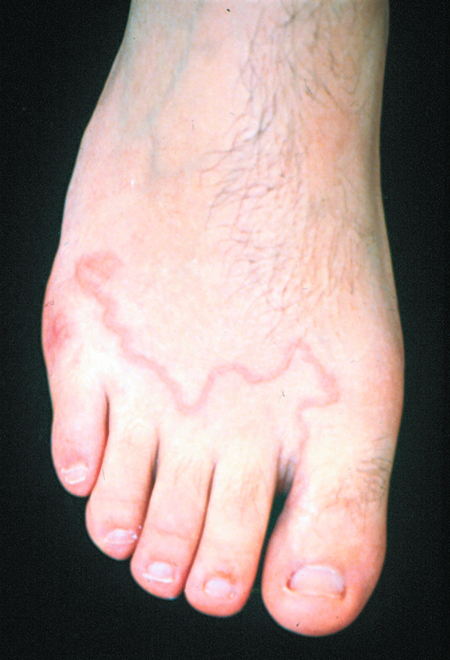
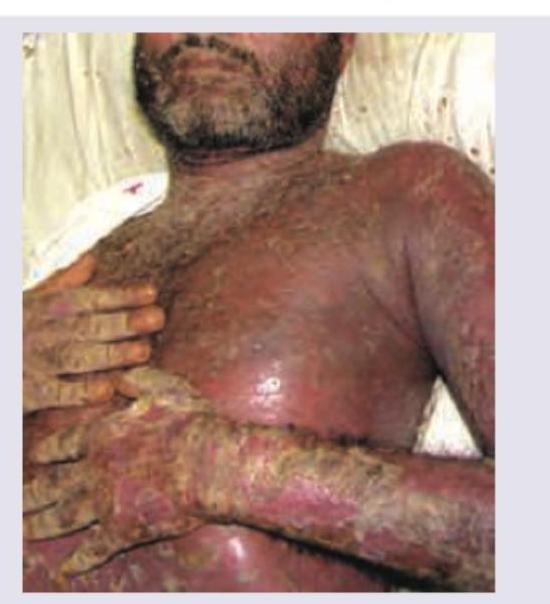
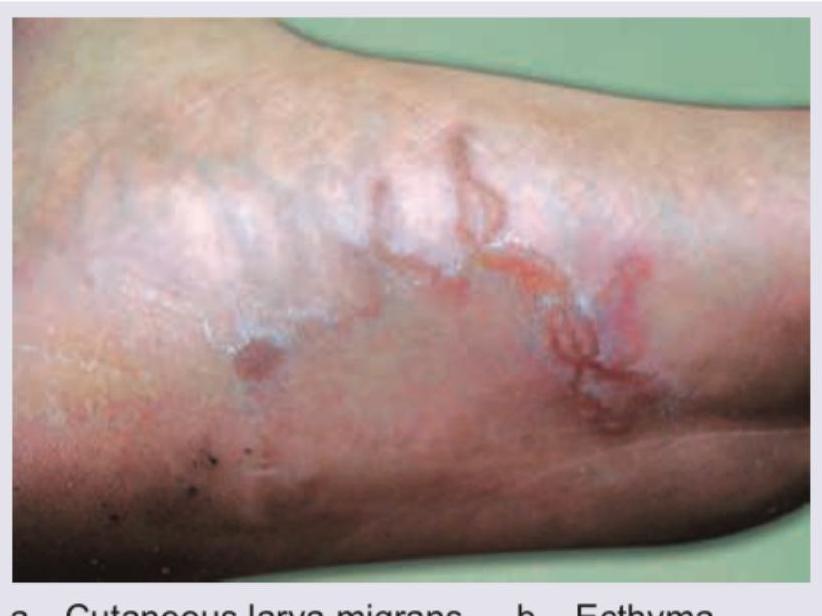
In a child presenting with itchy lesions over the groin and prepuce, which of the following management strategies is NOT indicated?
Which of the following drugs is NOT used in the management of scabies?
What is considered the most severe form of scabies?
Loxoscelism is a condition caused by the bite of which of the following?
The Circle of Hebra is associated with which of the following conditions?
What is the approximate average number of adult female mites found on an individual with the common form of scabies?
In an infant with scabies, what is the preferred treatment?
A middle-aged man came to you with itchy rash caused by the following organism. Identify the condition: (AIIMS Nov 2017)
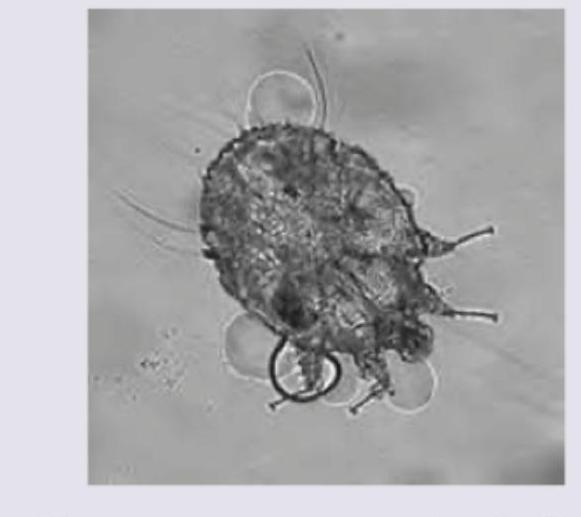
Identify the parasite shown in the image.

Which of the following statements about pediculosis pubis is MOST accurate?
Explanation: **Explanation:** The clinical presentation of itchy lesions over the groin and prepuce in a child is highly suggestive of **Scabies**, caused by the mite *Sarcoptes scabiei*. Scabies is a parasitic infestation characterized by nocturnal pruritus and pathognomonic lesions like burrows, papules, and nodules in predilection sites (web spaces, genitals, and flexures). **Why Option D is the Correct Answer:** Scabies is a parasitic infestation, not a systemic bacterial infection. The primary treatment involves **topical scabicides** (e.g., 5% Permethrin) or **oral Ivermectin**. Intravenous antibiotics are not indicated for uncomplicated scabies. They are only considered if there is a severe, systemic secondary bacterial complication (like sepsis from cellulitis), which is not the standard management strategy for the infestation itself. **Analysis of Incorrect Options:** * **Option A:** Standard protocol involves applying a scabicide (like Permethrin) from the neck down to the toes. A bath is often recommended before application to clean the skin, though the skin must be dry before applying the cream. * **Option B:** Scabies is highly contagious through skin-to-skin contact. To prevent a "ping-pong" reinfection, all household members and close contacts must be treated simultaneously, even if asymptomatic. * **Option C:** Fomite transmission is possible. Bedding and clothing used in the last 3-5 days should be washed in hot water (boiling) or sealed in plastic bags for 72 hours to kill the mites. **NEET-PG High-Yield Pearls:** * **Drug of Choice:** Topical **Permethrin 5%** (left for 8–12 hours). * **Nodular Scabies:** Common in children; persists even after mites are killed (hypersensitivity reaction). * **Crusted (Norwegian) Scabies:** Seen in immunocompromised patients; characterized by thousands of mites and low itching; requires both oral Ivermectin and topical Permethrin. * **Modified Hebra’s Elbow:** A clinical sign where the elbow shows eczematous lesions in scabies.
Explanation: **Explanation:** The management of scabies, caused by the mite *Sarcoptes scabiei*, requires **scabicidal agents**—drugs that directly kill the mites and their eggs. **Why Tacrolimus is the correct answer:** **Tacrolimus** is a **calcineurin inhibitor** and an immunosuppressant. It is used primarily in the management of atopic dermatitis and vitiligo to modulate the immune response. It has **no scabicidal properties**. In fact, applying topical steroids or immunosuppressants like tacrolimus to an undiagnosed scabies infestation can lead to "Scabies Incognito," where the typical inflammatory signs are masked while the infestation worsens. **Analysis of other options:** * **Permethrin (5%):** The current **drug of choice** for scabies. It acts by disrupting the sodium channel currents in the neurons of the mites, leading to paralysis and death. * **Gamma-benzene hexachloride (Lindane):** An organochlorine insecticide that was once a first-line treatment. Its use has declined due to potential neurotoxicity (seizures), especially in children and patients with damaged skin. * **Crotamiton (10%):** A scabicidal and antipruritic agent. While less effective than permethrin, it is useful in pediatric cases or when itching persists. **High-Yield Clinical Pearls for NEET-PG:** * **Ivermectin:** The oral drug of choice (200 μg/kg). It is particularly useful in institutional outbreaks and **Crusted (Norwegian) Scabies**. * **Treatment Protocol:** Scabicides must be applied from the **neck down to the toes** and left overnight. * **Nodular Scabies:** Characterized by itchy nodules on the genitalia/axilla; these are hypersensitivity reactions and may require topical steroids *after* the mites are eradicated. * **Safety:** Permethrin is considered safe in pregnancy and for infants over 2 months of age.
Explanation: **Explanation:** **Norwegian Scabies (Crusted Scabies)** is the correct answer because it represents a hyperkeratotic, highly contagious infestation characterized by millions of *Sarcoptes scabiei* mites. Unlike classical scabies (where a patient hosts 10–15 mites), Norwegian scabies occurs in immunocompromised individuals (HIV, leprosy), those with neurological deficits (Down syndrome), or the elderly. The lack of an effective cell-mediated immune response allows for uncontrolled mite proliferation, leading to thick, "oyster-shell" crusts, particularly on the palms, soles, and scalp. **Analysis of Incorrect Options:** * **Nodular Scabies:** A hypersensitivity reaction to mite antigens. It presents as persistent, itchy reddish-brown nodules (often on genitalia or axillae) that remain even after the mites are eradicated. It is not "severe" in terms of mite burden. * **Animal Scabies:** Caused by mites from pets (e.g., *Sarcoptes scabiei var. canis*). It is self-limiting in humans because the mites cannot complete their life cycle on human skin; no burrows are formed. * **Genital Scabies:** Simply refers to the site of involvement. While distressing, it follows the clinical course of classical scabies and is not a distinct severe variant. **High-Yield Clinical Pearls for NEET-PG:** * **Drug of Choice:** Oral **Ivermectin** (200 µg/kg) combined with topical **Permethrin (5%)** is the gold standard for Crusted Scabies. * **Key Feature:** It is often **non-pruritic** or minimally itchy despite the massive infestation. * **Sign:** The "Circle of Hebra" refers to the characteristic distribution of classical scabies (interdigital webs, wrists, elbows, axillae, areola, and umbilicus).
Explanation: **Explanation:** **Loxoscelism** is the clinical syndrome caused by the bite of the **Brown recluse spider** (*Loxosceles reclusa*). The primary pathology is driven by the enzyme **Sphingomyelinase D**, which triggers platelet aggregation, endothelial damage, and massive neutrophil infiltration. This leads to the characteristic "red, white, and blue" sign: an outer ring of erythema, a middle ring of ischemic blanching, and a central necrotic violaceous center. In severe cases, systemic loxoscelism can occur, manifesting as Coombs-positive hemolytic anemia, DIC, and renal failure. **Analysis of Incorrect Options:** * **Blister beetle (*Cantharidin*):** Causes **Paederus dermatitis** (though more specifically associated with Rove beetles) or localized blistering. It contains cantharidin, which causes intraepidermal acantholysis but not the deep tissue necrosis seen in loxoscelism. * **Rove beetle (*Paederus*):** Causes **Dermatitis Linearis**. When crushed against the skin, it releases *pederin*, leading to linear, erythematous, "whiplash" lesions with kissing ulcers. * **Thunder fly:** These are small insects (thrips) that can cause minor skin irritation or "thrip bites" but are not associated with necrotic arachnidism or systemic toxicity. **High-Yield Clinical Pearls for NEET-PG:** * **Characteristic Sign:** The "Red, White, and Blue" sign is pathognomonic for Brown recluse bites. * **Management:** Most cases are managed with local wound care and ice. **Dapsone** is sometimes used to inhibit neutrophil migration and limit necrosis. * **Comparison:** Unlike the Brown recluse (necrotic), the **Black Widow spider** (*Latrodectus*) produces a neurotoxin (alpha-latrotoxin) causing severe muscle spasms and abdominal rigidity (Latrodectism).
Explanation: **Explanation:** The **Circle of Hebra** is a classic clinical distribution pattern seen in **Scabies**, a parasitic infestation caused by the mite *Sarcoptes scabiei*. It refers to an imaginary circle connecting the most commonly affected sites of involvement in an adult. These sites include the **interdigital webs of the fingers, anterior wrists, ulnar borders of the forearms, axillary folds, nipples (in females), umbilicus, and the genitalia (in males).** Notably, the face and scalp are typically spared in adults, though they may be involved in infants. **Why the other options are incorrect:** * **Syphilis:** Primary syphilis presents with a painless chancre, while secondary syphilis is known for a generalized maculopapular rash involving the palms and soles. It does not follow the Hebra distribution. * **Leprosy:** Characterized by hypopigmented patches with sensory loss or thickened nerves. The distribution depends on the type (Tuberculoid vs. Lepromatous) but is not described by this circle. * **Lichen Planus:** Characterized by the "6 Ps" (Planar, Purple, Polygonal, Pruritic, Papules, and Plaques). It commonly affects the wrists and oral mucosa (Wickham striae) but lacks the specific "Circle of Hebra" pattern. **High-Yield Clinical Pearls for NEET-PG:** * **Pathognomonic Sign:** The **Burrow** (a short, wavy, dirty-looking line) is the diagnostic hallmark of scabies. * **Nocturnal Pruritus:** Itching is characteristically worse at night due to a Type IV hypersensitivity reaction to the mite, its eggs, and scybala (feces). * **Norwegian (Crusted) Scabies:** A highly contagious variant seen in immunocompromised patients, presenting with thick crusts and thousands of mites, but often minimal itching. * **Treatment of Choice:** Topical **Permethrin (5%)** cream is the first-line treatment (applied neck down and left overnight). Oral **Ivermectin** is an alternative, especially for institutional outbreaks or crusted scabies.
Explanation: **Explanation:** In the common form of scabies, caused by the mite *Sarcoptes scabiei var. hominis*, the clinical severity is disproportionate to the actual number of mites present. Despite the intense, generalized pruritus caused by a hypersensitivity reaction (Type IV) to the mite’s saliva, eggs, and scybala (feces), the actual parasite burden is remarkably low. **1. Why 12 is correct:** Studies and standard dermatological textbooks (like Fitzpatrick and Rook) establish that in a typical healthy adult with "classic" scabies, the total number of burrowing adult female mites is usually between **10 to 15**. Therefore, **12** represents the most accurate approximate average. The intense itching leads to scratching, which physically removes or destroys many mites, keeping the population in check. **2. Why other options are incorrect:** * **Option A (2):** This is too low; while a single mite can cause an infection, the average established infestation involves more than a couple of organisms. * **Options C & D (16 & 24):** These numbers overestimate the typical burden. While possible in early or untreated cases, they do not represent the "average" cited in high-yield medical literature. **Clinical Pearls for NEET-PG:** * **Crusted (Norwegian) Scabies:** This is the exception to the rule. In immunocompromised or debilitated patients, the mite population can explode into the **millions**, leading to thick, hyperkeratotic crusts. This form is highly contagious. * **Incubation Period:** 3–6 weeks for primary infestation; 1–3 days for re-infestation. * **Pathognomonic Sign:** The **Burrow** (found most commonly in the interdigital webs and wrists). * **Treatment of Choice:** Topical **Permethrin (5%)** cream, applied neck-down and left for 8–12 hours. Oral Ivermectin (200 µg/kg) is an alternative.
Explanation: ***Correct: 1, 3, 4 (Permethrin, Benzyl benzoate, Crotamiton)*** - **Permethrin 5% cream** is the **first-line treatment** for scabies in infants and children over 2 months of age due to its high efficacy (>90%) and excellent safety profile - **Benzyl benzoate (10-25% emulsion)** is a safe and effective alternative topical agent, particularly useful in resource-limited settings or when permethrin is unavailable - **Crotamiton 10% cream** is another alternative topical treatment option, though it has lower efficacy compared to permethrin - All three agents are **safe for topical use in infants** and represent appropriate treatment choices *Incorrect: 2, 4 (Ivermectin, Crotamiton)* - This option excludes **permethrin**, the first-line and most effective treatment for infant scabies - **Ivermectin is contraindicated in infants** as it is generally reserved for children over 5 years old or weighing more than 15 kg - Relying on ivermectin and crotamiton alone is not standard practice for routine infant scabies *Incorrect: 1, 2, 3 (Permethrin, Ivermectin, Benzyl benzoate)* - While this includes the first-line agent **permethrin** and the alternative **benzyl benzoate**, it incorrectly includes **ivermectin** - **Ivermectin is not recommended for routine use in infants** due to safety concerns in children under 15 kg or under 5 years of age - Ivermectin is reserved for special circumstances such as crusted scabies, treatment failures, or institutional outbreaks in older children *Incorrect: 1, 2, 4 (Permethrin, Ivermectin, Crotamiton)* - Although this includes the first-line treatment **permethrin** and alternative **crotamiton**, it inappropriately includes **ivermectin** - **Ivermectin is not standard therapy for infant scabies** and should not be routinely used in this age group - The combination with ivermectin makes this a non-preferred choice for general infant scabies management
Explanation: ***Scabies*** - The image provided shows **Sarcoptes scabiei**, the scabies mite, which is the causative organism for scabies. - Scabies is characterized by an **intensely itchy rash**, often worse at night, and typical burrows in the skin. *Pediculosis* - Pediculosis is caused by lice (e.g., **Pediculus humanus** or **Pthirus pubis**), which are distinct in appearance from the mite shown. - While also causing an itchy rash, the morphology of the causative agent in the image does not match that of a louse. *Insect bite reaction* - An insect bite reaction is a broad term for inflammatory responses to bites from various insects, but the image specifically identifies the **causative organism**. - The organism shown is a mite, which can cause an insect bite reaction, but scabies is the specific condition caused by this particular mite. *Tinea cruris* - Tinea cruris is a **fungal infection** of the groin, commonly known as jock itch. - The image displays a **mite**, not a fungus, making Tinea cruris an incorrect diagnosis.
Explanation: ***Sarcoptes scabiei*** - The image displayed is a characteristic microscopic view of **_Sarcoptes scabiei_**, the mite responsible for scabies. Key features include its **round to oval body** shape and the presence of **spines and setae** on its dorsal surface, which are visible. - The short, stubby legs with prominent suckers are consistent with the morphology used for burrowing into the skin. *Pediculus humanus capitis* - This parasite, the **head louse**, has a more **elongated body** shape and distinct legs with claws adapted for gripping hair shafts, which is not what is seen in the image. - Head lice are typically found on the scalp and attach nits (eggs) to hair, unlike the burrowing nature of the organism shown. *Pthirus Pubis* - **_Pthirus pubis_**, or the **pubic louse** (crab louse), has a distinctly **crab-like appearance** with broad bodies and large, clawed legs, especially the second and third pairs, which is not consistent with the image. - These lice typically infest coarse body hair, such as pubic hair, eyelashes, and eyebrows. *Dermatobia hominis* - **_Dermatobia hominis_** is the **human botfly**, and its larval stage (maggot) causes **cutaneous myiasis**. The image does not show a maggot-like larva but rather a microscopic mite. - The morphology of a botfly larva is worm-like and segmented, featuring prominent spines for anchoring within the host's skin.
Explanation: ***Eggs (nits) attached to hair shafts confirm diagnosis*** - The presence of **nits (eggs)** firmly attached to the hair shafts, particularly in the pubic region, is a **definitive diagnostic criterion** for pediculosis pubis. - These nits are typically oval, white or grayish, and cannot be easily removed, distinguishing them from dandruff. *It commonly infests scalp hair* - **Pediculosis pubis**, caused by *Pthirus pubis* (pubic louse or crab louse), primarily infests **coarse body hair**, most commonly in the pubic area. - **Scalp hair** is typically infested by *Pediculus humanus capitis* (head louse), which is a different species. *It requires systemic antibiotic treatment* - Pediculosis pubis is caused by an **ectoparasite** (louse), not a bacterial infection, and therefore does not require **systemic antibiotic treatment**. - Treatment involves topical insecticides like permethrin or malathion, and physical removal of lice and nits. *It is more contagious than other types of lice* - All types of lice are **highly contagious**, but pediculosis pubis is primarily transmitted through **sexual contact** or close bodily contact, making it a sexually transmitted infection (STI). - While easily spread, there is no evidence to suggest it is inherently more contagious than head lice, which spread easily through casual contact, especially among children.
Scabies
Practice Questions
Pediculosis
Practice Questions
Cutaneous Larva Migrans
Practice Questions
Leishmaniasis
Practice Questions
Onchocerciasis
Practice Questions
Myiasis
Practice Questions
Tungiasis
Practice Questions
Cutaneous Amebiasis
Practice Questions
Cutaneous Manifestations of Malaria
Practice Questions
Ectoparasitic Infestations
Practice Questions
Diagnosis of Parasitic Infestations
Practice Questions
Antiparasitic Therapy
Practice Questions
Get full access to all questions, explanations, and performance tracking.
Start For Free