Rapid, diffuse, excessive hair loss occurring 3 months after childbirth is due to?
Nail involvement is not a feature of :
A patient presents with focal alopecia areata. All of the following are associations of alopecia areata except:
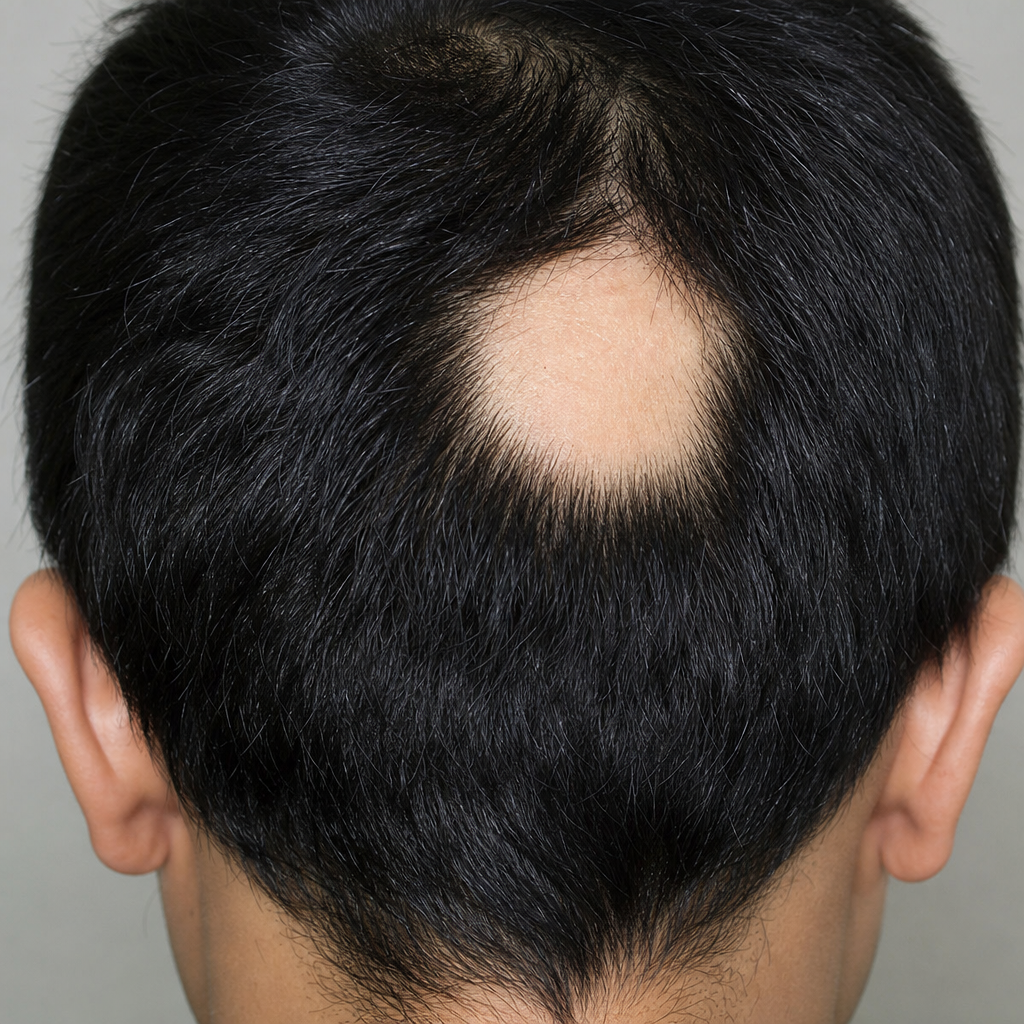
Alopecia areata is:
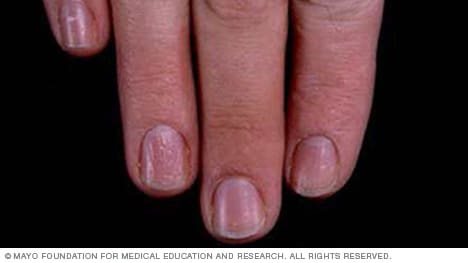
Pitting of nails is seen in:
A male patient presents with patchy loss of hair involving the scalp, eyebrows, and beard with presence of grey hair in the affected areas. What is the most likely diagnosis?
Pterygium of nail is seen in?
Nail is involved in all except-
A female presented with complaints of hair fall. Her delivery was 2 months ago. Physician diagnosed her condition as Telogen Effluvium. All of the following are true regarding telogen effluvium, EXCEPT:
A child presenting with localized patches of complete hair loss with normal appearance of scalp. The diagnosis is:
Explanation: ***Telogen effluvium*** - This condition is characterized by an excessive shedding of **club hairs** from the hair follicle, typically occurring 2-4 months after a significant stressor such as **pregnancy and childbirth**. - During pregnancy, high estrogen levels increase the number of follicles in the anagen (growth) phase; after delivery, estrogen drops, and many follicles simultaneously enter the **telogen (resting) phase**, leading to synchronized shedding. *Anagen effluvium* - This type of hair loss is rapid and severe, occurring when a significant percentage of **hair follicles** in the **anagen phase** are abruptly stopped from growing. - It is often seen with **chemotherapy, radiation therapy**, or exposure to toxins, which damage actively dividing hair matrix cells. *Alopecia areata* - This is an **autoimmune condition** where the body's immune system attacks hair follicles, leading to distinct, typically **round patches of hair loss**. - It can affect any hair-bearing area and is not directly linked to hormonal changes post-pregnancy. *Androgenetic alopecia* - Commonly known as **male or female pattern baldness**, this is a genetic condition influenced by androgens, characterized by a progressive **miniaturization of hair follicles**. - It presents as a characteristic pattern of thinning, such as a receding hairline or thinning at the crown, and is not typically a rapid, diffuse postpartum event.
Explanation: ***Drug induced lupus erythematosus*** - **Drug-induced lupus erythematosus** primarily presents with **systemic symptoms** such as arthralgia, myalgia, and skin rashes, but typically does *not* involve the nails. - While other forms of lupus can rarely affect nails, drug-induced lupus erythematosus is characterized by a lack of significant nail pathology. *Lichen Planus* - **Lichen planus** frequently affects the nails, causing various changes like **longitudinal ridging**, **onycholysis**, and sometimes **pterygium formation**. - Nail involvement can be an isolated finding or occur alongside characteristic **violaceous papules** on the skin and mucous membranes. *Dermatophytosis/Tenia* - **Dermatophytosis** (also known as **tinea unguium** or **onychomycosis**) is a common fungal infection that specifically targets the nails. - It results in nail discoloration, thickening, subungual hyperkeratosis, and brittleness. *Psoriasis* - **Psoriasis** commonly affects the nails, leading to characteristic signs such as **pitting**, **onycholysis** (separation of the nail from the nail bed), and **oil drop discoloration**. - Nail psoriasis can occur independently or in conjunction with skin and joint involvement.
Explanation: ***Geographic tongue*** - **Geographic tongue** (benign migratory glossitis) is a benign inflammatory condition of the tongue and is generally not associated with alopecia areata. - While its exact cause is unknown, it's typically linked to genetic factors or sensitivities rather than autoimmune hair loss. *Atopy* - **Atopy**, including conditions like **eczema**, **asthma**, and **allergic rhinitis**, is a well-established association with alopecia areata, suggesting a shared immune dysregulation. - Patients with alopecia areata often have a higher prevalence of **atopic diathesis**. *Exclamatory mark* - The presence of **exclamatory mark hairs** (short, broken hairs that are narrower near the scalp) is a **pathognomonic sign** of active alopecia areata. - These hairs indicate ongoing inflammation and destruction of the hair follicles. *Nail pitting* - **Nail pitting**, characterized by small depressions in the nail plate, is a common finding in patients with alopecia areata, reflecting an immune-mediated attack on the **nail matrix**. - Other nail changes, such as **trachyonychia** (roughened nails), can also occur.
Explanation: ***Non-cicatricial alopecia*** - **Alopecia areata** is a **non-scarring** form of hair loss, meaning the hair follicles are not permanently destroyed. - The potential for hair regrowth exists because the **follicles remain intact**, even if they are inactive. - It is an **autoimmune condition** characterized by patchy hair loss with "exclamation mark" hairs at the margins. *Fungal infection* - **Fungal infections** of the scalp (tinea capitis) often cause **patchy hair loss** with scaling and inflammation. - Unlike alopecia areata, tinea capitis is caused by a **microorganism** and typically involves an inflammatory response that can be managed with antifungals. *Cicatricial scar* - A **cicatricial scar** (or scarring alopecia) results in the **permanent destruction** of hair follicles, replacing them with fibrotic tissue. - This type of hair loss is **irreversible**, as the follicles are irrevocably damaged and cannot produce hair. *Telogen effluvium* - **Telogen effluvium** is characterized by **diffuse hair shedding** following a triggering event (stress, illness, childbirth). - Unlike the **patchy, localized** hair loss in alopecia areata, telogen effluvium causes **generalized thinning** across the scalp.
Explanation: ***Psoriasis and Alopecia areata*** - **Nail pitting** is a very common and characteristic finding in **psoriasis**, resulting from defective keratinization of the nail matrix. - While less common, nail pitting can also occur in **alopecia areata**, typically due to inflammation affecting the nail matrix. *Psoriasis only* - While **psoriasis** is a primary cause of nail pitting, stating it as "only" is incorrect as other conditions also present with this sign. - This option incorrectly limits the differential diagnosis for nail pitting. *Psoriasis and Lichen planus* - **Psoriasis** does cause nail pitting, but **lichen planus** typically causes **longitudinal ridging**, splitting, subungual hyperkeratosis, and sometimes pterygium formation, rather than classic pitting. - This option includes a condition that usually manifests with different nail changes. *Alopecia areata and Eczema* - **Alopecia areata** can cause nail pitting, but **eczema** of the hands or fingers more commonly leads to **nail plate dystrophy**, discoloration, ridging, or thickening, rather than distinct pitting. - While eczema can affect nails, pitting is not its characteristic nail manifestation.
Explanation: ***Alopecia areata*** - This condition is characterized by **patchy hair loss** that can affect the scalp, eyebrows, and beard, and is often associated with the presence of **grey hairs** in the affected areas. - It is an **autoimmune disorder** where the immune system mistakenly attacks **hair follicles**, leading to non-scarring hair loss. *Androgenic alopecia* - This is commonly known as **male-pattern baldness** and typically presents as a receding hairline and thinning at the crown. - It is primarily driven by **genetics** and **androgen hormones**, and does not usually involve patchy loss or affect eyebrows and beard in the same way. *Anagen effluvium* - This condition is often caused by **chemotherapy** or other strong chemical exposures, leading to an abrupt and widespread loss of hair during the **anagen (growth) phase**. - Hair loss is typically diffuse and rapid, not usually localized to patches or accompanied by grey hair in specific areas. *Telogen effluvium* - This is a common form of **temporary hair loss** that occurs following a stressful event, fever, childbirth, or severe illness, causing premature shedding of hairs in the **telogen (resting) phase**. - It results in diffuse thinning rather than discrete patchy hair loss and is not typically associated with grey hair in the manner described.
Explanation: ***Lichen planus*** - **Pterygium of the nail** refers to the forward growth of the proximal nail fold over the nail plate, often seen as a V-shaped scarring, which is a characteristic feature of severe **nail lichen planus**. - Other nail changes in lichen planus can include **longitudinal ridging**, thinning, splitting, and anonychia. *Pemphigoid* - Bullous pemphigoid typically affects the **skin with tense blisters** and rarely involves the nails significantly. - Nail changes are uncommon but if present, are usually non-specific, such as **subungual hematomas** or **onycholysis**, not pterygium. *Psoriasis* - Nail psoriasis presents with characteristic features like **pitting**, **onycholysis**, **oil-drop spots**, and **subungual hyperkeratosis**. - While significant nail dystrophy can occur, true pterygium formation from the proximal nail fold is **not a typical finding** in psoriasis. *Pemphigus* - Pemphigus is an autoimmune blistering disorder characterized by **flaccid blisters** and erosions, primarily affecting the skin and mucous membranes. - **Nail involvement is rare** and usually secondary to periungual blistering, leading to non-specific changes like paronychia or onychomadesis, not pterygium.
Explanation: ***Androgenetic alopecia*** - This condition is characterized by **progressive hair loss** due to the effects of androgens on genetically susceptible hair follicles, primarily affecting the scalp. - **Nails are not involved** in the pathogenesis or clinical presentation of androgenetic alopecia. *Psoriasis* - **Nail involvement is common in psoriasis**, presenting in various forms such as **pitting**, onycholysis, subungual hyperkeratosis, and discoloration. - These nail changes are caused by psoriatic inflammation affecting the nail matrix and nail bed. *Fungal infection* - Fungal infections of the nail, also known as **onychomycosis**, are a common condition that can affect one or more nails. - They lead to **thickening, discoloration, brittleness**, and crumbling of the nail plate. *Lichen planus* - **Nail involvement** occurs in about 10% of patients with lichen planus, ranging from subtle changes to complete nail destruction. - Manifestations include **longitudinal ridging, thinning of the nail plate, pterygium formation**, and onycholysis.
Explanation: ***Scarring*** - **Telogen effluvium** is a **non-scarring alopecia**, meaning it does not cause permanent damage to the hair follicles or lead to scar tissue formation. - The hair loss is temporary and reversible, as the follicles remain intact and capable of regrowth. *Diffuse hair thinning* - Telogen effluvium typically presents as **generalized or diffuse hair thinning** across the scalp, rather than localized patches of baldness. - This thinning is because a large number of hair follicles prematurely enter the **telogen (resting) phase**, leading to increased shedding. *Metabolic stress* - **Metabolic stressors** such as childbirth, severe illness, surgery, significant weight loss, or nutritional deficiencies are common triggers for telogen effluvium. - These stressors disrupt the normal hair growth cycle, causing a greater proportion of hairs to shift into the resting phase. *Recovery within 6 months* - Telogen effluvium is usually a **self-limiting condition**, with hair regrowth typically occurring within 3 to 6 months after the inciting event has passed and the body has recovered. - Complete recovery of hair density may take longer, but significant improvement is often seen within this timeframe.
Explanation: ***Alopecia areata*** - This condition is characterized by **localized, well-demarcated patches of complete hair loss** on the scalp. - The underlying skin typically appears **normal, smooth, and healthy**, without inflammation or scaling. *Tinea capitis* - This fungal infection usually presents with **scaly patches**, inflammation, pustules, or "black dots" where hairs have broken off. - The scalp appearance is typically **abnormal** due to scaling and inflammation, unlike the normal scalp seen here. *Cradle cap* - Also known as **seborrheic dermatitis in infants**, it presents as greasy, yellowish, scaly patches on the scalp. - It does not cause **complete hair loss** in localized patches, but rather diffuse scaling and sometimes mild thinning. *Telogen effluvium* - This condition involves **diffuse hair shedding** (increased number of hairs falling out), often triggered by stress, illness, or medications. - It does not present as **localized patches of complete hair loss**, and the hair thinning is generally widespread.
Hair Growth Cycle and Anatomy
Practice Questions
Alopecia Areata
Practice Questions
Androgenetic Alopecia
Practice Questions
Telogen Effluvium
Practice Questions
Scarring Alopecias
Practice Questions
Hair Shaft Abnormalities
Practice Questions
Hirsutism and Hypertrichosis
Practice Questions
Nail Anatomy and Growth
Practice Questions
Nail Infections
Practice Questions
Nail Psoriasis and Other Inflammatory Nail Disorders
Practice Questions
Nail Tumors
Practice Questions
Management of Hair and Nail Disorders
Practice Questions
Get full access to all questions, explanations, and performance tracking.
Start For Free