Benzoyl peroxide acts in acne vulgaris by:
Which drug is most likely to induce photosensitivity?
Enucleation is done for - a) Retinoblastoma b) Malignant melanoma c) Glaucoma d) Phthisis bulbi
A patient presents with a skin rash that is exaggerated on sun exposure. What is the repair mechanism involved in this condition?
Bright light therapy is used for?
What is the first-line treatment for melasma?
Which of the following are correct for managing hypertrophic scars? 1. Silicone gel sheeting 2. Intralesional steroid injections 3. Vitamin A gel applications 4. Laser treatment Select the answer using the code given below.
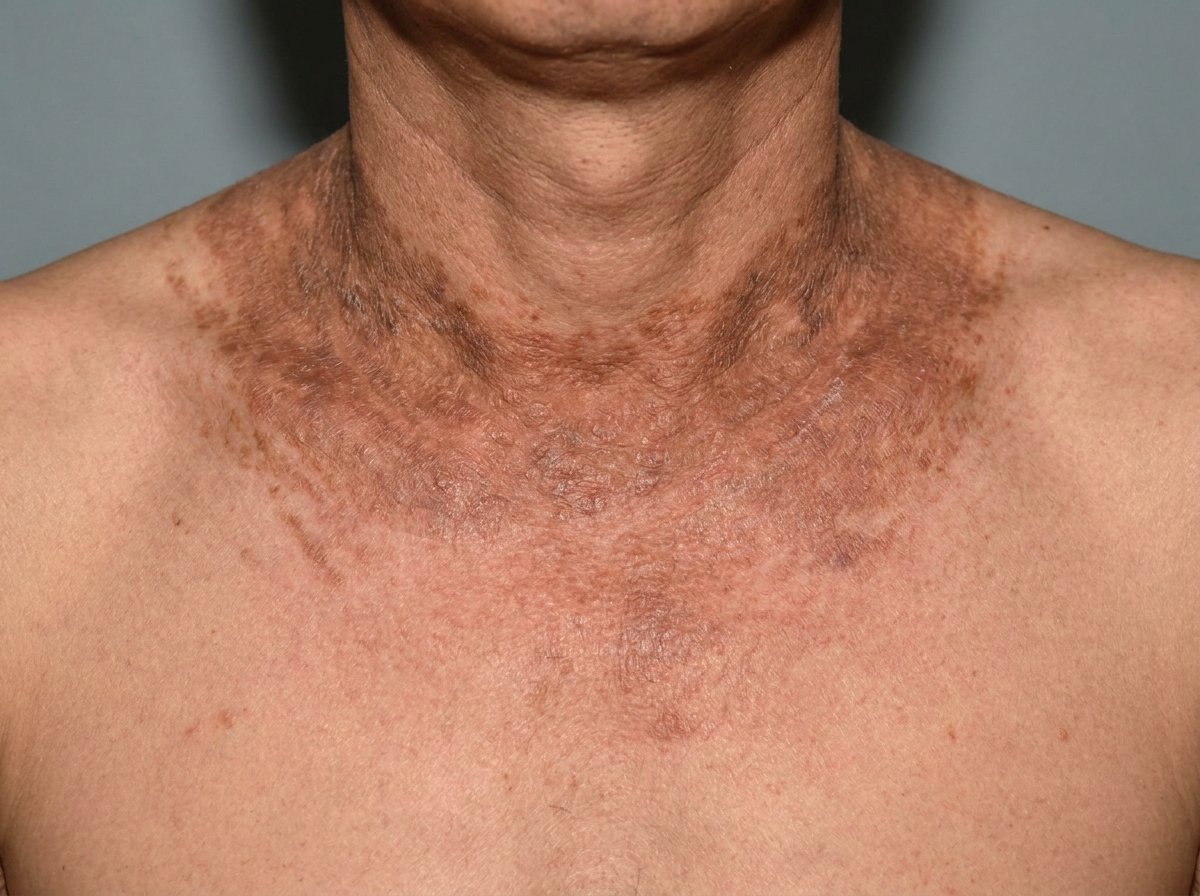
Dermatological manifestation of which of the following diseases?
An 8-year-old girl has extreme photosensitivity since birth. She has recently been diagnosed with skin cancer. What is the diagnosis?
A 6-year-old child born to consanguinity has pallor and intolerance to sunlight. His urine was exposed to Wood's light. Probable diagnosis is:
Explanation: ***Decreasing bacterial count*** - **Benzoyl peroxide** is a highly effective topical treatment for acne primarily due to its potent **antimicrobial activity** against *Cutibacterium acnes*, the bacterium implicated in acne pathogenesis. - It works by releasing **free radicals** that disrupt bacterial cell membranes and metabolism, thereby reducing the bacterial load in follicles. *Reduces sebum production* - While sebaceous gland activity is critical in acne, benzoyl peroxide does **not directly reduce sebum production**; retinoids like isotretinoin are known for this effect. - Its primary action is focused on combating bacteria and mildly promoting desquamation rather than affecting **lipid synthesis**. *Acts as a keratolytic agent* - Benzoyl peroxide does possess some **keratolytic activity**, aiding in the shedding of dead skin cells and preventing pore blockage. - However, its keratolytic action is **less pronounced** compared to agents like salicylic acid or tretinoin, and it is not its primary mechanism of action. *Increases epithelial turnover* - While benzoyl peroxide does promote a mild increase in **epithelial cell turnover**, helping to clear clogged pores, it is not its main mechanism of action or defining characteristic. - **Topical retinoids** (e.g., tretinoin, adapalene) are far more effective and primarily used to normalize follicular keratinization and increase cell turnover.
Explanation: ***Tetracycline*** - **Tetracyclines** are well-known to cause **photosensitivity reactions**, leading to exaggerated sunburns, rashes, or skin discoloration upon sun exposure. - This adverse effect is thought to be due to an interaction between the drug and UV light, leading to the formation of reactive oxygen species and subsequent cell damage. *Metronidazole* - While metronidazole can cause a variety of side effects, significant **photosensitivity** is generally not considered a common or prominent adverse reaction. - It is often associated with a **disulfiram-like reaction** when consumed with alcohol, as well as gastrointestinal upset and a metallic taste. *Ivermectin* - **Ivermectin** is primarily used as an antiparasitic agent and is not typically associated with **photosensitivity** as a common side effect. - Its main adverse effects are usually related to the Mazzotti reaction during treatment of onchocerciasis or other systemic symptoms like dizziness or nausea. *Fluconazole* - **Fluconazole**, an antifungal medication, has a relatively low incidence of causing **photosensitivity** compared to other drug classes. - Common side effects include gastrointestinal disturbances, headache, and elevated liver enzymes, but severe phototoxic reactions are rare.
Explanation: ***abd*** - **Enucleation** (surgical removal of the entire eyeball) is indicated for **retinoblastoma** and **malignant melanoma** due to the malignant nature of these conditions and the risk of metastasis. - It is also performed in cases of severe **phthisis bulbi**, where the eye is shrunken, non-functional, and often painful, to alleviate symptoms and for cosmetic reasons. *abc* - This option incorrectly includes **glaucoma** as a primary indication for enucleation. - While severe, painful, and blind glaucomatous eyes might eventually undergo enucleation, it is not the initial or typical treatment; many other medical and surgical options are explored first. *acd* - This option incorrectly includes **glaucoma** for the aforementioned reasons and omits **malignant melanoma**. - **Malignant melanoma** of the choroid is a significant indication for enucleation, especially in larger tumors, due to its metastatic potential. *bcd* - This option incorrectly includes **glaucoma** and omits **retinoblastoma**. - **Retinoblastoma** is a life-threatening pediatric malignancy, and prompt enucleation is often crucial for treatment and survival.
Explanation: ***Nucleotide excision repair*** - This mechanism is responsible for repairing **bulky lesions** in DNA, such as **pyrimidine dimers** caused by **UV radiation** from sun exposure. - Patients with defects in nucleotide excision repair (e.g., **xeroderma pigmentosum**) are highly sensitive to sunlight and develop skin rashes, pigment changes, and skin cancers. *Base excision repair* - This pathway primarily corrects **small damaged bases** that do not cause significant distortion of the DNA helix, such as deaminated, oxidized, or alkylated bases. - It does not primarily address the bulky lesions induced by UV light that cause exaggerated sun sensitivity. *Mismatch repair* - This system corrects errors, like **mismatched base pairs**, that are incorporated during DNA replication. - It is not directly involved in repairing DNA damage caused by environmental factors like UV radiation. *Double stranded DNA break repair* - This mechanism repairs **double-strand breaks** in DNA, which are highly deleterious lesions caused by ionizing radiation or oxidative stress. - While critical for genome stability, it is not the primary repair pathway for UV-induced DNA lesions or the direct cause of sun sensitivity.
Explanation: ***Seasonal affective disorder*** - **Bright light therapy** is a primary treatment for **seasonal affective disorder (SAD)**, particularly **winter depression**, by simulating natural outdoor light. - Exposure to bright light can help regulate the body's **circadian rhythm** and neurotransmitter levels, which are often disrupted in SAD. *Adjustment disorder* - This disorder is a **stress-related condition** where a person has difficulty coping with a specific stressor or event. - Treatment typically involves **psychotherapy** and addresses the specific stressor, not light therapy. *Anxiety* - **Anxiety disorders** are characterized by excessive worry, fear, or apprehension. - Treatment usually involves **cognitive behavioral therapy (CBT)**, medications (e.g., SSRIs), or a combination thereof, not bright light therapy. *Schizophrenia* - **Schizophrenia** is a chronic and severe mental disorder affecting how a person thinks, feels, and behaves, involving psychosis. - Management primarily relies on **antipsychotic medications** and psychosocial interventions, with no established role for bright light therapy.
Explanation: ***Topical hydroquinone*** - **Topical hydroquinone** (2-4%) is the **most effective single-agent treatment** among the given options, serving as the gold standard for melasma by inhibiting **tyrosinase enzyme** and melanin production. - Demonstrates **highest efficacy rates** (60-80% improvement) when combined with strict sun protection, making it both first-line and most effective monotherapy choice. *Laser therapy* - Carries **high risk of paradoxical darkening** and post-inflammatory hyperpigmentation, especially in darker skin types common in melasma patients. - Requires **specialized expertise** and should only be considered as adjunctive therapy after optimizing topical treatments, not as primary treatment. *Chemical peels* - Provide **variable and inconsistent results** as monotherapy, typically requiring multiple sessions with unpredictable outcomes. - Risk of **post-inflammatory hyperpigmentation** particularly in Fitzpatrick skin types IV-VI, making them less reliable than hydroquinone. *Microdermabrasion* - Offers only **superficial exfoliation** with minimal clinical improvement in melasma pigmentation. - May actually **worsen pigmentation** through mechanical irritation and is not recommended in evidence-based treatment guidelines.
Explanation: ***1, 2 and 4*** - **Silicone gel sheeting**, **intralesional steroid injections**, and **laser treatment** are all established and effective methods for managing hypertrophic scars. - Silicone gel helps to hydrate the scar, reduce collagen synthesis, and decrease itching, while steroids reduce inflammation and collagen production, and lasers can help to improve scar texture and color. *1, 3 and 4* - This option incorrectly includes **Vitamin A gel applications** as a primary treatment. While retinoids can have some skin benefits, they are not a first-line or well-established treatment for hypertrophic scars. - **Silicone gel sheeting** and **laser treatment** are indeed effective, but the inclusion of Vitamin A makes this option less accurate. *1, 2 and 3* - This option also incorrectly includes **Vitamin A gel applications**. While **silicone gel sheeting** and **intralesional steroid injections** are effective, Vitamin A is not a standard treatment for hypertrophic scars. - The primary methods for managing hypertrophic scars focus on reducing collagen production and inflammation, which Vitamin A gel does not effectively address in this context. *2, 3 and 4* - This option correctly includes **intralesional steroid injections** and **laser treatment**, but it again incorrectly includes **Vitamin A gel applications** and omits **silicone gel sheeting**, which is a widely recommended and often first-line treatment. - Omitting **silicone gel sheeting** significantly weakens the effectiveness of this combination as a comprehensive management strategy.
Explanation: ***Pellagra*** - The image shows a classic "butterfly" rash on the face, specifically a photosensitive dermatitis, which is a hallmark of **pellagra**. - Pellagra is caused by a deficiency of **niacin (vitamin B3)**, characterized by the "3 D's": **dermatitis**, **diarrhea**, and **dementia**. *Photo dermatitis* - While pellagra often presents with photosensitive dermatitis, "photo dermatitis" is a general term for **skin inflammation caused by light exposure** and not a specific disease itself. - It could be caused by various factors, including medication, immune reactions, or other underlying conditions, but the pattern seen here is highly suggestive of pellagra. *Acrodermatitis enteropathica* - This condition is a **hereditary zinc deficiency** that typically presents with a periorificial and acral dermatitis. - The skin lesions are typically **vesicular-pustular or eczematous** and do not usually have the distinct butterfly pattern of photosensitive dermatitis seen in the image. *Vitamin B deficiency* - While pellagra is a vitamin B **(niacin, B3)** deficiency, this option is too broad. - Other vitamin B deficiencies, such as **riboflavin (B2)** or **pyridoxine (B6)** deficiency, have different dermatological manifestations like angular cheilitis, glossitis, or seborrheic dermatitis, but not the characteristic facial rash seen here.
Explanation: ***Xeroderma Pigmentosum*** - This condition is characterized by an extreme sensitivity to **ultraviolet (UV) light** from birth due to defects in **DNA repair mechanisms**, leading to severe sunburns, pigmentary changes (freckles, hypopigmented macules), and a high risk of developing **skin cancers** at a young age. - The history of extreme photosensitivity since birth and the diagnosis of skin cancer in an 8-year-old girl is highly indicative of Xeroderma Pigmentosum. *Bloom syndrome* - Bloom syndrome is an inherited disorder characterized by **stunted growth**, a **photosensitive facial rash (telangiectatic erythema)**, and a predisposition to **various cancers**, including leukemia and lymphomas. - While photosensitivity and cancer risk are present, the extreme skin damage and early onset of specific skin cancers (as opposed to leukemias/lymphomas often seen in Bloom) make Xeroderma Pigmentosum a more fitting diagnosis. *Griscelli syndrome* - Griscelli syndrome is a rare autosomal recessive disorder characterized by **partial albinism**, immunodeficiency, and neurological impairment. - While it involves pigmentary abnormalities, it does not typically present with the extreme photosensitivity or the very early skin cancer development described in the patient. *Chediak Higashi syndrome* - Chediak-Higashi syndrome is an autosomal recessive disorder characterized by **partial albinism**, recurrent pyogenic infections, and neurological abnormalities, due to defective lysosomal trafficking. - This syndrome is not primarily associated with extreme photosensitivity leading to early skin cancers but rather with immunodeficiency and neurological issues.
Explanation: ***Gunther disease*** - The combination of **pallor**, **intolerance to sunlight** (photosensitivity), **consanguinity**, and particularly the **red fluorescence of urine under Wood's light** (due to increased uroporphyrins and coproporphyrins) is highly characteristic of **congenital erythropoietic porphyria (CEP)**, also known as Gunther disease. - This is an **autosomal recessive** disorder of heme synthesis, leading to accumulation of porphyrin precursors. Affected individuals often have **erythrodontia** (reddish-brown discoloration of teeth), severe **anemia**, and **hemolysis**, alongside marked photosensitivity. *SLE* - **Systemic lupus erythematosus (SLE)** can cause **photosensitivity** and **pallor (due to anemia)**, but it is an autoimmune disease, not an inborn error of metabolism. - It does not typically present with red fluorescent urine under Wood's light, which is a specific finding for porphyrias. *Xeroderma pigmentosum* - This is a rare **autosomal recessive** genetic disorder characterized by extreme **photosensitivity** and a high risk of skin cancers due to a defect in DNA repair mechanisms. - While it causes severe photosensitivity, it does not involve abnormalities in porphyrin metabolism or lead to red fluorescent urine. *Bloom syndrome* - **Bloom syndrome** is a rare **autosomal recessive** genetic disorder characterized by **photosensitivity**, **short stature**, a **distinctive facial appearance**, and an increased risk of cancer. - It does not involve porphyrin metabolism or result in red fluorescent urine under Wood's light.
Get full access to all questions, explanations, and performance tracking.
Start For Free