
Systemic Retinoids — MCQs

A 19-year-old woman presents to the dermatology clinic for a follow-up of worsening acne. She has previously tried topical tretinoin as well as topical and oral antibiotics with no improvement. She recently moved to the area for college and says the acne has caused significant emotional distress when it comes to making new friends. She has no significant past medical or surgical history. Family and social history are also noncontributory. The patient’s blood pressure is 118/77 mm Hg, the pulse is 76/min, the respiratory rate is 17/min, and the temperature is 36.6°C (97.9°F). Physical examination reveals erythematous skin lesions including both open and closed comedones with inflammatory lesions overlying her face, neck, and upper back. The patient asks about oral isotretinoin. Which of the following is the most important step in counseling this patient prior to prescribing oral isotretinoin?
Which of the following are treatment options for acne vulgaris?
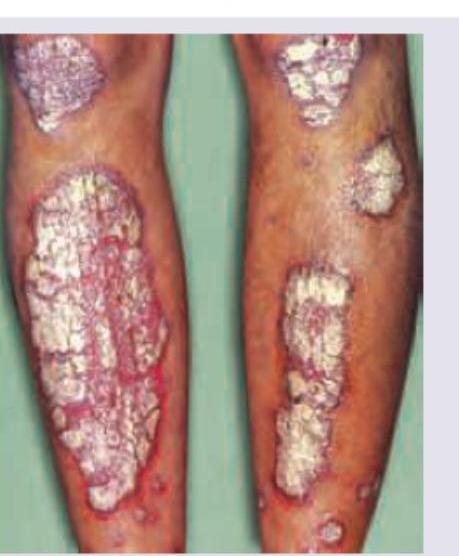
Which one of these should not be used in severe widespread psoriasis?
Most common side effect of retinoids is
Recalcitrant acne is treated by:
Which of the following drugs is given during pregnancy, resulting in fetal abnormalities such as cleft lip and central nervous system defects?
A patient presents with the skin lesions shown in the image. All of the following are routinely indicated for the treatment of this condition EXCEPT:
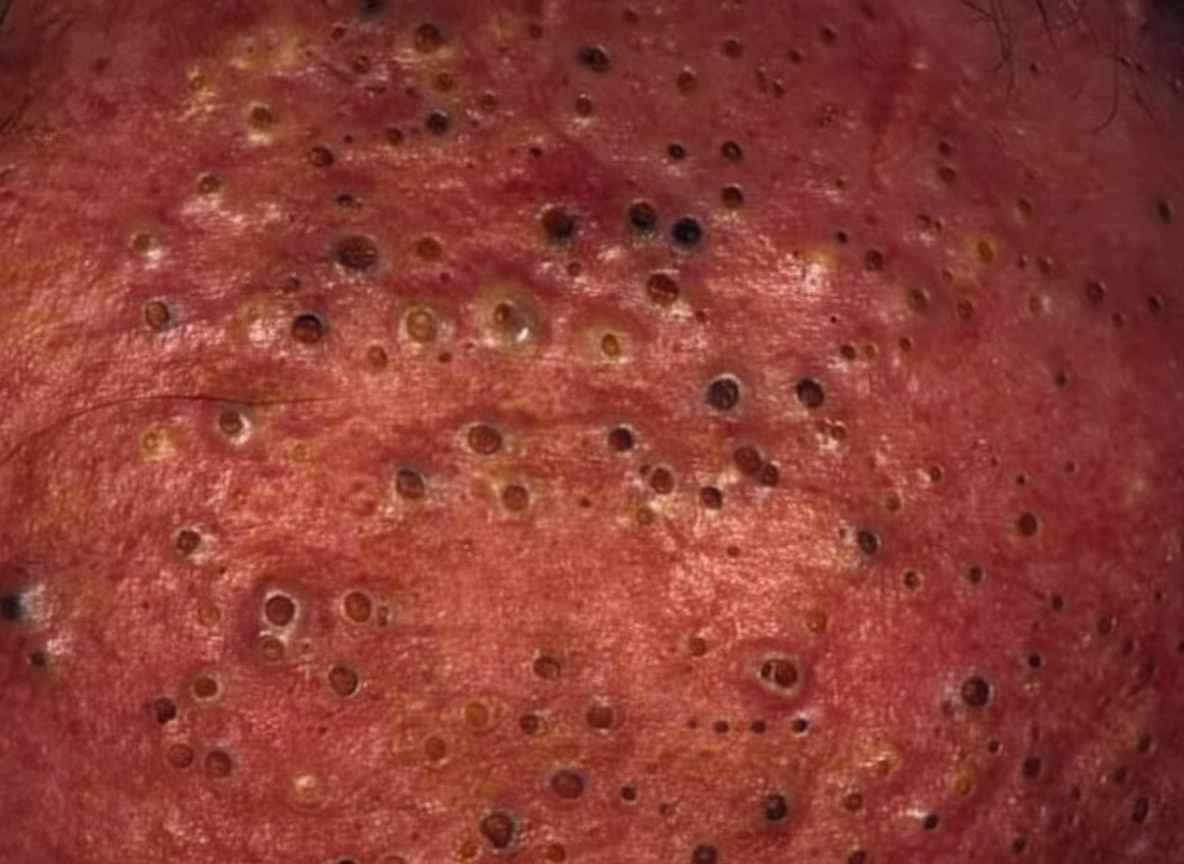
A young boy with oily skin presents with acne as shown. What is the appropriate treatment?
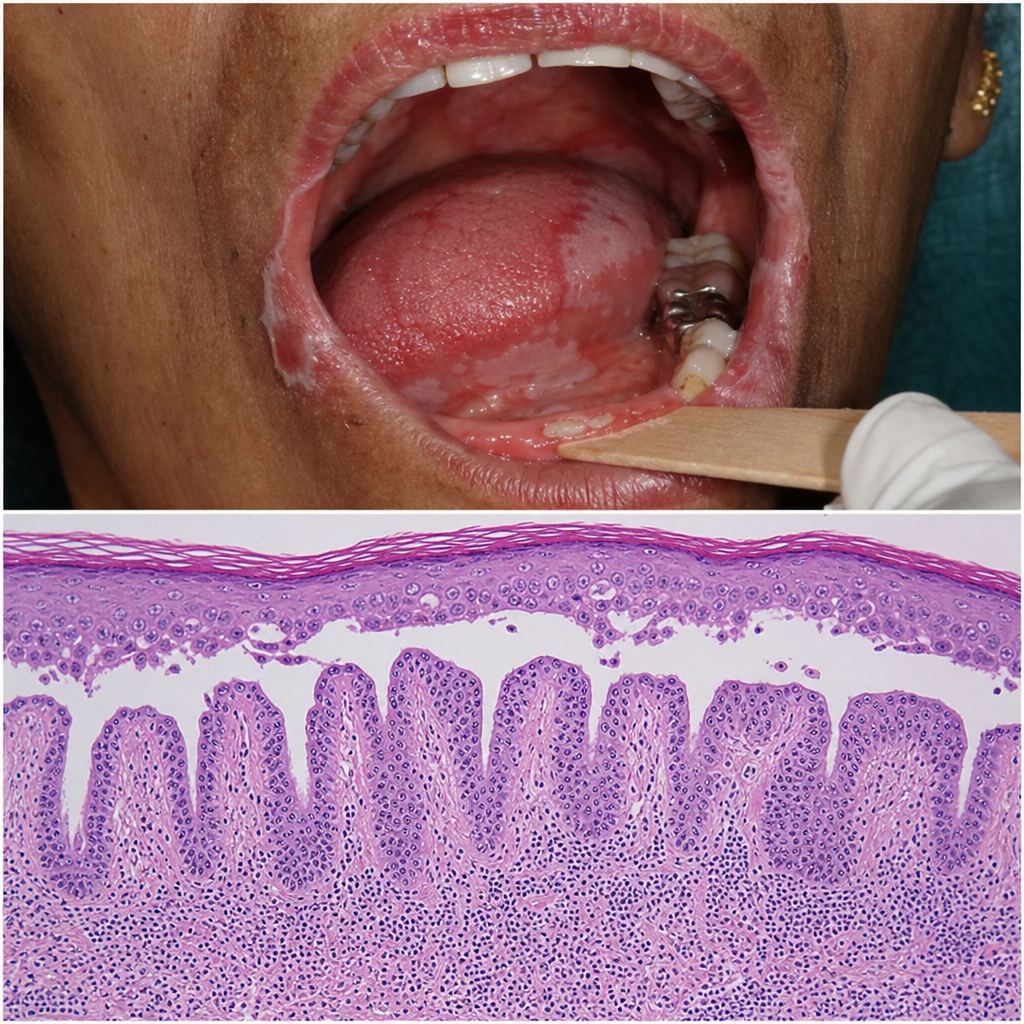
A 55-year-old woman presents with painful oral erosions and minimal skin involvement for 3 months. Nikolsky sign is positive on the oral mucosa. Serum is sent for autoantibody testing. Histology of a perilesional biopsy shows suprabasal acantholysis with a tombstone row of basal keratinocytes (Image). In this predominantly mucosal variant of pemphigus vulgaris, which autoantibody titre best correlates with mucosal disease activity and guides decisions about tapering systemic immunosuppression?
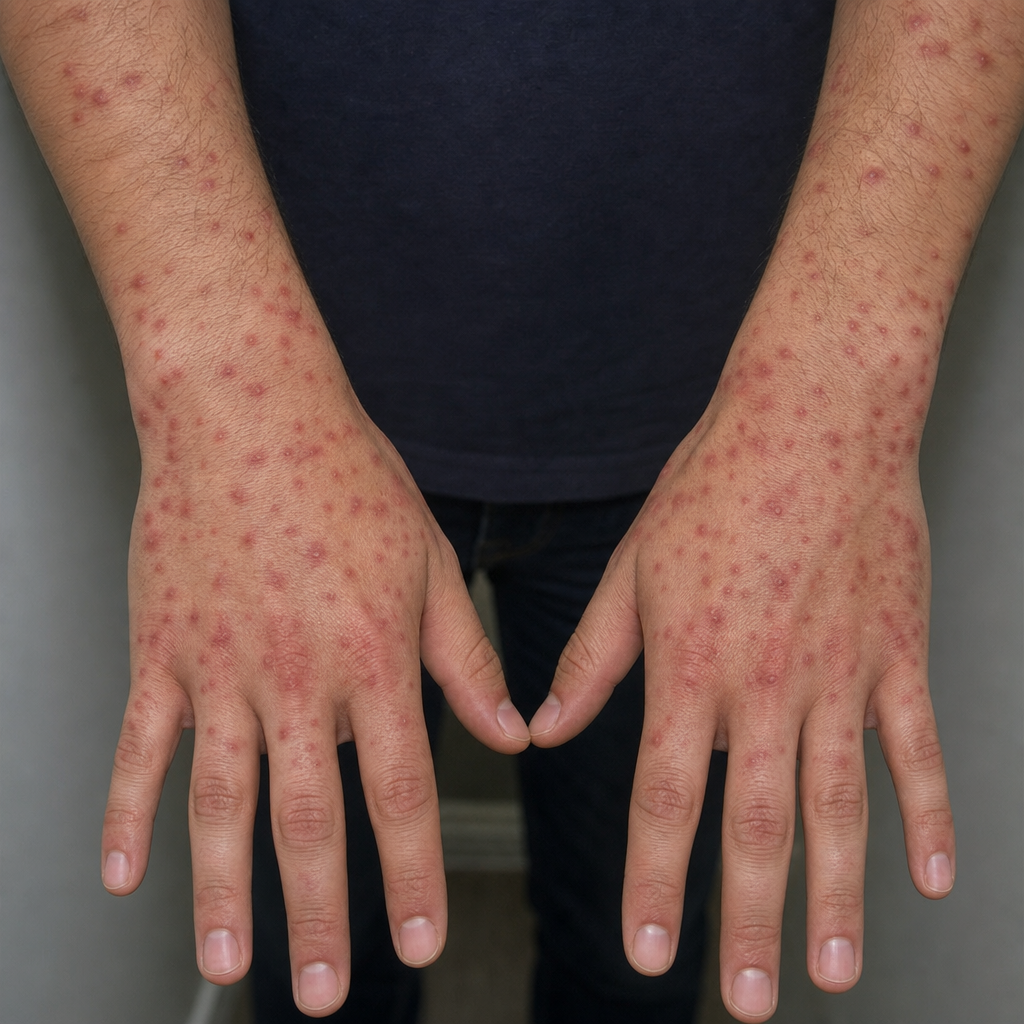
A 24-year-old man presents to the emergency department with a 3-day history of a rapidly spreading rash on his hands and forearms. He had a cold sore on his lip 10 days ago. He denies any new medications. There is no mucosal involvement. The rash is shown (Image 2). Which of the following statements best describes the underlying immunopathological mechanism responsible for this eruption?
Want unlimited practice?
Get full access to all questions, explanations, and performance tracking.
Scan to download app