A sexually active male presents with complaints of recurrent ulcers over the glans, which heal with hyperpigmentation. What is the probable diagnosis?
A patient on ACE inhibitors developed a rash. What is the true statement regarding this situation?
Scleromatous skin changes are seen in all of the following except:
Which of the following is a topical Vitamin D analogue?
What is the treatment for gold poisoning leading to exfoliative dermatitis?
Slate-like discoloration of the skin is caused by all of the following drugs except?
What is the primary management for a patient with a Type I lepra reaction presenting with severe neuritis?
At the same concentration, which of the following topical vehicle formulations is most potent?
What is the treatment of choice for the cutaneous complications of porphyria?
Which of the following drug classes are commonly responsible for causing a lichenoid drug reaction?
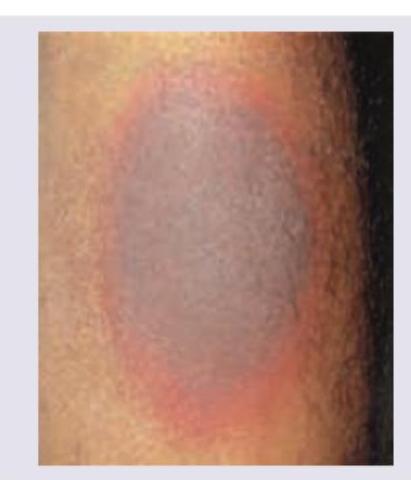
Explanation: ### Explanation The correct diagnosis is **Fixed Drug Eruption (FDE)**. This is a classic presentation frequently tested in NEET-PG. **1. Why Fixed Drug Eruption is correct:** The hallmark of FDE is the occurrence of well-demarcated, erythematous, or dusky-red plaques/bullae that **recur at the exact same anatomical site** upon re-exposure to the offending drug. On the glans penis, these often present as erosions or ulcers. A defining clinical feature of FDE is that as the lesion heals, it leaves behind characteristic **residual slate-grey or brown hyperpigmentation** due to pigmentary incontinence (melanin dropping into the dermis). In sexually active males, FDE is often triggered by NSAIDs or antibiotics (like Cotrimoxazole or Tetracyclines) taken for unrelated issues. **2. Why other options are incorrect:** * **Aphthous ulcers:** These are painful, shallow ulcers with a yellowish base and erythematous rim. While they can be recurrent, they **do not heal with hyperpigmentation**. * **Herpes genitalis:** Caused by HSV-2, this presents as grouped vesicles on an erythematous base that rupture to form painful ulcers. While recurrent, they typically heal **without scarring or significant hyperpigmentation**. * **Chlamydial infection (LGV):** Lymphogranuloma venereum usually presents with a transient, painless papule or ulcer followed by significant regional lymphadenopathy (Buboes). It does not follow a pattern of site-specific recurrence with post-inflammatory hyperpigmentation. **Clinical Pearls for NEET-PG:** * **Most common site:** Glans penis (in males), lips, and hands. * **Common triggers:** **NSAIDs** (most common overall), **Cotrimoxazole** (most common antibiotic), and Tetracyclines. * **Pathology:** Interface dermatitis with "Civatte bodies" (necrotic keratinocytes) and dermal melanophages. * **Key Distinguisher:** If the question mentions "recurrence at the same site" + "hyperpigmentation," always think FDE.
Explanation: **Explanation:** **1. Why Option A is Correct:** ACE inhibitors (ACEIs), such as Captopril and Enalapril, are well-known triggers for various cutaneous adverse drug reactions (CADRs). The most common manifestations include **angioedema, urticaria, and maculopapular rashes**. In some cases, they can even trigger autoimmune conditions like **Pemphigus foliaceus** (due to the sulfhydryl group in drugs like Captopril). The fundamental principle of managing any drug-induced eruption is the identification and **withdrawal of the offending agent**. Discontinuation typically leads to the resolution of the rash, confirming the diagnosis. **2. Why the Other Options are Incorrect:** * **Option B:** While steroids are used for severe drug reactions (like SJS/TEN), they are not the "initial" or primary step for a standard drug rash. The first step is always drug cessation. * **Option C:** This is factually incorrect. ACEIs are common causes of skin eruptions, particularly angioedema (due to increased bradykinin levels). * **Option D:** If a drug is suspected of causing a hypersensitivity reaction or a toxic eruption, continuing the drug can lead to worsening of the condition or progression to life-threatening states like exfoliative dermatitis. **Clinical Pearls for NEET-PG:** * **Angioedema:** The most characteristic side effect of ACEIs, mediated by **Bradykinin** accumulation. It can occur even after years of uneventful use. * **Pemphigus:** ACEIs (specifically Captopril) are the most common drugs associated with **drug-induced Pemphigus**. * **Management:** For most mild CADRs, the "Stop-and-Watch" approach is preferred. If the rash is severe, antihistamines or topical steroids may be added after drug withdrawal.
Explanation: **Explanation:** The core concept behind this question is identifying drugs that induce **Scleroderma-like (scleromatous) skin changes**, characterized by the thickening and hardening of the skin due to excessive collagen deposition. **Why Steroids are the correct answer:** Corticosteroids (Steroids) do the exact opposite of scleromatous changes. They inhibit fibroblast proliferation and collagen synthesis, leading to **skin atrophy**, thinning, and striae. Therefore, they are used as a treatment for inflammatory and fibrotic conditions rather than being a cause of skin hardening. **Analysis of Incorrect Options (Drugs causing Scleromatous changes):** * **Bleomycin:** This is the most common chemotherapeutic agent associated with scleroderma-like changes. It induces fibrosis by increasing TGF-β (Transforming Growth Factor-beta) levels, which stimulates collagen production. It can also cause flagellate hyperpigmentation. * **Adriamycin (Doxorubicin):** This anthracycline antibiotic can cause localized or generalized skin thickening and is a known trigger for sclerodermoid reactions. * **Busulphan:** An alkylating agent used in hematological malignancies, it is well-documented to cause systemic fibrosis, including scleromatous skin changes and pulmonary fibrosis. **High-Yield Clinical Pearls for NEET-PG:** * **Other drugs causing Scleroderma-like changes:** Pentazocine (at injection sites), L-Tryptophan, Vinyl chloride, and Taxanes (Docetaxel). * **Bleomycin Specifics:** Look for "Flagellate Dermatitis" and "Pulmonary Fibrosis" in the history. * **Steroid Side Effects:** Remember the "5 A's" of topical steroids: **A**trophy, **A**cneiform eruption, **A**llergic contact dermatitis, **A**nthropometric changes (Striae), and **A**ltered morphology (Tinea incognito).
Explanation: **Explanation:** **Calcipotriol** is a synthetic analogue of **1,25-dihydroxyvitamin D3 (Calcitriol)**. In dermatology, it is primarily used as a first-line topical treatment for **Psoriasis vulgaris**. It works by binding to Vitamin D receptors (VDR) on keratinocytes, leading to the inhibition of keratinocyte proliferation and the induction of cell differentiation. It also possesses anti-inflammatory properties by inhibiting T-cell activation. **Analysis of Options:** * **Calcipotriol (Correct):** It is the most commonly used topical Vitamin D analogue. Other topical analogues include **Calcitriol** and **Tacalcitol**. * **Cholecalciferol (Option A):** This is Vitamin D3, typically administered orally as a supplement to treat nutritional deficiency; it is not used as a targeted topical therapy for skin diseases. * **Doxercalciferol (Option B) & Paricalcitol (Option D):** These are synthetic Vitamin D analogues administered **systemically** (intravenously or orally). They are primarily used to treat secondary hyperparathyroidism in patients with chronic kidney disease (CKD) and are not used topically in dermatology. **High-Yield NEET-PG Pearls:** * **Mechanism in Psoriasis:** Calcipotriol normalizes epidermal poiesis (decreases mitosis) and reduces scaling. * **Combination Therapy:** It is frequently combined with topical steroids (e.g., Betamethasone) to increase efficacy and reduce skin irritation. * **Side Effects:** Local irritation is common. Systemic hypercalcemia is rare but can occur if used over >30% of the body surface area or in doses exceeding 100g/week. * **Stability:** Calcipotriol is inactivated by acidic substances like Salicylic acid; therefore, they should not be applied simultaneously.
Explanation: **Explanation:** The correct answer is **Steroids**. **1. Why Steroids are the Treatment of Choice:** Gold salts (used historically for rheumatoid arthritis) can trigger severe cutaneous adverse reactions, most notably **exfoliative dermatitis** (erythroderma). This is an immune-mediated type IV hypersensitivity reaction. Systemic **corticosteroids** are the mainstay of treatment because they suppress the underlying inflammatory cascade, stabilize mast cells, and reduce the extensive skin inflammation and systemic toxicity associated with gold-induced exfoliative dermatitis. While chelation therapy (like BAL) is used for systemic gold toxicity, steroids specifically address the life-threatening dermatological manifestations. **2. Why Other Options are Incorrect:** * **Chloroquine:** This is an antimalarial and DMARD. It has no role in treating acute drug-induced dermatitis and can itself cause skin eruptions. * **Antibiotics:** While exfoliative dermatitis carries a risk of secondary infection (due to loss of skin barrier), antibiotics are not the primary treatment for the drug reaction itself. They are only used as adjuncts if sepsis or cellulitis is suspected. * **Antihistamines:** These may provide symptomatic relief for pruritus (itching) but do not halt the progression of exfoliative dermatitis or treat the underlying inflammatory process. **3. High-Yield Clinical Pearls for NEET-PG:** * **Exfoliative Dermatitis (Erythroderma):** Defined as involvement of >90% of the body surface area. Common drug causes include sulfonamides, gold, antiepileptics, and allopurinol. * **Gold Toxicity:** Classically presents with "Chrysiasis" (blue-grey skin pigmentation) and mucocutaneous reactions. * **Management Priority:** In any drug-induced exfoliative dermatitis, the first step is **immediate withdrawal of the offending agent**, followed by systemic steroids and supportive care (fluid/electrolyte balance).
Explanation: **Explanation:** The term **"slate-gray" or "slate-like" discoloration** refers to a specific bluish-gray hyperpigmentation of the skin caused by the dermal deposition of drugs or their metabolites, often induced by sunlight exposure. **Why Thiacetazone is the correct answer:** Thiacetazone, an anti-tubercular drug, is primarily associated with severe cutaneous adverse reactions (SCARs), most notably **Stevens-Johnson Syndrome (SJS)** and **Toxic Epidermal Necrolysis (TEN)**, especially in HIV-positive patients. It does not cause chronic slate-like pigmentary changes. **Analysis of incorrect options:** * **Chlorpromazine:** This antipsychotic can cause a classic slate-gray to violaceous discoloration in sun-exposed areas due to the formation of a drug-melanin complex. * **Minocycline:** A tetracycline derivative known for three types of pigmentation. **Type II** involves slate-gray pigmentation on normal skin (shins and forearms) due to iron/melanin-containing deposits. * **Amiodarone:** An anti-arrhythmic drug that causes a characteristic slate-blue discoloration in roughly 10% of patients on long-term therapy. This occurs due to the accumulation of iodinated lipid complexes (lipofuscin) within dermal macrophages. **High-Yield Clinical Pearls for NEET-PG:** * **Silver (Argyria):** Causes a diffuse slate-gray/blue-gray tint, most prominent in sun-exposed areas and nails. * **Gold (Chrysiasis):** Causes a permanent mauve/slate-gray discoloration, particularly around the eyes. * **Clofazimine:** Causes a **reddish-brown** discoloration (not slate-like) and is a frequent "distractor" in pigmentation questions. * **Antimalarials (Chloroquine):** Often cause a **bluish-black** pigmentation, classically on the shins and hard palate.
Explanation: **Explanation:** **1. Why Systemic Corticosteroids are the Correct Choice:** Type I Lepra Reaction (Reversal Reaction) is a **Type IV hypersensitivity reaction** characterized by an increase in cell-mediated immunity. When it involves **severe neuritis** (nerve pain, tenderness, or new sensory/motor loss), it is a medical emergency. **Systemic corticosteroids** (e.g., Prednisolone) are the gold standard because they rapidly suppress the inflammatory response, reducing endoneural edema and preventing permanent nerve damage and subsequent physical disability. **2. Why Other Options are Incorrect:** * **Thalidomide (A):** This is the drug of choice for **Type II Lepra Reaction** (Erythema Nodosum Leprosum), particularly chronic or recurrent cases. It is ineffective in Type I reactions. * **Clofazimine (B):** While it has anti-inflammatory properties and is used in managing Type II reactions (ENL), its onset of action is too slow for acute, severe neuritis in Type I reactions. * **Dapsone (C):** This is a bacteriostatic component of Multi-Drug Therapy (MDT) for *M. leprae*. It does not treat the immunological reaction and must be continued alongside steroids, not used as a primary treatment for the reaction itself. **3. High-Yield Clinical Pearls for NEET-PG:** * **Type I Reaction:** Occurs in Borderline leprosy (BT, BB, BL). Clinical signs include existing skin lesions becoming erythematous and edematous. * **Steroid Regimen:** Usually started at 40–60 mg/day of Prednisolone, tapered over 12–24 weeks. * **Silent Neuritis:** Always screen for nerve thickening and sensory loss even without pain; it also requires immediate steroid therapy. * **MDT:** Never stop Multi-Drug Therapy during a lepra reaction.
Explanation: **Explanation:** The potency of a topical corticosteroid or medication is determined not only by the active ingredient's concentration but also by the **vehicle** in which it is formulated. **Why Ointment is the Correct Answer:** Ointments are primarily oil-based (water-in-oil emulsions) and provide the highest level of **occlusion**. Occlusion increases the hydration of the stratum corneum, which significantly enhances the penetration and absorption of the drug into the skin. Because they are greasy and do not evaporate quickly, they ensure prolonged contact with the skin surface, making them the most potent vehicle for a given concentration. **Analysis of Incorrect Options:** * **B. Cream:** These are oil-in-water emulsions. They are less greasy and more cosmetically acceptable but provide less occlusion than ointments, resulting in lower drug penetration. * **C. Lotion:** These have a high water content and are thinner than creams. They evaporate quickly and provide minimal occlusion, making them less potent. They are preferred for hairy areas or large surface areas. * **D. Gel:** These are transparent, non-greasy formulations. While they are excellent for hairy areas (scalp) and oily skin, they lack the occlusive properties of ointments and thus have lower relative potency. **High-Yield Clinical Pearls for NEET-PG:** * **Rule of Thumb:** Potency order: **Ointment > Cream > Lotion > Solution/Spray.** * **Site Selection:** Use ointments for **chronic, dry, lichenified, or hyperkeratotic lesions** (e.g., chronic plaque psoriasis). * **Contraindication:** Avoid ointments in **intertriginous areas** (axilla, groin) as they can cause maceration and folliculitis due to excessive heat and moisture trapping. * **Finger Tip Unit (FTU):** One FTU (from the distal crease to the tip of the index finger) equals approximately **0.5 grams**, which is enough to cover the area of two adult palms.
Explanation: **Explanation:** The treatment of choice for the cutaneous complications of porphyria, specifically **Erythropoietic Protoporphyria (EPP)**, is **Oral Beta-carotene**. 1. **Mechanism of Correct Answer:** In porphyrias, the accumulation of porphyrins in the skin leads to photosensitivity. When exposed to light, these porphyrins generate reactive oxygen species (ROS) and singlet oxygen, causing lipid peroxidation and tissue damage. Beta-carotene acts as a potent **antioxidant and singlet oxygen scavenger**, thereby increasing the patient's tolerance to sunlight and reducing the severity of cutaneous phototoxicity. 2. **Analysis of Incorrect Options:** * **Intravenous Dextrose and Haematin (Options A & B):** These are the treatments of choice for **Acute Intermittent Porphyria (AIP)** and other acute hepatic porphyrias. They work by inhibiting the enzyme **ALA synthase** via feedback inhibition, thereby reducing the production of neurotoxic precursors. They do not treat cutaneous symptoms. * **Calamine (Option D):** This is a soothing topical agent used for pruritus and mild inflammatory conditions. It has no role in the underlying pathophysiology of porphyria-induced photosensitivity. **High-Yield Clinical Pearls for NEET-PG:** * **Erythropoietic Protoporphyria (EPP):** Most common porphyria in children; presents with immediate burning/pain upon sun exposure. * **Porphyria Cutanea Tarda (PCT):** Most common porphyria overall; presents with blisters and fragility on sun-exposed areas. Treatment involves **low-dose Chloroquine** or phlebotomy. * **Wood’s Lamp:** Urine in PCT shows **coral-red fluorescence**. * **Enzyme Deficiencies:** Remember **Uroporphyrinogen decarboxylase** for PCT and **Ferrochelatase** for EPP.
Explanation: **Explanation:** A **Lichenoid Drug Eruption (LDE)**, also known as drug-induced lichen planus, is a cutaneous adverse reaction that clinically and histologically mimics Lichen Planus. It typically presents as symmetric, itchy, violaceous, flat-topped papules, often appearing weeks to months after starting the offending medication. **Why "All of the Above" is Correct:** The pathogenesis involves a T-cell mediated autoimmune response against keratinocytes, triggered by specific drug classes. The drugs listed are classic culprits: * **Antihypertensives:** Specifically **Beta-blockers**, **ACE inhibitors** (e.g., Captopril), and **Thiazide diuretics** are high-yield causes. * **NSAIDs:** Common agents like Ibuprofen and Naproxen are frequently implicated. * **Penicillamine:** This chelating agent is a notorious cause of various dermatological reactions, including lichenoid eruptions and pemphigus. **Distinguishing Features (Clinical Pearls):** Unlike idiopathic Lichen Planus, Lichenoid Drug Eruptions usually: 1. **Lack Wickham Striae** (the white lacy patterns). 2. **Spare the Mucosa** (oral involvement is rare compared to idiopathic LP). 3. Show **Photodistribution** (often occur on sun-exposed areas). 4. Histologically show more **parakeratosis** and **eosinophils** in the infiltrate. **High-Yield List of Causative Drugs for NEET-PG:** * **Antimalarials:** Chloroquine, Quinine. * **Gold salts.** * **Antidiabetics:** Sulfonylureas. * **Others:** Imatinib, Methyldopa, and Quinidine. **Management:** The primary treatment is the withdrawal of the offending drug, followed by topical or systemic corticosteroids to manage symptoms.
Topical Corticosteroids
Practice Questions
Topical Antibiotics
Practice Questions
Topical Antifungals
Practice Questions
Topical Antivirals
Practice Questions
Topical Retinoids
Practice Questions
Systemic Retinoids
Practice Questions
Immunosuppressive Agents
Practice Questions
Antihistamines in Dermatology
Practice Questions
Biological Agents in Dermatology
Practice Questions
Dermatological Vehicles and Delivery Systems
Practice Questions
Phototherapeutic Agents
Practice Questions
Adverse Cutaneous Drug Reactions
Practice Questions
Get full access to all questions, explanations, and performance tracking.
Start For Free