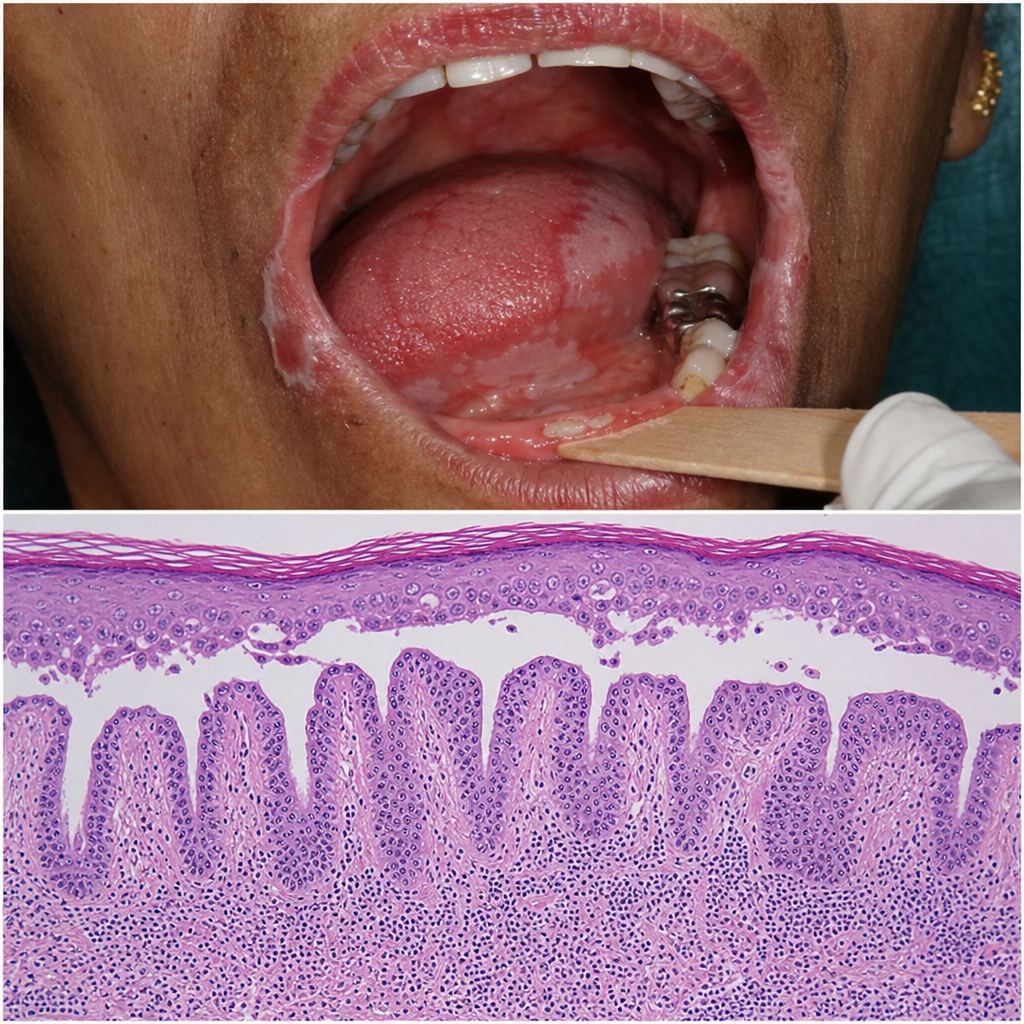
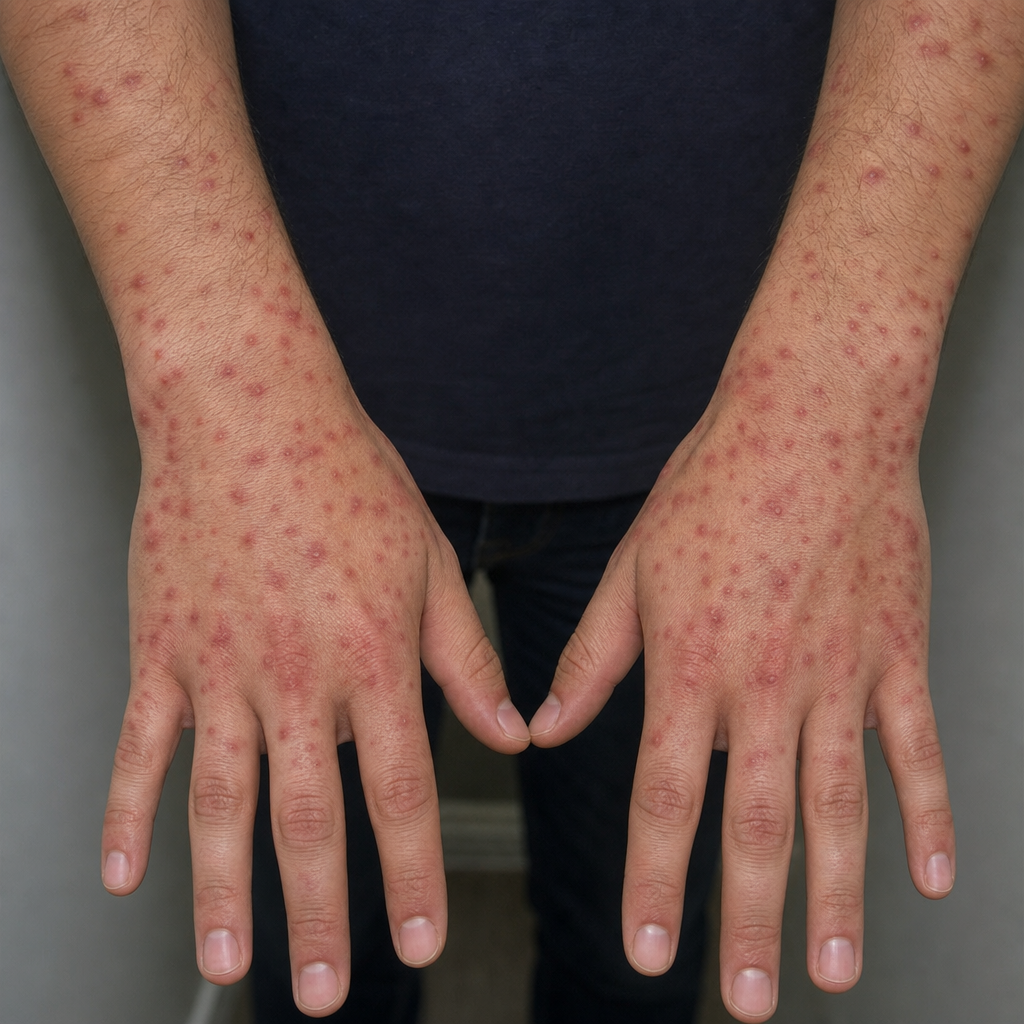
A patient developed fixed drug eruptions after taking certain medications. Which of the following drugs is known to cause these skin lesions?
Which of the following is a topical vitamin D analogue?
Which drug is used for intralesional injection in keloids?
Dapsone is used in which of the following conditions?
At the same concentration, which of the following vehicles is most potent for topical steroid delivery?
Which of the following monoclonal antibodies is used in the treatment of atopic dermatitis?
All of the following statements are true regarding warfarin toxicity (skin necrosis) except?
Lichenoid reactions are mainly due to:
Potassium iodide is contraindicated in all of the following conditions, EXCEPT:
A male presents with an erythematous patch over the penis after taking an over-the-counter medication. What is the most likely causal drug?
Explanation: **Explanation:** **Fixed Drug Eruption (FDE)** is a unique type of cutaneous drug reaction characterized by the recurrence of a lesion (usually a dusky red or violaceous macule) at the **exact same anatomical site** every time the offending drug is ingested. This occurs due to the persistence of **CD8+ memory T-cells** in the basal keratinocytes at the site of the lesion. **Why Option D is correct:** All three drugs listed are classic and high-yield triggers for FDE: * **Phenolphthalein:** Historically the most common cause (found in older laxatives). * **Aspirin (NSAIDs):** A very frequent trigger in clinical practice. * **Dapsone (Sulfonamides):** Sulfonamides are among the most common drug classes associated with FDE. **Analysis of Options:** * **Phenolphthalein:** Often presents as "bullous" FDE. * **Aspirin:** Along with other NSAIDs (like Ibuprofen and Naproxen), it is a leading cause of multi-focal FDE. * **Dapsone:** As a sulfone, it shares cross-reactivity patterns and is a well-documented cause. **High-Yield Clinical Pearls for NEET-PG:** 1. **Most Common Site:** The **glans penis** is the most common site for FDE, followed by the lips and palms. 2. **Commonest Causes (Overall):** NSAIDs, Sulfonamides (Cotrimoxazole), Tetracyclines, and Anticonvulsants. 3. **Clinical Feature:** Lesions often leave behind **post-inflammatory hyperpigmentation (PIH)** after healing. 4. **Refractory Period:** After an eruption, there is a brief refractory period where the drug may not cause a reaction. 5. **Diagnosis:** Primarily clinical; however, a **Patch Test** performed at the site of the previous lesion (not on the back) can confirm the offending agent.
Explanation: **Explanation:** **Calcipotriol** is a synthetic analog of **1,25-dihydroxyvitamin D3 (Calcitriol)**. In dermatology, it is primarily used as a first-line topical treatment for **Psoriasis vulgaris**. Its mechanism of action involves binding to intracellular vitamin D receptors (VDR), leading to the inhibition of keratinocyte proliferation and the induction of keratinocyte differentiation. It also possesses anti-inflammatory properties by inhibiting T-cell activation. **Analysis of Options:** * **Calcipotriol (Correct):** It is specifically designed for topical use. It is as effective as potent topical corticosteroids but has a better safety profile for long-term maintenance, as it does not cause skin atrophy. * **Cholecalciferol (Option A):** This is Vitamin D3, typically administered orally as a nutritional supplement to treat Vitamin D deficiency. * **Doxercalciferol (Option B) & Paricalcitol (Option D):** These are synthetic Vitamin D analogs administered **systemically** (oral or IV). They are primarily used in the management of secondary hyperparathyroidism in patients with chronic kidney disease (CKD). **High-Yield Clinical Pearls for NEET-PG:** * **Combination Therapy:** Calcipotriol is frequently combined with **Betamethasone dipropionate** (e.g., Daivobet) for synergistic effects in psoriasis. * **Side Effects:** The most common side effect is local skin irritation. Systemic hypercalcemia is rare unless the dose exceeds **100g per week**. * **Contraindication:** It should not be applied to the face (due to irritation) and is generally avoided in patients with pre-existing hypercalcemia. * **Other Topical Analogs:** Tacalcitol and Maxacalcitol are other topical analogs used globally.
Explanation: **Explanation:** **Triamcinolone acetonide (TAC)** is the gold standard and most commonly used drug for the intralesional treatment of keloids and hypertrophic scars. **Why Triamcinolone is the Correct Answer:** Triamcinolone is a potent, intermediate-acting synthetic corticosteroid. It works by: 1. **Inhibiting Fibroblasts:** It reduces the proliferation of fibroblasts and the synthesis of collagen. 2. **Anti-inflammatory Action:** It decreases the release of inflammatory mediators (like TGF-β) that drive excessive scarring. 3. **Increasing Collagenase:** It reduces levels of alpha-2-macroglobulin, which normally inhibits collagenase, thereby promoting the breakdown of existing collagen. The concentration typically used is **10–40 mg/mL**, injected directly into the mid-dermis of the lesion. **Analysis of Incorrect Options:** * **A & D (Prednisolone & Hydrocortisone):** These are shorter-acting corticosteroids with lower potency. They are highly soluble and rapidly absorbed into the systemic circulation, making them ineffective for maintaining the sustained local concentration required to break down dense keloidal tissue. * **C (Androgen):** Androgens have no role in the treatment of keloids; in fact, hormonal fluctuations (like puberty or pregnancy) are sometimes associated with keloid exacerbation. **High-Yield Clinical Pearls for NEET-PG:** * **Side Effects:** The most common side effects of intralesional TAC include **dermal atrophy, telangiectasia, and hypopigmentation** at the injection site. * **Combination Therapy:** For resistant keloids, TAC is often combined with **5-Fluorouracil (5-FU)** to improve efficacy and reduce atrophy. * **Cryosurgery:** Performing cryotherapy immediately before injection (the "cryo-insult" technique) softens the keloid, making the injection easier and more effective.
Explanation: **Explanation:** **Dapsone (Diaminodiphenyl sulfone)** is the drug of choice for **Dermatitis Herpetiformis (DH)**. DH is an autoimmune blistering disorder characterized by IgA deposits at the dermal papillae, leading to intense pruritus and neutrophilic infiltration. Dapsone works by inhibiting the enzyme myeloperoxidase and preventing the chemotaxis of neutrophils to the skin, providing rapid symptomatic relief (often within 24–48 hours). **Analysis of Options:** * **A. Dermatitis Herpetiformis:** Correct. It is the primary indication for Dapsone in dermatology. * **B. Pityriasis Rosea:** This is a self-limiting inflammatory condition (likely viral/HHV-6,7). Treatment is supportive (antihistamines, topical steroids); Dapsone has no role. * **C. Contact Dermatitis:** This is a Type IV hypersensitivity reaction. Management involves allergen avoidance and topical or systemic corticosteroids. * **D. Oculocutaneous Albinism:** This is a genetic disorder of melanin synthesis. There is no pharmacological "cure"; management focuses on photoprotection and monitoring for skin cancers. **High-Yield Clinical Pearls for NEET-PG:** * **Mechanism of Action:** Antifolate (inhibits dihydropteroate synthase) and anti-inflammatory (inhibits neutrophil recruitment). * **Other Indications:** Leprosy (part of MDT), Pemphigoid, Subcorneal Pustular Dermatosis (Sneddon-Wilkinson disease), and Brown Recluse spider bites. * **Mandatory Pre-screening:** Always check **G6PD levels** before starting Dapsone to prevent severe **hemolytic anemia**. * **Side Effects:** Dose-dependent hemolysis, methemoglobinemia (presents as cyanosis), and the "Dapsone Syndrome" (fever, malaise, exfoliative dermatitis, and hepatitis).
Explanation: **Explanation:** The potency of a topical corticosteroid is determined not only by the active pharmaceutical ingredient but also by its **vehicle**. The vehicle influences the rate of absorption and the depth of penetration into the skin. **Why Ointment is the Correct Answer:** Ointments are primarily oil-based (water-in-oil emulsions) and provide the highest level of **occlusion**. By forming a greasy film on the skin surface, they prevent transepidermal water loss, leading to increased hydration of the stratum corneum. Hydrated skin is significantly more permeable, allowing for maximum penetration of the steroid. Therefore, at the same concentration, an ointment is always more potent than a cream or lotion. **Why Other Options are Incorrect:** * **B. Lotion:** These are liquid-based (often water-based) and evaporate quickly. They have the least occlusive property and thus the lowest potency. They are preferred for hairy areas or oozing lesions. * **C. Cream:** These are oil-in-water emulsions. While they are more cosmetically elegant and easier to wash off, they provide less occlusion than ointments, resulting in moderate potency. * **D. Gel:** Gels are transparent, non-greasy formulations. While they are excellent for the scalp and oily skin, they lack the occlusive "barrier effect" required to match the potency of an ointment. **High-Yield Clinical Pearls for NEET-PG:** * **Rule of Thumb:** Potency ranking by vehicle: **Ointment > Cream > Lotion.** * **Absorption:** Steroid absorption is highest in areas with thin stratum corneum (e.g., eyelids, scrotum, face) and lowest in thick areas (e.g., palms, soles). * **Clinical Choice:** Use **ointments** for dry, thick, or hyperkeratotic lesions (e.g., chronic plaque psoriasis) and **creams/lotions** for moist, intertriginous, or weeping lesions. * **Finger Tip Unit (FTU):** One FTU (0.5g) is enough to cover the area of two adult palms.
Explanation: **Explanation:** **1. Why Dupilumab is Correct:** Dupilumab is a fully human monoclonal antibody that targets the **interleukin-4 receptor alpha (IL-4Rα) subunit**. By binding to this subunit, it inhibits the signaling of both **IL-4 and IL-13**. These cytokines are the key drivers of **Type 2 (Th2) inflammation**, which is the primary pathophysiological mechanism in atopic dermatitis. It is currently the first-line systemic biologic approved for moderate-to-severe atopic dermatitis unresponsive to topical therapies. **2. Why the Other Options are Incorrect:** * **Ipilimumab:** A checkpoint inhibitor that targets **CTLA-4**. It is used in the treatment of advanced melanoma and renal cell carcinoma. * **Durvalumab:** A checkpoint inhibitor that targets **PD-L1**. It is primarily used in the treatment of non-small cell lung cancer (NSCLC) and bladder cancer. * **Reslizumab:** An interleukin-5 (**IL-5**) antagonist. It is used as add-on maintenance treatment for severe eosinophilic asthma, not atopic dermatitis. **3. High-Yield Clinical Pearls for NEET-PG:** * **Mechanism:** Dual inhibitor of IL-4 and IL-13. * **Common Side Effect:** The most characteristic side effect of Dupilumab is **allergic conjunctivitis** and blepharitis. * **Other Indications:** It is also FDA-approved for moderate-to-severe asthma (eosinophilic phenotype) and chronic rhinosinusitis with nasal polyposis. * **Memory Aid:** "Dupi" stops the "D"ermatitis by blocking the "4" and "13" (IL-4/13).
Explanation: **Explanation:** Warfarin-induced skin necrosis (WISN) is a rare but severe complication occurring in approximately 0.01% to 0.1% of patients treated with vitamin K antagonists. **Why Option B is the correct answer (The False Statement):** While the buttocks and abdomen are common sites, the **most common sites** for warfarin necrosis are areas with **high subcutaneous fat content**, specifically the **breasts** (in females), followed by the thighs and buttocks. The statement in Option B is considered the "except" because it overlooks the breast as the primary site of predilection. **Analysis of Other Options:** * **Option A:** True. Necrosis typically occurs **3 to 10 days after initiation** of therapy, often due to a large loading dose. * **Option C:** True. Warfarin inhibits Vitamin K-dependent factors (II, VII, IX, X) and anticoagulant proteins (C and S). **Protein C has a shorter half-life** (6 hours) compared to clotting factors. This creates a transient "prothrombotic window" where natural anticoagulants are depleted while procoagulant factors are still active, leading to microvascular thrombosis. * **Option D:** True. Starting **Low Molecular Weight Heparin (LMWH)** as a "bridge" provides immediate anticoagulation, preventing the thrombotic complications during the initial drop in Protein C levels. **Clinical Pearls for NEET-PG:** * **Risk Factor:** Underlying **Protein C deficiency** is the most significant risk factor. * **Clinical Presentation:** Sudden onset of painful, erythematous, or purpuric lesions that rapidly progress to **hemorrhagic bullae and eschar**. * **Management:** Immediate discontinuation of Warfarin, administration of **Vitamin K**, and starting **Heparin** or Protein C concentrates.
Explanation: **Explanation:** **Lichenoid drug eruptions** (LDE) are cutaneous reactions that clinically and histologically mimic Lichen Planus. The correct answer is **Intake of certain drugs** because LDE is a well-recognized T-cell mediated delayed hypersensitivity reaction triggered by systemic medications. These drugs act as haptens, altering the antigenicity of keratinocytes and leading to a lichenoid tissue reaction characterized by a "saw-tooth" appearance of rete ridges and a band-like lymphocytic infiltrate at the dermo-epidermal junction. **Analysis of Options:** * **A. Intake of certain drugs (Correct):** Common culprits include NSAIDs, Antihypertensives (Beta-blockers, ACE inhibitors, Thiazides), Antimalarials (Chloroquine), and Gold salts. * **B. Betel nut chewing:** This is primarily associated with **Oral Submucous Fibrosis (OSMF)** and squamous cell carcinoma, not lichenoid reactions. * **C. Cigarette smoking:** While smoking is a risk factor for various dermatoses and oral cancers, it is not a primary cause of lichenoid eruptions. Interestingly, smoking is sometimes noted to have a paradoxical (though not therapeutic) inverse relationship with oral lichen planus. * **D. Intake of alcohol:** Alcohol is a trigger for psoriasis and rosacea exacerbations but does not directly cause lichenoid reactions. **High-Yield Clinical Pearls for NEET-PG:** * **Distinguishing LDE from Lichen Planus (LP):** LDE typically lacks **Wickham’s striae**, involves the trunk more than the wrists, and often shows parakeratosis and eosinophils on histology (features usually absent in classic LP). * **Photo-distribution:** Lichenoid drug eruptions often occur in sun-exposed areas (e.g., due to Hydrochlorothiazide). * **Latent Period:** The time between drug intake and eruption can range from weeks to several months.
Explanation: **Explanation:** Potassium Iodide (SSKI) is a versatile drug in dermatology, primarily used for its anti-neutrophilic and fibrinolytic properties. However, its use is strictly governed by specific contraindications. **Why Option D is the Correct Answer:** The question asks for the condition where Potassium Iodide is **NOT** contraindicated (i.e., where it can be used, albeit with caution). While SSKI is generally avoided in pregnancy due to the risk of fetal goiter and hypothyroidism (Category D), it is **not an absolute contraindication** in life-threatening situations or specific thyroid emergencies. More importantly, in the context of this specific MCQ, the other three options represent **absolute contraindications** where the drug can cause severe disease exacerbation or fatal reactions. **Analysis of Incorrect Options:** * **A. Dermatitis Herpetiformis (DH):** Iodides are strictly contraindicated. Ingestion of potassium iodide can trigger or severely exacerbate the blistering skin lesions in DH patients due to increased neutrophilic chemotaxis. * **B. Iodine Hypersensitivity:** This is an absolute contraindication. Administration can lead to anaphylaxis or severe drug eruptions (iododerma). * **C. Hypocomplementemic Vasculitis:** Also known as Urticarial Vasculitis. Iodides are known to flare the vasculitic process and are avoided in these patients. **NEET-PG High-Yield Pearls:** * **Drug of Choice:** SSKI is the drug of choice for **Sporotrichosis** (cutaneous-lymphatic type). * **Mechanism:** It inhibits the "oxygen burst" in neutrophils and suppresses inflammation. * **Other Indications:** Erythema Nodosum, Sweet Syndrome, and Pyoderma Gangrenosum. * **Side Effects:** "Iodism" (metallic taste, burning mouth, sore teeth/gums, and coryza-like symptoms). * **Wolff-Chaikoff Effect:** High doses of iodide cause a temporary reduction in thyroid hormone synthesis.
Explanation: **Explanation:** The clinical presentation of a solitary erythematous patch appearing at the same site (specifically the glans penis) following drug ingestion is a classic description of a **Fixed Drug Eruption (FDE)**. **1. Why Aceclofenac is correct:** NSAIDs are the most common cause of Fixed Drug Eruptions worldwide. Among them, the propionic acid derivatives and oxicams are frequent culprits, but in the Indian context, **NSAIDs (like Aceclofenac, Diclofenac, and Naproxen)** and Paracetamol are the leading causes of FDE. The glans penis is the most common site for FDE in males, often presenting as a well-demarcated, dusky red or violaceous macule that may evolve into a bulla and leaves behind post-inflammatory hyperpigmentation. **2. Analysis of Incorrect Options:** * **Azithromycin:** While macrolides can cause cutaneous reactions, they are a rare cause of FDE compared to NSAIDs. * **Ofloxacin:** Fluoroquinolones are known causes of FDE, but statistically, NSAIDs are more frequently implicated in OTC-related penile eruptions. * **Doxycycline:** Tetracyclines are a common cause of FDE; however, they are less likely to be taken as "over-the-counter" self-medication for minor pains compared to Aceclofenac. **3. High-Yield Clinical Pearls for NEET-PG:** * **Most common site for FDE:** Glans penis (Males), Labia (Females). * **Most common drugs causing FDE (Overall):** NSAIDs, Sulfonamides (Cotrimoxazole), Tetracyclines, and Carbamazepine. * **Pathogenesis:** Mediated by **CD8+ effector memory T cells** that remain resident in the skin lesion even after healing. * **Character:** The lesion recurs at the **exact same site** upon re-exposure to the offending drug.
Explanation: **Explanation:** The clinical presentation of recurrent, well-circumscribed erythematous plaques that resolve leaving behind **residual hyperpigmentation** (post-inflammatory hyperpigmentation) is the hallmark of a **Fixed Drug Eruption (FDE)**. In males, the glans penis is a classic site of involvement. The term "fixed" refers to the fact that the lesion recurs at the exact same anatomical site upon re-exposure to the offending drug. Common triggers include NSAIDs (most common), sulfonamides, tetracyclines, and anticonvulsants. **Analysis of Incorrect Options:** * **Aphthous Balanitis:** Presents as painful, shallow ulcers rather than erythematous plaques, and typically does not leave significant hyperpigmentation upon healing. * **Herpes Gestationis (Pemphigoid Gestationis):** This is a pregnancy-associated autoimmune bullous disorder. It would not occur in a male patient. * **Chlamydial Infection:** Typically presents as urethritis (discharge and dysuria). While it can be associated with Circinate Balanitis (in Reactive Arthritis), those lesions are usually painless, geographic, and do not characteristically heal with the deep "slate-grey" hyperpigmentation seen in FDE. **High-Yield Clinical Pearls for NEET-PG:** * **Most common site:** Glans penis (males), Labia (females). * **Most common drug:** Cotrimoxazole (historically) and NSAIDs (specifically Paracetamol and Oxyphenbutazone). * **Pathogenesis:** Mediated by **CD8+ effector memory T cells** that remain resident in the skin site. * **Diagnosis:** Primarily clinical; a "Provocation Test" can be done but is often avoided in severe cases.
Explanation: **Explanation:** **1. Why Phototoxicity is the Correct Answer:** Phototoxicity is a non-immunologic reaction that occurs when a drug (chromophore) absorbs UV radiation (usually UVA), leading to the formation of free radicals or reactive oxygen species. These cause direct tissue damage. **Paracetamol (Acetaminophen)** is a known, albeit less common, cause of phototoxicity. The mechanism involves the drug’s metabolites reacting under UV light to cause cellular damage in the skin. Unlike photoallergy, phototoxicity can occur on the first exposure and is dose-dependent. **2. Why the Other Options are Incorrect:** * **Photosensitivity:** This is a broad "umbrella term" that encompasses both phototoxicity and photoallergy. While technically correct in a general sense, **Phototoxicity** is the specific pathological mechanism attributed to Paracetamol, making it the more precise answer for a medical examination. * **Photoallergy:** This is a Type IV (delayed) hypersensitivity reaction. It requires prior sensitization and is not dose-dependent. Paracetamol does not typically trigger this cell-mediated immune response; its cutaneous reactions are primarily direct toxic effects. **3. Clinical Pearls & High-Yield Facts for NEET-PG:** * **Common Phototoxic Drugs:** Remember the mnemonic **"SAT for Photo"**: **S**ulfonamides/Sulfonylureas, **A**miodarone, **T**etracyclines (especially Demeclocycline), and **F**luoroquinolones (Lomefloxacin). Other common causes include NSAIDs (Naproxen) and Phenothiazines. * **Clinical Presentation:** Phototoxicity resembles an exaggerated sunburn (erythema, edema, blistering) limited to sun-exposed areas. Photoallergy, conversely, often presents as an eczematous dermatitis that can spread to non-exposed areas. * **Paracetamol & Skin:** While rare, Paracetamol is also a notorious trigger for **Stevens-Johnson Syndrome (SJS)** and **Toxic Epidermal Necrolysis (TEN)**, which are high-yield dermatological emergencies.
Explanation: **Explanation:** Drug Hypersensitivity Syndrome, commonly known as **DRESS (Drug Reaction with Eosinophilia and Systemic Symptoms)**, is a severe, idiosyncratic Type IVb hypersensitivity reaction. It is characterized by the clinical triad of fever, rash, and internal organ involvement (most commonly the liver), typically occurring 2 to 8 weeks after drug initiation. **Why Tetracycline is the correct answer:** While tetracyclines can cause various cutaneous side effects (like photosensitivity or fixed drug eruptions), they are **not** classically associated with DRESS syndrome. Minocycline is the only member of the tetracycline family frequently linked to DRESS; standard tetracycline is considered a rare or negligible cause. **Analysis of incorrect options:** * **Lamotrigine:** A well-known trigger among anticonvulsants. The "Aromatic Anticonvulsants" (Phenytoin, Carbamazepine, Phenobarbital) and Lamotrigine are the most common causes of DRESS. * **Allopurinol:** The most frequent cause of DRESS in many global cohorts, especially in patients with renal impairment or those carrying the **HLA-B*5801** allele. * **Nevirapine:** A Non-Nucleoside Reverse Transcriptase Inhibitor (NNRTI) strongly associated with DRESS and Stevens-Johnson Syndrome (SJS) in HIV patients. **High-Yield Clinical Pearls for NEET-PG:** * **Latent Period:** DRESS has a uniquely long onset (2–8 weeks), unlike SJS/TEN (1–3 weeks). * **Hallmark Lab Finding:** Peripheral blood **eosinophilia** (>1500/mm³) and atypical lymphocytosis. * **Organ Involvement:** The **liver** is the most common internal organ affected (hepatitis). * **Association:** Often linked to the reactivation of Human Herpesvirus 6 (**HHV-6**). * **Management:** Immediate withdrawal of the offending drug and systemic corticosteroids.
Explanation: **Explanation:** **Erythema Nodosum Leprosum (ENL)**, or Type 2 Lepra reaction, is a Type III hypersensitivity reaction characterized by painful subcutaneous nodules, fever, and systemic involvement. **Thalidomide** is considered the drug of choice for chronic or recurrent ENL due to its potent anti-TNF-α properties and its ability to inhibit neutrophil chemotaxis. 1. **Why 200-300 mg is correct:** The standard therapeutic dose for controlling an acute episode of ENL is **100 mg to 300 mg daily**, usually administered at bedtime. Most clinical guidelines (including WHO and IAL) recommend starting at **300 mg/day** for severe reactions to achieve rapid suppression of inflammation, followed by a gradual tapering once the reaction is controlled. 2. **Why other options are incorrect:** * **100 mg:** While 100 mg can be used for very mild cases or as a maintenance dose during tapering, it is often insufficient to control an acute, severe ENL flare. * **500 mg & 1000 mg:** These doses are excessively high and significantly increase the risk of dose-dependent toxicity (peripheral neuropathy and sedation) without providing additional therapeutic benefit for ENL. **High-Yield Clinical Pearls for NEET-PG:** * **Mechanism of Action:** Primarily acts by inhibiting **TNF-alpha**. * **Teratogenicity:** Thalidomide is notorious for causing **Phocomelia** (seal-like limbs). It is strictly contraindicated in pregnancy (Category X). * **Side Effects:** The most common side effect is **somnolence**; the most serious long-term side effect is **irreversible peripheral neuropathy**. * **Regulatory Note:** Due to its teratogenic potential, it is distributed under the **STEPS** (System for Thalidomide Education and Prescribing Safety) program.
Explanation: **Explanation:** **Triamcinolone acetonide** is the gold standard and most commonly used drug for the intralesional treatment of keloids and hypertrophic scars. The underlying medical concept involves its potent anti-inflammatory and immunosuppressive actions. It inhibits fibroblast proliferation, reduces collagen synthesis, and increases the production of collagenase, which helps in flattening the lesion and reducing symptoms like pruritus and pain. **Analysis of Options:** * **Triamcinolone (Correct):** It is preferred because it is a **synthetic, non-polar, intermediate-acting corticosteroid** with low solubility. This low solubility allows the drug to remain at the site of injection for a prolonged period, providing sustained therapeutic effect with minimal systemic absorption. * **Prednisolone:** This is a short-acting corticosteroid primarily used orally. It lacks the sustained-release properties required for effective intralesional therapy. * **Hydrocortisone:** This is a low-potency, short-acting natural corticosteroid. It is too weak to effectively break down the dense collagen bundles found in keloids. * **Androgen:** Androgens have no role in the treatment of keloids; in fact, hormonal fluctuations (like puberty or pregnancy) are sometimes associated with keloid exacerbation. **High-Yield Clinical Pearls for NEET-PG:** * **Concentration:** Usually used in concentrations of **10–40 mg/mL**. * **Side Effects:** Local skin atrophy, telangiectasia, and hypopigmentation are common adverse effects of intralesional steroids. * **Combination Therapy:** For resistant keloids, Triamcinolone is often combined with **5-Fluorouracil (5-FU)** or cryotherapy for better efficacy. * **Other Indications:** Intralesional Triamcinolone is also the treatment of choice for **Alopecia Areata** and **Lichen Planus Hypertrophicus (LPH)**.
Explanation: **Explanation:** **Castellani’s Paint** (also known as Carbol-Fuchsin solution) is a classic topical formulation used in dermatology primarily for its antifungal, antibacterial, and drying properties. 1. **Why Benzene Hexachloride is the correct answer:** Benzene hexachloride (Lindane) is an **ectoparasiticide** used to treat scabies and lice. It is not a component of Castellani’s paint. The paint is designed to treat fungal infections (like Tinea cruris or intertrigo) and bacterial overgrowth, not parasitic infestations. 2. **Analysis of Incorrect Options (Components of Castellani’s Paint):** * **Basic Fuchsin (Option A):** This is the primary active dye that gives the paint its characteristic deep red/magenta color. It provides potent antifungal and antiseptic action. * **Phenol (Option B):** Acts as a preservative and a local anesthetic/antipruritic agent, helping to relieve itching associated with skin infections. * **Boric Acid (Option C):** Serves as a mild antiseptic and helps maintain the acidic pH of the solution, which inhibits bacterial growth. * *Note:* Other standard ingredients include **Resorcinol** (keratolytic), **Acetone**, and **Alcohol**. **High-Yield Clinical Pearls for NEET-PG:** * **Indications:** It is highly effective for **Intertrigo**, **Erythrasma** (caused by *Corynebacterium minutissimum*), and localized **Tinea pedis**. * **The "Colorless" Variant:** Modern versions may omit Basic Fuchsin to avoid the permanent staining of clothes, though this reduces the antifungal efficacy. * **Side Effects:** It can cause localized irritation and, if applied over large denuded areas, phenol toxicity may occur. * **Key Identification:** In exams, remember the "deep red stain" mnemonic—Castellani’s Paint = Carbol-Fuchsin.
Explanation: **Explanation:** **1. Why Triamcinolone is Correct:** Intralesional corticosteroid injection is the **first-line treatment** for keloids and hypertrophic scars. **Triamcinolone acetonide (TAC)**, typically in concentrations of 10–40 mg/mL, is the preferred agent. It works by: * **Inhibiting Inflammation:** Reducing the recruitment of inflammatory cells. * **Reducing Collagen Synthesis:** Inhibiting fibroblast proliferation and suppressing the expression of genes responsible for collagen production. * **Increasing Collagenase Activity:** Promoting the breakdown of existing excess collagen fibers, thereby flattening the lesion. **2. Why Other Options are Incorrect:** * **A. Heparin:** While some experimental studies suggest heparin may inhibit fibroblast growth, it is not a standard clinical treatment for keloids. * **C. Danazol:** This is a synthetic androgen used primarily for endometriosis and hereditary angioedema; it has no role in the intralesional treatment of keloids. * **D. Hydrocortisone:** Although a corticosteroid, hydrocortisone is a low-potency, short-acting steroid. It is less effective and more soluble than Triamcinolone, making it unsuitable for providing the sustained local effect required to remodel dense keloid tissue. **3. NEET-PG High-Yield Pearls:** * **Side Effects of IL-TAC:** Dermal atrophy, telangiectasia, and hypopigmentation at the injection site. * **Combination Therapy:** For resistant keloids, Triamcinolone is often combined with **5-Fluorouracil (5-FU)** to improve efficacy and reduce side effects. * **Other Treatments:** Cryotherapy, silicone gel sheeting, and pulsed dye laser (PDL) are other common modalities. * **Surgical Caution:** Simple excision of a keloid has a high recurrence rate (up to 50-100%) unless followed by adjuvant therapy like pressure garments or radiotherapy.
Explanation: **Explanation:** **Triamcinolone acetonide (TAC)** is the gold standard and most commonly used drug for the intralesional treatment of keloids and hypertrophic scars. The underlying medical concept involves its potent anti-inflammatory and immunosuppressive actions. Corticosteroids inhibit fibroblast proliferation, decrease collagen synthesis, and increase the production of collagenase, which helps in flattening the firm, fibrous tissue of a keloid. **Analysis of Options:** * **Triamcinolone (Correct):** It is preferred because it is a **suspension** with low solubility, allowing the drug to remain at the site of injection for a prolonged period (depot effect), providing sustained action within the dense keloid tissue. * **Prednisolone:** While a potent steroid, it is typically used systemically (oral) or topically. It lacks the specific pharmacokinetic profile (insolubility) required for effective intralesional depot therapy in scars. * **Hydrocortisone:** This is a short-acting, low-potency corticosteroid. It is generally too weak to break down the dense collagen bundles found in keloids. * **Androgen:** Androgens have no role in the treatment of keloids; in fact, hormonal fluctuations (like puberty or pregnancy) are sometimes associated with keloid exacerbation. **High-Yield Clinical Pearls for NEET-PG:** * **Concentration:** Usually used in concentrations of **10–40 mg/mL**. * **Side Effects:** Local skin atrophy, telangiectasia, and hypopigmentation are common adverse effects of intralesional TAC. * **Combination Therapy:** For resistant keloids, Triamcinolone is often combined with **5-Fluorouracil (5-FU)** or cryotherapy for better efficacy. * **Other uses of Intralesional TAC:** Alopecia areata, lichen planus hypertrophicus (LPH), and cystic acne.
Explanation: **Explanation:** Radiation dermatitis is a common side effect of radiotherapy, categorized into stages based on severity. **Dry desquamation** (characterized by erythema, dryness, and scaling) and mild **moist desquamation** (serous exudate and peeling) are typically self-limiting processes. **Why "Observation alone" is correct:** In modern dermatological management of post-radiation skin changes, the primary goal is to maintain a clean environment and allow the skin’s natural regenerative processes to occur. For mild desquamation, conservative management—often termed "observation" or "supportive care"—is the standard. This involves avoiding irritants (harsh soaps, friction) and allowing the basal layer of the epidermis to repopulate. While gentle moisturizers are often used for comfort, the clinical progression itself does not require active medical or surgical intervention. **Analysis of Incorrect Options:** * **A. Petroleum jellies:** While emollients can soothe dry skin, heavy occlusives like petroleum jelly are often avoided immediately before radiation sessions (due to the "bolus effect" which increases surface dose) and are not a "treatment" for the underlying cellular damage. * **C. Surgery:** Surgery is contraindicated in acute radiation desquamation. It is only reserved for late-stage complications like non-healing radiation necrosis or secondary malignancies (e.g., BCC/SCC). * **D. Antibiotic coverage:** Prophylactic antibiotics are not indicated unless there is clear clinical evidence of secondary bacterial infection (impetiginization). **High-Yield Clinical Pearls for NEET-PG:** * **Grading:** Radiation dermatitis is graded by RTOG (Radiation Therapy Oncology Group) or CTCAE scales. * **Management:** For **Dry Desquamation**, use hydrophilic lotions (e.g., Aloe Vera). For **Moist Desquamation**, use hydrocolloid or silver-leaf dressings to promote moist wound healing. * **Late Sequelae:** Chronic radiation dermatitis is characterized by the "triad" of **telangiectasia, atrophy, and fibrosis.**
Explanation: **Explanation:** The question asks for a side effect that is **NOT** typically associated with the prolonged use of topical corticosteroids. While the question mentions "Addison's disease," in the context of dermatology, this refers to the systemic suppression of the Hypothalamic-Pituitary-Adrenal (HPA) axis, but the options provided focus on the **local cutaneous side effects** of topical steroids. **Why Photosensitivity is the Correct Answer:** Photosensitivity is not a recognized side effect of topical corticosteroids. In fact, steroids are often used to *treat* inflammatory photodermatoses (like Polymorphous Light Eruption) due to their potent anti-inflammatory and immunosuppressive properties. **Analysis of Incorrect Options (Local Side Effects of Steroids):** * **Skin Atrophy:** Steroids inhibit keratinocyte proliferation and reduce collagen synthesis by fibroblasts, leading to thinning of the epidermis and dermis. * **Telangiectasia:** Chronic use causes the release of nitric oxide and thinning of the dermal matrix, leading to permanent dilation of superficial capillaries. * **Folliculitis:** Steroids cause local immunosuppression and can induce "Steroid Acne" or "Steroid Folliculitis" (monomorphic pustules without comedones) by altering the local flora and follicular epithelium. **High-Yield Clinical Pearls for NEET-PG:** * **Systemic Side Effects:** Prolonged use of potent topical steroids over large surface areas can cause **Iatrogenic Cushing’s Syndrome** or **HPA axis suppression** (Secondary Adrenal Insufficiency). * **Tachyphylaxis:** This refers to the rapid decrease in response to a drug (tolerance) after repeated doses, common with topical steroids. * **Striae Distensae:** These are permanent linear scars (stretch marks) caused by dermal collagen degradation; they are irreversible even after stopping the drug. * **Classification:** Remember the **Stoughton-Cornell Classification** (7 classes), where Class I (Clobetasol propionate) is the most potent and Class VII (Hydrocortisone) is the least.
Explanation: **Explanation:** **Type II Lepra Reaction (Erythema Nodosum Leprosum - ENL)** is a Type III hypersensitivity reaction (immune-complex mediated) occurring primarily in multibacillary leprosy (BL/LL). It presents with tender subcutaneous nodules, fever, and systemic involvement (neuritis, arthritis, iritis). **Why Steroids are the Correct Answer:** Systemic **Corticosteroids (Prednisolone)** are the first-line drug of choice for Type II reactions because they provide rapid anti-inflammatory and immunosuppressive action. They are essential to prevent permanent nerve damage and manage acute systemic symptoms. While Thalidomide is highly effective, steroids remain the standard initial treatment, especially in cases involving neuritis. **Analysis of Incorrect Options:** * **A. Thalidomide:** It is the drug of choice specifically for **chronic, recurrent, or steroid-dependent** ENL. However, it is contraindicated in women of childbearing age (teratogenic) and acts slower than steroids in acute settings. * **C. Clofazimine:** Used as a steroid-sparing agent in chronic ENL. It has anti-inflammatory properties but takes 4–6 weeks to show effect, making it unsuitable for acute management. * **D. Rifampicin:** This is a bactericidal component of MDT. It has no role in managing the immunological reaction itself; in fact, reactions occur due to the release of antigens from dead bacilli. **High-Yield Clinical Pearls for NEET-PG:** * **Type I Reaction:** Delayed hypersensitivity (Type IV); Drug of Choice: **Steroids**. * **Type II Reaction:** Immune-complex mediated (Type III); Drug of Choice: **Steroids** (Thalidomide for recurrent cases). * **MDT during reactions:** Never stop Multi-Drug Therapy (MDT) during a Lepra reaction. * **Thalidomide side effect:** Phocomelia (seal-like limbs) in the fetus.
Explanation: **Explanation:** Topical corticosteroids are among the most frequently prescribed medications in dermatology, but their prolonged or inappropriate use leads to predictable local side effects. **Why Photosensitivity is the Correct Answer:** Photosensitivity is **not** a recognized side effect of topical steroids. In fact, steroids are often used therapeutically to *treat* inflammatory photodermatoses (like Polymorphous Light Eruption) due to their potent anti-inflammatory and immunosuppressive properties. **Analysis of Incorrect Options (Side Effects of Topical Steroids):** * **Skin Atrophy (Option A):** This is the most common side effect. Steroids inhibit keratinocyte proliferation and fibroblast function, leading to thinning of the epidermis and loss of dermal collagen/ground substance. * **Telangiectasia (Option B):** Steroids cause the release of nitric oxide, leading to persistent dilatation of superficial dermal capillaries. This is often seen alongside atrophy, making the vessels more visible. * **Folliculitis (Option C):** Topical steroids can cause "Steroid Acne" or "Steroid Folliculitis." They are also immunosuppressive, which can predispose the hair follicles to secondary bacterial or fungal infections. **High-Yield Clinical Pearls for NEET-PG:** * **Tinea Incognito:** A classic exam favorite where a fungal infection's appearance is modified (less inflamed but more widespread) due to inappropriate steroid use. * **Striae Distensae:** Irreversible "stretch marks" caused by dermal collagen degradation. * **Tachyphylaxis:** A decrease in therapeutic response to a drug after repeated use; common with potent steroids. * **Systemic Absorption:** Can lead to Cushing’s syndrome or HPA axis suppression, especially in infants or when used under occlusion.
Explanation: **Explanation:** **Fixed Drug Eruption (FDE)** is a distinctive type of cutaneous drug reaction characterized by recurrent, well-demarcated, erythematous or dusky plaques that appear in the **exact same anatomical location** upon re-exposure to the offending drug. **Why Mepacrine is the correct answer:** Mepacrine (Quinacrine) is an antimalarial and antiprotozoal agent. While it is notorious for causing **yellowish skin discoloration** and **lichenoid drug eruptions**, it is not a common or classic cause of Fixed Drug Eruptions. In the context of NEET-PG, FDE is most strongly associated with specific classes like NSAIDs and antimicrobials. **Analysis of Incorrect Options:** * **Sulphonamides (C):** Historically the **most common cause** of FDEs worldwide. They frequently cause lesions on the genitalia. * **Tetracyclines (A):** A very common cause of FDEs, often presenting with lesions on the glans penis. * **Ibuprofen (B):** NSAIDs (including Ibuprofen, Naproxen, and Oxyphenbutazone) are leading causes of FDEs. NSAID-induced FDEs often present as multiple or generalized lesions. **High-Yield Clinical Pearls for NEET-PG:** 1. **Most Common Site:** The glans penis is the most common site for FDEs in males. 2. **Commonest Culprits (The "S-N-A-T" Mnemonic):** **S**ulphonamides, **N**SAIDs, **A**nticonvulsants, and **T**etracyclines. 3. **Pathogenesis:** Mediated by **effector memory CD8+ T cells** that remain resident in the skin even after the lesion heals. 4. **Clinical Feature:** Lesions often heal with significant **post-inflammatory hyperpigmentation**. 5. **Bullous FDE:** A severe variant that must be differentiated from Stevens-Johnson Syndrome (SJS).
Explanation: **Explanation:** Imiquimod is a potent **topical immune response modifier**. Its primary mechanism of action involves acting as an agonist for **Toll-like receptor 7 (TLR-7)**. This stimulation induces the release of pro-inflammatory cytokines, most notably **Interferon-alpha (IFN-α)**, Interleukin-6 (IL-6), and Tumor Necrosis Factor-alpha (TNF-α). These cytokines activate the innate and cell-mediated immune systems to target both viral-infected cells and tumor cells. **Why "All of the Above" is correct:** * **Warts (Option B):** Imiquimod is FDA-approved for **Anogenital warts** (Condyloma acuminata) caused by HPV. It enhances the body's ability to clear the viral load. * **Skin Cancer (Option C):** It is used for treating **Superficial Basal Cell Carcinoma (sBCC)** and **Actinic Keratosis** (a pre-malignant precursor to Squamous Cell Carcinoma). Its pro-apoptotic and anti-tumor effects make it an excellent non-invasive option for low-risk lesions. * **Molluscum Contagiosum (Option A):** While often used off-label, it is a clinically recognized treatment for Molluscum, especially in extensive or recalcitrant cases, by stimulating an immune response against the Poxvirus. **Clinical Pearls for NEET-PG:** * **Mechanism:** TLR-7 agonist $\rightarrow$ IFN-α induction. * **Common Side Effects:** Local skin reactions (erythema, itching, burning, and erosion) are expected and indicate the drug is working. * **Other Indications:** It is also used off-label for Keloids (post-excision), Bowens’s disease, and Lentigo maligna. * **Contraindication:** It should be used with caution in patients with pre-existing autoimmune conditions.
Explanation: ### Explanation **Correct Option: B. Thioacetazone** Thioacetazone is a bacteriostatic second-line anti-tubercular drug known for its high incidence of severe cutaneous adverse reactions (SCARs). It is the most common anti-TB drug associated with **Stevens-Johnson Syndrome (SJS)** and **Toxic Epidermal Necrolysis (TEN)**. This risk is significantly potentiated in patients with **HIV co-infection**, leading to its restricted use or total withdrawal from national TB programs in many regions. **Incorrect Options:** * **A. PAS (Para-aminosalicylic acid):** Primarily causes gastrointestinal distress and hypersensitivity reactions like drug-induced hepatitis or infectious mononucleosis-like syndrome, but is rarely linked to SJS. * **C. Ethionamide:** Common side effects include intense metallic taste, nausea, vomiting, and hypothyroidism. While it can cause rashes, it is not a classic trigger for SJS. * **D. Isoniazid (INH):** The hallmark side effects are peripheral neuropathy (due to Vitamin B6 deficiency) and hepatotoxicity. While INH can cause acneiform eruptions or pellagra-like dermatitis, it is a much rarer cause of SJS compared to Thioacetazone. **High-Yield Clinical Pearls for NEET-PG:** * **HIV Link:** Always remember that Thioacetazone-induced SJS is a classic "exam favorite" association with HIV-positive patients. * **Other common SJS triggers:** Sulfonamides (most common overall), Anticonvulsants (Phenytoin, Carbamazepine, Phenobarbitone), Allopurinol, and NSAIDs (Oxicams). * **Dermatological Rule:** If a patient on AKT (Anti-Koch's Treatment) develops a severe bullous rash, **Thioacetazone** is the first suspect, followed by Rifampicin or Ethambutol.
Explanation: **Explanation:** **Warfarin-induced skin necrosis (WISN)** is a rare but severe complication occurring typically 3–10 days after starting warfarin therapy. **Why Option A is correct:** Warfarin inhibits Vitamin K-dependent clotting factors (II, VII, IX, X) and natural anticoagulants (**Protein C and Protein S**). Protein C has a significantly shorter half-life (approx. 6 hours) compared to procoagulant factors like Factor X or II. Consequently, during the initial phase of warfarin therapy, Protein C levels drop rapidly while procoagulant factors remain active. This creates a transient **paradoxical hypercoagulable state**, leading to microvascular thrombosis, skin infarction, and necrosis. Patients with a pre-existing (hereditary) deficiency of Protein C or S are at the highest risk. **Why other options are incorrect:** * **B. APLAS:** While APLAS causes thrombosis, it is an autoimmune condition involving antibodies against phospholipids, not the specific mechanism triggered by warfarin initiation. * **C. Vitamin K deficiency:** Warfarin induces a functional Vitamin K deficiency, but the *necrosis* specifically results from the imbalance between anticoagulant and procoagulant factors, not the deficiency itself. * **D. Fibrinogen deficiency:** This leads to bleeding tendencies (hypocoagulability), rather than the microvascular thrombosis seen in WISN. **Clinical Pearls for NEET-PG:** * **Classic Presentation:** Painful, erythematous plaques progressing to hemorrhagic bullae and eschar, typically in areas with high subcutaneous fat (breasts, thighs, buttocks). * **Prevention:** Always "bridge" warfarin with a rapid-acting anticoagulant like **Heparin** to cover the initial hypercoagulable window. * **Treatment:** Immediate discontinuation of warfarin, administration of Vitamin K, and providing Protein C concentrates or Fresh Frozen Plasma (FFP).
Explanation: **Explanation:** Toxic Epidermal Necrolysis (TEN) is a life-threatening mucocutaneous reaction characterized by extensive keratinocyte apoptosis leading to skin detachment (>30% Body Surface Area). **Why Hepatitis is the correct answer:** While TEN is a systemic disease that can cause transient elevations in liver enzymes (transaminitis), **Hepatitis** is not considered a classic or primary complication of the disease process itself. The systemic involvement in TEN primarily focuses on fluid-electrolyte balance, thermoregulation, and mucosal surfaces. **Analysis of Incorrect Options:** * **Hypothermia:** The loss of the epidermal barrier leads to massive heat loss through evaporation and inability to regulate body temperature. This is a common and dangerous acute complication. * **Sepsis:** This is the **most common cause of death** in TEN. The denuded skin acts as a portal for pathogens (commonly *S. aureus* and *P. aeruginosa*), leading to septicemia. * **Ocular Damage:** This is the most frequent **long-term complication**. Acute phase involves conjunctivitis and eyelid edema; chronic sequelae include symblepharon, ectropion, and permanent blindness. **High-Yield Clinical Pearls for NEET-PG:** * **SCORTEN:** The prognostic scoring system used to predict mortality in SJS/TEN (calculated within the first 24 hours). * **Nikolsky Sign:** Characteristically positive in TEN (epidermal detachment with lateral pressure). * **Etiology:** Most commonly drug-induced (Sulfonamides, Antiepileptics like Phenytoin/Carbamazepine, NSAIDs, and Allopurinol). * **Histopathology:** Shows **full-thickness epidermal necrosis** with minimal dermal inflammation.
Explanation: The correct answer is **Exanthematous pustulosis**, specifically **Acute Generalized Exanthematous Pustulosis (AGEP)**. ### **Explanation of the Correct Answer** AGEP is a rare but distinct cutaneous drug reaction characterized by the sudden onset of numerous small, sterile, non-follicular pustules on a background of edematous erythema. * **Mechanism:** It is a Type IV hypersensitivity reaction (T-cell mediated). * **Trigger:** **Hydroxychloroquine** is a classic and high-yield trigger for AGEP, especially in patients with autoimmune conditions like Sjogren’s syndrome or SLE. * **Clinical Features:** It typically presents with fever and **leukocytosis/eosinophilia**. The eruption usually starts in intertriginous areas (axilla, groin) and spreads rapidly. ### **Why Other Options are Incorrect** * **Bullous Impetigo:** This is a localized bacterial infection (Staph. aureus) characterized by large, fragile bullae. It is not a drug reaction and does not present with systemic eosinophilia. * **Exfoliative Dermatitis (Erythroderma):** While this involves diffuse erythema and scaling (>90% body surface area), it lacks the characteristic sterile pustules associated with hydroxychloroquine reactions. * **Stevens-Johnson Syndrome (SJS):** SJS involves extensive mucosal involvement and skin detachment (epidermal necrolysis). While it is a drug reaction, it presents with "targetoid" lesions and sloughing, not a diffuse pustular eruption. ### **High-Yield Clinical Pearls for NEET-PG** * **Key Triggers for AGEP:** Aminopenicillins, Macrolides, and **Hydroxychloroquine**. * **Timeline:** AGEP has a very short incubation period (often <48 hours), whereas SJS/TEN takes 1–3 weeks. * **Diagnostic Clue:** Look for "sterile pustules" and "high fever" in the history. * **Treatment:** Withdrawal of the offending drug; the condition is usually self-limiting with a good prognosis.
Explanation: ### Explanation The correct answer is **C. Herpes genitalis**. **1. Why Herpes Genitalis is Correct:** Herpes Simplex Virus (HSV-2) is characterized by **recurrent**, painful, grouped vesicles on an erythematous base. In the genital region, these vesicles quickly rupture to form shallow ulcers. A hallmark of healing in HSV (especially in darker skin types) is **post-inflammatory hyperpigmentation (PIH)**. The cycle of recurrence in the exact same or nearby location followed by residual pigmentary changes is a classic clinical presentation of genital herpes. **2. Why the Other Options are Incorrect:** * **A. Aphthous ulcers:** These typically occur on mucosal surfaces (like the mouth). While they can occur on the genitalia (complex aphthosis/Behçet’s), they usually heal without significant scarring or long-lasting hyperpigmentation. * **B. Fixed Drug Eruption (FDE):** This is a strong distractor. FDE presents as a solitary, dusky red/violaceous patch that recurs in the **exact same spot** upon drug re-exposure and leaves deep **slate-grey hyperpigmentation**. However, in the context of standard NEET-PG patterns, "recurrent lesions on the glans" with a focus on infectious etiology or classic viral patterns often points toward HSV. (Note: If the question specified a "single dusky patch" appearing after medication, FDE would be the primary choice). * **D. Chlamydial infection:** Lymphogranuloma venereum (LGV) or non-gonococcal urethritis caused by Chlamydia typically presents with a transient, painless primary ulcer or discharge, not recurrent pigmented lesions. **3. High-Yield Clinical Pearls for NEET-PG:** * **Tzanck Smear:** Look for **Multinucleated Giant Cells** and **Acantholytic cells** (Tzanck cells) in HSV. * **Gold Standard Diagnosis:** Viral PCR is the most sensitive; Viral culture is the specific gold standard. * **Treatment:** Oral Acyclovir, Valacyclovir, or Famciclovir. * **Key Differentiator:** If a lesion is **painless** and indurated, think Syphilis (Chancre); if **painful** and recurrent, think Herpes.
Explanation: **Explanation:** **Pseudoporphyria** is a bullous photosensitivity disorder that clinically and histologically mimics Porphyria Cutanea Tarda (PCT) but occurs without the associated abnormalities in porphyrin metabolism. **1. Why Methotrexate is the correct answer:** Methotrexate is a folate antagonist used in psoriasis and malignancies. While it can cause photosensitivity and "radiation recall" phenomena, it is **not** associated with pseudoporphyria. The pathogenesis of pseudoporphyria usually involves drug-induced phototoxicity leading to perivascular inflammation and basement membrane damage, a mechanism not triggered by Methotrexate. **2. Analysis of Incorrect Options:** * **Naproxen (Option C):** This is the **most common** cause of pseudoporphyria, especially in children with juvenile idiopathic arthritis. Other NSAIDs like Nabumetone and Oxaprozin can also cause it. * **Nalidixic Acid (Option B):** A classic cause among antibiotics. Other implicated drugs include Tetracyclines (especially Doxycycline), Furosemide, and Amiodarone. * **Isotretinoin (Option D):** Retinoids are known triggers for pseudoporphyria. Patients on isotretinoin for acne may present with increased skin fragility and blistering on the dorsum of the hands. **Clinical Pearls for NEET-PG:** * **Key Clinical Feature:** Tense bullae, skin fragility, and scarring on sun-exposed areas (dorsum of hands), identical to PCT. * **Distinguishing Factor:** Unlike true Porphyria, patients with Pseudoporphyria have **normal** urinary and fecal porphyrin levels. * **Histology:** Subepidermal blisters with "caterpillar bodies" (eosinophilic aggregates in the roof of the blister) may be seen, similar to PCT. * **Management:** Discontinuation of the offending drug and strict photoprotection. Unlike PCT, phlebotomy and hydroxychloroquine are not effective.
Explanation: **Explanation:** The clinical presentation of a patient being treated for **acne rosacea** who develops **bluish pigmentation** on the legs is classic for **Minocycline-induced hyperpigmentation**. Minocycline is a second-generation tetracycline frequently used for its anti-inflammatory properties in rosacea and acne. **Why Minocycline is correct:** Minocycline can cause skin discoloration in up to 15% of patients. There are three distinct clinical patterns: * **Type I:** Blue-black pigment in areas of scarring or inflammation (e.g., old acne scars). * **Type II:** Blue-grey pigment on **normal skin**, most commonly on the **shins/legs** (as seen in this case) and forearms. * **Type III:** Diffuse "muddy" brown pigmentation in sun-exposed areas. The pigment is a metabolic byproduct of the drug or a chelated iron complex deposited in the dermis. **Why other options are incorrect:** * **Amiodarone:** Causes a characteristic **slate-grey** pigmentation, but it occurs primarily in **sun-exposed areas** (face) and is associated with cardiac history, not rosacea. * **Hydroxychloroquine:** Can cause blue-grey pigmentation, but it typically involves the **shins and oral mucosa**. However, it is used for connective tissue diseases (like SLE), not rosacea. * **Amoxicillin:** Does not cause cutaneous hyperpigmentation; it is more commonly associated with hypersensitivity reactions (morbilliform rashes). **NEET-PG High-Yield Pearls:** 1. **Minocycline Type II** pigmentation is specifically associated with the **shins**. 2. **Staining:** Type I and II stain positive for **Perls' Prussian blue** (iron), whereas Type III does not. 3. **Other "Blue" Drugs:** Silver (Argyria), Gold (Chrysiasis), and Clofazimine (reddish-brown to blue-grey). 4. **Management:** Discontinuation of the drug usually leads to slow resolution, though Q-switched lasers can be used.
Explanation: **Explanation:** **Pityriasis Rosea (PR)** is a common, self-limiting inflammatory skin disease. The hallmark clinical feature is the **Herald Patch**, which appears in 50–90% of cases. It is a single, primary, salmon-colored, oval or annular (ring-shaped) lesion, typically 2–10 cm in diameter, featuring a characteristic "collarette" of scale (scales attached at the periphery with the free edge pointing inward). This patch precedes the generalized secondary eruption by days to weeks. **Analysis of Options:** * **Psoriasis (A):** Characterized by well-demarcated erythematous plaques with silvery-white micaceous scales. While it can be annular, it does not feature a "herald patch." * **Nocardiasis (B):** A bacterial infection that typically presents as pulmonary disease, primary cutaneous nodules, or lymphocutaneous lesions (sporotrichoid spread), not as an annular herald patch. * **Pityriasis Alba (C):** Common in children, presenting as hypopigmented, ill-defined patches with fine scaling, usually on the face. It lacks the initial large herald patch and the "Christmas tree" distribution. **High-Yield Clinical Pearls for NEET-PG:** * **Etiology:** Associated with Human Herpesvirus **HHV-6 and HHV-7**. * **Secondary Eruption:** Follows the herald patch in a **"Christmas Tree"** or "Fir Tree" distribution along the lines of cleavage (Langer’s lines). * **Collarette Scale:** A pathognomonic finding where the scale is attached at the edge of the lesion. * **Differential Diagnosis:** Secondary syphilis (always rule out with VDRL if palms/soles are involved). * **Management:** Reassurance (self-limiting in 6–8 weeks); antihistamines for pruritus.
Explanation: **Explanation:** **Dermatitis Herpetiformis (DH)** is a chronic, intensely pruritic autoimmune blistering disease associated with gluten-sensitive enteropathy (Celiac disease). It is characterized by subepidermal blisters and the deposition of IgA in a granular pattern at the dermal papillae tips. **Why Dapsone is the Correct Answer:** Dapsone (diaminodiphenyl sulfone) is the **drug of choice** for DH. Its primary mechanism involves inhibiting the migration of neutrophils to the site of inflammation and suppressing the myeloperoxidase-mediated cytotoxic system. In DH, the response to Dapsone is often dramatic, with itching subsiding within 24–48 hours, making it both a therapeutic agent and a diagnostic indicator. **Analysis of Incorrect Options:** * **A. Corticosteroids:** While they reduce inflammation, they are generally ineffective as monotherapy for DH and are not the first-line treatment. * **C. PUVA therapy:** Psoralen + UVA is used for conditions like psoriasis and vitiligo; it has no role in the primary management of DH. * **D. Antihistamines:** These may provide symptomatic relief for itching but do not treat the underlying pathology or prevent blister formation. **High-Yield Clinical Pearls for NEET-PG:** * **Definitive Management:** While Dapsone treats the skin, a **Strict Gluten-Free Diet (GFD)** is the only way to manage the underlying enteropathy and reduce the risk of intestinal lymphoma. * **Dapsone Pre-requisite:** Always check **G6PD levels** before starting Dapsone to prevent drug-induced hemolytic anemia. * **Histopathology:** Look for "Microabscesses" (neutrophilic) at the tips of dermal papillae. * **Direct Immunofluorescence (DIF):** Shows **granular IgA deposits** at the dermal papillae.
Explanation: **Explanation:** The correct answer is **C. Eczematous skin disease**. In dermatology, corticosteroids (both topical and systemic) are the **mainstay of treatment** for inflammatory conditions like eczema. They work by suppressing the immune response and reducing the release of inflammatory cytokines. Conversely, systemic steroids are generally contraindicated or must be used with extreme caution in conditions that can be exacerbated by their metabolic and physiological side effects. **Why the other options are contraindicated:** * **Diabetes Mellitus (A):** Steroids are "diabetogenic." They increase gluconeogenesis in the liver and decrease peripheral glucose uptake, leading to hyperglycemia and potential ketoacidosis. * **Hypertension (B):** Steroids have mineralocorticoid effects, leading to sodium and water retention. This increases intravascular volume and worsens hypertension. * **Peptic Ulcer Disease (D):** Steroids inhibit prostaglandin synthesis, which is essential for maintaining the protective gastric mucosal barrier. This increases the risk of peptic ulceration and gastrointestinal bleeding. **High-Yield Clinical Pearls for NEET-PG:** * **Absolute Contraindications for Systemic Steroids:** Systemic fungal infections, active tuberculosis, and herpes simplex keratitis. * **Topical Steroid Side Effects:** Skin atrophy, telangiectasia, striae, and "steroid acne." * **Tapering:** Systemic steroids must always be tapered to prevent **Acute Adrenal Insufficiency** (due to HPA axis suppression). * **Potency:** Clobetasol propionate (0.05%) is the most potent (Class I), while Hydrocortisone (1%) is the least potent (Class VII).
Explanation: ### Explanation The correct diagnosis is **Fixed Drug Eruption (FDE)**. This is a classic presentation frequently tested in NEET-PG. **1. Why Fixed Drug Eruption is correct:** The hallmark of FDE is the occurrence of well-demarcated, erythematous, or dusky-red plaques/bullae that **recur at the exact same anatomical site** upon re-exposure to the offending drug. On the glans penis, these often present as erosions or ulcers. A defining clinical feature of FDE is that as the lesion heals, it leaves behind characteristic **residual slate-grey or brown hyperpigmentation** due to pigmentary incontinence (melanin dropping into the dermis). In sexually active males, FDE is often triggered by NSAIDs or antibiotics (like Cotrimoxazole or Tetracyclines) taken for unrelated issues. **2. Why other options are incorrect:** * **Aphthous ulcers:** These are painful, shallow ulcers with a yellowish base and erythematous rim. While they can be recurrent, they **do not heal with hyperpigmentation**. * **Herpes genitalis:** Caused by HSV-2, this presents as grouped vesicles on an erythematous base that rupture to form painful ulcers. While recurrent, they typically heal **without scarring or significant hyperpigmentation**. * **Chlamydial infection (LGV):** Lymphogranuloma venereum usually presents with a transient, painless papule or ulcer followed by significant regional lymphadenopathy (Buboes). It does not follow a pattern of site-specific recurrence with post-inflammatory hyperpigmentation. **Clinical Pearls for NEET-PG:** * **Most common site:** Glans penis (in males), lips, and hands. * **Common triggers:** **NSAIDs** (most common overall), **Cotrimoxazole** (most common antibiotic), and Tetracyclines. * **Pathology:** Interface dermatitis with "Civatte bodies" (necrotic keratinocytes) and dermal melanophages. * **Key Distinguisher:** If the question mentions "recurrence at the same site" + "hyperpigmentation," always think FDE.
Explanation: **Explanation:** **1. Why Option A is Correct:** ACE inhibitors (ACEIs), such as Captopril and Enalapril, are well-known triggers for various cutaneous adverse drug reactions (CADRs). The most common manifestations include **angioedema, urticaria, and maculopapular rashes**. In some cases, they can even trigger autoimmune conditions like **Pemphigus foliaceus** (due to the sulfhydryl group in drugs like Captopril). The fundamental principle of managing any drug-induced eruption is the identification and **withdrawal of the offending agent**. Discontinuation typically leads to the resolution of the rash, confirming the diagnosis. **2. Why the Other Options are Incorrect:** * **Option B:** While steroids are used for severe drug reactions (like SJS/TEN), they are not the "initial" or primary step for a standard drug rash. The first step is always drug cessation. * **Option C:** This is factually incorrect. ACEIs are common causes of skin eruptions, particularly angioedema (due to increased bradykinin levels). * **Option D:** If a drug is suspected of causing a hypersensitivity reaction or a toxic eruption, continuing the drug can lead to worsening of the condition or progression to life-threatening states like exfoliative dermatitis. **Clinical Pearls for NEET-PG:** * **Angioedema:** The most characteristic side effect of ACEIs, mediated by **Bradykinin** accumulation. It can occur even after years of uneventful use. * **Pemphigus:** ACEIs (specifically Captopril) are the most common drugs associated with **drug-induced Pemphigus**. * **Management:** For most mild CADRs, the "Stop-and-Watch" approach is preferred. If the rash is severe, antihistamines or topical steroids may be added after drug withdrawal.
Explanation: **Explanation:** The core concept behind this question is identifying drugs that induce **Scleroderma-like (scleromatous) skin changes**, characterized by the thickening and hardening of the skin due to excessive collagen deposition. **Why Steroids are the correct answer:** Corticosteroids (Steroids) do the exact opposite of scleromatous changes. They inhibit fibroblast proliferation and collagen synthesis, leading to **skin atrophy**, thinning, and striae. Therefore, they are used as a treatment for inflammatory and fibrotic conditions rather than being a cause of skin hardening. **Analysis of Incorrect Options (Drugs causing Scleromatous changes):** * **Bleomycin:** This is the most common chemotherapeutic agent associated with scleroderma-like changes. It induces fibrosis by increasing TGF-β (Transforming Growth Factor-beta) levels, which stimulates collagen production. It can also cause flagellate hyperpigmentation. * **Adriamycin (Doxorubicin):** This anthracycline antibiotic can cause localized or generalized skin thickening and is a known trigger for sclerodermoid reactions. * **Busulphan:** An alkylating agent used in hematological malignancies, it is well-documented to cause systemic fibrosis, including scleromatous skin changes and pulmonary fibrosis. **High-Yield Clinical Pearls for NEET-PG:** * **Other drugs causing Scleroderma-like changes:** Pentazocine (at injection sites), L-Tryptophan, Vinyl chloride, and Taxanes (Docetaxel). * **Bleomycin Specifics:** Look for "Flagellate Dermatitis" and "Pulmonary Fibrosis" in the history. * **Steroid Side Effects:** Remember the "5 A's" of topical steroids: **A**trophy, **A**cneiform eruption, **A**llergic contact dermatitis, **A**nthropometric changes (Striae), and **A**ltered morphology (Tinea incognito).
Explanation: **Explanation:** **Calcipotriol** is a synthetic analogue of **1,25-dihydroxyvitamin D3 (Calcitriol)**. In dermatology, it is primarily used as a first-line topical treatment for **Psoriasis vulgaris**. It works by binding to Vitamin D receptors (VDR) on keratinocytes, leading to the inhibition of keratinocyte proliferation and the induction of cell differentiation. It also possesses anti-inflammatory properties by inhibiting T-cell activation. **Analysis of Options:** * **Calcipotriol (Correct):** It is the most commonly used topical Vitamin D analogue. Other topical analogues include **Calcitriol** and **Tacalcitol**. * **Cholecalciferol (Option A):** This is Vitamin D3, typically administered orally as a supplement to treat nutritional deficiency; it is not used as a targeted topical therapy for skin diseases. * **Doxercalciferol (Option B) & Paricalcitol (Option D):** These are synthetic Vitamin D analogues administered **systemically** (intravenously or orally). They are primarily used to treat secondary hyperparathyroidism in patients with chronic kidney disease (CKD) and are not used topically in dermatology. **High-Yield NEET-PG Pearls:** * **Mechanism in Psoriasis:** Calcipotriol normalizes epidermal poiesis (decreases mitosis) and reduces scaling. * **Combination Therapy:** It is frequently combined with topical steroids (e.g., Betamethasone) to increase efficacy and reduce skin irritation. * **Side Effects:** Local irritation is common. Systemic hypercalcemia is rare but can occur if used over >30% of the body surface area or in doses exceeding 100g/week. * **Stability:** Calcipotriol is inactivated by acidic substances like Salicylic acid; therefore, they should not be applied simultaneously.
Explanation: **Explanation:** The correct answer is **Steroids**. **1. Why Steroids are the Treatment of Choice:** Gold salts (used historically for rheumatoid arthritis) can trigger severe cutaneous adverse reactions, most notably **exfoliative dermatitis** (erythroderma). This is an immune-mediated type IV hypersensitivity reaction. Systemic **corticosteroids** are the mainstay of treatment because they suppress the underlying inflammatory cascade, stabilize mast cells, and reduce the extensive skin inflammation and systemic toxicity associated with gold-induced exfoliative dermatitis. While chelation therapy (like BAL) is used for systemic gold toxicity, steroids specifically address the life-threatening dermatological manifestations. **2. Why Other Options are Incorrect:** * **Chloroquine:** This is an antimalarial and DMARD. It has no role in treating acute drug-induced dermatitis and can itself cause skin eruptions. * **Antibiotics:** While exfoliative dermatitis carries a risk of secondary infection (due to loss of skin barrier), antibiotics are not the primary treatment for the drug reaction itself. They are only used as adjuncts if sepsis or cellulitis is suspected. * **Antihistamines:** These may provide symptomatic relief for pruritus (itching) but do not halt the progression of exfoliative dermatitis or treat the underlying inflammatory process. **3. High-Yield Clinical Pearls for NEET-PG:** * **Exfoliative Dermatitis (Erythroderma):** Defined as involvement of >90% of the body surface area. Common drug causes include sulfonamides, gold, antiepileptics, and allopurinol. * **Gold Toxicity:** Classically presents with "Chrysiasis" (blue-grey skin pigmentation) and mucocutaneous reactions. * **Management Priority:** In any drug-induced exfoliative dermatitis, the first step is **immediate withdrawal of the offending agent**, followed by systemic steroids and supportive care (fluid/electrolyte balance).
Explanation: **Explanation:** The term **"slate-gray" or "slate-like" discoloration** refers to a specific bluish-gray hyperpigmentation of the skin caused by the dermal deposition of drugs or their metabolites, often induced by sunlight exposure. **Why Thiacetazone is the correct answer:** Thiacetazone, an anti-tubercular drug, is primarily associated with severe cutaneous adverse reactions (SCARs), most notably **Stevens-Johnson Syndrome (SJS)** and **Toxic Epidermal Necrolysis (TEN)**, especially in HIV-positive patients. It does not cause chronic slate-like pigmentary changes. **Analysis of incorrect options:** * **Chlorpromazine:** This antipsychotic can cause a classic slate-gray to violaceous discoloration in sun-exposed areas due to the formation of a drug-melanin complex. * **Minocycline:** A tetracycline derivative known for three types of pigmentation. **Type II** involves slate-gray pigmentation on normal skin (shins and forearms) due to iron/melanin-containing deposits. * **Amiodarone:** An anti-arrhythmic drug that causes a characteristic slate-blue discoloration in roughly 10% of patients on long-term therapy. This occurs due to the accumulation of iodinated lipid complexes (lipofuscin) within dermal macrophages. **High-Yield Clinical Pearls for NEET-PG:** * **Silver (Argyria):** Causes a diffuse slate-gray/blue-gray tint, most prominent in sun-exposed areas and nails. * **Gold (Chrysiasis):** Causes a permanent mauve/slate-gray discoloration, particularly around the eyes. * **Clofazimine:** Causes a **reddish-brown** discoloration (not slate-like) and is a frequent "distractor" in pigmentation questions. * **Antimalarials (Chloroquine):** Often cause a **bluish-black** pigmentation, classically on the shins and hard palate.
Explanation: **Explanation:** **1. Why Systemic Corticosteroids are the Correct Choice:** Type I Lepra Reaction (Reversal Reaction) is a **Type IV hypersensitivity reaction** characterized by an increase in cell-mediated immunity. When it involves **severe neuritis** (nerve pain, tenderness, or new sensory/motor loss), it is a medical emergency. **Systemic corticosteroids** (e.g., Prednisolone) are the gold standard because they rapidly suppress the inflammatory response, reducing endoneural edema and preventing permanent nerve damage and subsequent physical disability. **2. Why Other Options are Incorrect:** * **Thalidomide (A):** This is the drug of choice for **Type II Lepra Reaction** (Erythema Nodosum Leprosum), particularly chronic or recurrent cases. It is ineffective in Type I reactions. * **Clofazimine (B):** While it has anti-inflammatory properties and is used in managing Type II reactions (ENL), its onset of action is too slow for acute, severe neuritis in Type I reactions. * **Dapsone (C):** This is a bacteriostatic component of Multi-Drug Therapy (MDT) for *M. leprae*. It does not treat the immunological reaction and must be continued alongside steroids, not used as a primary treatment for the reaction itself. **3. High-Yield Clinical Pearls for NEET-PG:** * **Type I Reaction:** Occurs in Borderline leprosy (BT, BB, BL). Clinical signs include existing skin lesions becoming erythematous and edematous. * **Steroid Regimen:** Usually started at 40–60 mg/day of Prednisolone, tapered over 12–24 weeks. * **Silent Neuritis:** Always screen for nerve thickening and sensory loss even without pain; it also requires immediate steroid therapy. * **MDT:** Never stop Multi-Drug Therapy during a lepra reaction.
Explanation: **Explanation:** The potency of a topical medication is determined not only by the concentration of the active ingredient but also by the **vehicle** in which it is delivered. **Why Ointment is the Correct Answer:** Ointments are primarily oil-based (water-in-oil emulsions) and are the most **occlusive** vehicle. Occlusion prevents the evaporation of water from the skin surface, increasing the hydration of the stratum corneum. This hydration significantly enhances the penetration and absorption of the active drug into the deeper layers of the epidermis. Therefore, at the same concentration, an ointment will deliver more drug to the target site than any other vehicle, making it the most potent. **Analysis of Incorrect Options:** * **B. Cream:** These are oil-in-water emulsions. They are less occlusive than ointments and contain preservatives that can be irritating. They are preferred for oozing lesions but have lower drug delivery efficiency. * **C. Lotion:** These have a high water content and are the least potent. They are easy to apply over large or hairy areas but provide minimal occlusion and rapid evaporation. * **D. Gel:** These are transparent, non-greasy formulations. While they are excellent for oily skin or the scalp, they lack the occlusive properties required to match the potency of an ointment. **High-Yield Clinical Pearls for NEET-PG:** * **The Rule of Thumb:** "If it’s dry, use an ointment; if it’s wet, use a cream/lotion." * **Absorption Hierarchy:** Ointment > Cream > Lotion > Solution. * **Contraindication:** Avoid ointments in intertriginous areas (like axilla or groin) as they can cause maceration and folliculitis due to excessive heat and moisture trapping. * **Absorption Boost:** Applying a medication under an artificial occlusive dressing (like plastic wrap) can increase its potency by up to 10–100 times.
Explanation: **Explanation:** The potency of a topical corticosteroid is determined not only by the drug molecule itself but also by its **vehicle** (the formulation). **Why Ointment is the Correct Answer:** Ointments are the most potent vehicle because they are **occlusive** in nature. They consist primarily of oils (like petrolatum) with little to no water. This occlusive barrier prevents transepidermal water loss, leading to increased hydration of the stratum corneum. Hydrated skin is more permeable, which significantly enhances the penetration of the steroid into the dermis. Therefore, an identical concentration of a steroid is more effective in an ointment base than in any other form. **Why Other Options are Less Potent:** * **Creams (B):** These are emulsions of oil in water. They are less greasy and more cosmetically elegant but lack the occlusive properties of ointments, leading to lower drug absorption. * **Lotions (D) and Gels (A):** These have high water or alcohol content and low oil content. They are "thin" vehicles designed for easy application over large or hairy areas. They evaporate quickly and provide the least amount of occlusion, resulting in the lowest potency among the options. **High-Yield Clinical Pearls for NEET-PG:** * **Rule of Thumb:** Ointment > Cream > Lotion > Solution/Spray. * **Site Selection:** Use **ointments** for dry, thick, or hyperkeratotic lesions (e.g., chronic plaque psoriasis) and **lotions/gels** for hairy areas (scalp) or intertriginous areas (axilla) where ointments might cause maceration or folliculitis. * **Absorption:** Steroid absorption is highest through the eyelids and scrotum, and lowest through the palms and soles. * **Finger Tip Unit (FTU):** 1 FTU (0.5g) is enough to cover the area of two adult palms.
Explanation: **Explanation:** The potency of a topical corticosteroid or medication is determined not only by the active ingredient's concentration but also by the **vehicle** in which it is formulated. **Why Ointment is the Correct Answer:** Ointments are primarily oil-based (water-in-oil emulsions) and provide the highest level of **occlusion**. Occlusion increases the hydration of the stratum corneum, which significantly enhances the penetration and absorption of the drug into the skin. Because they are greasy and do not evaporate quickly, they ensure prolonged contact with the skin surface, making them the most potent vehicle for a given concentration. **Analysis of Incorrect Options:** * **B. Cream:** These are oil-in-water emulsions. They are less greasy and more cosmetically acceptable but provide less occlusion than ointments, resulting in lower drug penetration. * **C. Lotion:** These have a high water content and are thinner than creams. They evaporate quickly and provide minimal occlusion, making them less potent. They are preferred for hairy areas or large surface areas. * **D. Gel:** These are transparent, non-greasy formulations. While they are excellent for hairy areas (scalp) and oily skin, they lack the occlusive properties of ointments and thus have lower relative potency. **High-Yield Clinical Pearls for NEET-PG:** * **Rule of Thumb:** Potency order: **Ointment > Cream > Lotion > Solution/Spray.** * **Site Selection:** Use ointments for **chronic, dry, lichenified, or hyperkeratotic lesions** (e.g., chronic plaque psoriasis). * **Contraindication:** Avoid ointments in **intertriginous areas** (axilla, groin) as they can cause maceration and folliculitis due to excessive heat and moisture trapping. * **Finger Tip Unit (FTU):** One FTU (from the distal crease to the tip of the index finger) equals approximately **0.5 grams**, which is enough to cover the area of two adult palms.
Explanation: **Explanation:** The treatment of choice for the cutaneous complications of porphyria, specifically **Erythropoietic Protoporphyria (EPP)**, is **Oral Beta-carotene**. 1. **Mechanism of Correct Answer:** In porphyrias, the accumulation of porphyrins in the skin leads to photosensitivity. When exposed to light, these porphyrins generate reactive oxygen species (ROS) and singlet oxygen, causing lipid peroxidation and tissue damage. Beta-carotene acts as a potent **antioxidant and singlet oxygen scavenger**, thereby increasing the patient's tolerance to sunlight and reducing the severity of cutaneous phototoxicity. 2. **Analysis of Incorrect Options:** * **Intravenous Dextrose and Haematin (Options A & B):** These are the treatments of choice for **Acute Intermittent Porphyria (AIP)** and other acute hepatic porphyrias. They work by inhibiting the enzyme **ALA synthase** via feedback inhibition, thereby reducing the production of neurotoxic precursors. They do not treat cutaneous symptoms. * **Calamine (Option D):** This is a soothing topical agent used for pruritus and mild inflammatory conditions. It has no role in the underlying pathophysiology of porphyria-induced photosensitivity. **High-Yield Clinical Pearls for NEET-PG:** * **Erythropoietic Protoporphyria (EPP):** Most common porphyria in children; presents with immediate burning/pain upon sun exposure. * **Porphyria Cutanea Tarda (PCT):** Most common porphyria overall; presents with blisters and fragility on sun-exposed areas. Treatment involves **low-dose Chloroquine** or phlebotomy. * **Wood’s Lamp:** Urine in PCT shows **coral-red fluorescence**. * **Enzyme Deficiencies:** Remember **Uroporphyrinogen decarboxylase** for PCT and **Ferrochelatase** for EPP.
Explanation: **Explanation:** A **Lichenoid Drug Eruption (LDE)**, also known as drug-induced lichen planus, is a cutaneous adverse reaction that clinically and histologically mimics Lichen Planus. It typically presents as symmetric, itchy, violaceous, flat-topped papules, often appearing weeks to months after starting the offending medication. **Why "All of the Above" is Correct:** The pathogenesis involves a T-cell mediated autoimmune response against keratinocytes, triggered by specific drug classes. The drugs listed are classic culprits: * **Antihypertensives:** Specifically **Beta-blockers**, **ACE inhibitors** (e.g., Captopril), and **Thiazide diuretics** are high-yield causes. * **NSAIDs:** Common agents like Ibuprofen and Naproxen are frequently implicated. * **Penicillamine:** This chelating agent is a notorious cause of various dermatological reactions, including lichenoid eruptions and pemphigus. **Distinguishing Features (Clinical Pearls):** Unlike idiopathic Lichen Planus, Lichenoid Drug Eruptions usually: 1. **Lack Wickham Striae** (the white lacy patterns). 2. **Spare the Mucosa** (oral involvement is rare compared to idiopathic LP). 3. Show **Photodistribution** (often occur on sun-exposed areas). 4. Histologically show more **parakeratosis** and **eosinophils** in the infiltrate. **High-Yield List of Causative Drugs for NEET-PG:** * **Antimalarials:** Chloroquine, Quinine. * **Gold salts.** * **Antidiabetics:** Sulfonylureas. * **Others:** Imatinib, Methyldopa, and Quinidine. **Management:** The primary treatment is the withdrawal of the offending drug, followed by topical or systemic corticosteroids to manage symptoms.
Explanation: **Explanation:** The correct answer is **Eczematous skin disease**. This question tests your knowledge of the systemic side effects of corticosteroids and their primary therapeutic indications in dermatology. **1. Why Eczematous skin disease is correct:** Corticosteroids are the **mainstay of treatment** for eczematous skin diseases (such as Atopic Dermatitis or Contact Dermatitis). They work through potent anti-inflammatory and immunosuppressive mechanisms, inhibiting cytokine production and stabilizing lysosomal membranes. In these conditions, steroids are an indication, not a contraindication. **2. Why the other options are wrong (Contraindications):** Systemic steroids are generally contraindicated (or must be used with extreme caution) in the following conditions due to their metabolic and physiological effects: * **Diabetes Mellitus:** Steroids promote gluconeogenesis and decrease peripheral glucose uptake, leading to hyperglycemia and worsening of glycemic control. * **Hypertension:** Steroids cause sodium and water retention (mineralocorticoid effect), which can exacerbate high blood pressure and lead to edema. * **Peptic Ulcer Disease:** Steroids inhibit prostaglandin synthesis in the gastric mucosa and can mask signs of perforation, increasing the risk of gastrointestinal bleeding and ulceration. **High-Yield Clinical Pearls for NEET-PG:** * **Absolute Contraindications:** Systemic fungal infections and hypersensitivity. * **Relative Contraindications:** Psychosis, Osteoporosis, and Active Tuberculosis (steroids can cause reactivation). * **Side Effect Profile:** Remember the mnemonic **CUSHINGOID** (Cataracts, Ulcers, Skin thinning/Striae, Hypertension/Hirsutism, Immunosuppression, Necrosis of femoral head, Glucose elevation, Osteoporosis, Impaired growth, Depression/Psychosis). * **Topical Steroid Side Effects:** Atrophy, telangiectasia, and tachyphylaxis (diminished response over time).
Explanation: **Explanation:** **Fixed Drug Eruption (FDE)** is a cutaneous drug reaction characterized by recurrent lesions appearing at the same anatomical site upon re-exposure to the offending agent. While most FDEs leave behind significant post-inflammatory hyperpigmentation (PIH), a specific subtype called **Non-pigmenting Fixed Drug Eruption (NPFDE)** resolves without any residual staining. **1. Why Pseudoephedrine is Correct:** Pseudoephedrine is the classic and most common cause of non-pigmenting FDE. Unlike typical FDEs where there is extensive basal cell degeneration and pigmentary incontinence (melanin dropping into the dermis), NPFDE involves more superficial dermal edema and less melanocyte damage. Clinically, it presents as large, symmetrical, erythematous, and edematous plaques that fade completely within weeks. **2. Analysis of Incorrect Options:** * **A. Sulphonamides:** These are the **most common cause of classic (pigmenting) FDE**. They typically leave behind a characteristic slate-gray or dusky brown hyperpigmentation. * **B. Ampicillin:** A common cause of morbilliform (exanthematous) rashes and can cause classic FDE, but it is not specifically associated with the non-pigmenting variant. * **C. Carbamazepine:** Frequently associated with severe cutaneous adverse reactions (SCARs) like Stevens-Johnson Syndrome (SJS) and DRESS syndrome, as well as classic FDE, but not NPFDE. **3. NEET-PG High-Yield Pearls:** * **Most common site for FDE:** Glans penis (overall, genitalia and lips are common). * **Most common drug for FDE (Overall):** Sulphonamides (specifically Cotrimoxazole). * **Other drugs causing NPFDE:** Piroxicam, Diflunisal, and Tadalafil (though Pseudoephedrine is the top examiner favorite). * **Pathology:** FDE is a **Type IV (Delayed) Hypersensitivity** reaction mediated by CD8+ T-cells.
Explanation: **Explanation:** **Sweet’s Syndrome**, also known as **Acute Febrile Neutrophilic Dermatosis**, is a reactive skin condition characterized by the sudden onset of fever, leukocytosis, and painful, erythematous plaques or nodules. Histologically, it is defined by a dense infiltration of neutrophils in the upper dermis without evidence of vasculitis. **Why Corticosteroids are the Correct Choice:** Systemic **Corticosteroids** (e.g., Prednisolone) are the **gold standard and first-line treatment**. They work by rapidly suppressing the intense inflammatory response and neutrophilic infiltration. Patients typically show a dramatic response, with fever and skin lesions often improving within 48 to 72 hours. **Why Other Options are Incorrect:** * **Antibiotics:** Although the clinical presentation (fever, high WBC count, and red skin lesions) mimics a bacterial infection like cellulitis, Sweet’s syndrome is an inflammatory, non-infectious process. Antibiotics are ineffective. * **Antifungals:** There is no fungal etiology involved; this is an autoinflammatory reaction. * **UV Light:** Phototherapy is generally not used in the acute phase of Sweet’s syndrome and may even trigger lesions in some patients (pathergy-like phenomenon). **High-Yield Clinical Pearls for NEET-PG:** 1. **Associations:** Often associated with **Malignancy** (most commonly **AML**), infections (URTI), or inflammatory bowel disease (IBD). 2. **Pathergy Sign:** Like Pyoderma Gangrenosum and Behçet’s disease, Sweet’s syndrome can exhibit pathergy (skin lesions at sites of minor trauma). 3. **Histology:** Look for "Edema of the papillary dermis" and "Diffuse neutrophilic infiltrate" (Neutrophilic Dermatosis). 4. **Second-line agents:** If steroids are contraindicated, **Potassium Iodide**, **Colchicine**, or **Dapsone** can be used.
Explanation: **Explanation:** **Morbilliform rash** (also known as exanthematous drug eruption) is the most common type of cutaneous adverse drug reaction, accounting for approximately **90-95%** of all drug-induced skin eruptions. 1. **Why Morbilliform Rash is Correct:** The term "morbilliform" refers to a measles-like appearance, characterized by symmetric, erythematous macules and papules that often coalesce. It typically develops **1 to 2 weeks** after starting a new medication (or within 1–3 days in previously sensitized individuals). It is a **Type IV (delayed) hypersensitivity reaction** mediated by T-cells. Common culprits include beta-lactams, sulfonamides, and anticonvulsants. 2. **Analysis of Incorrect Options:** * **Maculopapular rash:** While often used interchangeably with morbilliform in clinical practice, "morbilliform" is the more specific dermatological term preferred in exams to describe the classic drug-induced exanthem. * **Fixed Drug Eruption (FDE):** This is the **second most common** drug reaction. It is characterized by recurrent lesions (usually dusky red plaques) that appear in the exact same anatomical location every time the drug is ingested. * **Photosensitivity reaction:** These are common but significantly less frequent than exanthematous eruptions. They are categorized into phototoxic (more common) and photoallergic reactions. **High-Yield Clinical Pearls for NEET-PG:** * **Most common site:** Usually starts on the trunk and spreads symmetrically to the extremities. * **Mucosal involvement:** Typically absent in morbilliform rashes; if present, consider progression to more severe forms like Stevens-Johnson Syndrome (SJS). * **Management:** The most important step is the immediate withdrawal of the offending drug. * **Commonest drug causing FDE in India:** NSAIDs and Cotrimoxazole.
Explanation: **Explanation:** **Nicotinic acid (Niacin)** is a well-recognized pharmacological cause of **Acanthosis Nigricans (AN)**. The underlying mechanism involves the drug’s ability to induce insulin resistance and interfere with glucose metabolism. High doses of nicotinic acid can lead to an increase in insulin levels, which subsequently binds to **Insulin-like Growth Factor-1 (IGF-1) receptors** on keratinocytes and dermal fibroblasts. This stimulates the proliferation of these cells, resulting in the characteristic velvety, hyperpigmented plaques seen in AN. **Analysis of Incorrect Options:** * **Amphotericin-B:** This antifungal is primarily known for its systemic toxicities, such as nephrotoxicity, infusion-related reactions (chills/rigors), and hypokalemia. It does not cause acanthosis nigricans. * **Ketoconazole:** An imidazole antifungal that can cause hepatotoxicity and gynecomastia (due to inhibition of testosterone synthesis). While it has various side effects, AN is not one of them. * **Nalidixic acid:** A quinolone antibiotic known for causing **pseudoporphyria** and cutaneous photosensitivity, but it is not associated with insulin-mediated skin changes. **Clinical Pearls for NEET-PG:** * **Drug-induced AN:** Other common culprits include **systemic glucocorticoids**, oral contraceptives, protease inhibitors, and growth hormone therapy. * **Malignant AN:** If AN appears suddenly, is very extensive, or involves the palms/soles (Tripe palms), it is often a paraneoplastic sign of internal malignancy, most commonly **Gastric Adenocarcinoma**. * **Commonest Association:** In clinical practice, AN is most frequently associated with **obesity and Type 2 Diabetes Mellitus**.
Explanation: **Explanation:** **Chloroquine** and its derivative, Hydroxychloroquine, are **Antimalarials** that serve as the first-line systemic therapy for various forms of Cutaneous Lupus Erythematosus, including **Discoid Lupus Erythematosus (DLE)**. **1. Why Option A is Correct:** The mechanism of action in DLE involves the inhibition of antigen presentation to T-cells, stabilization of lysosomal membranes, and interference with Toll-like receptor (TLR) signaling. These actions reduce the inflammatory response and protect the skin from UV-induced damage, which is a primary trigger for DLE lesions. **2. Why the Other Options are Incorrect:** * **B. Pemphigus:** This is an autoimmune blistering disease treated primarily with systemic corticosteroids and immunosuppressants (e.g., Azathioprine, Rituximab). Antimalarials have no proven efficacy here. * **C. Psoriasis:** Antimalarials are generally **contraindicated** in psoriasis as they can trigger or exacerbate the condition, potentially leading to exfoliative dermatitis or erythrodermic psoriasis. * **D. Nummular Eczema:** This is a form of dermatitis treated with topical steroids, emollients, and occasionally phototherapy. Antimalarials do not play a role in its management. **High-Yield Clinical Pearls for NEET-PG:** * **Ocular Toxicity:** The most significant side effect of long-term Chloroquine use is **"Bull’s eye maculopathy"** (retinopathy). Baseline and periodic ophthalmological screening are mandatory. * **Other Indications:** Antimalarials are also used in Polymorphous Light Eruption (PMLE), Porphyria Cutanea Tarda (PCT), and Sarcoidosis. * **Smoking:** It is a high-yield fact that smoking significantly **decreases the efficacy** of antimalarials in patients with DLE.
Explanation: **Explanation:** The question focuses on the therapeutic application of **Systemic Corticosteroids** in dermatology. Systemic corticosteroids (e.g., Prednisolone, Dexamethasone) are the mainstay of treatment for **immunologically mediated, inflammatory, and bullous dermatoses**. They work by suppressing the immune response and inhibiting the release of pro-inflammatory cytokines. **Why Systemic Corticosteroids are correct:** In dermatology, systemic steroids are indicated for life-threatening or severe conditions where rapid immunosuppression is required. Key indications include: * **Immunobullous disorders:** Pemphigus vulgaris (Drug of choice) and Bullous pemphigoid. * **Connective Tissue Diseases:** Systemic Lupus Erythematosus (SLE) and Dermatomyositis. * **Severe Drug Reactions:** Stevens-Johnson Syndrome (SJS) / Toxic Epidermal Necrolysis (TEN) (though controversial, often used early) and DRESS syndrome. * **Acute Inflammatory states:** Severe Erythema Nodosum Leprosum (ENL) and Type 2 Lepra reactions. **Why other options are incorrect:** * **Systemic Antifungals:** Used for fungal infections like Tinea capitis, Onychomycosis, or deep mycoses. Steroids are generally contraindicated here as they can worsen infections (e.g., Tinea incognito). * **Systemic Antivirals:** Used for viral infections like Herpes Zoster or Varicella. * **Systemic Antibiotics:** Used for bacterial pyodermas (Impetigo, Cellulitis) or Acne vulgaris. **NEET-PG High-Yield Pearls:** * **Pulse Therapy:** High-dose intravenous Methylprednisolone (Dexamethasone-Cyclophosphamide Pulse or DCP) is a classic regimen used for Pemphigus Vulgaris to achieve rapid remission. * **Side Effects:** Long-term use leads to Cushingoid features, osteoporosis, avascular necrosis of the femoral head, and secondary infections. * **Contraindication:** Never use systemic steroids in **Psoriasis**, as withdrawal can precipitate life-threatening **Generalized Pustular Psoriasis**.
Explanation: **Explanation:** The correct answer is **Prednisolone**. The fundamental pharmacological principle here is the distinction between **prodrugs** and **active metabolites**. Topical steroids must be biologically active upon application because the skin lacks the specific enzymes required to convert certain systemic prodrugs into their active forms. * **Prednisolone (Option D):** This is primarily an oral or parenteral steroid. While its derivative, *Prednicarbate*, is used topically, pure Prednisolone is not used on the skin because it has poor lipophilicity and suboptimal topical potency compared to halogenated steroids. More importantly, its precursor, **Prednisone**, is a prodrug that requires hepatic conversion (via 11β-HSD1) to become active Prednisolone, making it ineffective for topical use. **Why other options are incorrect:** * **Hydrocortisone (Option A):** A low-potency (Group VII) topical steroid, often considered the "gold standard" for mild inflammatory conditions and use on delicate areas like the face. * **Fluticasone (Option B):** A potent (Group III/IV) fluorinated corticosteroid commonly used topically for eczema and psoriasis due to its high affinity for glucocorticoid receptors. * **Triamcinolone (Option C):** A mid-to-high potency steroid available in various topical formulations (acetonide) and also used for intralesional injections (e.g., in keloids). **High-Yield NEET-PG Pearls:** 1. **Potency Classification:** Topical steroids are classified using the **Stoughton-Cornell classification** (Groups I to VII). Clobetasol propionate (0.05%) is the most potent (Group I). 2. **Side Effects:** Chronic use leads to skin atrophy, telangiectasia, and striae due to inhibition of fibroblast proliferation and collagen synthesis. 3. **Absorption:** Absorption is highest through the **mucous membranes > scrotum > eyelids > face**, and lowest through the palms and soles. 4. **Finger Tip Unit (FTU):** One FTU (0.5g) is the amount of cream squeezed from a 5mm nozzle from the tip of the finger to the first joint, enough to cover two adult palms.
Explanation: **Explanation:** **Uremic pruritus** is a common and distressing complication of chronic kidney disease (CKD). While its exact pathogenesis is multifactorial—involving uremic toxins, systemic inflammation, and opioid receptor imbalances—**Ultraviolet (UV) light therapy**, specifically **Narrowband UVB (NB-UVB)**, is considered the most effective and first-line non-pharmacological treatment. * **Why Ultraviolet Light is Correct:** UV radiation (especially UVB) reduces the number of pro-inflammatory cytokines and mast cells in the skin. It also induces apoptosis of dermal mast cells and alters the cutaneous nerve endings, significantly reducing the itch sensation. It is highly effective in patients who do not respond to emollients or systemic antihistamines. **Analysis of Incorrect Options:** * **Cholestyramine (B):** This bile acid sequestrant is primarily used for pruritus associated with **cholestatic liver disease**. While it has been tried in uremia, its efficacy is inconsistent and inferior to phototherapy. * **Eskazine (C):** Also known as Trifluoperazine (an antipsychotic), it has no established role in treating uremic pruritus. * **Topical Benzocaine (D):** This is a local anesthetic. While it may provide transient numbing, it does not address the systemic cause of uremic itch and carries a high risk of **allergic contact dermatitis**. **High-Yield Clinical Pearls for NEET-PG:** 1. **First-line treatment:** Emollients and optimizing dialysis. 2. **Most effective/Gold standard:** NB-UVB phototherapy. 3. **Pharmacological options:** Gabapentin or Pregabalin (very effective, but requires dose adjustment for renal failure). 4. **Newer Drug:** **Difelikefalin** (a peripheral kappa-opioid receptor agonist) is now FDA-approved specifically for uremic pruritus. 5. **Key Association:** Uremic pruritus is often associated with secondary hyperparathyroidism and elevated calcium-phosphate product.
Explanation: **Explanation** **1. Why 3 months is the correct answer:** Isotretinoin is a highly effective systemic retinoid used for severe nodulocystic acne. However, it is a potent **teratogen** (FDA Pregnancy Category X), causing characteristic malformations known as "Retinoic Acid Embryopathy." While the elimination half-life of isotretinoin is relatively short (approximately 10–20 hours), guidelines recommend a safety margin to ensure complete clearance from the body and stabilization of endogenous retinoid levels. In India and many international guidelines, a **1-month** washout period is the absolute minimum; however, for the purpose of competitive exams like NEET-PG, **3 months** is frequently cited as the safest clinical window to ensure zero risk of teratogenicity before conception. **2. Why the other options are incorrect:** * **3 days / 2 weeks:** These durations are far too short. The drug and its metabolites (like 4-oxo-isotretinoin) would still be present in the plasma, posing a high risk of spontaneous abortion and severe birth defects (craniofacial, cardiac, and CNS anomalies). * **3 years:** This is the washout period required for **Acitretin** (used in psoriasis). Acitretin can undergo reverse esterification to etretinate in the presence of alcohol, which is stored in adipose tissue for years. Isotretinoin does not have this long-term storage profile. **3. High-Yield Clinical Pearls for NEET-PG:** * **Contraception:** The "Pledge" program requires two forms of contraception starting 1 month before, during, and 1 month after therapy. * **Monitoring:** Baseline and monthly monitoring of Liver Function Tests (LFTs) and Lipid profile (especially Triglycerides) is mandatory. * **Side Effects:** The most common side effect is **Cheilitis** (dryness of lips). It can also cause pseudotumor cerebri if combined with Tetracyclines. * **Acitretin vs. Isotretinoin:** Always distinguish the washout periods: **1 month/3 months** for Isotretinoin vs. **3 years** for Acitretin.
Explanation: **Explanation:** The core concept in this question is the distinction between **autoimmune** and **infectious** skin diseases. Corticosteroids are potent immunosuppressants; while they are the mainstay of treatment for autoimmune conditions, they are generally contraindicated in active viral, bacterial, or fungal infections as they impair the body's ability to contain the pathogen. **Why Pemphigus is Correct:** Pemphigus (including Pemphigus Vulgaris and Pemphigus Foliaceus) is a group of life-threatening **autoimmune blistering diseases** caused by IgG antibodies against desmogleins. Systemic corticosteroids are the **first-line treatment** and are considered "life-saving" in these conditions. They work by suppressing the production of autoantibodies and reducing the inflammatory response that leads to acantholysis (loss of cell-to-cell adhesion). **Why the other options are Incorrect:** * **Herpes Zoster, Varicella, and Herpes Simplex:** These are all viral infections caused by the Herpesviridae family (VZV and HSV). Administering corticosteroids in the presence of an active, untreated viral infection can lead to **dissemination**, delayed healing, and increased risk of secondary bacterial infections due to local or systemic immunosuppression. While steroids are occasionally used in specific complications (like post-herpetic neuralgia or Ramsay Hunt syndrome), they are contraindicated as a primary or monotherapy during the active infectious phase. **NEET-PG High-Yield Pearls:** * **Pemphigus Vulgaris:** Characterized by "row of tombstones" appearance on histology and a positive Nikolsky sign. * **Steroid Sparing Agents:** In Pemphigus, Azathioprine or Mycophenolate Mofetil are often added to reduce long-term steroid side effects. * **Absolute Contraindications for Topical Steroids:** Untreated bacterial (e.g., Impetigo), viral (e.g., Herpes), or fungal (e.g., Tinea) infections, and Rosacea (can cause steroid-induced rosacea).
Explanation: ***Fixed drug eruptions*** - This is the classic presentation of a fixed drug eruption (FDE), characterized by the recurrent appearance of one or more well-demarcated, erythematous to violaceous patches or plaques in the **exact same location** each time the causative drug (in this case, **NSAIDs**) is administered. - The lesions typically appear within hours of drug exposure and resolve over days to weeks, often leaving behind a slate-gray or brown **post-inflammatory hyperpigmentation**. *Erythema multiforme* - This condition is characterized by distinctive **targetoid lesions** (iris lesions), which have at least three concentric zones of color change. The lesion in the image is a uniform plaque, not a target lesion. - While drugs can be a cause, erythema multiforme is most commonly triggered by infections, particularly the **Herpes Simplex Virus (HSV)**. *Drug Induced Pigmentation* - This refers to a discoloration of the skin caused by drugs, but it typically lacks the acute inflammatory features (erythema, edema) seen in an FDE. It is a more chronic and insidious process. - It is commonly associated with drugs like **minocycline**, **amiodarone**, or antimalarials and presents as diffuse or patterned hyperpigmentation, not as a recurrent inflammatory plaque. *Herpes* - Herpes virus infections classically present as grouped **vesicles** (small blisters) on an erythematous base, which then evolve into pustules and crusted erosions. The image shows a plaque, not vesicles. - Recurrence is common with herpes, but it is not triggered by medication ingestion; rather, it's often precipitated by stress, illness, or immunosuppression.
Explanation: ***a, b, c*** - This option correctly includes three well-established local adverse effects of topical corticosteroids: **Hypertrichosis** (increased hair growth), **Acneiform eruptions** (steroid acne), and crucial connective tissue damage leading to **Skin atrophy**. - Other recognized local side effects include telangiectasias, striae, hypopigmentation, purpura, and delayed wound healing. *a, b, d* - This option incorrectly includes 'd. Blue pigmentation of the skin'; topical steroids primarily cause **hypopigmentation** due to melanocyte suppression, not true blue discoloration. - Blue pigmentation (e.g., slate-grey or blue-black) is typically associated with drugs like **Minocycline** or conditions like **Ochronosis** (Alkaptonuria). *a, c, d* - This option incorrectly lists 'd. Blue pigmentation of the skin' (as explained above) and simultaneously omits 'b. **Acneiform eruptions**', which is a very common side effect, especially with high-potency steroids applied to the face. - **Steroid acne** results from follicular occlusion and changes in the sebaceous unit, presenting as monomorphic papules and pustules. *b, c, d* - This option incorrectly includes 'd. Blue pigmentation of the skin' while omitting 'a. **Hypertrichosis**', an effect common due to the stimulation of hair follicles by circulating corticosteroid metabolites. - The development of **hypertrichosis** is concentration-dependent and especially noticeable in women using potent topical steroids on the face.
Explanation: ***HLA-B*1502*** - The image shows a **severe cutaneous adverse reaction (SCAR)** to phenytoin, likely representing early **Stevens-Johnson Syndrome (SJS)** or a maculopapular eruption that may progress to SJS/TEN. - The **HLA-B*1502** allele is strongly associated with an increased risk of **phenytoin-induced SJS/TEN** in patients of **Asian descent** (particularly Han Chinese, Thai, and South Asian populations). - This genetic marker has been identified as a major predisposing factor for aromatic antiepileptic drug-induced severe cutaneous reactions, including those from **phenytoin, carbamazepine, and oxcarbazepine**. - Screening for HLA-B*1502 is recommended before initiating these drugs in high-risk populations. *HLA-B*5801* - The **HLA-B*5801** allele is strongly associated with **allopurinol-induced severe cutaneous adverse reactions**, including SJS and TEN. - It is also associated with carbamazepine-induced SJS/TEN in some populations (particularly Japanese and Europeans). - However, this patient was prescribed **phenytoin, not allopurinol**, and HLA-B*5801 is not the primary genetic marker for phenytoin-induced reactions. *HLA-DQ2, DR3, DR4* - **HLA-DQ2 and DR3/DR4** are genetic markers primarily associated with **celiac disease** and autoimmune disorders like **Type 1 Diabetes Mellitus**. - These HLA alleles are not associated with drug-induced severe cutaneous adverse reactions or phenytoin hypersensitivity. *HLA-DR4* - **HLA-DR4** is associated with autoimmune diseases, most notably **rheumatoid arthritis**, **Type 1 Diabetes**, and **pemphigus vulgaris**. - There is no established association between HLA-DR4 and phenytoin-induced severe cutaneous adverse reactions or SJS/TEN.
Explanation: ***Increase adalimumab frequency*** - For patients on **adalimumab** with an inadequate response, increasing the frequency of administration (e.g., weekly instead of every other week) is a common and effective strategy, especially in highly symptomatic patients. - Given the patient's **high weight (120 kg)**, there's a possibility of suboptimal drug levels, and increasing the frequency can help achieve therapeutic concentrations and improve disease control. *Add intralesional steroids* - **Intralesional steroids** are useful for treating individual, inflamed **hidradenitis suppurativa (HS)** lesions, particularly for acute pain and inflammation. - They are not appropriate for managing widespread, severe disease progression or breakthrough symptoms despite systemic therapy, as they do not address the underlying systemic inflammation. *Switch to another TNF inhibitor* - While switching biologics is an option for non-responders, it is typically considered after optimizing the existing therapy, such as increasing the **frequency** or **dosage** of the current drug, especially when dealing with a potential suboptimal drug level due to high body weight. - In this case, there's still room to intensify the current **adalimumab** regimen before considering a full class switch. *Add oral antibiotics* - **Oral antibiotics** are often used in **hidradenitis suppurativa (HS)** for their anti-inflammatory and immunomodulatory properties and to treat secondary infections. - However, they are generally not the primary solution for breakthrough disease in a patient already on a TNF inhibitor like **adalimumab**, especially when the main issue might be insufficient systemic disease control from the biologic.
Explanation: ***IL-23 inhibitors require most frequent dosing*** - **IL-23 inhibitors** generally have some of the **least frequent dosing schedules** among biologics for psoriasis, often administered every 8-12 weeks after an initial loading phase. - This statement is false because their less frequent dosing contributes to better patient adherence and convenience. *TNF inhibitors increase risk of TB reactivation* - **TNF inhibitors** (e.g., infliximab, adalimumab) modulate the immune system by blocking tumor necrosis factor-alpha, which is crucial for granuloma formation to contain **tuberculosis**. - This mechanism significantly **increases the risk of reactivation of latent TB**, making TB screening essential before and during treatment. *All require baseline TB screening* - Due to the immunosuppressive nature and mechanisms of action of most biologics in psoriasis, **screening for latent or active tuberculosis (TB)** is a mandatory baseline requirement for all classes. - This precaution helps prevent the reactivation of TB, which can be life-threatening in immunocompromised patients. *IL-17 inhibitors may exacerbate IBD* - **IL-17 inhibitors** (e.g., secukinumab, ixekizumab) act by blocking interleukin-17, a cytokine involved in both psoriasis and the pathogenesis of **inflammatory bowel disease (IBD)**. - While generally effective for psoriasis, there have been reports of new-onset or exacerbation of IBD in some patients treated with IL-17 inhibitors, making this a relevant clinical consideration.
Explanation: ***1-b, 2-a, 3-c*** - **Hydroxyurea** is well-known to cause **leg ulcers**, particularly in patients with myeloproliferative disorders. These ulcers are often chronic and difficult to heal. - **Capecitabine** is a prodrug of 5-fluorouracil and characteristically causes **acral erythema**, also known as hand-foot syndrome, presenting as redness, swelling, and pain on the palms and soles. - **EGFR inhibitors** frequently lead to an **acneiform eruption**, often described as a papulopustular rash resembling acne, which can involve the face, scalp, and trunk. *1-a, 2-b, 3-c* - This option incorrectly associates Hydroxyurea with acral erythema; **acral erythema (hand-foot syndrome)** is a classic side effect of **capecitabine**, not hydroxyurea. - It also incorrectly associates capecitabine with leg ulcers; **leg ulcers** are a known adverse effect of **hydroxyurea**, not capecitabine. *1-c, 2-a, 3-b* - This option incorrectly links Hydroxyurea with acneiform eruption; **acneiform eruption** is characteristic of **EGFR inhibitors**. - It also incorrectly attributes leg ulcers to EGFR inhibitors; **leg ulcers** are a common side effect of **hydroxyurea**. *1-b, 2-c, 3-a* - This option incorrectly attributes acneiform eruption to capecitabine; **acneiform eruption** is specifically linked to **EGFR inhibitors**. - It also incorrectly associates EGFR inhibitors with acral erythema; **acral erythema** is a characteristic side effect of **capecitabine**.
Explanation: ***Fixed drug eruption*** - This condition presents as a **solitary, well-demarcated erythematous patch** that recurs at the **same cutaneous site** upon re-exposure to an offending drug. - The history of antibiotic administration followed by a localized patch is highly characteristic of a **fixed drug eruption**. *Contact dermatitis* - This typically results from direct skin exposure to an allergen or irritant, causing an **itchy rash** that is usually not well-demarcated and may include vesicles or bullae. - It would not typically be related to systemic drug administration and does not recur at the same site with repeated systemic exposure. *Psoriasis* - Characterized by **silvery scales** on well-demarcated **erythematous plaques**, often on extensor surfaces like elbows and knees. - It is a chronic inflammatory condition and does not typically present as a single, acute lesion in response to medication. *Tinea corporis* - This is a **fungal infection** of the skin, presenting as a **ring-shaped lesion** with central clearing and raised, scaly borders. - It is not caused by drug administration and has specific morphological features (e.g., scaling, annular pattern) that differentiate it from the described lesion.
Explanation: ***Retinoic acid (tretinoin)*** - **Tretinoin** is the **first generation topical retinoid** and is a naturally occurring derivative of **vitamin A**. - It is widely used for **acne vulgaris** and **photoaging** due to its potent effects on cellular differentiation and proliferation. *Adapalene* - **Adapalene** is a **third-generation topical retinoid** known for its selective action on **retinoic acid receptors (RARs)**. - It causes less irritation compared to tretinoin while maintaining significant efficacy in **acne treatment**. *Tazarotene* - **Tazarotene** is another **third-generation topical retinoid**, known as a **prodrug** that is converted to its active form, **tazarotenic acid**. - It is particularly effective for **psoriasis** and **acne**, demonstrating potent anti-inflammatory effects. *Acitretin* - **Acitretin** is a **second-generation oral retinoid** primarily used for severe **psoriasis**. - It is not a topical retinoid and has a systemic mechanism of action, with significant potential for **teratogenicity**.
Explanation: ***Drug reaction*** - The formation of widespread bullae involving >30% of the body surface area, along with significant mucosal erosions (lips), points strongly towards **toxic epidermal necrolysis (TEN)**, a severe form of cutaneous adverse drug reaction. - TEN is characterized by **extensive epidermal detachment** resulting from a drug-induced immune response, commonly occurring within days to weeks of drug exposure. *Bacterial skin infection* - While certain bacterial infections can cause bullae (e.g., **bullous impetigo**), they rarely lead to such widespread involvement (>30% BSA) and extensive mucosal erosions within 7 days, as seen in TEN. - The rapid progression to severe, widespread blistering and mucosal involvement is more typical of drug-induced hypersensitivity rather than common bacterial skin infections. *Viral skin infection* - Viral infections like **herpes simplex virus** or **varicella-zoster virus** can cause bullae, but typically in localized patterns or with specific morphologies (e.g., vesicles on an erythematous base) and usually without such extensive body surface area involvement or severe mucosal erosion in an immunocompetent adult. - Widespread bullae and mucosal erosions over >30% BSA are not characteristic of typical viral skin infections. *Skin malignancy* - Skin malignancies, such as **cutaneous lymphomas** or other aggressive tumors, can present with various skin lesions, but they rarely manifest acutely with widespread bullae and erosions involving >30% of the body surface area within a 7-day timeframe. - Such a rapid and severe presentation is inconsistent with the typical indolent or slowly progressive nature of most primary skin cancers.
Explanation: ***Fixed drug eruption*** - A **fixed drug eruption** is highly suggested by the development of a solitary **vesiculobullous lesion** on the glans shortly after taking **paracetamol**, which then heals with **hyperpigmentation**. The recurrence at the same site upon re-exposure to the drug is a hallmark. - The rapid appearance following drug intake and the consistent site of eruption with residual pigmentation are classic features. *Behcet's syndrome* - Behcet's syndrome is a **multisystemic inflammatory disorder** characterized by recurrent **oral** and **genital ulcers**, skin lesions, and ocular inflammation. - While it involves genital ulcers, its recurrent nature, systemic symptoms (like uveitis or neurological manifestations), and lack of a clear drug trigger differentiate it from this presentation. *Herpes genitalis* - Herpes genitalis presents with clusters of small, painful, itching **vesicles** often on an erythematous base, but it is caused by the **herpes simplex virus (HSV)** and is sexually transmitted, not drug-induced. - Lesions from herpes typically recur due to viral reactivation, but not in response to a specific medication, and typically resolve without significant hyperpigmentation unless secondary infection occurs. *Pemphigus vulgaris* - Pemphigus vulgaris is a rare, severe **autoimmune blistering disease** affecting the skin and mucous membranes, characterized by **flaccid bullae** that rupture easily, leading to erosions. - This condition presents with widespread blistering, not a solitary, drug-induced lesion, and typically does not heal with localized hyperpigmentation in this manner.
Topical Corticosteroids
Practice Questions
Topical Antibiotics
Practice Questions
Topical Antifungals
Practice Questions
Topical Antivirals
Practice Questions
Topical Retinoids
Practice Questions
Systemic Retinoids
Practice Questions
Immunosuppressive Agents
Practice Questions
Antihistamines in Dermatology
Practice Questions
Biological Agents in Dermatology
Practice Questions
Dermatological Vehicles and Delivery Systems
Practice Questions
Phototherapeutic Agents
Practice Questions
Adverse Cutaneous Drug Reactions
Practice Questions
Get full access to all questions, explanations, and performance tracking.
Start For Free