Which of the following statements about burn management is correct?
Treatment of erythroplakia
Which of the following is a contraindication to topical steroids?
YAG laser is used in the treatment of:
A lady with 50% TBSA burn with involvement of dermis and subcutaneous tissue came to the emergency department. The burns will be classified as:
A child presents with grouped vesicles on an erythematous base on the buttocks. What is the most likely diagnosis?
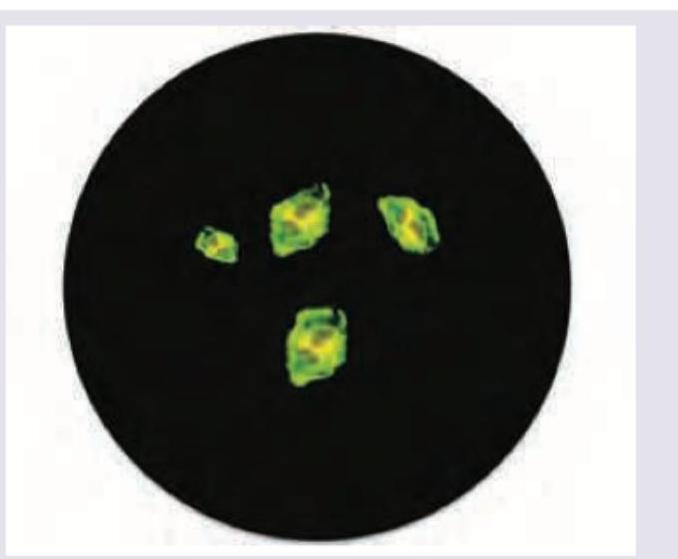
The following findings on Tzanck smear can be seen in:
A cosmetic dermatologist plans to introduce microneedling radiofrequency for acne scars. Which parameter combination would provide optimal collagen remodeling with minimal risk of thermal injury in Fitzpatrick type IV skin?
A 50-year-old man with Fitzpatrick skin type V desires treatment for melasma. He was previously treated with triple combination cream with partial response. What would be the most evidence-based next step considering safety and efficacy?
A patient treated with Q-switched Nd:YAG laser for nevus of Ota develops paradoxical darkening after 4 weeks. What is the most likely explanation for this phenomenon?
Explanation: ***Escharotomy is indicated for circumferential burns causing compartment syndrome*** - **Escharotomy** is a critical surgical procedure performed for circumferential full-thickness burns that cause **compartment syndrome**, impaired circulation, or respiratory compromise (in chest burns) - The hardened eschar acts as a tourniquet, restricting blood flow and causing vascular compromise - This is a **definitive indication** and represents correct burn management protocol - Escharotomy involves incising through the full-thickness eschar to release the constriction *Cool (not ice-cold) water should be applied for 10-20 minutes to reduce tissue damage* - While this statement is **medically correct** and represents appropriate first aid for burns - Cooling with cool (not ice-cold) water for 10-20 minutes is the standard initial treatment to reduce pain and limit tissue damage - However, in the context of this question focusing on comprehensive burn management principles, the escharotomy statement is more specific and clinically critical *All partial-thickness burns require sterile dressing to prevent infection* - This statement is **incorrect** as worded with the absolute term "all" - Small superficial partial-thickness burns may only require **clean, non-adherent dressing** rather than sterile dressing in routine first aid settings - Not all partial-thickness burns require the same level of sterile technique; depends on size, location, and clinical setting *Silver sulfadiazine is contraindicated in patients with sulfa allergies* - While this statement is **medically accurate** (silver sulfadiazine contains sulfonamide and should be avoided in sulfa-allergic patients) - However, this represents a specific contraindication rather than a general principle of burn management - Other topical agents like bacitracin or mupirocin can be used as alternatives
Explanation: ***Excision and regular follow up*** - **Erythroplakia** has a high rate of **malignant transformation** (up to 90% are severe dysplasia or carcinoma), making complete surgical excision essential to prevent progression. - **Regular follow-up** is critical due to the risk of recurrence and the development of new lesions, monitoring for any further malignant changes after excision. *Radiotherapy* - **Radiotherapy** is generally reserved for **malignancies** or situations where surgery is not feasible, not typically for the initial treatment of erythroplakia which is a precancerous lesion. - Its use for erythroplakia could lead to unnecessary side effects and may not remove all dysplastic tissue, increasing the risk of recurrence. *Excision* - While **excision** is a necessary part of the treatment, performing it without **regular follow-up** is insufficient due to the high risk of recurrence and new lesion development. - Failure to monitor the patient closely after initial excision could lead to delayed detection of malignant transformation or new areas of dysplasia. *Steroid injection* - **Steroid injections** are used to treat inflammatory conditions or reduce scarring, and have **no role** in the management of erythroplakia, which is a precancerous lesion. - This treatment would not address the underlying dysplastic changes and would allow for potential malignant transformation to continue unchecked.
Explanation: ***Dendritic ulcer*** - A **dendritic ulcer** is characteristic of **herpes simplex keratitis**, which is an active viral infection of the cornea. - **Topical steroids** are contraindicated because they can suppress the immune response, leading to viral replication, corneal melt, and potentially severe vision loss or perforation. *Herpetic stromal keratitis without epithelial defect* - In cases of **stromal keratitis**, where the infection is deeper and an intact epithelium is present, topical steroids may be used cautiously in conjunction with antiviral agents to reduce inflammation and scarring. - The primary concern with steroids in herpes simplex keratitis is activating viral replication in the presence of an **epithelial defect**, which is not present here. *Elevated intraocular pressure* - **Elevated intraocular pressure** is a known side effect of topical steroid use, especially with prolonged administration, but it is not an absolute contraindication in itself. - It necessitates careful monitoring and may require concurrent glaucoma treatment, but the primary condition needing steroids may still warrant their use. *Non-infectious anterior uveitis* - **Topical corticosteroids** are the **mainstay of treatment** for non-infectious anterior uveitis to reduce inflammation and prevent complications such as synechiae and vision loss. - The benefits of controlling inflammation in uveitis generally outweigh the risks associated with judicious steroid use.
Explanation: ***After cataract*** - YAG laser is primarily used for **posterior capsulotomy** to treat **"after cataract"** or **posterior capsule opacification (PCO)**, a common complication following cataract surgery. - This procedure creates an opening in the opacified posterior capsule to restore clear vision without requiring a surgical incision. *Open-angle glaucoma* - YAG lasers are sometimes used in **peripheral iridotomy** for narrow-angle or **angle-closure glaucoma**, but not typically for the primary treatment of open-angle glaucoma, which is managed with medications or other laser procedures (e.g., SLT). - While YAG laser can be used for **iridotomy** in specific glaucoma types, it is generally not the go-to treatment for improving outflow in **open-angle glaucoma**. *Retinal detachment* - Retinal detachment is a surgical emergency typically treated with procedures like **vitrectomy**, **scleral buckle**, or **pneumatic retinopexy**. - Lasers used for retinal issues are often **argon lasers** for creating chorioretinal adhesions to prevent or wall off detachments, not YAG lasers for the detachment itself. *Diabetic retinopathy* - **Diabetic retinopathy** is primarily treated with **argon laser photocoagulation** (panretinal photocoagulation or focal laser) to destroy abnormal blood vessels and reduce macular edema. - YAG lasers are not used for the direct treatment of **diabetic retinopathy** or its associated neovascularization.
Explanation: ***3rd degree burn*** - **Third-degree burns** involve the entire thickness of the skin (dermis and epidermis) and often extend into the **subcutaneous tissue**, muscle, or bone. - These burns typically appear dry, leathery, and often lack pain sensation due to nerve destruction. *2nd degree superficial* - **Superficial second-degree burns** involve the epidermis and the superficial part of the dermis, often presenting with **blisters** and painful, red, moist skin. - They do not extend to the subcutaneous tissue, which is a key feature of the burn described. *2nd degree deep* - **Deep second-degree burns** involve the epidermis and deeper layers of the dermis, but not the entire dermis or subcutaneous tissue. - While they can be less painful and appear dry, the involvement of **subcutaneous tissue** pushes the classification to third-degree. *1st degree* - **First-degree burns** only affect the epidermis, causing redness and pain but **no blistering** or damage to deeper layers. - These are typically sunburns or minor scalds and do not involve the dermis or subcutaneous tissue.
Explanation: ***Herpes simplex*** - Herpes simplex virus (HSV) classically presents with **grouped vesicles on an erythematous base**, which perfectly matches this clinical presentation. - In **children**, HSV commonly affects the **buttocks** through autoinoculation or direct contact, especially in the diaper area. - The lesions are typically **painful and pruritic**, and may be preceded by tingling or burning sensation. - Diagnosis is confirmed by **Tzanck smear** (multinucleated giant cells), **PCR**, or **viral culture**. - Treatment includes **acyclovir** or other antivirals, especially for severe or recurrent cases. *Dermatitis herpetiformis* - While DH does present with intensely pruritic, grouped vesicles on an erythematous base, it is **extremely rare in children** and typically presents in **adults (3rd-4th decade)**. - Classic sites include **extensor surfaces** (elbows, knees), scalp, and buttocks, but the pediatric presentation makes this diagnosis unlikely. - It is strongly associated with **celiac disease** and responds to **gluten-free diet** and **dapsone**. *Bullous impetigo* - Bullous impetigo presents with **flaccid bullae** that rupture to form **honey-colored crusts**, not grouped vesicles. - It is a **bacterial infection** caused by *Staphylococcus aureus* producing exfoliative toxin. - Common in **young children**, particularly in warm, humid conditions. *Pemphigus* - Pemphigus is **extremely rare in children** and causes **fragile bullae** that easily rupture, leading to erosions. - Typically affects **mucous membranes first** (oral cavity), then skin. - It is an **autoimmune blistering disease** with antibodies against desmoglein, causing intraepidermal acantholysis.
Explanation: ***All of the above*** - The image displays multiple **acantholytic cells** (keratinocytes that have lost intercellular connections) with prominent nuclei, which are characteristic findings in several dermatological conditions. - A **Tzanck smear** is a rapid cytological test performed by scraping the base of a fresh blister, staining with Giemsa or Wright stain, and examining under microscopy. **Why all three conditions show similar findings:** *Herpes simplex* - Tzanck smear shows **multinucleated giant cells** with molding of nuclei and **balloon degeneration** of keratinocytes - Acantholytic cells are present due to viral cytopathic effect causing cell separation - These findings are **identical** to those seen in Herpes zoster *Herpes zoster* - Cannot be distinguished from Herpes simplex on Tzanck smear morphology alone - Shows the same **multinucleated giant cells** and **acantholytic keratinocytes** - Viral culture, PCR, or direct fluorescent antibody (DFA) testing needed for definitive differentiation *Paraneoplastic pemphigus* - Shows **acantholytic cells** (rounded keratinocytes with hyperchromatic nuclei) due to autoantibody-mediated destruction of intercellular adhesion - Unlike herpes infections, typically shows acantholytic cells **without** multinucleated giant cells - Definitive diagnosis requires direct immunofluorescence (DIF) on skin biopsy showing intercellular and basement membrane zone IgG/C3 deposition **Note**: While Tzanck smear can show acantholytic cells in all three conditions, the **pattern differs** - herpes shows multinucleated giant cells prominently, while pemphigus shows isolated acantholytic cells. Clinical correlation and confirmatory tests are essential for accurate diagnosis.
Explanation: ***Needle depth 1.5-2 mm, temperature 60-65°C, pulse duration 100-200 ms*** - Optimal **collagen remodeling** occurs when the tissue is heated to **60-65°C**, which triggers the denaturation of proteins and the subsequent production of new collagen and elastin. - A depth of **1.5-2 mm** specifically targets the **papillary and mid-reticular dermis**, while the shorter pulse duration minimizes **Post-Inflammatory Hyperpigmentation (PIH)** in **Fitzpatrick type IV** skin. *Needle depth 3.5 mm, temperature 70°C, pulse duration 1000 ms* - Temperatures reaching **70°C** and very high pulse durations significantly increase the risk of **thermal necrosis** and bulk heating injuries. - A depth of **3.5 mm** is often too deep for standard facial acne scarring and may damage underlying **subcutaneous structures** or cause permanent scarring. *Needle depth 4 mm, temperature 75°C, pulse duration 500 ms* - High temperatures of **75°C** cause excessive tissue coagulation, which can lead to localized **skin burns** and prolonged downtime. - Excessive needle depth combined with high energy delivery poses a severe risk for **atrophic scarring** and pigmentary changes in darker skin types. *Needle depth 0.5 mm, temperature 55°C, pulse duration 50 ms* - A depth of **0.5 mm** is generally insufficient to reach the collagen-rich dermis required for significant improvement of **depressed acne scars**. - A temperature of **55°C** is below the threshold for effective **collagen denaturation**, resulting in suboptimal clinical outcomes for scar revision.
Explanation: ***Q-switched Nd:YAG laser 1064 nm with low fluence*** - This approach, often called **laser toning**, uses a long wavelength that spares the epidermis, making it the safest laser option for **Fitzpatrick skin type V** to avoid **post-inflammatory hyperpigmentation (PIH)**. - It is a clinically sound next step for **recalcitrant melasma** that has only partially responded to first-line therapies like **triple combination cream**. *Fractional CO2 laser resurfacing* - This is an **ablative** treatment that causes significant thermal damage, which carries an unacceptably high risk of **PIH** and scarring in darker skin types. - While effective for skin remodeling, it is generally contraindicated for treating melasma in **type V skin** due to the likelihood of worsening the pigmentation. *Intense pulsed light therapy* - **IPL** uses a broad spectrum of light which is poorly targeted for melasma in dark-skinned individuals and is frequently associated with **rebound hyperpigmentation**. - The melanin in the surrounding **darker skin (Type V)** competes for the energy, leading to a high risk of **thermal burns** and uneven results. *TCA 35% chemical peel* - A 35% concentration of **Trichloroacetic acid (TCA)** is considered a **medium-depth peel**, which is generally too aggressive for patients with Fitzpatrick skin type V. - Medium-depth peels in dark skin types are likely to cause **persistent dyschromia** or permanent **hypopigmentation**, whereas superficial peels (like glycolic or salicylic acid) are safer.
Explanation: ***Increased melanogenesis due to suboptimal fluence*** - Paradoxical darkening in **nevus of Ota** during **Q-switched Nd:YAG** therapy often results from **suboptimal fluence**, which triggers reactive **melanogenesis** instead of destroying the target cells. - This occurs when the energy delivered is sufficient to stimulate **dermal melanocytes** but remains below the threshold required for **selective photothermolysis** and cell destruction. *Delayed clearance in deeper dermal melanocytes* - Delayed clearance typically results in a slow resolution of the lesion rather than an actual **increase in pigmentation** or darkening. - The darkening suggests an active production of **melanin** rather than a passive failure of the lymphatic system to clear debris. *Post-inflammatory hyperpigmentation due to epidermal injury* - **Post-inflammatory hyperpigmentation (PIH)** usually presents as a more generalized or superficial brownish tan following **epidermal damage**. - While common in darker skin types, the term "paradoxical darkening" in the context of dermal lesions specifically refers to the reactive stimulation of **dermal melanocytes**. *Conversion to melanoma* - There is no clinical or histopathological evidence that **Q-switched lasers** induce **malignant transformation** or conversion of a benign nevus to **melanoma**. - While **nevus of Ota** has a small baseline risk of ocular or CNS melanoma, laser-induced darkening is a transient physiological response, not a neoplastic change.
Get full access to all questions, explanations, and performance tracking.
Start For Free