
Immunofluorescence in Bullous Diseases — MCQs

A 85-year-old female developed multiple blisters on the trunk and thighs. Nikolsky's sign is negative. The lesions came on and off. The most probable diagnosis is
Identify the diagnosis based on the dermatology immunofluorescence (IF) image provided.
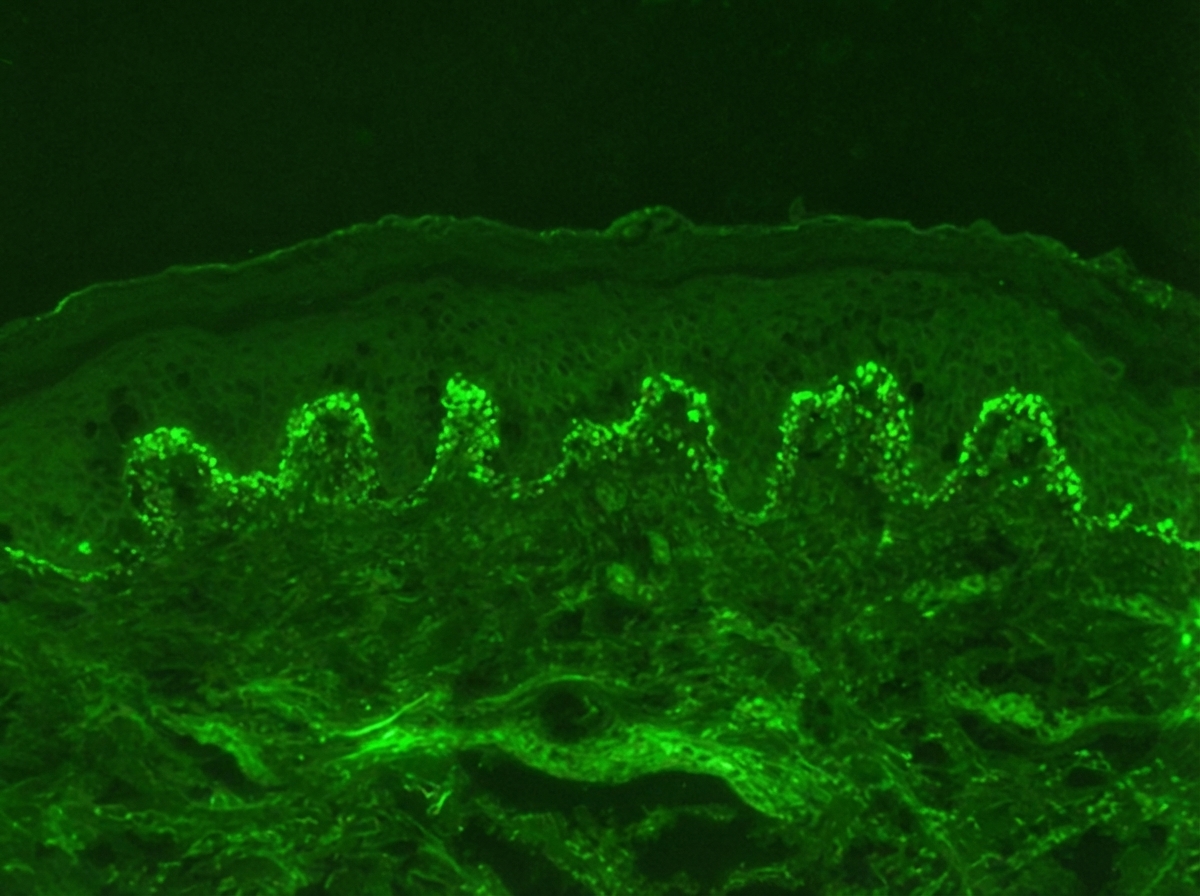
A skin biopsy shows 'crown of thorns' pattern on immunofluorescence. Which additional finding would confirm IgA vasculitis?
A skin biopsy shows suprabasilar acantholysis with 'row of tombstones' appearance. Which immunofluorescence pattern would confirm pemphigus vulgaris?
A patient presents with skin lesions and erosions on the buccal mucosa. The immunofluorescence image is shown. What is the most likely diagnosis?
A skin biopsy shows acantholysis with intraepidermal blistering. Which immunofluorescence pattern would confirm pemphigus vulgaris?
A 60-year-old female presents with eczematous itching lesions. Biopsy revealed a subepidermal cleft with Direct Immunofluorescence showing Linear C3 & IgG deposition along the basement membrane zone. What is the likely diagnosis?
A child presents with grouped vesicles on an erythematous base on the buttocks. What is the most likely diagnosis?
Which of the following is NOT associated with erythema nodosum?
A newborn presents with a skin lesion as shown. The infant is feeding normally, has no fever, hypotension, or shock signs. Which diagnosis is most likely?
Want unlimited practice?
Get full access to all questions, explanations, and performance tracking.
Scan to download app