Which of the following are efficient antigen-presenting cells found in the epidermis?
Hyperextensibility with normal elastic recoil is a feature of which of the following conditions?
Pseudo isomorphic phenomenon is seen in which dermatological condition?
The Pathergy test is primarily used in the diagnosis of which condition?
Which of the following is NOT true about hyperhidrosis?
Koebner's phenomenon is not seen in which of the following conditions?
A Lisch nodule is a clinical finding typically associated with which of the following conditions?
Adenoma sebaceum is a characteristic feature of which condition?
+ve pathergy test is seen in which of the following conditions?
A patient presents with seizures, adenoma sebaceum, and mental retardation. What is the diagnosis?
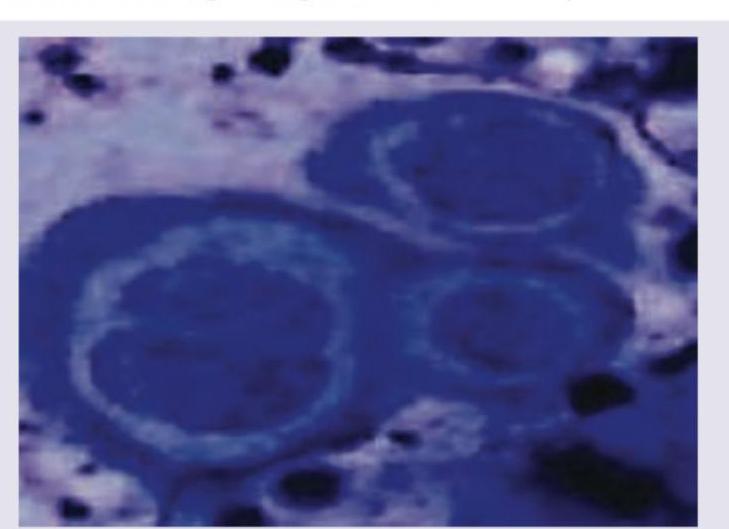
Explanation: ### Explanation **Correct Answer: C. Langerhans cells** **Langerhans cells (LCs)** are the primary and most efficient **antigen-presenting cells (APCs)** located in the **stratum spinosum** of the epidermis. Derived from the bone marrow, these are dendritic-type cells that function as the immune system's peripheral sentinels. They capture exogenous antigens, process them, and migrate to regional lymph nodes to present them to naive T cells, thereby initiating a delayed-type hypersensitivity (Type IV) reaction. **Analysis of Incorrect Options:** * **A. Macrophages:** While these are potent APCs, they are primarily found in the **dermis**, not the epidermis. * **B. T cells:** These are effector cells of the immune system. While some memory T cells reside in the epidermis, they are not professional antigen-presenting cells. * **D. Dendritic cells:** This is a broad category. While Langerhans cells are a *type* of dendritic cell, the question asks for the specific cell found in the **epidermis**. Dermal dendritic cells exist, but LCs are the classic epidermal residents. **High-Yield Clinical Pearls for NEET-PG:** * **Electron Microscopy:** LCs contain characteristic rod or tennis-racket-shaped organelles called **Birbeck granules**. * **Immunohistochemistry (IHC) Markers:** LCs are positive for **CD1a, S100, and Langerin (CD207)**. * **Clinical Correlation:** Proliferation of these cells leads to **Langerhans Cell Histiocytosis (LCH)**, which can present with seborrheic dermatitis-like scalp lesions and bone involvement. * **Origin:** Unlike other epidermal cells (keratinocytes/melanocytes), LCs originate from the **monocyte-macrophage lineage** in the bone marrow.
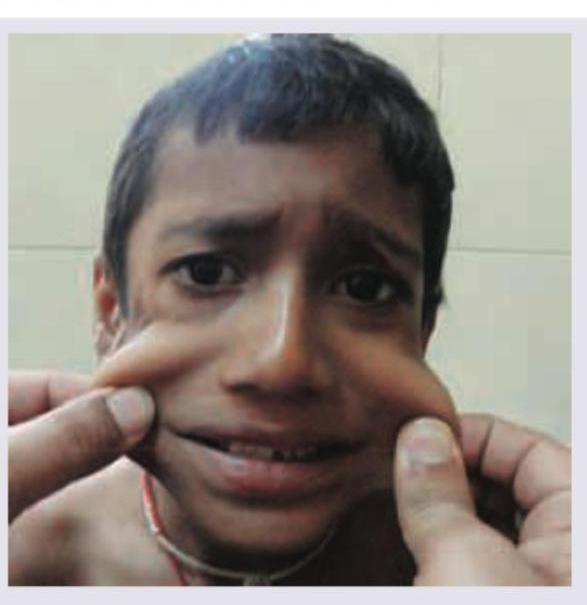
Explanation: **Explanation:** The correct answer is **Ehlers-Danlos Syndrome (EDS)**. **1. Why Ehlers-Danlos Syndrome is correct:** EDS is a group of inherited connective tissue disorders caused by defects in **collagen synthesis** (primarily types I, III, and V). In EDS, the elastic fibers remain structurally normal, but the "collagen scaffolding" that limits skin stretch is defective. This results in **hyperextensibility** (the skin can be pulled far away from the body) with **normal elastic recoil** (the skin snaps back immediately upon release) because the elastin is functional. **2. Why the other options are incorrect:** * **Cutis Laxa:** This is a disorder of **elastic fibers**. Unlike EDS, the skin is loose, pendulous, and lacks resilience. When stretched, it shows **poor/delayed elastic recoil** (it does not snap back). * **Pseudoxanthoma Elasticum (PXE):** This involves progressive calcification and fragmentation of elastic fibers. Clinical features include "plucked chicken" appearance of the skin and angioid streaks in the retina, rather than simple hyperextensibility. * **Scleroderma:** This is characterized by excessive collagen deposition leading to skin **thickening and tightening** (sclerosis). The skin becomes bound down and loses its ability to be pinched or stretched at all. **Clinical Pearls for NEET-PG:** * **EDS Hallmark:** Hyperextensibility + Normal Recoil + Cigarette paper (atrophic) scars + Joint hypermobility. * **Cutis Laxa Hallmark:** Lax, sagging skin + Loss of recoil + "Hook appearance" of the nose. * **Gorlin’s Sign:** Ability to touch the tip of the nose with the tongue (seen in EDS due to hypermobile joints/ligaments). * **Beighton Score:** Used to clinically assess joint hypermobility in EDS.
Explanation: **Explanation:** The **Pseudo-isomorphic phenomenon** refers to the spread of a skin lesion along the path of trauma (such as scratching or shaving) due to the **mechanical inoculation** of an infectious agent. In the case of **Warts (Verruca)**, the Human Papillomavirus (HPV) is autoinoculated into the epidermis through micro-trauma, leading to a linear arrangement of new lesions. This is distinct from the true Koebner phenomenon as it involves an external pathogen rather than an endogenous inflammatory response. **Analysis of Options:** * **Warts (Correct):** As an infectious condition, it exhibits pseudo-isomorphism. Other examples include Molluscum Contagiosum and Plane Warts. * **Psoriasis, Lichen Planus, and Vitiligo (Incorrect):** These conditions exhibit the **True Koebner Phenomenon (Isomorphic Phenomenon)**. In these cases, new lesions characteristic of the underlying disease develop in previously healthy skin following non-specific trauma (e.g., friction, burns, or surgery). This occurs due to an isomorphic response of the skin’s immune system, not infection. **High-Yield Clinical Pearls for NEET-PG:** * **True Koebner Phenomenon:** Seen in Psoriasis (most common), Lichen Planus, and Vitiligo. * **Reverse Koebner:** Disappearance of a lesion following trauma (e.g., Psoriasis, Vitiligo). * **Wolf’s Isotopic Response:** Occurrence of a new skin disease at the exact site of a previously healed, unrelated skin disease (most commonly post-Herpetic scars). * **Renbök Phenomenon:** The disappearance of one skin condition (e.g., Alopecia areata) when another (e.g., Psoriasis) appears in the same area.
Explanation: **Explanation:** The **Pathergy test** is a diagnostic tool used to identify skin hyper-reactivity to minor trauma. It is a hallmark clinical feature of **Behçet's syndrome**, a multisystem inflammatory vasculitis. **Why Behçet's Syndrome is Correct:** The test involves pricking the skin (usually the forearm) with a sterile 20-gauge needle. A positive result is defined by the formation of a sterile **erythematous papule or pustule** (at least 2 mm in size) at the site of the prick within 24–48 hours. This occurs due to an exaggerated influx of neutrophils (neutrophilic dermatosis) in response to local trauma. While highly specific for Behçet's, its sensitivity varies geographically, being highest in patients from the "Silk Road" region (Middle East and East Asia). **Why Other Options are Incorrect:** * **Reiter’s Syndrome (Reactive Arthritis):** Characterized by the triad of urethritis, conjunctivitis, and arthritis. Cutaneous findings include *keratoderma blennorrhagicum* and *circinate balanitis*, but pathergy is not a feature. * **Lichen Planus:** Known for the **Koebner phenomenon** (isomorphic response), where new lesions of the same disease appear along lines of trauma. Unlike pathergy, these are not sterile pustules but typical lichenoid papules. * **Atopic Dermatitis:** A chronic pruritic inflammatory condition characterized by skin barrier dysfunction and IgE-mediated hypersensitivity, not neutrophilic hyper-reactivity. **NEET-PG High-Yield Pearls:** * **Differential Diagnosis for Pathergy:** Besides Behçet's, pathergy can also be seen in **Pyoderma Gangrenosum** and **Sweet Syndrome**. * **Behçet’s Triad:** Recurrent oral ulcers (most common), genital ulcers (most specific), and uveitis. * **HLA Association:** Strongly associated with **HLA-B51**. * **Treatment:** Colchicine is often the first-line agent for mucocutaneous symptoms.
Explanation: ### Explanation The term **Hyperhidrosis** refers to **excessive sweating** beyond what is required for body temperature regulation. It is caused by overactivity of the eccrine sweat glands. **Why Option B is the correct answer:** Option B states "Complete absence of sweating," which is the definition of **Anhidrosis** (or Hypohidrosis if partial). Since hyperhidrosis is a condition of *excess* sweating, this statement is factually incorrect, making it the right choice for a "NOT true" question. **Analysis of other options:** * **Option A (Dessa Syndrome):** This is a lesser-known eponym sometimes associated with localized hyperhidrosis and specific dermatological presentations. * **Option C (Hyperkeratotic plugging):** In certain secondary forms of sweat gland disorders (like Miliaria or specific keratodermas), hyperkeratotic plugging can obstruct the sweat duct. While hyperhidrosis is the *symptom*, the underlying pathology in obstructive sweat disorders involves this plugging. * **Option D (Papular rashes):** Excessive sweating often leads to **Miliaria (Prickly heat)**, which presents as pruritic, papular, or vesicular rashes, commonly over the face, neck, and trunk due to sweat retention. **NEET-PG High-Yield Pearls:** 1. **Primary Focal Hyperhidrosis:** Most common type; involves palms, soles, and axillae. It is usually idiopathic and triggered by emotional stress (not heat). 2. **Treatment of Choice:** * First-line: **Topical Aluminum Chloride** (20%). * Refractory cases: **Iontophoresis**, **Botulinum toxin** injections, or oral anticholinergics (Oxybutynin). * Surgical: **Endoscopic Thoracic Sympathectomy (ETS)** for severe palmar cases. 3. **Frey’s Syndrome:** Gustatory sweating (sweating while eating) due to injury to the auriculotemporal nerve, often following parotid surgery.
Explanation: **Explanation:** **Koebner’s Phenomenon** (also known as the isomorphic response) refers to the development of new skin lesions, characteristic of a pre-existing dermatosis, at the site of trauma or injury to previously healthy skin. **Why Dermatitis Herpetiformis is the correct answer:** Dermatitis Herpetiformis (DH) is an autoimmune blistering disorder associated with gluten-sensitive enteropathy. It is characterized by intensely pruritic vesicles on an erythematous base, typically over extensor surfaces. While DH is triggered by gluten and characterized by the deposition of IgA, it **does not** exhibit the Koebner phenomenon. Trauma does not induce new DH lesions; rather, the distribution is determined by systemic factors and specific anatomical predilections. **Analysis of Incorrect Options:** * **Psoriasis:** This is the classic example of Koebner’s phenomenon. New psoriatic plaques frequently appear at sites of scratches, surgical scars, or sunburns. * **Lichen Planus:** This condition frequently demonstrates Koebnerization, where linear lichenoid papules form along scratch marks (often seen on the wrists or shins). * **Vitiligo:** Trauma to the skin can lead to localized melanocyte destruction, resulting in new patches of depigmentation at the site of injury. **High-Yield Clinical Pearls for NEET-PG:** * **True Koebner Phenomenon:** Seen in Psoriasis, Lichen Planus, and Vitiligo. * **Pseudo-Koebner Phenomenon:** Seen in infectious conditions like **Molluscum Contagiosum** and **Verruca (Warts)**, where trauma causes local inoculation/seeding of the virus. * **Reverse Koebner:** The disappearance of a pre-existing lesion following trauma to the site. * **Wolf’s Isotopic Response:** Appearance of a new skin disease at the exact site of a previously healed, unrelated skin disease (most commonly post-Herpes Zoster).
Explanation: **Explanation:** **Neurofibromatosis Type 1 (NF1)**, also known as von Recklinghausen disease, is an autosomal dominant neuroectodermal disorder. **Lisch nodules** are the most common ocular manifestation of NF1, occurring in over 90% of affected adults. Pathologically, they are melanocytic hamartomas of the iris. They appear as well-defined, dome-shaped, yellowish-brown elevations on the iris surface and do not affect vision. They are a key diagnostic criterion for NF1. **Analysis of Incorrect Options:** * **Tuberous Sclerosis:** Characterized by the "Vogt triad" (epilepsy, intellectual disability, and adenoma sebaceum). Ocular findings typically include **retinal astrocytic hamartomas** (mulberry lesions), not iris nodules. * **Sturge-Weber Syndrome:** A phakomatosis characterized by a port-wine stain (nevus flammeus) in the V1/V2 distribution. The primary ocular complication is **glaucoma** or choroidal hemangiomas, not Lisch nodules. * **Wilson Disease:** An inborn error of copper metabolism. The classic ocular finding is the **Kayser-Fleischer (KF) ring**, which is a brownish-green copper deposition in the Descemet membrane of the cornea. **Clinical Pearls for NEET-PG:** * **Diagnostic Criteria for NF1:** Requires 2 or more of: ≥6 Café-au-lait spots, ≥2 neurofibromas (or 1 plexiform), axillary/inguinal freckling (**Crowe sign**), optic glioma, **≥2 Lisch nodules**, sphenoid dysplasia, or a first-degree relative with NF1. * **Slit-lamp examination** is necessary to differentiate Lisch nodules from common iris nevi. * **Genetics:** NF1 is due to a mutation in the *NF1* gene on **Chromosome 17** (encodes Neurofibromin).
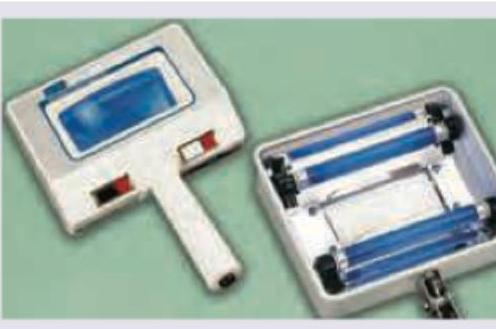
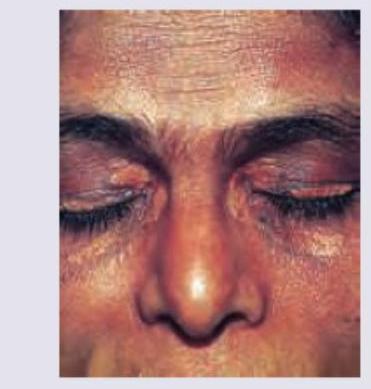
Explanation: **Explanation:** **Adenoma sebaceum** is a misnomer; these lesions are actually **angiofibromas**. They are the most characteristic cutaneous feature of **Tuberous Sclerosis Complex (TSC)**, an autosomal dominant neurocutaneous syndrome (phakomatosis) caused by mutations in the *TSC1* (Hamartin) or *TSC2* (Tuberin) genes. Clinically, they appear as small, pink-to-red, dome-shaped papules typically distributed in a butterfly pattern over the nose and cheeks. **Why other options are incorrect:** * **Neurofibromatosis (NF-1):** Characterized by Café-au-lait macules, Lisch nodules, and neurofibromas, but not angiofibromas. * **Xanthomatosis:** Involves lipid-laden macrophages (foam cells) in the skin, usually associated with hyperlipidemia (e.g., Xanthelasma, Eruptive xanthomas). * **Incontinentia pigmenti:** An X-linked dominant disorder presenting in four stages: Vesicular, Verrucous, Hyperpigmented (whorled), and Atrophic/Hypopigmented. **High-Yield Clinical Pearls for Tuberous Sclerosis (Vogt’s Triad):** 1. **Adenoma sebaceum** (Angiofibromas) 2. **Mental Retardation** 3. **Epilepsy** (Infantile spasms/West Syndrome) **Other Cutaneous Markers (NEET-PG Favorites):** * **Ash-leaf spots:** Earliest sign (hypopigmented macules; best seen under Wood’s lamp). * **Shagreen patch:** Connective tissue nevus (leathery plaque) usually on the lumbosacral area. * **Koenen’s tumor:** Periungual or subungual fibromas. * **Confetti-like hypopigmentation:** Multiple tiny white macules on the limbs.
Explanation: **Explanation:** The **Pathergy Test** is a clinical diagnostic tool used to identify exaggerated skin reactivity to minor trauma. It is performed by pricking the skin (usually the forearm) with a sterile 20-gauge needle. A positive result is defined by the formation of a **sterile erythematous papule or pustule** (at least 2 mm in size) at the site of injury within 24–48 hours. **1. Why Behcet's Disease is Correct:** Behcet’s disease is a multi-systemic inflammatory perivasculitis. The pathergy phenomenon reflects an **overactive neutrophil response** to local trauma. While the test has high specificity (95%+) for Behcet’s, its sensitivity varies geographically, being most reliable in populations along the "Silk Road" (Middle East and East Asia). It is a key minor criterion in the International Study Group criteria for Behcet’s. **2. Why Other Options are Incorrect:** * **Sarcoidosis:** Characterized by non-caseating granulomas. While it shows "Kveim-Siltzbach" skin test positivity (historical), it does not exhibit pathergy. * **Histoplasmosis & Candidiasis:** These are fungal infections. Skin testing for these (like the Histoplasmin test) relies on **Type IV Delayed-Type Hypersensitivity** to specific antigens, not a non-specific inflammatory response to needle trauma. **Clinical Pearls for NEET-PG:** * **Differential Diagnosis for Pathergy:** Apart from Behcet’s, pathergy can also be seen in **Pyoderma Gangrenosum**, Sweet Syndrome, and occasionally in Inflammatory Bowel Disease (IBD). * **Behcet’s Triad:** Recurrent oral ulcers (most common), genital ulcers (most specific), and uveitis. * **HLA Association:** Strongly associated with **HLA-B51**.
Explanation: **Explanation:** The patient presents with the classic **Vogt’s Triad**: Seizures, Mental Retardation, and Adenoma Sebaceum (facial angiofibromas). This triad is pathognomonic for **Tuberous Sclerosis Complex (TSC)**, an autosomal dominant neurocutaneous syndrome caused by mutations in the *TSC1* (Hamartin) or *TSC2* (Tuberin) genes. **Why the correct answer is right:** * **Adenoma Sebaceum:** Despite the name, these are actually **facial angiofibromas** (hamartomas of vascular and connective tissue) typically found in the malar region. * **Neurological involvement:** Cortical tubers and subependymal nodules lead to refractory seizures and cognitive impairment. **Why incorrect options are wrong:** * **Sturge-Weber Syndrome:** Characterized by a Port-wine stain (Nevus Flammeus) in the V1/V2 distribution, glaucoma, and leptomeningeal angiomas. It does not feature adenoma sebaceum. * **Neurofibromatosis (Type 1):** Presents with Café-au-lait spots, Lisch nodules, and neurofibromas. While seizures can occur, the cutaneous markers are distinct from TSC. * **Neurocysticercosis:** A parasitic infection causing seizures and ring-enhancing lesions on imaging, but it lacks the genetic cutaneous markers like adenoma sebaceum. **High-Yield Clinical Pearls for NEET-PG:** * **Earliest sign:** Ash-leaf spots (hypopigmented macules), best seen under **Wood’s lamp**. * **Pathognomonic skin finding:** Shagreen patch (connective tissue nevus on the lower back). * **Ungual findings:** Koenen tumors (periungual fibromas). * **Systemic associations:** Renal Angiomyolipoma (most common renal lesion) and Cardiac Rhabdomyoma (often regresses spontaneously).
Structure and Function of Skin
Practice Questions
Cutaneous Histopathology
Practice Questions
Dermatological Examination
Practice Questions
Skin Lesions: Morphology and Description
Practice Questions
Principles of Diagnosis in Dermatology
Practice Questions
Dermatological Procedures
Practice Questions
Wound Healing
Practice Questions
Cutaneous Immunology
Practice Questions
Genetics in Dermatology
Practice Questions
Cutaneous Manifestations of Systemic Diseases
Practice Questions
Geriatric Dermatology
Practice Questions
Pediatric Dermatology Basics
Practice Questions
Get full access to all questions, explanations, and performance tracking.
Start For Free