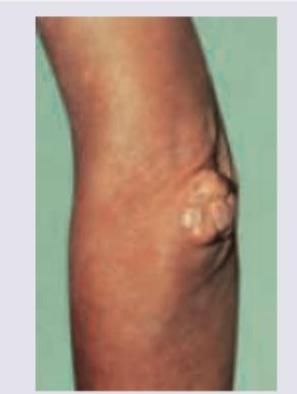
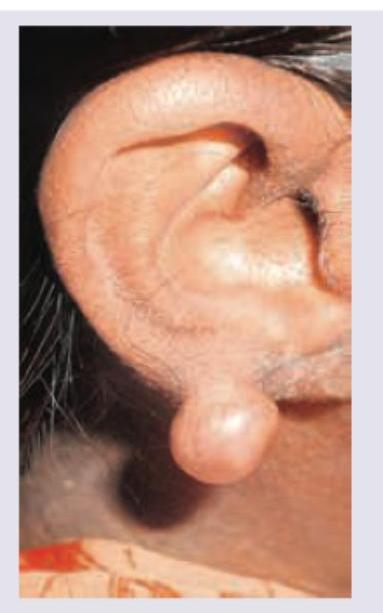
What is the most common site for hypertrophic keloids?
Which degeneration disorder is characterized by atrophic changes of the deeper structures (e.g., fat, muscle, cartilage, and bone) involving one side of the face?
Phrenoderma is reportedly caused due to deficiency of:
All of the following are causes of papulosquamous lesions except?
"Pellagra" like skin lesions are associated with which of the following conditions?
All of the following features are present in acrocyanosis except:
Sebaceous cysts do not occur in which of the following locations?
What is the most common site of Necrobiosis lipoidica diabeticorum?
Dyskeratosis is a characteristic feature of which of the following conditions?
Which one of the following conditions is associated with palpable purpura?
Explanation: **Explanation:** The correct answer is **C. Presternal area**. **Understanding the Concept:** Keloids are benign overgrowths of fibrous tissue (collagen) that extend beyond the boundaries of the original wound and do not regress spontaneously. They occur due to an exaggerated healing response. The **presternal area** is the most common site for keloid formation because this region is subject to high skin tension and constant movement during respiration. Other high-risk areas include the upper back, shoulders, and earlobes (often following piercings). **Analysis of Options:** * **A. Face:** While keloids can occur on the face (especially the jawline), it is not the most common site. However, the face is a common site for *hypertrophic scars*, which stay within the wound boundaries. * **B. Leg:** The lower limbs are relatively uncommon sites for keloid formation compared to the trunk and upper extremities. * **D. Arm:** The deltoid region of the arm is a frequent site (often due to vaccinations like BCG), but statistically, the presternal area remains the most frequent location. **Clinical Pearls for NEET-PG:** * **Histology:** Characterized by thick, eosinophilic, "glassy" collagen bundles (Keloidal collagen). * **Risk Factors:** More common in individuals with darker skin (Fitzpatrick types IV-VI) and those with a genetic predisposition. * **Keloid vs. Hypertrophic Scar:** Keloids extend *beyond* the wound margins and rarely regress; hypertrophic scars stay *within* the margins and may regress over time. * **Treatment:** Intralesional Triamcinolone acetonide (corticosteroid) is the first-line treatment. Surgical excision alone has a high recurrence rate and should be combined with adjuvant therapy (e.g., pressure therapy or radiotherapy).
Explanation: ### Explanation **Correct Answer: B. Parry Romberg Syndrome** **Parry Romberg Syndrome** (also known as Progressive Facial Hemiatrophy) is a rare neurocutaneous disorder characterized by the slow, progressive atrophy of the skin and soft tissues (fat, muscle) and, in severe cases, the underlying cartilage and bone of **one side of the face**. * **Pathogenesis:** While the exact cause is unknown, it is often considered a localized form of scleroderma (morphea en coup de sabre). * **Clinical Presentation:** It typically begins in the first or second decade of life. The atrophy usually follows a dermatomal distribution (often the trigeminal nerve) and can lead to a "sunken" facial appearance. **Why Incorrect Options are Wrong:** * **A. Scleroderma:** While Parry Romberg is related to localized scleroderma, systemic scleroderma primarily involves skin thickening (fibrosis) and internal organ involvement rather than the primary, deep-seated hemi-atrophy of bone and muscle seen in this syndrome. * **C. Miescher's Syndrome:** This refers to Granulomatous Cheilitis (recurrent swelling of the lips), which is a component of Melkersson-Rosenthal syndrome. It does not involve hemi-facial atrophy. * **D. Peutz-Jeghers Syndrome:** This is an autosomal dominant disorder characterized by hamartomatous gastrointestinal polyps and mucocutaneous hyperpigmentation (lentigines), typically on the lips and buccal mucosa. **NEET-PG High-Yield Pearls:** * **"En Coup de Sabre":** A linear form of scleroderma on the forehead/scalp that often co-exists with Parry Romberg Syndrome. * **Neurological Associations:** Patients may present with ipsilateral trigeminal neuralgia, migraine, or focal epilepsy. * **Ocular Involvement:** Enophthalmos (due to loss of periorbital fat) is a common finding.
Explanation: **Explanation:** **Phrenoderma** (also known as "toad skin") is a form of follicular hyperkeratosis characterized by dry, firm, papular eruptions typically found on the extensor surfaces of the limbs, shoulders, and back. **Why Essential Fatty Acids (EFA) is the correct answer:** While historically Phrenoderma was strongly associated with Vitamin A deficiency, modern clinical evidence and biochemical studies have established that **Essential Fatty Acid (EFA) deficiency** (specifically Linoleic and Linolenic acid) is the primary underlying cause. EFAs are crucial for maintaining the integrity of the epidermal water barrier and regulating keratinization. Their absence leads to the characteristic horny, follicular plugs seen in this condition. **Analysis of Incorrect Options:** * **Vitamin A:** Although Vitamin A deficiency can cause similar follicular hyperkeratosis, Phrenoderma specifically responds more effectively to EFA supplementation. In many clinical cases of Phrenoderma, Vitamin A levels are found to be normal. * **Vitamin D:** Deficiency primarily affects bone metabolism (Rickets/Osteomalacia) and does not typically present with follicular hyperkeratosis. * **Retinoic Acid:** This is a metabolite of Vitamin A. While used topically to treat hyperkeratotic conditions, its systemic deficiency is not the specific defined cause of Phrenoderma. **High-Yield Clinical Pearls for NEET-PG:** * **Clinical Presentation:** "Toad-like" appearance with keratotic plugs in the hair follicles. * **Associated Deficiencies:** While EFA is the primary answer, Phrenoderma is often considered a **multifactorial nutritional deficiency** involving Vitamin A, Vitamin B-complex, and EFAs. * **Differential Diagnosis:** Keratosis pilaris (genetic, not nutritional) and Pityriasis Rubra Pilaris (PRP). * **Treatment:** Supplementation with safflower oil, sunflower oil, or fish oils (rich in EFAs).
Explanation: **Explanation:** **Papulosquamous disorders** are a group of dermatological conditions characterized by the presence of **papules and plaques** associated with **scaling**. The primary pathology usually involves the epidermis and upper dermis. **Why Congenital Syphilis is the correct answer:** While **Secondary Syphilis** is a classic cause of papulosquamous lesions (often called the "Great Mimicker"), **Congenital Syphilis** typically presents with different cutaneous features. Early congenital syphilis is characterized by **vesiculobullous lesions** (syphilitic pemphigus), maculopapular rashes, and snuffles. It does not typically present in a primary papulosquamous pattern like the other options listed. **Analysis of Incorrect Options:** * **Psoriasis:** The prototype of papulosquamous diseases. It presents as well-demarcated erythematous plaques with silvery-white micaceous scales. * **Parapsoriasis:** A group of chronic inflammatory diseases (small plaque and large plaque) that are inherently papulosquamous and can occasionally progress to Mycosis Fungoides. * **Squamous Cell Carcinoma (SCC):** While malignant, SCC (especially SCC in-situ or Bowen’s disease) presents as a slow-growing, scaly, erythematous plaque, placing it clinically within the differential diagnosis of papulosquamous lesions. **NEET-PG High-Yield Pearls:** * **Mnemonic for Papulosquamous lesions (6 Ps):** **P**soriasis, **P**ityriasis rosea, **P**ityriasis rubra pilaris, **P**arapsoriasis, **P**lanus (Lichen Planus), and **P**hsyphilis (Secondary Syphilis). * **Auspitz Sign:** Pathognomonic for Psoriasis (pinpoint bleeding on removal of scales). * **Herald Patch:** The initial lesion seen in Pityriasis Rosea. * **Wickham Striae:** Reticulate white lines seen in Lichen Planus.
Explanation: ### Explanation **Correct Option: B. Bronchial carcinoid** Pellagra is caused by a deficiency of **Niacin (Vitamin B3)** or its precursor, the amino acid **Tryptophan**. In a healthy individual, approximately 1% of dietary tryptophan is converted into niacin. In **Carcinoid Syndrome** (associated with bronchial or intestinal carcinoid tumors), the tumor cells divert up to 60% of the body's tryptophan to synthesize massive amounts of **Serotonin (5-HT)**. This "tryptophan steal" results in a profound systemic deficiency of tryptophan available for niacin synthesis, leading to secondary Pellagra. Clinical features include the "4 Ds": Dermatitis (photosensitive Casal’s necklace), Diarrhea, Dementia, and Death. **Analysis of Incorrect Options:** * **A. Systemic Mastocytosis:** Characterized by the proliferation of mast cells. It presents with urticaria pigmentosa, flushing, and pruritus due to histamine release, but does not involve tryptophan diversion. * **C. Colorectal villous adenoma:** These are premalignant polyps typically associated with secretory diarrhea and hypokalemia (due to mucus production), not niacin deficiency. * **D. Medullary thyroid carcinoma:** This tumor secretes Calcitonin. While it may cause flushing and diarrhea, it does not utilize the tryptophan-serotonin pathway that leads to Pellagra. **High-Yield Clinical Pearls for NEET-PG:** * **Hartnup Disease:** Another cause of Pellagra-like lesions due to defective neutral amino acid (tryptophan) transport in the gut and kidneys. * **Drug-induced Pellagra:** Isoniazid (inhibits B6, a cofactor for niacin synthesis), 5-Fluorouracil, and Ethionamide. * **Dietary cause:** Diets predominantly consisting of **Maize** (niacin is bound/unavailable) or **Jowar** (high leucine interferes with tryptophan metabolism). * **Diagnosis of Carcinoid:** Elevated urinary **5-HIAA** (metabolite of serotonin).
Explanation: **Explanation:** **Acrocyanosis** is a functional peripheral vascular disorder characterized by persistent, painless, symmetric cyanosis of the hands, feet, and occasionally the face. **Why "Episodic" is the correct (Except) answer:** Unlike Raynaud’s phenomenon, which is **episodic** and triggered by sudden cold exposure (paroxysmal), acrocyanosis is **persistent**. Once the cyanosis develops, it remains relatively constant, though it may intensify with cold and improve (but not necessarily disappear) with warmth. **Analysis of Incorrect Options:** * **A. Tendency to affect young females:** This is a classic demographic feature. It most commonly presents in adolescent girls and young women (typically 20–30 years of age). * **B. Painless:** Acrocyanosis is characteristically painless. This distinguishes it from other vasospastic conditions like Raynaud’s (which can be painful) or erythromelalgia (which is burning). * **D. Accompanied by chilblains:** Patients with acrocyanosis often have a "cold-sensitive" constitution. It is frequently associated with other cold-induced injuries, most notably **chilblains (pernio)** and hyperhidrosis (sweaty palms/soles). **NEET-PG High-Yield Pearls:** 1. **Clinical Triad:** Persistent cyanosis, coldness of extremities, and local hyperhidrosis. 2. **Trophic Changes:** Unlike Raynaud’s or Buerger’s disease, acrocyanosis **does not** lead to ulceration, gangrene, or trophic skin changes. 3. **Pathophysiology:** Caused by vasospasm of the small cutaneous arteries/arterioles and compensatory dilatation of the post-capillary venules. 4. **Prognosis:** Benign condition; treatment is usually reassurance and cold protection. Calcium channel blockers are rarely needed.
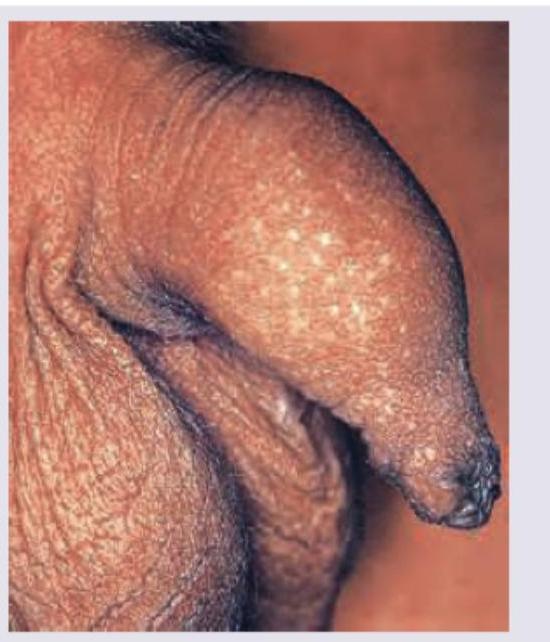
Explanation: **Explanation:** The correct answer is **Sole (Option D)**. **1. Why the Correct Answer is Right:** Sebaceous cysts (more accurately termed **Epidermal Inclusion Cysts**) are derived from the infundibulum of the hair follicle. Therefore, they can only occur in areas of the body that contain **pilosebaceous units** (hair follicles associated with sebaceous glands). The **palms and soles** are characterized by glabrous skin, which lacks hair follicles and sebaceous glands entirely. Consequently, a true sebaceous or epidermal cyst cannot develop in these locations. **2. Why the Incorrect Options are Wrong:** * **Scalp (Option A):** This is one of the most common sites for cysts. While most "sebaceous cysts" on the scalp are technically **pilar cysts** (trichilemmal cysts), epidermal cysts also occur frequently here due to the high density of hair follicles. * **Scrotum (Option B):** The scrotum is rich in sebaceous glands. It is a classic site for multiple sebaceous cysts, which may sometimes undergo calcification (Idiopathic Scrotal Calcinosis). * **Back (Option C):** The trunk and back are high-density areas for sebaceous glands and are among the most common clinical presentations for epidermal inclusion cysts. **3. Clinical Pearls for NEET-PG:** * **Punctum:** A key diagnostic feature of an epidermal cyst is the presence of a central pore or "punctum," which represents the opening of the follicle. * **Contents:** These cysts are filled with **keratin**, not sebum. They have a cheesy, foul-smelling material. * **Gardner Syndrome:** Multiple epidermal cysts (especially in unusual locations or at a young age) should raise suspicion for Gardner Syndrome (associated with familial adenomatous polyposis). * **Glabrous Skin:** Remember, palms and soles lack sebaceous glands and melanocytes (in the stratum basale), but have a high density of **eccrine sweat glands**.
Explanation: ### Explanation **Necrobiosis Lipoidica (NL)**, formerly known as Necrobiosis Lipoidica Diabeticorum, is a chronic granulomatous skin disorder. While it is strongly associated with diabetes mellitus (occurring in approximately 0.3% of diabetic patients), it can also occur in non-diabetic individuals. **Why "Front of the leg" is correct:** The most characteristic and common site for NL is the **pretibial area (shins)**, which corresponds to the **front of the leg**. The lesions typically present as well-demarcated, erythematous papules that evolve into yellowish-brown, atrophic, telangiectatic plaques with a "glazed" or "parchment-like" appearance. The predilection for the shins is thought to be due to relative poor vascularity and increased trauma in this area, leading to collagen degeneration (necrobiosis). **Why other options are incorrect:** * **Face and Neck:** These are extremely rare sites for NL. Lesions on the face or scalp are more likely to be Granuloma Annulare or Sarcoidosis, which are important differential diagnoses. * **Back of the leg:** While NL can occasionally involve the calves or ankles, the involvement is overwhelmingly bilateral and symmetrical on the anterior (front) surface of the lower extremities. **High-Yield Clinical Pearls for NEET-PG:** * **Pathology:** Characterized by "tiered" or "layered" granulomatous inflammation in the dermis (alternating layers of necrobiotic collagen and inflammatory cells). * **Clinical Sign:** The center of the plaque often becomes thin and atrophic, making it prone to **ulceration** following minor trauma (seen in 35% of cases). * **Diabetes Correlation:** The presence or severity of NL does **not** correlate with glycemic control; however, patients with NL have a higher incidence of diabetic nephropathy and retinopathy. * **Differential Diagnosis:** Granuloma Annulare (which lacks the atrophy and telangiectasia seen in NL).
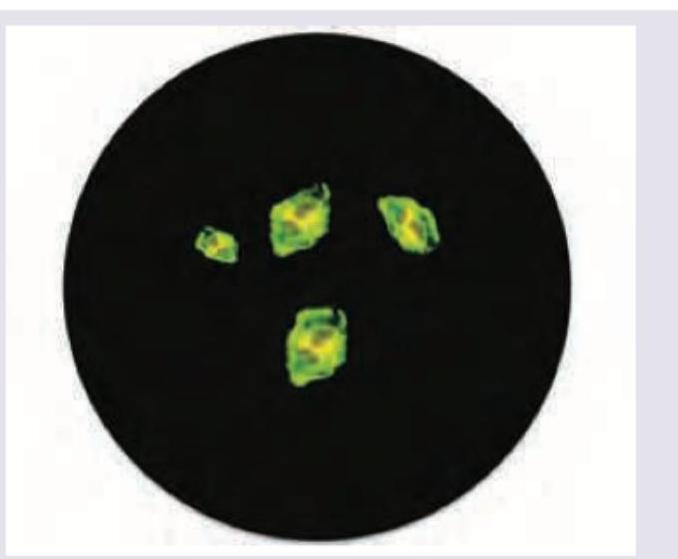
Explanation: **Explanation:** **Dyskeratosis** refers to the premature or abnormal keratinization of individual keratinocytes occurring below the stratum granulosum. In these cells, the nucleus is surrounded by a clear halo and a dense eosinophilic cytoplasm. **1. Why Darier’s Disease is correct:** Darier’s disease (Keratosis Follicularis) is the classic example of **acantholytic dyskeratosis**. It is caused by a mutation in the *ATP2A2* gene (encoding the SERCA2 pump), leading to a loss of cell-to-cell adhesion (acantholysis) and abnormal keratinization (dyskeratosis). On histology, dyskeratosis manifests as two pathognomonic structures: * **Corps ronds:** Large, round cells in the stratum spinosum with a central nucleus and a perinuclear halo. * **Grains:** Small, shrunken, elongated parakeratotic cells found in the stratum corneum. **2. Why other options are incorrect:** * **Pemphigus vulgaris:** Characterized by **acantholysis** (loss of intercellular connections) leading to intraepidermal blisters and a "tombstone appearance" of the basal layer, but it does *not* typically feature dyskeratosis. * **Psoriasis:** Characterized by **parakeratosis** (retention of nuclei in the stratum corneum), Munro’s microabscesses, and regular epidermal hyperplasia (psoriasiform hyperplasia), but not dyskeratosis. **High-Yield Clinical Pearls for NEET-PG:** * **Other conditions with dyskeratosis:** Hailey-Hailey disease (though less prominent than Darier's), Grover’s disease, and Squamous Cell Carcinoma (malignant dyskeratosis). * **Darier’s Clinical Triad:** Greasy, warty papules in seborrheic areas + V-shaped nicking of nails + Cobblestoning of oral mucosa. * **Key Histology Buzzword:** "Corps ronds and Grains" = Darier’s Disease.
Explanation: **Explanation:** The hallmark of **palpable purpura** is **leukocytoclastic vasculitis (LCV)**. Unlike non-palpable purpura, which results from simple extravasation of blood into the skin, palpable purpura indicates inflammatory damage to the vessel wall, leading to both hemorrhage and inflammatory edema/infiltration. **Why Acute Meningococcemia is Correct:** Acute meningococcemia (caused by *Neisseria meningitidis*) triggers an intense inflammatory response and septic vasculitis. The bacteria damage the vascular endothelium, leading to fibrin thrombi and vessel wall inflammation. This manifests clinically as petechiae that rapidly evolve into **palpable purpura** and eventually purpura fulminans. **Analysis of Incorrect Options:** * **ITP (Immune Thrombocytopenic Purpura):** This is caused by low platelet counts. Since the vessel walls remain intact and there is no inflammation, the resulting purpura is **non-palpable (flat)**. * **Scurvy:** Vitamin C deficiency leads to defective collagen synthesis, resulting in fragile capillary walls. This causes **non-palpable** perifollicular hemorrhages and "corkscrew hairs." * **DIC (Disseminated Intravascular Coagulation):** While DIC involves widespread clotting and bleeding, the primary mechanism is a consumptive coagulopathy. The skin lesions are typically large, **flat** ecchymoses or purpura fulminans without the primary inflammatory component of vasculitis. **NEET-PG High-Yield Pearls:** * **Palpable Purpura = Vasculitis** until proven otherwise. * The most common cause of palpable purpura in children is **Henoch-Schönlein Purpura (HSP)**. * **Non-palpable purpura** is usually due to thrombocytopenia, clotting factor deficiencies, or vascular fragility (e.g., senile purpura, steroids). * In meningococcemia, the presence of palpable purpura is a medical emergency requiring immediate intravenous antibiotics.
Structure and Function of Skin
Practice Questions
Cutaneous Histopathology
Practice Questions
Dermatological Examination
Practice Questions
Skin Lesions: Morphology and Description
Practice Questions
Principles of Diagnosis in Dermatology
Practice Questions
Dermatological Procedures
Practice Questions
Wound Healing
Practice Questions
Cutaneous Immunology
Practice Questions
Genetics in Dermatology
Practice Questions
Cutaneous Manifestations of Systemic Diseases
Practice Questions
Geriatric Dermatology
Practice Questions
Pediatric Dermatology Basics
Practice Questions
Get full access to all questions, explanations, and performance tracking.
Start For Free