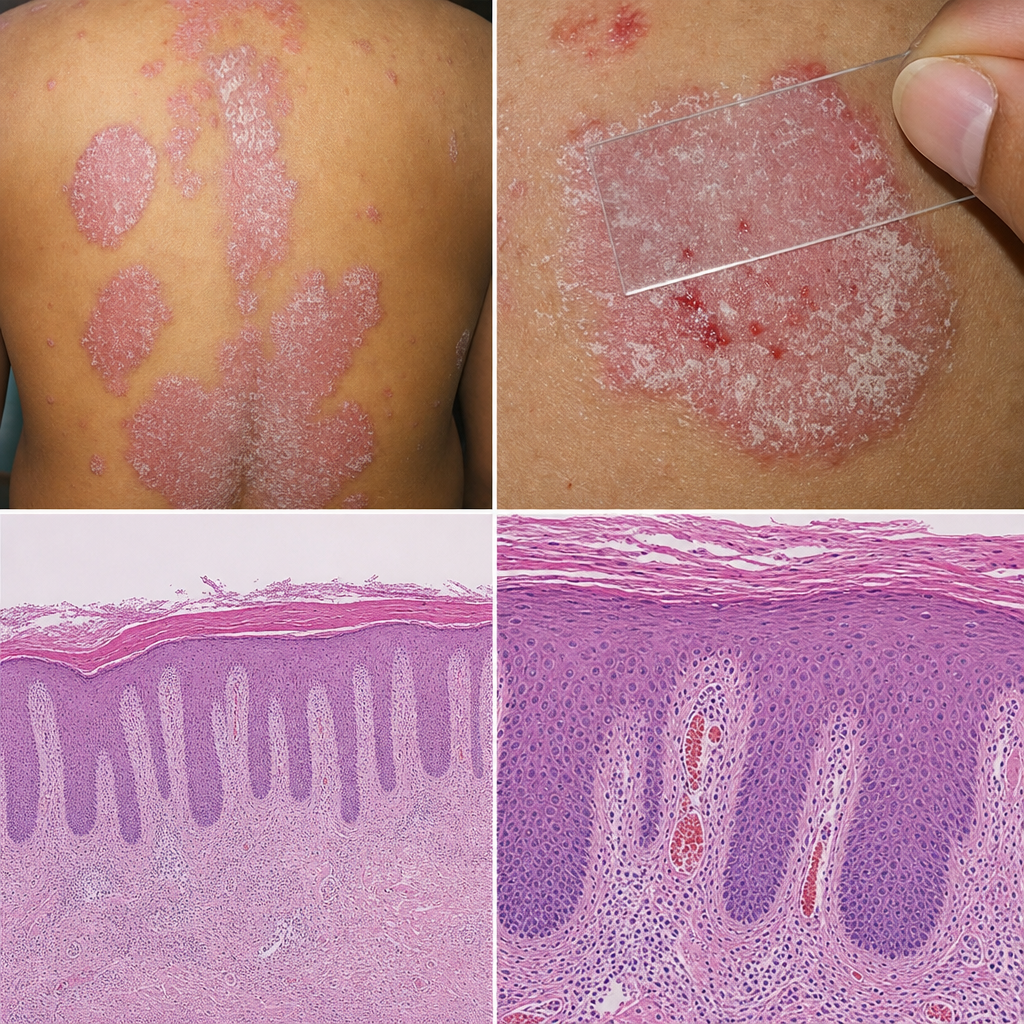
A 40 year old woman presents with a 2 year history of erythematous papulopustular lesions on convexities of the face. There is a background of erythema & telangiectasia. The most likely diagnosis is –
Actinic keratoses are associated with
A 60-year-old female presents with eczematous itching lesions. Biopsy revealed a subepidermal cleft with Direct Immunofluorescence showing Linear C3 & IgG deposition along the basement membrane zone. What is the likely diagnosis?
A patient presents with a skin rash that is exaggerated on sun exposure. What is the repair mechanism involved in this condition?
A 25-year-old male presents with a cluster of vesicles along the dermatome on his chest and back. He complains of burning pain in the same area. What is the most likely diagnosis?
A male patient presented with a 0.3 cm nodule on the left nasolabial fold. A pathological examination revealed a basaloid appearance with peripheral palisading. What is the most likely diagnosis?
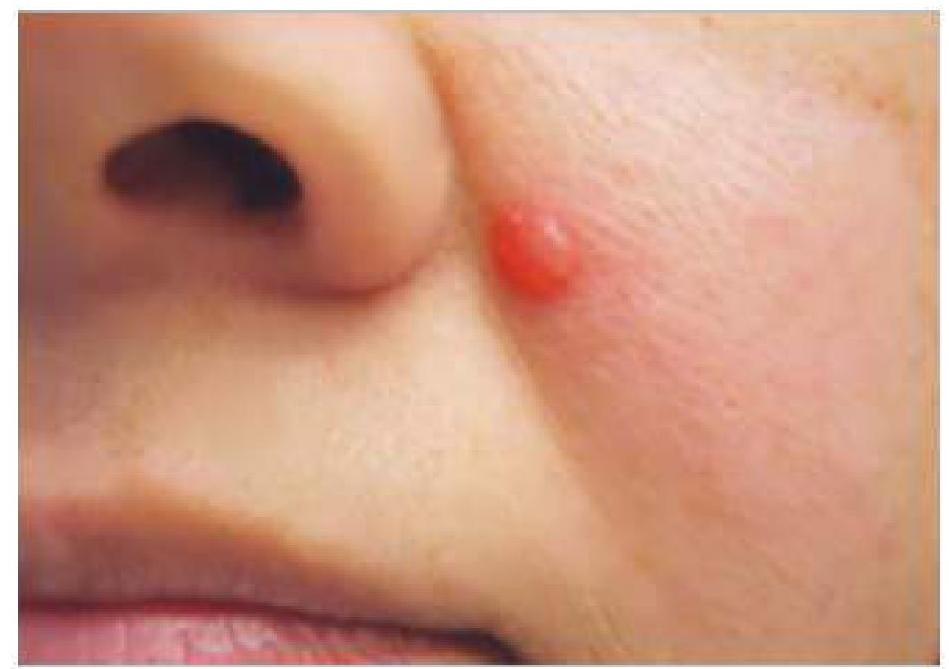
A patient presents with the skin lesions shown in the image. While evaluating for possible blistering disorders, all of the following conditions could present with similar morphology EXCEPT:
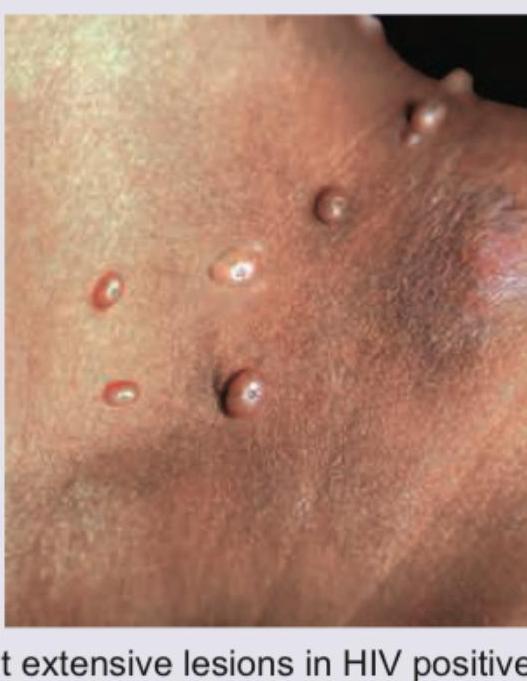
Which of the following is the MOST characteristic feature of skin tags (acrochordons)?
Which sign is pathognomonic for neurofibromatosis?
What is the primary lesion in lichen planus?
Explanation: ***Acne rosacea*** - This condition presents with **erythematous papulopustular lesions**, background **erythema**, and **telangiectasias** predominantly on the convexities of the face, which is a classic presentation for rosacea. - The absence of **comedones** (blackheads/whiteheads) helps differentiate it from acne vulgaris. *Polymorphic light eruption* - This is a recurring skin rash triggered by **sun exposure**, presenting as itchy papules, plaques, or vesicles, usually appearing a few hours after exposure. - Unlike rosacea, it does not typically feature permanent facial erythema or telangiectasias and is more directly linked to UV exposure episodes. *Acne vulgaris* - While it features papules and pustules, **acne vulgaris** is characterized by the presence of **comedones** (blackheads and whiteheads), which are not described in the patient's presentation. - It also does not typically involve the prominent background erythema and telangiectasias seen in rosacea. *SLE* - Systemic lupus erythematosus (SLE) can cause a **malar or 'butterfly' rash** across the nose and cheeks, but it is typically a fixed erythema, sometimes with scaling, and does not usually involve papulopustular lesions or telangiectasias as a primary feature. - SLE often has systemic symptoms (e.g., joint pain, fatigue) that are not mentioned, and skin lesions can be photosensitive but are not typically pustular.
Explanation: ***Squamous cell carcinoma (SCC)*** - **Actinic keratoses** are considered a **premalignant lesion** and are the most common precursor to invasive cutaneous SCC. - They represent **atypical keratinocytes** that have the potential to progress to SCC, particularly with continued sun exposure. *Basal cell carcinoma (BCC)* - While BCC is also a **sun-related skin cancer**, it typically develops de novo and is **not directly associated** with actinic keratoses as a precursor. - BCC usually arises from the **basal layer of the epidermis** or hair follicles, unlike SCC which originates from keratinocytes. *Malignant melanoma* - **Melanoma** originates from **melanocytes**, not keratinocytes, and is not associated with actinic keratoses. - Its precursors include **dysplastic nevi** or de novo development, distinct from the epidermal changes seen in actinic keratosis. *Keratoacanthoma* - **Keratoacanthoma** is a rapidly growing, dome-shaped tumor that can resemble SCC, and some consider it a **low-grade SCC variant**. - While it may share some features with SCC, actinic keratoses are more broadly recognized as precursors directly to typical invasive SCC rather than specifically to keratoacanthoma.
Explanation: ***Bullous Pemphigoid*** - The presence of **eczematous itching lesions**, a **subepidermal cleft**, and **linear C3 and IgG deposition along the basement membrane zone** on direct immunofluorescence (DIF) are classic diagnostic features of Bullous Pemphigoid. - This autoimmune blistering disease typically affects older individuals and is characterized by antibodies targeting components of the **hemidesmosomes**, specifically BP180 and BP230. *Pemphigus foliaceus* - This condition involves **intraepidermal blistering**, specifically within the granular layer, rather than a subepidermal cleft. - DIF in Pemphigus foliaceus shows **intercellular IgG deposition** in the epidermis, not linear deposition along the basement membrane zone. *Pemphigus Vulgaris* - Pemphigus Vulgaris is characterized by **intraepidermal blistering** above the basal cell layer (**suprabasal clefting**), leading to fragile bullae that rupture easily. - DIF typically reveals **intercellular IgG and C3 deposition** in a "chicken wire" pattern throughout the epidermis, which differs from the linear pattern seen in this case. *Dermatitis herpetiformis* - While Dermatitis herpetiformis is also an autoimmune blistering disease with itching lesions, its characteristic DIF finding is **granular IgA deposition** in the dermal papillae, not linear C3 and IgG at the basement membrane zone. - Histopathology in Dermatitis herpetiformis shows **subepidermal vesicles** with neutrophil infiltration in the dermal papillae, but the direct immunofluorescence pattern is distinct.
Explanation: ***Nucleotide excision repair*** - This mechanism is responsible for repairing **bulky lesions** in DNA, such as **pyrimidine dimers** caused by **UV radiation** from sun exposure. - Patients with defects in nucleotide excision repair (e.g., **xeroderma pigmentosum**) are highly sensitive to sunlight and develop skin rashes, pigment changes, and skin cancers. *Base excision repair* - This pathway primarily corrects **small damaged bases** that do not cause significant distortion of the DNA helix, such as deaminated, oxidized, or alkylated bases. - It does not primarily address the bulky lesions induced by UV light that cause exaggerated sun sensitivity. *Mismatch repair* - This system corrects errors, like **mismatched base pairs**, that are incorporated during DNA replication. - It is not directly involved in repairing DNA damage caused by environmental factors like UV radiation. *Double stranded DNA break repair* - This mechanism repairs **double-strand breaks** in DNA, which are highly deleterious lesions caused by ionizing radiation or oxidative stress. - While critical for genome stability, it is not the primary repair pathway for UV-induced DNA lesions or the direct cause of sun sensitivity.
Explanation: ***Herpes zoster*** - The classic presentation of **vesicular rash along a dermatome** with **burning pain** is highly characteristic of herpes zoster (shingles). - This condition is caused by the **reactivation of the varicella-zoster virus (VZV)**, which lies dormant in sensory ganglia. *Contact dermatitis* - This condition typically presents as an **itchy, erythematous rash** that appears after contact with an allergen or irritant. - While vesicles can be present, the rash is usually not strictly confined to a single dermatome and **burning pain is less common** than itching. *Herpes simplex* - Herpes simplex virus (HSV) typically causes **localized clusters of vesicles** on mucosal surfaces (e.g., oral, genital) or skin. - It does not usually present with a **dermatomal distribution** on the trunk as described in the vignette. *Impetigo* - Impetigo is a **bacterial skin infection** characterized by **honey-crusted lesions** or pustules. - While it can involve vesicles, it does not follow a **dermatomal pattern** and is caused by bacteria, not a viral reactivation.
Explanation: ***Basal cell carcinoma*** - The description of a **basaloid appearance with peripheral palisading** on pathological examination is a classic histological feature of basal cell carcinoma (BCC). - BCC commonly presents as a nodule on sun-exposed areas like the **nasolabial fold** and is the most common skin cancer. *Melanoma* - Melanoma is characterized by the **malignant proliferation of melanocytes** and histologically shows atypical melanocytes with pagetoid spread or nest formation. - While it can appear as a nodule, the described **basaloid appearance with peripheral palisading** is not characteristic of melanoma. *Squamous cell carcinoma* - Squamous cell carcinoma typically shows **atypical keratinocytes** with keratinization, intercellular bridges, and sometimes desmoplasia. - It usually presents as an **erythematous, scaly patch** or nodule, often with ulceration, and the described histology does not match. *Nevus* - A nevus (mole) is a benign proliferation of melanocytes, showing **uniform nests of melanocytes** with maturation as they descend into the dermis. - The term **basaloid appearance** refers to cells resembling basal keratinocytes, which is not typical for a nevus.
Explanation: ***Bullous pemphigoid*** - Presents with **tense bullae** on an erythematous base, typically in elderly patients, unlike the **umbilicated papules** seen in this image. - Involves **subepidermal blistering** with **linear IgG deposition** at the basement membrane zone, not the viral inclusions of Molluscum contagiosum. *Pemphigus vegetans* - A rare variant of pemphigus vulgaris characterized by **vegetating plaques and pustules** in intertriginous areas, not discrete umbilicated lesions. - Shows **intraepidermal acantholysis** with **suprabasal clefting**, histologically distinct from the viral cytopathic changes in Molluscum contagiosum. *Pemphigus vulgaris* - Presents with **flaccid bullae** and painful **mucosal erosions** due to **autoantibodies against desmoglein 1 and 3**. - The **Nikolsky sign** is positive, and lesions are erosive rather than the solid, pearl-like papules characteristic of Molluscum contagiosum. *Pemphigus erythematosus* - Features **erythematous, scaly, crusted lesions** primarily on the **face and upper trunk** with a butterfly distribution. - Combines features of **lupus erythematosus** and pemphigus foliaceus, showing superficial blistering unlike the viral papules in this case.
Explanation: ***They are typically pedunculated.*** - **Skin tags (acrochordons)** are benign soft tissue tumors characterized by their **pedunculated morphology** - they are attached to the skin by a narrow stalk or pedicle. - This **pedunculated appearance** is the **most characteristic** and **defining feature** that distinguishes them from other benign skin lesions. - They are typically **soft, flesh-colored or hyperpigmented**, and range from 1-5 mm in size. *They commonly occur on the neck and axilla.* - While **skin tags** frequently occur in areas of friction such as the neck, axilla, eyelids, groin, and inframammary folds, this **location is not specific**. - Many other skin conditions also favor these sites, so location alone is not a characteristic diagnostic feature. *They are associated with seborrhoeic keratosis.* - There is **no established clinical association** between skin tags and seborrheic keratoses. - Both are common **benign skin growths** in adults but represent different pathological entities with different clinical appearances. *They have malignant potential.* - This is **incorrect**. Skin tags are **benign fibrous polyps** with **no malignant potential**. - They do not require removal unless symptomatic or for cosmetic reasons.
Explanation: **Explanation:** **Neurofibromatosis Type 1 (NF1)**, also known as von Recklinghausen disease, is an autosomal dominant multisystem disorder. The correct answer is **Axillary freckling (Crowe sign)** because it is considered highly specific (pathognomonic) for NF1. 1. **Axillary Freckling (Crowe Sign):** These are small, 1–3 mm hyperpigmented macules found in intertriginous areas (axilla or groin). Unlike solar lentigines, they appear in areas not exposed to the sun. Their presence is a hallmark diagnostic criterion for NF1. 2. **Cafe-au-lait macules (CALMs):** While these are often the first sign of NF1, they are **not pathognomonic**. CALMs can be seen in healthy individuals, McCune-Albright syndrome, Fanconi anemia, and Legius syndrome. In NF1, the presence of 6 or more macules (>5mm in prepubertal; >15mm in postpubertal) is required for diagnosis. 3. **Shagreen patch:** This is a connective tissue nevus (leathery plaque) typically found on the lower back. It is a characteristic feature of **Tuberous Sclerosis**, not Neurofibromatosis. **High-Yield Clinical Pearls for NEET-PG:** * **Lisch Nodules:** Iris hamartomas (seen on slit-lamp exam) are the most common ocular finding in NF1. * **Optic Glioma:** The most common CNS tumor associated with NF1. * **Sphenoid Wing Dysplasia:** A classic skeletal deformity in NF1. * **Genetics:** NF1 is caused by a mutation in the *NF1* gene on **Chromosome 17** (encodes Neurofibromin), while NF2 is linked to **Chromosome 22** (encodes Merlin).
Explanation: **Explanation:** The primary lesion in **Lichen Planus (LP)** is classically described by the **"6 Ps"**: **P**lanar (flat-topped), **P**urple (violaceous), **P**olygonal, **P**ruritic, **P**apules, and **P**laques. 1. **Why Papule is Correct:** A papule is a solid, raised lesion less than 1 cm in diameter. In LP, the characteristic lesion is a violaceous, flat-topped papule. These papules often coalesce to form larger **plaques**. The surface of these papules typically shows fine, white, lace-like patterns known as **Wickham striae**, which are a hallmark diagnostic feature. 2. **Why Other Options are Incorrect:** * **Macule:** This is a flat, non-palpable change in skin color. While post-inflammatory hyperpigmentation (macules) is common after LP heals, the active primary lesion is always raised. * **Vesicle/Bullae:** These are fluid-filled blisters (vesicles <0.5 cm; bullae >0.5 cm). While a rare variant called "Bullous Lichen Planus" exists, these are not the *primary* or most common presentation of the disease. **High-Yield Clinical Pearls for NEET-PG:** * **Histopathology:** Look for the "saw-tooth" appearance of rete pegs, basal cell degeneration (liquefaction necrosis), and a band-like lymphocytic infiltrate at the dermo-epidermal junction. * **Koebner Phenomenon:** LP shows a positive Koebner phenomenon (lesions appearing at sites of trauma). * **Associations:** Often associated with **Hepatitis C** infection. * **Civatte Bodies:** These are apoptotic keratinocytes found in the lower epidermis/upper dermis, also known as colloid or cytoid bodies.
Get full access to all questions, explanations, and performance tracking.
Start For Free