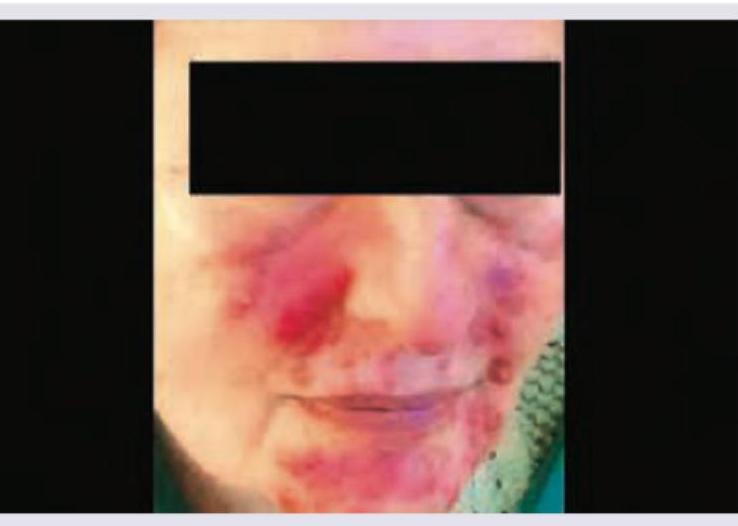
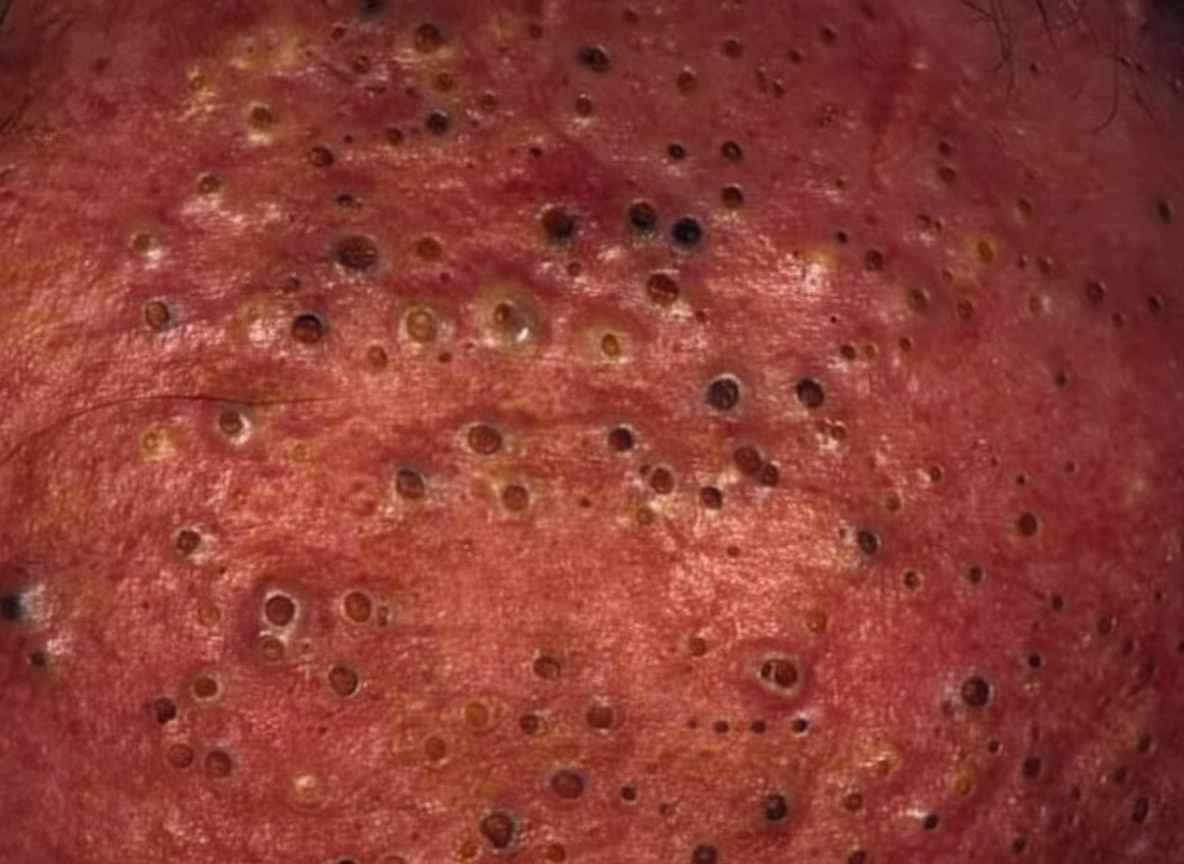
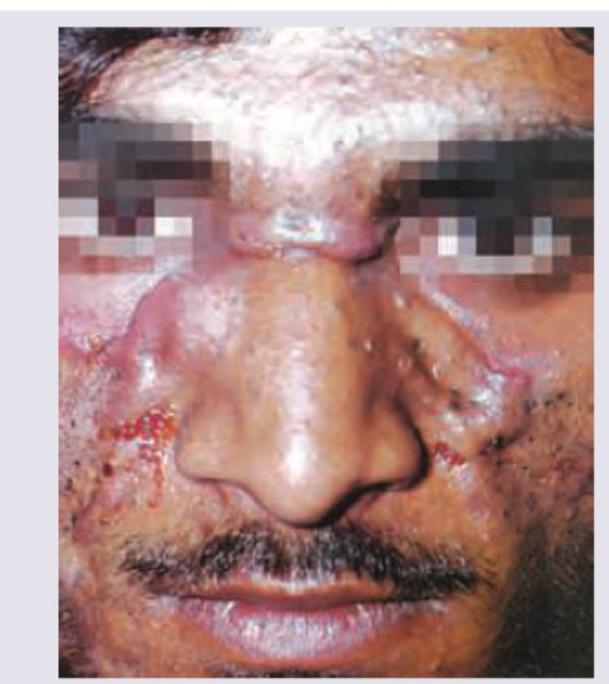
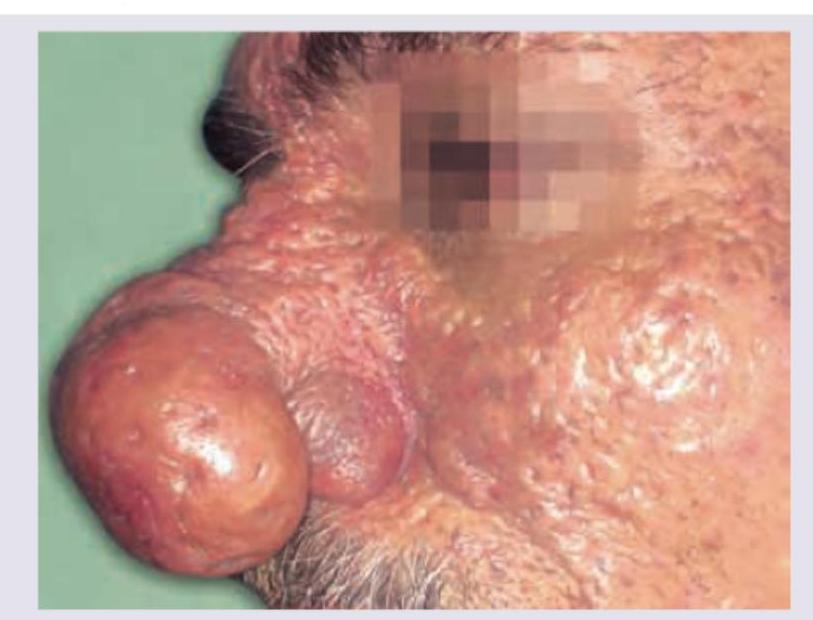
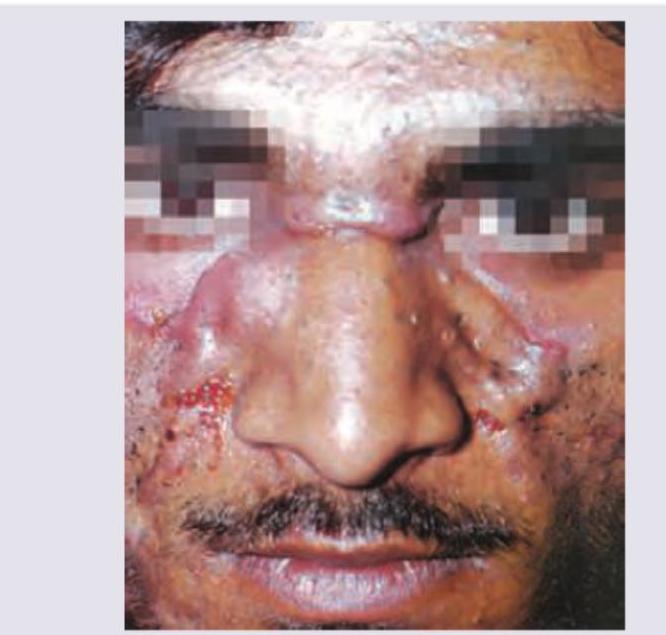
A female presented with erythematous lesions on the face with intolerance to spicy food. What is the most likely diagnosis?
Comedones are seen in:
What is the best treatment for nodulocystic acne?
What is the treatment of choice in severe cystic acne?
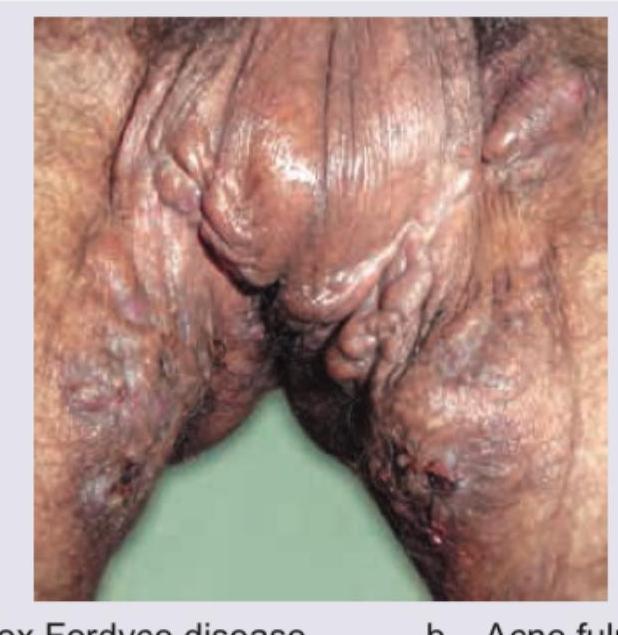
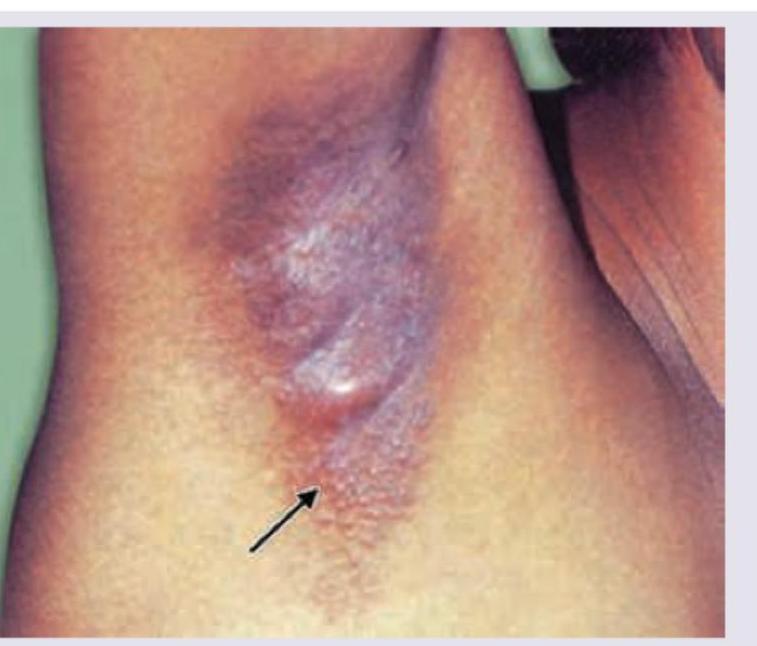
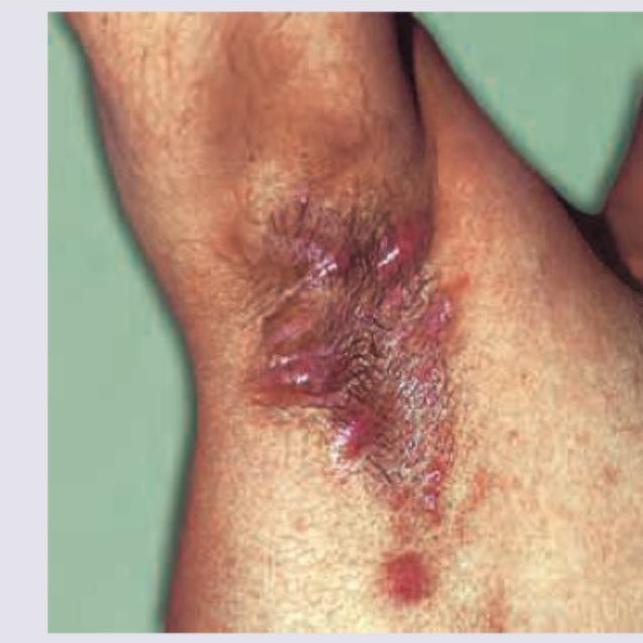
Hidradenitis suppurativa is an affection of:
A 19-year-old girl presents with multiple papulopustular erythematous lesions on her face and neck. What is the likely diagnosis?
Differential diagnosis of rosacea includes all of the following except?
A 4-year-old child presents with high fever, a toxic appearance, eruptions on the trunk and proximal extremities, bilateral bulbar conjunctivitis without discharge, fissured-crusted red lips, and limb edema making walking difficult. She also has desquamation in the perineum and fingertips, along with cervical adenopathy. What is the most likely diagnosis?
Hidradenitis suppurativa is typically found in association with which of the following structures?
Comedones are characteristic of:
Explanation: **Explanation:** The clinical presentation of erythematous facial lesions triggered by **spicy food** is a classic hallmark of **Acne Rosacea**. Unlike Acne Vulgaris, Rosacea is a chronic inflammatory condition characterized by facial flushing, persistent erythema, telangiectasia, and inflammatory papules/pustules. The underlying pathophysiology involves neurovascular dysregulation and an exaggerated innate immune response. Common triggers include spicy foods, hot beverages, alcohol, and sunlight, all of which induce vasodilation. **Analysis of Options:** * **SLE (Systemic Lupus Erythematosus):** While SLE presents with a "malar rash," it typically spares the nasolabial folds and is not specifically triggered by spicy food. It is often associated with systemic symptoms like joint pain and photosensitivity. * **Chloasma (Melasma):** This presents as hyperpigmented (brownish) macules and patches, usually due to hormonal changes or UV exposure. It is not an erythematous (red) condition and lacks the vascular triggers seen here. * **Lichen Planus Pigmentosus (LPP):** This is a variant of Lichen Planus characterized by grey-brown to dark-brown pigmentation in sun-exposed or intertriginous areas. It does not present with flushing or spicy food intolerance. **High-Yield NEET-PG Pearls:** * **Demographics:** Most common in females aged 30–50 years (though rhinophyma is more common in males). * **Key Feature:** Absence of **comedones** (this distinguishes Rosacea from Acne Vulgaris). * **Ocular Rosacea:** Up to 50% of patients have eye involvement (blepharitis, conjunctivitis). * **Treatment:** Topical **Metronidazole** is the first-line agent. For systemic treatment, oral Doxycycline (sub-antimicrobial doses) is used.
Explanation: **Explanation:** **Acne vulgaris** is the correct answer because **comedones** are the hallmark, pathognomonic clinical feature of this condition. Comedogenesis occurs due to abnormal follicular keratinization and increased sebum production, leading to the formation of a keratin-sebum plug within the pilosebaceous unit. These are classified as **open comedones** (blackheads) or **closed comedones** (whiteheads). Without the presence of comedones, a diagnosis of acne vulgaris cannot be definitively made. **Analysis of Incorrect Options:** * **Pityriasis:** This refers to a group of scaling skin disorders (e.g., Pityriasis rosea, Pityriasis versicolor). These are characterized by "collarette" scaling or fungal proliferation, not follicular plugging. * **Lichen planus:** This is an inflammatory condition characterized by the "6 Ps" (Planar, Purple, Polygonal, Pruritic, Papules, and Plaques). It involves Wickham striae and basal cell degeneration, but does not involve comedone formation. * **Adenoma sebaceum:** Despite the name, these are actually **angiofibromas** (seen in Tuberous Sclerosis). They appear as firm, discrete, reddish-brown papules in a malar distribution, lacking the follicular plugging seen in acne. **Clinical Pearls for NEET-PG:** * **Primary lesion of acne:** Microcomedone (microscopic). * **Acne Cosmetica:** Characterized by "pomade acne" or comedones caused by oily hair/skin products. * **Steroid-induced acne:** A common "comedone-free" acneiform eruption; it presents with monomorphic pustules. * **Chloracne:** A type of occupational acne caused by halogenated hydrocarbons; it is notorious for producing very large, persistent comedones.
Explanation: **Explanation:** **Nodulocystic acne** is a severe form of acne characterized by deep-seated inflammatory nodules and cysts. While **Oral Isotretinoin** is globally considered the "gold standard" and first-line treatment for this condition, among the options provided, **Dapsone** is the most appropriate choice. 1. **Why Dapsone is Correct:** Dapsone (diaminodiphenyl sulfone) possesses potent anti-inflammatory and antibacterial properties. It inhibits the myeloperoxidase enzyme and suppresses neutrophil chemotaxis, which is crucial in managing the intense inflammation seen in nodulocystic lesions. In clinical practice, it is often used as a steroid-sparing agent or an alternative when isotretinoin is contraindicated or poorly tolerated. 2. **Analysis of Incorrect Options:** * **Azithromycin:** While used for moderate inflammatory acne due to its pulse-dosing convenience, it is generally insufficient as a monotherapy for severe nodulocystic variants. * **Adapalene:** This is a third-generation topical retinoid. It is excellent for comedonal acne and maintenance therapy but lacks the potency required to penetrate and treat deep cystic lesions. * **Clindamycin:** A topical or oral antibiotic that targets *C. acnes*. Like azithromycin, it is used for inflammatory acne but is not the definitive treatment for the nodulocystic grade. **High-Yield Clinical Pearls for NEET-PG:** * **Isotretinoin** is the drug of choice for nodulocystic acne; however, if not in the options, look for Dapsone or systemic steroids (for Acne Fulminans). * **Acne Conglobata:** A severe form of nodulocystic acne involving interconnecting abscesses and scars. * **Side Effect Alert:** Before starting Dapsone, always check for **G6PD deficiency** to avoid drug-induced hemolytic anemia. * **Topical Dapsone (5% gel):** Specifically useful for inflammatory acne in adult females.
Explanation: **Explanation:** **Isotretinoin (Option A)** is the treatment of choice for severe cystic or nodulocystic acne because it is the only drug that targets all four pathogenic factors of acne: follicular hyperkeratosis, sebum production, *Cutibacterium acnes* colonization, and inflammation. It is specifically indicated for severe, scarring, or treatment-resistant acne. **Why the other options are incorrect:** * **Tretinoin (Option B):** A topical retinoid used primarily for comedonal acne. It lacks the systemic potency required to treat deep-seated cysts and nodules. * **Benzoyl Peroxide (Option C):** A topical antimicrobial and keratolytic agent. While effective for mild-to-moderate inflammatory acne, it is insufficient as a monotherapy for severe cystic lesions. * **Azelaic Acid (Option D):** A topical dicarboxylic acid used for mild acne and post-inflammatory hyperpigmentation. It is not indicated for severe cystic variants. **High-Yield Clinical Pearls for NEET-PG:** * **Mechanism:** Isotretinoin is a 13-cis-retinoic acid. It significantly reduces sebaceous gland size and activity. * **Teratogenicity:** The most serious side effect. Female patients must follow the **iPLEDGE** program (or equivalent) and use two forms of contraception. * **Monitoring:** Baseline and periodic checks of Liver Function Tests (LFTs) and Lipid Profile (specifically Triglycerides) are mandatory. * **Common Side Effects:** Cheilitis (most common), xerosis, and epistaxis. * **Drug Interaction:** Avoid concomitant use with **Tetracyclines** due to the increased risk of Pseudotumor Cerebri (Benign Intracranial Hypertension).
Explanation: **Explanation:** **Hidradenitis Suppurativa (HS)**, also known as **Acne Inversa**, is a chronic, inflammatory skin condition characterized by recurrent, painful nodules, abscesses, and draining fistulae (sinus tracts). 1. **Why Apocrine Gland is Correct:** The primary pathology involves the follicular occlusion of the **pilosebaceous-apocrine unit**. It specifically affects skin areas rich in apocrine glands, such as the axillae, groin, inframammary folds, and anogenital regions. While the initial event is follicular plugging, the subsequent rupture leads to severe inflammation of the associated apocrine glands. 2. **Why Other Options are Incorrect:** * **Nail:** HS does not involve the nail apparatus; nail disorders (like onychomycosis or psoriasis) have distinct etiologies. * **Eccrine Sweat Gland:** These are distributed throughout the body for thermoregulation. HS is localized to intertriginous areas, sparing general eccrine-rich skin. * **Sebaceous Gland:** While sebaceous glands are part of the pilosebaceous unit involved in acne vulgaris, HS is specifically defined by its predilection for apocrine-bearing areas and its deep cicatricial (scarring) nature. **High-Yield Clinical Pearls for NEET-PG:** * **Hurley Staging System:** Used to grade severity (Stage I: Abscess without sinus tracts; Stage II: Recurrent abscesses with sinus tracts and scarring; Stage III: Diffuse involvement with interconnected tracts). * **Risk Factors:** Obesity and **Smoking** (strongest environmental trigger). * **Associated Syndrome:** Part of the **Follicular Occlusion Tetrad** (HS, Acne conglobata, Dissecting cellulitis of the scalp, and Pilonidal sinus). * **Treatment:** Lifestyle modification, topical/oral antibiotics (Clindamycin + Rifampicin), and TNF-alpha inhibitors (Adalimumab is FDA approved). Severe cases require wide surgical excision.
Explanation: ### Explanation **Correct Answer: B. Acne vulgaris** **Why it is correct:** Acne vulgaris is the most common inflammatory dermatosis in adolescents. The clinical presentation of **papulopustular lesions** on the **face and neck** in a 19-year-old is classic for this condition. The pathogenesis involves four key factors: follicular hyperkeratinization, sebum overproduction (influenced by androgens), colonization by *Cutibacterium acnes*, and inflammation. The hallmark of acne vulgaris is the presence of **comedones** (open or closed), which distinguishes it from other acneiform eruptions. **Why the other options are incorrect:** * **A. Acne rosacea:** Typically occurs in an older age group (30–50 years). While it presents with erythema and papulopustules, it is characterized by telangiectasia and flushing, and crucially, **comedones are absent**. * **C. Pityriasis versicolor:** A fungal infection caused by *Malassezia* species. It presents as hypo- or hyperpigmented scaly macules, usually on the trunk, not as inflammatory papulopustules. * **D. Lupus vulgaris:** A chronic form of cutaneous tuberculosis. It typically presents as a solitary, slow-growing "apple-jelly" colored plaque, often on the face, rather than multiple acute inflammatory lesions. **High-Yield Clinical Pearls for NEET-PG:** * **Grading:** Grade I (Comedones), Grade II (Papules), Grade III (Pustules), Grade IV (Cysts/Nodules). * **Drug-induced acne:** Steroids, Isoniazid (INH), Lithium, and Phenytoin are common culprits; these typically present as **monomorphic** eruptions without comedones. * **Treatment Gold Standard:** Topical retinoids are the first-line treatment for comedonal acne; Oral Isotretinoin is the drug of choice for severe nodulocystic acne (highly teratogenic).
Explanation: **Explanation:** The correct answer is **Melasma**. The differential diagnosis of rosacea is based on its primary clinical features: erythema, telangiectasia, papules, and pustules. **Why Melasma is the correct answer:** Melasma is a disorder of **hyperpigmentation**, characterized by symmetric brown or grayish-brown patches, typically on the face. It lacks the inflammatory components (papules/pustules) and vascular changes (flushing/telangiectasia) that define rosacea. Therefore, it is not a clinical mimic of rosacea. **Analysis of other options:** * **Acne Vulgaris:** The most common differential. Both present with papules and pustules. However, acne is distinguished by the presence of **comedones** (absent in rosacea) and a lack of prominent flushing. * **Lupus Erythematosus (SLE):** Acute cutaneous lupus presents with a **malar rash** (butterfly distribution) that spares the nasolabial folds. Like rosacea, it involves facial erythema and photosensitivity, making it a critical differential. * **Basal Cell Carcinoma (BCC):** Specifically, the **nodular subtype** can present with telangiectasia. While BCC is usually a solitary lesion, it must be ruled out when evaluating chronic vascular changes on sun-damaged skin. **High-Yield Clinical Pearls for NEET-PG:** * **Key Distinguisher:** The absence of **comedones** is the hallmark that differentiates Rosacea from Acne Vulgaris. * **Triggers:** Rosacea is exacerbated by alcohol, spicy foods, hot beverages, and sunlight. * **Ocular Rosacea:** Up to 50% of patients have eye involvement (blepharitis, conjunctivitis). * **Phymatous changes:** Rhinophyma (bulbous nose) is a late-stage feature seen predominantly in men.
Explanation: **Explanation:** The clinical presentation described is a classic case of **Kawasaki Disease (KD)**, also known as Mucocutaneous Lymph Node Syndrome. It is an acute, febrile, medium-vessel vasculitis primarily affecting children under 5 years of age. **Why Kawasaki Syndrome is Correct:** Diagnosis is based on high-grade fever for ≥5 days plus at least 4 out of 5 "CRASH" criteria: 1. **C**onjunctivitis: Bilateral, bulbar, non-exudative. 2. **R**ash: Polymorphous eruption on the trunk/extremities. 3. **A**denopathy: Cervical, usually >1.5 cm and unilateral. 4. **S**trawberry tongue: Includes fissured/red lips and oropharyngeal erythema. 5. **H**ands and feet changes: Acute edema/erythema; subungual and **perineal desquamation** are characteristic late findings. The "toxic appearance" and limb edema (making walking difficult) further support this diagnosis. **Why Other Options are Incorrect:** * **Polyarteritis nodosa (PAN):** While also a vasculitis, it typically presents with livedo reticularis, subcutaneous nodules, and systemic hypertension. It lacks the specific mucocutaneous triad (conjunctivitis, strawberry tongue, desquamation) seen here. * **Henoch-Schönlein purpura (HSP):** A small-vessel vasculitis characterized by palpable purpura (usually on buttocks/legs), arthritis, and abdominal pain. It does not present with high-grade fever or the specific mucosal changes of KD. * **Erythema infectiosum (Fifth Disease):** Caused by Parvovirus B19, it presents with a "slapped-cheek" rash and a reticular pattern on the body, but lacks the toxic systemic features and mucosal involvement of KD. **High-Yield Pearls for NEET-PG:** * **Most serious complication:** Coronary artery aneurysms (occurs in 20-25% of untreated cases). * **Investigation of choice:** 2D-Echocardiography. * **Treatment:** IVIG (2g/kg) + High-dose Aspirin. * **Key Sign:** Perineal desquamation is often an early, highly suggestive clue before fingertip peeling begins.
Explanation: **Explanation:** **Hidradenitis Suppurativa (HS)**, also known as **Acne Inversa**, is a chronic inflammatory skin condition characterized by recurrent, painful nodules, abscesses, and sinus tracts. **Why Apocrine Glands are the Correct Answer:** The hallmark of HS is its anatomical distribution. It occurs primarily in **intertriginous areas** (axilla, groin, inframammary folds, and perineum) where **apocrine sweat glands** are most abundant. While the primary pathological event is now understood to be **follicular occlusion** (blockage of the hair follicle), the inflammation secondarily involves and destroys the associated apocrine glands. Historically and clinically, HS is defined by its localization to apocrine-rich skin. **Analysis of Incorrect Options:** * **A. Sebaceous glands:** While involved in Acne Vulgaris, they are not the defining structure for the localization of HS. * **B. Hair follicle:** Although follicular occlusion is the *initiating* event, the question asks for the structure "typically found in association" with the disease's unique distribution. In the context of NEET-PG, HS is classically linked to the apocrine system. * **C. Eccrine glands:** These are found all over the body and are responsible for thermoregulation; they are not the primary site of pathology in HS. **High-Yield Clinical Pearls for NEET-PG:** * **Follicular Occlusion Tetrad:** HS is part of this tetrad, which also includes Acne Conglobata, Dissecting Cellulitis of the scalp, and Pilonidal Sinus. * **Hurley Staging System:** Used to grade severity (Stage I: Abscess without sinus tracts; Stage II: Recurrent abscesses with sinus tracts; Stage III: Diffuse involvement with interconnected tracts). * **Risk Factors:** Smoking and Obesity are the most significant triggers. * **Treatment:** Lifestyle modification (weight loss, smoking cessation), topical/oral antibiotics (Clindamycin + Rifampicin), and TNF-alpha inhibitors (Adalimumab) for severe cases.
Explanation: **Explanation:** **Acne Vulgaris (Correct Answer):** Comedones are the **pathognomonic hallmark** of acne vulgaris. They represent the primary lesion formed due to the obstruction of the pilosebaceous unit. Pathophysiologically, follicular hyperkeratinization leads to the formation of a keratin plug. * **Open Comedones (Blackheads):** The follicular orifice is dilated, and the dark color is due to the oxidation of melanin and lipids. * **Closed Comedones (Whiteheads):** The orifice is narrow or closed, appearing as small, flesh-colored papules. The presence of comedones is essential to differentiate true acne from "acneiform eruptions" (e.g., steroid-induced acne), which typically lack comedones. **Incorrect Options:** * **Psoriasis:** A chronic inflammatory condition characterized by well-demarcated erythematous plaques with silvery-white scales. Key features include the Auspitz sign and Koebner phenomenon. * **Lichen Planus:** Characterized by the "6 Ps" (Planar, Purple, Polygonal, Pruritic, Papules, and Plaques). It features Wickham striae, not comedones. * **Pemphigus:** An autoimmune blistering disease involving acantholysis (loss of cell-to-cell adhesion). It presents with flaccid bullae and a positive Nikolsky sign. **NEET-PG High-Yield Pearls:** 1. **Microcomedone:** The earliest subclinical lesion of acne. 2. **Acneiform Eruptions:** Characterized by monomorphic papulopustules and the **absence** of comedones. 3. **Drug-induced Acne:** Most commonly caused by systemic corticosteroids, INH, Lithium, and Phenytoin. 4. **Topical Retinoids:** The treatment of choice for comedonal acne as they are comedolytic.
Acne Vulgaris: Pathophysiology
Practice Questions
Acne Vulgaris: Clinical Types
Practice Questions
Acne Vulgaris: Management
Practice Questions
Acne in Special Populations
Practice Questions
Rosacea
Practice Questions
Perioral Dermatitis
Practice Questions
Hidradenitis Suppurativa
Practice Questions
Acne Keloidalis Nuchae
Practice Questions
Acne Scarring and Its Management
Practice Questions
Psychological Aspects of Acne
Practice Questions
Diet and Acne
Practice Questions
Newer Therapies in Acne Management
Practice Questions
Get full access to all questions, explanations, and performance tracking.
Start For Free