
Hidradenitis Suppurativa — MCQs

Which of the following are treatment options for acne vulgaris?
Which of the following best describes the current understanding of rosacea pathogenesis?
A patient with typical cutaneous lesions, slightly elevated red or purple macules often covered by gray or yellow adherent scales. Forceful removal of the scale reveals numerous ‘carpet tack’ extensions. The lesion is:
Statement 1 - A 59-year-old patient presents with flaccid bullae. Histopathology shows a suprabasal acantholytic split. Statement 2 - The row of tombstones appearance is diagnostic of Pemphigus vulgaris.
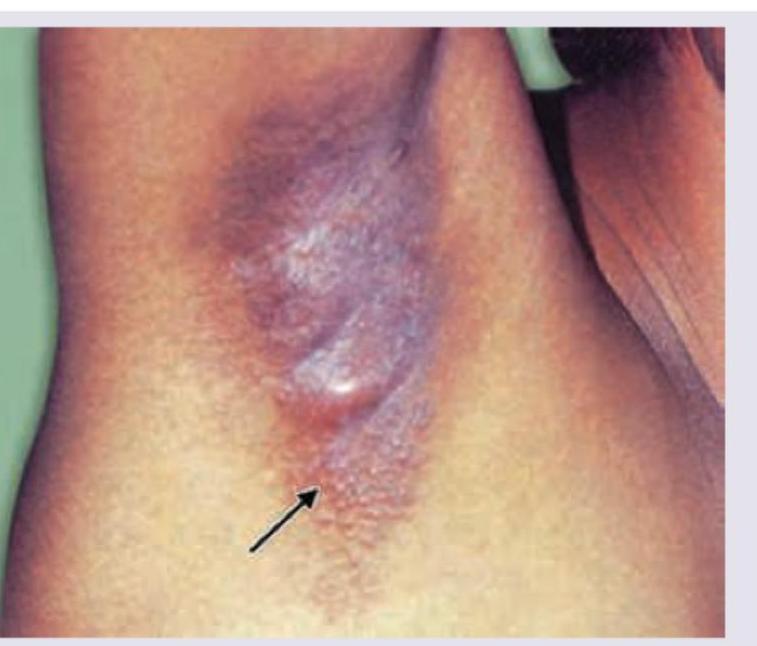
A 25-year-old female presents with the following lesions in the axilla, as shown by the arrow:
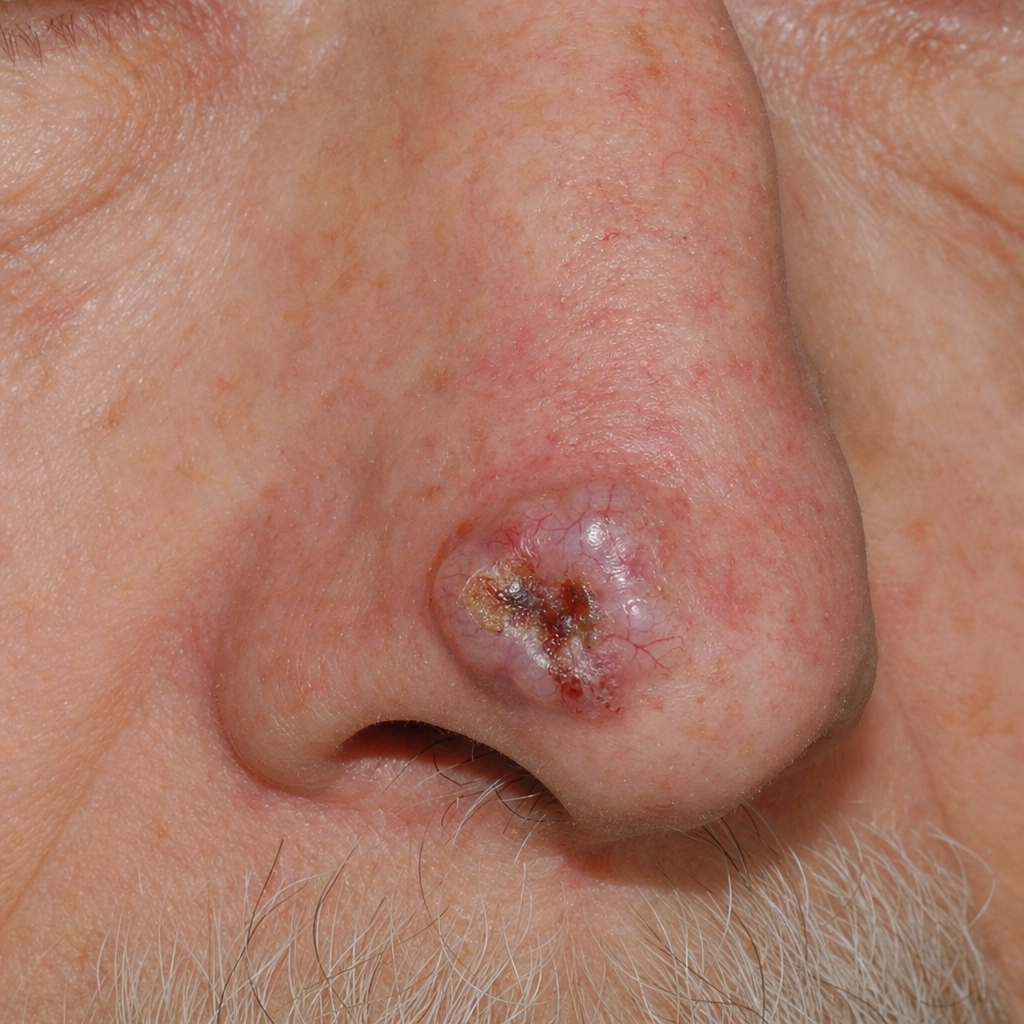
A 72-year-old fair-skinned farmer presents with a slowly enlarging, non-healing lesion on his nose that occasionally bleeds. He reports decades of outdoor sun exposure. The lesion has been present for approximately 18 months. On examination, a pearly, translucent nodule with rolled telangiectatic borders and central ulceration is noted on the nasal ala — a high-risk H-zone location. Which of the following is the most appropriate primary treatment for this lesion?
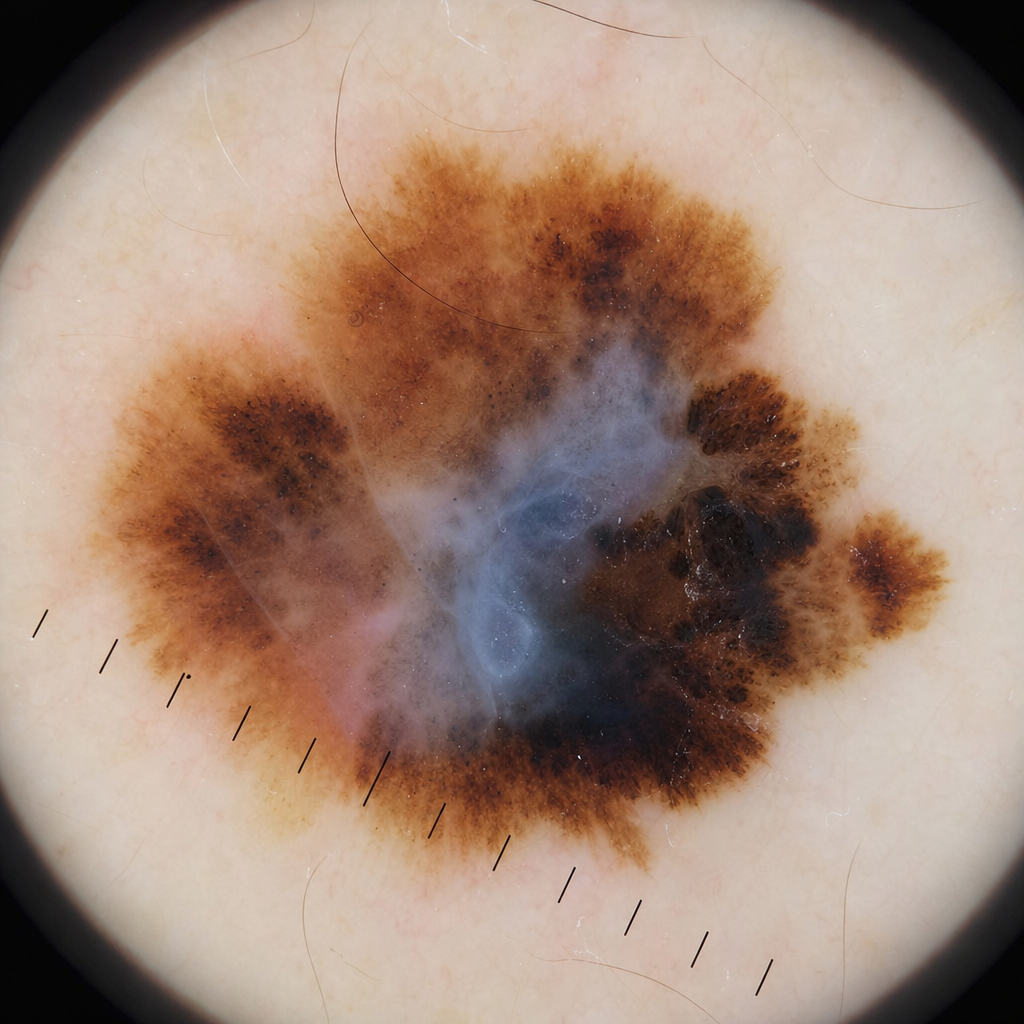
A 52-year-old fair-skinned man presents with a 1.2 cm pigmented lesion on his back that has changed in colour and border over the past 6 months. His GP referred him after noting asymmetry on clinical examination. The dermoscopy image is shown in (Image 1). Which of the following dermoscopic structures most specifically supports a diagnosis of malignancy in this lesion?
An 18-year-old girl presents with predominantly comedonal acne. What is the first-line treatment?
Which of the following drugs should not be used in the management of Rosacea?
Hypertrophy of the sebaceous glands in the nasal skin is called?
Want unlimited practice?
Get full access to all questions, explanations, and performance tracking.
Scan to download app