What is the latest retinoid drug used in acne?
What are the treatment options for acne vulgaris?
An 18-year-old girl presents with predominantly comedonal acne. What is the first-line treatment?
What causes a potato tumor?
A teenage girl presented in OPD with moderate acne and history of irregular menses. What treatment will you give?
Which of the following is associated with hidradenitis suppurativa?
What is the treatment for nodulocystic acne vulgaris?
Which of the following drugs should not be used in the management of Rosacea?
Hypertrophy of the sebaceous glands in the nasal skin is called?
A 19-year-old male presents with several comedones, papules, and pustules on his face and trunk. What is the most appropriate drug choice for this patient?
Explanation: **Explanation:** **Adapalane** is the correct answer as it represents a **third-generation topical retinoid**. Unlike first-generation retinoids, adapalane is a naphthoic acid derivative that selectively binds to **Retinoic Acid Receptors (RAR-β and RAR-γ)**. This selectivity, combined with its lipophilic nature, allows it to penetrate the pilosebaceous unit more effectively while causing significantly less skin irritation (redness and peeling) compared to older agents like Tretinoin. It is currently the standard "latest" generation retinoid frequently tested in this context for its stability and improved safety profile. **Analysis of Incorrect Options:** * **Retinoic acid (Tretinoin):** This is a **first-generation** retinoid. While highly effective, it is more photolabile (degrades in sunlight) and generally more irritating to the skin than Adapalane. * **Clindamycin:** This is a **topical antibiotic**, not a retinoid. It acts by inhibiting protein synthesis in *Cutibacterium acnes* but does not possess the comedolytic properties of retinoids. * **Azelaic acid:** This is a dicarboxylic acid with antibacterial and antikeratinizing properties. While used in acne (especially for post-inflammatory hyperpigmentation), it is **not a retinoid**. **High-Yield Clinical Pearls for NEET-PG:** * **Generations of Retinoids:** * 1st: Tretinoin, Isotretinoin. * 2nd: Etretinate, Acitretin (used in Psoriasis). * 3rd: Adapalane, Tazarotene. * 4th: **Trifarotene** (The most recent, highly selective for RAR-γ). * **Mechanism:** Retinoids are **comedolytic**; they normalize follicular keratinization to prevent microcomedone formation. * **Teratogenicity:** All oral retinoids are strictly contraindicated in pregnancy (Category X). Isotretinoin requires a mandatory contraception period (1 month post-discontinuation).
Explanation: **Explanation:** Acne vulgaris is a chronic inflammatory disease of the pilosebaceous unit. Its management is multifaceted, targeting the four key pathogenic factors: follicular hyperkeratinization, sebum production, *Cutibacterium acnes* colonization, and inflammation. * **Dapsone (Option A):** Topical dapsone (5% or 7.5% gel) is an effective treatment, particularly for inflammatory acne in adult females. It possesses potent anti-inflammatory properties. While oral dapsone is rarely used for routine acne due to side effects, it remains a recognized systemic option for severe, recalcitrant variants like Acne Fulminans. * **Oral Minocycline (Option B):** This is a second-generation tetracycline and a mainstay for moderate-to-severe inflammatory acne. It is highly lipophilic, ensuring excellent penetration into the pilosebaceous unit. It acts by inhibiting protein synthesis in *C. acnes* and reducing chemotactic factors. * **Isotretinoin (Option C):** This oral retinoid is the "gold standard" for severe nodulocystic acne. It is the only drug that addresses all four pathogenic mechanisms of acne. Since all three medications are established therapeutic options, **Option D (All the above)** is the correct answer. **Clinical Pearls for NEET-PG:** * **Isotretinoin:** Highly teratogenic (Category X); requires two forms of contraception and monthly pregnancy tests (IPLEDGE program). It can cause dryness (cheilitis is the most common side effect) and elevated triglycerides. * **Minocycline Side Effects:** Can cause blue-grey skin pigmentation, vestibular toxicity (vertigo), and drug-induced lupus. * **First-line for Mild Acne:** Topical retinoids (Adapalene) + Benzoyl Peroxide. * **Acne Fulminans:** The most severe form; treated with systemic steroids followed by low-dose Isotretinoin.
Explanation: **Explanation:** The primary goal in treating acne is to target the specific pathogenic mechanism involved. In this case, the patient presents with **predominantly comedonal acne** (non-inflammatory lesions). **1. Why Topical Retinoids are correct:** Topical retinoids (e.g., Adapalene, Tretinoin) are the **first-line treatment** for comedonal acne because they are potent **comedolytic agents**. They work by normalizing follicular keratinization, which prevents the formation of the microcomedo (the precursor to all acne lesions). They also possess mild anti-inflammatory properties, making them the foundation of maintenance therapy. **2. Why other options are incorrect:** * **Systemic retinoids (Isotretinoin):** These are reserved for severe, nodulocystic, or scarring acne, or cases refractory to conventional therapy. They are too aggressive for simple comedonal acne. * **Systemic antibiotics:** These are indicated for moderate-to-severe *inflammatory* acne (papules/pustules) to target *C. acnes* colonization. They have no significant comedolytic activity. * **Topical steroids:** These are **contraindicated** in acne. In fact, prolonged use of topical steroids can induce "steroid-induced acne," characterized by monomorphic papulopustular eruptions. **Clinical Pearls for NEET-PG:** * **Adapalene** is often preferred over Tretinoin due to better photostability and less skin irritation. * **First-line for Mild Inflammatory Acne:** Topical Retinoid + Topical Antimicrobial (e.g., Benzoyl Peroxide or Clindamycin). * **Side Effects:** Topical retinoids commonly cause "retinoid dermatitis" (dryness, erythema, and scaling). Patients should be advised to apply them at night and use sunscreen.
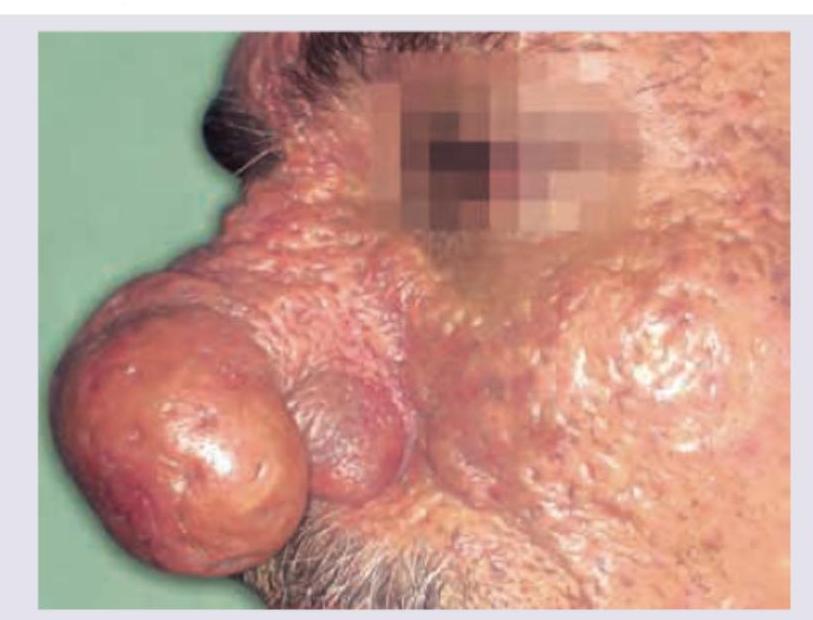
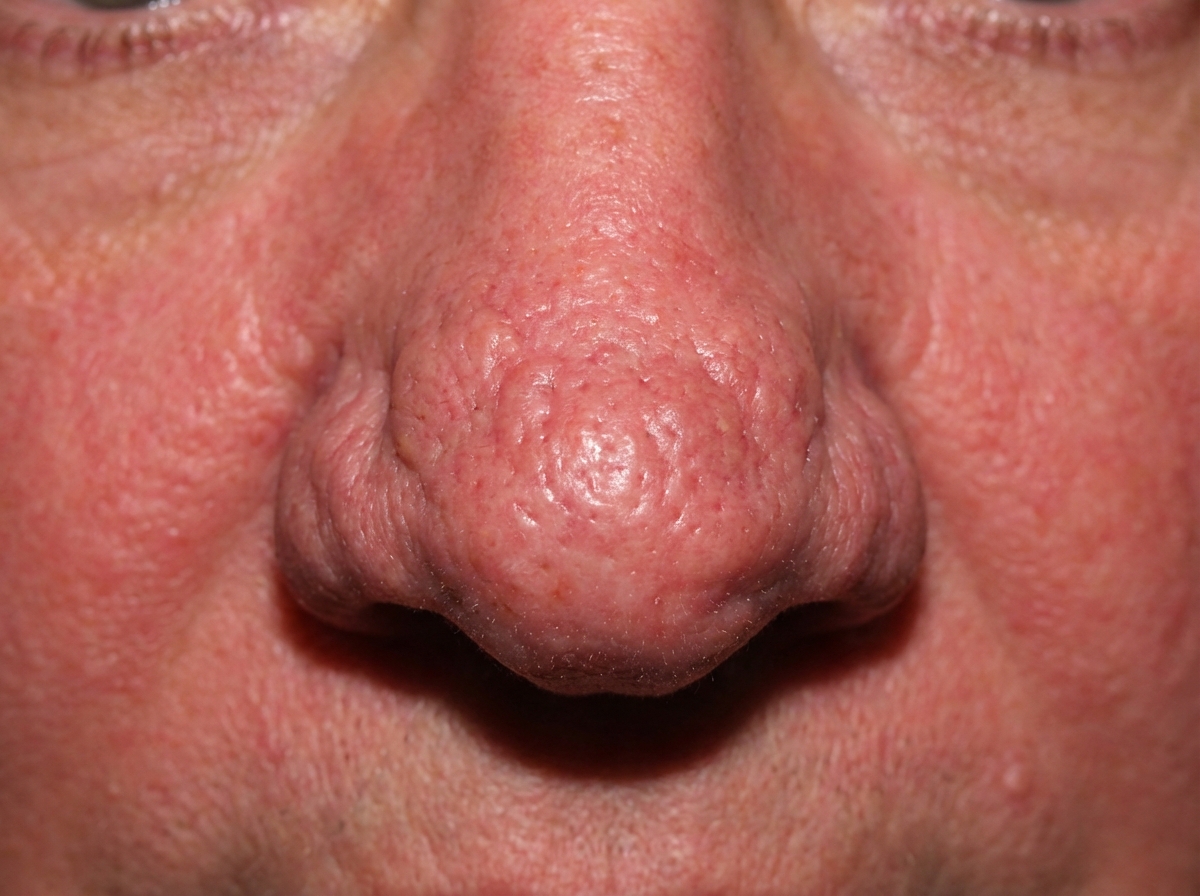
Explanation: **Explanation:** The term **"Potato Tumor"** is a clinical synonym for **Rhinophyma**, which represents the end-stage (Phymatous stage) of **Rosacea**. **1. Why Option B is Correct:** Rhinophyma is characterized by the progressive **hypertrophy and hyperplasia of the sebaceous glands** on the nose. This chronic inflammatory process leads to the deposition of fibrous tissue and an increase in connective tissue volume. Clinically, this results in a bulbous, irregular, and "potato-like" enlargement of the nose with prominent follicular pits. It is most commonly seen in elderly males. **2. Why Other Options are Incorrect:** * **Option A & C:** Rhinophyma specifically involves the pilosebaceous unit (sebaceous glands), not the eccrine or apocrine sweat glands. While the nose contains sweat glands, they do not undergo the massive hypertrophy required to produce a phymatous change. * **Option D:** Since the pathology is specific to sebaceous gland hypertrophy, "All of the above" is incorrect. **Clinical Pearls for NEET-PG:** * **Rosacea Stages:** Erythematotelangiectatic (flushing), Papulopustular, Phymatous (Rhinophyma), and Ocular rosacea. * **Demographics:** While Rosacea is more common in females, **Rhinophyma is significantly more common in males** (Male:Female ratio approx. 20:1). * **Misconception:** Historically, rhinophyma was falsely linked to chronic alcoholism ("rum nose"); however, alcohol is merely a trigger for flushing, not the primary cause. * **Treatment:** Early stages are treated with topical metronidazole or oral isotretinoin. Advanced Rhinophyma (Potato Tumor) usually requires **surgical intervention** (CO2 laser or dermabrasion) to reshape the nose.
Explanation: ### Explanation **Concept:** The clinical presentation of **moderate acne** associated with **irregular menses** in a teenage girl strongly suggests an underlying hormonal imbalance, most commonly **Polycystic Ovary Syndrome (PCOS)**. In such cases, the acne is driven by hyperandrogenism. **Cyproterone acetate** is a potent anti-androgen that works by blocking androgen receptors and inhibiting 5-alpha reductase. When combined with ethinylestradiol (as an oral contraceptive pill), it regulates the menstrual cycle while effectively treating hormonal acne. **Analysis of Options:** * **Cyproterone acetate (Correct):** It addresses the root cause (hyperandrogenism) in patients with menstrual irregularities. It is the treatment of choice for female patients with adult-onset acne or acne associated with signs of virilization/PCOS. * **Oral isotretinoin:** Reserved for severe, nodulocystic, or scarring acne. While effective, it does not address the underlying hormonal trigger in this specific scenario. * **Oral acitretin:** This is a second-generation retinoid used primarily for **psoriasis** (especially palmoplantar and pustular types). It is contraindicated in women of childbearing age due to its long half-life and extreme teratogenicity. * **Oral minocycline:** An antibiotic used for inflammatory acne. It provides symptomatic relief but does not correct the hormonal dysfunction causing the irregular menses. **Clinical Pearls for NEET-PG:** * **SAHA Syndrome:** Seborrhea, Acne, Hirsutism, and Alopecia; often seen in hormonal acne. * **Spironolactone:** Another anti-androgen used off-label for female acne, but Cyproterone acetate is the classic answer when menstrual regulation is also required. * **First-line for Moderate Acne (General):** Usually a combination of topical retinoids and topical/oral antibiotics. However, the presence of "irregular menses" shifts the focus to **hormonal therapy**.
Explanation: **Explanation:** **Hidradenitis Suppurativa (HS)**, also known as **Acne Inversa**, is a chronic inflammatory skin condition characterized by recurrent, painful nodules, abscesses, and sinus tracts. The primary pathology involves follicular occlusion of the pilosebaceous unit, particularly in intertriginous areas rich in apocrine glands. **Why Breast is the correct answer:** The **breast** (specifically the inframammary fold and the periareolar area) is one of the most common sites for HS, especially in females. HS characteristically involves the "milk line" distribution. Other classic sites include the axilla (most common), groin, perineum, and perianal regions. The chronic inflammation in the breast area can sometimes mimic mastitis or even malignancy, making it a high-yield clinical association. **Why other options are incorrect:** * **Lung, Uterus, and Kidney:** These are internal visceral organs. HS is a disease of the follicular epithelium of the skin. While HS is associated with systemic inflammation and various comorbidities (like metabolic syndrome or inflammatory bowel disease), it does not primarily involve or originate in the lungs, uterus, or kidneys. **High-Yield Clinical Pearls for NEET-PG:** * **Hurley Staging System:** Used to grade the severity of HS (Stage I: Abscess without sinus tracts; Stage II: Recurrent abscesses with sinus tracts and scarring; Stage III: Diffuse involvement with interconnected tracts). * **Follicular Occlusion Tetrad:** HS often co-occurs with Acne Conglobata, Dissecting Cellulitis of the scalp, and Pilonidal Sinus. * **Risk Factors:** Smoking and Obesity are the most significant triggers/exacerbating factors. * **Treatment:** Lifestyle modification (weight loss, smoking cessation), topical/oral antibiotics (Clindamycin + Rifampicin), and TNF-alpha inhibitors (Adalimumab is FDA-approved). Surgical excision is required for chronic sinus tracts.
Explanation: **Explanation:** **Nodulocystic acne** is the most severe form of acne vulgaris, characterized by deep-seated inflammatory nodules and cysts that carry a high risk of permanent scarring and psychological distress. **Why Isotretinoin is the Correct Answer:** Oral **Isotretinoin** (13-cis-retinoic acid) is the gold standard and first-line treatment for severe nodulocystic acne. It is the only drug that targets all four pathogenic factors of acne: 1. **Hyperkeratinization:** Normalizes follicular keratinization. 2. **Sebum production:** Significantly reduces sebaceous gland size and activity. 3. **C. acnes proliferation:** Indirectly reduces bacterial colonization by altering the microenvironment. 4. **Inflammation:** Exerts potent anti-inflammatory effects. **Why Other Options are Incorrect:** * **Clindamycin cream:** This is a topical antibiotic used for mild-to-moderate inflammatory acne. It is insufficient as monotherapy for deep nodular lesions. * **Topical steroids:** These are generally contraindicated in acne as they can induce "steroid acne." While intralesional triamcinolone may be used for individual large cysts, topical steroids have no role in systemic management. * **Benzoyl peroxide:** An oxidizing agent with comedolytic and antibacterial properties. It is an excellent adjunct for mild-to-moderate acne but cannot penetrate deep enough or provide the systemic control required for nodulocystic variants. **High-Yield Clinical Pearls for NEET-PG:** * **Teratogenicity:** Isotretinoin is highly teratogenic (Category X). Female patients must follow the **iPLEDGE** program (two forms of contraception and monthly pregnancy tests). * **Side Effects:** The most common side effect is **cheilitis** (dry lips). It can also cause deranged LFTs, hypertriglyceridemia, and premature epiphyseal closure in children. * **Monitoring:** Baseline and periodic monitoring of Liver Function Tests (LFT) and Lipid profile is mandatory. * **Indications:** Besides nodulocystic acne, it is indicated for acne resistant to conventional therapy and acne causing significant scarring or depression.
Explanation: **Explanation:** **Corticosteroids (Option C)** are contraindicated in the management of Rosacea because they can lead to a condition known as **Steroid-induced Rosacea**. While topical steroids may provide temporary symptomatic relief due to their anti-inflammatory properties, their prolonged use causes rebound vasodilation, skin atrophy, and the development of telangiectasia. Most importantly, they trigger the eruption of inflammatory papules and pustules, severely worsening the underlying disease. **Analysis of Incorrect Options:** * **Isotretinoin (Option A):** Low-dose oral isotretinoin is an effective second-line treatment for refractory or phymatous rosacea. It works by reducing sebaceous gland size and downregulating inflammatory pathways. * **Metronidazole (Option B):** Topical metronidazole (0.75% or 1%) is the **gold standard** first-line topical treatment for papulopustular rosacea due to its potent anti-inflammatory and antioxidant effects. * **Benzoyl peroxide (Option D):** Though potentially irritating, it is used (often in combination with clindamycin or encapsulated formulations) for its antimicrobial properties in treating the inflammatory lesions of rosacea. **High-Yield Clinical Pearls for NEET-PG:** * **First-line Topical:** Metronidazole or Azelaic acid. * **First-line Systemic:** Oral Tetracyclines (Doxycycline is preferred at sub-antimicrobial doses, e.g., 40mg). * **Erythematotelangiectatic Rosacea:** Best treated with topical Brimonidine (alpha-2 agonist) for vasoconstriction. * **Phymatous Rosacea:** Characterized by sebaceous hyperplasia (e.g., Rhinophyma); managed with Isotretinoin or surgical CO2 laser resurfacing. * **Key Trigger:** Demodex folliculorum (mite) is often implicated in the pathogenesis.
Explanation: **Explanation:** **Rhinophyma** is the correct answer. It represents the end-stage of **Phymatous Rosacea**, characterized by the hypertrophy of sebaceous glands, connective tissue hyperplasia, and vascular proliferation in the nasal skin. This results in a bulbous, irregular, and "pitted" appearance of the nose, often described as a "strawberry nose." While Rosacea is more common in women, Rhinophyma occurs almost exclusively in men over the age of 40. **Analysis of Incorrect Options:** * **Rhinosporidiosis:** A chronic granulomatous infection caused by *Rhinosporidium seeberi* (a Mesomycetozoea). It typically presents as friable, leafy, or strawberry-like vascular polyps on the nasal mucosa, not as sebaceous hypertrophy. * **Rhinolith:** A "nose stone" formed by the deposition of mineral salts (calcium and magnesium) around a foreign body nidus within the nasal cavity. * **Rhinorrhoea:** A clinical symptom referring to the free discharge of thin nasal mucus (commonly known as a "runny nose"). **High-Yield Clinical Pearls for NEET-PG:** * **Rosacea Stages:** It progresses through Erythematotelangiectatic, Papulopustular, Phymatous, and Ocular stages. * **Triggers:** Alcohol, spicy foods, sunlight, and hot beverages can exacerbate Rosacea (flushing). * **Treatment:** Early stages are managed with topical Metronidazole or Azelaic acid. Rhinophyma (the phymatous stage) usually requires surgical correction, such as CO2 laser resurfacing or electrosurgery, as medical therapy is ineffective for established hypertrophy. * **Demodex folliculorum:** This mite is often implicated in the pathogenesis of Rosacea.
Explanation: ### Explanation The patient presents with **moderate inflammatory acne**, characterized by a combination of non-inflammatory lesions (comedones) and inflammatory lesions (papules and pustules) involving both the face and trunk. **1. Why Option B is Correct:** The management of acne is based on its severity. For moderate inflammatory acne, a combination approach is superior to monotherapy because it targets multiple pathogenic factors: * **Topical Retinoids (e.g., Retinoic acid, Adapalene):** These are the cornerstone of acne therapy. They are comedolytic (expel existing comedones) and prevent the formation of microcomedones by normalizing follicular keratinization. * **Oral Antibiotics (e.g., Doxycycline, Minocycline):** These are indicated when inflammatory lesions are widespread or involve the trunk. Doxycycline reduces *Cutibacterium acnes* colonization and exerts significant anti-inflammatory effects. **2. Why Other Options are Incorrect:** * **Option A:** Topical retinoids alone are the treatment of choice for **mild comedonal acne**. They are insufficient for moderate inflammatory lesions. * **Option C:** Topical clindamycin should never be used as monotherapy due to the high risk of developing bacterial resistance. It is typically combined with Benzoyl Peroxide (BPO). * **Option D:** Topical azithromycin is not a standard first-line treatment for acne. Oral macrolides (Erythromycin/Azithromycin) are reserved for patients where tetracyclines are contraindicated (e.g., pregnancy, children <8 years). **Clinical Pearls for NEET-PG:** * **First-line for Severe/Nodulocystic Acne:** Oral Isotretinoin. * **Adverse Effect of Doxycycline:** Photosensitivity and GI upset. * **Adverse Effect of Isotretinoin:** Teratogenicity (requires two forms of contraception), dryness (cheilitis), and deranged lipid profile/LFTs. * **Mechanism of Acne:** 1. Follicular hyperkeratinization, 2. Excess sebum (androgens), 3. *C. acnes* colonization, 4. Inflammation.
Explanation: **Explanation:** **Benzoyl Peroxide (BPO)** is a first-line topical treatment for **Acne Vulgaris**. Its efficacy is attributed to three primary mechanisms: 1. **Bactericidal Action:** It releases singlet oxygen species that kill *Cutibacterium acnes* (formerly *P. acnes*). Unlike antibiotics, it does not induce bacterial resistance. 2. **Comedolytic Action:** It helps clear pores by reducing follicular hyperkeratosis. 3. **Anti-inflammatory Action:** It reduces the free fatty acid content in sebum, decreasing skin irritation. **Analysis of Incorrect Options:** * **B. Psoriasis:** This is a T-cell mediated autoimmune inflammatory condition characterized by keratinocyte hyperproliferation. Treatment involves topical steroids, Vitamin D analogues (Calcipotriol), or systemic biologics. BPO has no role here and may cause irritation. * **C. Contact Dermatitis:** This is an inflammatory reaction to allergens or irritants. Treatment focuses on identifying the trigger and using topical corticosteroids or emollients. BPO is actually a known cause of **allergic contact dermatitis** in some patients. * **D. Tinea:** This is a fungal infection (dermatophytosis) requiring antifungal agents like Clotrimazole or Terbinafine. BPO lacks antifungal properties. **High-Yield Clinical Pearls for NEET-PG:** * **Resistance:** BPO is often combined with topical antibiotics (e.g., Clindamycin) to **prevent the development of antibiotic resistance**. * **Side Effects:** The most common side effects are dryness, erythema, and **bleaching of hair and fabrics** (clothing/bedsheets). * **Pregnancy:** It is generally considered safe (Category C) but should be used with caution.
Explanation: **Explanation:** **Necrobiosis Lipoidica (NL)**, formerly known as Necrobiosis Lipoidica Diabeticorum, is a chronic granulomatous skin disorder characterized by collagen degeneration and granuloma formation. **Why the Leg is Correct:** The **pretibial area (shins)** is the most common site, involved in approximately **85% of cases**. The lesions typically present as well-circumscribed, firm, depressed, waxy, yellow-brown plaques with prominent telangiectasia and an "apple-jelly" hue. The skin in this area is prone to microvascular changes and minor trauma, which are thought to contribute to the pathogenesis. **Why Other Options are Incorrect:** * **Face & Neck:** While NL can occur in extra-pretibial sites (15% of cases), involvement of the face and neck is extremely rare. These areas are more common for other granulomatous conditions like *Granuloma Annulare*. * **Ankle:** Although lesions can extend toward the ankle, the primary and most frequent site of onset remains the anterior surface of the lower leg (shins). **High-Yield Clinical Pearls for NEET-PG:** * **Association with Diabetes:** Only about 0.3% of diabetic patients develop NL, but **65% of patients with NL have diabetes**. It is more common in Type 1 DM and in females. * **Pathology:** Look for "tiered" or "sandwich" granulomas in the dermis involving collagen necrobiosis. * **Koebner Phenomenon:** NL can exhibit the Koebner phenomenon (lesions appearing at sites of trauma). * **Complication:** The most serious complication is the development of **Squamous Cell Carcinoma** within chronic, ulcerated NL lesions. * **Treatment:** First-line therapy includes potent topical or intralesional corticosteroids.
Explanation: The clinical presentation described is a classic case of **Rosacea**, specifically highlighting its various subtypes. ### **Explanation of the Correct Answer** Rosacea is a chronic inflammatory dermatosis primarily affecting the central face. The diagnosis is confirmed by the presence of: * **Flushing and Telangiectasia:** Triggered by hot liquids, alcohol, spicy food, or sunlight (Erythematotelangiectatic Rosacea). * **Papules and Pustules:** Unlike acne, these occur without comedones (Papulopustular Rosacea). * **Phymatous Changes:** Chronic inflammation leads to sebaceous gland hyperplasia and fibrosis, most commonly on the nose (**Rhinophyma**), typically seen in older males. ### **Why Other Options are Incorrect** * **Acne Vulgaris:** While it presents with papules, it is characterized by **comedones** (blackheads/whiteheads) and typically affects younger patients. It does not cause flushing or rhinophyma. * **Pemphigus:** An autoimmune blistering disease. Pemphigus vulgaris presents with flaccid bullae and painful oral erosions, not a flushing facial rash. * **Psoriasis:** Presents as well-demarcated erythematous plaques with **silvery-white scales**. Facial involvement is rare and does not involve flushing or telangiectasia. ### **NEET-PG High-Yield Pearls** * **Demographics:** Most common in fair-skinned individuals (30–50 years); however, Phymatous Rosacea is predominantly seen in men. * **Key Negative:** **Comedones are absent** in Rosacea (distinguishes it from Acne). * **Ocular Rosacea:** Up to 50% of patients have eye involvement (blepharitis, conjunctivitis). * **Treatment:** * *First-line topical:* Metronidazole, Ivermectin, or Azelaic acid. * *Systemic:* Doxycycline (sub-antimicrobial dose). * *Rhinophyma:* Requires surgical correction or CO2 laser.
Explanation: ### Explanation **Correct Answer: C. Isotretinoin** **Why Isotretinoin is the Right Choice:** Nodulocystic acne is the most severe form of acne vulgaris, characterized by deep-seated inflammatory nodules and cysts that carry a high risk of permanent scarring and psychological distress. **Oral Isotretinoin (13-cis-retinoic acid)** is considered the gold standard and first-line treatment for this condition. It is the only drug that targets all four pathogenic factors of acne: 1. Hyperkeratinization (normalizes follicular desquamation). 2. Sebum production (induces atrophy of sebaceous glands). 3. *Cutibacterium acnes* proliferation (by altering the microenvironment). 4. Inflammation. **Analysis of Incorrect Options:** * **A. Steroids:** While systemic or intralesional steroids may be used as an adjunct to reduce acute inflammation or manage "acne fulminans," they are not the primary curative treatment. * **B. Antibiotics:** Oral antibiotics (like Doxycycline) are effective for moderate inflammatory acne but are generally insufficient as monotherapy for nodulocystic cases and do not provide long-term remission. * **D. Antifungals:** These are used for *Pityrosporum* folliculitis (fungal acne), not for conventional acne vulgaris. **Clinical Pearls for NEET-PG:** * **Teratogenicity:** Isotretinoin is highly teratogenic (Category X). Female patients must follow the **iPLEDGE** program or similar protocols, requiring two forms of contraception and monthly pregnancy tests. * **Monitoring:** Baseline and periodic checks of **Liver Function Tests (LFTs)** and **Lipid profile** (specifically Triglycerides) are mandatory. * **Side Effects:** The most common side effect is **cheilitis** (dry lips). It is also associated with secondary psychiatric symptoms and night blindness. * **Dosage:** The standard cumulative dose for remission is **120–150 mg/kg**.
Explanation: ### Explanation **Correct Option: A. Minocycline** The primary goal in treating acne with topical or systemic antibiotics is to target *Cutibacterium acnes* (formerly *Propionibacterium acnes*) and utilize anti-inflammatory properties. Among the tetracycline class, **Minocycline** is highly lipophilic, allowing it to penetrate the lipid-rich sebaceous follicles more effectively than other derivatives. While the question asks for a "topical drug," it is important to note that in clinical practice, Minocycline is traditionally used systemically. However, **Topical Minocycline (4% foam/gel)** has recently gained FDA approval and is preferred in modern dermatology because it offers high efficacy with a significantly lower risk of systemic side effects (like vestibular toxicity or pigmentation) compared to its oral counterpart. **Why other options are incorrect:** * **B. Oxytetracycline:** This is a first-generation tetracycline. It is less lipophilic, has poor skin penetration, and requires frequent dosing (empty stomach), making it less effective for acne compared to newer agents. * **C. Demeclocycline:** Primarily used for treating SIADH (due to its ability to induce nephrogenic diabetes insipidus). It is rarely used for acne due to its high potential for severe phototoxicity. * **D. Doxycycline:** While Doxycycline is the **most common oral antibiotic** used for acne due to its cost-effectiveness and safety profile, Minocycline is technically superior in terms of follicular penetration and anti-inflammatory potency. **High-Yield Clinical Pearls for NEET-PG:** * **Drug of Choice (DOC) for Mild Acne:** Topical Retinoids + Benzoyl Peroxide. * **DOC for Severe Nodulocystic Acne:** Oral Isotretinoin. * **Side Effect Highlight:** Minocycline can cause **blue-grey skin/mucosal pigmentation** and drug-induced lupus. * **Counseling:** Always advise patients to avoid taking tetracyclines with milk or antacids, as they chelate with calcium/magnesium, reducing absorption.
Explanation: **Explanation:** The patient presents with **Nodulocystic Acne**, which is classified as **Grade IV (Severe) Acne**. **1. Why Retinoids are the Correct Choice:** Oral **Isotretinoin** (a systemic retinoid) is the drug of choice for severe nodulocystic acne. It is the only medication that addresses all four pathogenic factors of acne: * **Follicular hyperkeratinization:** It normalizes keratinization, preventing comedone formation. * **Sebum production:** It significantly reduces the size and activity of sebaceous glands. * ***Cutibacterium acnes* colonization:** By reducing sebum (the bacteria's food source), it decreases bacterial load. * **Inflammation:** It possesses potent anti-inflammatory properties. **2. Why Other Options are Incorrect:** * **Antibiotics:** While oral tetracyclines (like Doxycycline) are used for Grade II and III acne, they are insufficient as monotherapy for nodulocystic lesions and do not prevent permanent scarring. * **Steroids:** Systemic steroids are not the primary treatment. They are used briefly as an adjunct in **Acne Fulminans** or to reduce "flare-ups" when starting Isotretinoin, but they do not treat the underlying pathology. * **UV Light:** Phototherapy has limited efficacy in acne. While it may have mild antibacterial effects, it is not a standard or first-line treatment for severe cystic cases. **Clinical Pearls for NEET-PG:** * **Teratogenicity:** Isotretinoin is highly teratogenic (Category X). Female patients must follow the **iPLEDGE** program or similar protocols (two forms of contraception and monthly pregnancy tests). * **Monitoring:** Check baseline Lipid Profile and Liver Function Tests (LFTs), as Isotretinoin can cause hypertriglyceridemia and transaminitis. * **Common Side Effect:** Cheilitis (dryness of lips) is the most common side effect, seen in nearly 100% of patients. * **Drug Interaction:** Never co-administer Isotretinoin with Tetracyclines due to the risk of **Pseudotumor Cerebri** (Benign Intracranial Hypertension).
Explanation: ### Explanation The correct diagnosis is **Rosacea**. This clinical presentation highlights the classic triad of rosacea: **erythema, telangiectasia (dilated blood vessels), and inflammatory lesions (papules/pustules)** involving the central face (cheeks, chin, forehead). The most critical diagnostic feature in this case is the **absence of comedones**. Rosacea is often called "adult acne," but unlike Acne Vulgaris, it is not a disorder of the pilosebaceous follicle involving hyperkeratinization; therefore, comedones (blackheads/whiteheads) are never present. The presence of nodules and pustules in a middle-aged female further supports the diagnosis of **Papulopustular Rosacea**. **Why other options are incorrect:** * **Folliculitis:** Usually presents as monomorphic pustules centered around hair follicles, often triggered by infection or friction, and lacks the background of telangiectasia and persistent facial erythema. * **Mild Acne Vulgaris:** While it presents with papules and pustules, it is characterized by the presence of **comedones** and typically occurs in a younger age group. * **Acne Conglobata:** This is a severe form of acne characterized by interconnecting abscesses, cysts, and significant scarring. It also features prominent comedones (often polyporous). **High-Yield Clinical Pearls for NEET-PG:** * **Triggers:** Rosacea is exacerbated by sunlight, spicy food, alcohol, and hot beverages. * **Demographics:** Most common in females aged 30–50 years. * **Phymatous changes:** Chronic rosacea can lead to **Rhinophyma** (bulbous nose due to sebaceous gland hyperplasia), which is more common in males. * **Ocular Rosacea:** Up to 50% of patients have eye involvement (blepharitis, conjunctivitis). * **Treatment:** Topical **Metronidazole** is the first-line treatment; systemic Tetracyclines (Doxycycline) are used for inflammatory lesions.
Explanation: This question tests the ability to classify acne severity and choose the appropriate pharmacological intervention based on standard treatment guidelines. ### **Explanation of the Correct Answer** The patient presents with **moderate to severe inflammatory acne** (papulo-pustular) involving multiple sites (face, trunk, and back). * **Systemic Involvement:** When acne affects large surface areas like the trunk and back, topical therapy alone is often impractical and insufficient. * **Combination Therapy:** The gold standard for moderate inflammatory acne is a combination of an **oral antibiotic** (to reduce *C. acnes* colonization and inflammation) and a **topical retinoid** (to target comedogenesis and normalize follicular keratinization). * **Doxycycline** is the preferred first-line oral tetracycline due to its efficacy and better safety profile compared to minocycline. ### **Analysis of Incorrect Options** * **A. Topical retinoic acid:** This is the first-line treatment for *mild comedonal* acne. It is insufficient as a monotherapy for inflammatory papulo-pustular lesions, especially with truncal involvement. * **C. Topical clindamycin:** While useful for mild inflammatory acne, it should never be used as monotherapy due to the high risk of bacterial resistance. It is typically combined with Benzoyl Peroxide (BPO). * **D. Oral retinoic acid (Isotretinoin):** This is reserved for **severe cystic/nodular acne**, scarring acne, or cases refractory to conventional systemic antibiotics. It is not the immediate first-line for standard papulo-pustular acne. ### **NEET-PG High-Yield Pearls** 1. **Drug of Choice (DOC):** Oral Isotretinoin is the DOC for **Acne Conglobata** and severe nodulocystic acne. 2. **Side Effects:** Doxycycline can cause **photosensitivity** and GI upset; it is contraindicated in pregnancy and children <8 years. 3. **Resistance Prevention:** Always combine topical/oral antibiotics with **Benzoyl Peroxide** to prevent the development of antibiotic resistance. 4. **Adverse Effect of Isotretinoin:** Most common is **cheilitis** (dry lips); most serious is **teratogenicity** (requires strict contraception/IPLEDGE).
Explanation: **Explanation:** Acne vulgaris is a chronic inflammatory disease of the pilosebaceous unit. The pathogenesis involves four primary factors: follicular hyperkeratinization, sebum production (androgen-mediated), colonization by *Cutibacterium acnes*, and inflammation. **Why "Dietary Factors" is the correct answer:** While historically debated, current medical consensus and standard textbooks (like Fitzpatrick) emphasize that **dietary factors** (such as chocolate, oily foods, or sweets) are not primary causative factors in the pathogenesis of acne. Although high-glycemic-index diets or dairy may exacerbate pre-existing acne in some individuals, they do not trigger the underlying pathophysiological process. **Analysis of other options:** * **Androgens (A):** These are crucial. Androgens (specifically DHT) stimulate sebaceous glands to increase sebum production, which is a prerequisite for acne development. * **Keratin (C):** Abnormal follicular **keratinization** leads to the formation of a "keratin plug" (microcomedo), which obstructs the pilosebaceous duct. * **Cell Nucleus (D):** This refers to the nuclear receptors (like Retinoic Acid Receptors or PPARs) involved in the differentiation of sebocytes and keratinocytes. Furthermore, the inflammatory cascade in acne involves nuclear transcription factors like **NF-κB**. **High-Yield Clinical Pearls for NEET-PG:** * **Primary lesion:** The **Microcomedo** is the earliest pathological lesion. * **Bacteria:** *Cutibacterium acnes* (formerly *Propionibacterium*) is a Gram-positive anaerobic rod. * **Drug of Choice:** Oral **Isotretinoin** is the only drug that acts on all four pathogenic mechanisms. * **Hormonal markers:** In females with recalcitrant acne, check for PCOS (increased LH/FSH ratio and DHEAS).
Explanation: **Explanation:** **Correct Option: A. Acne Vulgaris** Oral retinoids (specifically **Isotretinoin**) are the "gold standard" for severe, recalcitrant, or nodulocystic acne. Isotretinoin is unique because it is the only drug that targets all four pathogenic mechanisms of acne: 1. **Sebosuppression:** Reduces sebum production by inducing apoptosis of sebocytes. 2. **Comedolysis:** Normalizes follicular keratinization. 3. **Antibacterial:** Indirectly reduces *Cutibacterium acnes* by removing its food source (sebum). 4. **Anti-inflammatory:** Inhibits chemotaxis and inflammation. **Why other options are incorrect:** * **B. Pemphigus Vulgaris:** This is an autoimmune bullous disorder caused by antibodies against desmogleins. The mainstay of treatment is **systemic corticosteroids** and immunosuppressants (e.g., Azathioprine, Rituximab). * **C. Lupus Vulgaris:** This is a chronic form of cutaneous **Tuberculosis**. Treatment requires standard **Anti-Tubercular Therapy (ATT)** (Rifampicin, Isoniazid, etc.). * **D. Erythema Multiforme:** This is a hypersensitivity reaction (often triggered by HSV). Management involves treating the underlying cause and using supportive care or steroids; retinoids have no role here. **High-Yield Clinical Pearls for NEET-PG:** * **Teratogenicity:** Isotretinoin is highly teratogenic (Category X). Pregnancy must be ruled out, and "dual contraception" is mandatory (PPP - Pregnancy Prevention Programme). * **Monitoring:** Baseline and periodic checks of **Lipid profile** (risk of hypertriglyceridemia) and **Liver Function Tests (LFTs)** are essential. * **Side Effects:** The most common side effect is **Cheilitis** (dry lips). It is also associated with pseudotumor cerebri if taken with tetracyclines. * **Other indications for Retinoids:** Psoriasis (Acitretin), Ichthyosis, and Darier’s disease.
Explanation: **Explanation:** Oral isotretinoin is a systemic retinoid used for severe, nodulocystic, or recalcitrant acne. Because it is metabolized by the liver and significantly impacts lipid metabolism, baseline and periodic monitoring of specific laboratory parameters is mandatory. **Why Option B is Correct:** 1. **Liver Function Tests (LFTs):** Isotretinoin can cause a transient, dose-dependent increase in transaminases (ALT/AST). While usually mild, monitoring is essential to prevent hepatotoxicity. 2. **Lipid Profile:** Isotretinoin frequently causes **hypertriglyceridemia** (most common) and increased LDL levels. Severe hypertriglyceridemia (>800 mg/dL) poses a risk for acute pancreatitis; hence, a baseline lipid profile is critical. **Why Other Options are Incorrect:** * **Serum Electrolytes (Options A & C):** Isotretinoin does not affect renal function or electrolyte balance (sodium, potassium, etc.). * **Platelet Count (Option D):** While rare hematological changes (like mild leukopenia) can occur, they are not standard baseline requirements compared to LFTs and lipids. **High-Yield Clinical Pearls for NEET-PG:** * **Teratogenicity:** The most serious side effect. Female patients must follow the **iPLEDGE** program (or similar protocols), requiring two negative pregnancy tests before starting and two forms of contraception. * **Most Common Side Effect:** Cheilitis (dryness of lips). * **Musculoskeletal:** May cause myalgia and increased Creatine Phosphokinase (CPK) levels, especially in patients performing vigorous exercise. * **Psychiatric:** Though controversial, it is associated with mood swings and depression in some patients. * **Monitoring Frequency:** Usually checked at baseline, at 4 weeks, and then periodically if values are abnormal.
Explanation: ### Explanation **Correct Option: B. Rosacea** The clinical presentation of erythematous papulopustular lesions combined with diffuse facial redness (erythema/flushing) in a 35-year-old woman is classic for **Rosacea**. Unlike acne, rosacea typically affects middle-aged adults (30–50 years) and is characterized by the **absence of comedones**. The presence of flushing, telangiectasia, and papulopustules on the convexities of the face (cheeks, nose, chin) confirms the diagnosis. **Why Incorrect Options are Wrong:** * **A. Acne Vulgaris:** While it presents with papulopustules, the hallmark of acne is the **comedone** (blackheads/whiteheads). Acne usually starts in puberty and lacks the persistent background erythema/flushing seen in rosacea. * **C. Atopic Dermatitis:** This typically presents as pruritic, ill-defined eczematous plaques with lichenification in flexural areas. While facial involvement occurs, it is characterized by extreme dryness and itching rather than pustules. * **D. Seborrheic Dermatitis:** This presents with erythematous plaques covered by **greasy, yellowish scales**, typically in "seborrheic" areas like the nasolabial folds, eyebrows, and scalp. It does not typically present with pustular lesions. **NEET-PG High-Yield Pearls:** * **Triggers:** Spicy food, alcohol, sunlight, and hot beverages can exacerbate rosacea. * **Ocular Rosacea:** Up to 50% of patients have eye involvement (blepharitis, conjunctivitis). * **Rhinophyma:** Sebaceous gland hyperplasia leading to a bulbous nose (more common in men). * **Treatment:** Topical **Metronidazole** is the first-line agent; oral Doxycycline is used for moderate-to-severe cases. Avoid topical steroids as they can cause "steroid-induced rosacea."
Explanation: ### Explanation **Correct Answer: D. Cyproterone Acetate** The clinical presentation of **moderate acne** associated with **irregular menses** in a teenage girl strongly suggests an underlying hormonal imbalance, most likely **Polycystic Ovary Syndrome (PCOS)**. In such cases, the acne is driven by hyperandrogenism. **Cyproterone acetate** is a potent anti-androgen that works by blocking androgen receptors and inhibiting 5-alpha reductase. When combined with ethinyl estradiol (as an oral contraceptive pill), it regulates the menstrual cycle and effectively treats hormonal acne by reducing sebum production. **Analysis of Incorrect Options:** * **A. Oral Isotretinoin:** Reserved for severe, nodulocystic, or scarring acne. While effective, it does not address the underlying hormonal trigger (irregular menses) and requires strict contraception due to teratogenicity. * **B. Oral Acitretin:** This is a second-generation retinoid used primarily for **psoriasis**. It is contraindicated in women of childbearing age due to its extremely long half-life and high teratogenic potential. * **C. Oral Minocycline:** An antibiotic used for inflammatory acne. While it helps reduce *C. acnes* colonization, it does not correct the hormonal dysfunction causing the irregular cycles. **Clinical Pearls for NEET-PG:** * **First-line for Hormonal Acne:** Combined Oral Contraceptive Pills (COCPs) or Spironolactone. * **SAHA Syndrome:** Consider this in females with **S**eborrhea, **A**cne, **H**irsutism, and **A**lopecia. * **Investigation of Choice:** If PCOS is suspected, order a USG (Pelvis/Abdomen) and check the LH:FSH ratio (typically >2:1 or 3:1). * **Key Side Effect:** Cyproterone acetate can cause weight gain, breast tenderness, and mood swings.
Explanation: **Explanation:** Acne vulgaris is a chronic inflammatory disease of the **pilosebaceous unit**. The primary structure involved is the **sebaceous gland**, which is responsible for the production of sebum. **Why Sebaceous Glands are Correct:** The pathogenesis of acne involves four key factors: 1. **Hyperseborrhea:** Excessive sebum production (stimulated by androgens). 2. **Follicular hyperkeratinization:** Plugging of the follicle (comedone formation). 3. **Colonization by *Cutibacterium acnes*:** An anaerobe that thrives in sebum. 4. **Inflammation:** Triggered by the release of free fatty acids and cytokines. Since sebum is the substrate for *C. acnes* and the source of the inflammatory cascade, the sebaceous gland is the central anatomical structure involved. **Why other options are incorrect:** * **Sweat glands:** These include eccrine and apocrine glands. Eccrine glands are involved in thermoregulation, while apocrine glands are involved in conditions like *Hidradenitis suppurativa*, not acne. * **Hair follicles:** While the follicle is part of the "pilosebaceous unit," the primary pathology originates from the gland's activity and the blockage of the duct. In acne, the hair itself is usually rudimentary (vellus hair). * **Ceruminous glands:** These are modified apocrine glands located in the external auditory canal that produce earwax. **High-Yield Clinical Pearls for NEET-PG:** * **Target Structure:** Pilosebaceous unit (specifically on the face, back, and chest where sebaceous glands are largest). * **First visible lesion:** Microcomedone. * **Hallmark lesion:** Comedones (Open = Blackheads; Closed = Whiteheads). * **Drug of Choice (Severe/Nodulocystic):** Oral Isotretinoin (the only drug that targets all four pathogenic factors). * **Common Association:** Polycystic Ovarian Syndrome (PCOS) in females with recalcitrant acne.
Explanation: **Explanation:** **Rhinophyma** is a clinical subtype of **Acne Rosacea** (specifically Stage III or Phymatous Rosacea). It is characterized by the hypertrophy of sebaceous glands and fibrosis of the connective tissue, leading to a bulbous, irregular, and "cobblestone" enlargement of the nose. It predominantly affects elderly males. **Why the other options are incorrect:** * **Acne Vulgaris:** While both involve sebaceous glands, acne vulgaris is characterized by comedones (blackheads/whiteheads), which are strictly absent in rosacea. Rosacea is primarily a vascular and inflammatory disorder. * **Fungal Infection:** Rhinophyma is a structural hypertrophic change, not an infectious process. While some theories link rosacea to *Demodex folliculorum* (a mite), it is not a fungal etiology. * **Hematoma:** A hematoma is a localized collection of blood outside blood vessels. While the rhinophymatous nose may appear erythematous (red) due to telangiectasia, the pathology is glandular hyperplasia, not hemorrhage. **High-Yield Clinical Pearls for NEET-PG:** * **Phymatous Rosacea:** Can affect other areas: **Metophyma** (forehead), **Otophyma** (ears), **Blepharophyma** (eyelids), and **Gnathophyma** (chin). * **Demographics:** Rosacea is more common in females, but **Rhinophyma** is significantly more common in **males**. * **Triggers:** Alcohol, spicy foods, and sunlight can exacerbate rosacea (flushing), but alcohol is *not* the direct cause of rhinophyma (contrary to the "rum nose" myth). * **Treatment:** Early rosacea is treated with topical Metronidazole or Brimonidine; advanced Rhinophyma usually requires surgical debulking or CO2 laser resurfacing.
Explanation: **Explanation:** The clinical presentation of erythematous papulopustular lesions associated with diffuse facial redness (erythema) in a 35-year-old woman is classic for **Rosacea**. **1. Why Rosacea is Correct:** Rosacea is a chronic inflammatory dermatosis primarily affecting the "flush areas" of the face (cheeks, nose, chin, and forehead). The key differentiating feature from acne is the **absence of comedones** and the presence of **persistent erythema and telangiectasia**. It typically affects middle-aged adults (30–50 years), particularly women. The papulopustular subtype (Subtype 2) mimics acne but occurs on a background of chronic redness. **2. Why Other Options are Incorrect:** * **Acne Vulgaris:** While it presents with papules and pustules, the hallmark lesion is the **comedone** (blackhead/whitehead). It typically begins in puberty and lacks the diffuse, persistent background erythema seen in rosacea. * **Atopic Dermatitis:** This presents with intense pruritus, xerosis (dryness), and eczematous plaques, usually on flexural surfaces. Facial involvement is more common in infants than in 35-year-old adults. * **Seborrheic Dermatitis:** Characterized by erythematous plaques with **greasy, yellowish scales** in seborrheic areas (nasolabial folds, eyebrows, scalp). It does not typically present with pustules. **High-Yield Clinical Pearls for NEET-PG:** * **Triggers:** Spicy food, alcohol, sunlight, and hot beverages (vasodilation). * **Ocular Rosacea:** Up to 50% of patients have eye involvement (blepharitis, conjunctivitis). * **Rhinophyma:** Hypertrophy of sebaceous glands leading to a bulbous nose (more common in men). * **Treatment:** Topical **Metronidazole** is the drug of choice for mild cases; oral Doxycycline is used for systemic therapy. Avoid topical steroids as they can worsen the condition (Steroid-induced Rosacea).
Explanation: **Explanation:** **Stasis Dermatitis** is the correct diagnosis based on the patient’s age, underlying medical history, and clinical presentation. The fundamental pathology is **chronic venous insufficiency**. In this patient, congestive heart failure and varicose veins lead to venous hypertension. This causes fluid and red blood cells to leak into the dermis. The breakdown of hemoglobin results in **hemosiderin deposition**, which explains the characteristic **brown discoloration** (brawny edema). The clinical triad of edema, erythema/scaling, and ulceration near the medial malleolus is classic for this condition. **Why the other options are incorrect:** * **Atopic Dermatitis:** Typically presents in childhood with intense pruritus and involvement of flexural surfaces (popliteal/antecubital fossae). It does not cause brawny discoloration or venous ulcers. * **Lichen Simplex Chronicus (LSC):** This is a result of chronic scratching/rubbing. It presents as localized, well-defined, leathery (lichenified) plaques. While it can occur on the lower legs, it lacks the systemic signs of venous congestion. * **Seborrheic Dermatitis:** Characterized by greasy, yellowish scales in "seborrheic" areas (scalp, eyebrows, nasolabial folds). It does not affect the lower extremities or cause ulceration. **NEET-PG High-Yield Pearls:** * **Location:** Most common on the medial malleolus. * **Lipodermatosclerosis:** A chronic stage where the skin becomes "woody" and indurated, giving the leg an **"inverted champagne bottle"** appearance. * **Management:** The primary treatment is addressing the underlying venous hypertension via **compression stockings** and leg elevation. * **Complication:** Stasis dermatitis is a major risk factor for developing **allergic contact dermatitis** due to the frequent use of topical medications on a compromised skin barrier.
Explanation: **Explanation:** The correct answer is **Acne (Acne Vulgaris)**. The pathogenesis of acne is multifactorial, but the primary initiating event is the **accumulation of sebum** within the pilosebaceous unit. This occurs due to androgen-stimulated sebum overproduction combined with follicular hyperkeratosis (plugging of the pore). This trapped sebum provides a nutrient-rich environment for the proliferation of *Cutibacterium acnes*, leading to inflammation and the formation of comedones, papules, and pustules. **Analysis of Incorrect Options:** * **Milia:** These are small, superficial keratin-filled cysts (not sebum) that originate from the lower portion of the infundibulum of the hair follicle or sweat ducts. * **Epidermoid Cyst:** These are common cutaneous cysts lined with stratified squamous epithelium that contains **laminated keratin**. While they may contain some lipid, they are primarily a result of epidermal sequestration rather than simple sebum accumulation. * **Miliaria:** Also known as "prickly heat," this condition is caused by the blockage of **eccrine sweat ducts**, leading to the retention of sweat (not sebum) under the skin. **High-Yield Clinical Pearls for NEET-PG:** * **Four Key Factors in Acne:** 1. Sebum overproduction, 2. Follicular hyperkeratosis, 3. *C. acnes* colonization, 4. Inflammation. * **Microcomedo:** The earliest pathological lesion of acne. * **Drug-induced Acne:** Commonly caused by Steroids, Isoniazid (INH), Lithium, and Phenytoin. Note that drug-induced acne typically presents with monomorphic lesions and lacks comedones. * **Miliaria Types:** *M. crystallina* (stratum corneum), *M. rubra* (stratum spinosum), and *M. profunda* (dermo-epidermal junction).
Explanation: **Explanation:** The clinical presentation of facial flushing triggered by **hot liquids and alcohol**, combined with **telangiectasias, papules**, and an **enlarged, pitted nose (rhinophyma)**, is classic for **Rosacea**. Rosacea is a chronic inflammatory dermatosis primarily affecting the "flush areas" of the face. The patient exhibits features of two subtypes: 1. **Erythematotelangiectatic Rosacea:** Characterized by flushing and persistent central facial erythema with telangiectasias. 2. **Phymatous Rosacea:** Characterized by skin thickening and irregular surface nodularities, most commonly affecting the nose (rhinophyma). This subtype is predominantly seen in men. **Why other options are incorrect:** * **Acne Vulgaris:** While it presents with papules, it is characterized by the presence of **comedones** (absent here) and typically affects a younger age group. It does not cause flushing or rhinophyma. * **Pemphigus:** An autoimmune blistering disorder. It presents with flaccid bullae and erosions, not flushing or phymatous changes. * **Psoriasis:** Presents as well-demarcated erythematous plaques with silvery-white scales, typically on extensor surfaces. Facial involvement is less common and does not involve flushing triggers. **NEET-PG High-Yield Pearls:** * **Triggers:** Sunlight, spicy food, alcohol, and emotional stress. * **Ocular Rosacea:** Up to 50% of patients have eye involvement (blepharitis, conjunctivitis). * **Management:** * General: Sun protection and trigger avoidance. * Topical: **Metronidazole** (drug of choice), Ivermectin, or Azelaic acid. * Systemic: Oral Doxycycline (sub-antimicrobial doses). * Rhinophyma: Treated with CO2 laser or surgical debulking.
Explanation: In acne pathogenesis, alterations in the lipid composition of sebum play a critical role in the formation of comedones (follicular plugging). **Why Palmitic Acid is Correct:** The development of acne is associated with a specific shift in the fatty acid profile of sebum. Research indicates that in patients with acne, there is an **increase** in the levels of **Palmitic acid** (a saturated fatty acid) and a decrease in linoleic acid. High levels of palmitic acid contribute to the proinflammatory environment and stimulate the expression of inflammatory cytokines (like IL-1α) in keratinocytes, which promotes follicular hyperkeratosis and the formation of the microcomedo. **Analysis of Incorrect Options:** * **Linoleic acid (D):** This is the most important distractor. In acne patients, levels of linoleic acid are significantly **decreased** (hyposeborrheic state). Low linoleic acid leads to impaired skin barrier function and follicular hyperkeratosis. * **Linolenic acid (A):** While an essential fatty acid, it does not show the same diagnostic increase in comedones as palmitic acid. * **Acetic acid (C):** This is a short-chain fatty acid not primarily involved in the lipid pathophysiology of sebum or comedogenesis. **High-Yield Clinical Pearls for NEET-PG:** * **The "Linoleic Acid Theory":** Low levels of linoleic acid lead to "dilutional hypolinoleate," which triggers the comedogenic process. * **Sebum Composition:** Sebum is composed of Triglycerides (approx. 40%), Wax esters (25%), Squalene (12%), and Cholesterol. * **Role of *C. acnes*:** This bacterium produces **lipases** that break down triglycerides into **Free Fatty Acids (FFAs)**, which are highly irritating to the follicular wall and promote inflammation.
Explanation: **Explanation:** **Rhinophyma** is a severe, late-stage manifestation of **Phymatous Rosacea**. It is characterized by a bulbous, irregular enlargement of the nose, primarily due to the **hypertrophy and hyperplasia of sebaceous glands**, along with associated fibrosis and connective tissue proliferation. 1. **Why Option D is correct:** In the phymatous stage of rosacea, chronic inflammation leads to the overgrowth of the pilosebaceous units. This results in thickened skin, enlarged follicular orifices, and a "potato-like" appearance of the nose. Histologically, there is a marked increase in the size and number of sebaceous glands. 2. **Why other options are incorrect:** * **Option A:** Septal deviation is a structural/anatomical deformity of the nasal cartilage and bone, unrelated to the cutaneous pathology of rosacea. * **Option B & C:** While there is soft tissue hypertrophy, it specifically involves the sebaceous glands and dermal collagen, not the sweat (eccrine/apocrine) or mucous glands. **High-Yield Clinical Pearls for NEET-PG:** * **Demographics:** Unlike classic rosacea (more common in females), Rhinophyma is significantly more common in **males** (ratio ~20:1). * **Common Sites:** While the nose is most common, other "phyma" types include **Gnathophyma** (chin), **Metophyma** (forehead), and **Otophyma** (ears). * **Clinical Sign:** The "Squeezing Sign"—pressure on the rhinophyma may express a foul-smelling, pasty sebum (seborrhea). * **Treatment:** Medical therapy (Isotretinoin) is effective in early stages, but established Rhinophyma usually requires **surgical intervention** (CO2 laser resurfacing or electrosurgery) to debulk the tissue.
Explanation: **Explanation:** **SAPHO syndrome** is a rare, chronic inflammatory disorder characterized by a constellation of cutaneous and musculoskeletal manifestations. The name is an acronym where each letter represents a core component of the syndrome: * **S:** **S**ynovitis (inflammation of the joints) * **A:** **A**cne (specifically severe forms like Acne conglobata or Acne fulminans) * **P:** **P**ustulosis (often Palmoplantar pustulosis) * **H:** **H**yperostosis (excessive bone growth, typically involving the sternoclavicular region) * **O:** **O**steitis (inflammation of the bone) **Why Acantholysis is the correct answer:** **Acantholysis** refers to the loss of intercellular connections (desmosomes) between keratinocytes, leading to the formation of intraepidermal vesicles or bullae. This is the hallmark pathological feature of **Pemphigus** group of disorders, not SAPHO syndrome. Therefore, it is the "odd one out." **Analysis of incorrect options:** * **Acne (A):** Severe inflammatory acne is a diagnostic cutaneous marker of the syndrome. * **Hyperostosis (B) & Osteitis (C):** These represent the classic radiological and clinical bone involvement in SAPHO, most commonly affecting the anterior chest wall (sternocostoclavicular joints) and the spine. **High-Yield Clinical Pearls for NEET-PG:** * **Most common site of bone involvement:** Sternoclavicular joint (Anterior chest wall). * **Radiological sign:** The **"Bull’s Head" sign** on Technetium-99m bone scintigraphy (due to increased uptake in the sternocostoclavicular region). * **Treatment:** NSAIDs are first-line; Bisphosphonates and TNF-alpha inhibitors are used for refractory cases. * **Associated condition:** It is often classified under the spectrum of **Seronegative Spondyloarthropathies**.
Explanation: ### Explanation **Rhinophyma** is the end-stage clinical manifestation of the **Phymatous subtype (Subtype 3)** of **Acne Rosacea**. It is characterized by the hypertrophy of sebaceous glands and fibrosis of the connective tissue, leading to a bulbous, irregular, and "cobblestone" enlargement of the nose. #### Why the Correct Answer is Right: * **Glandular form of acne rosacea:** Rosacea is a chronic inflammatory condition. In its phymatous stage, there is significant **sebaceous gland hyperplasia** (glandular form). While it most commonly affects the nose (Rhinophyma), it can also affect the chin (Gnathophyma), forehead (Metophyma), and ears (Otophyma). It is predominantly seen in elderly males. #### Why Other Options are Wrong: * **B. Form of acne vulgaris:** Unlike rosacea, acne vulgaris is characterized by comedones (blackheads/whiteheads) and typically affects a younger age group. Rhinophyma is never a complication of common acne. * **C. Affects the scalp:** Rhinophyma specifically involves the nose. While some dermatological conditions affect the scalp, rosacea is primarily a facial centro-facial disease. * **D. A form of dermatofibroma:** Dermatofibroma is a benign fibrous nodule (usually on the limbs) caused by proliferation of fibroblasts; it is unrelated to the sebaceous gland pathology of rosacea. #### High-Yield Clinical Pearls for NEET-PG: * **Demographics:** Rosacea is more common in females, but the **Phymatous variant (Rhinophyma) is significantly more common in males.** * **Triggers:** Alcohol, spicy foods, and sunlight can exacerbate rosacea (flushing), but alcohol is **not** the direct cause of Rhinophyma (contrary to the "rum blossom" myth). * **Ocular Rosacea:** Up to 50% of patients have eye involvement (blepharitis, conjunctivitis). * **Treatment:** Early rosacea is treated with topical Metronidazole or Azelaic acid. Rhinophyma requires **surgical correction** (CO2 laser or electrosurgery) as medical therapy cannot reverse the fibrosis.
Explanation: **Explanation:** The pathogenesis of **Acne Vulgaris** is primarily driven by four factors: follicular hyperkeratinization, *Cutibacterium acnes* colonization, inflammation, and **excess sebum production**. Sebum production is directly stimulated by **Androgens** (specifically Dihydrotestosterone acting on sebaceous glands). Therefore, administering androgens would exacerbate acne rather than treat it, making it the correct "except" choice. **Analysis of Options:** * **Androgens (Correct Answer):** These increase the size and activity of sebaceous glands. Conditions with high androgen levels (e.g., PCOS, adrenal tumors) are classic causes of refractory acne. * **Oestrogens:** These are used in female patients (often via Oral Contraceptive Pills) to suppress ovarian androgen production and increase Sex Hormone Binding Globulin (SHBG), which lowers free testosterone, thereby improving acne. * **UV Light:** Phototherapy (Blue/Red light) has an antibacterial effect on *C. acnes* and anti-inflammatory properties. While not a first-line treatment, it is a recognized adjuvant modality. * **Cryotherapy:** Slush cryotherapy (using CO2 or Liquid Nitrogen) is an older but recognized physical therapy used to induce superficial peeling and reduce inflammation in nodulocystic acne. **NEET-PG High-Yield Pearls:** * **First-line for mild acne:** Topical retinoids + Benzoyl Peroxide. * **Drug of choice for severe/nodulocystic acne:** Oral Isotretinoin (Side effect: Teratogenicity—requires contraception). * **Hormonal therapy:** Indicated in females with hyperandrogenism (PCOS) or cyclical flares; includes Spironolactone (anti-androgen) and OCPs. * **Dietary link:** High glycemic index foods and dairy are associated with acne flares.
Explanation: **Explanation:** **Hidradenitis Suppurativa (HS)**, also known as **Acne Inversa**, is a chronic inflammatory skin condition primarily affecting the **apocrine gland-bearing areas** of the body. The pathogenesis involves follicular occlusion of the pilosebaceous unit, leading to abscess formation, sinus tracts, and scarring. * **Axilla:** This is the most common site of involvement in both males and females. * **Circumanal/Anogenital region:** This is a frequent site, particularly in males, often presenting with painful nodules and foul-smelling discharge. * **Scalp:** While less common than the axilla or groin, HS can involve the scalp (often associated with the **Follicular Occlusion Tetrad**). Since all three locations are rich in apocrine glands or prone to follicular occlusion, **Option D (All of the above)** is the correct answer. **Clinical Pearls for NEET-PG:** 1. **Follicular Occlusion Tetrad:** Includes (1) Hidradenitis Suppurativa, (2) Acne Conglobata, (3) Dissecting Cellulitis of the scalp, and (4) Pilonidal Sinus. 2. **Hurley Staging System:** Used to grade severity: * *Stage I:* Abscess formation without sinus tracts or scarring. * *Stage II:* Recurrent abscesses with sinus tracts and scarring. * *Stage III:* Diffuse involvement with interconnected tracts and abscesses across an entire area. 3. **Risk Factors:** Strongly associated with **smoking** and **obesity**. 4. **Treatment:** First-line medical management includes topical/oral antibiotics (Clindamycin + Rifampicin). For severe cases, Adalimumab (TNF-α inhibitor) or wide surgical excision is required.
Explanation: **Explanation:** The clinical presentation of erythematous facial lesions triggered by **spicy food** is a classic hallmark of **Acne Rosacea**. Unlike Acne Vulgaris, Rosacea is a chronic inflammatory condition characterized by facial flushing, persistent erythema, telangiectasia, and inflammatory papules/pustules. The underlying pathophysiology involves neurovascular dysregulation and an exaggerated innate immune response. Common triggers include spicy foods, hot beverages, alcohol, and sunlight, all of which induce vasodilation. **Analysis of Options:** * **SLE (Systemic Lupus Erythematosus):** While SLE presents with a "malar rash," it typically spares the nasolabial folds and is not specifically triggered by spicy food. It is often associated with systemic symptoms like joint pain and photosensitivity. * **Chloasma (Melasma):** This presents as hyperpigmented (brownish) macules and patches, usually due to hormonal changes or UV exposure. It is not an erythematous (red) condition and lacks the vascular triggers seen here. * **Lichen Planus Pigmentosus (LPP):** This is a variant of Lichen Planus characterized by grey-brown to dark-brown pigmentation in sun-exposed or intertriginous areas. It does not present with flushing or spicy food intolerance. **High-Yield NEET-PG Pearls:** * **Demographics:** Most common in females aged 30–50 years (though rhinophyma is more common in males). * **Key Feature:** Absence of **comedones** (this distinguishes Rosacea from Acne Vulgaris). * **Ocular Rosacea:** Up to 50% of patients have eye involvement (blepharitis, conjunctivitis). * **Treatment:** Topical **Metronidazole** is the first-line agent. For systemic treatment, oral Doxycycline (sub-antimicrobial doses) is used.
Explanation: **Explanation:** **Acne vulgaris** is the correct answer because **comedones** are the hallmark, pathognomonic clinical feature of this condition. Comedogenesis occurs due to abnormal follicular keratinization and increased sebum production, leading to the formation of a keratin-sebum plug within the pilosebaceous unit. These are classified as **open comedones** (blackheads) or **closed comedones** (whiteheads). Without the presence of comedones, a diagnosis of acne vulgaris cannot be definitively made. **Analysis of Incorrect Options:** * **Pityriasis:** This refers to a group of scaling skin disorders (e.g., Pityriasis rosea, Pityriasis versicolor). These are characterized by "collarette" scaling or fungal proliferation, not follicular plugging. * **Lichen planus:** This is an inflammatory condition characterized by the "6 Ps" (Planar, Purple, Polygonal, Pruritic, Papules, and Plaques). It involves Wickham striae and basal cell degeneration, but does not involve comedone formation. * **Adenoma sebaceum:** Despite the name, these are actually **angiofibromas** (seen in Tuberous Sclerosis). They appear as firm, discrete, reddish-brown papules in a malar distribution, lacking the follicular plugging seen in acne. **Clinical Pearls for NEET-PG:** * **Primary lesion of acne:** Microcomedone (microscopic). * **Acne Cosmetica:** Characterized by "pomade acne" or comedones caused by oily hair/skin products. * **Steroid-induced acne:** A common "comedone-free" acneiform eruption; it presents with monomorphic pustules. * **Chloracne:** A type of occupational acne caused by halogenated hydrocarbons; it is notorious for producing very large, persistent comedones.
Explanation: **Explanation:** **Nodulocystic acne** is a severe form of acne characterized by deep-seated inflammatory nodules and cysts. While **Oral Isotretinoin** is globally considered the "gold standard" and first-line treatment for this condition, among the options provided, **Dapsone** is the most appropriate choice. 1. **Why Dapsone is Correct:** Dapsone (diaminodiphenyl sulfone) possesses potent anti-inflammatory and antibacterial properties. It inhibits the myeloperoxidase enzyme and suppresses neutrophil chemotaxis, which is crucial in managing the intense inflammation seen in nodulocystic lesions. In clinical practice, it is often used as a steroid-sparing agent or an alternative when isotretinoin is contraindicated or poorly tolerated. 2. **Analysis of Incorrect Options:** * **Azithromycin:** While used for moderate inflammatory acne due to its pulse-dosing convenience, it is generally insufficient as a monotherapy for severe nodulocystic variants. * **Adapalene:** This is a third-generation topical retinoid. It is excellent for comedonal acne and maintenance therapy but lacks the potency required to penetrate and treat deep cystic lesions. * **Clindamycin:** A topical or oral antibiotic that targets *C. acnes*. Like azithromycin, it is used for inflammatory acne but is not the definitive treatment for the nodulocystic grade. **High-Yield Clinical Pearls for NEET-PG:** * **Isotretinoin** is the drug of choice for nodulocystic acne; however, if not in the options, look for Dapsone or systemic steroids (for Acne Fulminans). * **Acne Conglobata:** A severe form of nodulocystic acne involving interconnecting abscesses and scars. * **Side Effect Alert:** Before starting Dapsone, always check for **G6PD deficiency** to avoid drug-induced hemolytic anemia. * **Topical Dapsone (5% gel):** Specifically useful for inflammatory acne in adult females.
Explanation: **Explanation:** **Isotretinoin (Option A)** is the treatment of choice for severe cystic or nodulocystic acne because it is the only drug that targets all four pathogenic factors of acne: follicular hyperkeratosis, sebum production, *Cutibacterium acnes* colonization, and inflammation. It is specifically indicated for severe, scarring, or treatment-resistant acne. **Why the other options are incorrect:** * **Tretinoin (Option B):** A topical retinoid used primarily for comedonal acne. It lacks the systemic potency required to treat deep-seated cysts and nodules. * **Benzoyl Peroxide (Option C):** A topical antimicrobial and keratolytic agent. While effective for mild-to-moderate inflammatory acne, it is insufficient as a monotherapy for severe cystic lesions. * **Azelaic Acid (Option D):** A topical dicarboxylic acid used for mild acne and post-inflammatory hyperpigmentation. It is not indicated for severe cystic variants. **High-Yield Clinical Pearls for NEET-PG:** * **Mechanism:** Isotretinoin is a 13-cis-retinoic acid. It significantly reduces sebaceous gland size and activity. * **Teratogenicity:** The most serious side effect. Female patients must follow the **iPLEDGE** program (or equivalent) and use two forms of contraception. * **Monitoring:** Baseline and periodic checks of Liver Function Tests (LFTs) and Lipid Profile (specifically Triglycerides) are mandatory. * **Common Side Effects:** Cheilitis (most common), xerosis, and epistaxis. * **Drug Interaction:** Avoid concomitant use with **Tetracyclines** due to the increased risk of Pseudotumor Cerebri (Benign Intracranial Hypertension).
Explanation: **Explanation:** **Hidradenitis Suppurativa (HS)**, also known as **Acne Inversa**, is a chronic, inflammatory skin condition characterized by recurrent, painful nodules, abscesses, and draining fistulae (sinus tracts). 1. **Why Apocrine Gland is Correct:** The primary pathology involves the follicular occlusion of the **pilosebaceous-apocrine unit**. It specifically affects skin areas rich in apocrine glands, such as the axillae, groin, inframammary folds, and anogenital regions. While the initial event is follicular plugging, the subsequent rupture leads to severe inflammation of the associated apocrine glands. 2. **Why Other Options are Incorrect:** * **Nail:** HS does not involve the nail apparatus; nail disorders (like onychomycosis or psoriasis) have distinct etiologies. * **Eccrine Sweat Gland:** These are distributed throughout the body for thermoregulation. HS is localized to intertriginous areas, sparing general eccrine-rich skin. * **Sebaceous Gland:** While sebaceous glands are part of the pilosebaceous unit involved in acne vulgaris, HS is specifically defined by its predilection for apocrine-bearing areas and its deep cicatricial (scarring) nature. **High-Yield Clinical Pearls for NEET-PG:** * **Hurley Staging System:** Used to grade severity (Stage I: Abscess without sinus tracts; Stage II: Recurrent abscesses with sinus tracts and scarring; Stage III: Diffuse involvement with interconnected tracts). * **Risk Factors:** Obesity and **Smoking** (strongest environmental trigger). * **Associated Syndrome:** Part of the **Follicular Occlusion Tetrad** (HS, Acne conglobata, Dissecting cellulitis of the scalp, and Pilonidal sinus). * **Treatment:** Lifestyle modification, topical/oral antibiotics (Clindamycin + Rifampicin), and TNF-alpha inhibitors (Adalimumab is FDA approved). Severe cases require wide surgical excision.
Explanation: ### Explanation **Correct Answer: B. Acne vulgaris** **Why it is correct:** Acne vulgaris is the most common inflammatory dermatosis in adolescents. The clinical presentation of **papulopustular lesions** on the **face and neck** in a 19-year-old is classic for this condition. The pathogenesis involves four key factors: follicular hyperkeratinization, sebum overproduction (influenced by androgens), colonization by *Cutibacterium acnes*, and inflammation. The hallmark of acne vulgaris is the presence of **comedones** (open or closed), which distinguishes it from other acneiform eruptions. **Why the other options are incorrect:** * **A. Acne rosacea:** Typically occurs in an older age group (30–50 years). While it presents with erythema and papulopustules, it is characterized by telangiectasia and flushing, and crucially, **comedones are absent**. * **C. Pityriasis versicolor:** A fungal infection caused by *Malassezia* species. It presents as hypo- or hyperpigmented scaly macules, usually on the trunk, not as inflammatory papulopustules. * **D. Lupus vulgaris:** A chronic form of cutaneous tuberculosis. It typically presents as a solitary, slow-growing "apple-jelly" colored plaque, often on the face, rather than multiple acute inflammatory lesions. **High-Yield Clinical Pearls for NEET-PG:** * **Grading:** Grade I (Comedones), Grade II (Papules), Grade III (Pustules), Grade IV (Cysts/Nodules). * **Drug-induced acne:** Steroids, Isoniazid (INH), Lithium, and Phenytoin are common culprits; these typically present as **monomorphic** eruptions without comedones. * **Treatment Gold Standard:** Topical retinoids are the first-line treatment for comedonal acne; Oral Isotretinoin is the drug of choice for severe nodulocystic acne (highly teratogenic).
Explanation: **Explanation:** The correct answer is **Melasma**. The differential diagnosis of rosacea is based on its primary clinical features: erythema, telangiectasia, papules, and pustules. **Why Melasma is the correct answer:** Melasma is a disorder of **hyperpigmentation**, characterized by symmetric brown or grayish-brown patches, typically on the face. It lacks the inflammatory components (papules/pustules) and vascular changes (flushing/telangiectasia) that define rosacea. Therefore, it is not a clinical mimic of rosacea. **Analysis of other options:** * **Acne Vulgaris:** The most common differential. Both present with papules and pustules. However, acne is distinguished by the presence of **comedones** (absent in rosacea) and a lack of prominent flushing. * **Lupus Erythematosus (SLE):** Acute cutaneous lupus presents with a **malar rash** (butterfly distribution) that spares the nasolabial folds. Like rosacea, it involves facial erythema and photosensitivity, making it a critical differential. * **Basal Cell Carcinoma (BCC):** Specifically, the **nodular subtype** can present with telangiectasia. While BCC is usually a solitary lesion, it must be ruled out when evaluating chronic vascular changes on sun-damaged skin. **High-Yield Clinical Pearls for NEET-PG:** * **Key Distinguisher:** The absence of **comedones** is the hallmark that differentiates Rosacea from Acne Vulgaris. * **Triggers:** Rosacea is exacerbated by alcohol, spicy foods, hot beverages, and sunlight. * **Ocular Rosacea:** Up to 50% of patients have eye involvement (blepharitis, conjunctivitis). * **Phymatous changes:** Rhinophyma (bulbous nose) is a late-stage feature seen predominantly in men.
Explanation: **Explanation:** The clinical presentation described is a classic case of **Kawasaki Disease (KD)**, also known as Mucocutaneous Lymph Node Syndrome. It is an acute, febrile, medium-vessel vasculitis primarily affecting children under 5 years of age. **Why Kawasaki Syndrome is Correct:** Diagnosis is based on high-grade fever for ≥5 days plus at least 4 out of 5 "CRASH" criteria: 1. **C**onjunctivitis: Bilateral, bulbar, non-exudative. 2. **R**ash: Polymorphous eruption on the trunk/extremities. 3. **A**denopathy: Cervical, usually >1.5 cm and unilateral. 4. **S**trawberry tongue: Includes fissured/red lips and oropharyngeal erythema. 5. **H**ands and feet changes: Acute edema/erythema; subungual and **perineal desquamation** are characteristic late findings. The "toxic appearance" and limb edema (making walking difficult) further support this diagnosis. **Why Other Options are Incorrect:** * **Polyarteritis nodosa (PAN):** While also a vasculitis, it typically presents with livedo reticularis, subcutaneous nodules, and systemic hypertension. It lacks the specific mucocutaneous triad (conjunctivitis, strawberry tongue, desquamation) seen here. * **Henoch-Schönlein purpura (HSP):** A small-vessel vasculitis characterized by palpable purpura (usually on buttocks/legs), arthritis, and abdominal pain. It does not present with high-grade fever or the specific mucosal changes of KD. * **Erythema infectiosum (Fifth Disease):** Caused by Parvovirus B19, it presents with a "slapped-cheek" rash and a reticular pattern on the body, but lacks the toxic systemic features and mucosal involvement of KD. **High-Yield Pearls for NEET-PG:** * **Most serious complication:** Coronary artery aneurysms (occurs in 20-25% of untreated cases). * **Investigation of choice:** 2D-Echocardiography. * **Treatment:** IVIG (2g/kg) + High-dose Aspirin. * **Key Sign:** Perineal desquamation is often an early, highly suggestive clue before fingertip peeling begins.
Explanation: **Explanation:** **Hidradenitis Suppurativa (HS)**, also known as **Acne Inversa**, is a chronic inflammatory skin condition characterized by recurrent, painful nodules, abscesses, and sinus tracts. **Why Apocrine Glands are the Correct Answer:** The hallmark of HS is its anatomical distribution. It occurs primarily in **intertriginous areas** (axilla, groin, inframammary folds, and perineum) where **apocrine sweat glands** are most abundant. While the primary pathological event is now understood to be **follicular occlusion** (blockage of the hair follicle), the inflammation secondarily involves and destroys the associated apocrine glands. Historically and clinically, HS is defined by its localization to apocrine-rich skin. **Analysis of Incorrect Options:** * **A. Sebaceous glands:** While involved in Acne Vulgaris, they are not the defining structure for the localization of HS. * **B. Hair follicle:** Although follicular occlusion is the *initiating* event, the question asks for the structure "typically found in association" with the disease's unique distribution. In the context of NEET-PG, HS is classically linked to the apocrine system. * **C. Eccrine glands:** These are found all over the body and are responsible for thermoregulation; they are not the primary site of pathology in HS. **High-Yield Clinical Pearls for NEET-PG:** * **Follicular Occlusion Tetrad:** HS is part of this tetrad, which also includes Acne Conglobata, Dissecting Cellulitis of the scalp, and Pilonidal Sinus. * **Hurley Staging System:** Used to grade severity (Stage I: Abscess without sinus tracts; Stage II: Recurrent abscesses with sinus tracts; Stage III: Diffuse involvement with interconnected tracts). * **Risk Factors:** Smoking and Obesity are the most significant triggers. * **Treatment:** Lifestyle modification (weight loss, smoking cessation), topical/oral antibiotics (Clindamycin + Rifampicin), and TNF-alpha inhibitors (Adalimumab) for severe cases.
Explanation: **Explanation:** **Acne Vulgaris (Correct Answer):** Comedones are the **pathognomonic hallmark** of acne vulgaris. They represent the primary lesion formed due to the obstruction of the pilosebaceous unit. Pathophysiologically, follicular hyperkeratinization leads to the formation of a keratin plug. * **Open Comedones (Blackheads):** The follicular orifice is dilated, and the dark color is due to the oxidation of melanin and lipids. * **Closed Comedones (Whiteheads):** The orifice is narrow or closed, appearing as small, flesh-colored papules. The presence of comedones is essential to differentiate true acne from "acneiform eruptions" (e.g., steroid-induced acne), which typically lack comedones. **Incorrect Options:** * **Psoriasis:** A chronic inflammatory condition characterized by well-demarcated erythematous plaques with silvery-white scales. Key features include the Auspitz sign and Koebner phenomenon. * **Lichen Planus:** Characterized by the "6 Ps" (Planar, Purple, Polygonal, Pruritic, Papules, and Plaques). It features Wickham striae, not comedones. * **Pemphigus:** An autoimmune blistering disease involving acantholysis (loss of cell-to-cell adhesion). It presents with flaccid bullae and a positive Nikolsky sign. **NEET-PG High-Yield Pearls:** 1. **Microcomedone:** The earliest subclinical lesion of acne. 2. **Acneiform Eruptions:** Characterized by monomorphic papulopustules and the **absence** of comedones. 3. **Drug-induced Acne:** Most commonly caused by systemic corticosteroids, INH, Lithium, and Phenytoin. 4. **Topical Retinoids:** The treatment of choice for comedonal acne as they are comedolytic.
Explanation: **Explanation:** Acne vulgaris is a chronic inflammatory disease of the **pilosebaceous unit**. The primary pathogenic event is **follicular hyperkeratinization**, which leads to the **obstruction of the pilosebaceous duct**. This obstruction creates a "keratin plug" (microcomedo), trapping sebum and providing an anaerobic, lipid-rich environment for the proliferation of *Cutibacterium acnes* (formerly *Propionibacterium acnes*). **Analysis of Options:** * **Option D (Correct):** Obstruction is the fundamental step in comedogenesis. The four key factors in acne pathogenesis are: 1) Follicular hyperkeratinization (obstruction), 2) Increased sebum production (androgen-mediated), 3) Colonization by *C. acnes*, and 4) Inflammation. * **Option A:** *Staphylococcus aureus* is a common cause of bacterial folliculitis or impetigo, but it is not the causative agent of acne. * **Option B:** While *C. acnes* is a diphtheroid (Gram-positive rod), the term "Diphtheroids" is too broad and non-specific. Furthermore, colonization is secondary to the initial ductal obstruction. * **Option C:** Acne involves **sebaceous gland** hyperactivity, not sweat gland hyperplasia. Sweat gland disorders include conditions like miliaria or hidradenitis suppurativa. **NEET-PG High-Yield Pearls:** * **Earliest Lesion:** The microcomedo is the first pathological change. * **Clinical Hallmark:** The presence of **comedones** (open/blackheads or closed/whiteheads) distinguishes acne from acneiform eruptions. * **Drug-Induced Acne:** Commonly caused by Steroids, Isoniazid (INH), Lithium, and Phenytoin. These typically present as monomorphic pustules without comedones. * **Treatment Gold Standard:** Topical retinoids are the first-line treatment for comedonal acne as they target the ductal obstruction.
Explanation: **Explanation:** **Pityriasis Rosea (PR)** is a self-limiting, inflammatory papulosquamous disorder. The characteristic **"Collarette of scales"** refers to a thin, peripheral ring of scaling where the scales are attached at the periphery and free towards the center. This is most classically seen in the **Herald Patch** (the initial, largest lesion) and subsequent smaller oval lesions that follow the lines of cleavage (Langer’s lines), creating a **"Christmas Tree" appearance** on the back. **Analysis of Options:** * **Acne (A):** Characterized by comedones, papules, pustules, and nodules. Scaling is not a primary feature unless caused by topical treatments (e.g., retinoids). * **Psoriasis (B):** Features **silvery-white, micaceous scales** that are thick and stratified. Key signs include the **Auspitz sign** (pinpoint bleeding on scale removal) and **Grattage test** positivity. * **Pemphigus (C):** An autoimmune blistering disease. It presents with fragile bullae that rupture to leave painful erosions and crusting, rather than a collarette of scales. **High-Yield Clinical Pearls for NEET-PG:** * **Etiology:** Often associated with **HHV-6 and HHV-7** reactivation. * **Herald Patch:** The first lesion, usually 2–10 cm in diameter, appearing days to weeks before the generalized eruption. * **Differential Diagnosis:** Secondary syphilis (always rule this out if lesions involve palms and soles; PR typically spares them). * **Treatment:** Usually conservative (reassurance); acyclovir or UVB therapy may be used in severe cases.
Explanation: **Explanation:** **Tricholemmoma** is a benign cutaneous adnexal neoplasm that shows differentiation toward the **outer root sheath** of the hair follicle. The term is derived from "tricho" (hair) and "lemma" (sheath). Histologically, these tumors are characterized by well-circumscribed lobules of clear cells (due to glycogen content) surrounded by a palisaded layer of columnar cells and a thick basement membrane. **Analysis of Options:** * **Option C (Correct):** As stated, these are adnexal tumors specifically differentiating toward the hair follicle (specifically the outer root sheath). * **Option A (Incorrect):** An ectopic tuft of hair is a physical finding, not a specific neoplastic entity like tricholemmoma. * **Option B (Incorrect):** A teratoma of the ovary containing mainly hair and skin elements is known as a **Dermoid Cyst**. If it contains primarily thyroid tissue, it is called *Struma ovarii*. * **Option D (Incorrect):** The psychiatric impulse-control disorder where a patient pulls out their own hair is **Trichotillomania**. If they pick at their skin, it is known as *Dermatillomania* (Excoriation disorder). **High-Yield Clinical Pearls for NEET-PG:** * **Cowden Syndrome:** Multiple facial tricholemmomas are a pathognomonic marker for Cowden Syndrome (Multiple Hamartoma Syndrome), which is caused by a mutation in the **PTEN gene**. * **Associated Risks:** Patients with Cowden Syndrome have a significantly increased risk of **Breast cancer**, **Thyroid cancer** (follicular), and **Endometrial cancer**. * **Histology Keyword:** Look for "Clear cells" and "Peripheral palisading" on a biopsy report.
Explanation: **Explanation:** **Why Retinoids are the correct answer:** Oral **Isotretinoin** (a 1st-generation systemic retinoid) is the gold standard for severe, nodulocystic, or **recalcitrant** (treatment-resistant) acne. It is the only drug that targets all four pathogenic mechanisms of acne: 1. Reduction of sebum production (shrinks sebaceous glands). 2. Normalization of follicular keratinization (prevents comedone formation). 3. Inhibition of *Cutibacterium acnes* proliferation (by altering the microenvironment). 4. Anti-inflammatory properties. For pustular acne that has failed to respond to standard antibiotic therapy, retinoids are the definitive next step in management. **Analysis of Incorrect Options:** * **A & B (Oral Erythromycin/Tetracycline):** These are first-line systemic antibiotics for moderate inflammatory acne. However, "recalcitrant" by definition means the acne has failed to respond to these conventional treatments or has relapsed quickly after stopping them. * **C (Steroids):** While systemic steroids (like Prednisolone) are used in specific emergencies like **Acne Fulminans** or to prevent "flares" when starting isotretinoin, they are not a primary treatment for recalcitrant pustular acne and can actually cause "steroid acne" if used inappropriately. **High-Yield Clinical Pearls for NEET-PG:** * **Most common side effect of Isotretinoin:** Cheilitis (dryness of lips). * **Most serious side effect:** Teratogenicity (requires two forms of contraception; the "iPLEDGE" program). * **Monitoring:** Baseline and periodic Lipid Profile and Liver Function Tests (LFTs) are mandatory. * **Drug Interaction:** Never co-administer Isotretinoin with Tetracyclines due to the increased risk of **Pseudotumor Cerebri** (Benign Intracranial Hypertension).
Explanation: **Explanation:** The correct answer is **Acne agminata**. Despite its name, Acne agminata is **not** a variant of acne vulgaris. It is a chronic granulomatous inflammatory condition, currently considered a variant of **Lupus Miliaris Disseminatus Faciei (LMDF)**. It is characterized by small, reddish-brown papules on the face (especially the eyelids) that histologically show "naked" caseating granulomas. It is not related to the pilosebaceous unit pathology seen in acne. **Analysis of Incorrect Options:** * **Acne conglobata:** A severe, chronic form of inflammatory acne characterized by interconnecting abscesses, cysts, and sinus tracts. It is part of the "Follicular Occlusion Tetrad." * **Acne fulminans:** The most severe form of acne, presenting with sudden onset of painful, ulcerated, hemorrhagic crusting. It is unique because it is associated with **systemic symptoms** (fever, polyarthritis, and leukocytosis) and often requires systemic steroids along with Isotretinoin. * **Pomade acne:** A form of *Acne venenata* (contact acne) caused by the application of greasy or oily grooming products to the scalp and forehead, leading to comedone formation. **High-Yield Clinical Pearls for NEET-PG:** * **Follicular Occlusion Tetrad:** Includes Acne conglobata, Hidradenitis suppurativa, Dissecting cellulitis of the scalp, and Pilonidal sinus. * **SAPHO Syndrome:** Synovitis, Acne (conglobata/fulminans), Pustulosis, Hyperostosis, and Osteitis. * **Drug-induced Acne:** Commonly caused by Steroids (monomorphic papules without comedones), Isoniazid (INH), Lithium, and Phenytoin. * **Acne Fulminans Trigger:** Can be paradoxically triggered by starting high-dose Isotretinoin; hence, low-dose initiation is recommended in severe cases.
Explanation: **Explanation:** **SAPHO syndrome** is a rare, chronic inflammatory disorder characterized by a constellation of cutaneous and musculoskeletal manifestations. The name is an acronym where each letter represents a core component of the syndrome: * **S:** **S**ynovitis (inflammation of the joints) * **A:** **A**cne (specifically severe forms like Acne conglobata or Acne fulminans) * **P:** **P**ustulosis (often Palmoplantar pustulosis) * **H:** **H**yperostosis (excessive bone growth, typically involving the sternoclavicular region) * **O:** **O**steitis (inflammation of the bone) **Why Option D is correct:** **Acantholysis** refers to the loss of intercellular connections (desmosomes) between keratinocytes, leading to the formation of intraepidermal vesicles or bullae. This is the hallmark histological feature of **Pemphigus** group of diseases, not SAPHO syndrome. **Why other options are incorrect:** * **Option A (Acne):** Severe inflammatory acne is a diagnostic criterion for the syndrome. * **Option B & C (Hyperostosis & Osteitis):** These represent the hallmark musculoskeletal involvement. The anterior chest wall (sternoclavicular joint) is the most common site of involvement in adults, showing characteristic "bull's head" appearance on bone scintigraphy. **High-Yield Clinical Pearls for NEET-PG:** * **Treatment of Choice:** NSAIDs are first-line for pain; **Bisphosphonates** (like Pamidronate) are highly effective for bone pain and osteitis. * **Radiology:** Look for the **"Bull’s Head Sign"** on Technetium-99m bone scan, representing increased uptake in the sternocostoclavicular region. * **Associated Acne:** Often associated with **Acne Fulminans**, which can also present with systemic symptoms like fever and polyarthritis.
Explanation: **Explanation:** Acne vulgaris is a chronic inflammatory disease of the pilosebaceous unit. Its pathogenesis is multifactorial, involving four primary interrelated mechanisms. **Why "Dietary factors alone" is the correct answer:** While diet (specifically high glycemic index foods and dairy) is considered a *modulating* or *exacerbating* factor in some patients, it is not a primary causative mechanism. Current dermatological consensus states that diet alone cannot cause acne in the absence of the underlying pathophysiological processes. **Analysis of Incorrect Options (Primary Pathogenic Factors):** * **Androgen stimulation (A):** Androgens (specifically DHT) stimulate sebaceous glands to increase sebum production. This is the prerequisite for acne development. * **Bacterial contamination (C):** Specifically, the proliferation of *Cutibacterium acnes* (formerly *Propionibacterium acnes*) within the sebum-rich follicle triggers inflammatory pathways. * **Hypercornification of the duct (D):** Abnormal follicular keratinization leads to the formation of a "keratin plug," obstructing the pilosebaceous duct and forming the microcomedo (the precursor to all acne lesions). **High-Yield Clinical Pearls for NEET-PG:** * **The "Tetrad" of Acne Pathogenesis:** 1. Hyperkeratosis (Ductal obstruction), 2. Sebum overproduction, 3. *C. acnes* colonization, 4. Inflammation. * **First visible lesion:** Microcomedo. * **First clinically visible lesion:** Open/Closed Comedones. * **Drug-induced acne:** Steroids, Isoniazid (INH), Lithium, and Phenytoin are common culprits. Note that drug-induced acne is typically **monomorphic** (all lesions at the same stage) and lacks comedones. * **Severe Variant:** Acne Fulminans (associated with systemic symptoms like fever and joint pain; treated with systemic steroids + Isotretinoin).
Explanation: **Explanation:** Isotretinoin (13-cis-retinoic acid) is a potent systemic retinoid used for severe, recalcitrant acne. Monitoring is crucial due to its systemic metabolic effects. **Why Lipid Profile is the Correct Answer:** Isotretinoin significantly alters lipid metabolism. It commonly causes **hypertriglyceridemia** (seen in ~25% of patients) and, to a lesser extent, increases in total cholesterol and LDL, while decreasing HDL. Severe hypertriglyceridemia (>800 mg/dL) poses a high risk for **acute pancreatitis**, making regular lipid profile monitoring the standard of care during therapy. **Analysis of Incorrect Options:** * **A. Liver Function Tests (LFTs):** While isotretinoin can cause a transient rise in transaminases, modern guidelines emphasize that significant hepatotoxicity is rare. While LFTs are often checked at baseline, **Lipid Profile** is prioritized in many exam contexts because the metabolic shift is more frequent and carries the acute risk of pancreatitis. (Note: In clinical practice, both are often monitored, but lipids are the classic "high-yield" metabolic concern). * **C. Renal Function Tests:** Isotretinoin is primarily metabolized by the liver and excreted via feces and urine; it is not nephrotoxic. * **D. Complete Blood Count (CBC):** Systemic retinoids do not typically cause bone marrow suppression or significant hematological changes. **Clinical Pearls for NEET-PG:** * **Teratogenicity:** The most serious side effect. Pregnancy must be excluded (2 negative tests) before starting, and two forms of contraception are required (**iPLEDGE program**). * **Mucocutaneous effects:** Cheilitis (most common side effect), xerosis, and epistaxis. * **Ocular:** Decreased night vision and dry eyes. * **Musculoskeletal:** Myalgia and premature epiphyseal closure (in children). * **Psychiatric:** Possible association with depression and suicidal ideation.
Explanation: **Explanation:** The correct answer is **Acne (Acne Vulgaris)**. The pathogenesis of acne is multifactorial, but the primary initiating event is the formation of a **microcomedo**. This occurs due to follicular hyperkeratinization and increased sebum production (stimulated by androgens). When sebum accumulates within the pilosebaceous unit, it creates an obstructive plug. This stagnant sebum serves as a nutrient source for *Cutibacterium acnes*, leading to inflammation and the clinical presentation of comedones, papules, and pustules. **Analysis of Incorrect Options:** * **Milia:** These are small, superficial keratin-filled cysts (not sebum) derived from the pilosebaceous unit or eccrine sweat ducts. They appear as pearly white papules, commonly on the face. * **Epidermoid Cyst:** While these involve the follicular infundibulum, they are caused by the proliferation of epidermal cells within a circumscribed dermal space, leading to a cyst filled with **keratin**, not just sebum accumulation. * **Miliaria:** This condition (prickly heat) is caused by the blockage of **eccrine sweat glands**, leading to the retention of sweat, not sebum. **High-Yield Clinical Pearls for NEET-PG:** * **Four Key Factors in Acne:** 1. Hyperkeratinization, 2. Sebum overproduction, 3. *C. acnes* colonization, 4. Inflammation. * **Drug-Induced Acne:** Commonly caused by Steroids, Isoniazid (INH), Lithium, and Phenytoin. (Mnemonic: **SILP**) * **First-line treatment:** Topical retinoids (comedolytic) are the mainstay for mild acne; Oral Isotretinoin is the drug of choice for severe nodulocystic acne.
Explanation: ***Isotretinoin***- This is the most effective and definitive treatment for **severe nodular or cystic acne** that has failed to respond to conventional treatments like topical agents and oral antibiotics. - It is a systemic retinoid that targets all four major pathogenic factors of acne: reducing **sebum production**, normalizing follicular keratinization, inhibiting *Cutibacterium acnes*, and providing anti-inflammatory effects.*Topical Tretinoin*- Topical retinoids are the first-line agents, primarily effective for **mild to moderate comedonal acne**. - They lack the necessary systemic penetration and potency to resolve deep-seated inflammation and nodules characteristic of **severe acne**.*Steroids*- Systemic steroids are generally reserved for highly specific, severe, and acute inflammatory complications of acne, such as **acne fulminans**, or used short-term to manage Isotretinoin-induced flares. - They are not the standard long-term treatment for severe acne due to significant systemic side effects and the fact that they do not address the underlying pathology of **sebum hypersecretion**.*Antibiotics*- Oral antibiotics (e.g., **doxycycline, minocycline**) are indicated for **moderate inflammatory acne**, often combined with topical retinoids. - They are typically insufficient as monotherapy for severe, scarring, nodulocystic acne, and overuse contributes significantly to **antibiotic resistance**.
Explanation: ***Comedone*** - The **comedo** is the primary, pathognomonic lesion of **acne vulgaris**. It is a non-inflammatory lesion formed by a blocked **pilosebaceous unit** with sebum and keratinocytes. - Comedones can be open (**blackheads**) or closed (**whiteheads**) and are the precursor to all inflammatory acne lesions like papules and pustules. *Papule* - A **papule** is a small, solid, raised inflammatory lesion that develops when a comedo ruptures, leading to an inflammatory response. - It represents a progression from the non-inflammatory primary stage to **inflammatory acne** and is therefore not the initial lesion. *Pustule* - A **pustule** is a superficial inflammatory lesion containing visible purulent material (pus), which typically evolves from a papule. - The presence of pus signifies a more advanced inflammatory process involving **Propionibacterium acnes** and neutrophils, not the primary stage. *Abscess* - An **abscess** is a deep, painful, pus-filled lesion that is characteristic of severe **nodulocystic acne**, a more advanced form of the disease. - This represents a severe inflammatory response and is not the primary lesion, which is much smaller and non-inflammatory.
Explanation: ***Topical Retinoids (Tretinoin)*** - Considered the **primary first-line topical agent** for mild-to-moderate acne vulgaris due to their potent **comedolytic action**, normalizing follicular keratinization, and **anti-inflammatory effects**. - Topical retinoids (tretinoin, adapalene, tazarotene) are effective against both **comedonal and inflammatory lesions**, making them the foundation of acne treatment. - They prevent microcomedone formation and are recommended by most international guidelines as the **cornerstone of acne therapy**. - Often combined with benzoyl peroxide or topical antibiotics for enhanced efficacy in inflammatory acne. *Topical Antibiotics Alone* - Topical antibiotics such as clindamycin or erythromycin should **never be used as monotherapy** due to rapid development of **antibiotic resistance**. - They must be combined with benzoyl peroxide or retinoids to minimize resistance. - Not considered first-line monotherapy for acne management. *Topical Corticosteroids* - Topical corticosteroids are **contraindicated in acne vulgaris** as they can worsen the condition by causing **steroid-induced acne** (acne venenata). - They may also cause skin atrophy, telangiectasia, and perioral dermatitis with prolonged use. - Have no role in standard acne treatment. *Topical Antifungals* - Antifungals have **no role in acne vulgaris treatment** as the condition is primarily caused by *Cutibacterium acnes* (bacteria), comedone formation, and sebum production. - Antifungals are used for fungal conditions like tinea, candidiasis, or *Malassezia* folliculitis, which can mimic acne but is a different entity.
Explanation: ***Correct: Rosacea*** - The presentation of **facial erythema**, **papules**, **telangiectasias**, and chronic **flushing with burning sensation** in response to triggers like sun exposure or emotional stress is highly characteristic of rosacea. - Rosacea typically affects the **central face**, sparing the perioral and periorbital areas (though not always strictly) and lacks the **comedones** seen in acne. - This is a classic presentation that distinguishes rosacea from other facial dermatoses. *Incorrect: Acne vulgaris* - While acne can present with papules and erythema, it is primarily characterized by the presence of **comedones** (blackheads and whiteheads), which are absent in rosacea. - Acne flushing is less common and is not typically triggered by emotional changes or sun exposure in the same way as rosacea. *Incorrect: Systemic lupus erythematosus* - SLE can cause facial rashes, most notably the **malar "butterfly" rash**, but it is generally an erythematous rash, and typical features like papules, pustules, and prominent telangiectasias are less common. - Systemic symptoms like **arthralgia**, **fatigue**, and photosensitivity are usually present in SLE. *Incorrect: Scabies* - Scabies presents with intensely **pruritic papules**, vesicles, and burrows, typically in interdigital spaces, wrists, elbows, and genitals, and rarely primarily on the face in adults. - The characteristic symptoms of flushing and telangiectasia are not associated with scabies infestation.
Explanation: ***Topical retinoic acid*** - The image shows **comedonal acne** with numerous small bumps, which typically responds well to topical retinoids like retinoic acid. - **Topical retinoids** work by normalizing follicular keratinization and reducing comedone formation, making them the **first-line treatment** for comedonal and mild to moderate inflammatory acne. - Retinoids are superior to other agents for comedonal acne due to their comedolytic properties. *Oral isotretinoin* - **Oral isotretinoin** is reserved for **severe cystic or nodular acne**, or acne that is unresponsive to other treatments, which does not appear to be the case here. - It has significant side effects and requires close monitoring, making it inappropriate for the initial treatment of mild to moderate acne. *Oral steroid* - **Oral steroids** are not a primary treatment for acne and are usually reserved for severe, **fulminant acne** (like acne conglobata) or to manage acute exacerbations of inflammatory acne due to their numerous side effects. - Their primary role is potent **anti-inflammatory action**, but they do not address the underlying pathogenesis of acne. *Benzoyl peroxide* - **Benzoyl peroxide** is effective against **inflammatory acne** due to its antibacterial and keratolytic properties. - While it can be used for comedonal acne and is often combined with retinoids for enhanced efficacy, **topical retinoids are preferred as monotherapy** for predominantly comedonal acne as shown in this image. - Benzoyl peroxide is particularly useful when there are inflammatory lesions (papules, pustules) present.
Explanation: ***Acne conglobata*** - The image shows numerous interconnected cysts, abscesses, nodules, and irregular scarring, which are characteristic features of **acne conglobata**, a severe form of acne. - This condition is often associated with significant inflammation and can lead to extensive **disfiguring scars**. *Acne vulgaris* - This is the most common type of acne and typically presents with **comedones (blackheads and whiteheads)**, papules, and pustules. - It does not usually involve the widespread interconnected cysts, abscesses, and severe scarring seen in the image. *Acne venenata* - This term refers to acne caused by **external chemical irritants** or occupational exposure. - While it can manifest with various acne lesions, the morphology in the image, characterized by deep, interconnected lesions and extensive scarring, does not specifically suggest an external cause. *Acne fulminans* - This is an **acute, severe, and rare form of acne** characterized by the sudden onset of widespread nodular and ulcerative lesions, often accompanied by systemic symptoms like fever and joint pain. - Although very severe, acne fulminans typically presents with **ulcerative and hemorrhagic lesions**, which are not the predominant features shown in the image, where interconnected cysts and scarring are more prominent.
Explanation: ***Interconnecting sinus tracts*** - This is a characteristic feature of **Acne Conglobata**, NOT rhinophyma. Acne conglobata is a severe form of nodulocystic acne characterized by multiple interconnected comedones, abscesses, cysts, and draining sinus tracts, typically affecting the trunk, face, and neck. - **Rhinophyma** is a severe manifestation of rosacea involving progressive hypertrophy of sebaceous glands and connective tissue of the nose, producing a bulbous, enlarged appearance. It does **not** feature interconnecting sinus tracts. - This is the FALSE statement about rhinophyma, making it the correct answer for this "except" question. *Patulous pilo-sebaceous orifices* - This is a **hallmark feature of rhinophyma**. The sebaceous gland hyperplasia leads to markedly **dilated follicular openings** (patulous orifices) on the nasal surface. - These prominent, enlarged pores are a key diagnostic sign and contribute to the characteristic cobblestone appearance of the affected nose. *Foul smelling cheesy material* - The hypertrophied sebaceous glands in **rhinophyma** produce excessive sebum which accumulates in the dilated follicular openings. - This material consists of **keratin plugs, sebum, and bacterial debris**, often presenting as a foul-smelling, cheesy substance that can be expressed from the enlarged pores. *Can lead to difficulty in breathing* - **TRUE for severe rhinophyma**. Progressive nasal tissue hypertrophy can cause **external nasal valve obstruction** and narrowing of the nasal airways, leading to breathing difficulties. - Severe cases may require **surgical intervention** (e.g., laser therapy, surgical excision) not only for cosmetic reasons but also to relieve nasal obstruction and improve airflow. - This is a recognized complication documented in dermatology and otolaryngology literature.
Explanation: ***Hidradenitis Suppurativa*** - This image displays typical features of Hidradenitis Suppurativa, including **inflamed nodules**, **abscesses**, and **sinus tracts** in the intertriginous region (axilla in this case). - The disease commonly affects areas with **apocrine glands** and is characterized by chronic inflammation and scarring. *Fox-Fordyce disease* - This condition involves an **obstruction of apocrine sweat ducts**, leading to pruritic papules in apocrine gland-bearing areas. - While it affects similar anatomical locations as hidradenitis suppurativa, it does not typically present with the same degree of inflammation, deep nodules, abscesses, or sinus tracts. *Acne fulminans* - This is a rare and severe form of **acne vulgaris** characterized by the sudden onset of aggressive, ulcerative, and extensively inflamed nodules, cysts, and plaques with systemic symptoms like fever and arthralgia. - It primarily affects the **face, chest, and back**, not typically the axilla, and is associated with systemic inflammation. *Acne conglobata* - A severe form of **nodulocystic acne** characterized by interconnected abscesses, cysts, and sinus tracts, often leaving significant scarring. - While it involves extensive inflammation and sinus tracts, it primarily affects the **trunk and face**, not characteristically the axilla as the primary site of presentation in images like this.
Explanation: ***Patulous pilo-sebaceous orifices*** - **Hidradenitis suppurativa** (HS) is characterized by **follicular occlusion** and inflammation, leading to sinus tracts and abscesses, not patulous (widened) orifices. The initial lesion in HS is a follicular blockage, typically of the terminal hair follicle. - While HS is a disease of the **folliculopilosebaceous unit**, the primary problem is occlusion and rupture, not abnormally wide openings. *Hurley staging* - **Hurley staging** is a widely used clinical classification system for assessing the severity of hidradenitis suppurativa, ranging from stage I (isolated abscesses) to stage III (diffuse involvement with interconnected tracts and abscesses). - This staging helps guide management and prognosis for patients with HS. *Hidradenitis suppurativa* - The image displays classic features of **hidradenitis suppurativa**, including recurrent painful nodules, abscesses, and complex scarring with sinus tracts in the axilla, a common site for the condition. - The patient's history of being a **smoker** and having **long-standing lesions** in the axilla is highly consistent with risk factors and typical presentation of HS. *Topical clindamycin* - **Topical clindamycin** is a common first-line treatment for mild to moderate **hidradenitis suppurativa** (Hurley stage I and early stage II) to reduce bacterial colonization and inflammation. - It is used in conjunction with other management strategies, including hygiene, lifestyle modifications, and sometimes systemic medications or surgical intervention for more severe cases.
Explanation: ***Oral isotretinoin*** - This patient presents with severe **nodulocystic acne**, which is characterized by deep, painful lesions that often lead to scarring, and has been present for 1 year. Oral isotretinoin is the **drug of choice** for severe, recalcitrant nodulocystic acne due to its ability to target all four pathogenic factors of acne. - Isotretinoin reduces **sebum production**, normalizes follicular keratinization, decreases *P. acnes* colonization, and has anti-inflammatory effects, making it highly effective for severe cases. *Topical clindamycin* - **Topical clindamycin** is an antibiotic primarily used for mild to moderate inflammatory acne, particularly papules and pustules. - It is **insufficient** for severe nodulocystic acne due to its limited penetration and inability to address the deeper, more severe inflammation and scarring potential. *Topical adapalene* - **Topical adapalene** is a retinoid used for mild to moderate comedonal and inflammatory acne. It helps normalize follicular keratinization and has anti-inflammatory properties. - While effective for less severe acne, it is generally **not potent enough** to treat severe nodulocystic acne effectively, especially given its chronic nature as described. *Oral doxycycline* - **Oral doxycycline** is a systemic antibiotic used for moderate to severe inflammatory acne, primarily due to its anti-inflammatory properties and its effect on reducing *P. acnes*. - Although it can be used for severe acne, it is **less effective** than oral isotretinoin for nodulocystic acne, especially in the long-term, and does not address the underlying pathogenesis (like sebaceous gland activity) as comprehensively as isotretinoin.
Explanation: ***Hidradenitis suppurativa*** - This condition commonly presents with **tender subcutaneous nodules**, chronic inflammation, and scarring, typically in **intertriginous areas** such as the axillae. - Risk factors like **obesity** and **smoking** are highly associated with its development and severity. *Xeroderma pigmentosum* - This is a rare genetic disorder characterized by extreme **photosensitivity** and a high risk of **skin cancer** due to defective DNA repair. - It does not present with tender subcutaneous nodules or chronic inflammation in the axillae. *Pyoderma gangrenosum* - This condition is characterized by rapidly enlarging, painful **ulcerative skin lesions** with undermined borders, not primarily by subcutaneous nodules. - It is often associated with systemic diseases like **inflammatory bowel disease** or **rheumatoid arthritis**. *Lipodystrophy* - This refers to a group of disorders characterized by the selective **loss of adipose tissue**, which can be generalized or partial. - It does not typically involve tender, inflamed subcutaneous nodules or the formation of scars in the axilla.
Explanation: ***Propionibacterium acnes (Cutibacterium acnes)*** - **Acne fulminans** is a severe, ulcerative form of acne that is considered an **autoinflammatory syndrome** rather than a simple bacterial infection - While the exact etiology remains unclear, ***Cutibacterium acnes*** (formerly *Propionibacterium acnes*) plays a significant role in the pathophysiology - It is believed that acne fulminans may result from a **hypersensitivity reaction to *C. acnes* antigens** or an exaggerated immune response to the bacterium - *C. acnes* is the **most relevant microorganism** associated with all forms of acne, including acne vulgaris and severe variants like acne fulminans - Treatment often includes systemic corticosteroids (to control inflammation) combined with isotretinoin *Staphylococcus aureus* - *Staphylococcus aureus* causes **bacterial skin infections** such as folliculitis, impetigo, furuncles, and cellulitis - While secondary bacterial superinfection with *S. aureus* can complicate acne lesions, it is **not the primary organism** associated with acne fulminans *Malassezia furfur* - *Malassezia furfur* (now classified as *Malassezia globosa* or *M. restricta*) is a **yeast** that causes **pityriasis versicolor** and **Malassezia folliculitis** (also called fungal acne or pityrosporum folliculitis) - It is **not involved** in the pathogenesis of acne vulgaris or acne fulminans *Streptococcus pyogenes* - *Streptococcus pyogenes* is a common cause of **streptococcal infections** including pharyngitis, impetigo, erysipelas, and cellulitis - It is **not associated** with acne or acne fulminans pathogenesis
Explanation: ***Isotretinoin*** - This patient presents with **severe acne**, likely cystic or nodular, given the mention of "sinus tracts," which often correlates with **acne conglobata**. - **Isotretinoin** is the most effective treatment for severe acne as it targets all four pathogenic factors of acne: **sebaceous gland activity**, **follicular hyperkeratinization**, *C. acnes* proliferation, and inflammation. *Minocycline* - Minocycline is an **oral antibiotic** used for moderate to severe inflammatory acne, primarily due to its anti-inflammatory properties and ability to reduce *C. acnes*. - While effective for some inflammatory acne, it is **less effective than isotretinoin** for severe, nodulocystic acne or acne with sinus tracts and is not a definitive cure. *Doxycycline* - Doxycycline is another **oral tetracycline antibiotic** commonly used for moderate to severe inflammatory acne due to its anti-inflammatory effects and reduction of *C. acnes*. - Similar to minocycline, it is a good option for inflammatory acne but **insufficient for very severe, recalcitrant acne** with sinus tracts, where isotretinoin is superior. *Topical dapsone* - Topical dapsone is an **anti-inflammatory agent** primarily used for mild to moderate inflammatory acne, particularly papules and pustules. - It is **not effective for severe nodulocystic acne** or acne associated with sinus tracts and would not be appropriate as monotherapy for this presentation.
Explanation: ***Increased sebum production and follicular hyperkeratinization*** - This option most comprehensively describes the primary mechanisms of **acne vulgaris** by combining two key pathophysiologic elements: **increased sebum production** (often androgen-driven) and **follicular hyperkeratinization** leading to comedone formation. - The combination of these factors creates an environment conducive to *Propionibacterium acnes* proliferation and subsequent inflammation, leading to the clinical manifestations of papules, pustules, and comedones. *Bacterial colonization by Propionibacterium acnes* - While **bacterial colonization** by *Cutibacterium acnes* (formerly *Propionibacterium acnes*) is crucial in the inflammation of acne, it is a secondary event that occurs *after* sebum overproduction and follicular hyperkeratinization. - *C. acnes* thrives in the anaerobic environment of blocked follicles and metabolizes sebum, leading to the production of pro-inflammatory mediators, but it is not the initial trigger for the process described. *Genetic predisposition to follicular keratinization disorders* - **Genetic predisposition** can influence acne severity and susceptibility, and abnormal follicular keratinization is a component of acne pathogenesis. - However, referring to it broadly as "follicular keratinization disorders" is too general; acne's specific mechanism involves *hyper*keratinization of the follicular epithelium, combined with other factors, making this option less specific and comprehensive than the correct answer. *Hormonal influence on sebaceous gland activity* - **Androgens** significantly stimulate **sebaceous gland activity** and lead to increased sebum production, which is a critical initial step in acne pathogenesis, especially during adolescence. - While hormonal influence is a primary *trigger* for increased sebum, it doesn't encompass the physical blockage of the follicle due to hyperkeratinization, which is another essential component of comedone formation.
Explanation: ***Oral tetracyclines*** - The patient's symptoms (facial flushing, erythematous papules and pustules, telangiectasias worsening with sun exposure and spicy foods) are classic for **rosacea**. - **Oral tetracyclines** (e.g., doxycycline in sub-antimicrobial doses) are a first-line long-term treatment for the inflammatory papules and pustules of rosacea due to their **anti-inflammatory properties**. *Topical steroids* - While topical steroids can reduce inflammation, their long-term use on the face can actually **exacerbate rosacea**, leading to steroid-induced rosacea and skin atrophy. - They are generally contraindicated for long-term management of rosacea due to potential side effects like **telangiectasias** and rebound flares. *Oral antihistamines* - **Oral antihistamines** are primarily used for allergic reactions and histamine-mediated conditions, such as urticaria. - They do not address the pathogenesis of rosacea's inflammatory papules, pustules, or vascular components and thus are not effective for long-term management. *Oral isotretinoin* - **Oral isotretinoin** is a potent retinoid used for severe, refractory acne, and sometimes for severe granulomatous rosacea. - However, for typical inflammatory rosacea like this case, its significant side effect profile (e.g., teratogenicity, mucocutaneous dryness) makes it less appropriate as a first-line long-term management compared to safer options like tetracyclines. *Topical antifungals* - **Topical antifungals** are used to treat fungal infections (e.g., tinea, candidiasis). - Rosacea is an inflammatory condition and not caused by a fungal infection, so topical antifungals would not be an effective long-term treatment.
Explanation: ***Cheilitis*** - **Cheilitis** (dry, cracked lips) is the most frequently reported side effect due to the drug's effect on sebaceous glands and subsequent reduction in sebum production. - This symptom affects nearly all patients on isotretinoin therapy. *Xerosis* - While **xerosis** (dry skin) is a common side effect of isotretinoin, it is typically less pervasive and severe than cheilitis. - Patients often experience generalized skin dryness, but it usually doesn't affect all patients to the same degree as labial dryness. *Hair loss* - **Hair loss** (alopecia) is a known but less common side effect, usually mild and reversible upon discontinuation of the drug. - It does not affect the majority of patients undergoing isotretinoin treatment. *Facial erythema* - **Facial erythema** (redness) can occur due to skin sensitivity and dryness, but it's not as universal or prominent as cheilitis. - It is more of an indirect effect of the drug, rather than a direct and universal consequence of its mechanism of action.
Explanation: ***Isotretinoin*** - This patient presents with **severe nodulocystic acne**, characterized by multiple nodular, cystic, and pustular lesions, which is the primary indication for oral isotretinoin. - Isotretinoin is a potent systemic retinoid that **reduces sebum production**, inhibits _Propionibacterium acnes_, normalizes keratinization, and has anti-inflammatory effects, leading to significant and often long-term remission. *Azithromycin* - Azithromycin is an **antibiotic** that can be used for inflammatory acne, but it is typically reserved for patients who cannot tolerate or are resistant to other tetracycline-class antibiotics. - While it has anti-inflammatory properties, it is generally **less effective for severe nodulocystic acne** compared to isotretinoin. *Doxycycline* - Doxycycline is a **tetracycline antibiotic** commonly used for moderate to severe inflammatory acne due to its anti-inflammatory effects and ability to reduce _P. acnes_ bacteria. - However, for **severe nodulocystic acne**, systemic antibiotics like doxycycline are often insufficient as monotherapy and **isotretinoin is the preferred treatment** for its superior efficacy in such cases. *Acitretin* - Acitretin is a systemic retinoid primarily used for **severe psoriasis** and other keratinization disorders. - It is **not indicated for the treatment of acne** and has a different safety profile and mechanism of action compared to isotretinoin.
Explanation: ***Testosterone*** - **Testosterone** is an **androgen** that stimulates the **sebaceous glands** in the skin, leading to increased **sebum production**. - Excessive sebum, along with dead skin cells and bacteria, can clog pores and cause **acne breakouts**. *Gonadotropins* - **Gonadotropins (LH and FSH)** regulate the function of the gonads (testes and ovaries) and **indirectly influence sex hormone production**. - They do not directly cause acne; their role is upstream in the **hypothalamic-pituitary-gonadal axis**. *Estrogen* - **Estrogen** generally has an **anti-androgenic effect**, and its presence can sometimes **improve acne**, especially in women. - High levels of estrogen or estrogen therapy are often used to treat hormonally-driven acne. *Thyroid* - **Thyroid hormones** (T3 and T4) regulate metabolism and play a role in skin health, but they are **not directly responsible for acne**. - Imbalances in thyroid hormones can affect skin texture, but **acne is not a primary symptom of thyroid dysfunction**.
Explanation: ***Comedones*** - **Comedones are the pathognomonic (specific) lesion of acne vulgaris** and represent the primary lesion from which all other acne lesions develop - They result from follicular obstruction by sebum and keratin, forming **blackheads (open comedones)** and **whiteheads (closed comedones)** - Formed due to retention of follicular keratinocytes and increased sebum production, leading to characteristic **clogged pores** - Without comedones, a diagnosis of acne vulgaris cannot be made *Papules* - While papules are a common finding in acne vulgaris, they are **secondary inflammatory lesions** that arise from rupture and inflammation of comedones - They are small, solid, elevated lesions <1 cm in diameter representing an inflammatory response to follicular contents - Not specific to acne as papules occur in many other dermatological conditions *Pustules* - Pustules are also secondary inflammatory lesions in acne, representing **papules that have accumulated purulent material (pus)** - They appear as visible collections of pus surrounded by an inflammatory halo - Indicate a more advanced stage of the acne inflammatory process, but are not the defining lesion *Wheals* - **Wheals are NOT a feature of acne vulgaris** and are instead associated with **urticaria (hives)** or allergic reactions - They are transient, erythematous, edematous plaques resulting from histamine release leading to dermal edema - Completely unrelated to the pathophysiology of acne
Explanation: ***Isotretinoin*** - **Isotretinoin** is a systemic retinoid that targets all four major pathogenic factors of acne: **sebum production**, **follicular hyperkeratinization**, **Propionibacterium acnes growth**, and **inflammation**. - It is considered the most effective medication for **severe, nodulocystic acne**, often leading to long-term remission. *Erythromycin* - **Erythromycin** is a topical or oral antibiotic primarily used for its antibacterial and anti-inflammatory properties against *P. acnes*. - While useful for milder inflammatory acne, it is generally **insufficient for severe nodulocystic acne** and carries risks of **antibiotic resistance**. *PUVA* - **PUVA (Psoralen plus ultraviolet A)** therapy is a form of photochemotherapy primarily used for severe **psoriasis**, **eczema**, and **cutaneous T-cell lymphoma**. - It is **not a treatment for acne** and has significant side effects, including increased risk of **skin cancer**. *Tetracycline* - **Tetracycline** is an oral antibiotic often used to treat moderate to severe inflammatory acne due to its anti-inflammatory effects and reduction of *P. acnes*. - While effective for some inflammatory acne, it is typically **less potent than isotretinoin** for severe, **nodulocystic acne** and may not provide a permanent cure.
Explanation: ***Acne rosacea*** - **Rhinophyma** is a severe manifestation of **rosacea**, characterized by sebaceous gland hypertrophy and thickening of the skin on the nose. - This condition arises from long-standing inflammation and vascular changes typical of advanced rosacea. *Psoriasis* - **Psoriasis** is a chronic inflammatory skin condition characterized by **silvery scales** on erythematous plaques, not sebaceous gland hypertrophy. - It typically affects extensor surfaces and can be associated with joint disease, not rhinophyma. *Pemphigus* - **Pemphigus** is an autoimmune blistering disorder affecting the skin and mucous membranes, not sebaceous glands. - It is characterized by the formation of **flaccid bullae** due to autoantibodies against desmogleins. *Acne vulgaris* - **Acne vulgaris** is a common skin condition involving hair follicles and sebaceous glands, characterized by **comedones**, papules, pustules, and cysts. - While it affects sebaceous glands, it does not typically lead to the severe hypertrophic changes seen in rhinophyma, which is specific to rosacea.
Explanation: ***Acne rosacea*** - This condition presents with **erythematous papulopustular lesions**, background **erythema**, and **telangiectasias** predominantly on the convexities of the face, which is a classic presentation for rosacea. - The absence of **comedones** (blackheads/whiteheads) helps differentiate it from acne vulgaris. *Polymorphic light eruption* - This is a recurring skin rash triggered by **sun exposure**, presenting as itchy papules, plaques, or vesicles, usually appearing a few hours after exposure. - Unlike rosacea, it does not typically feature permanent facial erythema or telangiectasias and is more directly linked to UV exposure episodes. *Acne vulgaris* - While it features papules and pustules, **acne vulgaris** is characterized by the presence of **comedones** (blackheads and whiteheads), which are not described in the patient's presentation. - It also does not typically involve the prominent background erythema and telangiectasias seen in rosacea. *SLE* - Systemic lupus erythematosus (SLE) can cause a **malar or 'butterfly' rash** across the nose and cheeks, but it is typically a fixed erythema, sometimes with scaling, and does not usually involve papulopustular lesions or telangiectasias as a primary feature. - SLE often has systemic symptoms (e.g., joint pain, fatigue) that are not mentioned, and skin lesions can be photosensitive but are not typically pustular.
Explanation: **Decreasing bacterial count** - Benzoyl peroxide is a potent **antimicrobial agent** that works by releasing oxygen free radicals, which are toxic to the anaerobic *Propionibacterium acnes* (now *Cutibacterium acnes*) bacteria. - This reduction in bacterial load directly addresses one of the primary pathogenic factors in **acne vulgaris**. *Acts as oxidizing agent* - While benzyl peroxide does act as an oxidizing agent, this description is a mechanism of how it works, not its primary therapeutic effect in acne. - The oxidative action primarily destroys bacterial cell walls and proteins, leading to its **bactericidal effect**. *Decreased sebum production* - Retinoids (e.g., isotretinoin) are primarily responsible for **decreasing sebum production**, which is a key factor in acne pathogenesis. - Benzoyl peroxide does not significantly alter the activity of sebaceous glands. *Reduces epithelial proliferation* - Topical and oral retinoids (e.g., tretinoin, isotretinoin) function by modulating **epithelial keratinization** and proliferation, preventing the formation of comedones. - Benzoyl peroxide does not directly target epidermal cell turnover but rather exhibits a mild **comedolytic effect** indirectly.
Explanation: ***Seborrheic dermatitis*** - While general skin health can be affected by hormonal imbalances, **seborrheic dermatitis** is primarily linked to an inflammatory response to the yeast *Malassezia* and is not a direct or common skin manifestation of **PCOS**. - Its presence is more coincidental than directly causal in the context of PCOS. *Alopecia* - **Androgenetic alopecia** (female pattern hair loss) is a common manifestation of **PCOS** due to elevated **androgen levels**, leading to thinning hair on the scalp. - This symptom is directly linked to the hormonal dysregulation characteristic of the syndrome. *Acne* - **Acne vulgaris** is frequently seen in **PCOS** patients due to increased **androgen production**, stimulating sebaceous glands and leading to oily skin and breakouts. - It is a prominent dermatological sign of hyperandrogenism in PCOS. *Hirsutism* - **Hirsutism**, defined as excessive growth of coarse, dark hair in a male-like pattern, is a hallmark clinical sign of **hyperandrogenism** in **PCOS**. - It results from increased sensitivity of hair follicles to androgens or elevated androgen levels.
Explanation: **Acne vulgaris** - **Adapalene** is a **topical retinoid** primarily used for the treatment of **acne vulgaris**. - It works by modulating **cell differentiation**, **keratinization**, and **inflammatory processes** in the skin, which helps prevent the formation of **comedones**. *Atopic dermatitis* - Treatment for **atopic dermatitis** typically involves **topical corticosteroids**, **calcineurin inhibitors**, and **emollients** to reduce inflammation and itching. - **Adapalene** is not a primary treatment for atopic dermatitis and may even cause skin irritation in patients with compromised skin barriers. *Psoriasis* - **Psoriasis** treatment often includes **topical corticosteroids**, **vitamin D analogs** (e.g., calcipotriene), and sometimes **systemic therapies** or **biologics**. - While other retinoids (e.g., **tazarotene**) can be used for psoriasis, adapalene is not a first-line treatment for this condition. *All of the options* - This option is incorrect because adapalene is specifically indicated for **acne vulgaris** and is not a primary or recommended treatment for **atopic dermatitis** or **psoriasis**. - The distinct mechanisms and conditions for which these skin diseases are treated make it unlikely for one drug to be indicated for all three.
Explanation: ***Minocycline*** - **Minocycline** is a **tetracycline derivative** and is frequently used as a first-line oral antibiotic for moderate to severe acne due to its **lipophilicity** and good tissue penetration. - It exhibits **anti-inflammatory** properties in addition to its direct antibacterial effects against *Cutibacterium acnes* (formerly *Propionibacterium acnes*). *Co-triamoxazole* - **Co-triamoxazole** (trimethoprim/sulfamethoxazole) is an antibiotic combination generally reserved for acne that has been unresponsive to other treatments due to concerns about **adverse effects** and development of resistance. - It is not typically considered a **first-line agent** for acne vulgaris due to its broader spectrum of activity and potential for significant side effects like **Stevens-Johnson syndrome**. *Penicillin* - **Penicillin** is effective against many bacterial infections, but it has **limited efficacy** against *Cutibacterium acnes*, the primary bacterium implicated in acne vulgaris. - It is not routinely used for the treatment of **acne vulgaris** due to its poor targeting of the causative organisms and the availability of more effective antibiotics. *Tetracycline* - While **tetracycline** is an older antibiotic that was widely used for acne, its efficacy is often less than newer tetracycline derivatives like minocycline and doxycycline. - It requires **dosing precautions** such as taking it on an empty stomach and avoiding dairy, which can affect patient adherence compared to newer options.
Explanation: ***Isotretinoin*** - **Isotretinoin** is a highly effective systemic retinoid that targets all four pathogenic factors of acne: **sebum production**, **follicular hyperkeratinization**, **Propionibacterium acnes growth**, and **inflammation**. - It is considered the **drug of choice** for severe forms of acne, such as **nodulocystic acne**, due to its ability to induce long-term remission. *Estrogen* - **Estrogen-containing oral contraceptives** can be used in women with acne, particularly when there's an **androgenic component**, but they are not the first-line treatment for severe nodulocystic acne. - Their primary mechanism is to **reduce androgen production**, thereby decreasing sebum. *Systemic steroids* - **Systemic corticosteroids** are generally reserved for very severe, inflammatory acne, such as **acne fulminans**, or for short-term use to control acute flares. - They are not considered the standard long-term treatment for nodulocystic acne due to **significant side effects**. *Benzoyl peroxide* - **Benzoyl peroxide** is a topical agent with antibacterial and mild comedolytic properties and is effective for **mild to moderate acne**. - It is insufficient as monotherapy for **nodulocystic acne** and is usually used in combination with other topical or systemic treatments for less severe forms.
Explanation: ***Retinoids*** - **Topical retinoids** (e.g., tretinoin, adapalene) are the cornerstone of comedonal acne treatment as they normalize follicular keratinization, preventing the formation of microcomedones and promoting their expulsion. - They work by **reducing hyperkeratinization** and the adhesion of epidermal cells within the follicle, which directly targets the underlying pathology of comedonal acne. *Topical antibiotic* - Topical antibiotics (e.g., clindamycin, erythromycin) primarily target the **bacterial component** of acne, specifically *Cutibacterium acnes*, and have anti-inflammatory effects. - They are less effective for purely **comedonal acne**, which lacks significant inflammatory lesions or bacterial overgrowth as the primary issue. *Estrogen* - Estrogen, often combined with progestin in **oral contraceptives**, can treat acne by reducing androgen levels and thus decreasing sebum production. - This is typically used for **hormonal acne** with inflammatory lesions, and it is not the first-line treatment for purely comedonal acne. *Benzoyl peroxide* - **Benzoyl peroxide** is an antimicrobial agent and has comedolytic properties, meaning it helps to shed dead skin cells and prevent clogged pores. - While it has some benefit, it is often more effective for **inflammatory acne** due to its antimicrobial action and is secondary to retinoids for primary comedonal treatment.
Explanation: ***Hyperplasia of sebaceous glands*** - **Rhinophyma** is a severe form of rosacea primarily affecting the nose, characterized by **marked sebaceous gland hyperplasia** and connective tissue overgrowth. - This leads to the classic appearance of a large, red, bulbous nose with thickened skin and prominent pores. *Perioral dermatitis* - This condition presents as small, red papules and pustules around the mouth, not typically involving the nose in a generalized, hypertrophic manner. - It is often associated with topical corticosteroid use or irritants, which is distinct from the pathophysiology of rhinophyma. *Sweat gland hypertrophy* - While skin conditions can involve various glands, rhinophyma specifically affects **sebaceous glands**, not sweat glands (eccrine or apocrine). - Sweat gland hypertrophy is not a characteristic feature of rhinophyma and would not result in the distinct nasal enlargement seen. *Butterfly rash on the nose* - A **butterfly rash** (malar rash) is typically associated with conditions like **Systemic Lupus Erythematosus (SLE)**, affecting the cheeks and bridge of the nose symmetrically. - This rash is generally flat or slightly raised and erythematous, not characterized by the nodular hyperplasia and tissue thickening seen in rhinophyma.
Explanation: ***All of the options*** - All listed options (Isotretinoin, Topical erythromycin, and Oral Minocycline) are well-established and commonly used **treatment options for acne vulgaris**, depending on the severity and type of acne. - The choice of treatment often follows a stepped approach, starting with topical agents for mild to moderate acne and progressing to oral medications like antibiotics or isotretinoin for more severe or resistant cases. *Isotretinoin* - **Isotretinoin** is a powerful oral retinoid primarily used for **severe, recalcitrant nodular acne** that has not responded to other treatments. - It works by reducing sebum production, follicular hyperkeratinization, inflammation, and the growth of *P. acnes*. *Topical erythromycin* - **Topical erythromycin** is an **antibiotic** used to treat mild to moderate inflammatory acne by reducing the growth of *Cutibacterium acnes* (formerly *Propionibacterium acnes*) and decreasing inflammation. - It is often combined with other topical agents like benzoyl peroxide to minimize the development of **antibiotic resistance**. *Oral Minocycline* - **Oral minocycline** is a **tetracycline antibiotic** used for moderate to severe inflammatory acne. - It reduces bacterial populations on the skin and exhibits **anti-inflammatory properties**, making it effective for widespread or deeper lesions.
Explanation: ***Multifactorial etiology with no single definitive cause established*** - Rosacea is understood to arise from complex interactions between **genetic predisposition**, **environmental triggers**, **immune dysregulation**, and **neurovascular dysfunction**. - No single factor fully explains its development; rather, it's a **synergistic interplay** of multiple pathways. *Primarily caused by increased sebum production similar to acne vulgaris* - While sebaceous glands can be affected in phymatous rosacea, **increased sebum production** is the primary driver of **acne vulgaris**, not rosacea. - Rosacea is fundamentally a disorder of **neurovascular and immune dysregulation**, not primarily of follicular obstruction or sebum overproduction. *Solely due to increased reactivity of cutaneous blood vessels to vasodilators* - While **vascular dysfunction** and increased reactivity to vasodilators are significant components of rosacea, they are not the sole causative factor. - **Inflammation**, genetic factors, and immune system involvement also play crucial roles. *Results from bacterial infection affecting the entire face and back* - Rosacea is not solely caused by a **bacterial infection**, although the **skin microbiome** (e.g., *Demodex mites*, *Bacillus oleronius*) may contribute to inflammation in some cases. - Unlike conditions like **acne**, which is linked to *Cutibacterium acnes*, rosacea is not considered a primary bacterial infection.
Explanation: ***Acne vulgaris*** - **Comedones** are the hallmark lesions of acne vulgaris, resulting from the obstruction of hair follicles by sebum and keratinocytes. - These can be **open comedones (blackheads)** or **closed comedones (whiteheads)**. *Acne rosacea* - Characterized by **erythema**, **telangiectasias**, papules, and pustules, primarily on the central face. - **Comedones are notably absent** in acne rosacea, which helps differentiate it from acne vulgaris. *Adenoma sebaceum* - This term is a misnomer for **facial angiofibromas**, which are small, red-brown papules, typically found on the nose and cheeks. - These lesions are a characteristic feature of **tuberous sclerosis** and are not comedones. *SLE* - Systemic lupus erythematosus (SLE) is an autoimmune disease with diverse dermatologic manifestations such as the **malar rash (butterfly rash)**, photosensitivity, and discoid lesions. - **Comedones are not a typical feature** of cutaneous manifestations of SLE.
Explanation: ***Retinoids*** - **Oral retinoids**, particularly **isotretinoin**, are highly effective for **recalcitrant, severe acne** that has not responded to conventional therapies. - They work by reducing **sebum production**, inhibiting **Propionibacterium acnes**, normalizing **follicular keratinization**, and possessing **anti-inflammatory** properties. *Steroids* - **Systemic steroids** are generally not used for long-term acne treatment due to significant side effects and the potential for **steroid-induced acne**. - They may be used short-term for **severe nodulocystic acne** with significant inflammation, but not as a primary treatment for recalcitrance. *Oral erythromycin* - **Oral erythromycin** is an antibiotic sometimes used for acne, but resistance is common, limiting its effectiveness, especially in **recalcitrant cases**. - It primarily targets **Propionibacterium acnes** and has some **anti-inflammatory** effects, but is less potent than retinoids for severe, persistent acne. *Oral tetracycline* - **Oral tetracyclines** (e.g., doxycycline, minocycline) are commonly used for moderate to severe acne, but if acne is **recalcitrant**, it indicates a lack of response to these antibiotics. - Their mechanism involves reducing **bacterial growth** and inflammation, but they do not address the underlying pathogenesis of severe acne as comprehensively as retinoids.
Explanation: ***Propionibacterium acnes*** (now *Cutibacterium acnes*) - The presence of **comedones, papules, nodules, and pustules** on the face and upper back in an 18-year-old is classic for **acne vulgaris**. - **_P. acnes_** is a commensal bacterium that proliferates in clogged hair follicles, contributing to inflammation and lesion formation in acne due to its lipolytic activity and immune-activating properties. *Herpes simplex virus type 1* - **HSV-1** typically causes **oral herpes (cold sores)** or **genital herpes**, characterized by painful vesicles and ulcers. - The described lesions (comedones, papules, nodules, pustules) are not characteristic of HSV-1 infection. *Group A β-hemolytic streptococcus* - **Group A Strep** causes infections like **pharyngitis (strep throat)**, **impetigo**, or **cellulitis**, which are typically acute and rapidly spreading. - Its presence is not associated with chronic, polymorphic lesions characteristic of acne. *Mycobacterium leprae* - **_M. leprae_** is the causative agent of **leprosy**, presenting with skin lesions, nerve damage, and other systemic effects. - The skin lesions of leprosy are typically macules, papules, or nodules with sensory loss, not the comedones and pustules seen in acne.
Explanation: ***Sebaceous gland hypertrophy*** - **Oily skin (seborrhea)** and **acne formation** are directly linked to increased activity and size of the sebaceous glands. - Hypertrophied sebaceous glands produce excessive **sebum**, which clogs pores and creates a favorable environment for **Cutibacterium acnes** (formerly *Propionibacterium acnes*), leading to acne. *Septal deviation of nose* - **Septal deviation** is a structural abnormality within the nose, primarily affecting breathing and potentially leading to snoring or nosebleeds. - It has no direct etiopathogenic link to **acne** or **oily skin**. *Mucous gland hypertrophy* - **Mucous gland hypertrophy** typically occurs in conditions like chronic bronchitis, leading to increased mucus production in the respiratory tract. - It is unrelated to **skin oiliness** or **acne vulgaris**. *Sweat gland hypertrophy* - **Sweat gland hypertrophy** would primarily result in excessive sweating (**hyperhidrosis**). - While sweat glands contribute to skin moisture, their hypertrophy does not directly cause the **oily appearance** or **acne breakouts** described.
Explanation: ***Isotretinoin*** - **Isotretinoin** is the most effective treatment for **severe nodulocystic acne** due to its ability to reduce sebum production, normalize follicular keratinization, decrease *Propionibacterium acnes*, and exert anti-inflammatory effects. - It is often considered in cases that are **resistant to conventional therapies** like topical agents and systemic antibiotics. *Benzoyl peroxide* - **Benzoyl peroxide** is an effective topical agent for **mild to moderate inflammatory acne** by killing *P. acnes* and reducing inflammation. - It does not have sufficient potency to treat **severe nodulocystic acne**, which involves deep-seated inflammatory lesions. *Oestrogens* - **Oestrogens** (often in oral contraceptives) can be used to treat acne in women by reducing androgen effects on sebaceous glands. - While helpful for hormonal acne, they are not the **primary treatment of choice** or sufficiently potent for **severe nodulocystic acne**. *Systemic steroids* - **Systemic steroids** are powerful anti-inflammatory agents that can be used for **short-term control** of severe inflammatory acne flares or acne fulminans. - They are not a **long-term treatment of choice** for nodulocystic acne due to their significant side effect profile and the need for a more definitive solution to prevent recurrence.
Explanation: ***Acne vulgaris*** - **All-trans retinoic acid (tretinoin)** is a topical retinoid that is highly effective in treating **acne vulgaris** by normalizing follicular keratinization, reducing sebum production, and possessing anti-inflammatory properties. - It helps in preventing the formation of new **comedones** and promoting the clearance of existing lesions. *Lupus vulgaris* - **Lupus vulgaris** is a cutaneous form of **tuberculosis**, typically treated with multidrug antitubercular therapy. - Retinoic acid is **not a primary treatment** for this condition. *Alopecia areata* - **Alopecia areata** is an autoimmune hair loss condition, often treated with **topical or intralesional corticosteroids**, or immunomodulators. - Topical retinoic acid is **not indicated** for its treatment. *Androgenic alopecia* - **Androgenic alopecia (male or female pattern baldness)** is primarily treated with **topical minoxidil** or **oral finasteride**. - While retinoids can stimulate hair growth, they are **not a first-line treatment** for androgenic alopecia and are sometimes used as an adjuvant to minoxidil.
Explanation: ***Androgen*** - **Androgens** significantly stimulate the **sebaceous glands** to produce more sebum, which is a primary factor in the development of **acne**. - Increased sebum production, combined with follicular hyperkeratinization, creates an environment conducive to the growth of **Cutibacterium acnes** and subsequent inflammation. - Androgens are considered one of the **four primary pathogenic pillars** of acne vulgaris. *Cutibacterium acnes* - **Cutibacterium acnes** (formerly *Propionibacterium acnes*) is a commensal bacterium that proliferates in the sebum-rich, anaerobic environment of clogged follicles. - While it contributes to **inflammation** and is essential in acne pathogenesis, bacterial colonization is **secondary to** the initial processes of increased sebum production and follicular obstruction driven by androgens. - Antibacterial therapy helps manage acne but doesn't address the primary hormonal trigger. *Keratin* - **Keratin** is a protein that plays a role in the formation of acne via **follicular hyperkeratinization**, leading to clogged pores. - However, the increased production of keratinized cells is often secondary to androgenic stimulation and inflammatory processes, making it a contributing factor rather than the sole primary cause. *Diet alone* - While certain **dietary factors** (e.g., high glycemic index foods, dairy) are implicated in exacerbating acne for some individuals, diet is generally considered a **modulatory factor** rather than a primary causative one. - Acne is a complex multifactorial condition, and diet alone rarely accounts for its primary onset without other hormonal or genetic influences.
Explanation: ***Topical tretinoin*** - This patient presents with **comedonal and inflammatory acne** (papules and pustules with comedones) that has shown **minimal response to topical clindamycin**, a topical antibiotic. - **Topical retinoids** like tretinoin are considered **first-line therapy for comedonal acne** and are effective in treating both comedones and inflammatory lesions by normalizing follicular keratinization and reducing inflammation. They are often combined with antimicrobials for inflammatory acne. *Oral isotretinoin* - **Oral isotretinoin** is reserved for **severe, nodulocystic acne** or **moderate acne unresponsive to other therapies** due to its significant side effect profile and teratogenicity. - The patient's presentation with scattered papules and pustules suggests moderate, not severe, acne, and prior treatments have not yet included topical retinoids or oral antibiotics. *Topical benzoyl peroxide* - **Topical benzoyl peroxide** is an effective antimicrobial and comedolytic agent, often used in conjunction with topical retinoids or antibiotics for inflammatory acne. - While it could be added to the regimen, **topical tretinoin** is more specifically indicated for the comedonal component and overall improvement of acne pathology. The question asks for the **most appropriate single treatment** given current resistance concerns. *Oral minocycline* - **Oral minocycline**, an oral antibiotic, is typically used for **moderate to severe inflammatory acne**, often when topical treatments alone are insufficient or when there's a significant inflammatory component. - Given the patient's prior use of **topical clindamycin with minimal improvement**, introducing an oral antibiotic might be a consideration, but addressing the **comedonal aspect** with a topical retinoid and cycling antibiotics (if needed) is a more structured approach. Oral antibiotics are generally considered after failure of topical combination therapy.
Explanation: ***Tretinoin*** - **Tretinoin** is a **topical retinoid** that normalizes follicular keratinization and reduces comedo formation, making it a first-line treatment for mild to moderate acne. - It works by increasing cell turnover, preventing follicles from becoming clogged, and is effective against both **comedonal** and **inflammatory acne**. *Isotretinoin* - **Isotretinoin** is an **oral retinoid** reserved for severe, recalcitrant nodular acne due to its significant systemic side effects. - It is not a topical agent and is not typically used for mild acne. *Salicylic acid* - **Salicylic acid** is a **beta-hydroxy acid** that acts as a mild comedolytic and exfoliating agent, primarily used in over-the-counter products for very mild acne or as an adjunct. - While helpful, it is generally less potent and effective than topical retinoids like tretinoin for established mild acne. *Clindamycin* - **Clindamycin** is a **topical antibiotic** used to reduce **P. acnes** bacteria and inflammation in acne. - It is typically used in combination with a retinoid or benzoyl peroxide to prevent resistance, but it does not address the primary comedonal lesion as effectively as retinoids.
Explanation: ***Acne*** - **Resorcinol** is a keratolytic agent that helps to **exfoliate skin cells** and prevents pore clogging, making it effective in treating acne. - It also has **antiseptic properties** that can help reduce bacteria associated with acne breakouts. *Lichen planus* - Treatment for lichen planus typically involves **corticosteroids** (topical or systemic), retinoids, or phototherapy, not resorcinol. - **Resorcinol** is not indicated for treating the inflammatory and immunologically mediated lesions of lichen planus. *Vitiligo* - Vitiligo is a pigmentation disorder treated with **phototherapy**, **topical corticosteroids**, calcineurin inhibitors, or depigmentation agents, not resorcinol. - Resorcinol has no known role in stimulating **melanin production** or repigmenting skin in vitiligo. *Scabies* - Scabies is treated with **scabicides** like permethrin, ivermectin, or malathion, which directly target the *Sarcoptes scabiei* mite. - Resorcinol is not an **effective scabicidal agent** and would not eradicate the mites causing scabies.
Explanation: ***Isotretinoin (Retinoic acid)*** - **Isotretinoin** is a systemic retinoid that targets all four **pathogenic factors of acne**: sebum production, follicular hyperkeratinization, _Propionibacterium acnes_ colonization, and inflammation. - Due to its comprehensive mechanism of action, it is considered the most effective treatment for **severe nodulocystic acne** and acne unresponsive to other therapies. *Erythromycin* - **Erythromycin** is an oral antibiotic primarily used to reduce bacterial colonization (specifically _P. acnes_) and inflammation in moderate acne. - It is generally less effective for **severe nodulocystic acne** due to increasing bacterial resistance and its inability to address underlying issues like sebum overproduction. *Tetracycline* - **Tetracycline** (and its derivatives like doxycycline and minocycline) are oral antibiotics that reduce _P. acnes_ and have anti-inflammatory properties. - While effective for moderate to severe inflammatory acne, they are often insufficient for **nodulocystic acne** and do not address the fundamental problem of sebum overproduction as comprehensively as isotretinoin. *Steroids* - **Systemic steroids** may be used for a short course to reduce severe inflammation in acne fulminans or during the initial worsening phase of isotretinoin treatment. - They are not a long-term treatment for **nodulocystic acne** due to significant side effects with prolonged use and do not address the root causes of acne.
Explanation: ***Topical retinoids*** - **Topical retinoids** are considered **first-line therapy for comedonal acne** due to their ability to normalize follicular keratinization and reduce microcomedone formation. - They work by **unclogging pores** and preventing new comedones from forming, making them highly effective for this specific type of acne. *Topical clindamycin* - **Topical clindamycin** is an **antibiotic** primarily used for its **anti-inflammatory** and **antibacterial properties** against *Propionibacterium acnes* (now *Cutibacterium acnes*) in inflammatory acne. - It has **limited efficacy** against comedones as it does not directly address the abnormal follicular keratinization that leads to their formation. *Benzoyl peroxide* - **Benzoyl peroxide** is an effective agent for acne due to its **bactericidal activity** against *C. acnes* and its **mild comedolytic properties**. - While it can help with comedones, its primary role is in **inflammatory lesions**, and **retinoids** are generally more potent for direct comedo resolution, especially in moderate to severe cases. *Oral contraceptives* - **Oral contraceptives** are primarily used for **hormonal acne** in women, often characterized by inflammatory lesions around the jawline, chin, and neck. - Their mechanism involves reducing androgen levels, which decreases sebum production, but they are **not the first-line treatment for comedonal acne specifically**, nor are they suitable for all patients.
Explanation: ***Testosterone*** - **Androgens**, including **testosterone** and its more potent derivative **dihydrotestosterone (DHT)**, play a crucial role in acne development by stimulating the **sebaceous glands** to produce more **sebum**. - Increased sebum production, along with follicular hyperkeratinization and bacterial colonization, leads to the formation of **comedones** and inflammatory lesions characteristic of acne. *Estrogen* - **Estrogen** generally has an **anti-androgenic effect** and can reduce sebum production. - High estrogen levels, such as during pregnancy or with hormonal birth control, often lead to an improvement in acne. *Thyroid* - **Thyroid hormones** (T3 and T4) are primarily involved in regulating metabolism and growth. - While thyroid dysfunction can affect skin health, it is **not directly associated** with the primary pathogenesis of acne. *Gonadotropins* - **Gonadotropins** (FSH and LH) regulate the function of the ovaries and testes, including the production of sex hormones. - They indirectly influence hormone levels, but their direct role in the development of acne is **not primary**; rather, the downstream effects of the sex hormones they regulate (like testosterone) are more directly involved.
Explanation: ***Absence of comedone*** - A key distinguishing feature is the **absence of comedones** (blackheads and whiteheads) in **acne rosacea**, which are characteristic of acne vulgaris. - Rosacea primarily involves **erythema**, telangiectasias, papules, and pustules, often triggered by factors like heat and stress. *Pustule* - While **pustules** can be present in both conditions, they are **more common** and often more inflammatory in acne vulgaris. - In rosacea, pustules often occur on an **erythematous** background without comedones. *Erythema* - **Erythema** (redness) is a prominent feature of **acne rosacea**, particularly central facial erythema, which is less pronounced and less persistent in acne vulgaris. - In rosacea, erythema is often accompanied by **telangiectasias** (visible blood vessels) and flushing. *Papule* - **Papules** are seen in both conditions, but in **acne rosacea**, they tend to be inflammatory and occur without associated comedones. - In acne vulgaris, papules often arise from inflamed **comedones** and can be accompanied by cysts and nodules.
Explanation: ***Acne rosacea*** - **Potato nose**, also known as **rhinophyma**, is a severe manifestation of **acne rosacea**, characterized by thickened, red, and bumpy skin on the nose. - This condition results from **hyperplasia of sebaceous glands** and connective tissue in the nose, leading to its characteristic bulbous appearance. *Acne vulgaris* - This common skin condition is characterized by **comedones**, **papules**, **pustules**, and sometimes cysts, primarily on the face, chest, and back. - It does **not typically cause rhinophyma** or significant thickening of nasal skin. *Rhinosporoidosis* - This is a **chronic granulomatous fungal infection** affecting mucous membranes, particularly the nose. - While it can cause nasal polyps and masses, it does **not result in the sebaceous gland hyperplasia** and thickened skin characteristic of rhinophyma. *Lupus vulgaris* - Lupus vulgaris is a chronic and progressive form of **cutaneous tuberculosis**, often affecting the face. - It presents with **reddish-brown plaques** and nodules that can ulcerate and scar but does **not lead to the specific nasal hypertrophy** seen in rhinophyma.
Explanation: ***Acne rosacea*** - **Rhinophyma** is a severe form of **acne rosacea**, characterized by sebaceous gland hypertrophy and connective tissue hyperplasia on the nose. - It specifically represents the **phymatous subtype** of rosacea, which involves thickening of the skin. *Premalignant* - Rhinophyma itself is generally **not considered premalignant** to skin cancer. - While skin cancers like **basal cell carcinoma** can rarely occur within rhinophyma, the condition itself does not inherently transform into malignancy. *Common in alcoholics* - This is a **common misconception**; while often associated with heavy alcohol use, there is no direct causal link. - The development of rhinophyma is primarily driven by the underlying pathogenesis of **rosacea**, not alcohol consumption. *Fungal etiology* - Rhinophyma is primarily an inflammatory skin condition, not caused by **fungal infection**. - Its etiology is complex, involving genetics, environmental triggers, and vascular dysregulation, but **microbial involvement** is typically bacterial (e.g., Demodex mites) rather than fungal.
Explanation: ***Sebaceous hyperplasia*** - This condition is characterized by the **enlargement (hypertrophy)** of normal sebaceous glands, often appearing as yellowish-white papules with a central umbilication. - It commonly occurs on the **face of older adults**, particularly on the forehead and cheeks, and is a benign condition. *Rhinosporidiosis* - This is a **chronic granulomatous disease** caused by the fungus *Rhinosporidium seeberi*, primarily affecting the **mucous membranes** of the nose and nasopharynx. - It presents as **friable, polypoidal masses** with a characteristic "strawberry-like" appearance due to small white spots (sporangia), not sebaceous gland hypertrophy. *Tubercular infection* - A tubercular infection, particularly cutaneous tuberculosis, can manifest in various forms, including **lupus vulgaris**, scrofuloderma, or tuberculosis cutis verrucosa. - These presentations involve **granulomatous inflammation** and tissue destruction, not isolated hypertrophy of sebaceous glands. *Nasopharyngeal angiofibroma* - This is a **rare, benign, highly vascular tumor** that originates in the nasopharynx, predominantly affecting adolescent males. - It typically presents with symptoms like **epistaxis** and **nasal obstruction**, and is composed of fibrous and vascular tissue, not sebaceous glands.
Explanation: ***Mucosal ulcerations*** - **Mucosal ulcerations** are not a characteristic feature of rosacea; rosacea primarily affects the **facial skin**. - Conditions like **Behçet's disease** or **Crohn's disease** are associated with oral or genital mucosal ulcerations, not rosacea. *Flushing* - **Transient facial erythema (flushing)** is a hallmark symptom of rosacea, often triggered by heat, stress, or certain foods. - It is one of the primary diagnostic criteria and often the first symptom to appear. *Telangiectasia* - **Telangiectasias**, or visible small blood vessels, are a common and persistent feature of rosacea, especially in the **erythematotelangiectatic subtype**. - They result from chronic vasodilation and inflammation associated with the condition. *Rhinophyma* - **Rhinophyma**, characterized by skin thickening and irregular nodularity of the nose, is a severe form of **phymatous rosacea**. - While less common, it is a well-recognized and specific manifestation of advanced rosacea.
Explanation: ***Hypertrophy of sebaceous gland*** - **Rhinophyma** is a **chronic inflammatory skin condition** characterized by progressive enlargement and redness of the nose, primarily due to **hypertrophy of the sebaceous glands**. - It is considered a severe manifestation of **rosacea**, where the glandular and connective tissues become hyperplastic, leading to a bulbous, disfigured appearance. *Infection of hair follicles* - Infections of hair follicles, such as **folliculitis** or **furuncles (boils)**, are acute inflammatory conditions caused by bacteria or fungi. - While these can cause swelling and redness, they do not result in the chronic, progressive sebaceous gland hypertrophy seen in rhinophyma. *Congenital deformity of the nose* - **Congenital deformities** are structural abnormalities present at birth, often due to developmental errors during gestation. - Rhinophyma is an **acquired condition** that develops later in life, typically in adults, and is not present from birth. *Hypertrophy of sweat gland* - **Hypertrophy of sweat glands** (eccrine or apocrine) is not the characteristic feature of rhinophyma. - Conditions involving sweat gland overgrowth are rare and present differently, such as in certain forms of **hidradenitis** or **cystic fibrosis**, and do not lead to the specific nasal disfigurement of rhinophyma.
Explanation: ***Decreasing bacterial count*** - **Benzoyl peroxide** is a highly effective topical treatment for acne primarily due to its potent **antimicrobial activity** against *Cutibacterium acnes*, the bacterium implicated in acne pathogenesis. - It works by releasing **free radicals** that disrupt bacterial cell membranes and metabolism, thereby reducing the bacterial load in follicles. *Reduces sebum production* - While sebaceous gland activity is critical in acne, benzoyl peroxide does **not directly reduce sebum production**; retinoids like isotretinoin are known for this effect. - Its primary action is focused on combating bacteria and mildly promoting desquamation rather than affecting **lipid synthesis**. *Acts as a keratolytic agent* - Benzoyl peroxide does possess some **keratolytic activity**, aiding in the shedding of dead skin cells and preventing pore blockage. - However, its keratolytic action is **less pronounced** compared to agents like salicylic acid or tretinoin, and it is not its primary mechanism of action. *Increases epithelial turnover* - While benzoyl peroxide does promote a mild increase in **epithelial cell turnover**, helping to clear clogged pores, it is not its main mechanism of action or defining characteristic. - **Topical retinoids** (e.g., tretinoin, adapalene) are far more effective and primarily used to normalize follicular keratinization and increase cell turnover.
Acne Vulgaris: Pathophysiology
Practice Questions
Acne Vulgaris: Clinical Types
Practice Questions
Acne Vulgaris: Management
Practice Questions
Acne in Special Populations
Practice Questions
Rosacea
Practice Questions
Perioral Dermatitis
Practice Questions
Hidradenitis Suppurativa
Practice Questions
Acne Keloidalis Nuchae
Practice Questions
Acne Scarring and Its Management
Practice Questions
Psychological Aspects of Acne
Practice Questions
Diet and Acne
Practice Questions
Newer Therapies in Acne Management
Practice Questions
Get full access to all questions, explanations, and performance tracking.
Start For Free