What is the employer's contribution to Employees State Insurance?
Which of the following is NOT considered a socio-economic determinant of health?
What is the definition of society?
Quality of life is defined as?
Learned behavior which has been socially acquired is called?
Acculturation is defined as:
Complete contraction of a family starts when?
What is the term for the patterns of interrelationships between persons in a society?
Which of the following is NOT one of the degrees of health as per the spectral concept of health?
A group of people gathering temporarily to watch a comedy show is best described as which of the following?
Explanation: ### Educational Explanation **1. Understanding the Correct Answer (A: 3.25%)** The Employees' State Insurance (ESI) Act of 1948 is a comprehensive social security scheme designed to provide medical care and cash benefits to employees in the organized sector. Effective from **July 1, 2019**, the Government of India significantly reduced the contribution rates to ease the financial burden on MSMEs and improve compliance. The current **Employer’s contribution is 3.25%** of the wages payable to an employee. **2. Analysis of Incorrect Options** * **B (3.5%) & C (3.75%):** These figures are incorrect. Prior to the 2019 amendment, the employer's contribution was significantly higher at **4.75%**. There has never been a statutory rate of 3.5% or 3.75% in the recent history of the ESI Act. * **D (3.2%):** This is a distractor. While it is numerically close to the correct figure, the ESI Act specifies the rate precisely at 3.25%. **3. High-Yield Clinical Pearls for NEET-PG** * **Current Rates (Post-2019):** Employer = 3.25%; Employee = 0.75%; Total = 4.0%. * **Wage Ceiling:** The current wage limit for coverage under ESI is **₹21,000 per month** (₹25,000 for persons with disabilities). * **Exemption:** Employees earning less than **₹176 per day** (daily average wage) are exempt from paying their share (0.75%), though the employer must still pay their 3.25%. * **Benefits:** ESI provides six benefits: Medical, Sickness, Maternity, Disablement, Dependents', and Funeral expenses. * **Funding:** The State Government contributes **1/8th (12.5%)** of the total cost of medical care, while the ESI Corporation bears the remaining 7/8th.
Explanation: **Explanation:** In Community Medicine, health is influenced by a complex interplay of factors known as the **Determinants of Health**. While "Social" and "Socio-economic" factors are often grouped together, they represent distinct categories in standard epidemiological frameworks (like the WHO Commission on Social Determinants of Health). **Why Culture is the Correct Answer:** Culture is classified as a **Social/Cultural determinant**, not a socio-economic one. It refers to the learned patterns of behavior, beliefs, and values shared by a group (e.g., dietary habits, breastfeeding practices, or taboos). While culture profoundly impacts health behaviors, it does not define a person’s economic standing or social class hierarchy in the same way that income or education does. **Analysis of Incorrect Options:** * **A. Economic Conditions:** This is the primary socio-economic determinant. It dictates the "standard of living," purchasing power for healthcare, and quality of nutrition. * **B. Education:** Education is a key socio-economic indicator. It correlates with health literacy, better employment opportunities, and the ability to make informed health choices. * **C. Occupation:** Occupation determines social status and income level. It also involves specific "occupational hazards" that directly impact the health profile of a population. **NEET-PG High-Yield Pearls:** * **Socio-economic Status (SES) Scales:** In India, the **Kuppuswamy Scale** (Urban) and **BG Prasad Scale** (Rural/Urban - based on per capita income) are used to measure SES. Both rely heavily on Education, Occupation, and Income. * **The "Social Gradient":** This concept states that the lower the socio-economic position, the worse the health outcomes (a linear relationship). * **Standard of Living vs. Quality of Life:** Standard of living is objective (income, housing), while Quality of Life (PQLI) is subjective and includes life expectancy and literacy.
Explanation: **Explanation:** In Community Medicine (Sociology), **Society** is defined as a complex network or a **system of social relationships** between individuals. According to MacIver, society is a "web of social relationships" that is ever-changing. It is not merely a collection of people, but the organized pattern of interactions and mutual awareness between them. **Analysis of Options:** * **Option A (Correct):** Society is fundamentally built upon the interactions and relationships between individuals. These relationships are governed by norms, values, and institutions, forming a structured system. * **Option B:** While families are the basic units of society, the definition of society is broader than just inter-family relations; it encompasses all interpersonal connections. * **Option C:** "Interaction" is a component of society, but the term "system of relationships" is the more precise sociological definition, as it implies a structured and enduring framework. * **Option D:** This describes a political or national structure rather than the sociological essence of a society. **NEET-PG High-Yield Pearls:** * **Community vs. Society:** A *Community* is a group of people living in a specific geographic area sharing common interests (e.g., a village), whereas *Society* is the abstract network of relationships. * **Social Health:** Defined by the WHO as the ability of an individual to form and maintain harmonious relationships with others. * **Family:** The "fundamental unit" of society and the "unit of service" in health care. * **Socialization:** The process by which an individual learns the norms and values of their society, crucial for behavioral medicine.
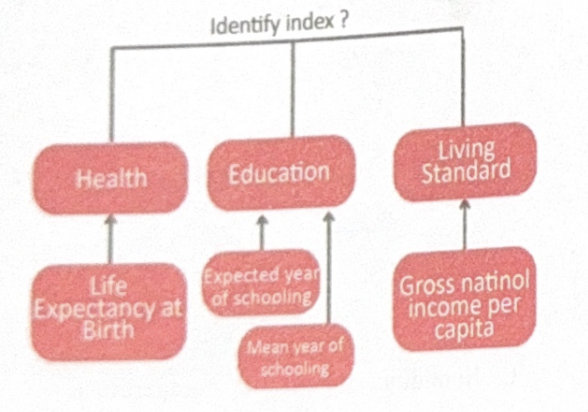
Explanation: **Explanation:** **Quality of Life (QoL)** is a multi-dimensional concept that represents a **subjective feeling of well-being** and satisfaction with life. According to the WHO, it is defined as an individual's perception of their position in life in the context of the culture and value systems in which they live, and in relation to their goals, expectations, standards, and concerns. Unlike objective measures, QoL focuses on how a person *feels* about their health and life circumstances. **Analysis of Options:** * **Option A (Standard of Living):** This is an **objective** measure based on economic factors such as income (GNP/GDP), housing, and sanitation. It reflects what a person *has*, rather than how they *feel*. * **Option B (Level of Living):** This refers to the actual conditions under which people live and the degree to which their needs are met (e.g., health, nutrition, education). It is an objective assessment used by international agencies to compare populations. * **Option D:** Incorrect, as QoL is distinct from purely economic or objective metrics. **High-Yield NEET-PG Pearls:** * **PQLI (Physical Quality of Life Index):** Includes three indicators: **Infant Mortality Rate (IMR), Life Expectancy at Age 1, and Literacy.** It ranges from 0 to 100. (Note: It does *not* include GNP/Income). * **HDI (Human Development Index):** Includes three dimensions: **Life expectancy at birth, Mean/Expected years of schooling, and GNI per capita.** * **Key Distinction:** Standard of Living = Objective/Economic; Quality of Life = Subjective/Perceptual.
Explanation: **Explanation:** **Why Culture is the Correct Answer:** In sociology and community medicine, **Culture** is defined as the "social heritage" of a group. It consists of learned behavior patterns, beliefs, values, and customs that are transmitted from one generation to the next through social learning rather than biological inheritance. It is a collective phenomenon that shapes an individual’s lifestyle and health-seeking behavior. **Analysis of Incorrect Options:** * **Custom (Option B):** These are specific established patterns of behavior or practices within a culture (e.g., dietary habits or marriage rituals). While customs are part of culture, they are specific components rather than the overarching term for socially acquired learned behavior. * **Acculturation (Option C):** This refers to the process of "culture contact" where an individual or group adapts to a new culture while often retaining their original patterns. It is a process of change, not the definition of the behavior itself. * **Euthenics (Option D):** This is the science of improving the internal well-being of humans by improving their external living conditions (environment). It is distinct from behavioral sciences. **High-Yield Pearls for NEET-PG:** * **Enculturation:** The process by which an individual learns the requirements of the culture by which they are surrounded (socialization). * **Cultural Lag:** A situation where non-material culture (values/beliefs) fails to keep pace with changes in material culture (technology). * **Socialization:** The process by which a child learns to conform to the norms of the group. The **family** is the primary unit of socialization. * **Acculturation types:** Can lead to integration, assimilation, separation, or marginalization.
Explanation: **Explanation:** **Acculturation** refers to the process of cultural and psychological change that results from the **continuous, first-hand contact** between two or more distinct cultural groups. While the original cultural patterns of either or both groups may be altered, the groups remain distinct. In public health, this concept is vital for understanding how migration and globalization influence health behaviors, dietary habits, and healthcare-seeking patterns. **Why the correct answer is right:** * **D. Cultural contact:** This is the fundamental requirement for acculturation. It involves the exchange of cultural features (language, customs, technology) when groups come into contact. Unlike "assimilation" (where one culture is absorbed into another), acculturation emphasizes the interaction and the resulting changes in both the minority and majority cultures. **Why the incorrect options are wrong:** * **A. Loss of culture:** This describes *Deculturation* or *Assimilation* (if the original culture is entirely replaced). Acculturation usually involves adding new traits rather than simply losing old ones. * **B. Isolation of two cultures:** This is the opposite of acculturation. Isolation prevents the exchange of ideas and behaviors necessary for the acculturation process. * **C. Fading away of culture:** This refers to *Cultural Atrophy* or extinction, which is a passive loss of heritage rather than an active exchange through contact. **High-Yield Pearls for NEET-PG:** * **Acculturation vs. Assimilation:** In acculturation, the group maintains its identity while adopting new traits. In **Assimilation**, the group loses its distinctive cultural identity and becomes part of the dominant culture ("Melting Pot" vs. "Salad Bowl"). * **Acculturative Stress:** This is the psychological impact of adaptation (e.g., anxiety or depression) often seen in migrant populations, which can lead to poor health outcomes. * **Enculturation:** This is the process by which an individual learns the requirements of their **own** native culture (socialization).
Explanation: ### Explanation This question pertains to the **Family Life Cycle**, a concept in sociology and community medicine that describes the developmental stages a family passes through over time. **1. Why the correct answer is right:** The family life cycle is generally divided into several stages: Formation, Extension, Completion, Contraction, and Dissolution. * **Contraction** begins when the first child leaves the home (Partial Contraction). * **Complete Contraction** occurs when the **last child leaves home**, leaving only the original couple (the "Empty Nest" stage). At this point, the family unit has shrunk back to its original size before children were born. **2. Why the incorrect options are wrong:** * **Option A (Birth of the last child):** This marks the end of the **Extension** phase (the period of childbearing) and the beginning of the **Completed Extension** phase. * **Option C (First spouse dies):** This marks the beginning of the **Dissolution** phase, where the original unit begins to cease to exist. * **Option D (Death of the last child):** This is not a standard milestone in the sociological family life cycle model. **3. High-Yield Facts for NEET-PG:** * **Formation:** Starts with marriage and ends with the birth of the first child. * **Extension:** Starts with the birth of the first child and ends with the birth of the last child. * **Completed Extension:** From the birth of the last child until the first child leaves home. * **Contraction:** Starts when the first child leaves home. * **Complete Contraction:** When the last child leaves home. * **Dissolution:** Starts with the death of one spouse and ends with the death of the surviving spouse.
Explanation: **Explanation:** **Social structure** refers to the organized pattern of social relationships and institutions that together constitute society. In the context of Community Medicine, it represents the "skeleton" of a society—the stable arrangement of institutions (like family, religion, and economy) and the **interrelationships between persons** (roles and statuses) that shape human behavior and health outcomes. **Analysis of Options:** * **A. Social structure (Correct):** It specifically defines the framework of social groups and the recurring patterns of interaction between individuals within those groups. * **B. Social psychology:** This is the scientific study of how an individual’s thoughts, feelings, and behaviors are influenced by the actual, imagined, or implied presence of others. It focuses on the individual within a social context rather than the overall framework of society. * **C. Herd structure:** This is not a standard sociological term. It is likely a distractor derived from "herd immunity," which refers to the resistance of a group to an attack by a disease to which a large proportion of the members are immune. * **D. Social science:** This is an umbrella term for the various disciplines (Sociology, Anthropology, Economics, etc.) that study human society and social relationships. **High-Yield Facts for NEET-PG:** * **Social Stratification:** The division of society into hierarchical layers (e.g., Social Class, Caste) which directly impacts health equity and access to care. * **Socialization:** The process by which an individual learns the norms, values, and behaviors of their society. * **Acculturation:** The process of cultural change that occurs when two different cultural groups come into continuous contact (often tested in the context of migration and lifestyle diseases).
Explanation: ### Explanation The **Spectral Concept of Health** (Health-Sickness Spectrum) views health as a dynamic state that fluctuates along a continuum. It emphasizes that health is not a static "all or none" phenomenon but a range of states between optimum vitality and death. **Why "Good Health" is the correct answer:** In the standardized classification of the health spectrum, the term **"Good Health" is not a recognized degree**. The spectrum specifically categorizes levels of wellness and illness into distinct stages. While "Good Health" is a common colloquial term, it lacks the specific technical definition required in the spectral hierarchy of Community Medicine. **Analysis of Incorrect Options (Degrees that DO exist):** * **Positive Health (Option C):** This is the highest point on the spectrum. It represents the "ideal" state where an individual achieves perfect physical, mental, and social well-being. * **Better Health (Option B):** This represents a high level of wellness, though not yet the "ideal" state of positive health. * **Freedom from Sickness (Option D):** This is the neutral point on the spectrum. It indicates the absence of clinical disease but lacks the proactive vitality associated with higher levels of health. **The Full Spectrum (High-Yield Order):** 1. **Positive Health** (Highest) 2. **Better Health** 3. **Freedom from Sickness** (Neutral) 4. **Unrecognized Sickness** (Subclinical) 5. **Mild Sickness** 6. **Severe Sickness** 7. **Death** (Lowest) **NEET-PG Clinical Pearls:** * **Dynamic Nature:** The spectrum implies that an individual's health status is constantly shifting due to internal and external environmental factors. * **Subclinical Zone:** "Unrecognized sickness" is a critical concept for screening; it represents the "Iceberg phenomenon" where the disease is present but not yet symptomatic. * **Goal of Public Health:** To shift the population from the lower end of the spectrum (sickness) toward the higher end (positive health).
Explanation: ### Explanation **Correct Answer: C. Crowd** In sociology and behavioral sciences, a **Crowd** is defined as a temporary collection of people who gather in a specific place for a common purpose or focus of interest (e.g., watching a comedy show, a sports match, or a street performance). Crowds are characterized by a lack of internal organization, no pre-existing structure, and a shared emotional experience. They are generally peaceful and dissolve once the event concludes. **Analysis of Incorrect Options:** * **A. Mob:** A mob is a crowd that has become emotionally charged and disorderly. It is characterized by a loss of individual self-control and a tendency toward violence or destructive behavior. While a crowd is passive or appreciative, a mob is aggressive. * **B. Band:** In social science, a band refers to the simplest form of human society, typically consisting of a small, integrated group of people (often extended family) who live and work together. It is a permanent social unit, unlike a temporary gathering. * **C. Herd:** This term is primarily used in animal behavior. When applied to humans (e.g., "herd mentality"), it refers to the tendency of individuals to follow the actions or beliefs of a larger group to avoid conflict or out of a lack of independent thought, rather than a physical gathering for entertainment. **High-Yield Facts for NEET-PG:** * **Social Group vs. Crowd:** A social group (like a family or peer group) has a sense of belonging and shared values, whereas a crowd is anonymous and temporary. * **Audience:** A specific subtype of a crowd that gathers for a performance or lecture. * **Public:** A group of people who share an interest in an idea or issue but are not necessarily in the same physical location (e.g., the "medical community"). * **Collective Behavior:** This is the spontaneous behavior of people in a crowd or mob, often driven by "social contagion" where emotions spread rapidly among members.
Social Determinants of Health
Practice Questions
Health Behavior Models
Practice Questions
Health Promotion
Practice Questions
Behavior Change Communication
Practice Questions
Cultural Aspects of Health
Practice Questions
Social Stigma and Health
Practice Questions
Gender and Health
Practice Questions
Social Support and Health
Practice Questions
Community Participation
Practice Questions
Qualitative Research Methods
Practice Questions
Health Psychology
Practice Questions
Social Marketing in Health
Practice Questions
Get full access to all questions, explanations, and performance tracking.
Start For Free