Acculturation may take place by what means?
Arrange the following stages of the family life cycle in chronological sequence?
Who proposed the concept of negative reinforcement?
Which of the following is an example of disability limitation?
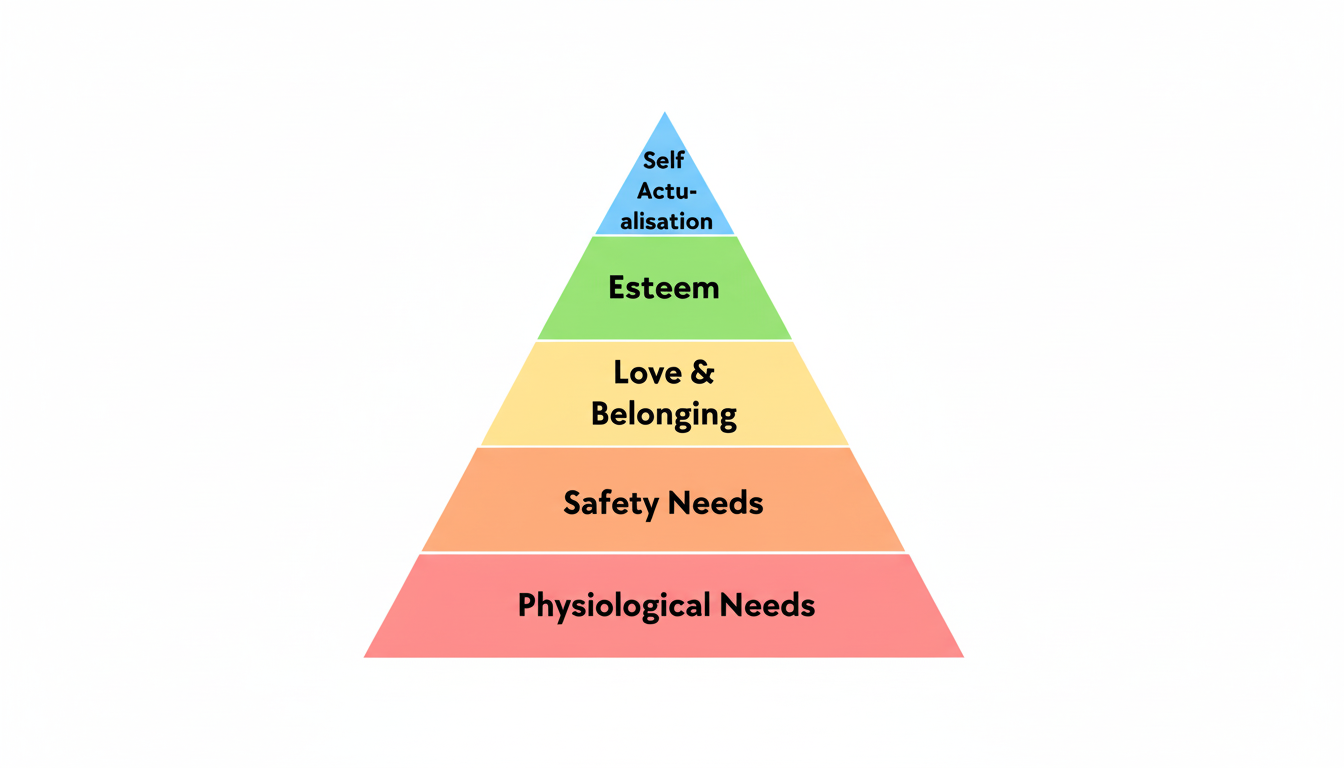
According to Maslow's hierarchy of needs, which level is at the top of the pyramid?
What is the name of the following pyramid?
Who first introduced the concept of Social Medicine?
Which of the following is NOT a scale used to measure socio-economic status?
Which of the following represents a non-deliberate cultural practice leading to an anti-mosquito effect?
All of the following are parts of cognitive behavior change techniques except?
Explanation: **Explanation:** **Acculturation** is a key concept in social medicine referring to the process of cultural and psychological change that occurs when two or more cultural groups come into continuous contact. Unlike *assimilation* (where a group loses its original identity), acculturation involves the adoption of new cultural traits while often retaining elements of the original culture. **Why "All of the above" is correct:** Acculturation is driven by various socio-economic forces that facilitate the exchange of ideas, behaviors, and values: * **Education (Option A):** Formal schooling introduces individuals to new languages, scientific temperaments, and modern social norms, acting as a primary driver of cultural shift. * **Trade and Commerce (Option C):** Economic interactions necessitate communication and the adoption of global business practices, leading to the exchange of lifestyle habits and consumer patterns. * **Industrialization (Option D):** The shift from agrarian to industrial societies leads to urbanization, migration, and exposure to diverse populations, forcing individuals to adapt to a "modern" way of life. **Incorrect Options:** Options A, C, and D are individual mechanisms of acculturation. Since all three are valid pathways through which cultural contact and change occur, selecting any single one would be incomplete. **High-Yield NEET-PG Pearls:** * **Acculturation vs. Assimilation:** In acculturation, cultural change is a two-way process (though often asymmetrical). In assimilation, the minority group is completely absorbed into the dominant culture. * **Health Impact:** Acculturation is a significant social determinant of health. It can lead to "acculturative stress" and often results in changes in dietary habits, physical activity, and substance use (e.g., the adoption of a Western diet in developing nations). * **Socialization:** The process by which an individual learns the norms of their *own* culture from childhood is called **Enculturation**.
Explanation: ### Explanation The **Family Life Cycle** is a demographic concept used in Community Medicine to describe the progressive stages through which a typical family passes from its inception to its end. Understanding these stages is crucial for identifying specific health needs and vulnerabilities at different periods. #### 1. Why Option D is Correct The chronological sequence follows the natural progression of family size and structure: 1. **Formation:** Starts with marriage (union of two individuals). 2. **Extension:** Begins with the birth of the first child. 3. **Complete Extension:** Ends with the birth of the last child (family is at its maximum size). 4. **Contraction:** Begins when the first child leaves home (e.g., for marriage or employment). 5. **Complete Contraction:** Ends when the last child leaves home (only the original couple remains). 6. **Dissolution:** Begins with the death of one spouse and ends with the death of the surviving spouse. #### 2. Why Other Options are Incorrect * **Options A & B:** These are incorrect because they place **Dissolution** before **Contraction** or **Complete Contraction**. Dissolution is always the final stage of a single-generation family cycle. * **Option C:** This is logically flawed as it suggests **Contraction** (children leaving) happens before **Extension** (children being born). #### 3. High-Yield Clinical Pearls for NEET-PG * **Concept Origin:** The family life cycle is a key component of **Family Sociology** and helps in planning "Family-Centered Care." * **Health Implications:** * *Extension Stage:* Focus on Maternal and Child Health (MCH) and Immunization. * *Contraction/Dissolution Stage:* Focus on Geriatric care, mental health (Empty Nest Syndrome), and non-communicable diseases (NCDs). * **Definition of Family:** In PSM, a family is defined as a group of people related by blood, marriage, or adoption, living under the same roof and eating from a common kitchen.
Explanation: **Explanation:** The correct answer is **B. F. Skinner**. Skinner was a pioneer of **Operant Conditioning**, a learning process where behavior is modified by its consequences. He introduced the concept of **Negative Reinforcement**, which involves the **removal of an unpleasant or aversive stimulus** following a behavior, which subsequently increases the likelihood of that behavior being repeated. For example, taking an analgesic to remove the sensation of pain reinforces the behavior of pill-taking. **Analysis of Options:** * **A. Jean Piaget:** Known for the **Theory of Cognitive Development**, which describes how children move through four specific stages of mental development (Sensorimotor, Preoperational, Concrete Operational, and Formal Operational). * **C. Brahmavihara:** This is a concept from Buddhist philosophy (The Four Immeasurables: Metta, Karuna, Mudita, and Upekkha) related to ethical and mental cultivation, not behavioral psychology. * **D. Mary Ainsworth:** Famous for the **"Strange Situation"** procedure and her work on **Attachment Theory**, categorizing infant-caregiver bonds (Secure, Anxious-Avoidant, and Anxious-Resistant). **High-Yield Clinical Pearls for NEET-PG:** * **Reinforcement vs. Punishment:** Reinforcement (Positive or Negative) always **increases** a behavior. Punishment always **decreases** a behavior. * **Positive Reinforcement:** Adding a reward (e.g., giving a child a chocolate for finishing homework). * **Negative Reinforcement:** Removing a negative stimulus (e.g., an alarm stops only when you buckle your seatbelt). * **Classical Conditioning:** Proposed by **Ivan Pavlov** (learning through association), whereas Operant Conditioning is by Skinner (learning through consequences).
Explanation: ### Explanation The concept of **Levels of Prevention** is a high-yield topic in Community Medicine. To understand why spectacles represent disability limitation, we must look at the **Natural History of Disease** and the **Tertiary Level of Prevention**. **Why the correct answer is right:** **Disability Limitation** is the first stage of **Tertiary Prevention**. It involves interventions applied during the late pathogenesis phase to halt the disease process, prevent further complications, or limit the transition from impairment to disability. * In refractive errors (the impairment), the inability to see clearly can lead to a functional disability (inability to read or work). * **Spectacles** act as an intervention that corrects the impairment, thereby limiting the progression to a functional disability. **Analysis of Incorrect Options:** * **A. DOTS (Directly Observed Treatment, Short-course):** This is an example of **Secondary Prevention**. The goal of DOTS is early diagnosis and prompt treatment to cure the patient and prevent the spread of Tuberculosis in the community. * **B. Quit smoking:** This is an example of **Primordial Prevention** (if preventing the habit) or **Primary Prevention** (Specific Protection/Health Promotion) to reduce the risk of developing diseases like lung cancer or COPD. * **C. BCG vaccine:** This is a classic example of **Primary Prevention (Specific Protection)**, as it is administered to healthy individuals to prevent the occurrence of disease. **High-Yield Pearls for NEET-PG:** 1. **Primordial Prevention:** Action taken to prevent the emergence of risk factors (e.g., discouraging children from starting smoking). 2. **Primary Prevention:** Action taken *before* the onset of disease (e.g., Immunization, use of helmets). 3. **Secondary Prevention:** Action which halts the progress of a disease at its incipient stage (e.g., Pap smear, Screening, DOTS). 4. **Tertiary Prevention:** Includes **Disability Limitation** (medical/surgical) and **Rehabilitation** (social/vocational/psychological).
Explanation: **Explanation:** Abraham Maslow’s Hierarchy of Needs is a motivational theory in psychology, often represented as a five-tier pyramid. The theory posits that individuals must satisfy lower-level basic needs before progressing to higher-level growth needs. **Why Self-actualization is correct:** **Self-actualization** sits at the very apex (top) of the pyramid. It represents the highest level of psychological development where an individual seeks to realize their full potential, seeking personal growth and "self-fulfillment." In a medical and social context, this level is reached only after all deficiency needs are met. **Analysis of Incorrect Options:** * **A. Physical needs (Physiological):** These are at the **base** (bottom) of the pyramid. They are the most basic requirements for human survival, such as food, water, sleep, and warmth. * **C. Safety:** This is the **second level**. Once physiological needs are met, security and safety (financial security, health, and protection from harm) become primary. * **D. Esteem recognition:** This is the **fourth level** (just below self-actualization). it involves the need for respect, self-esteem, status, and recognition. **NEET-PG High-Yield Pearls:** * **The Hierarchy (Bottom to Top):** Physiological → Safety → Love/Belonging → Esteem → Self-actualization. * **Deficiency Needs (D-needs):** The bottom four levels. Motivation arises from deprivation. * **Growth Needs (B-needs):** Self-actualization is the only "being" or growth need. * **Application in Health:** This model is used in Community Medicine to understand health-seeking behavior; for example, a patient struggling with physiological needs (hunger) is unlikely to prioritize preventive health measures (vaccinations or screenings).
Explanation: ***Maslow's hierarchy of needs*** - This pyramid represents **Maslow's hierarchy of needs**, featuring the classic **five-tier structure**: physiological, safety, love/belonging, esteem, and self-actualization needs. - The **triangular pyramid format** with needs arranged from basic (bottom) to complex (top) is the distinctive visual representation of Maslow's theory. *Engel's law* - Engel's law describes the relationship between **income and food expenditure**, stating that as income increases, the proportion spent on food decreases. - It is expressed as an **economic principle or graph**, not as a pyramid structure with hierarchical needs. *Murray's psychogenic needs* - Murray's theory identifies **20 psychogenic needs** (like achievement, affiliation, dominance) presented as a **comprehensive list**. - These needs are not organized in a **pyramid format** but rather as equal categories without hierarchical arrangement. *Manfred's fundamental needs model* - Manfred Max-Neef's model uses a **matrix-based approach** with nine fundamental needs and four existential categories. - It does not follow the **five-tier pyramid structure** characteristic of Maslow's hierarchy, instead using a grid format.
Explanation: **Explanation:** The concept of **Social Medicine** emphasizes that health and disease are not merely biological phenomena but are deeply rooted in social, economic, and political conditions. **1. Why Neumann and Virchow are correct:** The term "Social Medicine" was first coined by **Salomon Neumann** and **Rudolf Virchow** in **1848** in Germany. Virchow, often called the "Father of Modern Pathology," famously stated that *"Medicine is a social science, and politics is nothing else but medicine on a large scale."* They argued that the state has an obligation to protect the health of its citizens and that social conditions must be improved to prevent disease. **2. Analysis of Incorrect Options:** * **Alfred Grotjahn (Option B):** While Neumann and Virchow introduced the concept, Grotjahn is credited with reviving it in the early 20th century. He is considered the pioneer of **Social Hygiene** and was the first to describe the principles of social pathology. * **John Ryle (Option C):** He was the first Professor of Social Medicine at Oxford (1942). He is known for transitioning the focus from individual clinical medicine to the **social pathology of populations**. * **Rene Sand (Option D):** A Belgian pioneer who played a crucial role in the international development of social medicine and was a founder of the **International Hospital Federation**. **High-Yield NEET-PG Pearls:** * **Father of Public Health:** Cholera (John Snow) is often associated, but **Johann Peter Frank** is known as the "Father of Public Health" for his work on "Medical Police." * **Social Medicine vs. Socialized Medicine:** Social medicine is a philosophy of health; socialized medicine refers to a system of medical care delivery (state-funded). * **Virchow’s Triad:** While famous in pathology, remember his contribution to Community Medicine as the proponent of the "Medicine is a social science" doctrine.
Explanation: **Explanation:** In Community Medicine, socio-economic status (SES) scales are vital tools for epidemiological research and health planning. This question tests the ability to distinguish between scales measuring **socio-economic status** versus those measuring **intelligence or personality**. **Why Option B is the Correct Answer:** The **Udai Pareek scale** is indeed a socio-economic status scale, specifically designed for **rural populations** in India. However, in the context of this specific question (often sourced from standard textbooks like Park), the **Jalota Scale (Option D)** is the actual outlier. *Note: There appears to be a discrepancy in your provided key; traditionally, Jalota is a test for Intelligence, while Udai Pareek is a validated SES scale for rural India.* If we follow the standard medical curriculum: * **Modified Kuppuswamy Scale (A):** The most common scale for **urban** families. It uses three parameters: Education, Occupation, and Income of the Head of the Family. * **Udai Pareek Scale (B):** A widely used scale for **rural** areas. It uses 9 parameters (Occupation, Education, Land, House, Farm animals, Material possessions, Family size, Type, and Social participation). * **Kulshreshtha Scale (C):** An SES scale used in India that accounts for both urban and rural settings. * **Jalota Scale (D):** This is a **Group Test of General Mental Ability (Intelligence)**, not an SES scale. **High-Yield Clinical Pearls for NEET-PG:** 1. **Modified B.G. Prasad Scale:** Based solely on **per capita monthly income**. It is updated frequently based on the Consumer Price Index (CPI) and is applicable to both rural and urban areas. 2. **Standard of Living Index (SLI):** Used in NFHS (National Family Health Surveys). 3. **Kuppuswamy Update:** Always check the latest CPI values for income criteria before the exam, as these are updated annually. 4. **Parameters:** Remember that Kuppuswamy uses "Income of the Head," whereas B.G. Prasad uses "Per Capita Income."
Explanation: ### Explanation The core of this question lies in the distinction between **deliberate** and **non-deliberate** health behaviors. In Community Medicine, cultural practices are often categorized by their impact on health, even when the primary intent of the practice is unrelated to disease prevention. **1. Why "Use of alkaline detergent" is correct:** This is a classic example of a **non-deliberate (unintentional) beneficial practice**. In many cultures, washing clothes with alkaline detergents or soaps near water bodies or in household containers is a routine domestic chore. The primary intent is cleanliness. However, the runoff changes the pH of the water, making it unfavorable for mosquito breeding (especially *Anopheles* and *Aedes*). The anti-mosquito effect is a "side effect" of the cultural habit, not the primary goal. **2. Why the other options are incorrect:** * **Use of larvicidal agents (B):** This is a **deliberate** chemical control measure specifically intended to kill mosquito larvae. * **Use of bed nets (C):** This is a **deliberate** physical barrier method used specifically for personal protection against mosquito bites. * **Use of repellents (D):** This is a **deliberate** chemical application (like DEET) intended solely to ward off insects. **3. High-Yield Facts for NEET-PG:** * **Cultural Factors in Health:** Practices can be **beneficial** (e.g., breastfeeding), **harmful** (e.g., female genital mutilation), or **neutral** (e.g., wearing a "nazar" thread). * **Other Non-deliberate Beneficial Practices:** The use of copper vessels for water storage (oligodynamic effect) and the use of turmeric in cooking (anti-inflammatory/antiseptic properties). * **Mosquito Control:** Remember that *Aedes* prefers clean, stagnant water, while *Culex* prefers dirty, polluted water. Altering water chemistry (like adding alkaline soap) disrupts these specific breeding niches.
Explanation: ### Explanation The question refers to the **Transtheoretical Model (Stages of Change)**, a key psychological framework used in Community Medicine to understand and facilitate health behavior modifications (e.g., smoking cessation, weight loss). **1. Why "Consolidation" is the Correct Answer:** Consolidation is **not** a stage in the Transtheoretical Model. While the term is used in memory processing or business, it is not part of the standard five-stage cycle of behavioral change. The fifth stage of this model is actually **Maintenance**, where the individual works to prevent relapse and sustain the new behavior. **2. Analysis of Incorrect Options (Stages of Change):** * **Pre-contemplation (Option A):** The individual has no intention of changing behavior in the foreseeable future (usually defined as the next 6 months). They are often unaware that their behavior is problematic. * **Contemplation (Option D):** The individual recognizes that their behavior is problematic and starts to weigh the pros and cons of changing, but has not yet made a commitment to take action. * **Preparation:** (Missing from options but essential) The individual intends to take action in the immediate future and may take small steps toward change. * **Action (Option C):** The individual has made specific, overt modifications in their lifestyle within the past six months. **Clinical Pearls for NEET-PG:** * **Prochaska and DiClemente:** The researchers who developed this model. * **Relapse:** This is often considered a "sixth" stage or a circular path where the individual reverts to an earlier stage; it is a normal part of the process, not a failure. * **Motivational Interviewing:** The clinical technique used to move a patient from one stage to the next (e.g., using "decisional balance" during the Contemplation stage).
Social Determinants of Health
Practice Questions
Health Behavior Models
Practice Questions
Health Promotion
Practice Questions
Behavior Change Communication
Practice Questions
Cultural Aspects of Health
Practice Questions
Social Stigma and Health
Practice Questions
Gender and Health
Practice Questions
Social Support and Health
Practice Questions
Community Participation
Practice Questions
Qualitative Research Methods
Practice Questions
Health Psychology
Practice Questions
Social Marketing in Health
Practice Questions
Get full access to all questions, explanations, and performance tracking.
Start For Free