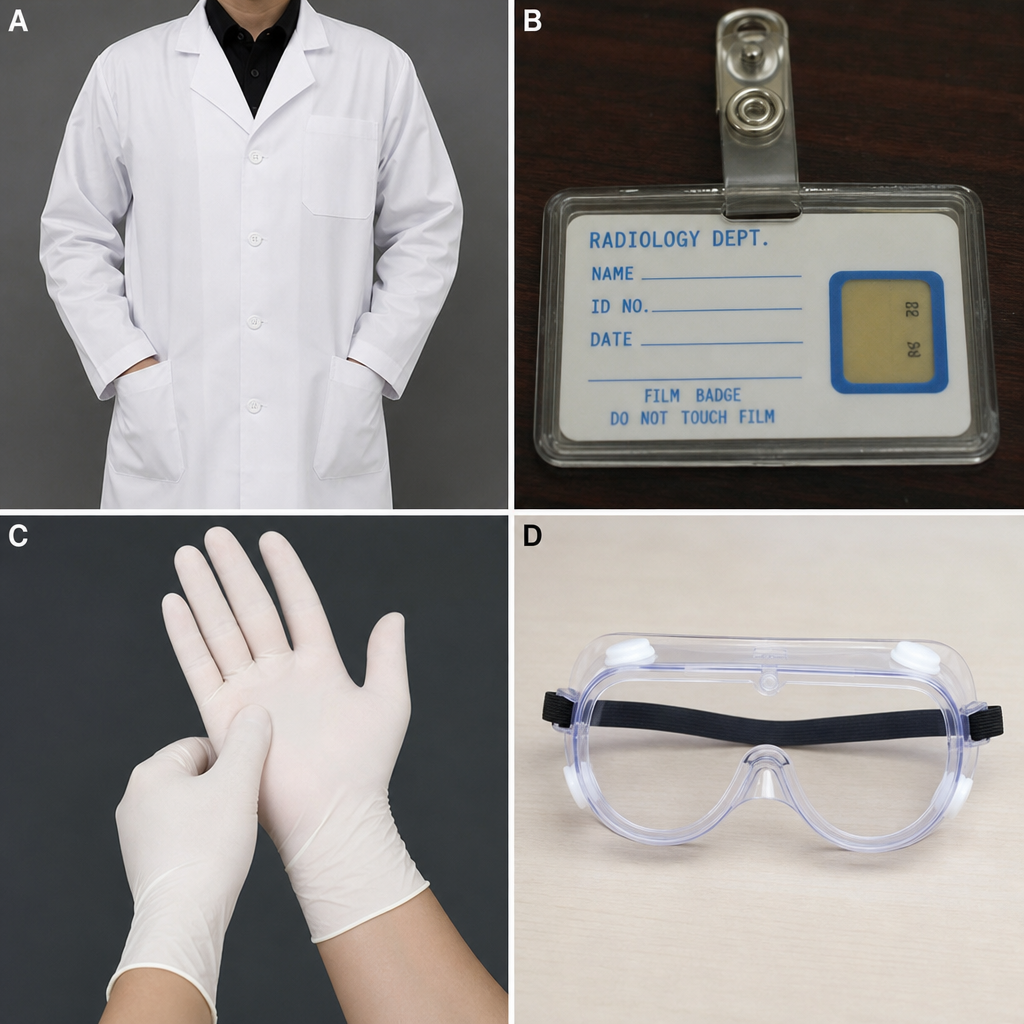
Pneumoconiosis seen in Textile industry workers is:
Which of the following statements is true regarding the Employees' State Insurance (ESI) Act?
Which of the following symptoms is NOT caused by inorganic lead poisoning?
The Employees' State Insurance (ESI) Act is not applicable to which of the following?
What is the dangerous particle size range that causes pneumoconiosis?
Chest tightness occurring on Mondays is characteristic of which occupational lung disease?
Baggasosis is caused by dust from which of the following?
Thermophilic actinomycosis is associated with which condition?
What is the maximum tolerable sound level for humans?
What is the most frequent cancer associated with asbestos exposure?
Explanation: **Explanation:** **Byssinosis** is the correct answer as it is a specific type of occupational lung disease caused by the inhalation of **cotton, flax, hemp, or jute dust**, commonly seen in textile industry workers. It is clinically characterized by "Monday Morning Fever" or "Monday Chest Tightness," where symptoms are most severe on the first day of the work week after a break and improve as the week progresses. **Analysis of Incorrect Options:** * **Silicosis (Option A):** Caused by inhalation of free silica (silicon dioxide). It is associated with industries like mining, stone cutting, sandblasting, and glass manufacturing. It is the most common and serious pneumoconiosis. * **Bagassosis (Option B):** Caused by inhalation of dust from **sugarcane waste** (bagasse). It is primarily seen in the paper and cardboard manufacturing industries. * **Anthracosis (Option C):** Also known as "Coal Worker's Pneumoconiosis," it is caused by the inhalation of coal dust over many years, typically seen in coal miners. **High-Yield Clinical Pearls for NEET-PG:** * **Schilling’s Classification:** Used to grade the severity of Byssinosis based on the timing of chest tightness. * **Farmer’s Lung:** Caused by grain dust or hay containing *Saccharopolyspora rectivirgula* (formerly *Micropolyspora faeni*). * **Egg-shell calcification:** A classic radiological finding in the hilar lymph nodes of patients with **Silicosis**. * **Snow-storm appearance:** Characteristic X-ray finding in **Silicosis**. * **Ground-glass appearance:** Characteristic X-ray finding in **Asbestosis**.
Explanation: The **Employees' State Insurance (ESI) Act, 1948** is a comprehensive social security legislation designed to provide protection to employees against sickness, maternity, disablement, and death due to employment injury. ### **Explanation of the Correct Option** **Option B is correct.** Under the ESI Act, the responsibility for providing medical care is shared between the State Government and the ESI Corporation (ESIC). The **State Government contributes 1/8th** of the total cost of medical care, while the **ESI Corporation bears the remaining 7/8th**. This financial arrangement ensures that the burden of healthcare infrastructure and services is distributed, with the central body (ESIC) taking the majority share. ### **Analysis of Incorrect Options** * **Option A:** The **Funeral Benefit** is a one-time payment made to the eldest surviving member or the person who performs the last rites. The current amount is up to **₹15,000**, not ₹50,000. * **Option C:** Employees earning a daily average wage up to **₹176** are exempted from contributing their share. Therefore, a person earning ₹70/day contributes **zero**. * **Option D:** As per the 2019 amendment, the contribution rates were reduced. Currently, the **Employee's contribution is 0.75%** and the **Employer's contribution is 3.25%** of the wages. ### **High-Yield Clinical Pearls for NEET-PG** * **Applicability:** Applies to non-seasonal factories employing 10 or more persons. * **Wage Ceiling:** The current wage limit for coverage is **₹21,000 per month** (₹25,000 for persons with disabilities). * **Sickness Benefit:** Provides 70% of wages for a maximum of 91 days in a year. * **Maternity Benefit:** Payable for **26 weeks**, extendable by one month on medical grounds. * **Adjudication:** Disputes are settled by **Employees' Insurance Courts**, not Civil Courts.
Explanation: **Explanation:** Inorganic lead poisoning (Plumbism) primarily affects the hematological, gastrointestinal, and peripheral nervous systems. **Why Insomnia is the correct answer:** Insomnia is a characteristic symptom of **organic lead poisoning** (e.g., tetraethyl lead found in leaded gasoline), which is highly lipid-soluble and primarily targets the Central Nervous System (CNS), causing "Encephalopathy" symptoms like insomnia, nightmares, and mania. In contrast, **inorganic lead** (found in paints, batteries, and smelting) primarily causes peripheral neuropathy (wrist drop) rather than central symptoms like insomnia in adults. **Analysis of Incorrect Options:** * **Anemia:** Lead inhibits enzymes **ALAD** and **Ferrochelatase**, preventing heme synthesis. It also causes hemolysis, leading to microcytic hypochromic anemia with characteristic **basophilic stippling**. * **Pallor:** This is often the earliest clinical sign of lead poisoning. It is caused by a combination of anemia and lead-induced angiospasm of the skin capillaries. * **Burtonian Line:** A high-yield sign consisting of a **blue-purple line on the gums** (gingival margin) due to the reaction of lead with sulfur-producing bacteria in the mouth, forming lead sulfide deposits. **NEET-PG High-Yield Pearls:** 1. **Screening Test:** Measurement of **Coproporphyrin in urine** (sensitive but not specific). 2. **Best Diagnostic Test:** Blood Lead Levels (BLL). 3. **Biological Marker of Exposure:** Amino-levulinic acid (ALA) in urine. 4. **Treatment of Choice:** Calcium disodium EDTA or Succimer (DMSA). 5. **Pica:** A common cause of lead poisoning in children (ingesting lead-based paint chips).
Explanation: **Explanation:** The **Employees' State Insurance (ESI) Act, 1948** is a social security legislation designed to provide medical care and cash benefits to employees in the organized sector. **Why Educational Institutions are the correct answer:** Under the current legal framework and the ESI Act's expansion, the Act applies to various commercial establishments. However, **Educational Institutions** (and Medical Institutions) are generally excluded from the mandatory purview of the ESI Act in many states, or they fall under different statutory bodies (like PF/Gratuity acts) rather than the ESI scheme. While some states have recently issued notifications to include them, for the purpose of standard NEET-PG questions based on the classic ESI framework, they remain the primary exclusion among the given options. **Analysis of Incorrect Options:** * **Power working factories (10+ people):** The ESI Act was amended to cover all factories using power and employing 10 or more persons. * **Non-power working factories (20+ people):** Factories not using power but employing 20 or more persons are covered under Section 2(12) of the Act. * **Newspaper establishments:** These are specifically included under the category of "establishments" (along with hotels, restaurants, cinemas, and road-motor transport undertakings) employing 20 or more persons (10 in many states). **High-Yield Clinical Pearls for NEET-PG:** * **Funding:** ESI is a self-financing scheme. Contribution rates (revised 2019): **Employer = 3.25%**; **Employee = 0.75%** of wages. * **Wage Ceiling:** Currently applicable to employees earning up to **₹21,000 per month** (₹25,000 for persons with disabilities). * **Benefits:** Includes Medical, Sickness, Maternity, Disablement, Dependents, and Funeral expenses. * **Medical Benefit:** This is the only benefit provided in kind; all others are cash benefits. There is **no upper ceiling** on expenditure for the treatment of an insured person.
Explanation: **Explanation:** The correct answer is **D. 1-5 μm**. **1. Why 1-5 μm is correct:** The respiratory system has a natural filtration mechanism based on particle size. For a particle to cause **pneumoconiosis**, it must reach the gas-exchange zone (alveoli). * Particles between **1 and 5 μm** are known as **"respirable dust."** They are small enough to bypass the upper airway defenses (cilia and mucus) but heavy enough to settle in the alveoli via gravitational sedimentation. * Once deposited, they are engulfed by alveolar macrophages, triggering the inflammatory and fibrotic processes characteristic of pneumoconiosis (e.g., Silicosis, Anthracosis). **2. Why other options are incorrect:** * **Options A, B, and C (10-150 μm):** These particles are too large to reach the deep lung. Particles **>10 μm** are generally trapped in the nasal passages and upper respiratory tract. Particles between **5 and 10 μm** usually settle in the proximal tracheobronchial tree and are cleared by the mucociliary escalator. They do not reach the alveoli to cause classic pneumoconiosis. * *Note:* Particles **<0.5 μm** are often exhaled or remain suspended in the air (Brownian motion) and do not settle effectively. **3. High-Yield Clinical Pearls for NEET-PG:** * **Definition:** Pneumoconiosis is a "dusty lung" disease resulting from the inhalation of inorganic dust. * **Silicosis:** The most common and serious pneumoconiosis; characterized by "Snowstorm appearance" on X-ray and "Eggshell calcification" of hilar lymph nodes. * **Asbestosis:** Caused by fibers (not just particles). Unlike most others, asbestos fibers are long and thin, often affecting the lower lobes and causing pleural plaques. * **Anthracosis:** Caused by coal dust; leads to Coal Workers' Pneumoconiosis (CWP). * **Rule of Thumb:** The smaller the particle (down to 1 μm), the deeper the penetration; the larger the particle, the earlier the clearance.
Explanation: **Explanation:** The correct answer is **Byssinosis**. This condition is an occupational lung disease caused by the inhalation of raw **cotton, flax, or hemp dust**. **Why Byssinosis is correct:** The hallmark clinical feature of Byssinosis is **"Monday Chest Tightness."** Symptoms of chest tightness, cough, and dyspnea typically appear on the first day of the work week (Monday) after a weekend break. This occurs because the dust triggers the release of histamine or other mediators, causing bronchoconstriction. Interestingly, symptoms often improve as the week progresses (tachyphylaxis), only to return after the next period of absence from work. **Why other options are incorrect:** * **Asbestosis:** Caused by asbestos fibers; characterized by progressive interstitial fibrosis and the presence of "Asbestos bodies." It does not follow a weekly periodic pattern. * **Coal Worker’s Pneumoconiosis (CWP):** Caused by chronic inhalation of coal dust. It presents as "Anthracosis" or Progressive Massive Fibrosis (PMF) and is characterized by permanent lung scarring rather than episodic bronchospasm. * **Silicosis:** Caused by silica dust (mining, sandblasting). It is characterized by "Snowstorm appearance" on X-ray and "Eggshell calcification" of hilar lymph nodes, with no specific weekly periodicity. **High-Yield Clinical Pearls for NEET-PG:** * **Schilling’s Classification:** Used to grade Byssinosis (Grade ½: occasional Monday tightness; Grade 1: every Monday; Grade 2: Monday and other days; Grade 3: permanent incapacity). * **Other Names:** Also known as "Brown Lung Disease" or "Monday Fever." * **Prevention:** Controlled by "Workroom Ventilation" and "Pre-employment/Periodic medical checkups." * **Bagassosis:** A similar condition caused by **sugar cane dust** (thermophilic actinomycetes), but it does not typically feature the specific "Monday" pattern.
Explanation: **Explanation:** **Bagassosis** is an occupational lung disease classified as **Hypersensitivity Pneumonitis** (Extrinsic Allergic Alveolitis). It is caused by the inhalation of dust from **Bagasse**, which is the fibrous waste material remaining after the extraction of juice from **Sugarcane**. The disease is specifically triggered by a thermophilic actinomycete called ***Thermoactinomyces sacchari***, which grows in stored, moldy bagasse. When inhaled, these spores cause an allergic reaction in the small airways and alveoli, leading to symptoms like breathlessness, cough, and fever. **Analysis of Incorrect Options:** * **Cotton (Option B):** Inhalation of cotton, flax, or hemp dust causes **Byssinosis** (also known as "Monday Fever" or "Grain Dust Fever"). * **Jute (Option A) & Textiles (Option D):** While workers in these industries are prone to respiratory issues, they are primarily associated with Byssinosis or non-specific chronic bronchitis rather than Bagassosis. **High-Yield Clinical Pearls for NEET-PG:** 1. **Prevention:** The most effective preventive measure is **moistening the bagasse** (spraying with 2% propionic acid) to prevent dust from becoming airborne. 2. **Radiology:** Characterized by "miliary mottling" in the lungs during the acute phase. 3. **Other Occupational Lung Diseases (Quick Recall):** * **Farmer’s Lung:** Moldy hay/grain (*Micropolyspora faeni*). * **Silicosis:** Silica dust (Sandblasting, Mining); shows "Egg-shell calcification" of hilar lymph nodes. * **Anthracosis:** Coal dust. * **Asbestosis:** Asbestos fibers; associated with Mesothelioma and "Bleshy" pleural plaques.
Explanation: **Explanation:** **Bagassosis** is a hypersensitivity pneumonitis caused by the inhalation of dust from moldy **sugar cane residue** (bagasse). The underlying medical concept involves an allergic reaction to **Thermophilic actinomycetes**, specifically *Thermoactinomyces sacchari*, which thrive in the heat generated by the decomposition of stored, moist bagasse. This condition is characterized by breathlessness, cough, and hemoptysis. **Analysis of Incorrect Options:** * **Byssinosis:** Also known as "Monday Fever," this is caused by the inhalation of **cotton, flax, or hemp dust**. It is not associated with fungi or actinomycetes but rather with the pharmacological action of endotoxins in the cotton bracts. * **Silicosis:** A type of fibrotic lung disease caused by the inhalation of **free silica (silicon dioxide)** particles, commonly seen in mining, sandblasting, and stone cutting. It is a mineral dust disease, not a biological/fungal one. * **Pneumoconiosis:** This is a broad "umbrella term" for all lung diseases caused by the inhalation of dust (organic or inorganic). While Bagassosis is a type of organic dust pneumonitis, the specific causative agent "Thermophilic actinomycetes" points directly to Bagassosis. **High-Yield Clinical Pearls for NEET-PG:** * **Farmer’s Lung:** Also caused by Thermophilic actinomycetes (*Micropolyspora faeni*), but the source is **moldy hay/grain**. * **Prevention of Bagassosis:** Keep bagasse moist (wetting) or treat it with **2% propionic acid** to prevent fungal growth. * **Byssinosis Grading:** Often tested via the **Schilling classification** based on the timing of symptoms (worse on the first day back to work).
Explanation: **Explanation:** The correct answer is **85 dB**. This value represents the threshold for occupational noise exposure beyond which there is a significant risk of permanent hearing loss. **1. Why 85 dB is correct:** In Occupational Health, 85 dB is defined as the **maximum permissible/tolerable sound level** for a standard 8-hour work shift. Exposure to noise levels above this threshold for prolonged periods leads to **Noise-Induced Hearing Loss (NIHL)**, characterized by damage to the hair cells in the cochlea. According to the "Equal Energy Rule," for every 3 dB increase in sound level, the safe exposure time is halved (e.g., 88 dB is tolerable for only 4 hours). **2. Analysis of Incorrect Options:** * **A. 100 dB:** This level is significantly higher than the safety threshold. Exposure at this level is only safe for approximately 15 minutes per day. * **C. 120 dB:** This is the **"Threshold of Discomfort."** Sounds at this level cause physical discomfort and can lead to immediate, acute acoustic trauma. (Note: 140 dB is the "Threshold of Pain"). * **D. 40 dB:** This represents a quiet environment, such as a library or a quiet residential area. While safe, it is not the "maximum" tolerable limit. **3. High-Yield Clinical Pearls for NEET-PG:** * **Audiometry Finding:** NIHL typically presents with a characteristic **"4000 Hz Notch"** (Boilermaker's notch) on an audiogram. * **Acceptable Noise Level:** For residential areas during the day, the limit is **55 dB**; for silence zones, it is **50 dB**. * **Unit of Intensity:** The **Decibel (dB)** is a logarithmic scale. A 10 dB increase represents a tenfold increase in sound intensity. * **Frequency:** The human ear is most sensitive to frequencies between **2000 and 5000 Hz**.
Explanation: ### Explanation **1. Why Lung Cancer is the Correct Answer:** While Asbestos is famously linked to mesothelioma, **Bronchogenic Carcinoma (Lung Cancer)** is statistically the **most common** malignancy associated with asbestos exposure. It occurs much more frequently than mesothelioma in exposed workers. The risk is significantly potentiated by smoking; a worker who is exposed to asbestos and also smokes has a **50 to 90-fold increased risk** of developing lung cancer compared to the general population (a synergistic effect). **2. Analysis of Incorrect Options:** * **B. Pleural Mesothelioma:** This is the most **specific** or characteristic cancer associated with asbestos, but it is not the most frequent. Unlike lung cancer, mesothelioma is not related to cigarette smoking. * **C. Peritoneal Mesothelioma:** This is a rare form of mesothelioma involving the abdominal lining. While linked to asbestos, it occurs much less frequently than both lung cancer and pleural mesothelioma. * **D. Adenocarcinoma of the esophagus:** While asbestos exposure is linked to various gastrointestinal and laryngeal cancers, these are far less common than primary respiratory malignancies. **3. High-Yield Clinical Pearls for NEET-PG:** * **Latency Period:** Lung cancer typically appears 15–20 years after exposure, whereas Mesothelioma has a longer latency period of 30–40 years. * **Asbestosis vs. Cancer:** Asbestosis is a restrictive lung disease (pneumoconiosis), while Bronchogenic Carcinoma is the leading cause of death in asbestos workers. * **Diagnostic Marker:** The presence of **Ferruginous bodies** (asbestos bodies) in sputum or lung biopsy indicates exposure. * **Rule of Thumb:** If the question asks for the "Most Common" cancer, choose **Lung Cancer**. If it asks for the "Most Specific" cancer, choose **Mesothelioma**.
Occupational Hazards: Classification
Practice Questions
Occupational Diseases
Practice Questions
Ergonomics
Practice Questions
Industrial Toxicology
Practice Questions
Occupational Cancers
Practice Questions
Work-Related Musculoskeletal Disorders
Practice Questions
Occupational Health Services
Practice Questions
Industrial Hygiene
Practice Questions
Assessment of Work Environment
Practice Questions
Personal Protective Equipment
Practice Questions
Occupational Health Legislation
Practice Questions
Workers' Compensation
Practice Questions
Get full access to all questions, explanations, and performance tracking.
Start For Free