A 5-year-old has the following anthropometry findings: Weight/age < -3.2 SD, Height/age < -2.5 SD, Weight/height < -1.7 SD. What is the most likely diagnosis?
Which of the following anthropometric indicators best reflects acute malnutrition (wasting) in children?
Which of the following is NOT a symptom of Kwashiorkor?
Which is the most specific clinical feature for diagnosis of Kwashiorkor?
Kwashiorkor is diagnosed in growth-retarded children along with:
Retardation of skeletal maturity can be caused by all of the following except:
Which of the following anthropometric indicators best reflects acute malnutrition (wasting) in children?
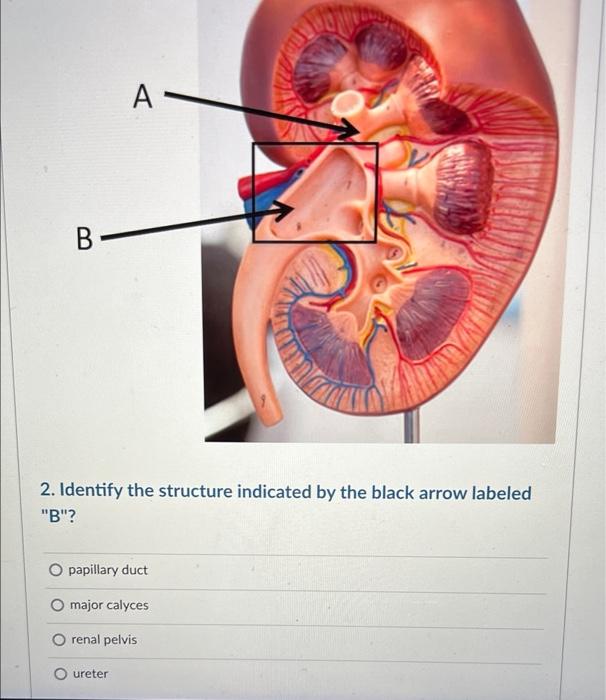
Name the structure marked with an arrow
A 2-year-old child presents with severe acute malnutrition with features of kwashiorkor. Which of the following clinical signs is most indicative of this condition?
A 2 years baby with 6.7 kg, Hb%- 6 g/dl total protein 3 g/dL, low albumin with distended stomach but no proteinuria. What will be the diagnosis?
Explanation: ***Severe Acute Malnutrition with stunting*** - This child has **both acute and chronic malnutrition** indicators that must be identified together for accurate diagnosis and management. - **Height-for-age < -2.5 SD** confirms **stunting (chronic malnutrition)**, indicating long-term nutritional deprivation. - **Weight-for-age < -3.2 SD** indicates **severe underweight**, which in the context of stunting reflects the combined impact of both chronic and acute malnutrition. - **Weight-for-height < -1.7 SD** shows mild wasting, indicating an acute component, though not meeting the < -3 SD threshold for SAM by W/H alone. - The combination of severe underweight, stunting, and wasting requires the comprehensive diagnosis of **SAM with stunting** for appropriate clinical management and nutritional rehabilitation. *Severe Acute Malnutrition (without mentioning stunting)* - While this child has severe underweight, diagnosing only SAM **ignores the documented stunting** (H/A < -2.5 SD). - SAM is typically defined by **Weight-for-height < -3 SD**, but this child's W/H is only -1.7 SD, not meeting the strict SAM criteria by this parameter alone. - In pediatric nutrition, when stunting coexists with severe underweight, both components must be identified as they have different management implications. *Moderate acute malnutrition* - Moderate acute malnutrition requires **Weight-for-height between -2 SD and -3 SD** or MUAC between 11.5-12.5 cm. - This child's W/A is **< -3.2 SD** (severe underweight, not moderate), making this diagnosis inadequate. - The presence of stunting and severe underweight indicates a more serious condition than moderate acute malnutrition. *Chronic malnutrition* - While **Height-for-age < -2.5 SD confirms chronic malnutrition (stunting)**, this diagnosis alone doesn't capture the full clinical picture. - The **Weight-for-age < -3.2 SD** indicates severe underweight with an acute wasting component, requiring urgent intervention beyond addressing chronic malnutrition alone. - A diagnosis of only "chronic malnutrition" would underestimate the severity and miss the acute component requiring immediate management.
Explanation: ***Weight for height*** - **Weight for height** directly measures a child's **current weight** relative to their **height**, providing a snapshot of their nutritional status. - A low weight for height indicates **wasting**, which is a sign of **acute malnutrition** resulting from recent or rapid weight loss. *Height for age* - **Height for age** measures the child's **height** relative to standard measurements for children of the same age. - A low height for age indicates **stunting**, which is a chronic nutritional problem reflecting **long-term malnutrition**. *BMI for age* - **BMI for age** can be used as an indicator for both **underweight** and **overweight** in children over 2 years of age. - While it reflects nutritional status, **weight-for-height** is generally considered a more direct and sensitive indicator for **acute malnutrition** (wasting) in young children. *Weight for age* - **Weight for age** measures the overall nutritional status by comparing a child's **weight** to that of a reference population of the same age. - It reflects both **acute and chronic malnutrition** (underweight) but cannot distinguish between wasting and stunting alone.
Explanation: ***Hypertension*** - **Hypertension** is generally **NOT a direct symptom** of Kwashiorkor; rather, children with Kwashiorkor often have **low blood pressure** due to overall cardiovascular system depression. - While chronic malnutrition can have various systemic effects, elevated blood pressure is not a characteristic clinical feature of this condition. - This is the correct answer as the question asks what is NOT a symptom. *Hair changes and depigmentation* - This is a **classic symptom** of Kwashiorkor, characterized by sparse, brittle hair that may be discolored (e.g., reddish or yellowish - "flag sign"). - These changes reflect the severe protein deficiency interfering with hair follicle function and melanin production. *Edema* - **Edema**, particularly in the lower extremities and face, is a **hallmark symptom** of Kwashiorkor, caused by severe protein deficiency leading to decreased oncotic pressure. - This results in fluid shifting from the intravascular space into the interstitial space. *Growth retardation* - **Growth retardation** (stunting) is a common and severe symptom of Kwashiorkor, reflecting the long-term impact of inadequate protein and energy intake on physical development. - Both height and weight are significantly below age-appropriate norms.
Explanation: ***Easy pluckable hair*** - **Easy pluckable hair** is a highly specific clinical sign of Kwashiorkor, indicating severe **protein deficiency** affecting hair follicle integrity. - This symptom, often accompanied by changes in hair color and texture (e.g., **flag sign**), highlights the chronic lack of essential amino acids. *Edema* - **Edema** is a prominent feature of Kwashiorkor, resulting from low **oncotic pressure** due to **hypoalbuminemia**. - While characteristic, edema can also be seen in other conditions like **cardiac**, **renal**, or **hepatic failure**, making it less specific than hair changes. *Fatty liver* - **Fatty liver** (hepatic steatosis) is commonly observed in Kwashiorkor due to impaired synthesis and export of **VLDL** from the liver. - Although characteristic, fatty liver can also occur in **obesity**, **alcoholism**, and **diabetes**, reducing its specificity as a standalone diagnostic feature. *Low serum albumin* - **Low serum albumin** is a hallmark biochemical finding in Kwashiorkor, reflecting severe **protein malnutrition** and reduced hepatic synthesis. - While critical for diagnosis, hypoalbuminemia can also be caused by severe **liver disease**, **nephrotic syndrome**, or **malabsorption**, limiting its specificity for Kwashiorkor alone.
Explanation: ***Edema and mental changes*** - **Kwashiorkor** is characterized primarily by **edema**, often pitting, due to **hypoalbuminemia** from severe protein deficiency. - **Mental changes**, including apathy, irritability, and decreased responsiveness, are also common features reflecting the brain's impaired function due to malnutrition. *Edema and hypopigmentation in skin* - While kwashiorkor does cause **edema**, **hypopigmentation of the skin** can occur but is not a universally defining or primary diagnostic feature as mental changes are. - Skin changes, often described as "flaky paint" dermatosis, are diverse and not limited to just hypopigmentation. *Hepatomegaly and mild anemia* - **Hepatomegaly** (enlarged liver) due to fatty infiltration is a common finding in kwashiorkor, and **anemia** is also frequently present. - However, these are secondary manifestations that do not define the core clinical picture as strongly as edema and mental status alterations. *Hypopigmentation and mild anemia* - While both **hypopigmentation** and **mild anemia** can be present in kwashiorkor, they are not the most prominent or diagnostic features. - The absence of **edema**, a hallmark symptom, makes this option less complete in describing the primary clinical presentation.
Explanation: ***Congenital adrenal hyperplasia*** - This condition involves **excessive androgen production**, which can lead to **accelerated skeletal maturity** and premature epiphyseal fusion, rather than retardation. - The increased androgen levels **hasten bone age advancement**, leading to a shorter adult height. *Protein energy malnutrition* - **Severe nutritional deficiencies**, especially of protein and energy, impair growth hormone and IGF-1 axis, leading to **delayed bone growth** and skeletal maturation. - This directly impacts the ability of bones to grow and ossify properly. *Hypothyroidism* - Lack of **thyroid hormones** significantly affects bone development, leading to **delayed epiphyseal ossification** and skeletal maturation. - Thyroid hormones are crucial for normal bone growth and development. *Chronic renal failure* - **Chronic kidney disease** can cause **renal osteodystrophy**, which includes growth retardation and delayed bone age due to disturbances in calcium, phosphate, and vitamin D metabolism. - It also affects growth hormone sensitivity and IGF-1 production.
Explanation: ***Weight for height*** - **Weight-for-height** is the most sensitive indicator of **acute malnutrition (wasting)** because it measures body mass relative to an individual's height, directly reflecting recent and rapid weight loss. - It helps identify children who are too thin for their height, indicating a current nutritional deficit and is crucial for immediate intervention. *Height for age* - **Height-for-age** is an indicator of **chronic malnutrition (stunting)**, reflecting long-term nutritional deficiencies and skeletal growth faltering. - It does not provide information about recent weight changes or acute nutritional status. *BMI for age* - **BMI-for-age** is a helpful indicator for overall nutritional status, including **overweight and obesity**, and can also reflect stunting or wasting. - However, for specifically identifying **acute wasting**, **weight-for-height** is more direct and sensitive as BMI for age can be influenced by both short-term (weight) and long-term (height) growth. *Weight for age* - **Weight-for-age** is an indicator of **underweight**, which can be a result of either acute (wasting) or chronic (stunting) malnutrition, or both. - It does not distinguish between these two forms of malnutrition, making it less specific for identifying **acute wasting** compared to weight-for-height.
Explanation: ***Secretory vesicles*** - The image shows an **electron micrograph of a cell**, likely an endocrine or exocrine cell, with numerous small, membrane-bound structures near the plasma membrane. - These structures, indicated by the arrow, are consistent with secretory vesicles, which store and transport substances (e.g., hormones, enzymes) to be released from the cell via **exocytosis**. *Mitochondria* - Mitochondria are **larger organelles** with characteristic inner folds called cristae, and are primarily involved in ATP production. - The structures pointed to by the arrow are much smaller and lack the internal structure typical of mitochondria. *Rough Endoplasmic reticulum* - The rough ER is a network of interconnected membranes studded with ribosomes, involved in protein synthesis and modification. - It usually appears as **flattened sacs or cisternae** and is distinct from the individual, small, spherical structures shown. *Golgi bodies* - The Golgi apparatus consists of **flattened membrane-bound sacs** called cisternae, arranged in stacks, and is involved in processing and packaging proteins and lipids. - While it processes substances destined for secretion, the structures indicated by the arrow are the final transport vesicles, not the Golgi stack itself.
Explanation: ***Edema*** - The presence of **bilateral pitting edema**, particularly in the feet and legs, is the **hallmark sign of kwashiorkor**, a form of severe acute malnutrition (SAM). - Edema is a **critical diagnostic criterion** for kwashiorkor and distinguishes it from marasmus (the other major form of SAM which presents with severe wasting without edema). - According to **WHO criteria**, bilateral pitting edema in the presence of malnutrition is diagnostic of kwashiorkor-type SAM. *Hyperpigmentation* - While skin changes including **hyperpigmentation** can occur in kwashiorkor, they are not the most specific or consistent diagnostic feature. - Hyperpigmentation may be seen in various nutritional deficiencies and dermatological conditions, making it less definitive than edema for diagnosis. *Alopecia* - **Hair changes** (sparse, thin, easily pluckable hair with flag sign) can occur in kwashiorkor as part of protein-energy malnutrition. - However, alopecia is not as specific or diagnostic as bilateral pitting edema, which is the defining clinical feature of kwashiorkor. *Scaly dermatitis* - **Dermatosis** with desquamating skin lesions (flaky paint dermatosis) can be seen in kwashiorkor, often in areas of friction. - While supportive of the diagnosis, scaly dermatitis is less specific than edema and can occur in various nutritional deficiencies including zinc deficiency and pellagra.
Explanation: ***Kwashiorkor*** - This condition is characterized by **severe protein deficiency**, leading to **edema** (often manifesting as a **distended abdomen**), low albumin, and **anemia**. - The combination of **low total protein and albumin** with a distended stomach and anemia in a 2-year-old is classic for Kwashiorkor. *Marasmus* - Marasmus is a severe form of **malnutrition** characterized by **extreme thinness** and **wasting of muscle and fat**, without significant edema. - While there is severe weight loss, the classic presenting feature of **edema** (distended stomach in this case due to ascites/edema) and **low albumin** is more indicative of Kwashiorkor. *Indian childhood cirrhosis* - This is a progressive **liver disease** typically seen in young children, characterized by **jaundice**, hepatosplenomegaly, and ascites in later stages. - While it can cause ascites (distended stomach), the primary features in this case point more strongly to **severe protein-calorie malnutrition** rather than a specific liver pathology origin. *None of the options* - The clinical presentation aligns very well with the diagnostic criteria for Kwashiorkor, making this option incorrect. - The presence of **edema (distended stomach), hypoalbuminemia, and anemia** are key features that definitively point to Kwashiorkor.
Get full access to all questions, explanations, and performance tracking.
Start For Free