An 8-month-old infant is being treated with vitamin A supplementation over 2 consecutive days for Vitamin A deficiency. What is the recommended dose to be given each day?
A community health survey reveals that 40% of children under 5 years are stunted, 15% are wasted, and 35% are underweight. Based on these findings, what is the most likely underlying problem in this community?
According to the WHO definition, what is the recommended indicator for assessing the nutritional status of a community?
According to the population strategy for prevention of coronary artery disease, what is the recommended dietary cholesterol intake limit per day?
Under the Weekly Iron and Folic Acid Supplementation (WIFS) scheme, what is the composition of IFA tablets given to children aged 10-19 years?
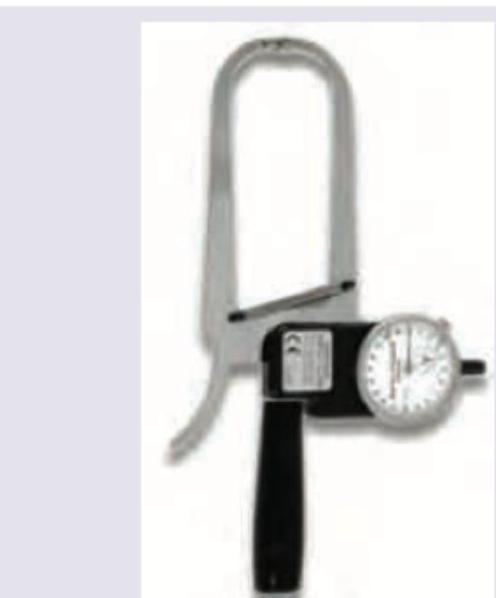
The following instrument is used for the measurement of: (Recent NEET Pattern 2016-17)
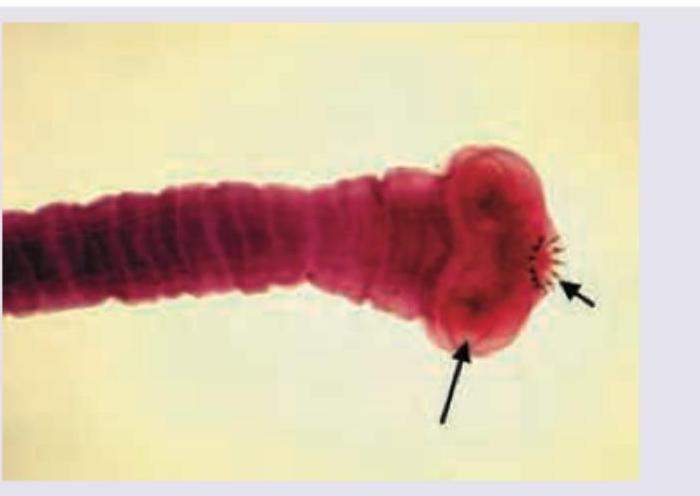
The following image shows presence of:
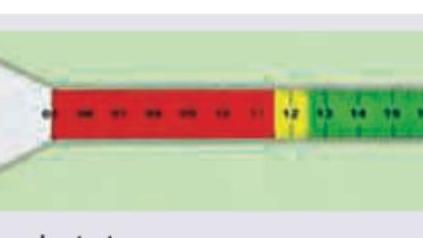
Which of the following can be monitored using this tape?
The Ministry of Health and Family Welfare has launched a programme to meet the challenge of high prevalence of anaemia amongst adolescent boys and girls. Consider the following statements in relation to the key interventions being undertaken : I. It entails supervised weekly administration of 100 mg elemental iron and 500 mu g folic acid. II. These weekly iron-folic acid supplements are administered by using a fixed day approach. III. It entails supervised administration of Albendazole 400 mg every three months for control of helminth infestation. Which of the statements given above is/are correct?
Consider the following statement : "The people should seek to preserve their traditional eating patterns and lifestyles associated with low levels of Coronary Heart Disease (CHD)." Which level of prevention is implied in this statement?
Explanation: ***100,000 IU*** - This is the correct **single dose per day** of Vitamin A for infants aged 6 to 11 months in the therapeutic regimen for Vitamin A deficiency or measles. - According to **WHO guidelines**, the therapeutic protocol for this age group involves administering **100,000 IU on Day 1** and **100,000 IU on Day 2** (and a third dose on Day 14 for severe deficiency). - This dose is both safe and effective for treating deficiency in this specific age group. *25,000 IU* - This dose is significantly lower than the recommended therapeutic level for infants 6-11 months and would be **ineffective** for treating Vitamin A deficiency. - Doses of this magnitude are not part of standardized WHO supplementation protocols for this age group. *50,000 IU* - This is the standard single dose recommended for **infants under 6 months** of age (1-5 months) for both prophylactic and therapeutic purposes. - For an 8-month-old infant (6–11 months age group), 50,000 IU is **insufficient** for effective therapeutic intervention. *200,000 IU* - This is the standard single dose for **children aged 12 months to 5 years** for routine supplementation. - Giving 200,000 IU as a single dose to an 8-month-old infant carries significant risk of **acute hypervitaminosis A toxicity** including symptoms such as bulging fontanelle, nausea, vomiting, and headache.
Explanation: ***Chronic malnutrition and poor sanitation*** - **Stunting (40%)**, the highest prevalence indicator, signifies **chronic malnutrition** caused by long-term inadequate intake of energy and protein, combined with recurrent infections (often due to poor sanitation). - High rates of all three indicators (stunting, wasting, and underweight) point to a pervasive, underlying problem of **socioeconomic deprivation** affecting overall food availability, maternal nutrition, and hygiene practices (WASH). *Recent epidemic of infectious disease* - While infectious disease epidemics can contribute to malnutrition (especially wasting), they would typically cause a **rapid increase in acute malnutrition** rather than the chronic, widespread stunting pattern seen here. - The 40% stunting prevalence suggests a **long-standing problem**, not a recent epidemic event. *Acute food insecurity* - Acute food insecurity (such as famine or drought) primarily results in a rapid increase in the prevalence of **wasting** (acute malnutrition), often reaching critical levels quickly. - While wasting is elevated (15%), the dominance of **stunting (40%)** suggests the primary issue is a long-standing, chronic problem rather than an acute crisis. *Micronutrient deficiency only* - Isolated micronutrient deficits cause specific deficiency syndromes (e.g., rickets from Vitamin D, scurvy from Vitamin C, xerophthalmia from Vitamin A) but are unlikely to cause such high and widespread prevalence of **stunting**, **wasting**, and **underweight** simultaneously. - These anthropometric indicators primarily reflect severe, generalized deficits in **calories** and **protein** intake, not isolated micronutrient problems.
Explanation: ***Weight-for-height Z-score for children under 5*** - The internationally recommended standard by the **WHO** for assessing the nutritional status of a community relies primarily on **anthropometric indices** derived from children under five years, specifically the prevalence of **stunting** (height-for-age), **wasting** (weight-for-height), and **underweight** (weight-for-age). - These indices, calculated as **Z-scores** relative to WHO Child Growth Standards, provide the most comprehensive quantitative indicators for monitoring nutritional health status in populations. - **Weight-for-height Z-score** is a key component of this anthropometric assessment system and represents the gold standard for community nutritional surveillance. *Body Mass Index (BMI) for adults* - BMI (Weight/Height²) is the primary indicator for assessing **overweight and obesity** in adults and adolescents. - However, it is **not the primary standard** for assessing overall community nutritional status, which focuses on growth failure and protein-energy malnutrition in children under 5. - BMI does not capture acute or chronic malnutrition patterns that are core to community nutritional assessment. *Mid-upper arm circumference (MUAC) for children* - MUAC is a highly effective public health tool used primarily for **screening** and identifying individual cases of **Severe Acute Malnutrition (SAM)** rapidly in the field. - While useful for targeting interventions, MUAC is considered a **screening tool** rather than a comprehensive assessment measure. - The robust assessment of overall community **prevalence** rates required for national surveillance favors the more detailed anthropometric Z-score indices. *Why not "All of the above"* - The question asks for **THE recommended indicator** (singular) according to WHO. - While all these measures have roles in nutritional assessment, **anthropometric Z-scores for children under 5** (represented by weight-for-height Z-score) are the **primary WHO-recommended standard** for community nutritional status assessment. - Other measures serve specific purposes but are not the core community assessment standard.
Explanation: ***100 mg / 1000 kcal*** - The **population strategy** or public health approach aims to shift the entire risk distribution in the population. - A recommended target for **dietary cholesterol** intake for the general population is often set at less than **100 mg per 1000 kcal** (or <300 mg/day absolute limit). *200 mg / 1000 kcal* - While lower than average intake, setting the limit at **200 mg / 1000 kcal** might not be stringent enough for achieving optimal **population-wide reduction** in **CAD risk**. - This limit may be closer to recommendations for individuals with pre-existing risk factors, but not the general population strategy goal. *400 mg / 1000 kcal* - An intake of **400 mg / 1000 kcal** is considered high and would exceed the recommended limits for **primary prevention** of **coronary artery disease (CAD)**. - High cholesterol intake is directly linked to increased **serum LDL levels** in many individuals. *500 mg / 1000 kcal* - **500 mg / 1000 kcal** significantly exceeds public health recommendations and is associated with a high risk of hypercholesterolemia and subsequent development of **atherosclerosis**. - The goal of the population strategy is to move the average consumption far below this level to benefit the whole community.
Explanation: ***Correct: 60 mg elemental iron + 500 µg folic acid*** - This tablet composition is specifically designated for the **Weekly Iron and Folic Acid Supplementation (WIFS)** program, targeting schoolchildren and adolescents (10-19 years). - The tablets provided for this age group are characteristically **blue** in color. - Given **once weekly** as prophylactic supplementation to prevent anemia in this vulnerable age group. *Incorrect: 60 mg elemental iron + 100 µg folic acid* - This composition (often a pink tablet) is typically used for the treatment of **anemia in children** aged 6 months to 5 years under the National Iron Plus Initiative (NIPI). - The dose of **folic acid (100 µg)** is insufficient for the adolescent WIFS scheme. *Incorrect: 100 mg elemental iron + 500 µg folic acid* - This is the standard dose of IFA recommended for routine supplementation in **pregnant women** starting from the second trimester. - The **red tablet** contains both higher elemental iron (**100 mg**) and appropriate folic acid (500 µg) for pregnancy needs. - The iron content is significantly higher than the **60 mg** prescribed for weekly adolescent prophylaxis. *Incorrect: 100 mg elemental iron + 100 µg folic acid* - This particular combination does not align with the standardized dosage protocols under the NIPI/WIFS guidelines. - Neither the iron content (**100 mg** - too high) nor the folic acid content (**100 µg** - too low) matches the adolescent WIFS requirements.
Explanation: ***Skin fold thickness*** - The instrument shown is a **skin fold caliper**, specifically designed to measure the thickness of subcutaneous fat at various body sites. - This measurement is used to estimate **body fat percentage** and assess nutritional status. *Head circumference* - Head circumference is measured using a **flexible measuring tape**, not a caliper, to assess head growth and detect conditions like microcephaly or hydrocephalus. - This instrument's design is unsuitable for measuring a large, curved circumference. *Chest circumference* - Chest circumference is also measured with a **flexible measuring tape** around the chest, typically at the nipple line, to assess growth and respiratory function. - The caliper's limited span makes it impractical for measuring the chest. *Mid arm circumference* - Mid-arm circumference is measured using a **flexible measuring tape** around the mid-upper arm to assess nutritional status, especially in children. - While a caliper could measure arm *thickness*, it doesn't provide the circumference directly, which is the standard measurement.
Explanation: ***Taenia solium*** - The image shows the **scolex** (head) of a parasitic worm with both **suckers** (bottom arrow) and a prominent **rostellum with hooks** (top arrow), which is characteristic of *Taenia solium* (pork tapeworm). - The presence of the armed rostellum differentiates *Taenia solium* from *Taenia saginata*, which only has suckers. *Necator americanus* - This is a **hookworm** and its mouthparts typically feature **cutting plates**, not suckers and hooks in the manner shown. - Hookworms are nematodes, distinct from the cestode morphology presented. *Ancylostoma duodenale* - Similar to *Necator americanus*, *Ancylostoma duodenale* is also a **hookworm** and possesses **teeth** in its buccal capsule, not the distinct suckers and rostellum with hooks seen in the image. - Again, this morphology is inconsistent with a cestode. *Enterobius vermicularis* - This is a **pinworm**, a small nematode, and its anterior end does not feature the prominent scolex with suckers and a hooked rostellum visible in the image. - *Enterobius vermicularis* has a more simple mouth, sometimes with cuticular alae.
Explanation: ***Nutritional status*** - The tape shown is a **mid-upper arm circumference (MUAC) tape**, a simple tool used to assess **nutritional status**, especially in children and pregnant women. - The colored segments (red, yellow, green) indicate different levels of **malnutrition**, with red typically signifying severe acute malnutrition. - MUAC is a **WHO-recommended screening tool** for detecting acute malnutrition in community and clinical settings. *Ascites* - **Ascites** is the accumulation of fluid in the abdomen, which is typically monitored through abdominal girth measurements or clinical examination, not a MUAC tape. - While a MUAC tape measures circumference, it is specifically designed for the mid-upper arm and its readings are calibrated for nutritional assessment, not abdominal fluid detection. *Skull growth* - **Skull growth** (head circumference) is measured using a standard measuring tape placed around the widest part of the head, primarily to monitor brain development in infants and young children. - The MUAC tape is not designed or suitable for measuring head circumference. *Height* - **Height** (or length in young children) is measured using a stadiometer or an infant measuring board, which are specialized tools for linear measurements. - The MUAC tape is a circumferential measurement tool and cannot be used to assess height.
Explanation: ***Correct: I and II*** - The **Weekly Iron and Folic Acid Supplementation (WIFS)** program targets adolescent boys and girls for anaemia control - **Statement I is correct:** The program involves supervised weekly administration of **100 mg elemental iron** and **500 μg folic acid** - **Statement II is correct:** Supplements are administered using a **fixed-day approach** (e.g., every Wednesday) to ensure adherence and systematic implementation - Both statements accurately reflect the core interventions of the WIFS program *Incorrect: I only* - This is incomplete as it excludes Statement II, which describes the crucial fixed-day implementation strategy - While the supplementation dosage is correct, the delivery mechanism (fixed day) is equally important *Incorrect: II only* - This misses the essential component of the actual supplementation (iron and folic acid dosage) - The fixed-day approach alone without the supplementation details is incomplete *Incorrect: I and III* - **Statement III is incorrect:** Albendazole 400 mg for deworming is administered **twice yearly (every 6 months)**, NOT every 3 months - While deworming is part of the comprehensive WIFS strategy, the frequency stated in Statement III is inaccurate - Only Statement I is correct in this combination
Explanation: ***Primordial*** - **Primordial prevention** aims to prevent the development of risk factors themselves by addressing underlying social, economic, and environmental determinants of health before they emerge in populations. - Preserving traditional eating patterns and lifestyles associated with **low CHD risk** prevents the adoption of modern unhealthy lifestyles, thereby stopping risk factors from developing in the first place. - This is the most upstream level of prevention, maintaining conditions of low risk in entire populations. *Primary* - **Primary prevention** targets individuals or populations who are healthy but may already have risk factors, aiming to prevent disease onset. - Examples include **vaccination**, promoting healthy diets to those at risk, and exercise programs. - Unlike primordial prevention, primary prevention assumes risk factors might already exist and works to prevent disease development. *High risk* - The **high risk approach** is a strategy within primary prevention that focuses interventions on individuals identified as having high probability of developing disease. - This statement addresses population-level strategies before risk factors are established, which is broader than targeting high-risk individuals. - This approach comes into play after risk factors have already emerged in some population segments. *Secondary* - **Secondary prevention** focuses on early detection and prompt treatment of existing disease to prevent progression and complications. - Involves **screening programs** (e.g., lipid profile screening, ECG) and early intervention once disease or risk factors have manifested. - This is clearly not applicable as the statement addresses prevention before any disease or risk factors develop.
Basic Nutritional Requirements
Practice Questions
Assessment of Nutritional Status
Practice Questions
Protein-Energy Malnutrition
Practice Questions
Micronutrient Deficiencies
Practice Questions
Nutritional Programs in India
Practice Questions
Dietary Guidelines
Practice Questions
Food Safety and Security
Practice Questions
Diet and Non-Communicable Diseases
Practice Questions
Nutrition in Pregnancy and Lactation
Practice Questions
Infant and Young Child Nutrition
Practice Questions
Nutrition in Emergencies
Practice Questions
Food Fortification and Supplementation
Practice Questions
Get full access to all questions, explanations, and performance tracking.
Start For Free