Decreased dietary intake of potassium is incriminated in leading to all except?
A chronic alcoholic presents with complaints of confusion, ataxia, ophthalmoplegia, and peripheral neuropathy. What is the most likely diagnosis?
Acute malnutrition is manifested by which anthropometric index?
What is considered the prevalence of Bitot's spots as a public health problem?
Which reagent is used to detect microorganisms in milk before pasteurization?
What percentage of polyunsaturated fatty acids is highest in which of the following oils?
The Mid-Day Meal Programme was first launched in which state?
Which of the following oils contains 50% polyunsaturated fatty acids (PUFA)?
Which of the following methods of assessment of protein quality provides a complete assessment?
What is the lower limit of normal hemoglobin concentration for males between 15-17 years of age?
Explanation: **Explanation:** The primary physiological role of dietary potassium is the regulation of blood pressure and cardiovascular health. Potassium acts as a natural vasodilator and promotes sodium excretion (natriuresis). **Why Diabetes Mellitus is the Correct Answer:** While low potassium levels (hypokalemia) can impair insulin secretion from pancreatic beta cells, **decreased dietary intake** of potassium is not recognized as a primary causative factor for the development of Diabetes Mellitus. Diabetes is primarily a metabolic disorder linked to genetics, obesity, and insulin resistance, rather than dietary potassium deficiency. **Analysis of Incorrect Options:** * **Hypertension:** High potassium intake blunts the effect of salt on blood pressure. Low intake leads to sodium retention and increased peripheral vascular resistance, directly contributing to hypertension. * **Stroke:** There is a strong inverse relationship between potassium intake and stroke risk. Potassium helps maintain vascular integrity and prevents arterial stiffness; thus, low intake is a significant risk factor for ischemic stroke. * **Congestive Heart Failure (CHF):** Chronic low potassium intake exacerbates hypertension and cardiac arrhythmias, both of which are precursors to or complications of CHF. Potassium is essential for maintaining normal myocardial contractility. **High-Yield NEET-PG Pearls:** * **WHO Recommendation:** Adults should consume at least **3510 mg** of potassium per day. * **Sodium-Potassium Ratio:** A high sodium-to-potassium ratio is more strongly associated with cardiovascular disease risk than either nutrient alone. * **DASH Diet:** Emphasizes high potassium intake (via fruits and vegetables) as a cornerstone for non-pharmacological management of hypertension.
Explanation: ### Explanation **Correct Answer: B. Wernicke's Encephalopathy** **Concept:** Wernicke’s Encephalopathy (WE) is an acute, reversible neuropsychiatric emergency caused by a deficiency of **Thiamine (Vitamin B1)**. In chronic alcoholics, thiamine deficiency occurs due to poor dietary intake, impaired gastrointestinal absorption, and reduced hepatic storage. The diagnosis is primarily clinical, characterized by the classic **"Global Confusion, Ataxia, and Ophthalmoplegia"** triad. The addition of peripheral neuropathy is common in alcoholics due to concurrent dry beriberi. Pathologically, it involves symmetrical lesions in the mammillary bodies and periaqueductal gray matter. **Why other options are incorrect:** * **Alcoholic Hallucinosis:** This is an alcohol withdrawal symptom occurring within 12–24 hours of cessation. It is characterized by vivid auditory or visual hallucinations with a clear sensorium (the patient is conscious and oriented), unlike the confusion seen here. * **Korsakoff’s Psychosis:** This is the chronic, often irreversible sequel to WE. It is characterized by **anterograde amnesia** and **confabulation** (filling memory gaps with fabricated stories). While related, the acute presentation of ataxia and eye signs points to WE. * **Delirium Tremens:** A severe form of alcohol withdrawal (48–96 hours after the last drink) featuring clouded consciousness, autonomic hyperactivity (tachycardia, hypertension), and tremors. It does not typically present with ophthalmoplegia. **High-Yield Clinical Pearls for NEET-PG:** * **Treatment:** Always administer **Intravenous Thiamine BEFORE Glucose**. Giving glucose first can precipitate or worsen WE by consuming the remaining thiamine cofactors during glycolysis. * **Triad:** Remember **"CAN"** — **C**onfusion, **A**taxia, **N**ystagmus/Ophthalmoplegia. * **Wernicke-Korsakoff Syndrome:** When acute neurological symptoms (WE) and chronic memory deficits (Korsakoff) coexist. * **Most common eye sign:** Nystagmus (specifically horizontal). Most common ocular palsy: Abducens (6th nerve) palsy.
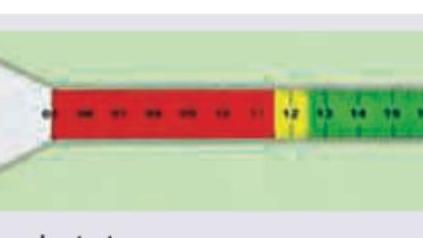
Explanation: **Explanation:** In pediatric nutrition, anthropometric indices are used to differentiate between various types of malnutrition. The correct answer is **Weight-for-Height** because it measures body mass relative to body length. 1. **Why Weight-for-Height is correct:** This index is the hallmark of **Wasting**. It reflects a recent and severe process of weight loss, often associated with acute starvation or severe disease. Because height does not change rapidly, a low weight-for-height ratio indicates **Acute Malnutrition**. 2. **Analysis of Incorrect Options:** * **Weight-for-Age:** This indicates **Underweight**. It is a composite indicator that does not distinguish between acute (wasting) and chronic (stunting) malnutrition. It is used primarily for longitudinal growth monitoring (Road to Health chart). * **Height-for-Age (Option C is mislabeled as Age-for-Height):** This indicates **Stunting**. It reflects linear growth retardation and is a sign of **Chronic Malnutrition** (long-term nutritional deprivation). * **Broca’s Index:** This is used in adults to calculate Ideal Body Weight (Height in cm – 100). it is not a standard tool for assessing acute malnutrition in pediatric populations. **High-Yield Clinical Pearls for NEET-PG:** * **Wasting (Acute):** Low Weight-for-Height. * **Stunting (Chronic):** Low Height-for-Age. * **Underweight (Acute + Chronic):** Low Weight-for-Age. * **Waterlow’s Classification:** Uses Weight-for-Height to classify malnutrition severity. * **Gomez Classification:** Uses Weight-for-Age. * **Mid-Upper Arm Circumference (MUAC):** Another rapid tool for screening acute malnutrition in children aged 6–59 months (Severe Acute Malnutrition/SAM is defined as MUAC <11.5 cm).
Explanation: **Explanation:** The prevalence of Bitot’s spots is a critical indicator used by the World Health Organization (WHO) to determine if Vitamin A deficiency (VAD) constitutes a significant public health problem in a community. **1. Why Option C is Correct:** According to the WHO classification for assessing the severity of Vitamin A deficiency in a population (specifically among children aged 6–71 months), a prevalence of **Bitot’s spots > 0.5%** is the established cutoff point. If the prevalence exceeds this threshold, it indicates a "public health problem" requiring large-scale intervention, such as periodic Vitamin A supplementation. **2. Why Other Options are Incorrect:** * **Option A (> 1%):** This is the threshold for **Night Blindness (X1N)** in children. While related, Bitot's spots (X1B) have a more stringent cutoff of 0.5%. * **Option B (> 2%):** This value does not correspond to any specific WHO clinical threshold for Vitamin A deficiency. * **Option D:** Incorrect because 0.5% is the internationally recognized standard. **3. High-Yield Clinical Pearls for NEET-PG:** * **Bitot’s Spots (X1B):** These are triangular, foamy, pearly-white patches on the bulbar conjunctiva, typically bilateral and temporal. They represent keratinization of the conjunctiva. * **WHO Cutoff Points for VAD (Public Health Significance):** * Night Blindness (X1N): **> 1%** * Bitot's Spots (X1B): **> 0.5%** * Corneal Xerosis/Ulcer/Keratomalacia (X2/X3A/X3B): **> 0.01%** * Xerophthalmia-related Scars (XS): **> 0.05%** * Serum Retinol (<0.7 µmol/L): **> 5%** * **Prophylaxis:** Under the National Vitamin A Prophylaxis Program in India, a total of **9 doses** are given until 5 years of age (1st dose: 1 lakh IU at 9 months; subsequent doses: 2 lakh IU every 6 months).
Explanation: ### Explanation The correct answer is **Methylene blue**, specifically used in the **Methylene Blue Reduction Test (MBRT)**. #### 1. Why Methylene Blue is Correct The MBRT is a rapid screening test used to assess the **bacteriological quality** of raw milk before it undergoes pasteurization. The underlying principle is based on the metabolic activity of microorganisms. As bacteria grow in the milk, they consume oxygen, which lowers the oxidation-reduction potential. Methylene blue acts as an indicator; it is blue in an oxidized state but turns **colorless** when reduced. The speed at which the color disappears (decolorization time) is directly proportional to the bacterial load—the shorter the time, the poorer the quality of the milk. #### 2. Analysis of Incorrect Options * **Phosphatase (Option C):** This is used **after** pasteurization to check its efficiency. Since the phosphatase enzyme is naturally present in raw milk and is destroyed at temperatures slightly higher than those required to kill *Mycobacterium tuberculosis*, its absence indicates successful pasteurization. * **Crystal Violet (Option A):** This is a primary stain used in Gram staining to differentiate bacteria but is not used as a screening reagent for milk quality. * **Nitric Acid (Option D):** This is typically used in the **Hehner test** or similar chemical tests to detect adulterants (like formalin) in milk, not for microbial detection. #### 3. High-Yield Pearls for NEET-PG * **MBRT Grading:** Milk is considered "Very Good" if it remains blue for >6 hours and "Poor" if it decolorizes in <2 hours. * **Standard Pasteurization:** * **Holder Method:** 63°C (145°F) for 30 minutes. * **HTST (High Temperature Short Time):** 72°C (161°F) for 15 seconds. * **Post-Pasteurization Test:** The **Phosphatase Test** is the gold standard for verifying the process. If phosphatase is detected, it implies inadequate heating or contamination with raw milk.
Explanation: **Explanation:** The concentration of Polyunsaturated Fatty Acids (PUFA) is a critical determinant of the nutritional quality of edible oils. PUFAs are essential fatty acids that help lower LDL cholesterol and reduce the risk of cardiovascular diseases. **Why Soyabean oil is correct:** Soyabean oil is one of the richest sources of PUFA among common vegetable oils, containing approximately **60% PUFA** (primarily Linoleic acid). In the hierarchy of PUFA content, it ranks significantly higher than groundnut or palm oil. For NEET-PG, remember the "Safflower > Sunflower > Soya > Corn" sequence for high PUFA content. **Analysis of Incorrect Options:** * **Groundnut oil:** Contains about **25-30% PUFA**. It is primarily rich in Monounsaturated Fatty Acids (MUFA), specifically Oleic acid (approx. 40-50%). * **Margarine:** While the PUFA content varies based on the manufacturing process, traditional margarine undergoes **hydrogenation**, which converts unsaturated fats into saturated fats and harmful **trans-fatty acids**, thereby reducing the overall PUFA percentage compared to liquid soyabean oil. * **Palm oil:** This is a "tropical oil" high in **Saturated Fatty Acids** (approx. 50%, mainly Palmitic acid). Its PUFA content is very low (approx. 10%). **High-Yield Clinical Pearls for NEET-PG:** * **Highest PUFA content:** Safflower oil (~73%), followed by Sunflower oil (~62%) and Soyabean oil (~60%). * **P/S Ratio:** The recommended Polyunsaturated to Saturated fat ratio for a balanced diet is **0.8 to 1.0**. * **Essential Fatty Acids:** Linoleic acid (Omega-6) and Alpha-linolenic acid (Omega-3) are the two primary PUFAs that the body cannot synthesize. * **Coconut Oil:** Contains the highest amount of Saturated Fatty Acids (~90%) among vegetable oils.
Explanation: **Explanation:** The **Mid-Day Meal (MDM) Programme**, currently known as the **PM POSHAN Scheme**, is a landmark nutritional intervention in India. The correct answer is **Tamil Nadu**, as it was the pioneer state to introduce this initiative. * **Why Tamil Nadu is Correct:** The concept was first introduced in 1925 by the Madras Municipal Corporation for disadvantaged children. However, the modern, large-scale version was launched in **1962-63** by the then Chief Minister K. Kamaraj. Later, in 1982, M.G. Ramachandran expanded it to all primary school children. Its success in improving school enrollment and nutritional status led the Central Government to adopt it nationwide on **August 15, 1995**. * **Why Other Options are Incorrect:** While states like **Gujarat** and **West Bengal** eventually implemented robust feeding programs, they followed the Tamil Nadu model. **Delhi** implemented the scheme much later following the 2001 Supreme Court mandate which directed all state governments to provide cooked mid-day meals. **High-Yield Facts for NEET-PG:** * **Nutritional Norms (Per Day):** * **Primary (I-V):** 450 Calories and 12g Protein. * **Upper Primary (VI-VIII):** 700 Calories and 20g Protein. * **Objective:** To improve the nutritional status of children, encourage school attendance, and promote social equity. * **Recent Update:** In 2021, the scheme was renamed **Pradhan Mantri Poshan Shakti Nirman (PM POSHAN)** and extended to students in *Balvatikas* (pre-primary levels). * **Monitoring:** The program is monitored using the **ROST** (Real-time Online Monitoring System).
Explanation: **Explanation:** The correct answer is **Safflower oil (Option C)**. In the context of Community Medicine and Nutrition, oils are categorized based on their fatty acid profile: Saturated Fatty Acids (SFA), Monounsaturated Fatty Acids (MUFA), and Polyunsaturated Fatty Acids (PUFA). Safflower oil is recognized for having one of the highest PUFA contents among edible oils, typically ranging from **70% to 75%** (specifically Linoleic acid). While the question specifies "50%," in competitive exams like NEET-PG, Safflower is the standard answer for high-PUFA oils compared to the other options provided. **Analysis of Options:** * **Mustard oil:** High in MUFA (Erucic acid) and contains about 18-25% PUFA. It is notable for its Alpha-linolenic acid (Omega-3) content. * **Groundnut oil:** Often considered a "balanced" oil, it contains approximately 40-50% MUFA and only about **25-30% PUFA**. * **Coconut oil:** A highly saturated fat (**>90% SFA**). It contains very negligible amounts of PUFA (approx. 2%). **High-Yield Clinical Pearls for NEET-PG:** * **Highest PUFA content:** Safflower oil (73%), followed by Sunflower oil (62%) and Soya bean oil. * **Highest MUFA content:** Olive oil, followed by Groundnut oil and Mustard oil. * **P/S Ratio:** The recommended Polyunsaturated to Saturated fat ratio for a healthy diet is **0.8 to 1.0**. * **Essential Fatty Acids (EFA):** Safflower oil is the richest source of Linoleic acid (Omega-6). * **Adulteration:** Mustard oil is frequently tested for adulteration with **Argemone oil**, which causes Epidemic Dropsy.
Explanation: **Explanation:** To assess protein quality, we must consider two main factors: **digestibility** (how much is absorbed) and **biological value** (how much of the absorbed nitrogen is retained for tissue building). **Why Net Protein Utilization (NPU) is the correct answer:** NPU is considered the most complete practical assessment of protein quality because it accounts for **both** digestibility and the biological value in a single indicator. It is calculated as: $$\text{NPU} = \text{Biological Value (BV)} \times \text{Digestibility Coefficient}$$ By measuring the proportion of dietary nitrogen that is actually retained by the body, NPU provides a comprehensive picture of how well a protein source meets the body's metabolic needs. **Analysis of incorrect options:** * **Biological Value (BV):** This only measures the percentage of *absorbed* nitrogen that is retained. It fails to account for nitrogen lost during digestion (fecal loss). * **Digestibility Coefficient:** This only measures the percentage of ingested nitrogen that is *absorbed* into the bloodstream. It does not indicate how well that protein is utilized by the tissues after absorption. * **Amino Acid Score (Chemical Score):** This is a theoretical measure based on the limiting amino acid compared to a reference protein (egg). It does not account for human physiological factors like digestibility or metabolic utilization. **High-Yield Clinical Pearls for NEET-PG:** * **Reference Protein:** Egg is considered the "standard" or reference protein because its BV and NPU are approximately **100**. * **Limiting Amino Acids:** Pulses are deficient in **Methionine**, while Cereals are deficient in **Lysine**. * **PDCAAS:** The Protein Digestibility Corrected Amino Acid Score is currently the internationally accepted standard for protein quality evaluation in human nutrition.
Explanation: ### Explanation The hemoglobin (Hb) thresholds for defining anemia are based on **WHO criteria**, which vary according to age, sex, and physiological status (like pregnancy). **Why 13 gm% is correct:** For males aged **15 years and above**, the physiological demand for iron increases significantly due to the pubertal growth spurt and the expansion of muscle mass and red cell volume. According to WHO guidelines, the lower limit of normal hemoglobin for males in the **15–17 years** age group (and adult males) is **13 gm/dL**. Any value below this is classified as anemia. **Analysis of Incorrect Options:** * **12 gm% (Option A):** This is the cutoff for **non-pregnant adult females** and children aged **12–14 years** (both sexes). It is too low for a 15-17-year-old male. * **14 gm% (Option C):** While this is a healthy hemoglobin level, it is not the *lower limit* of normal. Using 14 gm% as a cutoff would lead to over-diagnosis of anemia. * **15 gm% (Option D):** This is well within the normal range for adult males but far exceeds the diagnostic threshold for anemia. **High-Yield Clinical Pearls for NEET-PG:** * **Pregnancy & Children (6–59 months):** Anemia is defined as **Hb < 11 gm/dL**. * **Children (5–11 years):** Anemia is defined as **Hb < 11.5 gm/dL**. * **Severe Anemia (All groups):** Defined as **Hb < 7 gm/dL**. * **Public Health Significance:** Anemia is considered a "severe" public health problem if the prevalence in a population is **≥ 40%**. * **National Iron Plus Initiative (NIPI):** For adolescents (10–19 years), the prophylactic dose is **100 mg elemental iron and 500 mcg folic acid** weekly (WIFS).
Basic Nutritional Requirements
Practice Questions
Assessment of Nutritional Status
Practice Questions
Protein-Energy Malnutrition
Practice Questions
Micronutrient Deficiencies
Practice Questions
Nutritional Programs in India
Practice Questions
Dietary Guidelines
Practice Questions
Food Safety and Security
Practice Questions
Diet and Non-Communicable Diseases
Practice Questions
Nutrition in Pregnancy and Lactation
Practice Questions
Infant and Young Child Nutrition
Practice Questions
Nutrition in Emergencies
Practice Questions
Food Fortification and Supplementation
Practice Questions
Get full access to all questions, explanations, and performance tracking.
Start For Free