All of the following are true about folic acid except?
What is the extra energy needed per day during pregnancy?
What is the best indicator of protein quality?
The top line of the 'Road to Health' card typically represents which percentile for child growth?
Under the National Programme for Prevention of Nutritional Blindness, what is the mega dose of vitamin A given to a child in the age group of 6-11 months?
What is the recommended Vitamin A supplementation for a 10-month-old child diagnosed with xerophthalmia?
A 40-year-old man notes a family history of colon carcinoma. He asks his physician how best to reduce his risk of developing this type of cancer. Which of the following dietary practices should he be advised to follow each day?
What is the recommended dietary allowance of calcium for pregnant females?
Which of the following are milk-borne diseases?
What is the most sensitive and specific test for sanguinane?
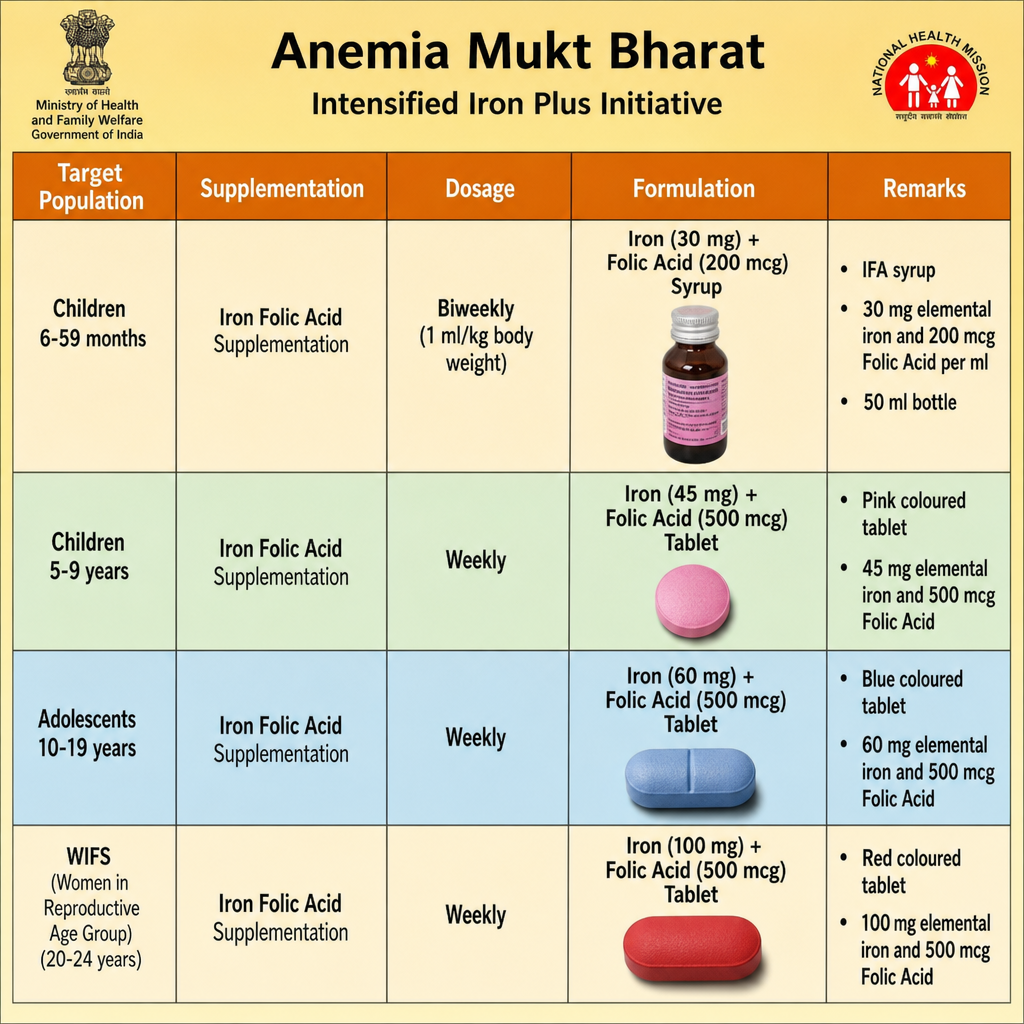
Explanation: **Explanation** The correct answer is **A**. While the USA has mandated the fortification of cereal grain products with folic acid since 1998, **India does not have a mandatory national policy for folic acid fortification of wheat.** In India, fortification is largely voluntary or restricted to specific state-level programs, and the primary strategy for preventing deficiency remains the Iron Plus Initiative (IFA supplementation). **Analysis of other options:** * **Option B:** Green leafy vegetables (e.g., spinach, amaranth) are primary dietary sources of folate. Other sources include liver, pulses, and citrus fruits. * **Option C:** Periconceptional folic acid supplementation (400 mcg/day) is a gold-standard intervention proven to reduce the incidence of **Neural Tube Defects (NTDs)** like spina bifida and anencephaly by over 70%. * **Option D:** The **Methyl-folate trap** occurs in Vitamin B12 deficiency. B12 is a cofactor for *methionine synthase*; without it, 5-methyl THF cannot be converted back to THF, "trapping" folate in its methylated form and leading to functional folate deficiency and megaloblastic anemia. **High-Yield Clinical Pearls for NEET-PG:** * **Prophylactic Dose:** 400 mcg (0.4 mg) daily for women of childbearing age, starting 1 month before conception through the first trimester. * **High-Risk Dose:** 4 mg (4000 mcg) daily if the woman has a previous history of a child with NTD. * **Storage:** Folate is heat-labile; up to 50-90% can be destroyed by prolonged cooking. * **Antagonists:** Drugs like Methotrexate, Phenytoin, and Trimethoprim interfere with folate metabolism.
Explanation: **Explanation:** The correct answer is **350 Kcal/day**. This value is based on the **ICMR-NIN (2020) guidelines**, which are the current gold standard for NEET-PG. **1. Why 350 Kcal is Correct:** During pregnancy, extra energy is required to support the growth of the fetus, placenta, and maternal tissues (uterus and breasts), as well as the increased basal metabolic rate (BMR). According to the latest ICMR recommendations, a pregnant woman requires an additional **+350 Kcal/day** over her pre-pregnancy sedentary/moderate/heavy work requirement. **2. Analysis of Incorrect Options:** * **150 Kcal:** This is significantly lower than the physiological requirement for any stage of pregnancy. * **200 Kcal:** This does not meet the metabolic demands of the second and third trimesters. * **300 Kcal:** This was the **previous ICMR recommendation** (prior to 2020). Many older textbooks still list this value, but for current exams, 350 Kcal is the updated standard. **3. High-Yield Clinical Pearls for NEET-PG:** * **Lactation:** The extra energy requirement is much higher during lactation: **+600 Kcal/day** (0–6 months) and **+520 Kcal/day** (6–12 months). * **Protein Requirement:** During pregnancy, the additional protein requirement is **+9.5 g/day** (2nd trimester) and **+22.0 g/day** (3rd trimester). * **Iron:** Requirement increases to **27 mg/day** during pregnancy. * **Calcium:** Requirement remains the same as a non-pregnant woman (**1000 mg/day**) according to 2020 guidelines, as absorption efficiency increases naturally.
Explanation: **Explanation:** Protein quality is determined by how effectively the body can utilize the nitrogen derived from a specific food source for growth and maintenance. **1. Why Net Protein Utilization (NPU) is the best indicator:** NPU is considered the superior indicator of protein quality because it accounts for **both** digestibility and the actual retention of nitrogen in the body. It is calculated as: * **NPU = Biological Value (BV) × Digestibility Coefficient.** Since it integrates how well a protein is broken down and how well its amino acid profile matches the body's needs, it provides a more complete "real-world" picture of protein utility than any single parameter. **2. Why the other options are incorrect:** * **Biological Value (BV):** This measures the proportion of *absorbed* nitrogen that is retained. While it assesses the quality of amino acids, it ignores how much of the protein was actually digested and absorbed in the first place. * **Digestibility Coefficient:** This only measures the percentage of ingested nitrogen that is absorbed into the bloodstream. It does not account for whether those amino acids are actually useful for protein synthesis. * **Amino Acid Score:** Also known as the Chemical Score, this is a theoretical measure comparing the limiting amino acid of a food to a reference protein (egg). It does not account for human physiological digestion or metabolism. **High-Yield Clinical Pearls for NEET-PG:** * **Reference Protein:** Egg is considered the "standard" or reference protein (BV = 100, NPU = 100). * **Limiting Amino Acids:** Pulses are deficient in **Methionine**, while Cereals are deficient in **Lysine**. * **PDCAAS:** The Protein Digestibility Corrected Amino Acid Score is currently the internationally accepted standard for evaluating protein quality in human nutrition. * **Net Dietary Protein Calories % (NDPCal%):** An NDPCal% of **>5%** is considered adequate for an adult, while **>8%** is required for infants and pregnant/lactating women.
Explanation: ### Explanation The **'Road to Health' card** (Growth Chart) is a vital tool in Community Medicine used for longitudinal monitoring of a child's physical growth and nutritional status. **1. Why the Correct Answer is Right:** In the standard growth chart recommended by the WHO and used in India’s Integrated Child Development Services (ICDS), the **top line** (usually colored green) represents the **50th percentile** (Median) of the reference population. This line signifies the "ideal" growth trajectory for a healthy child. The area between the top line and the lines below it constitutes the "Road to Health." If a child's growth curve follows this trajectory or runs parallel to it, it indicates adequate nutrition and health. **2. Analysis of Incorrect Options:** * **Option A (3rd percentile):** This is typically the **bottom-most line** (often marked in red). Any child falling below this line is classified as having "Severe Underweight" or Grade III/IV malnutrition. * **Option C (80th percentile):** This was historically used in the *Gomez classification* (80% of weight-for-age), but it is not a standard percentile line on the modern WHO Road to Health card. * **Option D (97th percentile):** While used in clinical pediatrics to identify overnutrition or obesity, it is not the standard "top line" used for primary health monitoring in the ICDS Road to Health cards. **3. High-Yield Clinical Pearls for NEET-PG:** * **Direction of the Curve:** The most important feature is the *direction* of the curve, not the position. A **rising curve** indicates growth; a **flat curve** (stagnation) is an early warning sign of protein-energy malnutrition (PEM); a **falling curve** is a danger sign. * **WHO Standards:** India adopted the **WHO Child Growth Standards (2006)** for the Road to Health cards, which are based on the growth of breastfed children. * **Reference:** The chart uses **Weight-for-Age** as the primary indicator because it is sensitive to acute changes.
Explanation: **Explanation:** The **National Vitamin A Prophylaxis Programme** (now part of the National Programme for Control of Blindness) aims to prevent Vitamin A deficiency (VAD) and its ocular manifestation, Xerophthalmia. Vitamin A is crucial for maintaining the integrity of epithelial tissues and the visual cycle. **Why 1 Lakh IU is correct:** According to the current operational guidelines in India, the first dose of Vitamin A is administered at **9 months of age** (along with the Measles/MR vaccine). For infants aged **6–11 months**, the recommended mega dose is **1 Lakh IU** (1 ml). This dosage is calculated to provide sufficient hepatic stores without causing toxicity in infants with lower body weight. **Analysis of Incorrect Options:** * **A. 50,000 IU:** This dose is insufficient for prophylaxis in this age group. However, it is used as a treatment dose for infants *under* 6 months of age in specific clinical scenarios (e.g., severe acute malnutrition). * **C. 1.5 Lakh IU:** This is not a standard dose used in the national schedule. * **D. 2 Lakh IU:** This is the standard dose for children aged **12–59 months**. Giving this high a dose to an infant under 12 months increases the risk of acute toxicity (bulging fontanelle, vomiting). **High-Yield Clinical Pearls for NEET-PG:** * **Total Doses:** A child receives a total of **9 doses** from 9 months to 5 years of age. * **Total Amount:** The cumulative dose over 5 years is **17 Lakh IU** (1 Lakh + 8 doses of 2 Lakh). * **Interval:** The minimum interval between two doses must be **6 months**. * **Target Group:** The program primarily targets children aged 6 months to 5 years. * **Clinical Sign:** The earliest clinical sign of Vitamin A deficiency is **Conjunctival Xerosis**, while the earliest symptom is **Night Blindness (Nyctalopia)**.
Explanation: ### Explanation **1. Why Option C is Correct (The Medical Concept):** The management of clinical xerophthalmia (active eye signs) differs significantly from routine prophylactic supplementation. According to WHO and National Guidelines, the treatment schedule for xerophthalmia involves **three doses** of Vitamin A to replenish liver stores and ensure rapid ocular healing: * **Dose 1:** Immediately on diagnosis. * **Dose 2:** The following day (Day 2). * **Dose 3:** Four weeks later (Day 28). The dosage is age-dependent: * **Infants <6 months:** 50,000 IU per dose. * **Infants 6–12 months:** 1,00,000 IU per dose. * **Children >12 months:** 2,00,000 IU per dose. Since the child is **10 months old**, the correct regimen is three doses of 1 lakh (100,000) units. **2. Why Other Options are Incorrect:** * **Option A:** One dose is insufficient to treat active xerophthalmia; it only provides temporary improvement without long-term recovery of liver stores. * **Option B:** Two doses are used in some protocols for severe malnutrition, but the standard treatment for xerophthalmia requires the third "booster" dose at 4 weeks to prevent recurrence. * **Option D:** 2 lakh units is the therapeutic dose for children **above 1 year** of age. Giving this to a 10-month-old exceeds the recommended safety limit for that age group. **3. NEET-PG High-Yield Pearls:** * **Prophylaxis Schedule:** Under the National Vitamin A Prophylaxis Program, the 1st dose (9 months) is 1 lakh IU; subsequent doses (every 6 months until age 5) are 2 lakh IU. Total = 9 doses (17 lakh IU). * **First Sign vs. Symptom:** The earliest *symptom* of Vitamin A deficiency is Night Blindness (X1A), while the earliest *sign* is Conjunctival Xerosis (X1B). * **Bitot’s Spots (X2):** These are triangular, foamy patches on the bulbar conjunctiva; they represent permanent sequelae in older children but active deficiency in younger ones. * **Measles Link:** All children diagnosed with Measles should receive **two doses** of Vitamin A (Day 1 and Day 2) to prevent complications.
Explanation: **Explanation:** The correct answer is **C. Eat more vegetables.** **Medical Concept:** Colorectal carcinoma (CRC) is strongly linked to dietary habits. A high intake of **dietary fiber**, primarily found in vegetables, fruits, and whole grains, is protective against colon cancer. Fiber reduces transit time in the colon, thereby decreasing the duration of contact between the intestinal mucosa and potential carcinogens. Additionally, fiber undergoes fermentation by gut bacteria to produce short-chain fatty acids (like butyrate), which have anti-inflammatory and anti-neoplastic properties. Vegetables also contain antioxidants and phytochemicals that inhibit carcinogenesis. **Analysis of Incorrect Options:** * **A. Consume more beef:** High consumption of red meat (beef, lamb) and processed meats is a well-established risk factor for CRC. These meats contain heme iron and are often cooked at high temperatures, leading to the formation of heterocyclic amines and polycyclic aromatic hydrocarbons, which are mutagenic. * **B. Drink a glass of red wine:** While some studies suggest moderate alcohol may have cardiovascular benefits, alcohol consumption is generally associated with an *increased* risk of several cancers, including colorectal cancer. * **D. Have a bowl of ice cream:** Diets high in saturated fats and refined sugars (typical of ice cream) are associated with obesity and metabolic syndrome, both of which are independent risk factors for the development of colorectal malignancies. **High-Yield NEET-PG Pearls:** * **Protective Factors for CRC:** High fiber diet, Calcium, Vitamin D, Selenium, and regular physical activity. * **Risk Factors for CRC:** Red/processed meat, obesity, smoking, alcohol, and low physical activity. * **Screening:** In individuals with a family history, screening (colonoscopy) usually starts earlier than the standard age of 45-50. * **Aspirin/NSAIDs:** Long-term use is known to reduce the risk of adenomatous polyps and CRC (via COX-2 inhibition).
Explanation: **Explanation:** The correct answer is **1000 mg/day**. This value is based on the **ICMR-NIN (2020) guidelines**, which are the current gold standard for NEET-PG. **1. Why 1000 mg is correct:** During pregnancy, there is a significant transfer of calcium to the fetus (approximately 30g), primarily during the third trimester for skeletal mineralization. According to the **ICMR-NIN 2020 RDA**, the calcium requirement for a pregnant woman is **1000 mg/day**. Notably, this is the **same** as the requirement for a non-pregnant, non-lactating adult woman. The body compensates for the increased fetal demand by increasing intestinal calcium absorption efficiency, rather than requiring a massive increase in dietary intake. **2. Why other options are incorrect:** * **1200 mg:** This was the RDA in the older **ICMR 2010** guidelines. Many older textbooks still carry this value, but for current exams, the 2020 update (1000 mg) is preferred. * **1300 mg:** This is the RDA recommended by some international bodies (like the IOM) specifically for **pregnant adolescents** (14–18 years) to support both fetal growth and the mother’s own continuing bone maturation. * **1500 mg:** This value is not a standard RDA but is sometimes used in clinical practice for women at high risk of gestational hypertension or pre-eclampsia. **High-Yield Clinical Pearls for NEET-PG:** * **Lactation RDA:** The calcium requirement remains **1000 mg/day** (ICMR 2020). * **Post-menopausal women:** The RDA increases to **1200 mg/day** to prevent osteoporosis. * **Iron & Calcium:** Never advise taking Iron and Calcium tablets together; calcium inhibits the absorption of non-heme iron. * **WHO Recommendation:** In areas with low dietary calcium intake, WHO suggests 1.5g–2.0g daily to reduce the risk of **pre-eclampsia**.
Explanation: **Explanation:** Milk is an excellent culture medium for various microorganisms due to its high nutrient content and neutral pH. Milk-borne diseases are categorized based on the source of infection: those transmitted from the animal (e.g., Bovine TB, Brucellosis) and those transmitted via human handling or environmental contamination. **Why "All of the above" is correct:** Milk can act as a vehicle for a wide range of bacterial pathogens if it is not pasteurized or handled hygienically: * **Salmonellosis (A):** Non-typhoidal *Salmonella* species can contaminate milk through fecal matter from the cow or contaminated water used in dairies. * **E. coli infection (B):** *Escherichia coli* (including the dangerous O157:H7 strain) is a common contaminant from bovine feces during the milking process. * **Streptococcal infection (C):** *Streptococcus pyogenes* can enter milk from an infected udder (mastitis) or from the respiratory tract of human handlers (causing outbreaks of septic sore throat or scarlet fever). **Clinical Pearls for NEET-PG:** * **Pasteurization:** The standard method to make milk safe. It kills all pathogenic bacteria, including the heat-resistant *Coxiella burnetii* (Q fever), but does **not** kill bacterial spores or thermoduric bacteria. * **Phosphatase Test:** This is the gold standard biochemical test to check the efficiency of pasteurization. If the enzyme phosphatase is destroyed, pasteurization is considered successful. * **Methylene Blue Reduction Test:** Used to assess the **bacteriological quality** (cleanliness) of raw milk. A rapid decolorization indicates a high bacterial load. * **Other Milk-borne diseases to remember:** Brucellosis (undulant fever), Bovine Tuberculosis, Q fever, and Listeriosis.
Explanation: **Explanation:** The question refers to the detection of **Sanguinarine**, a toxic alkaloid found in **Argemone mexicana** (Prickly Poppy) seeds. Contamination of mustard oil with Argemone oil leads to **Epidemic Dropsy**. **1. Why Nucleic Acid is the Correct Answer:** While traditional chemical tests are commonly used for screening, **Nucleic Acid-based testing (specifically DNA-based methods like PCR)** is considered the most sensitive and specific. It can detect minute traces of Argemone DNA even in highly refined or adulterated oils where chemical concentrations might fall below the detection limit of traditional reagents. It eliminates the "false positives" sometimes seen with chemical tests due to interfering substances in mustard oil. **2. Analysis of Incorrect Options:** * **A. Fe Cl3 (Ferric Chloride Test):** This is the standard **screening test** for Argemone oil. When added to contaminated oil with concentrated HCl, it produces needle-shaped crystals (ferric sanguinarinate). It is sensitive but less specific than molecular methods. * **B. NO (Nitric Acid Test):** This is another common chemical test. Adding concentrated nitric acid to the oil produces a **brownish-red/orange-red** color. It is a quick field test but lacks the high specificity of nucleic acid testing. * **C. HCl (Hydrochloric Acid):** HCl is used as a reagent *within* the Ferric Chloride test to acidify the solution; it is not a standalone diagnostic test for Sanguinarine. **3. High-Yield Clinical Pearls for NEET-PG:** * **Epidemic Dropsy:** Caused by Sanguinarine which interferes with oxidative phosphorylation, leading to increased capillary permeability. * **Clinical Triad:** Bilateral pitting edema (lower limbs), Cardiac failure, and **Glaucoma** (most specific complication). * **Key Feature:** Cutaneous telangiectasia (sarcoids) on the skin. * **Confirmatory Test:** Paper Chromatography is often cited as the gold standard in older texts, but Nucleic Acid/PCR is the modern benchmark for sensitivity and specificity.
Basic Nutritional Requirements
Practice Questions
Assessment of Nutritional Status
Practice Questions
Protein-Energy Malnutrition
Practice Questions
Micronutrient Deficiencies
Practice Questions
Nutritional Programs in India
Practice Questions
Dietary Guidelines
Practice Questions
Food Safety and Security
Practice Questions
Diet and Non-Communicable Diseases
Practice Questions
Nutrition in Pregnancy and Lactation
Practice Questions
Infant and Young Child Nutrition
Practice Questions
Nutrition in Emergencies
Practice Questions
Food Fortification and Supplementation
Practice Questions
Get full access to all questions, explanations, and performance tracking.
Start For Free