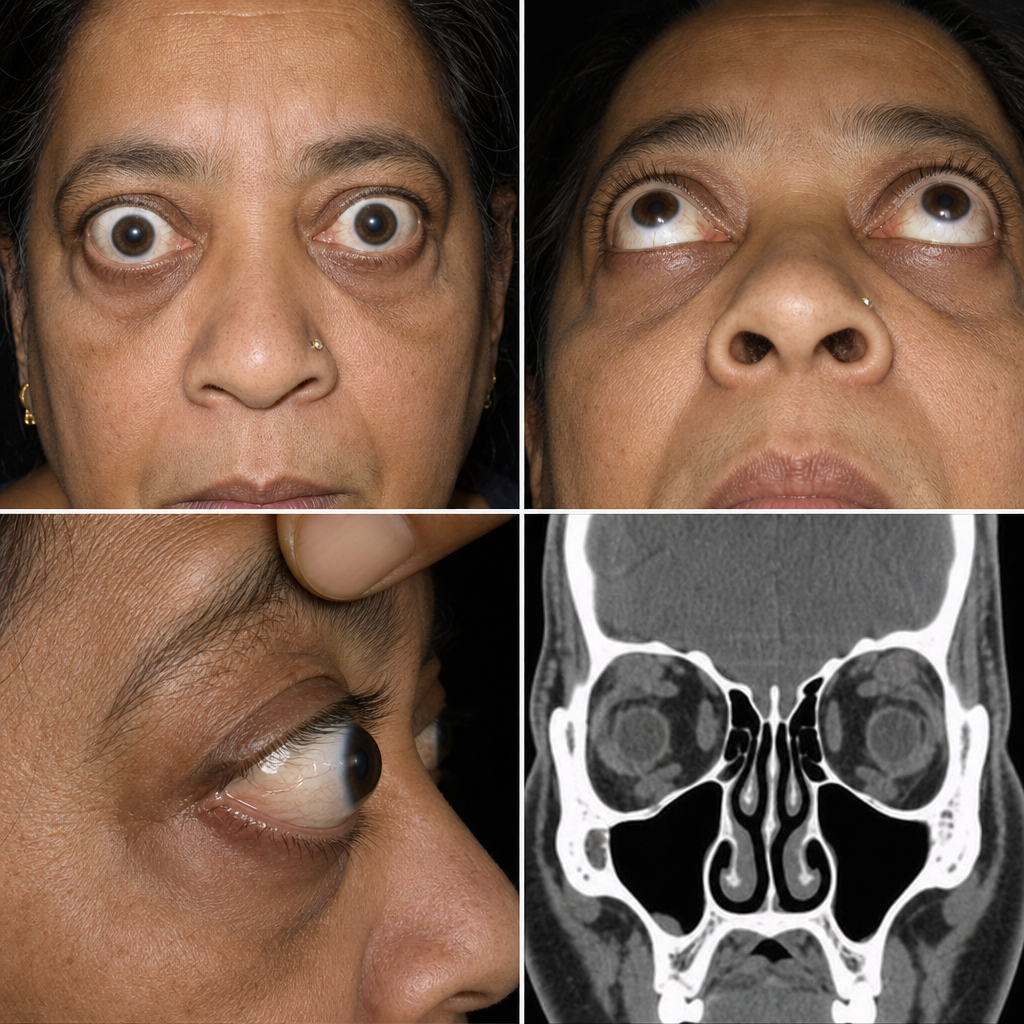
What does a visual acuity test primarily assess?
A patient complains of an inability to read a newspaper, particularly in bright sunlight. What is the most likely diagnosis?
Vision 2020 "The right to sight" includes all except-
The eye condition for which the World bank assistance was provided to the National Programme for Control of Blindness:
According to the WHO, what is the minimum distance at which a person is considered blind if they cannot count fingers in daylight?
National AIDS Control Programme was started in:
Cancer control programme was launched in India in?
Which intervention has shown the highest return on investment in national STI control programs?
Consider the following management methods/techniques : 1. System analysis 2. Organizational design 3. Personnel management 4. Information systems Which of the above methods/techniques are based on behavioural sciences?
What is the post-exposure rabies vaccination schedule for a patient who has already been immunized?
Explanation: ***Ability to recognize shapes and details*** - A visual acuity test, typically using a **Snellen chart**, measures the sharpness of vision, specifically the ability to discern letters or symbols at a given distance. - It assesses the eye's capacity to resolve fine **spatial detail**, which is crucial for tasks like reading and recognizing faces. - This is the fundamental definition of visual acuity and what these tests are specifically designed to measure. *Ability to perceive light* - This refers to **light perception (LP)**, the most basic form of vision, indicating whether a person can detect the presence or absence of light. - While essential for vision, it is a much simpler function than what visual acuity tests measure and is assessed separately. *Ability to differentiate colors* - This is assessed by **color vision tests**, such as the Ishihara plates, which evaluate the function of cone photoreceptors. - It specifically checks for **color blindness** (e.g., red-green or blue-yellow deficiencies) and is distinct from the sharpness of vision. *Ability to detect contrast* - This is measured by **contrast sensitivity tests**, which evaluate the ability to distinguish objects from their background at various contrast levels. - While related to overall visual quality, it is a different aspect of vision than the ability to recognize fine details at high contrast.
Explanation: ***Posterior subcapsular cataract*** - This type of cataract causes significant **glare** and **photophobia**, making it difficult to read in bright light due to opacities located at the **posterior lens capsule**. - The patient experiences worsening vision in **bright light** conditions because the constricted pupil directs more light through the **central posterior opacity**, which lies directly in the visual axis. *Nuclear cataract* - Patients with **nuclear cataracts** typically experience **myopic shift** and improved near vision (second sight) due to increased refractive power of the lens. - Vision is usually worse in **dim light** conditions because of pupillary dilation, which allows more light to pass through the central opacity. *Cortical cataract* - Characterized by **spoke-like opacities** that start in the periphery and extend inward. - While it can cause glare, vision often remains good until the opacities encroach upon the **visual axis**, and it doesn't specifically cause worsening vision in bright light to the same degree as PSC. *Congenital cataract* - Present at birth or shortly after, and symptoms depend on the density and location of the opacity. - While it affects vision, the specific complaint of difficulty reading in bright sunlight is not a typical distinguishing feature of **congenital cataracts**.
Explanation: ***Measles induced blindness*** - Vision 2020 primarily targets conditions that are either preventable or treatable with *cost-effective interventions* and contribute significantly to *avoidable blindness*. - While measles can cause blindness, the specific program focuses on a defined list of priority diseases for intervention, and measles-related blindness is generally addressed through broader public health initiatives (vaccination) rather than direct "right to sight" surgical or direct medical interventions for established blindness. *Onchocerciasis* - **Onchocerciasis** (river blindness) is a major focus of Vision 2020 due to its profound impact on sight, particularly in endemic areas. - It is a **preventable** and **treatable** cause of blindness through mass drug administration. *Trachoma* - **Trachoma** is recognized as one of the leading infectious causes of blindness globally and is explicitly targeted by Vision 2020 through the **SAFE strategy** (Surgery, Antibiotics, Facial cleanliness, Environmental improvement). - It is a highly **preventable** and **treatable** condition, fitting the program's objectives. *Cataract* - **Cataract** is the leading cause of blindness worldwide and is highly **treatable** through a relatively simple and cost-effective surgical procedure. - Providing cataract surgery is a cornerstone of the Vision 2020 initiative to restore sight.
Explanation: ***Cataract*** - The **National Programme for Control of Blindness (NPCB)**, with World Bank assistance, has focused heavily on **cataract surgeries** due to cataract being the leading cause of preventable blindness in India. - The program's aim was to provide accessible and affordable surgical interventions to clear the clouded lens, thereby restoring vision. *Vitamin A deficiency* - While vitamin A deficiency can lead to severe eye conditions like **xerophthalmia** and blindness, it's primarily addressed through nutritional programs and supplementary interventions, not the main focus of World Bank-assisted surgical initiatives within the NPCB. - Its prevention is mainly based on dietary changes and distribution of **vitamin A supplements**, especially in children. *Trachoma* - Trachoma is a bacterial eye infection that can cause blindness, particularly prevalent in regions with poor hygiene. - Although it's part of global blindness prevention efforts, the World Bank's assistance to the NPCB primarily targeted conditions requiring surgical intervention on a large scale, with **trachoma control** often involving antibiotic treatment and hygiene improvement rather than extensive surgical campaigns. *Onchocerciasis* - Onchocerciasis, or **river blindness**, is a parasitic disease primarily prevalent in sub-Saharan Africa. - It is not a major cause of blindness in India, thus not a primary focus of the **National Programme for Control of Blindness** or its World Bank-supported initiatives.
Explanation: ***3 metres*** - The **WHO definition of blindness** includes the inability to count fingers at 3 meters (or 10 feet) in daylight. - This serves as a practical measure for severe **visual impairment** when standard acuity charts are unavailable. *1 metre* - While a significant visual impairment, the inability to count fingers at 1 meter is typically categorized as **severe visual impairment**, not outright blindness, by the WHO. - Severe visual impairment has a slightly less stringent threshold than the definition of blindness. *2 metres* - The inability to count fingers at 2 meters also falls under the category of **severe visual impairment**, according to WHO criteria. - It indicates significant vision loss but is not the specific distance used to define blindness when counting fingers. *4 metres* - A person unable to count fingers at 4 meters would certainly meet the criteria for **blindness**, as this is a greater distance than the 3-meter threshold. - However, the 3-meter mark is the **minimum specified distance** for this particular criterion of blindness by the WHO.
Explanation: ***Correct Option: 1987*** - The National AIDS Control Programme (NACP) in India was officially initiated in **1987** - Its objective was to prevent the transmission of **HIV** and manage the care of people living with **AIDS** - This was launched in response to the detection of the first HIV cases in India in 1986 *Incorrect Option: 1986* - The first case of **HIV** in India was detected in **1986** in Chennai among sex workers - While this discovery was pivotal, it prompted the establishment of NACP, which officially began the following year in 1987 - This marks the recognition phase rather than the program launch *Incorrect Option: 1985* - While significant early efforts against **HIV/AIDS** were underway globally around this time, NACP was not formally launched in India until later - The initial **HIV case** in India was identified in 1986, making a 1985 program launch chronologically impossible *Incorrect Option: 1984* - In 1984, the global understanding of **HIV/AIDS** was still rapidly evolving - Comprehensive national programs like NACP were not yet established in India - This period predates the official recognition of **HIV** as a major public health concern in the country
Explanation: **1976** - The **National Cancer Control Programme (NCCP)** was officially launched in India in **1976** to address the growing burden of cancer. - Its initial focus was on **primary prevention**, early detection, treatment, and palliation of cancer cases across the country. *1970* - While there may have been some preliminary discussions or small-scale initiatives related to cancer in the early 1970s, a formal, comprehensive national cancer control programme was **not launched in 1970**. - This year generally predates the systematized approach to cancer control taken by many countries. *1986* - By **1986**, the National Cancer Control Programme was already established and undergoing **revisions and expansions** based on early experiences and evolving needs. - The year 1986 did not mark the initial launch, but rather a period of programme enhancement. *1992* - The year **1992** saw further significant **revisions and strengthening** of the NCCP, particularly in expanding district-level activities and improving infrastructure for cancer care. - However, this was a subsequent development, not the original launch year of the program.
Explanation: ***Integration with HIV services*** - This approach offers the **highest return on investment** for national STI control programs as it leverages existing infrastructure and funding for HIV services, maximizing resource utilization. - **Syndromic management of STIs integrated with HIV care** allows for efficient screening, diagnosis, and treatment of both conditions simultaneously, reaching high-risk populations effectively. - **India's National AIDS Control Programme (NACP)** successfully demonstrates this model, with STI/RTI services integrated into HIV testing and counseling centers, reducing duplication and operational costs. - **WHO guidelines strongly recommend** this integration strategy as the most cost-effective approach for national STI control programs, particularly in resource-limited settings. *Mobile testing units* - While helpful for reaching underserved populations, **mobile units have high operational costs** including staffing, vehicle maintenance, and equipment, which significantly limit their overall return on investment. - Their effectiveness is often localized and may not provide broad, sustainable impact across an entire national program compared to integrated services. *Online partner notification* - This method's reach is limited by **digital literacy and access barriers**, potentially excluding high-risk groups without internet access, particularly relevant in the Indian context. - While it can improve partner tracing in certain populations, the initial setup costs and limited universal applicability reduce its overall cost-effectiveness compared to integrated clinical services. *Mass media campaigns* - These campaigns require **significant financial investment** for broadcast time and creative development, with outcomes that are difficult to quantify in terms of direct STI reduction. - While effective for raising general awareness, they generate less measurable return on investment for direct STI control services compared to targeted clinical interventions like integrated service delivery.
Explanation: ***1, 2 and 3*** - **System analysis** in management context involves understanding human behavior within organizational systems, analyzing workflows, and interpersonal dynamics to optimize processes and structures. When applied to organizational management, it incorporates behavioral principles. - **Organizational design** is fundamentally rooted in behavioral sciences, focusing on structuring roles, relationships, and hierarchies to enhance human interaction, motivation, and performance based on principles from organizational psychology and sociology. - **Personnel management** directly deals with human resource management, applying behavioral science principles including motivation theory, leadership styles, group dynamics, employee relations, and organizational behavior. *1, 2 and 4* - This option incorrectly includes **information systems**, which are primarily technology-focused and rooted in computer science and data management rather than behavioral sciences. - While information systems may influence organizational behavior, their core methodologies are not based on behavioral science principles. *2, 3 and 4* - This option incorrectly includes **information systems** while excluding **system analysis**. - Information systems are technology-based rather than behavioral science-based. *1, 3 and 4* - This option incorrectly includes **information systems**, which are technology-focused rather than behavioral science-based. - It also excludes **organizational design**, which is a fundamental behavioral science application in management, focusing on how structure affects human behavior and organizational effectiveness.
Explanation: **Explanation:** The correct answer is **A (0, 3)**. This follows the WHO and National Guidelines for Rabies Prophylaxis regarding **re-exposure** in previously immunized individuals. **1. Why Option A is Correct:** When a person has documented evidence of a complete pre-exposure or post-exposure vaccination course (using modern Cell Culture Vaccines), they possess "immunological memory." Upon re-exposure, a rapid "booster" effect is required to elevate antibody titers. The recommended schedule is **two doses** of the vaccine, administered intramuscularly (or intradermally) on **Days 0 and 3**. Crucially, Rabies Immunoglobulin (RIG) is **not** required for these patients, even for Category III bites. **2. Why Other Options are Incorrect:** * **Option B (0, 3, 14):** This is not a standard recognized schedule for rabies. * **Option C (0, 7, 28):** This is the standard **Pre-exposure Prophylaxis (PrEP)** schedule for high-risk individuals (e.g., veterinarians, lab workers). * **Option D (8, 4, 0, 1, 1):** This refers to the **Thai Red Cross (Intradermal) Schedule** (2-2-2-0-2), but the numbers provided are jumbled and do not represent a standard post-exposure regimen. **High-Yield Clinical Pearls for NEET-PG:** * **Definition of "Previously Immunized":** A person who has received a full course of PEP or PrEP with Cell Culture Vaccine (CCV) or Purified Duck Embryo Vaccine (PDEV). * **RIG Rule:** RIG is contraindicated in previously immunized individuals as it may interfere with the secondary immune response. * **Standard PEP (Unvaccinated):** The Essen schedule (IM) is **0, 3, 7, 14, 28**. * **Site of Injection:** Always the **deltoid** in adults and the **anterolateral thigh** in children. **Never** in the gluteal region (due to lower neutralizing antibody titers).
Get full access to all questions, explanations, and performance tracking.
Start For Free