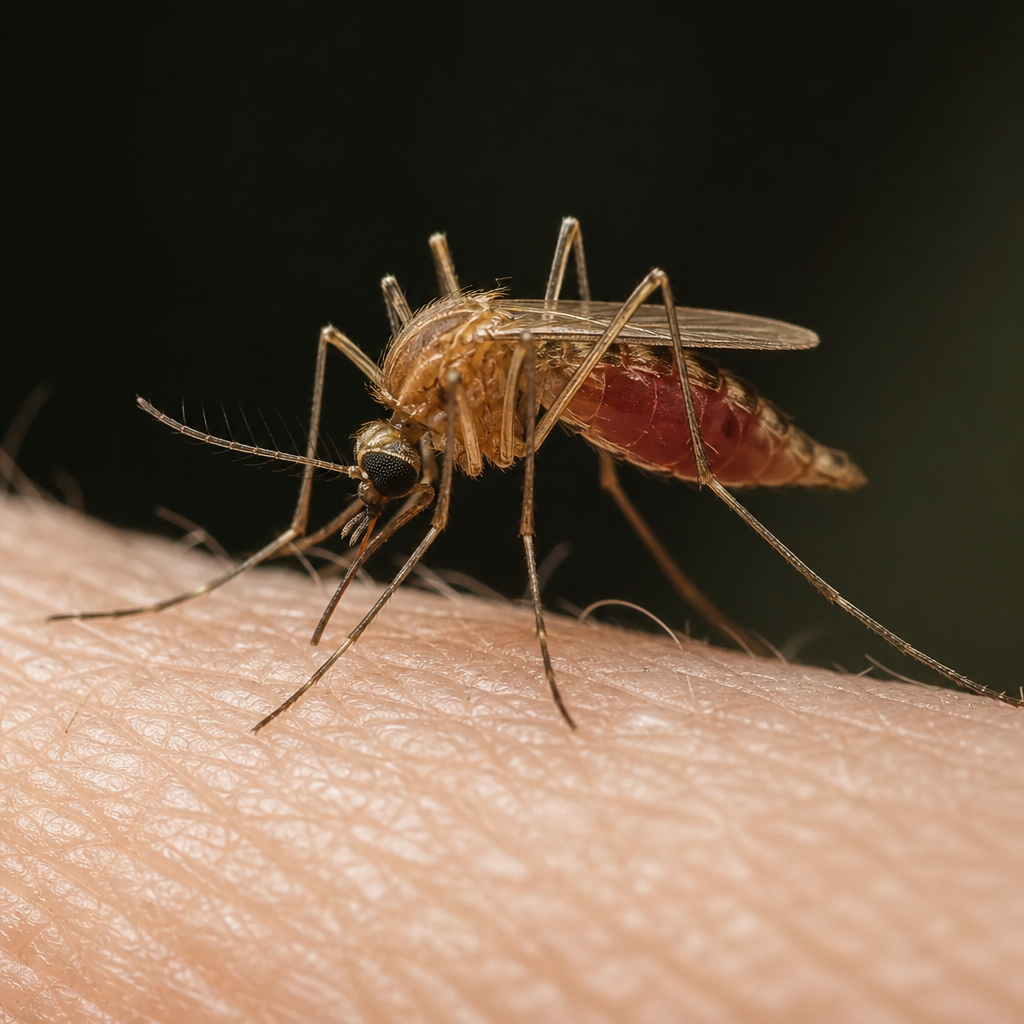
In the National Malaria Control Programme, Indoor Residual Spray (IRS) is the primary method of vector control in rural setting. Which one of the following is the 'insecticide of choice'?
Raju, a 6-year-old boy, was returning home from school. At the gate, he was scratched by a dog and there was some bleeding from the wound. Which option should be followed for the post-exposure prophylaxis?
Consider the following statements regarding Kyasanur Forest Disease (KFD): 1. It is transmitted by ticks. 2. It was originally called 'pig disease' because of the association with dead pigs. 3. It was first recognized in Karnataka State. How many of the statements given above are correct?
Consider the following statements regarding dengue : 1. The mosquito becomes infective after an extrinsic incubation period of 8-10 days. 2. Once it becomes infective, the mosquito remains infective for life. 3. The genital tract of the mosquito does not get infected. Which of the statements given above are correct?
Consider the following statements with reference to the National Framework for Malaria Elimination in India, 2016–2030. Which of the following statements is correct? 1. The goal is to eliminate indigenous cases throughout the country by 2030. 2. By 2022, transmission of malaria is to be interrupted and indigenous cases brought to zero in all 26 States/UTs that were under Categories 1 and 2 in 2014. 3. By 2026, incidence of malaria is to be reduced to less than 1 case per 1000 population in all States and UTs, and their districts. 4. By 2030, indigenous transmission of malaria is to be interrupted in all States and UTs of India.
Which of the following statements is true about 'End TB Strategy'?
Consider the following : 1. Land filling for source reduction. 2. Vaccination of pigs in the risk area. 3. Immunization of children in risk area. Which of the above are the recommended control strategies for Japanese Encephalitis ?
Match List-I with List-II and select the correct answer using the code given below the Lists:

Diethyltoluamide is an effective :
Mansonioides mosquito transmits the following disease :
Explanation: ***Synthetic pyrethroid*** - **Synthetic pyrethroids** are the **insecticide of choice** for Indoor Residual Spraying (IRS) in many national malaria control programs due to their **rapid knockdown effect** and good residual activity. - They are effective against various mosquito species and have a **relatively low toxicity** to humans at recommended concentrations. *Temephos* - **Temephos** is primarily used as a **larvicide**, often applied to waterbodies to control mosquito larvae. - It is **not suitable for IRS** as it lacks the necessary residual effect on surfaces to control adult mosquitoes effectively. *DDT* - **DDT** was historically a very effective insecticide for malaria control but is now **restricted or banned** in many countries due to its **environmental persistence** and potential health concerns. - While still used in some specific contexts, it is generally **not the primary insecticide of choice** for new or ongoing programs due to these restrictions and growing **insecticide resistance**. *Malathion* - **Malathion** is an **organophosphate insecticide** that can be used for IRS, but it generally has a **shorter residual effect** compared to synthetic pyrethroids. - It may also have issues with **odor** and require more frequent reapplication, making it a less preferred option than pyrethroids in many programs.
Explanation: ***Wash the wound, vaccinate with ARV and administer immunoglobulin*** - This approach is recommended for **Category III animal bites**, which involve single or multiple transdermal bites or scratches, licks on broken skin, or contamination of mucous membranes with saliva. - The combination of **wound washing**, **antirabies vaccination (ARV)**, and **rabies immunoglobulin (RIG)** provides both immediate passive immunity and active long-term immunity against rabies. *Wash the wound and vaccinate with ARV only* - This is appropriate for **Category II exposures**, such as minor scratches or abrasions without bleeding. - Since there was **bleeding** from the wound, indicating a transdermal breach, ARV alone is insufficient for this higher-risk exposure. *Wash and apply antiseptic to the wound* - While wound washing is the crucial initial step in rabies post-exposure prophylaxis, applying antiseptic alone is **not sufficient** for preventing rabies. - This measure does not provide **passive or active immunization** against the rabies virus. *Wash the wound and administer a shot of tetanus toxoid* - Administering **tetanus toxoid** is important for preventing tetanus, especially if the wound is dirty or deep, but it does not protect against rabies. - This option **omits both rabies vaccination and immunoglobulin**, leaving the individual vulnerable to rabies exposure.
Explanation: ***Only two of the statements*** - Statement 1 is **correct**: KFD is a **tick-borne viral hemorrhagic fever**, primarily transmitted by infected *Haemaphysalis spinigera* ticks - Statement 3 is **correct**: KFD was first identified in the **Kyasanur Forest of Karnataka, India** in 1957 - Statement 2 is **incorrect**: KFD was originally called **'monkey disease' or 'monkey fever'**, not 'pig disease', because of its strong association with **monkey deaths** which serve as an early warning sign *All the three statements* - Incorrect because Statement 2 is false - the disease was associated with monkeys, not pigs *None of the statements* - Incorrect because statements 1 and 3 are both factually accurate regarding **tick-borne transmission** and **geographical origin in Karnataka** *Only one of the statements* - Incorrect because two statements (1 and 3) are correct, not just one
Explanation: ***1 and 2 only*** - The **extrinsic incubation period** for dengue in mosquitoes (Aedes aegypti and Aedes albopictus) is indeed **8-10 days** at optimal temperatures, after which the mosquito becomes infective. - Once infected, the mosquito's salivary glands harbor the virus, making it capable of transmitting dengue for the **rest of its life**. *2 and 3 only* - While statement 2 is correct, statement 3 is incorrect. The **genital tract of the mosquito can be infected**; vertical transmission (from infected female mosquito to offspring via eggs) is a known but less common route of spread. *1 and 3 only* - Statement 1 is correct, but statement 3 is incorrect as the **genital tract can be infected**, leading to vertical transmission in mosquitoes. *1, 2 and 3* - This option is incorrect because statement 3 is false. The dengue virus can infect the **genital tract** of the mosquito, allowing for **vertical transmission** to its offspring.
Explanation: ***The goal is to eliminate indigenous cases throughout the country by 2030.*** - This statement accurately reflects the primary overarching goal of the National Framework for Malaria Elimination in India, 2016–2030, which aims for the complete cessation of indigenous malaria cases nationwide by this target year. - The framework sets out a phased approach, with this ultimate goal guiding all intermediate targets and strategies. *By 2026, incidence of malaria is to be reduced to less than 1 case per 1000 population in all States and UTs, and their districts.* - The target of reducing **Annual Parasite Incidence (API)** to **less than 1 case per 1000 population** is actually set for **2024**, not 2026. - This specific target is an important **intermediate milestone** towards elimination, but the timeline provided is incorrect. *By 2022, transmission of malaria is to be interrupted and indigenous cases brought to zero in all 26 States/UTs that were under Categories 1 and 2 in 2014.* - The target for **Category 1 and 2 states/UTs** (those with low or no indigenous malaria cases in 2014) to achieve zero indigenous cases was set for **2020**, not 2022. - This phase focused on areas where elimination was considered more readily achievable due to lower disease burden. *By 2030, indigenous transmission of malaria is to be interrupted in all States and UTs of India.* - While the ultimate goal is elimination by 2030, the specific phrasing "indigenous transmission of malaria is to be interrupted" in all states and UTs is a step towards, but not the entirety of, the 2030 goal. - The **2030 goal is the elimination of indigenous cases**, implying sustained interruption of transmission in all areas.
Explanation: ***The strategy goes beyond patient care to promote TB prevention.*** - The **End TB Strategy** emphasizes an expanded approach that includes not only **diagnosis and treatment** but also **proactive prevention** of tuberculosis. - This holistic strategy aims to tackle the root causes and transmission of TB, moving beyond traditional clinical management to include **public health interventions** and social determinants. *The milestone for 2025 is to reduce the TB deaths by 35% compared to 2015.* - The **milestone for 2025** set by the End TB Strategy is to reduce **TB deaths by 75%** compared to 2015, not 35%. - Similarly, the 2025 milestone for reducing the **TB incidence rate is 50%**, compared to 2015. *The targets are to be achieved by 2035.* - The ultimate targets of the End TB Strategy are set for **2030 and 2035**, with goals to end the TB epidemic by 2030 and achieving zero TB deaths, disease, and suffering by 2035. - The **2035 target** is to achieve a **95% reduction in TB deaths** and a **90% reduction in TB incidence rate** compared to 2015. *The strategy identifies four barriers to achieve progress in fight against TB.* - The End TB Strategy identifies **three key pillars** for action: integrated, patient-centered care and prevention; bold policies and supportive systems; and intensified research and innovation. - It does not explicitly define "four barriers" but rather outlines these three comprehensive pillars to address challenges.
Explanation: ***2 and 3 only*** - **Immunization of children** in risk areas is the **primary recommended control strategy** for Japanese Encephalitis, as children are particularly vulnerable to severe encephalitis and long-term neurological sequelae from JEV infection. Human vaccination is endorsed by WHO and forms the backbone of JE control programs. - **Vaccination of pigs**: While pigs act as **amplifying hosts** for JEV, **pig vaccination is NOT routinely recommended** by WHO or most national programs due to practical challenges (high turnover of pig populations, cost-effectiveness issues). However, some older guidelines and regional programs have included this as a supplementary strategy in specific contexts. *1 only* - **Landfilling for source reduction** is a method for **solid waste disposal** and is NOT a recommended strategy for Japanese Encephalitis control. - JE vectors (**Culex tritaeniorhynchus mosquitoes**) breed primarily in **rice paddies, irrigation channels, and stagnant water bodies**, not in areas affected by solid waste. - Appropriate environmental management would focus on **water management** in agricultural areas, not landfilling. *1, 2 and 3* - This option incorrectly includes **landfilling**, which is not a recognized JE control strategy. - Landfilling does not target the breeding sites of Culex mosquitoes that transmit JE. *1 and 2 only* - This option incorrectly includes **landfilling** and critically omits **human immunization**, which is the most important and universally recommended control measure. - Human vaccination provides direct protection and is the cornerstone of JE prevention in endemic areas.
Explanation: ***A→1 B→2 C→4 D→3*** - This option correctly matches each disease with its primary characteristic: **Anthrax** is caused by *Bacillus anthracis*, **Leptospirosis** is known as **Weil's disease** (in its severe form), **Yellow fever** causes **jaundice** (hence the name "yellow"), and **Japanese encephalitis** is transmitted by **mosquito vector** (Culex species). - All pairings are medically accurate and represent the most distinctive features of each disease. *A→1 B→4 C→2 D→3* - While it correctly links **Anthrax** to *Bacillus anthracis* and **Japanese encephalitis** to **mosquito vector**, it makes critical errors with the middle two diseases. - **B→4** incorrectly pairs **Leptospirosis** with **jaundice** - while jaundice can occur in severe leptospirosis, this is not its defining characteristic or eponym (that would be Weil's disease). - **C→2** incorrectly pairs **Yellow fever** with **Weil's disease** - these are completely unrelated; Yellow fever is a flavivirus infection characterized by jaundice, not Weil's disease (which is leptospirosis). *A→4 B→3 C→2 D→1* - This option contains multiple fundamental errors in disease-characteristic matching. - **A→4** incorrectly pairs **Anthrax** with **jaundice** - Anthrax typically presents with cutaneous lesions (eschar), pulmonary, or GI symptoms, not jaundice. - **B→3** incorrectly pairs **Leptospirosis** with **mosquito vector** - Leptospirosis is transmitted through contact with water/soil contaminated with infected animal urine, not by mosquitoes. - The other pairings are also incorrect, making this option entirely wrong. *A→1 B→2 C→3 D→4* - This option correctly links **Anthrax** to *Bacillus anthracis* and **Leptospirosis** to **Weil's disease**, but makes errors in the last two pairings. - **C→3** incorrectly pairs **Yellow fever** with **mosquito vector** - while Yellow fever IS transmitted by mosquitoes (Aedes aegypti), this ignores that option 3 should go with Japanese encephalitis, and Yellow fever's most distinctive feature is jaundice (option 4). - **D→4** incorrectly pairs **Japanese encephalitis** with **jaundice** - JE is a neurological infection without jaundice as a primary feature.
Explanation: ***Repellent*** - **Diethyltoluamide (DEET)** is a highly effective and widely used **insect repellent**. - It works by creating an olfactory barrier that deters mosquitoes and other biting insects. *Agent against propagation of Anopheles* - While DEET can prevent bites from **Anopheles mosquitoes**, it doesn't directly target their reproduction or population growth. - Measures against propagation typically involve **larvicides**, habitat modification, or insecticidal spraying. *Space spray* - **Space sprays** are designed to kill insects in an area, often using insecticides like pyrethroids, rather than repelling them from an individual. - DEET's mechanism is to deter insects from landing on skin or clothing, not to kill them in an open space. *Larvicide* - **Larvicides** are chemical or biological agents used to kill insect larvae, particularly mosquito larvae, in aquatic breeding sites. - DEET is applied to the skin or clothing to prevent adult insect bites and does not act on larvae.
Explanation: ***Brugian filariasis*** - **Mansonioides mosquitoes** are the primary vectors for **Brugian filariasis**, caused by **Brugia malayi** and **Brugia timori**. - This form of filariasis is characterized by **lymphatic obstruction** and **elephantiasis**, predominantly affecting the limbs. *Dengue* - **Dengue** is a viral disease transmitted exclusively by **Aedes mosquitoes**, particularly **Aedes aegypti** and **Aedes albopictus**. - Symptoms include severe fever, headache, retro-orbital pain, muscle and joint pains, and a characteristic skin rash. *Bancroftian filariasis* - **Bancroftian filariasis**, caused by **Wuchereria bancrofti**, is primarily transmitted by **Culex** (e.g., *Culex quinquefasciatus*) and sometimes **Anopheles** or **Aedes mosquitoes**. - While leading to similar lymphatic complications as Brugian filariasis, its vector species differ from Mansonioides. *Malaria* - **Malaria** is transmitted solely by **Anopheles mosquitoes**, which carry the **Plasmodium parasite**. - The disease is characterized by recurring fever, chills, and flu-like symptoms, and can be life-threatening.
Communicable Disease Control Principles
Practice Questions
Vector-Borne Diseases
Practice Questions
Water-Borne Diseases
Practice Questions
Air-Borne Diseases
Practice Questions
Zoonotic Diseases
Practice Questions
Sexually Transmitted Infections
Practice Questions
HIV/AIDS Control Program
Practice Questions
Tuberculosis Control
Practice Questions
Leprosy Elimination
Practice Questions
Emerging and Re-emerging Infections
Practice Questions
Hospital-Acquired Infections
Practice Questions
Integrated Disease Surveillance Project
Practice Questions
Get full access to all questions, explanations, and performance tracking.
Start For Free