Which is the strain of the Japanese encephalitis vaccine?
How many doses of the MMR vaccine are typically recommended in childhood immunization schedules?
What is the efficacy of the Measles vaccine after the second dose?
Which of the following statements about measles is true?
All of the following are used for the transportation of vaccines except?
Which vaccine can be stored at -10°C temperature?
An 11-month-old child has received two doses of DTP and polio vaccine. The child presents for further immunization 5 months after the last dose. What is the recommended course of action?
Pulse Polio Immunization is administration of Oral Polio Vaccine (OPV) to:
Which is the best way to prevent the spread of Polio during an epidemic?
What is the minimum vaccine coverage required in successive birth cohorts for the elimination of measles?
Explanation: **Explanation:** The correct answer is **C. Nakayama strain**. Japanese Encephalitis (JE) vaccines are categorized into inactivated and live-attenuated types. The **Nakayama strain** (and the Beijing-1 strain) are the classic strains used in the production of the mouse-brain-derived inactivated JE vaccine. While many countries have transitioned to the **SA-14-14-2 strain** (a live-attenuated vaccine derived from primary hamster kidney cells), the Nakayama strain remains the historical and frequently tested prototype for inactivated JE vaccines. **Analysis of Incorrect Options:** * **A. Jeryl Lynn strain:** This is the live-attenuated strain used in the **Mumps** vaccine (part of the MMR/MMRV vaccine). * **B. Oka strain:** This is the live-attenuated strain used in the **Varicella** (Chickenpox) and Herpes Zoster vaccines. * **C. 17D strain:** This is the live-attenuated strain used for the **Yellow Fever** vaccine, known for providing long-lasting immunity (up to 10 years or life). **High-Yield Clinical Pearls for NEET-PG:** * **SA-14-14-2:** This is currently the most widely used strain in India’s Universal Immunization Programme (UIP) for the live-attenuated JE vaccine. * **JE Vaccination Schedule (UIP):** Two doses are given—the 1st dose at 9 months (with Measles/MR) and the 2nd dose at 16–24 months (with the DPT booster). * **Vector:** JE is transmitted by the **Culex tritaeniorhynchus** mosquito, which breeds in stagnant water (paddy fields). * **Amplifier Host:** The **Pig** acts as the primary amplifier host for the virus.
Explanation: **Explanation:** The correct answer is **One dose (Option A)**, specifically within the context of the **National Immunization Schedule (NIS)** in India, which is the primary reference for NEET-PG. **1. Why Option A is Correct:** Under the current Universal Immunization Programme (UIP) in India, the **Measles-Rubella (MR)** vaccine has replaced the standalone Measles vaccine. However, where the **MMR** (Measles, Mumps, Rubella) vaccine is specifically utilized in public health programs, it is traditionally administered as a **single dose at 9 completed months** (range 9-12 months). In the NIS, the second dose provided at 16-24 months is typically the MR vaccine. The question specifically asks for the "typical" recommendation in standard childhood schedules; in the Indian context, the primary protection against Mumps is often covered by a single dose if MMR is used. **2. Why Other Options are Incorrect:** * **Option B (Two doses):** While the IAP (Indian Academy of Pediatrics) recommends two doses of MMR (at 9 months and 15 months), the NEET-PG follows the **UIP/WHO guidelines** unless specified otherwise. In the UIP, the second dose is MR, not MMR. * **Options C & D:** Three or four doses are not standard for the MMR vaccine in any primary childhood schedule. Booster requirements beyond the second dose are not routinely indicated for healthy children. **3. High-Yield Clinical Pearls for NEET-PG:** * **Type of Vaccine:** MMR is a **Live Attenuated** vaccine. * **Route & Site:** Subcutaneous (SC) injection, usually in the right upper arm. * **Diluent:** Sterile water (must be used within 4 hours of reconstitution). * **Contraindications:** Pregnancy, severely immunocompromised states (e.g., advanced HIV/AIDS), and history of anaphylaxis to neomycin. * **Mumps Component:** The most common strain used is the **Jerryl Lynn strain**. * **Rubella Component:** The **RA 27/3 strain** is used, grown on human diploid cells.
Explanation: ### Explanation The efficacy of the Measles vaccine is highly dependent on the number of doses administered and the age at which they are given. **1. Why 99% is the Correct Answer:** The Measles vaccine (Live Attenuated, Edmonston-Zagreb strain) is highly immunogenic. While a single dose administered at 9 months provides approximately **95%** protection, a small percentage of children fail to seroconvert (primary vaccine failure). The **second dose** is administered to catch those who did not respond to the first dose. After the completion of a two-dose schedule, the cumulative efficacy reaches **99%**, providing near-total protection against the virus. **2. Analysis of Incorrect Options:** * **90% (Option A):** This is lower than the standard efficacy of even a single dose. * **95% (Option B):** This is the efficacy typically associated with a **single dose** of the measles vaccine when given after 9 months of age. * **100% (Option D):** No vaccine is 100% effective due to biological variations in host immune responses and potential cold chain failures. **3. High-Yield Clinical Pearls for NEET-PG:** * **Schedule:** Under the National Immunization Schedule (NIS) in India, Measles (as MR vaccine) is given in 2 doses: 1st dose at **9-12 months** and 2nd dose at **16-24 months**. * **Type of Vaccine:** Live attenuated vaccine. * **Reconstitution:** Must be reconstituted with **Sterile Water** (Diluent). Once reconstituted, it must be used within **4 hours**; otherwise, it must be discarded due to the risk of *Staphylococcus aureus* contamination (Toxic Shock Syndrome). * **Cold Chain:** It is highly heat-sensitive and must be stored at **+2°C to +8°C** (though it can be frozen at the regional level). * **Contraindication:** Severe immunocompromised states and pregnancy. History of anaphylaxis to neomycin or gelatin.
Explanation: ### Explanation **Correct Option: B. Otitis media is the most common complication.** In children, **Otitis media** is the most frequent complication associated with measles. While pneumonia is the most common cause of measles-related *death* (especially in developing countries), middle ear infection remains the most common overall morbidity. **Analysis of Incorrect Options:** * **A. The incubation period is 5 days:** This is incorrect. The incubation period for measles is typically **10–14 days** (10 days to the onset of fever and 14 days to the appearance of the rash). * **C. It is caused by an orthomyxovirus:** This is incorrect. Measles is caused by an RNA virus belonging to the **Paramyxoviridae** family (Genus: *Morbillivirus*). Orthomyxoviruses cause Influenza. * **D. A large number of carriers exist:** This is incorrect. Measles is characterized by the **absence of a carrier state**. It is an obligatory human disease with no animal reservoir, which makes it a candidate for potential eradication. **NEET-PG High-Yield Pearls:** * **Koplik’s Spots:** Pathognomonic sign; small bluish-white spots on an erythematous base found on the buccal mucosa opposite the lower 2nd molars during the pre-eruptive stage. * **SSPE (Subacute Sclerosing Panencephalitis):** The most serious, late-onset neurological complication (occurring years after infection). * **Infectivity:** Highly contagious from **4 days before to 5 days after** the appearance of the rash. * **Vitamin A:** Supplementation is recommended for all children with acute measles to reduce the risk of blindness and mortality.
Explanation: **Explanation:** The core concept tested here is the distinction between **storage equipment** and **transportation equipment** within the Cold Chain system. **Why ILR (Ice-Lined Refrigerator) is the correct answer:** An ILR is a **storage device**, not a transportation device. It is the "backbone" of the cold chain at the District and PHC levels. It is designed to maintain a temperature of +2°C to +8°C even during power outages (for up to 20+ hours) due to the tubes of water/ice lining its walls. Because of its size, weight, and requirement for a continuous power source, it is never used for the physical movement of vaccines between locations. **Analysis of Incorrect Options (Transportation Tools):** * **Vaccine Van:** These are specially refrigerated vehicles used for the bulk transport of vaccines from the State or Regional stores to District stores. * **Cold Box:** These are large, insulated containers used for transporting large quantities of vaccines (e.g., from District to PHC) or for emergency storage during power failures. They can maintain the cold chain for several days. * **Vaccine Carriers:** These are smaller insulated containers used to carry small quantities of vaccines (16-20 vials) from the PHC to the sub-centers or outreach session sites (the "last mile" of delivery). **High-Yield Clinical Pearls for NEET-PG:** * **Most Heat Sensitive Vaccine:** Oral Polio Vaccine (OPV). * **Most Heat Resistant Vaccine:** Tetanus Toxoid (TT) / Td. * **Most Cold/Freeze Sensitive Vaccine:** Hepatitis B (followed by DPT/Pentavalent). These must **never** be stored in the freezer or in direct contact with ice packs. * **The "Shake Test":** Used to determine if a freeze-sensitive vaccine (like DPT or Hep B) has been damaged by sub-zero temperatures. * **Placement in ILR:** OPV and Measles are kept at the bottom (coldest part), while Td and Hepatitis B are kept at the top to prevent freezing.
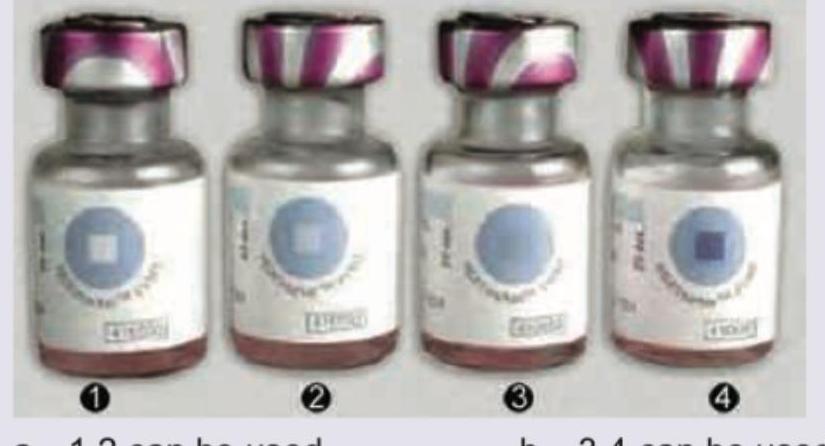
Explanation: ### Explanation The storage of vaccines depends on their sensitivity to heat and freezing. Vaccines are broadly classified into **Heat-Sensitive** and **Freeze-Sensitive** categories. **Why Measles is the Correct Answer:** Measles vaccine is a live-attenuated viral vaccine that is highly heat-sensitive but **freeze-stable**. According to Universal Immunization Programme (UIP) guidelines, at the district level and below, most vaccines are stored in the ILR (Ice-Lined Refrigerator) at +2°C to +8°C. However, for long-term storage at regional or state stores, measles vaccines can be stored in a **Deep Freezer at -15°C to -25°C**. Therefore, it can safely be stored at -10°C without losing potency. **Analysis of Incorrect Options:** * **Polio (OPV):** While OPV is the *most* heat-sensitive vaccine and is stored at -20°C for long periods, it was not the designated answer in this specific context compared to Measles, which is also freeze-stable. (Note: In many exams, both OPV and Measles are considered suitable for sub-zero storage). * **BCG:** While BCG is heat-sensitive, it is generally recommended to be stored at +2°C to +8°C. Freezing the diluent must be avoided, and freezing the reconstituted vaccine can damage the vial. * **DPT:** This is a **freeze-sensitive** vaccine. If DPT is stored at -10°C, the aluminum adjuvant precipitates, leading to a loss of potency and increased risk of local reactions (sterile abscesses). It must never be frozen. **High-Yield Clinical Pearls for NEET-PG:** * **Most Heat-Sensitive Vaccine:** OPV > Measles > BCG. * **Most Heat-Resistant Vaccine:** TT (Tetanus Toxoid) > Hepatitis B. * **Shake Test:** Used to determine if a freeze-sensitive vaccine (DPT, DT, TT, Hep B, Pentavalent) has been damaged by sub-zero temperatures. * **VVM (Vaccine Vial Monitor):** A marker of heat exposure, found on the label of the vial. If the inner square matches or is darker than the outer circle, the vaccine must be discarded.
Explanation: ### Explanation **Correct Answer: A. Repeat the whole course** **1. Why Option A is Correct:** The core concept here is the **maximum permissible interval** between doses in a primary immunization series. According to standard immunization guidelines (often cited in older textbooks and specific program protocols for DTP), if the interval between two doses of a primary series exceeds a certain threshold (typically **6 months**), the previous doses are considered "lost" or immunologically insufficient to prime the memory cells effectively. In this clinical scenario: * The child is 11 months old. * The last dose was 5 months ago (meaning the child received the 2nd dose at age 6 months). * While the National Immunization Schedule (NIS) generally follows the "broken chain" rule (never restart, just resume), certain academic and competitive exam standards (like those often reflected in NEET-PG sources like Park’s PSM) suggest that if the delay is excessive during the **primary series** (especially for DTP), the course should be restarted to ensure adequate seroconversion. **2. Why Other Options are Wrong:** * **Option B & C:** These follow the "Resume, don't Restart" principle. While this is the current WHO/Universal Immunization Program (UIP) policy for most vaccines to avoid wastage, it is not the "textbook" answer for this specific DTP delay scenario in many PG entrance exams. * **Option D:** A booster dose cannot be given until the primary series (3 doses) is completed. Giving a booster to a partially immunized child results in sub-optimal antibody titers. **3. NEET-PG High-Yield Pearls:** * **The "Broken Chain" Rule:** For most routine UIP vaccines (like Hepatitis B or OPV), the rule is: *An interruption in the schedule does not require restarting the series.* * **DTP Specifics:** DTP is given at 6, 10, and 14 weeks. The 1st booster is at 16-24 months, and the 2nd booster is at 5-6 years. * **Age Limit:** DTP vaccine should not be administered to children older than 7 years due to the risk of severe local reactions (Td is used instead). * **Exam Tip:** If the question implies a significant lapse in the **primary series** of DTP, look for "Restart" as the preferred academic answer, despite field practices of "Resuming."
Explanation: ### Explanation **Correct Answer: A. All children between 0-5 years of age on a single day, irrespective of their previous immunization status.** **Concept:** Pulse Polio Immunization (PPI) is a mass immunization strategy designed to eliminate the Wild Polio Virus (WPV) by replacing it with the vaccine virus in the environment. The "Pulse" refers to the simultaneous administration of Oral Polio Vaccine (OPV) to all susceptible children (0-5 years) in a geographic area on a single day (National Immunization Day). This creates a massive surge of intestinal immunity and "crowds out" the wild virus from the community through **herd immunity** and **interference**. Crucially, it is given **regardless of previous immunization status** to ensure no gaps in the immunity barrier. **Analysis of Incorrect Options:** * **Option B:** PPI is not a primary series for infants; it is a supplemental immunization activity (SIA) targeting the entire under-5 population to break the chain of transmission. * **Option C:** PPI is not a scheduled booster; it is a synchronized mass campaign. * **Option D:** While "Mop-up rounds" are conducted during outbreaks, PPI refers to the scheduled national/sub-national rounds aimed at total eradication, not just reactive outbreak control. **High-Yield Facts for NEET-PG:** * **Launched in India:** 1995. * **Vaccine Used:** Bivalent OPV (Type 1 and 3). * **Objective:** To achieve **"Gutsy Immunity"** (Intestinal mucosal immunity) and displace WPV. * **Zero Dose:** The dose of OPV given at birth. * **India’s Status:** Declared Polio-free by the WHO on March 27, 2014 (last case reported in Jan 2011, Howrah, West Bengal). * **Current Schedule:** Under NIS, 3 doses of OPV (6, 10, 14 weeks) + 3 doses of fIPV (6, 14 weeks, and 9 months).
Explanation: **Explanation:** The primary goal during a polio epidemic is to rapidly break the chain of transmission and induce "herd immunity." **Oral Polio Vaccine (OPV)** is the intervention of choice for the following reasons: 1. **Intestinal Immunity:** OPV (Sabin) is a live-attenuated vaccine that induces robust local secretory IgA production in the gut. Since Poliovirus is transmitted via the feto-oral route, this intestinal barrier prevents the wild virus from multiplying and being excreted, effectively stopping community spread. 2. **Secondary Spread:** Vaccinated individuals shed the vaccine virus in their stools, which can "immunize" unvaccinated contacts in areas with poor sanitation (contact immunity). 3. **Rapid Response:** OPV is easy to administer on a mass scale without the need for trained healthcare workers or sterile equipment. **Analysis of Incorrect Options:** * **B. Isolation:** Polio has a high ratio of inapparent (asymptomatic) infections to clinical cases (approx. 1:200 for Type 1). For every one clinical case isolated, hundreds of silent carriers continue to spread the virus, making isolation ineffective for outbreak control. * **C. IPV:** While IPV (Salk) provides excellent individual protection by inducing systemic IgG (preventing paralytic polio), it does **not** produce significant intestinal immunity. An IPV-vaccinated child can still be infected with wild poliovirus and shed it in their feces, failing to stop an epidemic. **NEET-PG High-Yield Pearls:** * **Vaccine of Choice in Epidemics:** OPV (due to rapid gut immunity). * **Vaccine for Routine Immunization (India):** bOPV (Type 1 & 3) + fIPV (Fractional Inactivated Polio Vaccine). * **Most Heat Sensitive Vaccine:** OPV (requires storage at -20°C; monitored by Vaccine Vial Monitor - VVM). * **Herd Immunity:** OPV contributes to herd immunity; IPV does not.
Explanation: **Explanation:** The correct answer is **D (>95%)**. **1. Why >95% is correct:** Measles is one of the most highly infectious human diseases, with a Basic Reproduction Number ($R_0$) typically ranging between **12 and 18**. This means a single infected individual can spread the virus to 12–18 susceptible people. To achieve **Elimination** (interruption of indigenous transmission in a geographical area), the level of **Herd Immunity** must be high enough to break the chain of transmission. Using the formula for Herd Immunity Threshold ($HIT = 1 - 1/R_0$), measles requires a population immunity of approximately 92–94%. To account for vaccine efficacy (which is not 100%), the WHO recommends a sustained coverage of **$\geq$95%** with two doses of measles-containing vaccine (MCV) in every district and every birth cohort. **2. Why other options are incorrect:** * **A and B (>70% to >80%):** These levels are insufficient for measles. While 80% coverage might reduce mortality, it allows for periodic outbreaks because the "critical wall" of protected individuals is too low to stop the virus from circulating. * **C (>90%):** While 90% is a target for many other vaccines (like Polio or DPT), it is still below the threshold required to eliminate measles due to its extreme transmissibility. **3. High-Yield Facts for NEET-PG:** * **Elimination vs. Eradication:** Measles is targeted for *elimination* in India (Regional target: 2023, now updated). *Eradication* refers to global extinction (only Smallpox has been eradicated). * **Vaccine Schedule (India):** 1st dose at 9–12 months; 2nd dose at 16–24 months (as MR vaccine). * **MCV1 vs. MCV2:** One dose provides ~85% protection; two doses provide ~97% protection. * **Vitamin A:** Administered along with Measles vaccine to reduce complications and severity.
Principles of Immunization
Practice Questions
Types of Vaccines
Practice Questions
Universal Immunization Program
Practice Questions
Cold Chain System
Practice Questions
Vaccine Storage and Handling
Practice Questions
Adverse Events Following Immunization
Practice Questions
National Immunization Schedule
Practice Questions
Polio Eradication
Practice Questions
Measles Elimination
Practice Questions
Tetanus Control
Practice Questions
New and Underutilized Vaccines
Practice Questions
Vaccination Coverage Assessment
Practice Questions
Get full access to all questions, explanations, and performance tracking.
Start For Free