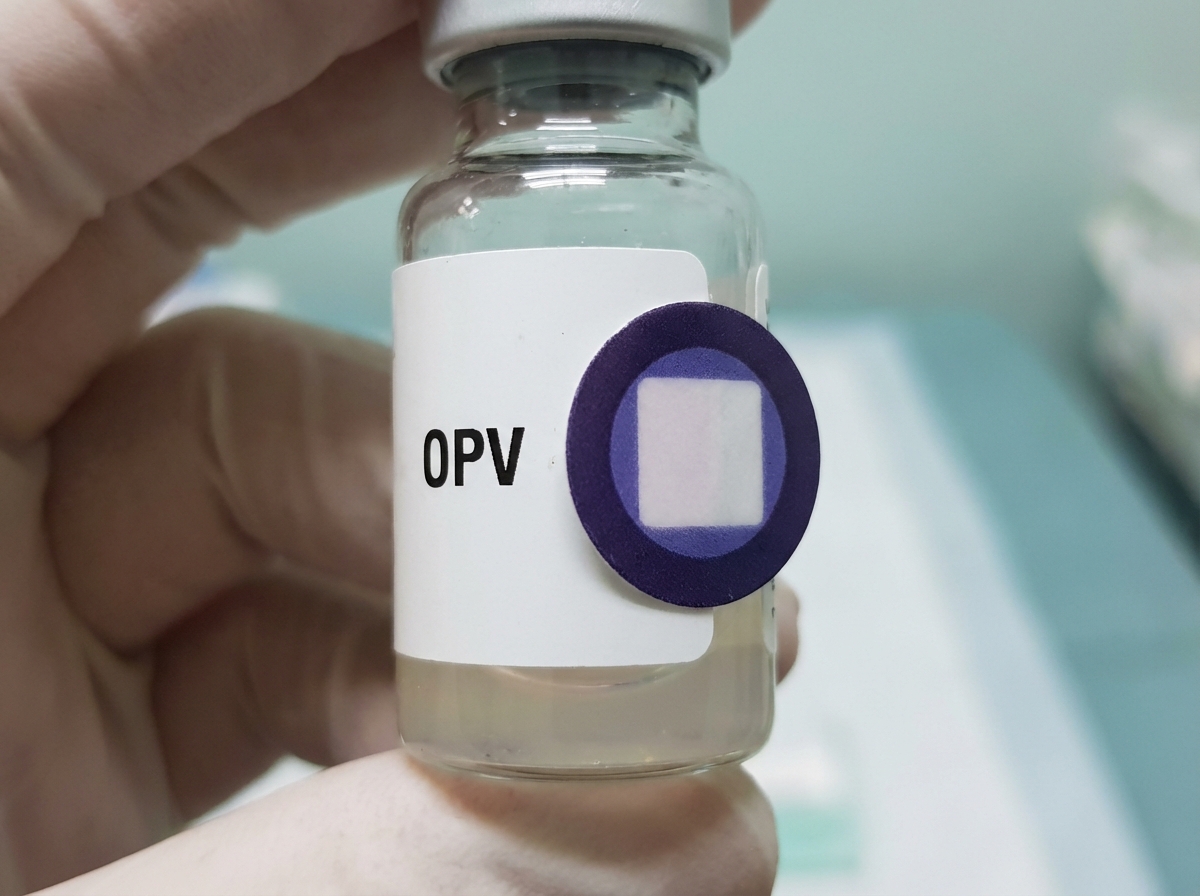
What is the target age group for pulse polio immunization?
Which of the following is a component of the Expanded Programme on Immunization (EPI)?
Neonatal Tetanus is considered eliminated when the incidence rate is below which threshold per 1000 live births?
Which of the following diseases does NOT require chemoprophylaxis?
Which one of the following vaccines is contraindicated in pregnancy?
What is the recommended schedule for pre-exposure prophylaxis of rabies vaccine?
Which of the following is NOT true about measles?
Which of the following vaccines is NOT included in the National Immunization Schedule?
All vaccines reduce pneumonia induced mortality except?
Which of the following is NOT a freeze-dried vaccine?
Explanation: **Explanation:** The **Pulse Polio Immunization (PPI)** program is a mass immunization strategy aimed at eradicating poliomyelitis by vaccinating all children in a specific age group simultaneously to break the chain of transmission. **1. Why Option B is Correct:** The target age group for PPI is **children aged 0 to 5 years** (specifically, <60 months). This age group is chosen because children under five are most vulnerable to infection by the Poliovirus due to an immature immune system and higher exposure risks. By vaccinating all children in this bracket on a single day (National Immunization Day), the wild poliovirus is "crowded out" of the community through **intestinal immunity** (IgA) and **herd effect**, as the vaccine virus is excreted and spreads to others in the environment. **2. Why Other Options are Incorrect:** * **Option A:** Restricting vaccination to children older than 3 years would leave the most vulnerable infants (0–3 years) unprotected, allowing the virus to circulate freely. * **Options C & D:** While older children and adults can technically contract polio, the epidemiological risk significantly drops after age 5. Including them in mass campaigns is not cost-effective and is unnecessary for achieving the "herd effect" required for eradication. **Clinical Pearls for NEET-PG:** * **Type of Vaccine:** PPI uses the **Bivalent Oral Polio Vaccine (bOPV)**, containing types 1 and 3. * **Zero Dose:** The dose of OPV given at birth is called the "Zero Dose." * **Recent Change:** India has introduced **Fractional IPV (fIPV)** at 6, 14 weeks, and 9 months to provide additional systemic immunity. * **Status:** India was declared "Polio Free" by the WHO on **March 27, 2014**. The last case was reported in Howrah, West Bengal (2011).
Explanation: **Explanation:** The **Expanded Programme on Immunization (EPI)** was launched globally by the WHO in 1974 and in India in 1978. Its primary objective was to protect children against six "killer" diseases: **Tuberculosis, Diphtheria, Pertussis, Tetanus, Poliomyelitis, and Measles.** **Pertussis (Option C)** is correct because it was one of the original six antigens included in the EPI (as part of the DPT vaccine). The program aimed to reduce the high morbidity and mortality associated with these specific pediatric infections. **Analysis of Incorrect Options:** * **Hepatitis B (Option A):** While now part of the Universal Immunization Programme (UIP) and the Pentavalent vaccine, it was not a component of the original EPI. It was introduced into the Indian national schedule much later (pilot in 2002, nationwide in 2011). * **Rubella (Option B):** Rubella was introduced recently as the MR (Measles-Rubella) campaign/vaccine to eliminate Congenital Rubella Syndrome. It was not part of the initial EPI. * **Mumps (Option D):** Mumps is part of the MMR vaccine. While common in private practice (IAP schedule), it is currently **not** included in India’s National Immunization Schedule (UIP). **High-Yield Clinical Pearls for NEET-PG:** * **EPI India (1978):** Focused on the original 6 diseases. * **UIP (1985):** EPI was renamed the Universal Immunization Programme with expanded coverage targets. * **Vitamin A supplementation** was added to the UIP in 1990. * **Latest Additions to UIP:** Rotavirus vaccine, Pneumococcal Conjugate Vaccine (PCV), and Inactivated Polio Vaccine (IPV). * **Mission Indradhanush:** Launched in 2014 to achieve 90% full immunization coverage.
Explanation: ### Explanation **Correct Answer: B. 0.1 per 1000 live births** **1. Understanding the Concept** Neonatal Tetanus (NT) elimination is defined by the World Health Organization (WHO) as reaching an incidence of **less than 1 case per 1,000 live births in every district** of a country. To convert this to the standard format used in this question: * 1 per 1,000 live births = **0.1 per 1000 live births** (when expressed as a decimal of the total population) or more accurately, the threshold is **<1 case per 1,000 live births**. * *Note:* In many standardized exams, the target is specifically cited as **<1 per 1000 live births**. If the options provide "1 per 1000" and "0.1 per 1000," the standard WHO definition is <1/1000. However, in the context of this specific MCQ structure, **0.1% (which is 1 per 1000)** is the intended threshold for elimination. **2. Why Other Options are Incorrect** * **Option A (10 per 1000):** This is a very high incidence rate and does not represent a controlled or eliminated state. * **Options C & D (1 per 1000):** While "1 per 1000" is the numerical threshold, the definition specifically requires the rate to be **below** this number (i.e., <1). In competitive exams, if 0.1 is provided as an option, it often refers to the stringent target of reducing the burden significantly below the unit threshold. **3. High-Yield Clinical Pearls for NEET-PG** * **Maternal and Neonatal Tetanus Elimination (MNTE):** India was declared to have eliminated Maternal and Neonatal Tetanus by the WHO in **May 2015** (officially July 2016). * **The "5 Cleans" Strategy:** To prevent NT during delivery: Clean hands, Clean surface, Clean blade, Clean cord tie, and Clean cord stump (No application). * **Vaccination:** Under the Universal Immunization Programme (UIP), pregnant women receive two doses of Tetanus-adult Diphtheria (Td) vaccine (or one booster if previously vaccinated within 3 years). * **Incubation Period:** Typically 3–21 days (Average 7 days—hence the "7th-day disease").
Explanation: **Explanation:** The correct answer is **Chickenpox (Varicella)**. Chemoprophylaxis refers to the administration of drugs to prevent the development of a disease in an exposed individual. **Why Chickenpox is the correct answer:** Chickenpox is a viral infection caused by the Varicella-Zoster Virus (VZV). There is **no specific chemoprophylaxis** (antibiotics or antivirals) recommended for routine prevention after exposure. Instead, prevention relies on **Immunoprophylaxis**: * **Active:** Varicella vaccine (within 3–5 days of exposure). * **Passive:** Varicella-Zoster Immunoglobulin (VZIG) for high-risk individuals (e.g., immunocompromised, pregnant women, or neonates). **Analysis of Incorrect Options:** * **Typhoid:** Chemoprophylaxis is indicated for household contacts or during outbreaks in specific settings. Drugs like **Ciprofloxacin** or **Azithromycin** can be used. * **Influenza:** Antiviral chemoprophylaxis with Neuraminidase inhibitors like **Oseltamivir** is recommended for high-risk individuals (e.g., healthcare workers or elderly) during an outbreak or post-exposure. * **Cholera:** While not recommended for mass use, selective chemoprophylaxis is given to household contacts. The drug of choice is **Doxycycline** (single dose) or Tetracycline. **High-Yield NEET-PG Pearls:** 1. **Meningococcal Meningitis:** Drug of choice for chemoprophylaxis is **Rifampicin** (Ciprofloxacin or Ceftriaxone are alternatives). 2. **Diphtheria:** Chemoprophylaxis for contacts is **Erythromycin** or Benzathine Penicillin. 3. **Pertussis:** Erythromycin is used for all household contacts regardless of age or vaccination status. 4. **Leptospirosis:** Doxycycline (200 mg weekly) is used for high-risk individuals (farmers/sewer workers).
Explanation: **Explanation:** The core principle in pregnancy immunization is the avoidance of **Live Attenuated Vaccines**. The **MMR (Measles, Mumps, and Rubella)** vaccine contains live viruses which, theoretically, pose a risk of transplacental transmission to the fetus. Specifically, the Rubella component carries a risk of **Congenital Rubella Syndrome (CRS)**, although the actual risk from the vaccine is considered low. Therefore, MMR is strictly contraindicated during pregnancy, and women are advised to avoid conception for at least 28 days (4 weeks) after receiving the vaccine. **Analysis of Incorrect Options:** * **Rabies (Option B):** Rabies is a 100% fatal disease. The vaccine is an **inactivated (killed)** vaccine and is indicated for post-exposure prophylaxis in pregnant women. Pregnancy is never a contraindication to life-saving rabies vaccination. * **Hep B (Option C):** This is a **recombinant/subunit** vaccine. It is safe and indicated during pregnancy if the mother is at high risk of infection (e.g., healthcare worker or HBsAg-positive partner). **High-Yield NEET-PG Pearls:** * **Safe in Pregnancy:** All Inactivated/Killed vaccines (e.g., Inactivated Polio, Influenza), Toxoids (Tetanus, Diphtheria), and Recombinant vaccines. * **Contraindicated in Pregnancy:** All Live vaccines (**M**MR, **V**aricella, **Y**ellow Fever, **B**CG, **L**ive Attenuated Influenza). * **Exception:** Yellow Fever vaccine may be given to a pregnant woman if travel to an endemic area is unavoidable and the risk of disease outweighs the risk of vaccination. * **Standard Care:** Tdap (Tetanus, diphtheria, and acellular pertussis) is recommended during each pregnancy (ideally between 27–36 weeks) to provide passive immunity to the neonate.
Explanation: ### Explanation **1. Why Option D is Correct:** The recommended schedule for **Pre-Exposure Prophylaxis (PrEP)** of Rabies, as per WHO and National Guidelines (NRCP), is a 3-dose regimen administered on **days 0, 7, and 21 or 28**. * **Concept:** PrEP is intended for high-risk individuals (veterinarians, lab workers, animal handlers). The goal is to induce a baseline immune memory so that if a future exposure occurs, the individual only requires two booster doses (0, 3) and **no Rabies Immunoglobulin (RIG)**. **2. Why Other Options are Incorrect:** * **Option A (0 and 7 days):** While WHO recently suggested a 2-dose PrEP schedule (0, 7) for certain settings, the standard academic and national guideline answer for NEET-PG remains the 3-dose (0, 7, 21/28) regimen. * **Option B (0, 3, 7, and 14 days):** This is the **Essen Schedule** (Intramuscular) for Post-Exposure Prophylaxis (PEP) in immunocompetent individuals. * **Option C (0, 3, 7, 14, and 30 days):** This is the older 5-dose PEP schedule. Modern PEP usually follows the 4-dose IM (Essen) or the 2-2-2-0-0 ID (Updated Thai Red Cross) regimen. **3. High-Yield Clinical Pearls for NEET-PG:** * **Site of Injection:** Always **Deltoid** (adults) or anterolateral thigh (children). **Never in the gluteal region** (variable fat distribution interferes with absorption). * **Re-exposure after PrEP:** If a person who completed PrEP is bitten, they need only **2 doses (Day 0 and 3)**. RIG is contraindicated as it may interfere with the secondary immune response. * **Intradermal (ID) PrEP:** The dose is 0.1 ml at one site on days 0, 7, and 21/28. * **Pregnancy:** Rabies vaccine is **not contraindicated** in pregnancy; it is life-saving.
Explanation: **Explanation:** The correct answer is **B (Secondary attack rate is 30-40%)** because this statement is factually incorrect. Measles is one of the most highly infectious diseases known to mankind. Its **Secondary Attack Rate (SAR)**—the probability that infection occurs among susceptible persons within a specific group (like a household)—is **>80% (often cited as 90%)**. A SAR of 30-40% is significantly lower than the actual clinical reality of measles. **Analysis of other options:** * **A. Incubation period is 10-14 days:** This is a standard fact. It is typically 10 days from exposure to the onset of fever and 14 days to the appearance of the rash. * **C. Subcutaneous vaccine is available:** The measles vaccine (usually as MMR or MR) is traditionally administered via the **subcutaneous route** (right upper arm). * **D. Vaccine is live attenuated:** The vaccine uses the **Edmonston-Zagreb strain** (in India) or the Schwarz strain, both of which are live attenuated viruses. **High-Yield Clinical Pearls for NEET-PG:** * **Infectivity Period:** From 4 days before to 4 days after the appearance of the rash. * **Koplik’s Spots:** Pathognomonic sign; small white spots on a red base found on the buccal mucosa opposite the lower 2nd molars during the pre-eruptive stage. * **Vitamin A:** Supplementation is mandatory in measles management to reduce mortality and prevent blindness. * **SSPE (Subacute Sclerosing Panencephalitis):** A rare, fatal late complication occurring years after the initial infection. * **Cold Chain:** Measles vaccine is highly heat-sensitive and must be stored at +2°C to +8°C (reconstituted vaccine must be used within 4 hours).
Explanation: **Explanation:** The correct answer is **Hepatitis B vaccine**. **1. Why Hepatitis B is the correct answer (in the context of this specific question):** While Hepatitis B is indeed part of the Universal Immunization Programme (UIP) in India today, this question reflects a common pattern in older NEET-PG/AIIMS papers or specific historical contexts where Hepatitis B was the "last" major vaccine to be integrated nationwide. However, from a strictly technical and updated standpoint, all four options are currently part of the National Immunization Schedule (NIS). In exams, if forced to choose, Hepatitis B is often the "distractor" because it was introduced much later (phased in from 2002-2011) compared to the original EPI vaccines (TT, OPV, Measles) which have been pillars of the program since 1978-1985. **2. Why the other options are incorrect:** * **Tetanus Toxoid (TT):** One of the original components of the EPI (1978). Note: Under the current schedule, TT has been replaced by **Td (Tetanus & adult Diphtheria)** for pregnant women and children aged 10 and 16 years. * **Oral Polio Vaccine (OPV):** A core component of the NIS since 1978. It is administered at birth (zero dose) and at 6, 10, and 14 weeks. * **Measles Vaccine:** Introduced in 1985. It is currently administered as **MR (Measles-Rubella)** vaccine at 9-12 months and 16-24 months. **3. Clinical Pearls & High-Yield Facts for NEET-PG:** * **Latest Addition:** The most recent additions to the NIS include **Rotavirus vaccine** (nationwide), **PCV** (Pneumococcal Conjugate Vaccine), and the **Fractional IPV (fIPV)**. * **Hepatitis B Schedule:** Given at 0 (birth dose), 6, 10, and 14 weeks (as part of the **Pentavalent vaccine**). * **Open Vial Policy:** Applies to Multi-dose vials of OPV, DPT, TT/Td, Hep B, and Hib. It **does not** apply to reconstituted vaccines like Measles/MR, BCG, and JE. * **Pentavalent Vaccine:** Protects against Diphtheria, Pertussis, Tetanus, Hepatitis B, and HiB.
Explanation: **Explanation:** The core concept behind this question is identifying which vaccine-preventable diseases (VPDs) lead to secondary bacterial or primary viral pneumonia as a major cause of death. **Why Rubella is the correct answer:** Rubella (German Measles) is typically a mild, self-limiting viral infection in children and adults. Its primary clinical significance lies in **Congenital Rubella Syndrome (CRS)** when acquired during pregnancy. Unlike Measles, Rubella is not a significant cause of lower respiratory tract infections or pneumonia-induced mortality. Therefore, the Rubella vaccine is intended to prevent congenital malformations rather than reduce pneumonia deaths. **Why the other options are incorrect:** * **Measles:** Measles causes profound immune suppression. Pneumonia (either primary viral or secondary bacterial) is the **most common cause of death** associated with Measles in children. * **Hib (Haemophilus influenzae type b):** Before the introduction of the vaccine, Hib was a leading cause of bacterial pneumonia and meningitis in children under five. * **PCV (Pneumococcal Conjugate Vaccine):** *Streptococcus pneumoniae* is the most common cause of bacterial pneumonia worldwide. PCV directly targets the serotypes responsible for invasive pneumococcal disease. **High-Yield Clinical Pearls for NEET-PG:** * **Most common cause of death in Measles:** Pneumonia. * **Most common complication of Measles:** Otitis Media. * **WHO "Big Three" for Childhood Pneumonia:** *S. pneumoniae*, *Hib*, and RSV (Respiratory Syncytial Virus). * **Integrated Management of Neonatal and Childhood Illness (IMNCI):** Focuses heavily on Measles, Hib, and PCV vaccination to achieve SDG-3 targets for reducing under-5 mortality.
Explanation: **Explanation:** The correct answer is **DPT** because it is a **liquid vaccine** and is never freeze-dried. Freeze-drying (lyophilization) is a process used to stabilize live-attenuated vaccines, making them more heat-stable during storage. However, DPT contains an **alum adjuvant** (aluminum salts) to enhance the immune response. If DPT is freeze-dried or accidentally frozen, the alum adjuvant crystallizes, leading to permanent loss of potency and an increased risk of sterile abscesses at the injection site. **Analysis of Options:** * **BCG (Bacillus Calmette-Guérin):** This is a live-attenuated bacterial vaccine that is always supplied in a **freeze-dried** form. It must be reconstituted with Normal Saline. * **Measles:** This is a highly heat-sensitive live-attenuated viral vaccine. It is **freeze-dried** to maintain stability and must be reconstituted with Sterile Water for Injection. * **Yellow Fever:** This is a live-attenuated viral vaccine (17D strain) that is **freeze-dried**. It is one of the most heat-sensitive vaccines in the cold chain. **High-Yield Clinical Pearls for NEET-PG:** * **The "Shake Test":** Used specifically for DPT, TT, and Hepatitis B vaccines to check if they have been damaged by **freezing**. If the vaccine appears clumped or settles rapidly after shaking, it has been frozen and must be discarded. * **Reconstitution Rule:** Once reconstituted, BCG and Measles vaccines must be used within **4 hours** or by the end of the session, whichever is earlier, due to the risk of contamination (e.g., *S. aureus* Toxic Shock Syndrome). * **Freeze-Sensitive Vaccines:** Remember the mnemonic **"D-T-H"** (DPT, TT, Hepatitis B). These are stored in the **middle/top** of the ILR (Ice-Lined Refrigerator) to prevent freezing.
Principles of Immunization
Practice Questions
Types of Vaccines
Practice Questions
Universal Immunization Program
Practice Questions
Cold Chain System
Practice Questions
Vaccine Storage and Handling
Practice Questions
Adverse Events Following Immunization
Practice Questions
National Immunization Schedule
Practice Questions
Polio Eradication
Practice Questions
Measles Elimination
Practice Questions
Tetanus Control
Practice Questions
New and Underutilized Vaccines
Practice Questions
Vaccination Coverage Assessment
Practice Questions
Get full access to all questions, explanations, and performance tracking.
Start For Free