Based on healthcare utility values and life expectancy, which of the following measures can be calculated? Consider a scenario where the average life expectancy for a woman in Japan is 87 years, and there is an increase in life expectancy due to healthcare advancements.
In implementation of a health programme, best thing to do is -
The disability adjusted life years (DALYs) lost due to neuropsychiatric disorders are highest in -
Disability-adjusted life years (DALYs) measure the burden of disease by accounting for both:
Which of the following statements is TRUE regarding Disability-Adjusted Life Year (DALY)?
Which of the following is not considered a participatory approach to health education?
Which of the following is NOT considered an element of primary healthcare?
In a programme, analysis of results in comparison to cost is known as
The most comprehensive indicator of cost-effectiveness analysis is
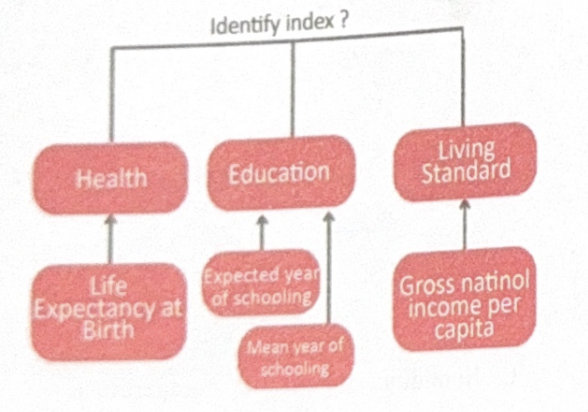
Identify the index?
Explanation: ***QALY*** - **Quality-Adjusted Life Years (QALYs)** combine the length of life with the **quality of life** lived, taking into account healthcare utility values (e.g., from 0 for dead to 1 for perfect health). - An increase in life expectancy due to healthcare advancements, coupled with assumed utility values, directly enables the calculation of QALYs gained or lost. *HALE* - **Health-Adjusted Life Expectancy (HALE)** is a measure of the average number of years that a person can expect to live in "**full health**" by adjusting for years lived in less than full health due to disease or injury. - While it incorporates health status, it specifically focuses on time lived in full health rather than the utility-weighted quality of life over the entire lifespan as QALYs do. *DALY* - **Disability-Adjusted Life Years (DALYs)** measure the total number of healthy years lost due to disease, disability, or premature death. - DALYs are a measure of disease burden, quantifying years lost, whereas QALYs are a measure of health gains or health states. *DFLE* - **Disability-Free Life Expectancy (DFLE)** measures the expected number of years an individual will live without disability. - While it considers the absence of disability, it does not incorporate the concept of "utility values" or varying degrees of health-related quality of life beyond a binary disabled/non-disabled state, as QALYs do.
Explanation: ***Discussion with doctors in PHC and implement accordingly*** - **Primary Healthcare (PHC) doctors** possess critical hands-on knowledge of common health issues, local demographics, and daily health challenges faced by the community. - Their involvement ensures the program is **practically viable** and tailored to the specific needs and resources available at the grassroots level for effective implementation. *Discussion with leaders in community and implement accordingly* - While engaging community leaders is important for acceptance and dissemination, they may lack the **medical expertise** required to design effective and clinically sound health interventions. - Relying solely on leaders might lead to programs that are **socially acceptable but not medically optimal** or comprehensive. *Discussion with people in community and decide according to it* - Involving the community is crucial for program adherence and understanding local needs, but **laypersons** may not have the necessary medical knowledge to make informed decisions about complex health interventions. - Their input is valuable for relevance and acceptance, but medical and public health expertise is required for program design and implementation to ensure **efficacy and safety**. *Discussion and decision taken by the health ministry regarding implementation* - The health ministry sets policies and provides overall strategic direction, but they often lack direct, **on-the-ground understanding** of specific local health issues and implementation challenges. - A top-down approach without involving local healthcare providers can lead to programs that are **not feasible** or effective in the local context.
Explanation: ***Unipolar depressive disorders*** - **Unipolar depressive disorders** are the leading cause of DALYs lost among neuropsychiatric conditions globally. - This is due to their **high prevalence**, **early age of onset**, and significant impact on **functional capacity** and quality of life. *Panic disorders* - While panic disorders significantly impair an individual's quality of life, their **prevalence** and **disability burden** are generally lower than that of unipolar depressive disorders. - They tend to cause episodic, intense distress rather than chronic, pervasive functional impairment to the same extent as severe depression. *Obsessive compulsive disorder* - **OCD** can be severely disabling, but its **prevalence** is lower than that of unipolar depressive disorders. - The impact on DALYs, while substantial for affected individuals, does not reach the global burden attributed to depression. *Bipolar affective disorders* - **Bipolar affective disorders** contribute significantly to DALYs due to their chronic nature and severe episodes of mood disturbance. - However, their **prevalence** is lower compared to unipolar depressive disorders, resulting in a lower overall DALY burden globally.
Explanation: ***Mortality and disability*** - **DALYs** quantify the overall burden of disease by combining years of life lost due to **premature mortality** and years lived with disability. - This metric provides a comprehensive measure of disease impact, reflecting both the fatal and non-fatal consequences of illness. *Morbidity and disability* - While both **morbidity** (illness) and **disability** contribute to disease burden, DALYs specifically quantify the years lived with disability, not just the general state of morbidity. - **Morbidity** is a broader term encompassing any illness or disease, which doesn't fully capture the "years lost" component of DALYs. *None of the options* - This option is incorrect because **DALYs** are explicitly defined by the combination of mortality and disability. - The definition of **DALYs** is standard in public health and epidemiology. *Morbidity and mortality* - Although both **morbidity** and **mortality** are crucial aspects of population health, DALYs use **disability** (specifically "years lived with disability" or YLDs) in conjunction with **mortality** ("years of life lost" or YLLs). - Simply using "morbidity" is less precise than "disability" when defining the components of DALYs.
Explanation: ***DALY includes both Years of Life Lost (YLL) and Years Lived with Disability (YLD).*** - This statement is **correct**. The fundamental formula is **DALY = YLL + YLD**. - **YLL (Years of Life Lost)** quantifies the burden of premature mortality by measuring years of potential life lost due to early death. - **YLD (Years Lived with Disability)** quantifies the burden of morbidity by measuring time lived in states of less than full health. - **DALY** is a comprehensive health metric designed to capture the total burden of disease by integrating both mortality and morbidity components. - This unified metric allows comparison of disease burden across different conditions and populations. *Years of Life Lost (YLL) is not included in DALY calculations.* - This is **incorrect**. YLL is a core component of DALY calculations, representing the mortality burden. *Years lost due to disability (YLD) are not considered in DALY.* - This is **incorrect**. YLD is an essential component of DALY, representing the morbidity burden. *DALY only measures mortality and does not include morbidity.* - This is **incorrect**. DALY explicitly measures both mortality (through YLL) and morbidity (through YLD), making it a comprehensive burden of disease measure.
Explanation: ***Mass media dissemination*** - This approach primarily involves a **one-way transfer of information** from health authorities to the public without direct, active involvement of the target audience in the creation or tailoring of the messages. - While it can raise awareness on a large scale, it generally **lacks the interactive and collaborative elements** that define participatory methods in health education. - There is **no feedback mechanism** or dialogue between the educator and the audience. *Community engagement approach* - This is a **highly participatory method** where community members are actively involved in identifying health issues, planning interventions, and implementing solutions relevant to their specific needs. - It emphasizes **shared decision-making** and ownership, ensuring that programs are culturally appropriate and sustainable. *Lecture-based teaching approach* - While this allows for some **question-answer interaction**, it is primarily a **didactic, teacher-centered method** where information flows from the educator to the learners. - It involves **limited active participation** from the audience in content creation or decision-making, though it may include some discussion. - More participatory than mass media, but less so than community engagement or health promotion approaches. *Health promotion approach* - This is an **umbrella term** that often encompasses participatory methods, focusing on empowering individuals and communities to take control over factors influencing their health. - It involves educating and enabling people to increase control over their own health and its determinants, often through **collaborative efforts** and community involvement.
Explanation: ***Cost effectiveness*** - While an important consideration in healthcare policy and management, **cost-effectiveness** is an outcome or an evaluation criterion rather than a direct, inherent element or principle of primary healthcare delivery itself. - Primary healthcare focuses on access, equity, comprehensiveness, and community participation rather than solely on economic efficiency as a foundational element. *Health education* - **Health education** is a core component of primary healthcare, empowering individuals and communities to make informed decisions about their health and adopt healthy behaviors. - It plays a crucial role in **disease prevention** and promoting self-care. *Intersectoral coordination* - **Intersectoral coordination** involves collaborating with other sectors (e.g., education, agriculture, housing) to address the broader determinants of health, which is a key principle of primary healthcare. - It recognizes that health outcomes are influenced by factors beyond the healthcare system alone. *Provision of essential drugs* - The **provision of essential drugs** is a fundamental element of primary healthcare, ensuring access to necessary medications at an affordable cost for effective treatment and management of common health problems. - This accessibility is crucial for achieving **universal health coverage**.
Explanation: ***Cost benefit analysis*** - In **cost-benefit analysis**, the **benefits of a program** are quantified in monetary terms and then compared directly with the **monetary cost** of the program. - This method is used to determine if the **monetary gain (or benefit)** from a program outweighs its monetary expenditure. *Cost effective analysis* - **Cost-effectiveness analysis** compares the **costs of alternative programs** with their effectiveness, usually measured in natural units suitable for the health outcome (e.g., lives saved, cases cured). - It does not assign a monetary value to the health outcome but rather identifies the intervention that achieves the **desired outcome at the lowest cost** or the maximum outcome for a given cost. *Management by objectives* - **Management by objectives (MBO)** is a strategic management model that aims to improve organizational performance by clearly defining objectives that are agreed to by both management and employees. - This concept is primarily about **setting goals and tracking performance** within an organization, not about analyzing program costs versus outcomes. *Cost utility study* - A **cost-utility analysis (CUA)** is a type of cost-effectiveness analysis where the health outcome is measured in **quality-adjusted life years (QALYs)** or disability-adjusted life years (DALYs). - It accounts for both the **quantity and quality of life**, but it still does not express benefits in direct monetary terms.
Explanation: ***QALYs gained*** - **Quality-Adjusted Life Years (QALYs)** is the most comprehensive measure in cost-effectiveness analysis as it accounts for both the quantity and quality of life - Combines years of life added with a utility score reflecting health-related quality of life during those years - Provides a holistic view that captures both mortality and morbidity benefits of interventions *Number of heart attacks avoided* - Specific to a single clinical outcome and does not account for other health benefits or adverse effects - While important for cardiovascular interventions, it is too narrow to serve as a comprehensive cost-effectiveness indicator - Does not capture broader impact on overall health, quality of life, or longevity *Cost per life year gained* - Focuses on the quantity (length) of life gained but does not consider the quality of those gained years - An intervention might add years of life that are of poor quality, which this measure cannot differentiate - Less comprehensive than QALYs as it misses the health status dimension *Number of life years gained* - Only considers the extension of life without incorporating health status or quality of life during additional years - Provides an incomplete picture as it treats all life years equally regardless of health state - A longer life with significant disability would be valued the same as healthy years
Explanation: ***Human developmental index*** - The **Human Development Index (HDI)** is the correct answer as the diagram exactly represents its three core dimensions - HDI measures overall achievement in: **Health** (life expectancy at birth), **Education** (mean years of schooling and expected years of schooling), and **Living standards** (GNI per capita) - These are the standard components published by UNDP for calculating HDI - HDI is a summary measure of average achievement in key dimensions of human development *Human poverty index* - The Human Poverty Index (HPI) was an older measure that has been discontinued - HPI focused on deprivations rather than overall development achievements - The diagram shows development indicators (positive achievements), not deprivation indicators - HPI has been replaced by the Multidimensional Poverty Index (MPI) *POLI* - **POLI** (Physical Quality of Life Index) is a different index that uses infant mortality, life expectancy at age one, and literacy rate - The components shown in the diagram (mean years of schooling, expected years of schooling, GNI per capita) are not part of POLI - This is not a recognized standard index in current use *Multidimensional poverty index* - The **Multidimensional Poverty Index (MPI)** measures acute multidimensional poverty across health, education, and living standards - However, MPI uses **different specific indicators**: nutrition, child mortality, years of schooling, school attendance, cooking fuel, sanitation, drinking water, electricity, housing, and assets - The diagram shows HDI components (life expectancy, mean/expected years of schooling, GNI per capita), which are NOT the MPI indicators - MPI focuses on deprivations at the household level, while the diagram shows aggregate development measures
Get full access to all questions, explanations, and performance tracking.
Start For Free