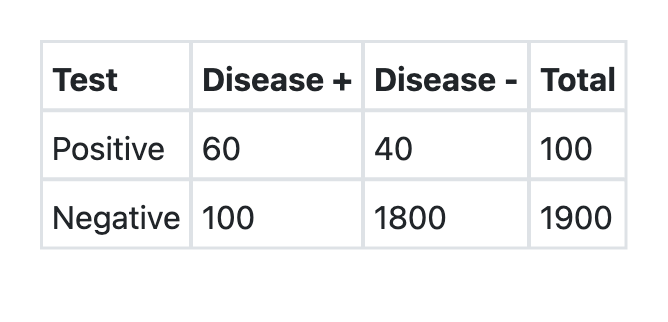
A study that examines individuals who have already contracted a disease to identify risk factors is called:
In the context of a cohort study, which of the following statistical measures is not typically used?
Berksonian bias is a type of ?
Which study design is best for rare diseases?
According to Hill's criteria, which of the following is NOT a criterion for establishing causality in noncommunicable diseases?
In which type of study is selection bias most likely to occur?
The difference between the incidence in the exposed and non-exposed group is best given by:
A 10-year long study concerning the use of fluorides and pit and fissure sealants in the control of caries on the same population group is an example of:
What is the primary purpose of interventional studies in clinical research?
What is the definition of Population Attributable Risk?
Explanation: ***Case control*** - A **case-control study** specifically examines individuals who have already contracted the disease (**cases**) and compares them to those without the disease (**controls**). - The **cases** component directly addresses studying people who have already developed the disease to identify **risk factors** and **exposures** that led to the condition. - This is a **retrospective study design** that works backward from disease to exposure. *Control cohort* - A control cohort refers to a group of individuals who **do not have the disease or exposure** of interest and serve as a comparison group. - This is a component of studies, not a study type itself. - This option focuses on **healthy or unexposed individuals**, not those who have already contracted the disease. *Cohort* - A **cohort study** follows a group of individuals over time to observe who develops disease (**prospective**) or examines past exposures and outcomes (**retrospective**). - While it may include diseased individuals, its primary focus is on **disease incidence** and **temporal relationships**, starting from exposure and moving forward to disease outcome. *Cross-sectional* - A **cross-sectional study** examines disease and exposure status **simultaneously** at a single point in time. - It provides a **snapshot** of prevalence but does not specifically focus on examining those who have already contracted disease to identify risk factors. - It cannot establish **temporal relationships** between exposure and disease.
Explanation: ***Odds ratio*** - The **odds ratio** is primarily used in **case-control studies** to estimate the association between exposure and outcome. - While it can be calculated in a cohort study, it is not the most appropriate or typical measure of association, as the **relative risk** can be directly calculated. *Incidence rate* - **Incidence rate** is a measure reflecting the **rate at which new cases** of a disease or health condition occur in a population at risk over a specified period. - It is a fundamental measure in cohort studies to quantify the **risk of developing an outcome** in exposed versus unexposed groups. *Attributable risk percentage* - The **attributable risk percentage** quantifies the proportion of disease in the exposed group that is **attributable to the exposure**. - This measure helps determine the public health impact of an exposure in a cohort study. *Relative risk* - The **relative risk** (also called risk ratio) directly compares the incidence of disease in the exposed group to the incidence in the unexposed group. - It is the **primary measure of association** calculated in cohort studies, indicating how many times more likely an exposed group is to develop the outcome compared to an unexposed group.
Explanation: ***Selection bias*** - **Berkson's bias** is a form of **selection bias** that arises in studies conducted using hospital data. - It occurs when the probability of admission to a hospital or inclusion in a study is conditional on both exposure and disease status, leading to a **flawed association** between them. *Interviewer bias* - **Interviewer bias** is a type of **information bias** where the interviewer's expectations or knowledge about the study or participants influence the way information is sought or recorded. - This typically affects the **data collection process** and not the selection of participants. *Information bias* - **Information bias** is a broad category of biases that arise from **systematic errors in measurement** or classification of exposure or disease. - While Berkson's bias can lead to misinformation, its root cause is in how subjects are selected, not how data on those subjects is collected after selection. *Recall bias* - **Recall bias** is a type of **information bias** where there are systematic differences in the way participants **recall past events or exposures**. - It is particularly common in **case-control studies** where individuals with a disease may remember exposures differently than healthy controls.
Explanation: ***Case-control*** - This design is ideal for rare diseases because it starts by identifying individuals with the disease (cases) and then retrospectively compares their exposure to a potential risk factor with a group of healthy individuals (controls). - This **retrospective approach** is efficient since it does not require waiting for new cases to develop and allows for the investigation of multiple exposures for a single outcome. *Cross-sectional* - This study design determines the **prevalence** of a disease and exposures at a single point in time. - For rare diseases, a cross-sectional study would likely find very few or no cases, making it **inefficient** for studying disease etiology. *Cohort* - In a cohort study, a group of exposed individuals and a group of unexposed individuals are followed over time to see who develops the disease. - This design is **impractical and expensive** for rare diseases because a very large cohort would be needed to observe a sufficient number of disease cases. *Randomized trial* - Randomized controlled trials are primarily used to assess the **efficacy of interventions** by randomly assigning participants to treatment or control groups. - This design is **not suitable for studying the etiology** of rare diseases or risk factors, as it involves manipulating exposure, which is unethical for potential causes of disease.
Explanation: ***Absence of temporal sequence*** - A crucial criterion for establishing causality is the **presence of a temporal sequence**, meaning the exposure must precede the outcome. - The **absence of a temporal sequence** would argue directly against causality, as the cause cannot come after the effect. *Strength of association* - This criterion suggests that a **stronger statistical association** between an exposure and an outcome makes a causal relationship more likely. - A large **relative risk** or **odds ratio** indicates a strong association. *Dose response relationship* - This criterion implies that as the **amount or duration of exposure increases**, the **risk or severity of the outcome also increases**. - This **dose-response gradient** strengthens the argument for a causal link. *Specificity of association* - This criterion suggests that a single exposure leads to a **specific effect**, and not a wide range of unrelated effects. - While helpful, **lack of specificity does not rule out causality**, as many exposures can have multiple effects.
Explanation: ***Case-control study*** - **Selection bias** is a common concern as cases and controls are often selected based on their disease status, making it difficult to ensure they represent the underlying population's exposure distribution. - This study design inherently involves **retrospective data collection**, increasing the risk of differential selection of participants based on their exposure history. - The retrospective nature and non-random selection of cases and controls makes this study type **most vulnerable** to selection bias. *Cohort study* - While selection bias can occur (e.g., participants lost to follow-up), it is generally **less pronounced** than in case-control studies because subjects are selected based on **exposure status** before disease development, minimizing bias related to outcome. - The prospective nature of many cohort studies reduces the risk of selecting participants based on a known outcome. *Cross-sectional study* - Selection bias can occur if the sample is not representative of the target population. - However, since both exposure and outcome are measured **simultaneously**, there is no temporal selection based on outcome status as seen in case-control studies. - The risk is lower than case-control studies as participants are typically selected from a defined population at one point in time. *Randomized controlled trial (RCT)* - **Randomization** is specifically designed to minimize selection bias by ensuring that exposure (intervention) assignment is independent of participant characteristics. - The process of randomly assigning participants to treatment or control groups reduces the likelihood of systemic differences between groups at baseline.
Explanation: ***Attributable risk*** - **Attributable risk** (AR), also known as risk difference, directly quantifies the absolute difference in disease incidence between an **exposed group** and an **unexposed group**. - It represents the amount of disease incidence (or risk) in the exposed group that is **directly attributable to the exposure**, assuming a causal relationship. *Population attributable risk* - **Population attributable risk** (PAR) measures the proportion of disease incidence in the **total population** that is attributable to the exposure. - It takes into account both the impact of the exposure and the **prevalence of the exposure** in the population, which is distinct from simply comparing exposed and non-exposed groups. *Odds ratio* - The **odds ratio** (OR) is a measure of association between an exposure and an outcome, representing the **odds of an outcome occurring in the exposed group** compared to the odds of it occurring in the unexposed group. - It does not directly express the difference in incidence but rather the **ratio of odds**, often used in case-control studies. *Relative risk* - **Relative risk** (RR), or risk ratio, is the ratio of the **incidence of an outcome in the exposed group** to the incidence in the unexposed group. - It indicates how many times more likely an exposed group is to develop the outcome compared to an unexposed group, expressing a **ratio rather than a difference**.
Explanation: ***Prospective cohort study*** - This study design involves following a group of individuals (**cohort**) over a period of time (10 years) to observe the development of an outcome (caries control) in relation to specific exposures (fluorides and sealants). - The study starts with individuals free of the outcome and collects data prospectively, making it ideal for studying the **incidence** and **natural history** of diseases or the effectiveness of interventions over time. *Experimental study* - An experimental study, such as a **randomized controlled trial (RCT)**, would involve the active manipulation of an intervention and random assignment of subjects to different groups (e.g., fluoride group vs. no fluoride group). - While interventions are being observed (fluorides, sealants), the description does not mention random assignment or direct researcher manipulation for comparison, only observation over time. *Case control study* - A case-control study is **retrospective**, meaning it starts with an outcome (cases with caries vs. controls without caries) and looks back in time to identify potential exposures. - This study, however, follows the same population group for 10 years to observe outcomes, which is a key characteristic of prospective designs. *Cross sectional study* - A cross-sectional study measures exposures and outcomes at a **single point in time**, providing a snapshot of the population. - This study, lasting 10 years and observing changes over time, clearly goes beyond a single time point and is designed to assess changes and relationships longitudinally.
Explanation: ***Testing Hypotheses*** - Interventional studies, such as **randomized controlled trials**, are specifically designed to **test cause-and-effect relationships** by actively intervening. - They aim to determine if a specific intervention (e.g., a drug, a therapy) produces a hypothesized outcome. *Confirming Hypotheses* - While interventional studies can confirm hypotheses, their primary role is not just confirmation but the initial **rigorous testing** of a hypothesis under controlled conditions. - Confirmation often implies that previous evidence already strongly supports the hypothesis. *Manipulating Hypotheses* - Hypotheses themselves are not "manipulated"; rather, the **variables** within the study design (e.g., treatment groups, dosages) are manipulated to test the hypothesis. - This option incorrectly applies the concept of manipulation to the hypothesis. *Formulating Hypotheses* - Hypothesis formulation usually occurs during the **observational research phase** or through literature review, *before* interventional studies are designed. - Observational studies or descriptive research are more typically used for generating new hypotheses.
Explanation: ***Correct: The difference between incidence in population and incidence in non-exposed.*** - **Population Attributable Risk (PAR)** quantifies the excess incidence of disease in the total population that is attributable to a specific exposure. - Formula: **PAR = Incidence in total population - Incidence in unexposed** - It represents the amount of disease burden that would be eliminated from the entire population if the exposure were completely removed. - PAR accounts for both the strength of association and the prevalence of exposure in the population. *Incorrect: The difference between incidence in population and incidence in exposed.* - This formula (I(population) - I(exposed)) does not correctly capture PAR. - This calculation does not isolate the portion of disease attributable to the exposure across the entire population. - It fails to provide meaningful information about attributable risk. *Incorrect: The difference between incidence in population and incidence in non-exposed compared with incidence in exposed.* - This option introduces unnecessary complexity and is not the standard definition of PAR. - PAR is a simple difference, not a comparative ratio involving exposed individuals. - This description confuses PAR with other epidemiological measures. *Incorrect: The difference between incidence in exposed and incidence in non-exposed.* - This describes **Attributable Risk (AR)** or **Risk Difference (RD)**, not Population Attributable Risk. - Formula: **AR = I(exposed) - I(unexposed)** - AR measures excess risk in the exposed group only, without considering the prevalence of exposure in the total population. - PAR differs from AR by accounting for how common the exposure is in the population.
Get full access to all questions, explanations, and performance tracking.
Start For Free