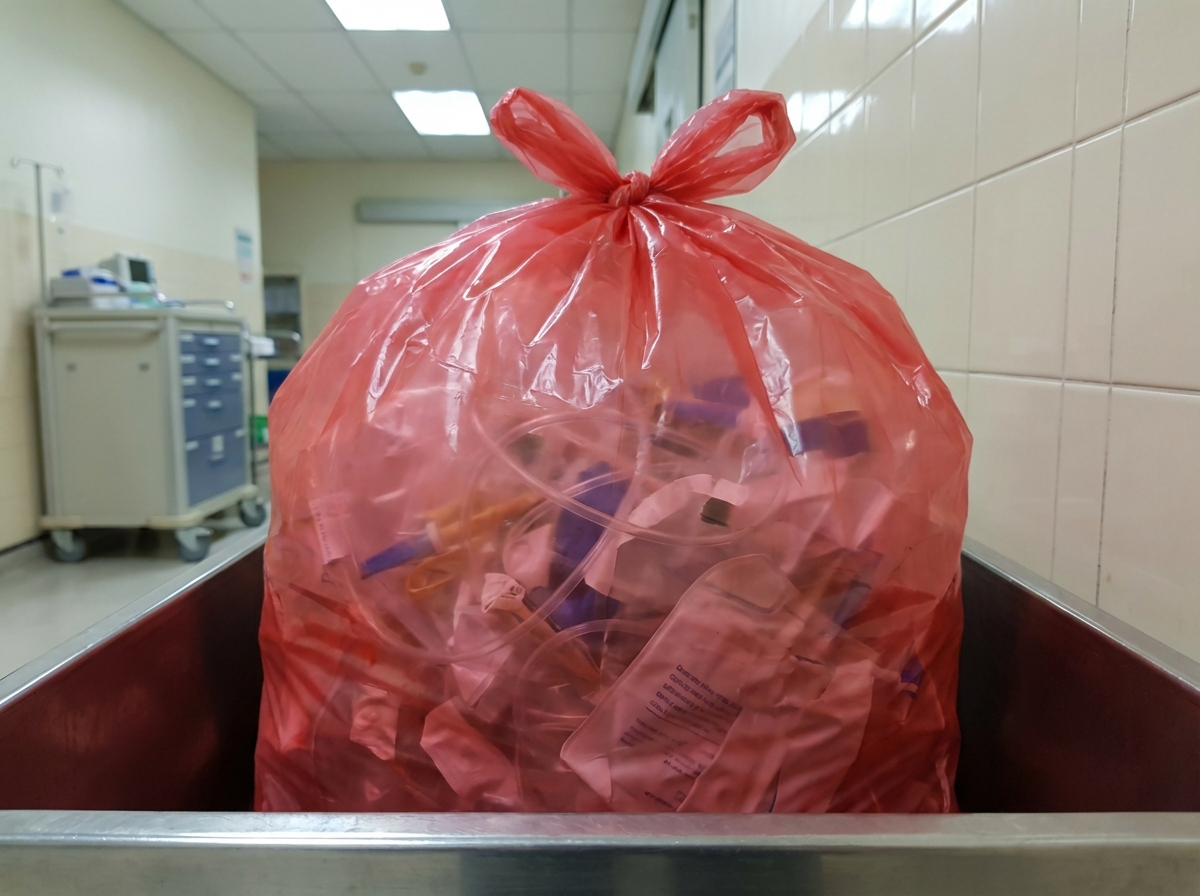
What is incineration?
Skeletal fluorosis can be diagnosed on X-ray of which anatomical region?
The Ohotolidine test is used for detecting which of the following?
Depression is associated with which of the following neurological conditions?
Which of the following is NOT considered a "Water-Washed Disease"?
What is the recommended light index for a living room?
Mottled enamel is due to:
What is the primary function of a grit chamber in modern sewage treatment plants?
According to school health services recommendations, what is the ideal ratio of urinals and privies per children in a school?
Which one of the following pollutants causes surface deterioration of leather goods?
Explanation: ### Explanation **1. Why Option C is Correct:** Incineration is a waste treatment process that involves the combustion of organic substances contained in waste materials. Chemically, combustion is a **high-temperature oxidation process**. During this process, waste is converted into ash, flue gas, and heat. The temperatures typically range from **800°C to 1100°C**, ensuring the complete destruction of pathogens and a significant reduction (up to 90%) in waste volume. **2. Why Other Options are Incorrect:** * **Options A & B (Reduction):** Reduction is a chemical process involving the gain of electrons or the removal of oxygen. Incineration, conversely, requires an excess of oxygen to burn waste; therefore, it is an oxidative, not a reductive, process. * **Option D (Low Temperature):** Low temperatures lead to incomplete combustion, which results in the formation of toxic byproducts like dioxins and furans. Effective incineration specifically requires high temperatures to ensure biological safety and chemical breakdown. **3. High-Yield Clinical Pearls for NEET-PG:** * **Best Method for:** Incineration is the preferred method for **Anatomical Waste** (Human/Animal tissues) and **Cytotoxic drugs** (Yellow Bag waste). * **Contraindications:** Never incinerate **PVC (plastics)** or **mercury**, as this releases highly toxic dioxins and heavy metal vapors into the atmosphere. * **Key Components:** A modern incinerator consists of a **Primary Chamber** (800°C ± 50°C) and a **Secondary Chamber** (1050°C ± 50°C). * **Rule of Thumb:** If a question mentions "Volume reduction" and "Pathogen destruction" for infectious solids, think Incineration.
Explanation: **Explanation:** Skeletal fluorosis is a chronic metabolic bone disease caused by the ingestion of excessive fluoride (typically >10 mg/day) over a prolonged period. The diagnosis is primarily radiological, and the **forearm** is the most characteristic site for early diagnosis. **Why Forearm is the Correct Answer:** The hallmark of skeletal fluorosis is the **calcification of interosseous membranes and ligaments**. In the forearm, the calcification of the interosseous membrane between the radius and ulna is a classic, early radiological sign. Additionally, osteosclerosis (increased bone density) and the formation of osteophytes (bone spurs) are prominent in this region. **Analysis of Incorrect Options:** * **Hips & Knee:** While skeletal fluorosis does affect the axial skeleton (spine, pelvis) and large joints, leading to stiffness and "poker back" deformity, these are not the specific anatomical regions used for the definitive radiological diagnosis in the context of standard medical examinations. The pelvis and spine show increased density, but the interosseous membrane calcification in the forearm is more pathognomonic. **High-Yield Clinical Pearls for NEET-PG:** * **Safe Limit of Fluoride:** 0.5–0.8 mg/L (in drinking water). * **Dental Fluorosis:** Occurs at levels >1.5 mg/L; characterized by "mottling" of enamel. * **Skeletal Fluorosis:** Occurs at levels >3–6 mg/L. * **Nalgonda Technique:** Used for fluoride removal (Defluoridation) using alum, lime, and bleaching powder. * **Genu Valgum:** A characteristic physical deformity (knock-knees) seen in endemic fluorosis areas, particularly when associated with molybdenum toxicity (as seen in parts of India).
Explanation: **Explanation:** The **Orthotolidine (OT) test** is a classic chemical method used to determine the presence of **Free and Combined Chlorine** in water. When orthotolidine reagent is added to water containing chlorine, it reacts to produce a characteristic **yellow color**. The intensity of the yellow color is proportional to the concentration of chlorine present, which is then measured by comparing it against standard color discs. * **Free Residual Chlorine:** Reacts almost instantaneously (within 10 seconds). * **Combined Chlorine (Chloramines):** Reacts more slowly (measured after 5 minutes). **Analysis of Incorrect Options:** * **B & C (Nitrites and Nitrates):** These are indicators of organic pollution and the nitrogen cycle in water. Nitrates are specifically associated with Infantile Methaemoglobinaemia (Blue Baby Syndrome). They are not detected by the OT test. * **D (Ammonia):** Ammonia in water indicates recent fecal contamination. It is typically detected using **Nessler’s Reagent**, which produces a yellow-brown coloration. **High-Yield Clinical Pearls for NEET-PG:** 1. **OT Test Limitation:** It cannot distinguish between free and combined chlorine effectively if read late. 2. **OTA (Orthotolidine-Arsenite) Test:** This is a superior modification used to quantitatively distinguish between Free Chlorine, Combined Chlorine, and false positives caused by interfering substances like Nitrites, Iron, or Manganese. 3. **Chlorine Demand:** The difference between the amount of chlorine added to water and the amount of free residual chlorine remaining after a specific contact time (usually 30-60 minutes). 4. **Ideal Residual Chlorine:** For safe drinking water, the recommended free residual chlorine is **0.5 mg/L** after a contact period of 1 hour.
Explanation: **Explanation:** **Cerebrovascular disorder** is the correct answer because of the well-established clinical entity known as **Post-Stroke Depression (PSD)**. Approximately one-third of stroke survivors develop depression, which is attributed to both the psychological impact of disability and biological changes. Ischemic lesions, particularly those involving the **frontal cortex and basal ganglia**, disrupt neural circuits (such as the prefrontal-subcortical circuits) and deplete neurotransmitters like serotonin and dopamine, directly triggering depressive symptoms. **Analysis of Incorrect Options:** * **Multiple Sclerosis (MS):** While depression is highly prevalent in MS patients due to demyelination and psychosocial stress, the question specifically targets the classic association often emphasized in public health and geriatric psychiatry regarding vascular burden. * **Epilepsy:** Although there is a bidirectional relationship between epilepsy and depression (interictal depression), it is considered a psychiatric comorbidity rather than a primary neurological driver in the same systemic context as vascular disease. * **None of the above:** Incorrect, as the link between vascular health and mood (the "Vascular Depression" hypothesis) is a core concept in neuropsychiatry. **High-Yield Clinical Pearls for NEET-PG:** * **Vascular Depression Hypothesis:** Suggests that cerebrovascular disease (even subclinical "silent" infarcts) can predispose, precipitate, or perpetuate depression in older adults. * **Location Matters:** Lesions in the **left frontal lobe** and **left basal ganglia** are most strongly associated with post-stroke depression. * **Impact:** PSD is associated with poorer functional recovery, increased cognitive impairment, and higher mortality rates following a stroke.
Explanation: This question tests your understanding of the **Feachem Classification of Water-Related Diseases**, a high-yield topic for NEET-PG. ### **Explanation of the Correct Answer** **Typhoid (Option D)** is a **Water-Borne Disease**, not a water-washed one. Water-borne diseases occur when pathogens are ingested through contaminated drinking water (fecal-oral route). Other examples include Cholera, Hepatitis A & E, and Amoebiasis. ### **Why the other options are "Water-Washed"** **Water-washed diseases** are infections caused by a **lack of adequate water for personal hygiene** (washing hands, face, and body). They are not necessarily caused by drinking contaminated water, but by the scarcity of water to maintain cleanliness. * **Scabies (Option A):** A parasitic skin infestation that spreads easily when body hygiene is poor. * **Trachoma (Option B):** A chronic contagious conjunctivitis; frequent face washing is the primary preventive measure (part of the WHO 'SAFE' strategy). * **Conjunctivitis (Option C):** Bacterial or viral eye infections spread rapidly in conditions where water for hand and face washing is limited. ### **High-Yield Clinical Pearls for NEET-PG** To master this topic, remember the four categories of water-related diseases: 1. **Water-Borne:** Ingestion of contaminated water (e.g., Typhoid, Cholera). 2. **Water-Washed:** Lack of hygiene/volume of water (e.g., Scabies, Trachoma, Leprosy, Lice). 3. **Water-Based:** Host lives in water (e.g., Schistosomiasis, Guinea worm). 4. **Water-Related Insect Vector:** Insects breeding near water (e.g., Malaria, Filariasis, Dengue). **Mnemonic for Water-Washed:** *"Skin and Eyes"* – If the disease affects the skin (Scabies) or eyes (Trachoma), it is likely water-washed.
Explanation: ### Explanation **1. Understanding the Correct Answer (Option A: 8)** In Community Medicine and Environmental Health, the **Light Index** (also known as the Window-to-Floor Area Ratio) is a critical standard for housing hygiene. It is defined as the ratio of the total window area to the total floor area of a room. For a living room to have adequate natural illumination and ventilation, the recommended light index is **1:10 to 1:8**. In the context of this question, **8** represents the denominator of the ratio (1/8th of the floor area). This ensures that at least 12.5% of the floor space is matched by window openings to prevent dampness and promote physical well-being. **2. Analysis of Incorrect Options** * **Option B (15):** A ratio of 1:15 provides insufficient natural light for a living area, leading to poor visibility and potential growth of pathogens in dark corners. * **Options C and D (20 and 25):** These values represent even smaller window areas (5% and 4% of floor area, respectively). Such low indices are inadequate for residential standards and are generally associated with poorly ventilated storage spaces or sub-standard housing. **3. High-Yield Clinical Pearls for NEET-PG** * **Daylight Factor:** The illumination at a point inside a room should ideally be **1% or more** (the ratio of indoor light to outdoor light). * **Floor Space:** The minimum floor area for a single person should be **70-100 sq. ft.** * **Cubic Space:** To prevent overcrowding, the recommended air space per person is **500 cubic feet** (though this is less emphasized than floor area). * **Overcrowding Definition:** A room is considered overcrowded if two persons over 9 years of age (of opposite sexes, not married) must sleep in the same room.
Explanation: **Explanation:** **Mottled enamel**, clinically known as **Dental Fluorosis**, is a condition caused by the chronic ingestion of excessive fluoride during the period of tooth development (calcification). 1. **Why Option B is correct:** Fluoride has a "double-edged sword" effect on dental health. While optimal levels (0.5–0.8 mg/L) prevent dental caries, concentrations exceeding **1.5 mg/L** interfere with ameloblasts (enamel-forming cells). This leads to hypomineralization of the enamel, manifesting as lusterless, paper-white patches, which may later turn brown or black (mottling) and lead to pitted or chipped teeth. 2. **Why other options are incorrect:** * **Vitamin A deficiency:** Primarily affects ocular health (Bitot’s spots, Xerophthalmia) and epithelial integrity, not enamel mineralization. * **Vitamin D deficiency:** Causes Rickets (children) or Osteomalacia (adults). While it can cause enamel hypoplasia, it does not produce the characteristic "mottling" associated with fluoride. * **Teratogens:** These are agents (like Thalidomide or Phenytoin) that cause structural birth defects during embryonic development, rather than specific dental mineralization issues like mottling. **High-Yield Clinical Pearls for NEET-PG:** * **Safe Limit:** The WHO recommended upper limit for fluoride in drinking water is **1.5 mg/L**. * **Skeletal Fluorosis:** Occurs with prolonged intake of fluoride at levels of **3–10 mg/L**, leading to "poker back" deformity and crippling. * **Defluoridation:** The **Nalgonda Technique** (using alum and lime) is the most common method used in India for removing excess fluoride. * **Endemicity:** Fluorosis is a significant public health issue in states like Rajasthan, Andhra Pradesh, and Punjab.
Explanation: ### Explanation **Primary Function: Settlement of Heavy Inorganic Objects** In modern sewage treatment, the **grit chamber** is a crucial component of **Primary Treatment (Physical Treatment)**. Its specific function is to remove "grit"—which includes heavy, inorganic solids such as sand, gravel, cinders, and broken glass. This is achieved by reducing the velocity of the sewage flow, allowing these dense materials to settle by gravity while keeping lighter organic matter in suspension. This step is vital to protect mechanical equipment (pumps and mixers) from abrasion and to prevent the clogging of pipes and sedimentation tanks. **Analysis of Incorrect Options:** * **A. Formation of sludge:** This occurs primarily in the **Primary Sedimentation Tank** (where organic solids settle) and the **Secondary Sedimentation Tank** (where biological floc settles). * **B. Removal of floating large objects:** This is the function of **Screens** (Screening), which is the very first step in sewage treatment to remove rags, sticks, and plastics. * **D. Formation of the Zoogleal layer:** This is a characteristic feature of **Biological/Secondary Treatment**, specifically in **Trickling Filters**. The layer consists of bacteria, algae, and fungi that oxidize organic matter. **High-Yield NEET-PG Pearls:** * **Sequence of Treatment:** Screening → Grit Chamber → Primary Sedimentation → Secondary (Biological) Treatment. * **Grit Chamber Velocity:** The flow is typically maintained at **1 foot per second (0.3 m/s)** to ensure only inorganic matter settles. * **Efficiency Metric:** The success of sewage treatment is measured by the reduction in **BOD (Biochemical Oxygen Demand)**. Secondary treatment (e.g., Activated Sludge Process) can remove up to 90-95% of BOD.
Explanation: ### Explanation **1. Understanding the Correct Answer (Option A)** The School Health Committee (Renuka Ray Committee, 1961) in India laid down specific standards for environmental sanitation in schools to ensure hygiene and prevent the spread of feco-oral diseases. The recommended ratio is **1 urinal for every 60 children** and **1 privy (latrine) for every 100 children**. The logic behind this disparity is frequency of use: children utilize urinals more frequently during short breaks, necessitating a higher density (1:60) compared to privies (1:100), which are used less often for defecation during school hours. **2. Analysis of Incorrect Options** * **Options B, C, and D:** These ratios provide fewer facilities than the statutory requirements. For instance, a ratio of 1:200 for privies or 1:100 for urinals would lead to overcrowding, poor maintenance, and open urination/defecation, increasing the risk of infections like Hookworm and Typhoid among students. **3. High-Yield Clinical Pearls for NEET-PG** * **Location:** Latrines should be located away from the classroom but within the school premises. * **Drinking Water:** There should be at least one tap for every **50 children**. * **Classroom Space:** A minimum of **10 sq. ft. per student** is required. * **Illumination:** Natural light should come from the **left side** (to avoid shadows while writing) and should not fall directly on the eyes. * **Desks:** "Minus desks" (where the edge of the desk overhangs the seat) are preferred to maintain correct posture. * **Combined Health Check-up:** The recommended frequency for a comprehensive medical examination of school children is **once a year** (at entry and thereafter annually).
Explanation: **Explanation:** The correct answer is **Sulphur dioxide ($SO_2$)**. Sulphur dioxide is a major atmospheric pollutant primarily produced by the combustion of fossil fuels. When $SO_2$ comes into contact with leather, it undergoes oxidation to form **sulphuric acid ($H_2SO_4$)**. This acid causes the structural breakdown of leather fibers, a process known as "red rot," leading to surface cracking, loss of tensile strength, and eventual disintegration. This is a classic example of the "deterioration of materials" caused by air pollution. **Analysis of Incorrect Options:** * **Hydrogen sulphide ($H_2S$):** Known for its "rotten egg" odor, it primarily causes the **tarnishing of silver** and blackening of lead-based paints, rather than the structural deterioration of leather. * **Nitrogen dioxide ($NO_2$):** While it contributes to acid rain and can cause fading of textile dyes, it is not the primary agent associated with the specific surface deterioration of leather goods. * **Ozone ($O_3$):** Ozone is a powerful oxidizing agent that primarily causes the **cracking of rubber** (ozonolysis) and the fading of certain fabric dyes. **High-Yield Facts for NEET-PG:** * **Stone Leprosy:** $SO_2$ is responsible for the erosion of monuments (e.g., Taj Mahal) by converting calcium carbonate into calcium sulphate (Gypsum). * **Indicator Plants:** Lichens are highly sensitive to $SO_2$ and serve as biological indicators of air quality. * **Health Impact:** $SO_2$ acts as a potent upper respiratory tract irritant and can trigger acute bronchoconstriction in asthmatic patients. * **London Smog (1952):** A classic "Reducing Smog" dominated by $SO_2$ and particulate matter.
Water Quality and Health
Practice Questions
Air Pollution and Health Effects
Practice Questions
Solid Waste Management
Practice Questions
Hazardous Waste Management
Practice Questions
Housing and Health
Practice Questions
Noise Pollution
Practice Questions
Radiation Health Effects
Practice Questions
Climate Change and Health
Practice Questions
Environmental Impact Assessment
Practice Questions
Disaster Management and Preparedness
Practice Questions
Vector Control
Practice Questions
Environmental Legislation
Practice Questions
Get full access to all questions, explanations, and performance tracking.
Start For Free