Consider the following stages of modern sewage treatment plants : 1. Use of Grit chamber 2. Use of Primary sedimentation tank 3. Screening 4. Use of Sludge digester What would be the correct sequence of the above stages ?
Iodine can be used for the disinfection of which of the following? 1. Water 2. Faeces 3. Urine 4. Skin Select the correct answer using the code given below:
Which of the following insecticides is not used as a larvicide?
The following statements are correct for healthful school environment except:
Excessive nitrates in drinking water can produce:
Consider the following: 1. Skin 2. Water 3. Faeces 4. Urine Bleaching powder can be used for disinfection of which of the above?
The presence of which of the following bacteria in drinking water is an important confirmatory evidence of recent faecal pollution of water?
Endemic ascites occurs due to:
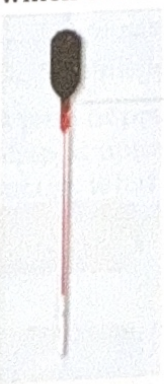
This instrument is used to measure which of the following?
In a post-Diwali air pollution index chart, an AQI value of 470 was recorded. What level of air pollution does this indicate?
Explanation: ***3→1→2→4*** - The correct sequence for modern sewage treatment begins with **screening** (3) to remove large debris, followed by **grit chambers** (1) for sand and gravel, then **primary sedimentation tanks** (2) to settle organic solids. Finally, the collected sludge is processed in a **sludge digester** (4). - This order ensures progressive removal of contaminants, from large physical objects to settled organic matter, optimizing the efficiency of each treatment stage. *2→3→4→1* - This sequence incorrectly places the **primary sedimentation tank** (2) as the first step, which would be inefficient as large debris and grit would interfere with its operation. - It also reverses the order of screening and grit removal, which are crucial initial physical processes. *3→2→1→4* - While starting with **screening** (3) is correct, this sequence incorrectly places the **primary sedimentation tank** (2) before the **grit chamber** (1). - Grit removal should precede primary sedimentation to prevent abrasive materials from damaging equipment and accumulating in sedimentation tanks. *4→2→1→3* - This sequence is entirely incorrect, as it begins with the **sludge digester** (4), which is a final step in sludge processing, not the initial treatment of raw sewage. - It also drastically misorders the preliminary physical treatment stages.
Explanation: ***1 and 4 only*** - **Iodine is highly effective for water disinfection**, particularly in emergency and travel situations, killing bacteria, viruses, and protozoa - **Povidone-iodine is a standard antiseptic for skin disinfection** used pre-operatively, for wound care, and before injections due to its broad-spectrum antimicrobial activity - These are the two established and recommended uses of iodine for disinfection in medical and public health practice *1, 3 and 4* - While iodine effectively disinfects water and skin, it is **not used for urine disinfection** - Urine from healthy individuals is typically sterile and does not require routine disinfection - If disinfection of contaminated urine is needed (rare situations), other chemical agents would be preferred *1, 2 and 3* - Iodine is effective for water disinfection but **not suitable for faecal matter disinfection** - Faeces requires stronger disinfection methods: **chlorine-based compounds (sodium hypochlorite/bleach)**, heat treatment, or proper sewage treatment systems - Iodine is impractical and ineffective for the high pathogen load in faecal waste *1 only* - This option incorrectly excludes skin disinfection, which is **one of the most common applications of iodine** in medical practice - Povidone-iodine solutions (Betadine) are standard antiseptics used worldwide for skin preparation before surgical procedures
Explanation: ***Fenthion*** - **Fenthion** is an **organophosphate insecticide** primarily used as an **adulticide** for **mosquitoes** and other flying insects. - While it can target adult mosquitoes, it is **not commonly used or recommended as a larvicide** due to its higher toxicity profile and environmental concerns compared to other dedicated larvicides. *Dichlorvos* - **Dichlorvos** (DDVP) is an organophosphate insecticide that has been used as a **larvicide**, particularly in situations where rapid knockdown of larvae is required. - It is known for its **quick action** and **fumigant properties**, making it effective against early mosquito stages. *Paris green* - **Paris green** (copper(II) acetoarsenite) is historically one of the **earliest larvicides** used to control mosquito larvae. - It acts as a **stomach poison** when ingested by mosquito larvae. *Abate* - **Abate** (temephos) is a widely used **organophosphate larvicide** known for its **low toxicity to mammals** and aquatic organisms at recommended doses. - It is effective against mosquito larvae in various breeding sites, including drinking water, making it a **preferred choice for public health programs**.
Explanation: ***In the classroom, desks should be of minus type.*** - This statement is **incorrect** and is the exception. For a healthful school environment, desks should ideally be of the **'plus type'**, which means the desk overlaps the bench by at least 2 inches to allow for a comfortable and ergonomically sound seating posture, preventing slouching. - A 'minus type' desk, where the bench overlaps the desk, would lead to poor posture and discomfort, making it an unhealthful arrangement. *Combined window and door area should be 25% of the floor space.* - This statement is **correct** for optimal **ventilation and natural lighting** in a school environment. - Adequate window and door area (typically 20-25% of floor space) ensures proper air circulation and reduces reliance on artificial lighting, contributing to a healthier learning space. *Per capita space for each student should be 6 sq. feet.* - This statement represents an **acceptable minimum per capita space requirement** for students in a classroom according to traditional standards. - Providing sufficient space (minimum 6 sq ft, though 8-10 sq ft is preferred by modern guidelines) prevents overcrowding, allows for mobility, and ensures a comfortable learning environment. *One urinal should be provided for 60 students.* - This statement reflects an **accepted standard** for the **provision of sanitation facilities** in schools. - Adequate numbers of urinals and toilets (ratio of 1:50-60) are crucial for maintaining hygiene, preventing long queues, and ensuring accessibility for students.
Explanation: ***Methaemoglobinaemia*** - Nitrates are converted to **nitrites** in the gastrointestinal tract, especially in infants. Nitrites then oxidize the **ferrous iron (Fe2+)** in hemoglobin to **ferric iron (Fe3+)**, forming **methemoglobin**. - **Methemoglobin** cannot bind oxygen, leading to **cyanosis** and **tissue hypoxia**, often referred to as "blue baby syndrome" in infants. *Polycythemia vera* - This is a **myeloproliferative neoplasm** characterized by the overproduction of red blood cells, white blood cells, and platelets. - It is not caused by nitrate exposure but is rather a bone marrow disorder that can lead to symptoms like headaches, dizziness, and a ruddy complexion due to increased blood viscosity. *Hypochromic microcytic anemia* - This type of anemia is typically caused by **iron deficiency**, leading to smaller (microcytic) red blood cells with less hemoglobin (hypochromic). - It is not directly linked to excessive nitrate consumption; instead, nitrate toxicity primarily affects oxygen transport by converting hemoglobin to methemoglobin. *Hemophilia* - Hemophilia is a **genetic bleeding disorder** caused by a deficiency in specific blood clotting factors, most commonly Factor VIII or Factor IX. - It is an inherited condition and has no association with environmental factors such as nitrate levels in drinking water.
Explanation: ***2, 3 and 4*** - **Bleaching powder** (calcium hypochlorite) is a strong oxidizing agent widely used for **disinfection** in public health. - It is highly effective for **water purification** (chlorination of drinking water and wells), **faeces disinfection** (in latrines and for controlling fecal-oral disease transmission), and **urine disinfection** (in urinals and public sanitation facilities). - These are the **standard applications** of bleaching powder in community medicine and environmental health. *1, 2 and 3* - While bleaching powder is effective for **water** and **faeces** disinfection, it is **NOT recommended for skin disinfection**. - Bleaching powder is a **strong irritant** that can cause chemical burns and skin damage. - **Skin antisepsis** requires gentler agents like alcohol, chlorhexidine, or povidone-iodine—not bleaching powder. *2 and 3 only* - This option correctly includes **water** and **faeces** disinfection. - However, it incorrectly omits **urine**, which is also routinely disinfected with bleaching powder in latrines, urinals, and sanitation systems for **odor control** and **pathogen elimination**. *1 and 2 only* - This option incorrectly includes **skin**, which should not be disinfected with bleaching powder due to its caustic nature. - It also omits both **faeces** and **urine**, which are major applications of bleaching powder in environmental health and sanitation.
Explanation: ***E. coli*** - The presence of **Escherichia coli** (E. coli) in drinking water is a definitive indicator of **recent fecal contamination**. - **E. coli** is a bacterium that normally lives in the intestines of humans and animals and its presence suggests a direct pathway for fecal matter to enter the water supply. *Streptococci* - **Fecal streptococci** (now often referred to as enterococci) can indicate fecal contamination, but they are not as specific as E. coli for **recent human fecal pollution** because they can persist longer in the environment and are found in both human and animal feces. - While useful as an indicator, they are generally considered **less precise for recent human fecal contamination** compared to E. coli. *Klebsiella* - **Klebsiella** species are found in the gastrointestinal tract and can be present in water, but their primary habitat is not exclusively fecal, as they can also be found in soil and on plants. - Therefore, their presence in water is **not as reliable an indicator** of recent fecal pollution as E. coli. *Clostridium* - **Clostridium perfringens** is a spore-forming bacterium found in feces, but its spores are highly resistant and can survive in the environment for extended periods. - Its presence indicates **past or intermittent fecal contamination** rather than recent contamination, making it less suitable for confirming recent fecal pollution.
Explanation: ***Naturally occurring toxin*** - Endemic ascites, specifically **hepatic veno-occlusive disease (HVOD)** leading to ascites, is primarily caused by **pyrrolizidine alkaloids**. - These are **naturally occurring toxins** found in certain plants (e.g., *Crotalaria*, *Heliotropium*) that contaminate food supplies, particularly in endemic regions. *Fungal toxin* - While some fungal toxins (e.g., aflatoxins) are hepatotoxic, they are more commonly associated with **hepatocellular carcinoma** or acute liver failure rather than endemic ascites due to veno-occlusive disease. - HVOD is specifically linked to plant-derived toxins. *Bacterial toxin* - Bacterial toxins are generally not implicated in the pathogenesis of **endemic ascites** through the mechanism of **veno-occlusive disease**. - Bacterial infections can cause liver damage or sepsis, but not typically the specific form of ascites seen in endemic situations. *Viral toxin* - Viruses, such as hepatitis viruses, can cause chronic liver disease and ascites, but this is due to **viral replication and immune-mediated damage**, not a viral toxin in the traditional sense. - Endemic ascites due to toxins refers specifically to exogenous, non-biological toxins.
Explanation: ***Radiant heat*** - The instrument shown is a **globe thermometer** (also called a black globe thermometer), which is used to measure **radiant heat** in an environment. - It consists of a thermometer bulb encased in a matte black copper sphere (typically 6 inches in diameter), designed to absorb and re-emit radiation effectively. - It is a key component in calculating the **Wet Bulb Globe Temperature (WBGT) index**, which assesses heat stress in occupational and environmental health settings. *Cooling power of air* - The **cooling power of air** is measured by instruments like a **katathermometer**, which assesses the combination of air temperature and air movement. - This instrument does not have the features of a katathermometer, such as the large alcohol-filled bulb and specialized scale. *Humidity* - **Humidity** is measured using a **hygrometer** or **psychrometer**, which typically involves sensing changes in materials due to moisture or comparing wet-bulb and dry-bulb temperatures. - The globe thermometer's design is not suited for directly measuring water vapor content in the air. *Temperature* - While it contains a thermometer, a **globe thermometer** measures more than just the ambient air temperature; its primary purpose is to account for the combined effect of **radiant heat, air temperature, and air velocity**. - A standard **dry-bulb thermometer** would be used for simple ambient air temperature measurement alone.
Explanation: ***Severe*** - An **AQI value of 470** falls into the **401-500 range**, which is classified as severe according to most air quality index standards. - This level indicates a high risk of respiratory effects on healthy people and serious health impacts on those with lung diseases. *Moderate* - The moderate category typically spans AQI values from **51 to 100**, indicating acceptable air quality with some risk for sensitive individuals. - An AQI of 470 is significantly higher than this range. *Very poor* - The very poor category generally ranges from AQI values of **301 to 400**, suggesting health warnings of emergency conditions. - While concerning, an AQI of 470 exceeds this level, indicating an even more critical situation. *Poor* - The poor category usually covers AQI values from **201 to 300**, signifying a likely impact on the health of vulnerable groups. - An AQI of 470 is much higher than the poor category, indicating a more hazardous level of pollution.
Water Quality and Health
Practice Questions
Air Pollution and Health Effects
Practice Questions
Solid Waste Management
Practice Questions
Hazardous Waste Management
Practice Questions
Housing and Health
Practice Questions
Noise Pollution
Practice Questions
Radiation Health Effects
Practice Questions
Climate Change and Health
Practice Questions
Environmental Impact Assessment
Practice Questions
Disaster Management and Preparedness
Practice Questions
Vector Control
Practice Questions
Environmental Legislation
Practice Questions
Get full access to all questions, explanations, and performance tracking.
Start For Free