A 20-year-old resident of Andhra Pradesh presents with outward bending of the lower limbs and signs of osteoporosis. His diet mainly consists of rice and jowar roti. What should not be done in the management of this patient?
During a Health Mela organized by a medical college, the Nalgonda technique for water purification was demonstrated. Which two chemicals are used in this technique?
The following image shows:
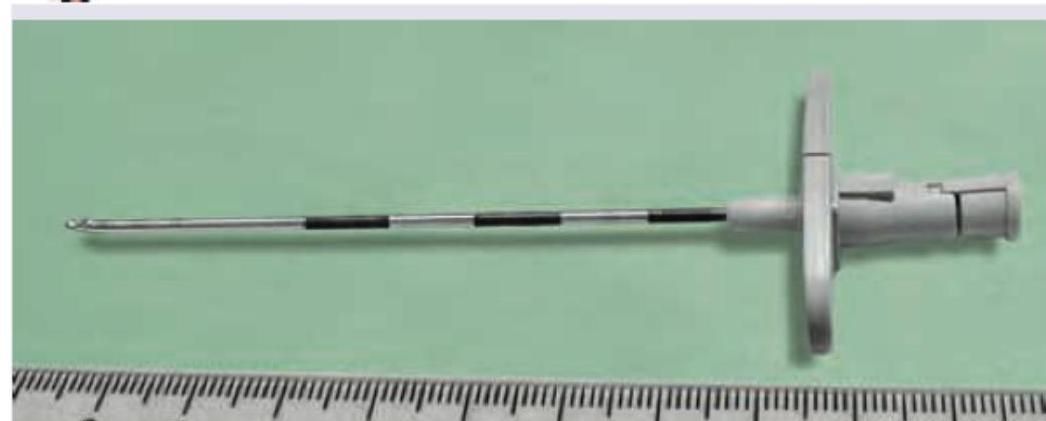
The following instrument is used for:
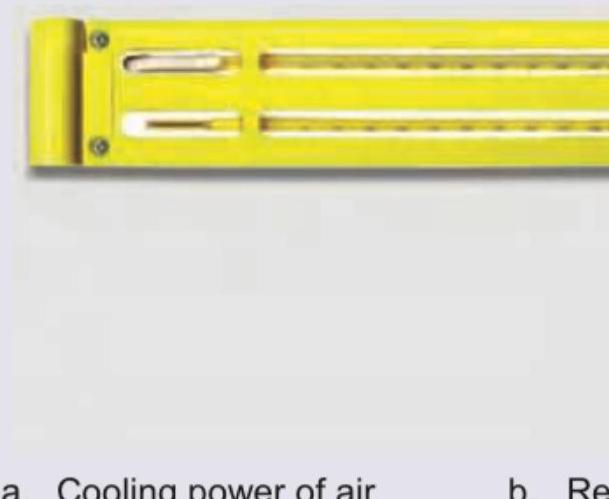
Identify the instrument shown below.
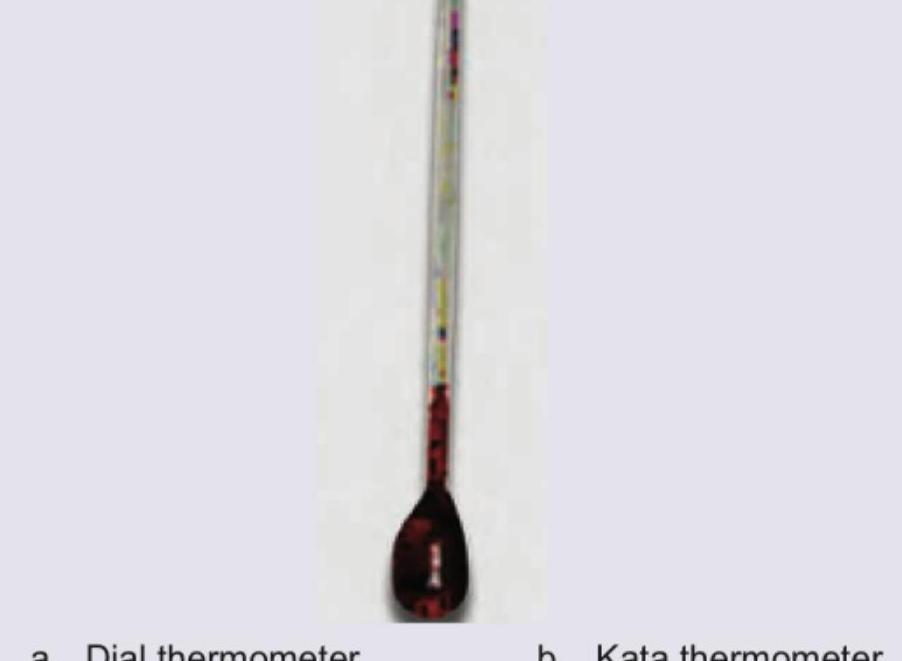
Act pertaining to symbol shown in the image given below was enacted in: (Recent NEET Pattern 2016-17)

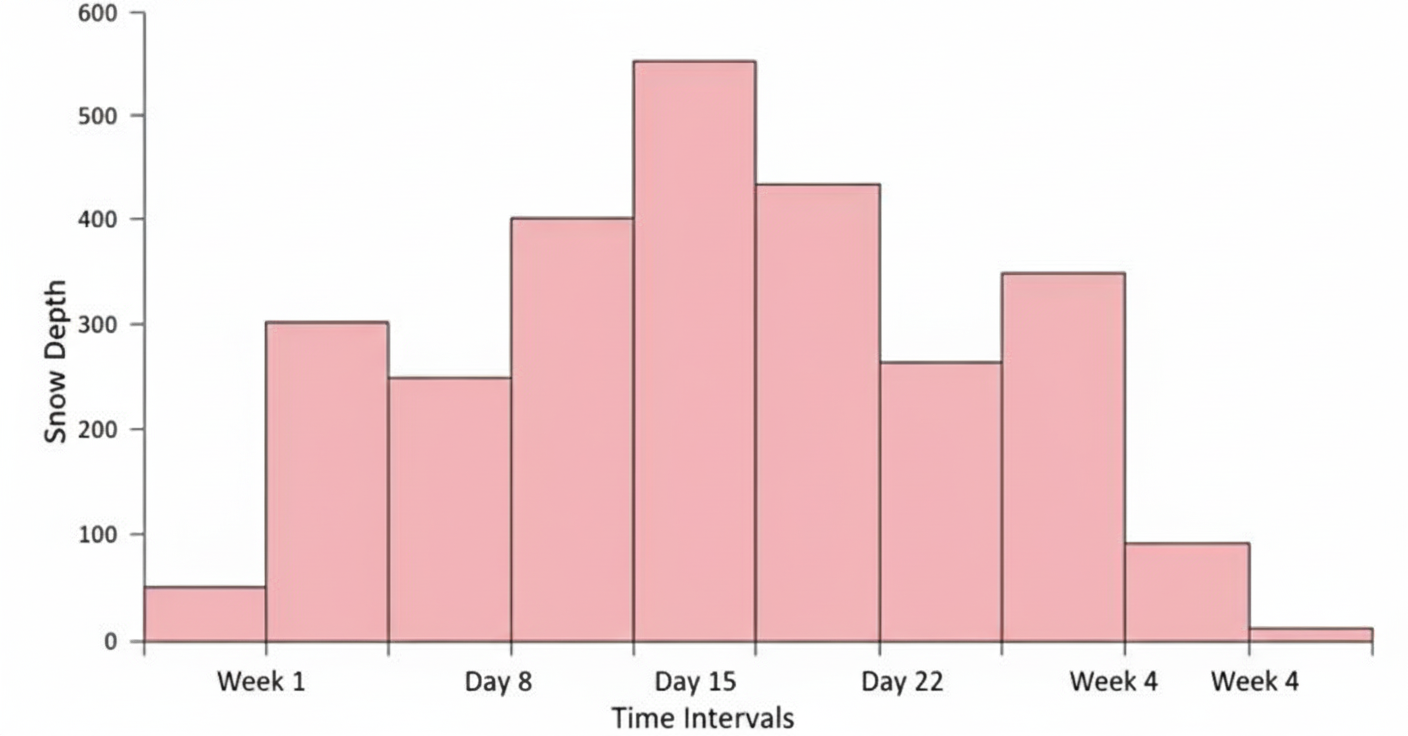
You are posted in the Army Medical Corps. The company officer is briefing you over the depth of snow in Rohtang pass over the period of last one month. This diagram is called as:
The biomedical waste category for the item shown in the image is:

What are the reasons for choosing coliform organisms as indicators of faecal pollution of water rather than the waterborne pathogens directly? I. They are present in great abundance in the human intestine and excreted in great numbers in faeces. II. They have lower resistance to forces of natural purification. III. They survive lesser than the pathogens. IV. They are easily detected by culture methods. Select the correct answer using the code given below :
Under the Biomedical Waste Management Rules 2016, human anatomical waste is to be carried in which colour plastic bags?
Explanation: ***Fluoride supplementation*** - The clinical presentation (outward bending of lower limbs, osteoporosis) in an endemic area like Andhra Pradesh strongly suggests **Skeletal Fluorosis**, likely from high fluoride levels in drinking water. - **Fluoride supplementation** would exacerbate the condition by increasing the total fluoride body burden, leading to worsening of the bone deformities and pain. *Provision of running surface water for drinking* - This is a recommended management step as **surface water** typically has much lower concentrations of **fluoride** compared to deep borehole water, thereby reducing intake. - This action directly targets the removal of the primary source of excess fluoride ingestion. *Change the water source* - This is a key public health measure to reduce fluoride exposure by replacing the current high-fluoride source with a source known to have safe levels (less than 1.5 ppm, ideally less than 1.0 ppm). - Reducing the long-term consumption of high-fluoride water is essential to halt the progression of **skeletal fluorosis**. *Add lime and alum to drinking water* - Adding **lime (calcium oxide)** and **alum (aluminum sulfate)** is a recognized defluoridation technique (especially the Nalgonda technique). - This method effectively precipitates and removes excess **fluoride** from the water, making it a viable public health intervention.
Explanation: ***Alum and Lime*** - The **Nalgonda technique** is a simple and cost-effective method for defluoridation of water, primarily using **alum** (aluminum sulfate) and **lime** (calcium hydroxide). - The process involves mixing water with these chemicals, quick mixing, slow stirring, sedimentation, and filtration, resulting in the removal of **fluorides** through precipitation and adsorption. *Alum and Gypsum* - **Gypsum** (calcium sulfate) is not a primary component of the standard Nalgonda technique for defluoridation. - While calcium compounds are involved (lime), gypsum is more commonly encountered in soil stabilization or as a source of calcium/sulfur. *Alum and Charcoal* - While **activated charcoal** is used in water purification for removing organic contaminants, taste, and odor, it is not a required material in the specific **Nalgonda defluoridation process**. - The Nalgonda method relies on the precipitation of **aluminum hydroxyfluoride** complex using alum and lime. *Charcoal and Lime* - **Charcoal** is not the specified adsorbent agent used in this technique; its main function is flavor and odor removal, not binding fluoride effectively in this process. - The technique requires the coagulant properties of **alum** (aluminum salt) to facilitate the precipitation reaction with fluoride ions.
Explanation: ***Jamshidi needle*** - The image displays a needle with a **tapered, open-ended tip** and a stylet, characteristic features of a Jamshidi needle, which is used for **bone marrow biopsy**. - The **winged hub** provides a secure grip and improved control during insertion and rotation. *Epidural needle* - An epidural needle typically has a **blunt, curved (Tuohy) tip** designed to push aside tissues and reduce the risk of puncturing the dura mater. - The tip shown in the image is sharp and tapered, not blunt or curved. *Pleural biopsy needle* - Pleural biopsy needles (e.g., Abrams needle) often have a **cutting mechanism** or a special design to obtain a tissue sample from the pleura, which is not evident in this image. - While some biopsy needles can be long, their tips are specifically adapted for cutting or grasping pleural tissue. *Quincke's needle* - A Quincke's needle is a type of spinal needle characterized by a **sharp, beveled tip** with an opening on the side, used for lumbar punctures to access cerebrospinal fluid. - The needle in the image has a different tip design, primarily for coring tissue, not for aspiration of fluid through a side port.
Explanation: **Relative humidity of air** - The image displays a **sling psychrometer**, which is specifically designed to measure the **relative humidity of air**. - It works by comparing **wet-bulb** and **dry-bulb** temperatures, where evaporation from the wet bulb creates a temperature difference that indicates humidity levels. *Cooling power of air* - Cooling power is measured using a **Kata thermometer**, which assesses heat loss from heated objects through convection and radiation. - The instrument shown is a sling psychrometer, not a Kata thermometer, and does not measure cooling power. *Air density* - Air density is calculated based on **temperature, pressure, and humidity** using specific formulas, or measured with specialized densitometers. - The sling psychrometer measures humidity directly, not air density calculations. *Air pressure* - Air pressure is measured using a **barometer**, which can be an aneroid or mercury type. - The instrument shown is designed for humidity measurement through temperature comparison, not atmospheric pressure measurement.
Explanation: ***Kata thermometer*** - The image shows a **Kata thermometer**, which is characterized by its large bulb and a stem with two engraved marks indicating a specific temperature range. - It is used to measure **cooling power of the environment** rather than ambient temperature directly, by timing the fall of the liquid between two marks. *Dial thermometer* - A dial thermometer features a **circular face with a pointer** that indicates the temperature. - They are commonly used for industrial or household temperature measurements, and do not resemble the instrument shown. *Wet globe thermometer* - A wet globe thermometer combines a **thermometer covered in a wet cloth** (to measure wet-bulb temperature) with a **black globe thermometer** (to measure radiant heat). - It's used to assess heat stress in an environment, and its appearance differs significantly from the instrument in the image. *Six's thermometer* - Also known as a **maximum-minimum thermometer**, Six's thermometer records both the highest and lowest temperatures reached over a period. - It typically has a U-shaped tube with mercury separating two alcohol columns and indicators for maximum and minimum readings, which does not match the image.
Explanation: ***2006*** - The image displays the logo for **FSSAI (Food Safety and Standards Authority of India)**. - The **Food Safety and Standards Act (FSSA)** was enacted in **2006** to consolidate various acts and orders that had hitherto handled food-related issues in various Ministries and Departments. - This Act replaced the earlier Prevention of Food Adulteration Act, 1954. *2003* - This is not the year of enactment of the Food Safety and Standards Act. *2011* - While FSSAI became fully operational in 2011, the **Food Safety and Standards Act was enacted in 2006**. *1954* - This was the year the **Prevention of Food Adulteration Act** was enacted, which was subsequently replaced by the FSSA, 2006.
Explanation: ***Correct: Histogram*** - A **histogram** is used to represent the frequency distribution of a **continuous variable** over different time intervals or class intervals - In this case, the **depth of snow** (continuous quantitative data) is measured over **one month period** at Rohtang pass - Histograms display data using adjacent rectangular bars where the **height represents frequency or magnitude** and the **width represents class intervals** (time periods) - This is the standard method for showing trends of continuous environmental data over time in epidemiology and biostatistics *Incorrect: Scatter diagram* - Scatter diagrams are used to show the **relationship between two continuous variables** (bivariate data) - They display individual data points on X-Y coordinates to assess correlation - Not appropriate here as we're tracking a single variable (snow depth) over time, not examining relationships between two variables *Incorrect: Pie chart* - Pie charts represent **proportions or percentages** of categorical data as sectors of a circle - Used when showing parts of a whole (e.g., distribution of diseases, budget allocation) - **Cannot be used for continuous time-series data** like snow depth measurements - Not suitable for showing trends over time *Incorrect: Pictogram* - Pictograms use **pictures or symbols** to represent data quantities - Primarily used for simple visual representation for lay audiences - Less precise and not standard for scientific/medical data presentation - Not the conventional method for recording meteorological or environmental continuous data
Explanation: ***Cytotoxic waste*** - The image displays a **bone marrow needle**, a device used to obtain bone marrow samples, often in the diagnosis and monitoring of cancers. - Materials contaminated with **chemotherapeutic agents** or originating from patients undergoing such treatments are classified as cytotoxic waste due to their genotoxic, carcinogenic, or teratogenic properties. *Biomedical waste* - **Biomedical waste** is a broader category that includes general healthcare waste, but cytotoxic waste requires specific handling due to its hazardous nature. - While a bone marrow needle is a medical device, its association with cancer treatment and potentially cytotoxic substances elevates its classification beyond regular biomedical waste. *Radiation hazard* - **Radiation hazard** waste typically involves materials contaminated with radioactive isotopes, indicated by a trefoil symbol. - The instrument shown is not associated with radioactive materials or procedures involving ionizing radiation. *Bioterrorism* - **Bioterrorism** refers to the intentional release of biological agents to cause illness or death in humans, animals, or plants. - The item pictured is a medical instrument for diagnostic purposes, unrelated to the deliberate use of biological agents for harm.
Explanation: ***I and IV*** - **Coliforms** are found in abundance in the human intestine and are excreted in large numbers, making their presence a reliable indicator of potential fecal contamination. - They are also relatively **easy to detect** using standard culture methods, which allows for rapid and cost-effective testing of water quality. *II and III* - This statement is incorrect because coliforms generally have **higher resistance** to environmental stresses and **survive longer** in water than many fastidious waterborne pathogens. - If coliforms survived less than pathogens, their absence would not guarantee the absence of more resilient harmful organisms. *I only* - While statement I is correct, it does not fully encompass all the critical reasons for using coliforms as indicators. The **ease of detection** (statement IV) is equally crucial for their practical application. - Relying solely on abundance would make monitoring less efficient without practical and rapid detection methods. *IV only* - While statement IV is correct, it fails to mention the critical aspect of **coliform abundance** in feces, which makes them a meaningful indicator. - The ease of detection alone wouldn't make them suitable if they weren't consistently present in fecal matter.
Explanation: ***Yellow*** - **Human anatomical waste** (e.g., organs, tissues, body parts) is designated to be collected in **yellow** plastic bags according to the Biomedical Waste Management Rules 2016. - This category also includes soiled waste (items contaminated with blood/body fluids), expired medicines, and chemical waste. - This waste is typically **incinerated or deeply buried** to ensure proper disposal and prevent the spread of infection. *Red* - **Red** plastic bags are used for **contaminated waste (recyclable)**, such as tubing, catheters, intravenous sets, soiled gloves, and other contaminated plastic items. - This waste is **sterilized by autoclaving/microwaving** before being shredded and sent for recycling. *White* - **White (translucent)** bags are used for **sharp waste** including needles, syringes with needles, scalpel blades, and broken glass. - Also used for waste sharps including metals. - This waste is **disinfected by autoclaving/microwaving** and then subjected to shredding or mutilation. *Blue* - **Blue** bags are used for **glassware and metallic body implants** (e.g., broken or discarded glass vials, ampoules). - This waste is **disinfected/autoclaved** and then sent for recycling or appropriate disposal.
Water Quality and Health
Practice Questions
Air Pollution and Health Effects
Practice Questions
Solid Waste Management
Practice Questions
Hazardous Waste Management
Practice Questions
Housing and Health
Practice Questions
Noise Pollution
Practice Questions
Radiation Health Effects
Practice Questions
Climate Change and Health
Practice Questions
Environmental Impact Assessment
Practice Questions
Disaster Management and Preparedness
Practice Questions
Vector Control
Practice Questions
Environmental Legislation
Practice Questions
Get full access to all questions, explanations, and performance tracking.
Start For Free