Which is the water-soluble form of Vitamin K?
Vitamin K is involved in the post-translational modification of which of the following amino acids?
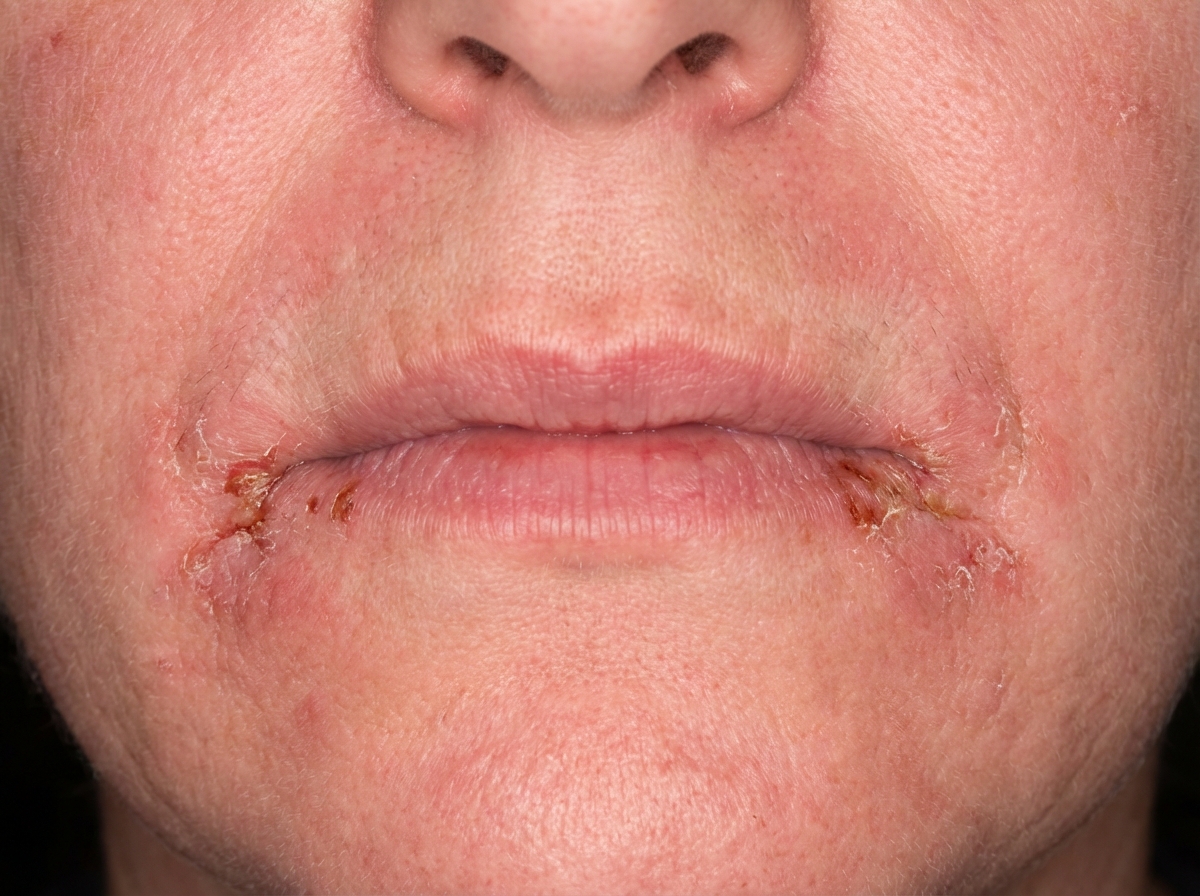
The condition shown in the image is caused by deficiency of which of the following vitamins?

The function of vitamin K largely depends on which mineral?
In which part of the intestine does vitamin B12 bind with intrinsic factor?
Decreased serum Vitamin B6 levels are associated with which of the following conditions or treatments?
Which of the following vitamins can act without phosphorylation?
Vitamin B6 is required for which reaction?
Hypervitaminosis of which of the following vitamins will cause bony abnormalities?
All of the following are characteristics of rickets except?
Explanation: **Explanation:** Vitamin K is a group of fat-soluble vitamins essential for the post-translational modification of certain proteins, primarily those required for blood coagulation. **Why Menadione is correct:** Vitamin K exists in three main forms: $K_1$, $K_2$, and $K_3$. **Menadione (Vitamin $K_3$)** is the synthetic, parent compound of the Vitamin K series. Unlike the naturally occurring forms, Menadione lacks a long aliphatic side chain, making it **water-soluble**. Because of this property, it can be absorbed directly into the blood without the need for bile salts or pancreatic lipases, making it useful in patients with biliary obstruction. **Why other options are incorrect:** * **Phylloquinone (Vitamin $K_1$):** This is the natural form found in green leafy vegetables. It possesses a long phytyl side chain, making it highly **lipid-soluble**. * **Menaquinone (Vitamin $K_2$):** This form is synthesized by intestinal bacterial flora. It contains a multi-isoprenyl side chain and is also **lipid-soluble**. **High-Yield Clinical Pearls for NEET-PG:** * **Function:** Vitamin K acts as a coenzyme for **$\gamma$-glutamyl carboxylase**, which converts glutamate residues to $\gamma$-carboxyglutamate (Gla) on Factors **II, VII, IX, X**, and Proteins **C and S**. * **Warfarin Mechanism:** Warfarin inhibits **Vitamin K Epoxide Reductase (VKOR)**, preventing the regeneration of active hydroquinone. * **Toxicity:** Menadione is no longer used clinically in infants because it can cause **hemolytic anemia, hyperbilirubinemia, and kernicterus** due to its reaction with sulfhydryl groups (e.g., glutathione). * **Newborns:** They are born with sterile guts and low placental transfer of Vitamin K; hence, a prophylactic IM injection of Vitamin $K_1$ is mandatory to prevent **Hemorrhagic Disease of the Newborn**.
Explanation: **Explanation:** **1. Why Glutamate is Correct:** Vitamin K acts as a vital co-factor for the enzyme **gamma-glutamyl carboxylase**. This enzyme facilitates the post-translational modification of specific **Glutamate (Glu)** residues on certain proteins, converting them into **gamma-carboxyglutamate (Gla)**. This process involves the addition of a carboxyl group ($CO_2$) to the gamma carbon of glutamate. The resulting Gla residues are negatively charged, which allows the protein to bind positively charged **Calcium ($Ca^{2+}$) ions**. This calcium binding is essential for the activation of clotting factors (II, VII, IX, X) as it enables them to bind to phospholipids on platelet membranes. **2. Why Other Options are Incorrect:** * **Aspartate:** While chemically similar to glutamate, it is not a substrate for Vitamin K-dependent carboxylation. * **Lysine:** Lysine undergoes post-translational modifications like hydroxylation (in collagen) or methylation/acetylation (in histones), but not Vitamin K-dependent carboxylation. * **Proline:** Proline undergoes hydroxylation to form hydroxyproline, a process that requires **Vitamin C**, not Vitamin K. **3. High-Yield Clinical Pearls for NEET-PG:** * **Vitamin K Dependent Proteins:** Clotting factors **II, VII, IX, X** and anticoagulants **Protein C and Protein S**. * **Osteocalcin:** A non-clotting bone protein that also undergoes Vitamin K-dependent gamma-carboxylation. * **Warfarin Mechanism:** It inhibits **Vitamin K Epoxide Reductase (VKOR)**, preventing the regeneration of active Vitamin K, thereby inhibiting the carboxylation of glutamate. * **Lab Marker:** Vitamin K deficiency or Warfarin use leads to an increased **Prothrombin Time (PT)**.
Explanation: ***Vitamin A*** - **Vitamin A deficiency** causes characteristic ocular manifestations including **xerophthalmia**, **Bitot's spots**, **night blindness**, and **keratomalacia**. - The condition shown likely demonstrates **ocular surface changes** typical of **vitamin A deficiency**, which affects epithelial cell differentiation and mucus production. *Vitamin B* - **B vitamin deficiencies** typically cause neurological symptoms like **peripheral neuropathy**, **beriberi**, or **pellagra** with dermatitis. - Ocular manifestations are rare with B vitamin deficiency and do not include the **conjunctival** or **corneal changes** seen with vitamin A deficiency. *Vitamin C* - **Vitamin C deficiency** (scurvy) primarily affects **collagen synthesis**, leading to **bleeding gums**, **petechial rash**, and **delayed wound healing**. - Does not cause the **ocular surface epithelial changes** or **night blindness** characteristic of the condition shown. *Vitamin D* - **Vitamin D deficiency** affects **calcium metabolism** and **bone mineralization**, causing **rickets** in children and **osteomalacia** in adults. - Has no direct effect on **ocular epithelium** or **visual function** that would produce the findings demonstrated in the image.
Explanation: ### Explanation **Why Calcium is the Correct Answer:** Vitamin K acts as a vital cofactor for the enzyme **$\gamma$-glutamyl carboxylase**. This enzyme performs the post-translational modification of specific glutamic acid residues into **$\gamma$-carboxyglutamic acid (Gla)** on various proteins, most notably Clotting Factors II, VII, IX, and X, as well as Protein C and S. The addition of this second carboxyl group creates a high-affinity binding site for **Calcium ($Ca^{2+}$)** ions. This "Calcium bridge" is essential because it allows the clotting factors to bind to the negatively charged phospholipids on the surface of activated platelets. Without calcium binding, these factors cannot localize to the site of injury, rendering the coagulation cascade ineffective. **Analysis of Incorrect Options:** * **A. Selenium:** This is a trace element essential for the function of **Glutathione Peroxidase**, which protects cells from oxidative damage. It has no direct role in the Vitamin K cycle. * **C. Iron:** Iron is central to heme synthesis (Hemoglobin, Myoglobin) and the Cytochrome P450 system. While involved in oxygen transport and redox reactions, it does not interact with Vitamin K-dependent carboxylation. * **D. Magnesium:** Magnesium is a cofactor for over 300 enzymatic reactions, particularly those involving **ATP** (kinases). While it is involved in some steps of the clotting cascade (like Factor IX activation), it is not the primary mineral upon which Vitamin K's function depends. **High-Yield Clinical Pearls for NEET-PG:** * **Warfarin Mechanism:** Warfarin inhibits **Vitamin K Epoxide Reductase (VKOR)**, preventing the regeneration of active Vitamin K, thereby inhibiting the $\gamma$-carboxylation of Gla-residues. * **Osteocalcin:** Vitamin K is also required for the carboxylation of Osteocalcin, a bone protein that binds **Calcium** hydroxyapatite, linking Vitamin K to bone health. * **Newborn Prophylaxis:** Neonates are born with sterile guts and low Vitamin K stores; a mandatory Vitamin K injection is given at birth to prevent **Hemorrhagic Disease of the Newborn**.
Explanation: **Explanation:** The absorption of Vitamin B12 (Cobalamin) is a complex, multi-step process. While **Intrinsic Factor (IF)** is secreted by the parietal cells of the **stomach**, it cannot bind to B12 immediately due to the acidic environment and the presence of **R-binders** (haptocorrin). 1. **Why Duodenum is correct:** In the stomach, B12 binds to R-binders found in saliva and gastric juice. Once this complex enters the **duodenum**, pancreatic proteases digest the R-binders. This release allows Vitamin B12 to finally bind with **Intrinsic Factor** in the alkaline environment of the duodenum. 2. **Why other options are incorrect:** * **Stomach:** IF is *produced* here, but B12 is bound to R-binders at this stage to protect it from acid. * **Jejunum:** This is a site of transit; no specific binding or major absorption occurs here. * **Ileum:** This is the site of **absorption**. The B12-IF complex travels to the terminal ileum, where it binds to **cubilin receptors** for uptake into the enterocyte. **High-Yield NEET-PG Pearls:** * **Source:** B12 is synthesized only by microorganisms; not found in plants (important for strict vegans). * **Transport:** In the blood, B12 is transported by **Transcobalamin II**. * **Storage:** Unlike other water-soluble vitamins, B12 is stored in the **liver** for 3–5 years. * **Clinical Correlation:** Pernicious anemia is caused by autoimmune destruction of parietal cells, leading to IF deficiency. Post-gastrectomy patients require lifelong B12 injections because the binding site (duodenum) and absorption site (ileum) remain, but the source of IF (stomach) is gone.
Explanation: **Explanation:** **Correct Option: B. Isoniazid (INH) therapy** The primary mechanism behind INH-induced Vitamin B6 (Pyridoxine) deficiency is the formation of **pyridoxal-hydrazone complexes**. Isoniazid reacts with pyridoxal phosphate (PLP), the active form of B6, making it biologically inactive. Furthermore, INH inhibits the enzyme **pyridoxine phosphokinase**, which is essential for converting pyridoxine into its active coenzyme form. This deficiency leads to decreased synthesis of neurotransmitters like GABA, manifesting clinically as **peripheral neuropathy**. To prevent this, patients on INH are routinely co-prescribed 10–50 mg/day of pyridoxine. **Analysis of Incorrect Options:** * **A. Chronic Renal Failure (CRF):** While CRF can lead to various nutritional deficiencies, it is not classically associated with isolated B6 deficiency. In fact, some B-vitamins may accumulate if not cleared, though they are often lost during dialysis. * **C. Congestive Heart Failure (CHF):** CHF is more commonly associated with **Vitamin B1 (Thiamine)** deficiency, particularly due to the use of loop diuretics (furosemide) which increase urinary thiamine excretion. * **D. Alcohol abuse:** While alcoholics are often malnourished, alcohol is most strongly linked to **Vitamin B1 (Wernicke-Korsakoff syndrome)** and **Folate** deficiency. While acetaldehyde can displace PLP from proteins, INH therapy is the more specific and "textbook" association for B6 deficiency in the context of this question. **High-Yield Clinical Pearls for NEET-PG:** * **Sideroblastic Anemia:** B6 deficiency causes microcytic anemia because PLP is a cofactor for **ALA synthase**, the rate-limiting enzyme in heme synthesis. * **Homocysteinemia:** B6 is a cofactor for **Cystathionine β-synthase**; its deficiency leads to elevated homocysteine levels (a risk factor for thrombosis). * **Drug Interactions:** Besides INH, **Penicillamine** and **Hydralazine** are also known to cause B6 deficiency.
Explanation: **Explanation:** The correct answer is **Lipoamide (Option B)**. In biochemistry, most B-complex vitamins are "pro-vitamins" that must be chemically modified—usually via **phosphorylation**—to become biologically active coenzymes. 1. **Why Lipoamide is correct:** Lipoic acid (the precursor) does not require phosphorylation to function. Instead, it undergoes a **covalent amide linkage** to a lysine residue of an enzyme (forming **Lipoamide**). It acts as a key coenzyme in oxidative decarboxylation reactions, such as the Pyruvate Dehydrogenase (PDH) and α-Ketoglutarate Dehydrogenase complexes, where it facilitates acyl group transfer and redox reactions. 2. **Why other options are incorrect:** * **Pyridoxine (B6):** Must be phosphorylated by pyridoxal kinase to become **Pyridoxal Phosphate (PLP)**, the active form required for transamination and decarboxylation. * **Niacin (B3):** Must be converted into **NAD+ or NADP+**, both of which contain phosphate groups as part of their dinucleotide structure. * **Thiamine (B1):** Must be phosphorylated by thiamine pyrophosphokinase to become **Thiamine Pyrophosphate (TPP)**, its active coenzyme form. **High-Yield Clinical Pearls for NEET-PG:** * **Lipoic Acid "Suicide":** Arsenic poisoning inhibits enzymes like PDH by binding to the -SH groups of lipoic acid, leading to lactic acidosis and neurological symptoms. * **Universal Cofactors:** The "Big 5" cofactors required by all oxidative decarboxylase complexes are: **T**hiamine (B1), **R**iboflavin (B2), **N**iacin (B3), **L**ipoic acid, and **C**oenzyme A (B5) (Mnemonic: **T**ender **R**oving **N**ights **L**ove **C**are). * **Vitamin C and Vitamin A** are other notable vitamins that function without phosphorylation.
Explanation: **Explanation:** **Vitamin B6 (Pyridoxine)**, in its active form **Pyridoxal Phosphate (PLP)**, serves as a versatile coenzyme primarily involved in amino acid metabolism. **Why Transamination is correct:** Transamination is the process where an amino group is transferred from an amino acid to a keto acid (e.g., ALT and AST reactions). PLP acts as a temporary carrier of the amino group, shifting between Pyridoxal Phosphate and Pyridoxamine Phosphate. Beyond transamination, PLP is also essential for **decarboxylation** (e.g., GABA, Histamine, Serotonin synthesis), **deamination**, and **heme synthesis** (ALA synthase). **Why other options are incorrect:** * **Carboxylation:** This requires **Biotin (Vitamin B7)**. Examples include Pyruvate carboxylase and Acetyl-CoA carboxylase. * **Oxidative Decarboxylation:** This requires a multienzyme complex (like Pyruvate Dehydrogenase) using five cofactors: **Thiamine (B1)**, Lipoic acid, CoA (B5), FAD (B2), and NAD (B3). * **Transketolase:** This is a key enzyme in the Pentose Phosphate Pathway and specifically requires **Thiamine Pyrophosphate (TPP/Vitamin B1)** as a cofactor. **High-Yield Clinical Pearls for NEET-PG:** * **Isoniazid (INH) Therapy:** This anti-tubercular drug inhibits pyridoxine kinase, leading to B6 deficiency and peripheral neuropathy. Always co-administer B6 with INH. * **Sideroblastic Anemia:** Since PLP is a cofactor for ALA synthase (the rate-limiting step in heme synthesis), B6 deficiency can lead to microcytic hypochromic anemia with ringed sideroblasts. * **Homocystinuria:** B6 is a cofactor for **Cystathionine β-synthase**; some patients respond to high doses of Pyridoxine. * **Glycogenolysis:** PLP is a unique cofactor for **Glycogen Phosphorylase**, where it plays a structural rather than a catalytic role.
Explanation: **Explanation:** The correct answer is **Vitamin A and Vitamin D** (Note: There appears to be a typographical error in the provided key; Option A is the medically accurate choice). Hypervitaminosis of fat-soluble vitamins, specifically A and D, leads to significant skeletal pathology. **1. Why Vitamin A and Vitamin D are correct:** * **Vitamin A Toxicity:** Chronic ingestion leads to **cortical hyperostosis** (excessive bone growth) and painful swelling of long bones. It stimulates osteoclast activity and inhibits osteoblasts, leading to bone resorption, premature epiphyseal closure in children, and increased fracture risk. * **Vitamin D Toxicity:** Excessive Vitamin D causes hypercalcemia. This leads to **metastatic calcification** of soft tissues and "demineralization" of bones as calcium is mobilized into the blood, resulting in bone pain and pathological fractures. **2. Analysis of Incorrect Options:** * **Vitamin B (Options B, C, D):** B-complex vitamins are water-soluble. They are generally excreted in the urine when taken in excess and do not accumulate to toxic levels that affect bone density or structure. * **Vitamin D alone (Option D):** While Vitamin D causes bone issues, it is not the *only* vitamin to do so; Vitamin A is equally significant in this context. **3. NEET-PG High-Yield Pearls:** * **Vitamin A Toxicity Triad:** Bone pain/swelling, hepatosplenomegaly, and alopecia. * **Radiological sign:** Look for "subperiosteal new bone formation" in Vitamin A toxicity. * **Vitamin D Toxicity:** Often presents with the "Stones, Bones, Abdominal Groans, and Psychic Overtones" of hypercalcemia. * **Key Concept:** Fat-soluble vitamins (A, D, E, K) are stored in the liver and adipose tissue, making them significantly more prone to toxicity than water-soluble vitamins.
Explanation: **Explanation:** Rickets is a metabolic bone disease characterized by defective mineralization of the osteoid matrix in children, primarily due to Vitamin D deficiency. **Why Option D is the Correct Answer:** In rickets, **Alkaline Phosphatase (ALP) activity is increased**, not decreased. ALP is produced by overactive osteoblasts attempting to lay down new bone in a disorganized manner. An elevated serum ALP is one of the most sensitive biochemical markers for diagnosing and monitoring the activity of rickets. **Analysis of Incorrect Options:** * **A. Bow-legs (Genu varum):** This is a classic clinical feature. The softened, unmineralized bone cannot support the child's weight, leading to outward bowing of the legs. * **B. Delay in teeth formation:** Vitamin D is essential for dental enamel and dentin formation. Deficiency leads to delayed eruption of teeth, enamel hypoplasia, and increased dental caries. * **C. Decreased plasma level of calcitriol:** Since nutritional rickets is most commonly due to a lack of Vitamin D or sunlight, the levels of 25-hydroxyvitamin D and its active form, 1,25-dihydroxyvitamin D (calcitriol), are typically low. **NEET-PG High-Yield Pearls:** * **Biochemical Profile of Rickets:** Low/Normal Serum Calcium, Low Serum Phosphate, **High Serum ALP**, and High PTH (Secondary Hyperparathyroidism). * **Radiological Signs:** Cupping, splaying, and fraying of the metaphysis (best seen at the wrist or knee). * **Clinical Signs:** Rachitic rosary (enlarged costochondral junctions), Harrison’s sulcus, and Craniotabes (softening of skull bones). * **Key Enzyme:** 1-alpha-hydroxylase in the kidney converts 25(OH)D to the active 1,25(OH)₂D (Calcitriol).
Fat-Soluble Vitamins: A, D, E, K
Practice Questions
Vitamin A and Vision
Practice Questions
Vitamin D and Calcium Metabolism
Practice Questions
Vitamin E and Antioxidant Functions
Practice Questions
Vitamin K and Blood Coagulation
Practice Questions
Water-Soluble Vitamins: B Complex and C
Practice Questions
Thiamine (B1) and Pyruvate Dehydrogenase
Practice Questions
Riboflavin (B2) and Flavin Coenzymes
Practice Questions
Niacin and NAD/NADP
Practice Questions
Vitamin B6 and Transamination
Practice Questions
Folate and Vitamin B12 in One-Carbon Metabolism
Practice Questions
Vitamin C and Collagen Synthesis
Practice Questions
Get full access to all questions, explanations, and performance tracking.
Start For Free