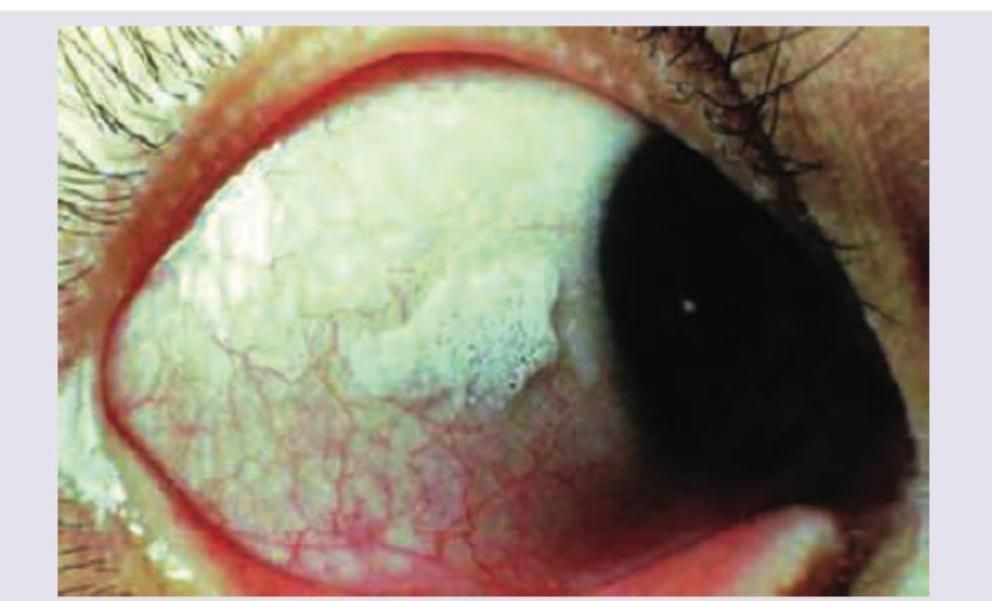
Which vitamin is not required in the Tricarboxylic Acid (TCA) cycle?
Which of the following tocopherol forms is the most active form of vitamin E?
Deficiency of Vitamin E causes all of the following, except:
Maize is pellagragenic due to excess content of which amino acid?
A 50-year-old chronic alcoholic presented with acute confusion, delirium, ataxia, and mild memory loss. Ophthalmoplegia and hypotension were noted on ophthalmoscopic examination. Serum electrolyte levels were normal, but lab findings revealed increased RBC transketolase activity along with reduced blood lactate levels. A CT scan of the brain showed no findings. Which of the following enzymes uses the vitamin deficient in this patient as a coenzyme?
Which of the following is NOT seen with vitamin C toxicity?
A 38-year-old female patient on isoniazid therapy for tuberculosis developed rashes on sun-exposed areas of her body and disorientation. Family members also report diarrhea. What is the most likely diagnosis?
Scurvy is due to deficiency of?
Which vitamin is lost on exposure to sunlight?
Casal's necklace is a characteristic feature of which condition?
Explanation: The Tricarboxylic Acid (TCA) cycle, also known as the Krebs cycle, is a central metabolic pathway that requires several B-complex vitamins acting as essential cofactors. **Why Pyridoxine (Vitamin B6) is the correct answer:** Pyridoxine is primarily involved in **amino acid metabolism** (transamination, decarboxylation) and heme synthesis. While it is crucial for the entry of amino acids into metabolic pathways, it is **not** a direct cofactor for any of the eight enzymes within the TCA cycle itself. **Why the other options are incorrect:** The TCA cycle requires four specific B-vitamins (often remembered by the mnemonic "The Rhythm Nearly Proved Fatal" for Thiamine, Riboflavin, Niacin, Pantothenic acid): * **Niacin (Vitamin B3):** Required as **NAD+** for Isocitrate dehydrogenase, $\alpha$-ketoglutarate dehydrogenase, and Malate dehydrogenase. * **Riboflavin (Vitamin B2):** Required as **FAD** for Succinate dehydrogenase (Complex II). * **Pantothenic acid (Vitamin B5):** A structural component of **Coenzyme A (CoA)**, essential for the formation of Acetyl-CoA and Succinyl-CoA. * *Note: Thiamine (B1) is also required for the $\alpha$-ketoglutarate dehydrogenase complex.* **High-Yield Clinical Pearls for NEET-PG:** * **$\alpha$-Ketoglutarate Dehydrogenase Complex:** This is a multi-enzyme complex requiring 5 cofactors: Thiamine (B1), Riboflavin (B2), Niacin (B3), Pantothenic acid (B5), and Lipoic acid. It is functionally identical to the Pyruvate Dehydrogenase (PDH) complex. * **Succinate Dehydrogenase:** This is the only enzyme of the TCA cycle that is embedded in the inner mitochondrial membrane (acting as Complex II of the Electron Transport Chain). * **Arsenite Poisoning:** Arsenite inhibits the $\alpha$-ketoglutarate dehydrogenase complex by binding to the -SH groups of lipoic acid, leading to a backup of the cycle.
Explanation: **Explanation:** Vitamin E is a group of eight fat-soluble compounds consisting of four **tocopherols** and four **tocotrienols** (alpha, beta, gamma, and delta). **Why Alpha-tocopherol is the correct answer:** Alpha-tocopherol is considered the most biologically active form of Vitamin E in humans. This is primarily due to the **Alpha-Tocopherol Transfer Protein (α-TTP)** found in the liver. While the intestine absorbs all forms of Vitamin E, the α-TTP specifically recognizes and incorporates alpha-tocopherol into Very Low-Density Lipoproteins (VLDL) for distribution to peripheral tissues. Other forms are not recognized by this protein and are largely excreted. **Why other options are incorrect:** * **Beta, Gamma, and Delta tocopherols:** These forms differ from the alpha form by the number and position of methyl groups on the chromanol ring. Although they possess antioxidant properties and are often found in higher quantities in the diet (especially gamma-tocopherol in soybean oil), they have significantly lower biological activity because they are not preferentially retained by the liver and are rapidly metabolized. **High-Yield Clinical Pearls for NEET-PG:** * **Function:** Vitamin E is the most powerful **natural antioxidant**; it prevents lipid peroxidation in cell membranes (chain-breaking antioxidant). * **Deficiency:** Presents with **posterior column signs** (loss of position and vibration sense), ataxia, and **hemolytic anemia** (due to fragile RBC membranes). * **Toxicity:** High doses can interfere with Vitamin K action, leading to an increased risk of hemorrhage (prolonged PT/INR). * **Location:** It is stored primarily in the **adipose tissue**.
Explanation: **Explanation:** Vitamin E (Tocopherol) is a potent lipid-soluble antioxidant that protects cell membranes from oxidative damage. While historical animal studies (specifically in rats) suggested a link between Vitamin E and fertility, **decreased sexual ability or infertility has never been clinically proven in humans** as a result of Vitamin E deficiency. Therefore, Option D is the correct "except" choice. **Why the other options are incorrect (Features of Vitamin E Deficiency):** * **Ataxia (Option A):** Vitamin E is crucial for the integrity of the central nervous system. Deficiency leads to **spinocerebellar ataxia**, loss of vibratory sense, and proprioception (similar to Friedreich’s ataxia) due to oxidative damage to large-caliber axons. * **Atherogenesis (Option B):** Vitamin E prevents the oxidation of **LDL (Low-Density Lipoprotein)**. Oxidized LDL is a key driver in the formation of foam cells and atherosclerotic plaques. Thus, its deficiency promotes atherogenesis. * **Visual Symptoms (Option C):** Deficiency can lead to **retinopathy** (pigmentary degeneration of the retina) and ophthalmoplegia, particularly in children with fat malabsorption syndromes. **High-Yield Clinical Pearls for NEET-PG:** 1. **Hemolytic Anemia:** In premature infants, Vitamin E deficiency causes fragile RBC membranes, leading to hemolytic anemia. 2. **Absorption:** Vitamin E requires bile and pancreatic juice for absorption; deficiency is usually secondary to **fat malabsorption** (e.g., Cystic Fibrosis, Abetalipoproteinemia). 3. **Least Toxic:** Vitamin E is considered the least toxic of the fat-soluble vitamins. 4. **Neurological Mimicry:** Always differentiate Vitamin E deficiency from Vitamin B12 deficiency; both cause posterior column signs, but Vitamin E deficiency presents with **hemolysis** and lacks the megaloblastic changes of B12.
Explanation: **Explanation:** Pellagra is a clinical deficiency of **Niacin (Vitamin B3)**. While maize (corn) is naturally low in Tryptophan (the precursor for niacin synthesis) and contains niacin in a bound, unabsorbable form (niacytin), its **pellagragenic** nature is primarily attributed to a high concentration of **Leucine**. **Why Leucine is the correct answer:** High dietary intake of Leucine interferes with the metabolic pathway that converts Tryptophan to Niacin (the Kynurenine pathway). Specifically, excess Leucine inhibits the enzyme **Quinolinate Phosphoribosyl Transferase (QPRT)**. This inhibition prevents the formation of Nicotinic Acid Mononucleotide, thereby reducing the endogenous synthesis of NAD/NADP and precipitating pellagra symptoms even if some tryptophan is present. **Analysis of Incorrect Options:** * **Lysine & Threonine:** Maize is actually **deficient** in these essential amino acids. Their absence contributes to protein-energy malnutrition but does not directly cause the biochemical block leading to pellagra. * **Tryptophan:** Maize is deficient in Tryptophan. While this deficiency contributes to the development of pellagra, the question specifically asks which amino acid is present in **excess**, making Leucine the correct choice. **Clinical Pearls for NEET-PG:** * **The 4 D’s of Pellagra:** Dermatitis (Casal’s necklace), Diarrhea, Dementia, and Death. * **The 60:1 Rule:** 60 mg of dietary Tryptophan yields 1 mg of Niacin. * **Hartnup Disease:** A genetic cause of pellagra due to impaired intestinal and renal transport of neutral amino acids (including Tryptophan). * **Carcinoid Syndrome:** Can lead to secondary pellagra because Tryptophan is diverted toward the overproduction of Serotonin.
Explanation: **Explanation:** The patient presents with the classic triad of **Wernicke’s Encephalopathy** (confusion, ataxia, and ophthalmoplegia), a condition caused by a deficiency of **Vitamin B1 (Thiamine)**, commonly seen in chronic alcoholics. **Why Pyruvate Dehydrogenase is Correct:** Thiamine is converted into its active form, **Thiamine Pyrophosphate (TPP)**. TPP serves as a vital coenzyme for several key oxidative decarboxylation reactions: 1. **Pyruvate Dehydrogenase (PDH):** Converts pyruvate to Acetyl-CoA (linking glycolysis to the TCA cycle). 2. **$\alpha$-Ketoglutarate Dehydrogenase:** A key enzyme in the TCA cycle. 3. **Branched-chain $\alpha$-ketoacid dehydrogenase:** Involved in the metabolism of Leucine, Isoleucine, and Valine. 4. **Transketolase:** An enzyme in the Hexose Monophosphate (HMP) shunt. (Note: The question mentions increased transketolase activity *after* TPP addition in lab tests, confirming deficiency). **Analysis of Incorrect Options:** * **B. Transaminase:** These enzymes (e.g., ALT, AST) require **Pyridoxal Phosphate (Vitamin B6)** as a cofactor. * **C. Xanthine dehydrogenase:** This enzyme, involved in purine catabolism, requires **Molybdenum**, FAD, and Iron. * **D. Ornithine decarboxylase:** This is the rate-limiting enzyme in polyamine synthesis and requires **Vitamin B6**. **High-Yield Clinical Pearls for NEET-PG:** * **Diagnosis:** Wernicke’s is a clinical diagnosis. The "gold standard" lab test is the **Erythrocyte Transketolase Activation Test** (activity increases >15% upon adding TPP). * **Management:** Always administer **Thiamine before Glucose** in alcoholic patients. Giving glucose first can precipitate Wernicke’s by consuming the remaining thiamine stores during glycolysis. * **Progression:** If untreated, it progresses to **Korsakoff Psychosis**, characterized by irreversible confabulation and anterograde amnesia.
Explanation: **Explanation:** Vitamin C (Ascorbic acid) is a water-soluble vitamin with a wide therapeutic index; however, megadoses (typically >2g/day) can lead to specific toxic effects. **Why Thrombosis is the correct answer:** Thrombosis is **not** a recognized complication of Vitamin C toxicity. In fact, Vitamin C is essential for collagen synthesis (prolyl and lysyl hydroxylase cofactor); while deficiency leads to impaired vessel wall integrity and bleeding (Scurvy), excess intake does not pathologically trigger the coagulation cascade or platelet aggregation to cause thrombosis. **Analysis of Incorrect Options:** * **Abdominal pain:** High doses of Vitamin C act as an osmotic laxative in the gastrointestinal tract, leading to abdominal cramps, bloating, and diarrhea. * **Kidney stones:** Ascorbic acid is metabolically converted into **oxalate**. Excessive intake increases urinary oxalate levels (hyperoxaluria), which promotes the formation of **calcium oxalate stones**, especially in predisposed individuals. * **Hemolysis:** In patients with **G6PD deficiency**, high doses of Vitamin C (a reducing agent) can paradoxically induce oxidative stress or alter the redox balance, leading to acute hemolysis. **High-Yield Clinical Pearls for NEET-PG:** * **Biological Function:** Acts as a co-factor for **hydroxylation** of proline and lysine residues in collagen. * **Iron Absorption:** Vitamin C enhances the absorption of **non-heme iron** by maintaining it in the ferrous ($Fe^{2+}$) state. * **Scurvy:** Characterized by "corkscrew hair," perifollicular hemorrhages, and swollen, bleeding gums. * **Rebound Scurvy:** Can occur in neonates if the mother took megadoses during pregnancy, due to the induction of degradative enzymes.
Explanation: **Explanation:** The patient is presenting with the classic triad of **Pellagra**: Dermatitis (sun-exposed rashes), Diarrhea, and Dementia (disorientation). This condition is caused by a deficiency of **Niacin (Vitamin B3)**. **Why Niacin deficiency is the correct answer:** Isoniazid (INH) is a structural analog of **Pyridoxine (Vitamin B6)**. It interferes with B6 metabolism in two ways: it increases its excretion and inhibits the enzyme *pyridoxal kinase*. Vitamin B6 is a crucial cofactor for the enzyme **Kynureninase**, which converts the amino acid Tryptophan into Niacin. Therefore, prolonged INH therapy leads to a secondary Niacin deficiency, manifesting as Pellagra. **Analysis of Incorrect Options:** * **A. Tuberculosis skin lesions:** While TB can cause skin manifestations (like Lupus Vulgaris), they do not typically present as photosensitive rashes associated with systemic symptoms like diarrhea and disorientation. * **C. Isoniazid-induced neuropathy:** While INH commonly causes peripheral neuropathy due to B6 deficiency, this presents as numbness and paresthesia in a "glove and stocking" distribution, not as dermatitis or diarrhea. * **D. Adverse drug reaction:** While many drugs cause rashes, the specific combination of the "3 Ds" (Dermatitis, Diarrhea, Dementia) in the context of INH therapy specifically points to the metabolic pathway of Niacin. **High-Yield NEET-PG Pearls:** * **The 4 Ds of Pellagra:** Dermatitis, Diarrhea, Dementia, and Death (if untreated). * **Casal’s Necklace:** A characteristic broad-collar rash around the neck seen in Pellagra. * **Hartnup Disease:** A genetic defect in neutral amino acid (Tryptophan) transporters that also leads to Pellagra-like symptoms. * **Carcinoid Syndrome:** Can cause Niacin deficiency because Tryptophan is diverted to produce excessive Serotonin.
Explanation: **Explanation:** **Scurvy** is the clinical manifestation of chronic **Vitamin C (Ascorbic acid)** deficiency. Vitamin C is a vital water-soluble antioxidant and serves as a mandatory co-factor for the enzymes **prolyl hydroxylase** and **lysyl hydroxylase**. These enzymes are responsible for the post-translational hydroxylation of proline and lysine residues in collagen synthesis. Hydroxylation is essential for the cross-linking of collagen fibers, providing structural integrity to connective tissues. In its absence, defective collagen leads to capillary fragility and impaired wound healing. **Analysis of Incorrect Options:** * **Vitamin A (Retinol):** Deficiency primarily affects vision (Night blindness, Xerophthalmia) and epithelial integrity (Bitot’s spots, Keratomalacia). * **Vitamin K (Phylloquinone/Menaquinone):** Essential for the gamma-carboxylation of clotting factors II, VII, IX, and X. Deficiency leads to bleeding disorders and increased Prothrombin Time (PT). * **Vitamin E (Tocopherol):** Acts as a potent lipid-soluble antioxidant. Deficiency is rare but can cause hemolytic anemia and posterior column neurological deficits. **High-Yield Clinical Pearls for NEET-PG:** * **Clinical Triad of Scurvy:** Perifollicular hemorrhages, easy bruising (ecchymosis), and corkscrew hairs. * **Oral Findings:** Swollen, spongy, and bleeding gums (gingivitis). * **Infantile Scurvy (Barlow’s Disease):** Presents with subperiosteal hemorrhage and "Frog-leg" position. * **Radiological Signs:** Frankel’s line (dense zone of provisional calcification) and Wimberger’s ring sign (epiphyseal lucency). * **Heat Lability:** Vitamin C is the most heat-labile vitamin; it is easily destroyed by cooking.
Explanation: **Explanation:** **Vitamin C (Ascorbic Acid)** is the correct answer because it is the most chemically unstable vitamin. It is highly sensitive to heat, oxygen, and **ultraviolet (UV) light**. Exposure to sunlight triggers the photo-oxidation of ascorbic acid into dehydroascorbic acid, which eventually degrades into inactive metabolites like diketogulonic acid. This extreme sensitivity is why Vitamin C-rich foods should be stored in dark, cool places and consumed fresh. **Analysis of Incorrect Options:** * **Vitamin A (Retinol):** While Vitamin A is sensitive to oxidation and prolonged UV exposure, it is relatively more stable than Vitamin C in food matrices. It is primarily stored in the liver and is more famously associated with night blindness rather than rapid degradation by light. * **Vitamin B1 (Thiamine):** Thiamine is primarily sensitive to **heat** (thermolabile) and alkaline pH. While it can degrade over time, sunlight is not its primary mode of destruction compared to Vitamin C. * **Vitamin B2 (Riboflavin):** This is a common distractor. Riboflavin is indeed **photosensitive** and decomposes when exposed to light (forming lumiflavin). However, in the context of standard medical examinations, Vitamin C is prioritized as the most volatile and easily lost vitamin due to its rapid oxidation. **High-Yield Clinical Pearls for NEET-PG:** * **Most Heat Labile Vitamin:** Vitamin C (destroyed by cooking/boiling). * **Milk Storage:** Vitamin B2 (Riboflavin) is lost from milk if kept in transparent glass bottles under sunlight; hence, milk is often stored in opaque containers. * **Scurvy:** Characterized by "corkscrew hair," petechiae, and impaired wound healing due to defective collagen hydroxylation (Vitamin C is a co-factor for prolyl and lysyl hydroxylase). * **Iron Absorption:** Vitamin C enhances the absorption of non-heme iron by reducing it from the ferric ($Fe^{3+}$) to the ferrous ($Fe^{2+}$) state.
Explanation: **Explanation:** **Pellagra** is the correct answer. It is caused by a deficiency of **Niacin (Vitamin B3)** or its precursor, the amino acid **Tryptophan**. The condition is classically characterized by the "4 Ds": Dermatitis, Diarrhea, Dementia, and, if untreated, Death. **Casal’s necklace** (also known as Casal’s collar) is a pathognomonic dermatological sign of Pellagra. It presents as a well-demarcated, hyperpigmented, scaly erythematous rash that forms a ring around the lower neck. This occurs because the skin in Pellagra is highly **photosensitive**; the rash develops specifically in sun-exposed areas. **Analysis of Incorrect Options:** * **Lichen planus:** Characterized by the "6 Ps" (Planar, Purple, Polygonal, Pruritic, Papules, and Plaques) and Wickham striae, typically on the wrists or oral mucosa, not a necklace distribution. * **Pernicious anemia:** Caused by Vitamin B12 deficiency due to lack of intrinsic factor. It presents with megaloblastic anemia and neurological symptoms (Subacute Combined Degeneration), not Casal’s necklace. * **Systemic Lupus Erythematosus (SLE):** While SLE features photosensitivity, its classic skin finding is a **Malar (butterfly) rash** across the cheeks and nasal bridge. **NEET-PG High-Yield Pearls:** * **Hartnup Disease:** A genetic disorder of tryptophan transport that can lead to "Pellagra-like" symptoms. * **Carcinoid Syndrome:** Can cause Pellagra because tryptophan is diverted to synthesize excessive Serotonin instead of Niacin. * **Corn/Maize-based diets:** Predispose to Pellagra because the niacin in corn is bound (niacytin) and unavailable for absorption. * **Key Coenzymes:** Niacin is essential for the formation of **NAD+ and NADP+**, critical for redox reactions.
Fat-Soluble Vitamins: A, D, E, K
Practice Questions
Vitamin A and Vision
Practice Questions
Vitamin D and Calcium Metabolism
Practice Questions
Vitamin E and Antioxidant Functions
Practice Questions
Vitamin K and Blood Coagulation
Practice Questions
Water-Soluble Vitamins: B Complex and C
Practice Questions
Thiamine (B1) and Pyruvate Dehydrogenase
Practice Questions
Riboflavin (B2) and Flavin Coenzymes
Practice Questions
Niacin and NAD/NADP
Practice Questions
Vitamin B6 and Transamination
Practice Questions
Folate and Vitamin B12 in One-Carbon Metabolism
Practice Questions
Vitamin C and Collagen Synthesis
Practice Questions
Get full access to all questions, explanations, and performance tracking.
Start For Free