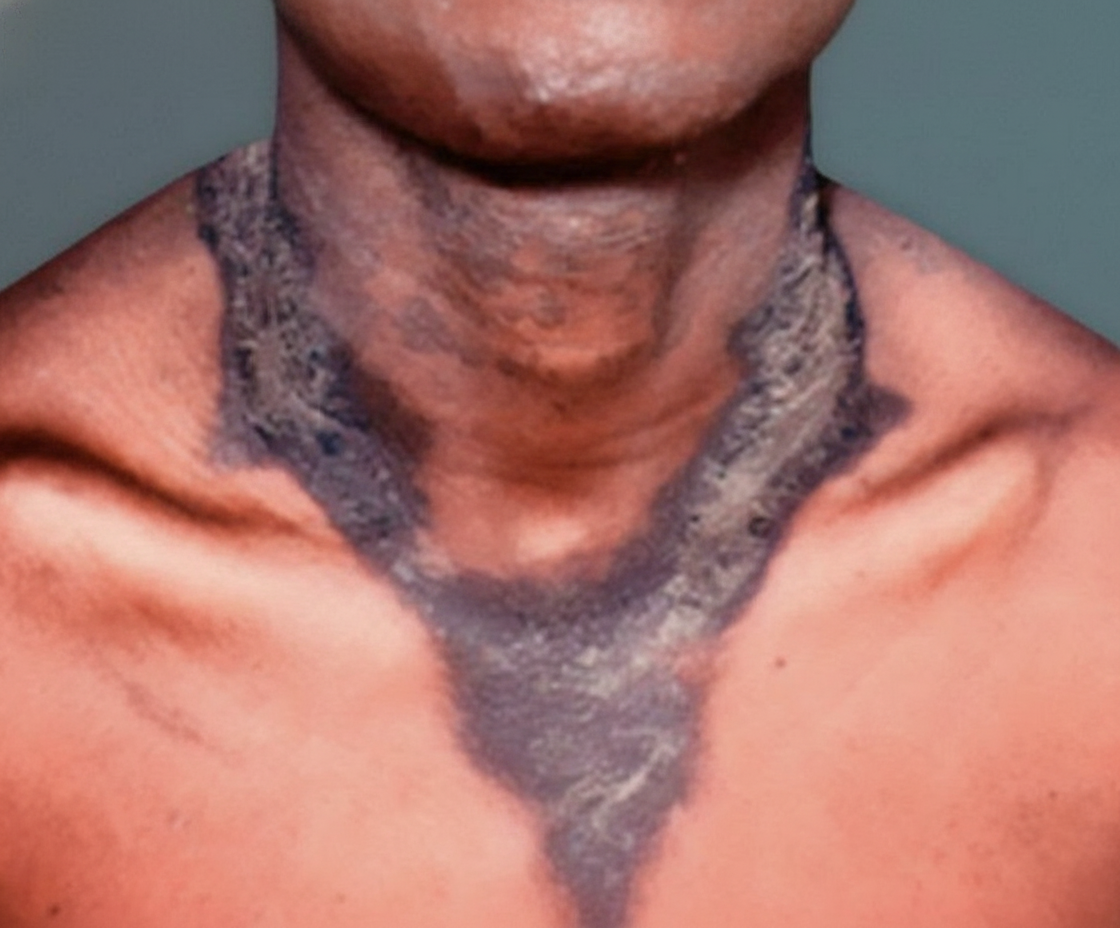
Pellagra can cause all of the following except?
Pellagra is caused by the deficiency of which vitamin?
All of the following are cofactors for Branched chain ketoacid dehydrogenase, EXCEPT?
Conversion of glycine to serine requires which of the following?
Which of the following vitamins is absent in eggs?
Magenta red tongue with cheilosis is caused by deficiency of?
Vitamin E prevents rancidity by virtue of its property:
Which of the following is NOT a coenzyme of pyruvate dehydrogenase complex?
Which vitamin aids in iron absorption?
Which of the following is a rich source of vitamin A?
Explanation: **Explanation:** Pellagra is caused by a deficiency of **Niacin (Vitamin B3)** or its precursor, the amino acid **Tryptophan**. It is classically characterized by the "4 Ds": **Dermatitis, Diarrhea, Dementia, and Death.** **Why Option D is correct:** **Acute Hemorrhagic Disseminated Encephalomyelitis (AHDE)** is a hyperacute, inflammatory demyelinating disease of the central nervous system, often considered a fulminant form of ADEM. It is typically post-infectious or autoimmune in etiology, not nutritional. Therefore, it is not a manifestation of Pellagra. **Why other options are incorrect:** * **Option A (Depression):** The "Dementia" component of Pellagra encompasses a wide range of neuropsychiatric symptoms, including irritability, depression, anxiety, and cognitive decline. * **Option B (Skin lesions):** Dermatitis is a hallmark of Pellagra. It typically presents as a symmetric, photosensitive erythematous rash, often forming **Casal’s necklace** around the neck. * **Option C (Spastic paretic syndrome):** In advanced or chronic cases, Pellagra can lead to neurological degeneration involving the pyramidal tracts and posterior columns of the spinal cord, resulting in spasticity and gait disturbances. **High-Yield Clinical Pearls for NEET-PG:** * **Hartnup Disease:** An autosomal recessive disorder involving defective neutral amino acid transport (Tryptophan), leading to pellagra-like symptoms. * **Carcinoid Syndrome:** Can cause Pellagra because Tryptophan is diverted to produce excessive Serotonin instead of Niacin. * **Corn/Maize Diets:** Diets dependent on untreated maize can lead to Pellagra because the niacin is bound (**Niacytin**) and unavailable for absorption. * **Coenzyme forms:** Niacin is essential for the synthesis of **NAD+ and NADP+**, which are vital for redox reactions.
Explanation: **Explanation:** **Pellagra** is the clinical manifestation of **Vitamin B3 (Niacin)** deficiency. Niacin is essential for the synthesis of NAD and NADP, which act as coenzymes in numerous redox reactions. The deficiency leads to systemic cellular dysfunction, primarily affecting tissues with high turnover rates like the skin and gastrointestinal tract. **Why Vitamin B3 is correct:** Pellagra is classically characterized by the **"4 Ds"**: **D**ermatitis (photosensitive, symmetrical "Casal’s necklace"), **D**iarrhea, **D**ementia (or depression/delirium), and if untreated, **D**eath. It can occur due to dietary lack of niacin or its precursor, the amino acid **Tryptophan** (60 mg Tryptophan = 1 mg Niacin). **Why other options are incorrect:** * **Vitamin B2 (Riboflavin):** Deficiency causes **Ariboflavinosis**, characterized by cheilosis, angular stomatitis, glossitis (magenta tongue), and corneal neovascularization. * **Vitamin B1 (Thiamine):** Deficiency leads to **Beriberi** (Dry: peripheral neuropathy; Wet: high-output heart failure) and **Wernicke-Korsakoff syndrome** (common in alcoholics). * **Folic Acid (B9):** Deficiency results in **Megaloblastic anemia** and neural tube defects in fetuses. It does not cause the dermatological or neurological symptoms of Pellagra. **High-Yield Clinical Pearls for NEET-PG:** * **Hartnup Disease:** An autosomal recessive disorder involving defective transport of neutral amino acids (Tryptophan), leading to **secondary Pellagra**. * **Carcinoid Syndrome:** Can cause Pellagra because tryptophan is diverted toward the overproduction of Serotonin. * **Corn/Maize-based diets:** Predispose to Pellagra because niacin in corn is bound (niacytin) and it is deficient in tryptophan. * **Isoniazid (INH) Therapy:** Can induce Pellagra by inhibiting the conversion of tryptophan to niacin (as it depletes Vitamin B6, a required cofactor).
Explanation: **Explanation:** The **Branched-chain α-keto acid dehydrogenase (BCKDH)** complex is a multi-enzyme mitochondrial complex responsible for the oxidative decarboxylation of branched-chain amino acids (Leucine, Isoleucine, and Valine). BCKDH belongs to a family of "α-ketoacid dehydrogenases" which also includes **Pyruvate Dehydrogenase (PDH)** and **α-Ketoglutarate Dehydrogenase**. All members of this family require the same **five essential cofactors** (mnemonic: **T**ender **L**oving **C**are **F**or **N**ancy): 1. **T**hiamine pyrophosphate (TPP/Vitamin B1) 2. **L**ipoamide (Lipoic acid) 3. **C**oenzyme A (CoA/Vitamin B5) 4. **F**AD (Riboflavin/Vitamin B2) 5. **N**AD+ (Niacin/Vitamin B3) **Why NADP is the correct answer:** The complex utilizes **NAD+** as the final electron acceptor to produce NADH. **NADP** (Nicotinamide adenine dinucleotide phosphate) is primarily used in reductive biosynthesis (like fatty acid synthesis) and the pentose phosphate pathway, but it is **not** a cofactor for the BCKDH complex. **Analysis of Incorrect Options:** * **Thiamin pyrophosphate (TPP):** Acts as a cofactor for the E1 subunit (decarboxylase). * **Lipoamide:** Acts as a cofactor for the E2 subunit (transacylase), swinging the acyl group between active sites. * **FAD:** Acts as a cofactor for the E3 subunit (dihydrolipoyl dehydrogenase) to re-oxidize lipoamide. **High-Yield Clinical Pearls for NEET-PG:** * **Maple Syrup Urine Disease (MSUD):** Caused by a deficiency in the BCKDH complex. It leads to the accumulation of branched-chain amino acids and their keto-acids, giving urine a characteristic burnt-sugar smell. * **Thiamine-responsive MSUD:** Some variants of MSUD improve with high doses of Thiamine (Vitamin B1), as it stabilizes the E1 subunit. * All three complexes (PDH, α-KGDH, BCKDH) are inhibited by **Arsenite**, which binds to the SH groups of Lipoic acid.
Explanation: **Explanation:** The conversion of **Glycine to Serine** is a reversible reaction catalyzed by the enzyme **Serine Hydroxymethyltransferase (SHMT)**. This reaction is a classic example of **one-carbon metabolism**. 1. **Why Folic Acid is Correct:** The enzyme SHMT requires **Tetrahydrofolate (THF)**, the active form of Folic acid, as a coenzyme. Specifically, it uses **N5, N10-methylene THF** to donate a hydroxymethyl group to glycine to form serine. Pyridoxal Phosphate (Vitamin B6) is also required as a cofactor for this reaction. 2. **Why Other Options are Incorrect:** * **Thiamine (B1):** Acts as a cofactor (TPP) for oxidative decarboxylation (e.g., Pyruvate Dehydrogenase) and transketolase reactions, not one-carbon transfers. * **Vitamin C:** Primarily involved in collagen synthesis (hydroxylation of proline/lysine) and as an antioxidant; it does not participate in glycine metabolism. * **Iron (Fe2+):** Acts as a cofactor for enzymes like prolyl hydroxylase or in the electron transport chain, but is not involved in the SHMT reaction. **High-Yield Clinical Pearls for NEET-PG:** * **One-Carbon Pool:** Folic acid is the primary carrier of one-carbon units (formyl, methyl, methylene groups). * **The "Folate Trap":** A deficiency in Vitamin B12 leads to folate being trapped as N5-methyl THF, which impairs DNA synthesis and causes megaloblastic anemia. * **Glycine Cleavage System:** This is the major pathway for glycine degradation, which also requires THF and NAD+, producing CO2 and NH4+. Deficiency in this system leads to **Non-ketotic Hyperglycinemia**. * **Dual Cofactor Requirement:** Remember that SHMT is one of the few enzymes requiring both **Folate and B6 (PLP)**.
Explanation: ### Explanation The correct answer is **Vitamin C (Ascorbic Acid)**. **Why Vitamin C is the correct answer:** Eggs are often described as "nature’s multivitamin" because they contain almost every essential vitamin and mineral required for life. However, they are notably deficient in **Vitamin C**. This is because the developing avian embryo synthesizes its own Vitamin C within the egg, or the mother bird does not deposit it into the yolk/white as it is not required from an external source during incubation. For NEET-PG, remember the "Rule of Two": Eggs lack **Vitamin C** and **Fiber**. **Analysis of Incorrect Options:** * **Vitamin B12 (Cobalamin):** Eggs are an excellent source of B12. It is concentrated primarily in the egg yolk. * **Vitamin A (Retinol):** Eggs are rich in fat-soluble vitamins. Vitamin A is present in the yolk in the form of retinol and carotenoids (which give the yolk its yellow color). * **Vitamin B2 (Riboflavin):** Eggs are one of the best dietary sources of B2. In fact, the "ovoflavin" found in egg whites is a type of riboflavin. **High-Yield Clinical Pearls for NEET-PG:** * **The "Egg White Injury":** Raw egg whites contain a glycoprotein called **Avidin**, which binds tightly to **Biotin (Vitamin B7)**, preventing its absorption and leading to deficiency. Cooking denatures avidin, making the biotin available. * **Milk vs. Eggs:** Like eggs, milk is also notoriously poor in Vitamin C and Iron. * **Reference Protein:** Egg protein (Albumin) is considered the "Reference Protein" with a **Biological Value (BV) of 100**, used as a gold standard to compare the quality of other proteins.
Explanation: **Explanation:** The correct answer is **Riboflavin (Vitamin B2)**. **1. Why Riboflavin is correct:** Riboflavin deficiency, also known as **ariboflavinosis**, characteristically manifests with mucocutaneous lesions. The classic triad includes **magenta-colored tongue** (glossitis), **cheilosis** (fissuring at the corners of the mouth), and **corneal neovascularization**. The magenta hue of the tongue is due to inflammation and atrophy of the lingual papillae, which allows the underlying vascularity to give it a distinct purplish-red appearance. **2. Why other options are incorrect:** * **Thiamine (B1):** Deficiency leads to **Beriberi** (Dry: peripheral neuropathy; Wet: high-output heart failure) or **Wernicke-Korsakoff syndrome**. It does not typically cause magenta tongue. * **Cyanocobalamin (B12):** Deficiency causes megaloblastic anemia and subacute combined degeneration of the spinal cord. While it causes glossitis, the tongue is usually described as **"beefy red"** and smooth (Hunter’s glossitis), not magenta. * **Ascorbic acid (C):** Deficiency leads to **Scurvy**, characterized by swollen/bleeding gums, perifollicular hemorrhages, and poor wound healing. **3. NEET-PG High-Yield Pearls:** * **Coenzyme forms:** Riboflavin is the precursor for **FMN** and **FAD**, which are essential for redox reactions (e.g., Succinate dehydrogenase in TCA cycle). * **Diagnostic Test:** The most sensitive functional test for B2 deficiency is the measurement of **Erythrocyte Glutathione Reductase activity**. * **The "C"s of B2:** **C**heilosis, **C**orneal neovascularization, and **C**onfused with B3 (Pellagra-like dermatitis). * **Note:** Riboflavin is light-sensitive; hence, newborns undergoing phototherapy for jaundice may develop B2 deficiency.
Explanation: **Explanation:** **1. Why "Antioxidant" is correct:** Rancidity is the process of oxidation of fats and oils, leading to an unpleasant odor and taste. This occurs primarily through **lipid peroxidation**, where free radicals attack the unsaturated fatty acids in cell membranes or food products. Vitamin E (specifically **α-tocopherol**) is a potent, fat-soluble antioxidant. It acts as a "chain-breaker" by donating a hydrogen atom to free radicals (like lipid peroxyl radicals), neutralizing them before they can propagate the oxidative damage. By preventing this oxidative breakdown of lipids, Vitamin E prevents rancidity. **2. Why the other options are incorrect:** * **Oxidant:** An oxidant promotes the loss of electrons and increases oxidative stress. This would accelerate rancidity rather than prevent it. * **Sulfuration:** This refers to the addition of sulfur. While sulfur compounds are involved in some biochemical pathways, they do not play a primary role in preventing lipid rancidity. * **Hydrogenation:** This is a chemical process used to convert unsaturated fats into saturated fats (e.g., making margarine). While hydrogenated fats are more stable, Vitamin E does not perform hydrogenation; it protects existing unsaturated bonds from oxygen. **3. High-Yield Clinical Pearls for NEET-PG:** * **Location:** Vitamin E is the most powerful antioxidant in **biological membranes**. * **Synergy:** Vitamin E works in tandem with **Vitamin C (Ascorbic acid)**; Vitamin C helps regenerate the reduced (active) form of Vitamin E after it has neutralized a radical. * **Deficiency:** Clinical manifestations include **hemolytic anemia** (due to fragile RBC membranes), posterior column degeneration, and ataxia. * **Toxicity:** High doses of Vitamin E can interfere with Vitamin K action, leading to an increased risk of hemorrhage (prolonged Prothrombin Time).
Explanation: The **Pyruvate Dehydrogenase (PDH) Complex** is a multi-enzyme system that catalyzes the oxidative decarboxylation of pyruvate into Acetyl-CoA, linking glycolysis to the TCA cycle. ### Why Biotin is the Correct Answer **Biotin (Vitamin B7)** is not a part of the PDH complex. Biotin functions as a coenzyme for **carboxylation** reactions (adding $CO_2$). It is required by **Pyruvate Carboxylase**, which converts pyruvate into oxaloacetate. In contrast, the PDH complex performs **decarboxylation** (removing $CO_2$). ### Why Other Options are Incorrect The PDH complex requires five specific cofactors, often remembered by the mnemonic **"Tender Loving Care For No-one"**: * **T: Thiamine pyrophosphate (TPP/B1)** – Required by E1 (Pyruvate dehydrogenase). * **L: Lipoic acid / Lipoamide** – Required by E2 (Dihydrolipoyl transacetylase). * **C: CoA (B5/Pantothenic acid):** (Option D) Acts as the carrier for the acetyl group, forming Acetyl-CoA. * **F: FAD (B2/Riboflavin):** (Option C) Required by E3 (Dihydrolipoyl dehydrogenase) to accept electrons. * **N: NAD+ (B3/Niacin):** (Option B) The final electron acceptor that produces NADH for the electron transport chain. ### High-Yield Clinical Pearls for NEET-PG * **Arsenic Poisoning:** Arsenite inhibits the PDH complex by binding to the SH-groups of **Lipoic acid**, leading to lactic acidosis and neurological symptoms. * **Thiamine Deficiency:** Leads to Beriberi and Wernicke-Korsakoff syndrome because PDH and Alpha-ketoglutarate dehydrogenase cannot function without TPP. * **Location:** The PDH complex is located in the **mitochondrial matrix**. * **Regulation:** PDH is inhibited by its products (Acetyl-CoA, NADH) and by phosphorylation via PDH kinase.
Explanation: **Explanation:** **Vitamin C (Ascorbic Acid)** is the correct answer because it plays a crucial role in the intestinal absorption of **non-heme iron** (the form found in plant-based foods). It facilitates this through two primary mechanisms: 1. **Reduction:** It reduces dietary iron from the ferric state ($Fe^{3+}$) to the ferrous state ($Fe^{2+}$). Iron is more soluble and more easily absorbed by the divalent metal transporter 1 (DMT1) in the duodenum in its ferrous form. 2. **Chelation:** It forms a soluble iron-ascorbate complex that prevents the precipitation of iron by phytates or phosphates in the alkaline environment of the small intestine. **Why other options are incorrect:** * **Vitamin A:** Primarily involved in vision (rhodopsin), epithelial integrity, and gene transcription. While it helps in iron mobilization from stores, it does not directly aid intestinal absorption. * **Vitamin B:** This is a complex of vitamins (e.g., $B_{12}$, Folate) mainly involved as coenzymes in energy metabolism and DNA synthesis. $B_{12}$ and Folate deficiency cause megaloblastic anemia, not iron deficiency. * **Vitamin E:** Acts as a potent lipid-soluble antioxidant that protects cell membranes from oxidative damage; it has no significant role in iron kinetics. **NEET-PG Clinical Pearls:** * **High-Yield Tip:** Patients taking oral iron supplements are often advised to take them with orange juice (rich in Vitamin C) to maximize absorption. * **Inhibitors:** Conversely, substances like **tannins (tea)**, **caffeine**, and **calcium** inhibit iron absorption. * **Scurvy Connection:** Vitamin C is also a co-factor for **prolyl and lysyl hydroxylase**, essential for collagen synthesis. Microcytic anemia is often seen in Scurvy due to concomitant iron deficiency.
Explanation: **Explanation:** Vitamin A (Retinol) is a fat-soluble vitamin essential for vision, epithelial integrity, and immune function. It is found in two primary forms: **Preformed Vitamin A (Retinoids)** found in animal sources and **Provitamin A (Carotenoids)** found in plant sources. **1. Why Cod Liver Oil is Correct:** Cod liver oil is considered the **richest natural source** of Vitamin A. As a concentrated animal-derived oil, it contains extremely high levels of preformed Vitamin A (retinol). In medical entrance exams, it is the "gold standard" answer for the richest source, followed by other fish liver oils (like shark liver oil) and mammalian liver. **2. Analysis of Incorrect Options:** * **Coriander:** While green leafy vegetables are excellent sources of $\beta$-carotene (a precursor), they must be converted into retinol in the body, making them less potent than direct animal sources. Among vegetables, carrots and spinach are higher yield than coriander. * **Egg:** Eggs contain Vitamin A in the yolk, but the concentration is significantly lower than that found in fish liver oils. * **Milk:** Whole milk and dairy products are good dietary sources, but they provide only a fraction of the Vitamin A found in concentrated oils. **Clinical Pearls for NEET-PG:** * **Richest Source:** Cod liver oil (Animal); Red Palm Oil/Carrots (Plant). * **Storage:** 95% of the body's Vitamin A is stored in the **Ito cells** (Stellate cells) of the liver. * **Deficiency:** The earliest symptom is **Nyctalopia** (Night blindness); the earliest clinical sign is **Conjunctival Xerosis**. * **Toxicity:** Hypervitaminosis A can lead to pseudotumor cerebri (idiopathic intracranial hypertension). * **WHO Schedule:** Prophylactic Vitamin A is given to children (9 months to 5 years) to prevent nutritional blindness.
Fat-Soluble Vitamins: A, D, E, K
Practice Questions
Vitamin A and Vision
Practice Questions
Vitamin D and Calcium Metabolism
Practice Questions
Vitamin E and Antioxidant Functions
Practice Questions
Vitamin K and Blood Coagulation
Practice Questions
Water-Soluble Vitamins: B Complex and C
Practice Questions
Thiamine (B1) and Pyruvate Dehydrogenase
Practice Questions
Riboflavin (B2) and Flavin Coenzymes
Practice Questions
Niacin and NAD/NADP
Practice Questions
Vitamin B6 and Transamination
Practice Questions
Folate and Vitamin B12 in One-Carbon Metabolism
Practice Questions
Vitamin C and Collagen Synthesis
Practice Questions
Get full access to all questions, explanations, and performance tracking.
Start For Free