Genetic analysis of a patient showed a loss of function mutation in a gene that leads to accumulation of misfolded proteins. Which of the following biochemical processes is most likely affected?
What is the isoelectric point of a protein?
What is true about histone protein?
Which of the following is an example of post-translational modification?
What is the primary role of chaperones?
Folding of a protein chain is due to which type of bond?
Which amino acid is responsible for forming bends in the alpha-helix structure?
Hydroxylation of peptidyl prolyl residues in collagen requires which of the following?
Which of the following bonds is preserved during the denaturation of proteins?
Leucine is an amino acid with a:
Explanation: ### Explanation **Correct Option: B. Ubiquitination** The accumulation of misfolded proteins is a hallmark of a defective **Ubiquitin-Proteasome Pathway (UPP)**. In cells, misfolded or damaged proteins are tagged with a small regulatory protein called **Ubiquitin**. This process, mediated by enzymes (E1, E2, and E3 ligases), marks the protein for destruction by the **26S Proteasome** (the cell's "garbage disposal"). If ubiquitination is impaired, these toxic, misfolded proteins aggregate, leading to cellular dysfunction and diseases such as Parkinson’s and Alzheimer’s. **Analysis of Incorrect Options:** * **A. Glucuronidation:** This is a Phase II detoxification reaction in the liver (mediated by UDP-glucuronosyltransferase) that makes hydrophobic substances more water-soluble for excretion. It is not involved in protein folding or degradation. * **C. Acetylation:** This is a post-translational modification (e.g., histone acetylation) that primarily regulates gene expression by altering DNA-protein interactions. * **D. Phosphorylation:** This involves the addition of a phosphate group by kinases to activate or deactivate enzymes and signaling molecules. While it regulates protein function, it is not the primary pathway for clearing misfolded proteins. **NEET-PG High-Yield Pearls:** * **Chaperones (Heat Shock Proteins):** These are the primary molecules responsible for helping proteins fold correctly in the first place. * **Prion Diseases:** These occur when misfolded proteins (PrPSc) induce normal proteins to misfold, resisting proteolysis. * **Bortezomib:** A high-yield clinical drug that acts as a **Proteasome Inhibitor**, used in the treatment of Multiple Myeloma to induce apoptosis by allowing misfolded proteins to accumulate in cancer cells.
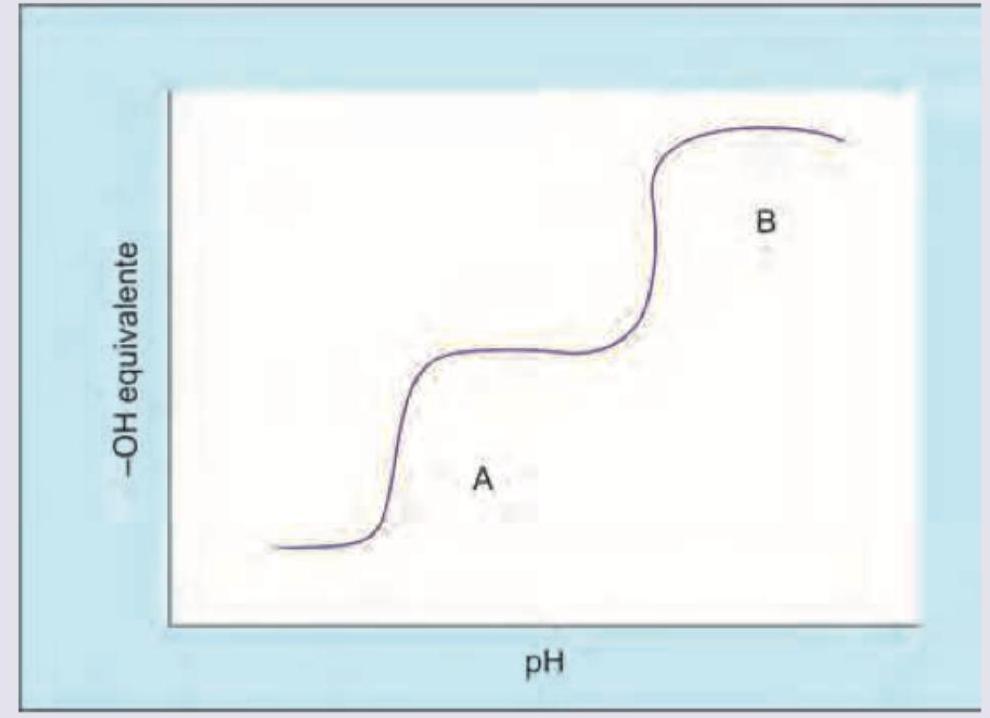
Explanation: **Explanation:** The **Isoelectric Point (pI)** is the specific pH at which a molecule, such as a protein or amino acid, carries **no net electrical charge**. At this pH, the number of positive charges (from protonated amino groups) exactly equals the number of negative charges (from deprotonated carboxyl groups), resulting in a zwitterionic state. * **Option A (Correct):** By definition, at the pI, the net charge is zero. Because the protein is electrically neutral, it will not migrate toward either the anode or the cathode when placed in an electric field (the basis for **Isoelectric Focusing**). * **Option B (Incorrect):** Mass is a physical property determined by the amino acid sequence and post-translational modifications; it is independent of the environmental pH. * **Option C (Incorrect):** While it is a true biochemical fact that proteins exhibit **minimum solubility** at their pI (due to reduced electrostatic repulsion between molecules, leading to aggregation), this is a *consequence* of the zero net charge, not the definition itself. * **Option D (Incorrect):** Denaturation refers to the loss of quaternary, tertiary, or secondary structure. While extreme pH values can cause denaturation, the pI is simply a charge state and does not inherently imply structural breakdown. **High-Yield Clinical Pearls for NEET-PG:** 1. **Electrophoresis:** Proteins move toward the opposite charge if the pH is above or below their pI. If **pH > pI**, the protein is negatively charged (Anion) and moves toward the **Anode**. 2. **Solubility:** Proteins are most easily precipitated from solution at their pI. 3. **Calculation:** For a simple amino acid, $pI = (pK_1 + pK_2) / 2$. 4. **HbA1c:** Measurement via ion-exchange chromatography relies on the difference in pI between glycated and non-glycated hemoglobin.
Explanation: **Explanation:** Histones are highly conserved, low-molecular-weight proteins that play a fundamental role in the structural organization of eukaryotic chromosomes. **1. Why the correct answer is right:** Histones are primarily **located inside the nucleus** of eukaryotic cells. Their primary function is to act as "spools" around which DNA winds to create structural units called **nucleosomes**. This process is essential for packaging the massive length of genomic DNA into a compact, organized structure (chromatin) that fits within the confines of the nucleus. **2. Why the incorrect options are wrong:** * **Option A (Ribonucleoprotein):** Histones are simple proteins, not ribonucleoproteins. A ribonucleoprotein consists of RNA combined with protein (e.g., ribosomes or telomerase). Histones associate with DNA to form **deoxyribonucleoproteins**. * **Option C (Acidic):** This is a common distractor. Histones are actually **strongly basic** proteins. They are rich in basic amino acids—specifically **Arginine and Lysine**. The positive charge of these amino acids allows histones to bind ionically to the negatively charged phosphate backbone of DNA. **High-Yield Clinical Pearls for NEET-PG:** * **The Nucleosome Core:** Consists of an octamer of two molecules each of **H2A, H2B, H3, and H4**. * **Linker Histone:** **H1** is the "linker histone" that resides outside the nucleosome core and helps stabilize the 30-nm chromatin fiber. * **Epigenetics:** Histone modification (Acetylation, Methylation, Phosphorylation) is a key regulator of gene expression. **Acetylation** (by HATs) usually neutralizes the positive charge, relaxing chromatin and increasing transcription. * **Drug Link:** **Sodium Valproate** (anti-epileptic) acts as a Histone Deacetylase (HDAC) inhibitor.
Explanation: **Explanation:** **1. Why Proline to Hydroxyproline is Correct:** Post-translational modification (PTM) refers to the covalent modification of proteins after they have been synthesized by ribosomes. The conversion of **Proline to Hydroxyproline** is a classic example of PTM occurring during collagen synthesis. This hydroxylation is catalyzed by the enzyme **prolyl hydroxylase** within the endoplasmic reticulum. Hydroxyproline is essential for the thermal stability of the collagen triple helix, as it provides additional hydrogen bonding. **2. Analysis of Incorrect Options:** * **Options A & C (Glutamate to Glutamine / Aspartate to Asparagine):** These are simple amidation reactions involving free amino acids or metabolic intermediates. While Glutamine and Asparagine are standard amino acids encoded by the genetic code, their interconversion is part of general nitrogen metabolism (e.g., urea cycle or ammonia transport), not a modification of a protein chain. * **Option D (Leucine to Isoleucine):** These are distinct, essential branched-chain amino acids. One cannot be converted into the other as a modification within a protein structure; they are incorporated into proteins as separate entities based on specific mRNA codons. **3. NEET-PG High-Yield Clinical Pearls:** * **Vitamin C Requirement:** Prolyl and lysyl hydroxylases require **Vitamin C (Ascorbic acid)** as a co-factor to keep the enzyme's iron in the reduced ($Fe^{2+}$) state. * **Scurvy:** Deficiency of Vitamin C leads to defective hydroxylation, resulting in unstable collagen, which manifests clinically as bleeding gums, poor wound healing, and petechiae. * **Other PTM Examples:** Gamma-carboxylation of Glutamate (Vitamin K dependent), phosphorylation, glycosylation, and proteolytic cleavage (e.g., Proinsulin to Insulin).
Explanation: ### Explanation **Correct Answer: D. Protein folding** **Why it is correct:** Chaperones (also known as **Molecular Chaperones**) are a specialized class of proteins whose primary function is to assist in the correct **folding** of nascent polypeptide chains into their functional 3D conformations. They prevent the aggregation of unfolded or partially folded proteins by shielding hydrophobic patches that would otherwise stick together inappropriately. Many chaperones are **Heat Shock Proteins (HSPs)**, such as HSP70, which are upregulated during cellular stress to refold denatured proteins. **Why the other options are incorrect:** * **A. Protein synthesis:** This is the function of **ribosomes** (translation). While chaperones often bind to the polypeptide as it emerges from the ribosome, they do not catalyze the formation of peptide bonds. * **B. Protein degradation:** This is primarily the role of the **Ubiquitin-Proteasome System** or lysosomes. Chaperones may direct irreversibly misfolded proteins to these systems, but their primary goal is "rescue" (folding), not destruction. * **C. Protein denaturation:** This refers to the loss of quaternary, tertiary, or secondary structure due to heat, pH changes, or chemicals. Chaperones act to **reverse** or prevent denaturation, not cause it. **NEET-PG High-Yield Pearls:** 1. **Chaperonins:** A specific subgroup of chaperones (e.g., GroEL/GroES in bacteria, **HSP60** in humans) that provide a "cage" (isolation chamber) for proteins to fold in an ATP-dependent manner. 2. **Clinical Correlation:** Defective protein folding is the hallmark of **Prion diseases** (Creutzfeldt-Jakob disease), **Alzheimer’s disease** (Amyloid-beta plaques), and **Cystic Fibrosis** (CFTR protein misfolding). 3. **ATP Requirement:** Most chaperone-mediated folding is an active process requiring **ATP hydrolysis**.
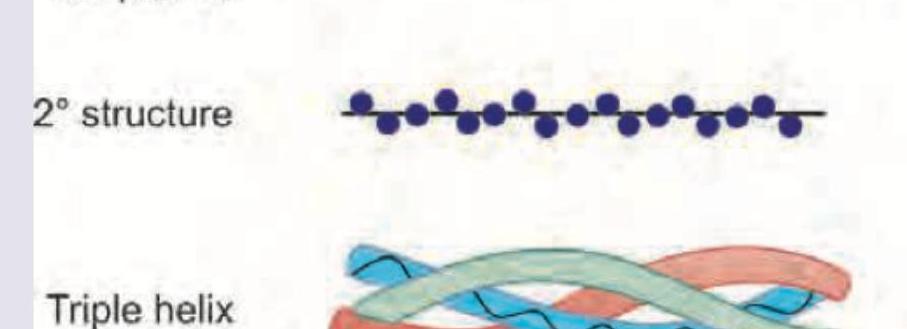
Explanation: **Explanation:** Protein folding is the process by which a linear polypeptide chain acquires its functional three-dimensional conformation. The primary driver for the formation of **secondary structures** (like alpha-helices and beta-pleated sheets) is the formation of **Hydrogen bonds** between the carbonyl oxygen (-CO) and the amide hydrogen (-NH) of the peptide backbone. While hydrophobic interactions drive the initial "molten globule" collapse, hydrogen bonding provides the structural stability and specificity required for the final folded state. **Analysis of Options:** * **A. Amide bond:** Also known as a peptide bond, this is a strong covalent bond that links amino acids together. It defines the **primary structure** (sequence) but does not cause the folding into higher-order structures. * **C. Phosphodiester bond:** These bonds form the backbone of nucleic acids (DNA and RNA), linking the 3' carbon of one sugar to the 5' carbon of another. They are not involved in protein structure. * **D. Disulphide bond:** These are strong covalent bonds between cysteine residues that stabilize the **tertiary and quaternary structures**. While they are crucial for stability, they are considered "cross-links" rather than the primary force responsible for the folding process itself. **High-Yield Clinical Pearls for NEET-PG:** * **Chaperones (Heat Shock Proteins):** Specialized proteins (e.g., HSP70) that prevent misfolding and facilitate the correct folding of nascent polypeptides. * **Prion Diseases:** Caused by the misfolding of normal PrP proteins into beta-sheet rich pathological forms (e.g., Creutzfeldt-Jakob Disease). * **Alzheimer’s Disease:** Characterized by the accumulation of misfolded Amyloid-beta proteins. * **Denaturation:** The loss of secondary, tertiary, and quaternary structure (breaking of H-bonds) without breaking the primary peptide bonds.
Explanation: **Explanation:** The correct answer is **Glycine (Option A)**. **Why Glycine is Correct:** The alpha-helix is a rigid, right-handed spiral stabilized by intrachain hydrogen bonding. **Glycine** is the smallest amino acid, with only a hydrogen atom as its R-group. This unique structural flexibility allows it to adopt a wide range of conformational angles that are incompatible with the rigid constraints of an alpha-helix. When glycine is incorporated into a helix, its high conformational entropy and lack of a bulky side chain often cause the helix to lose its stability, leading to the formation of **bends or kinks**. *Note:* While **Proline** is the most famous "helix breaker" because its cyclic structure physically prevents hydrogen bonding and creates a fixed bend, **Glycine** is the correct answer here as it is the primary amino acid responsible for providing the flexibility required for tight turns and bends in various protein secondary structures. **Why Other Options are Incorrect:** * **B. Lysine:** A positively charged amino acid that is generally well-tolerated in alpha-helices, though a sequence of many Lysines can cause electrostatic repulsion. * **C. Methionine:** One of the strongest helix-formers. It has a non-polar, unbranched side chain that fits perfectly within the helical geometry. * **D. Glutamine:** An uncharged polar amino acid that is a frequent and stable constituent of alpha-helices. **High-Yield NEET-PG Pearls:** * **Helix Breakers:** Proline (due to its rigid secondary amino group) and Glycine (due to its excessive flexibility). * **Best Helix Formers:** M-A-L-E-K (Methionine, Alanine, Leucine, Glutamate, Lysine). * **Collagen Connection:** Glycine is essential every third residue in collagen (Gly-X-Y) because its small size is the only one that can fit into the crowded center of the triple helix.
Explanation: **Explanation:** The synthesis of collagen involves significant post-translational modifications, specifically the **hydroxylation of proline and lysine residues**. This process is essential for the thermal stability of the collagen triple helix, as hydroxyproline allows for interchain hydrogen bonding. The enzyme responsible, **Prolyl hydroxylase**, is a mixed-function oxidase that requires four specific co-factors/substrates to function: 1. **Molecular Oxygen ($O_2$):** One atom of oxygen is incorporated into the proline residue, while the other is incorporated into $\alpha$-ketoglutarate. 2. **$\alpha$-Ketoglutarate:** It acts as a co-substrate and undergoes oxidative decarboxylation to form succinate and $CO_2$. 3. **Ferrous iron ($Fe^{2+}$):** This is a critical metal cofactor at the enzyme's active site. 4. **Ascorbate (Vitamin C):** Its primary role is to act as a reducing agent. It maintains the iron in the **ferrous ($Fe^{2+}$) state** by reducing any ferric ($Fe^{3+}$) iron formed during accidental uncoupled catalytic cycles. **Why "All of the above" is correct:** Since the reaction cannot proceed without oxygen (substrate), $\alpha$-ketoglutarate (co-substrate), and ascorbate (redox cofactor), all three are mandatory requirements for collagen maturation. **Clinical Pearls for NEET-PG:** * **Scurvy:** Deficiency of Vitamin C leads to impaired hydroxylation, resulting in unstable collagen fibers. Clinical signs include fragile blood vessels (petechiae), easy bruising, and poor wound healing. * **Location:** Hydroxylation occurs in the **Lumen of the Rough Endoplasmic Reticulum (RER)**. * **Amino Acid Sequence:** Collagen is characterized by the repeating sequence **Gly-X-Y**, where X is often Proline and Y is often Hydroxyproline or Hydroxylysine.
Explanation: **Explanation:** **Denaturation** is the process by which a protein loses its native three-dimensional conformation (secondary, tertiary, and quaternary structures) due to external stress such as heat, extreme pH, or organic solvents. **Why the Peptide Bond is Preserved:** The peptide bond is a strong **covalent bond** that constitutes the **primary structure** of a protein. Denaturation involves the disruption of non-covalent interactions and disulfide bridges, but it does **not** involve the hydrolysis of the peptide backbone. Therefore, the primary sequence of amino acids remains intact. Only proteolytic enzymes (proteases) can break peptide bonds. **Why Other Options are Incorrect:** * **Hydrogen Bonds (A):** These are weak non-covalent interactions that stabilize alpha-helices and beta-pleated sheets (**secondary structure**). They are easily disrupted by heat or urea. * **Ionic Bonds (C):** Also known as salt bridges, these stabilize the **tertiary structure**. Changes in pH alter the ionization state of amino acid side chains, breaking these bonds. * **All of the above (D):** Since hydrogen and ionic bonds are lost during denaturation, this option is incorrect. **High-Yield Clinical Pearls for NEET-PG:** * **Renaturation:** If the denaturing agent is removed, some proteins (like Ribonuclease) can spontaneously refold, proving that the primary structure contains all the information necessary for folding. * **Chaperones:** These are specialized proteins (Heat Shock Proteins) that assist in the correct folding of proteins and prevent aggregation during stress. * **Misfolding Diseases:** Prion diseases (Creutzfeldt-Jakob disease) and Alzheimer’s involve protein misfolding rather than simple denaturation, leading to the formation of insoluble amyloid plaques.
Explanation: ### Explanation **1. Why the Correct Answer is Right:** Leucine is a **branched-chain amino acid (BCAA)**. Its side chain consists of a purely hydrocarbon isobutyl group. Because hydrocarbons (carbon and hydrogen) have similar electronegativities, they do not create dipoles or charges. This makes the side chain **hydrophobic (nonpolar)**. In a physiological environment, leucine residues tend to cluster in the interior of globular proteins to avoid contact with water, contributing significantly to the protein's tertiary structure through hydrophobic interactions. **2. Why the Incorrect Options are Wrong:** * **Polar side chain:** Polar amino acids (e.g., Serine, Threonine, Tyrosine) contain electronegative atoms like Oxygen or Nitrogen in their side chains (hydroxyl or amide groups) that can form hydrogen bonds. Leucine lacks these groups. * **Negatively charged side chain:** These are acidic amino acids, specifically **Aspartate** and **Glutamate**, which possess a carboxyl group ($COO^-$) in their side chain at physiological pH. * **Positively charged side chain:** These are basic amino acids—**Lysine, Arginine, and Histidine**—which contain nitrogenous groups (like amino or guanidino groups) that carry a positive charge at physiological pH. **3. Clinical Pearls & High-Yield Facts for NEET-PG:** * **Maple Syrup Urine Disease (MSUD):** This is a high-yield clinical correlation. It is caused by a deficiency in the **Branched-Chain Alpha-Keto Acid Dehydrogenase** complex, leading to the accumulation of Leucine, Isoleucine, and Valine. * **Ketogenic Property:** Leucine is one of the two **purely ketogenic** amino acids (the other is Lysine). It cannot be converted into glucose. * **BCAA Trio:** Always remember the three branched-chain amino acids together: **Leucine, Isoleucine, and Valine**. All three are nonpolar and essential amino acids.
Amino Acids: Structure and Properties
Practice Questions
Peptide Bond Formation
Practice Questions
Primary Structure of Proteins
Practice Questions
Secondary Structure of Proteins
Practice Questions
Tertiary and Quaternary Structures
Practice Questions
Protein Folding and Chaperones
Practice Questions
Protein Domains and Motifs
Practice Questions
Structure-Function Relationships
Practice Questions
Hemoglobin and Myoglobin
Practice Questions
Collagen and Elastin
Practice Questions
Albumin and Plasma Proteins
Practice Questions
Post-Translational Modifications
Practice Questions
Get full access to all questions, explanations, and performance tracking.
Start For Free