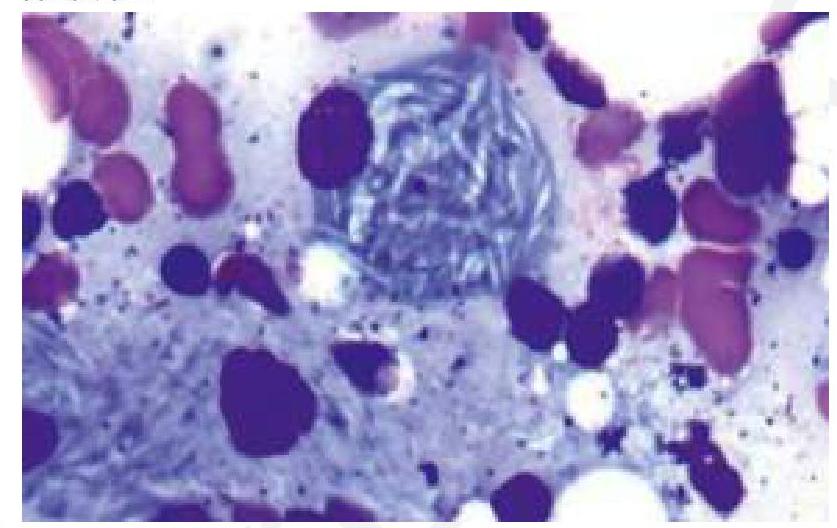
Fatty liver caused due to excess alcohol consumption is primarily due to an altered ratio of which of the following?
Platelet-activating factor is biochemically a?
After a meal rich in dietary lipids, lipids are absorbed by the small intestine and transported in the lymph primarily as which of the following?
Which enzyme catalyzes the rate-limiting step in the synthesis of bile acids?
Which of the following is not a step of beta-oxidation?
Which of the following types of hypertriglyceridemia is associated with an increase in chylomicron and VLDL remnants?
Phospholipase A2 acts on which of the following?
What are the products of complete hydrolysis of cardiolipin?
Which of the following is the rate-limiting enzyme of bile acid synthesis?
Apolipoproteins E and C are synthesized by which organ?
Explanation: **Explanation:** The primary metabolic consequence of ethanol metabolism is an **increased NADH/NAD+ ratio** in the liver. Alcohol is metabolized in the cytosol by *Alcohol Dehydrogenase* and in the mitochondria by *Acetaldehyde Dehydrogenase*. Both reactions reduce NAD+ to NADH, leading to an overabundance of NADH. **Why NADH/NAD+ is the correct answer:** The high NADH/NAD+ ratio signals a "pseudo-fed" state, shifting the liver's metabolic equilibrium: 1. **Inhibition of Fatty Acid Oxidation:** High NADH inhibits $\beta$-oxidation (which requires NAD+), leading to the accumulation of fatty acids. 2. **Increased Lipogenesis:** Excess NADH promotes the conversion of Dihydroxyacetone phosphate (DHAP) to Glycerol-3-phosphate, providing the backbone for Triglyceride synthesis. 3. **Shift in Redox State:** Pyruvate is diverted to Lactate to regenerate NAD+, leading to lactic acidosis and inhibiting gluconeogenesis. **Why other options are incorrect:** * **NAD/NADH (Option A):** This is the inverse. In chronic alcoholism, NAD+ is depleted, not increased. * **NADP/NADPH & NADPH/NADP (Options B & D):** While NADPH is involved in fatty acid synthesis, the acute metabolic derangement caused by alcohol is driven by the NAD-dependent dehydrogenase enzymes, not the pentose phosphate pathway or NADPH-dependent reactions. **High-Yield Clinical Pearls for NEET-PG:** * **Key Enzyme:** Alcohol Dehydrogenase is the rate-limiting step (follows zero-order kinetics). * **Histology:** Alcohol-induced fatty liver (Steatosis) typically shows **macrovesicular steatosis**. * **Associated Findings:** The high NADH/NAD+ ratio also causes **hyperuricemia** (due to lactate competing with urate for excretion) and **fasting hypoglycemia**. * **Biochemical Marker:** Serum **Gamma-Glutamyl Transferase (GGT)** is a sensitive marker for chronic alcohol ingestion.
Explanation: ### Explanation **Platelet-activating factor (PAF)** is a potent lipid mediator involved in inflammation, platelet aggregation, and anaphylaxis. **Why Option C is correct:** Biochemically, PAF is a **glycerol ether phospholipid** (specifically, 1-alkyl-2-acetyl-sn-glycero-3-phosphocholine). Its structure is unique due to two key features: 1. **Ether Linkage:** It contains an alkyl group attached to the carbon-1 (C1) of glycerol via an **ether bond**, rather than the typical ester bond found in most phospholipids. 2. **Acetyl Group:** It has an **acetyl residue** at the C2 position instead of a long-chain fatty acid. This makes it more water-soluble than other membrane lipids, allowing it to act as a signaling molecule. **Why other options are incorrect:** * **Options A & D (Prostaglandins & Leukotrienes):** These are **Eicosanoids**, derived from 20-carbon polyunsaturated fatty acids (like arachidonic acid). While they are also inflammatory mediators, they do not contain a glycerol backbone or phosphate group. * **Option B (Glycolipid):** Glycolipids (like cerebrosides or gangliosides) contain a carbohydrate component and a sphingosine or glycerol base, but they lack the phosphate group and the specific ether-linked alkyl chain characteristic of PAF. **High-Yield Clinical Pearls for NEET-PG:** * **Source:** PAF is synthesized by platelets, neutrophils, monocytes, and endothelial cells. * **Potency:** It is one of the most potent known biological molecules, active at concentrations as low as $10^{-11}$ mol/L. * **Functions:** It triggers platelet aggregation, induces systemic vasodilation (hypotension), and causes bronchoconstriction. * **Enzyme:** It is inactivated by the enzyme **PAF acetylhydrolase**, which removes the acetyl group at the C2 position.
Explanation: **Explanation:** **1. Why Chylomicrons are the Correct Answer:** Dietary lipids (exogenous lipids), primarily triacylglycerols, are emulsified by bile salts and digested by pancreatic lipase in the small intestine. Once absorbed by the enterocytes, they are re-esterified and packaged into **Chylomicrons**. These are the largest and least dense lipoproteins, characterized by the presence of **Apolipoprotein B-48**. Because they are too large to enter the blood capillaries directly, they are secreted into the **lacteals (lymphatic vessels)** of the intestinal villi and enter the systemic circulation via the thoracic duct. **2. Why the Other Options are Incorrect:** * **VLDLs (Option A):** These transport **endogenous** lipids (synthesized in the liver), not dietary lipids. They contain Apo B-100. * **Free Fatty Acids (Option B):** While FFAs are transported bound to albumin, this occurs primarily during **fasting** (lipolysis from adipose tissue), not during the post-prandial absorption phase. * **LDLs (Option D):** Known as "bad cholesterol," LDLs are metabolic products of VLDLs (via IDL) and function to transport cholesterol to peripheral tissues. **3. High-Yield NEET-PG Clinical Pearls:** * **Apo B-48 vs. Apo B-100:** Both are products of the same gene. Apo B-48 is produced in the intestine via **RNA editing** (C to U conversion creating a premature stop codon). * **Milky Plasma:** After a fatty meal, plasma appears milky (lipemia) due to the high concentration of chylomicrons. * **LPL Activation:** Chylomicrons acquire **Apo C-II** and **Apo E** from HDL in the blood. Apo C-II is essential for activating **Lipoprotein Lipase (LPL)** to release fatty acids to tissues. * **Abetalipoproteinemia:** A deficiency in Microsomal Triglyceride Transfer Protein (MTP) leads to an inability to form Chylomicrons and VLDLs, resulting in fat malabsorption and steatorrhea.
Explanation: **Explanation:** The synthesis of bile acids occurs in the liver from cholesterol. The conversion of cholesterol into **7α-hydroxycholesterol** is the first and **rate-limiting step** in this pathway. This reaction is catalyzed by the enzyme **7α-Hydroxylase** (a cytochrome P450 enzyme). * **Regulation:** This enzyme is inhibited by bile acids (feedback inhibition) and stimulated by cholesterol. Vitamin C and NADPH are essential cofactors for this reaction. **Analysis of Incorrect Options:** * **12α-Hydroxylase:** This enzyme is involved later in the pathway to determine the ratio of cholic acid to chenodeoxycholic acid, but it is not the rate-limiting step. * **HMG CoA Reductase:** This is the rate-limiting enzyme for **cholesterol synthesis**, not bile acid synthesis. (Note: Option C mentions inhibitors/sequestrants, which are pharmacological classes, not enzymes). * **25-hydroxycholecalciferol 1-hydroxylase:** This enzyme is located in the kidneys and is responsible for the activation of Vitamin D (converting 25-(OH)D₃ to 1,25-(OH)₂D₃). **High-Yield Clinical Pearls for NEET-PG:** * **Bile Acid Sequestrants (e.g., Cholestyramine):** These drugs bind bile acids in the gut, preventing their reabsorption. This relieves the feedback inhibition on 7α-Hydroxylase, leading to increased diversion of cholesterol into bile acid synthesis, thereby lowering serum LDL levels. * **Vitamin C Deficiency:** Scurvy can lead to cholesterol accumulation in the liver because 7α-Hydroxylase requires Vitamin C as a cofactor. * **Primary vs. Secondary Bile Acids:** Primary bile acids (Cholic/Chenodeoxycholic acid) are made in the liver; secondary bile acids (Deoxycholic/Lithocholic acid) are formed by bacterial action in the colon.
Explanation: **Explanation:** Beta-oxidation is the primary catabolic pathway for fatty acids, occurring within the mitochondrial matrix. It involves a repeating sequence of four reactions that shorten the fatty acid chain by two carbons (as Acetyl-CoA) in each cycle. **Why Option A is correct:** The oxidation steps in beta-oxidation utilize **NAD⁺** and **FAD** as electron acceptors, not NADP⁺. * **NAD⁺** is used in the third step (3-hydroxyacyl-CoA dehydrogenase). * **NADPH** is typically utilized in **reductive biosynthesis** (e.g., Fatty Acid Synthesis in the cytoplasm), not in catabolic oxidation. Therefore, NADP-dependent oxidation is not a part of beta-oxidation. **Analysis of Incorrect Options:** * **B. FAD dependent oxidation:** This is the **first step** of the cycle, catalyzed by *Acyl-CoA dehydrogenase*, which creates a double bond between C2 and C3 (trans-Δ²-enoyl-CoA). * **D. Hydration:** This is the **second step**, where *Enoyl-CoA hydratase* adds water across the double bond to form 3-L-hydroxyacyl-CoA. * **C. Thiolysis:** This is the **fourth and final step**, catalyzed by *Thiolase* (β-ketothiolase). It uses a molecule of CoA-SH to cleave the bond, releasing Acetyl-CoA and a fatty acyl-CoA shortened by two carbons. **High-Yield Clinical Pearls for NEET-PG:** * **Mnemonic:** Remember the sequence as **OHOT** (Oxidation by FAD → Hydration → Oxidation by NAD → Thiolysis). * **Location:** Beta-oxidation occurs in the **Mitochondria**, whereas Fatty Acid Synthesis occurs in the **Cytosol**. * **Rate-limiting step:** The transport of fatty acids into the mitochondria via the **Carnitine Shuttle** (inhibited by Malonyl-CoA). * **Energy Yield:** Oxidation of one Palmitate (16C) molecule yields a net of **106 ATP**.
Explanation: **Explanation:** **Type III Hyperlipoproteinemia** (also known as **Dysbetalipoproteinemia** or Broad Beta Disease) is characterized by a deficiency in **Apolipoprotein E (Apo E)**. Apo E is the essential ligand required for the liver to recognize and clear **chylomicron remnants** and **VLDL remnants (IDL)** via the LDL-receptor-related protein (LRP). When Apo E is defective (specifically the E2/E2 phenotype), these remnants accumulate in the plasma, leading to elevated cholesterol and triglycerides. **Analysis of Incorrect Options:** * **Type I (Familial Chylomicronemia):** Caused by a deficiency in Lipoprotein Lipase (LPL) or Apo C-II. It results in a massive increase in **chylomicrons** only, not remnants. * **Type IIa (Familial Hypercholesterolemia):** Caused by a defect in LDL receptors. It leads to isolated elevation of **LDL** (cholesterol), with normal triglyceride levels. * **Type IV (Familial Hypertriglyceridemia):** Characterized by the overproduction or decreased clearance of **VLDL**. Remnant levels are typically not the primary finding. **High-Yield Clinical Pearls for NEET-PG:** * **Pathognomonic Sign:** **Palmar xanthomas** (xanthoma striatum palmare) are highly specific for Type III. * **Electrophoresis:** Shows a characteristic **"Broad Beta Band"** due to the presence of IDL. * **Genetics:** Associated with the **Apo E2 homozygote** genotype. * **Risk:** Significant increase in the risk of premature coronary artery disease and peripheral vascular disease.
Explanation: **Explanation:** **Phospholipase A2 (PLA2)** is a specific esterase enzyme that hydrolyzes the ester bond at the **second carbon (C2)** of a phospholipid, releasing a free fatty acid (usually arachidonic acid) and a lysophospholipid. 1. **Why Phosphatidyl-inositol is correct:** Phosphatidyl-inositol is a classic **glycerophospholipid** found in cell membranes. PLA2 acts specifically on the glycerol backbone of such phospholipids. When PLA2 acts on phosphatidyl-inositol, it releases **Arachidonic acid**, which serves as the precursor for the synthesis of eicosanoids (prostaglandins, leukotrienes, and thromboxanes). This is a critical step in the inflammatory cascade. 2. **Why other options are incorrect:** * **Phosphoglyceric acid:** This is an intermediate in glycolysis (e.g., 3-phosphoglycerate), not a phospholipid substrate for phospholipases. * **Phosphate:** This is an inorganic ion or a functional group, not a complex lipid molecule. * **Calcium ion:** While PLA2 is a **calcium-dependent enzyme** (it requires $Ca^{2+}$ for its catalytic activity), calcium is a cofactor, not the substrate itself. **Clinical Pearls for NEET-PG:** * **Snake Venom:** The venom of cobras and vipers contains high concentrations of PLA2, which causes hemolysis by producing lysolecithin (a potent detergent that dissolves RBC membranes). * **Steroid Mechanism:** Glucocorticoids induce the synthesis of **Lipocortin (Annexin A1)**, which inhibits PLA2. This is the primary mechanism by which steroids exert their anti-inflammatory effect (by preventing the release of arachidonic acid). * **Pancreatitis:** Serum PLA2 levels are often elevated in acute pancreatitis and are associated with the development of pulmonary complications (ARDS).
Explanation: **Explanation:** **Cardiolipin** (Diphosphatidylglycerol) is a unique phospholipid found exclusively in the inner mitochondrial membrane. To understand its hydrolysis products, one must look at its chemical structure: it consists of **two molecules of phosphatidic acid** joined together by a **central glycerol bridge**. 1. **Why Option A is correct:** * **Glycerol:** Each phosphatidic acid unit contains one glycerol backbone (2 total), plus the central linking glycerol. Total = **3 Glycerols**. * **Fatty Acids:** Each phosphatidic acid unit carries two fatty acid chains. Total = **4 Fatty Acids**. * **Phosphate:** Each phosphatidic acid unit contains one phosphate group. Total = **2 Phosphates**. Therefore, complete hydrolysis yields 3 glycerol, 4 fatty acids, and 2 phosphates. 2. **Why other options are incorrect:** * **Option B:** Incorrect because it suggests only 1 phosphate; cardiolipin is a *di*phosphatidyl compound. * **Option C:** Incorrect because it suggests 3 fatty acids; a "double" phospholipid structure must have 4 acyl chains. * **Option D:** Incorrect because 5 glycerols would imply a much larger, non-existent polymer. **High-Yield Clinical Pearls for NEET-PG:** * **Mitochondrial Marker:** Cardiolipin is essential for the optimal function of enzymes in the **Electron Transport Chain** (especially Complex IV). * **Barth Syndrome:** An X-linked genetic disorder caused by a defect in cardiolipin metabolism (tafazzin mutation), leading to cardiomyopathy and muscle weakness. * **Syphilis Testing:** Cardiolipin is the antigen used in the **VDRL/RPR tests** to detect non-specific antibodies (reagin) in syphilis. * **Antiphospholipid Antibody Syndrome (APS):** Anti-cardiolipin antibodies are a hallmark finding, associated with arterial/venous thrombosis and recurrent miscarriages.
Explanation: **Explanation:** The synthesis of bile acids from cholesterol is the primary pathway for cholesterol excretion in the body. This process occurs in the liver and is regulated by a critical rate-limiting step. **Why Option C is correct:** The enzyme **7 α-hydroxylase** catalyzes the first and most important regulatory step in bile acid synthesis, converting cholesterol into 7 α-hydroxycholesterol. This enzyme is a **microsomal** enzyme (located in the endoplasmic reticulum) and belongs to the cytochrome P450 superfamily (CYP7A1). It requires NADPH, molecular oxygen, and Vitamin C as cofactors. **Analysis of Incorrect Options:** * **Option A:** 17 α-hydroxylase is involved in the synthesis of steroid hormones (adrenal and gonadal steroids), not bile acids. * **Option B:** While the enzyme name is correct, its localization is wrong. 7 α-hydroxylase is membrane-bound in the microsomes, not free in the cytoplasm. * **Option C vs D:** The distinction between microsomal and mitochondrial is a common "trap" in NEET-PG. While some later steps in the "alternative pathway" of bile acid synthesis occur in mitochondria (via 27-hydroxylase), the **primary rate-limiting step** (CYP7A1) is strictly **microsomal**. **High-Yield Clinical Pearls for NEET-PG:** * **Feedback Inhibition:** Bile acids (the end product) inhibit 7 α-hydroxylase via the Farnesoid X Receptor (FXR). * **Vitamin C Deficiency:** Scurvy can lead to cholesterol accumulation and gallstone formation because Vitamin C is a necessary cofactor for 7 α-hydroxylase. * **Thyroid Connection:** Thyroid hormones (T3) upregulate this enzyme; thus, hypothyroidism often presents with hypercholesterolemia due to decreased bile acid conversion. * **Bile Acid Sequestrants:** Drugs like Cholestyramine increase the activity of this enzyme by removing the feedback inhibition of bile acids.
Explanation: ### Explanation **1. Why the Correct Answer is Right:** The **liver** is the primary metabolic hub for lipid synthesis and transport. It is the major site for the synthesis of most apolipoproteins, including **Apo C (C-I, C-II, C-III)** and **Apo E**. * **Apo C-II** is a vital cofactor that activates Lipoprotein Lipase (LPL) for triglyceride hydrolysis. * **Apo E** serves as the essential ligand for the hepatic uptake of chylomicron remnants and IDL via the LDL receptor and LRP (LDL Receptor-related Protein). While the intestine synthesizes specific apolipoproteins (like Apo B-48 and Apo A-I), the bulk of the circulating "exchangeable" apolipoproteins (C and E) are produced and secreted by hepatocytes into the plasma, where they are primarily associated with VLDL and HDL. **2. Why the Incorrect Options are Wrong:** * **Kidney:** The kidneys are involved in the filtration and reabsorption of small molecules but do not possess the biosynthetic machinery for lipoprotein assembly or apolipoprotein synthesis. * **Intestine:** The enterocytes are responsible for synthesizing **Apo B-48** (unique to chylomicrons) and some **Apo A-I**. While they contribute small amounts of Apo A-IV, they are not the source of Apo C or Apo E. * **RBCs:** Red blood cells lack a nucleus and organelles (ribosomes/ER); therefore, they cannot synthesize proteins. **3. Clinical Pearls & High-Yield Facts for NEET-PG:** * **Apo B-100 vs. B-48:** Remember that Apo B-100 is made in the **Liver**, while Apo B-48 is made in the **Intestine** (due to RNA editing by the enzyme *cytidine deaminase*). * **Apo C-II Deficiency:** Leads to Type I Hyperlipoproteinemia (marked elevation of Chylomicrons). * **Apo E Deficiency:** Leads to Type III Hyperlipoproteinemia (Dysbetalipoproteinemia), characterized by the accumulation of IDL and Chylomicron remnants. * **Alzheimer’s Link:** The **Apo E4** isoform is a significant genetic risk factor for late-onset Alzheimer’s disease.
Lipid Classification and Chemistry
Practice Questions
Fatty Acid Oxidation
Practice Questions
Ketone Body Metabolism
Practice Questions
Fatty Acid Synthesis
Practice Questions
Metabolism of Triacylglycerols
Practice Questions
Phospholipid Metabolism
Practice Questions
Cholesterol Metabolism and Biosynthesis
Practice Questions
Bile Acids and Bile Salts
Practice Questions
Lipoprotein Metabolism and Transport
Practice Questions
Dyslipidemias and Atherosclerosis
Practice Questions
Prostaglandins and Eicosanoids
Practice Questions
Fatty Liver and Lipotropic Factors
Practice Questions
Get full access to all questions, explanations, and performance tracking.
Start For Free