Digestion of proteins is initiated by:
A patient presents with respiratory distress and is diagnosed with panacinar emphysema. Which of the following is deficient?
Which of the following statements best describes the mechanism of action of insulin on target cells?
Intrinsic factor in the stomach is secreted by:
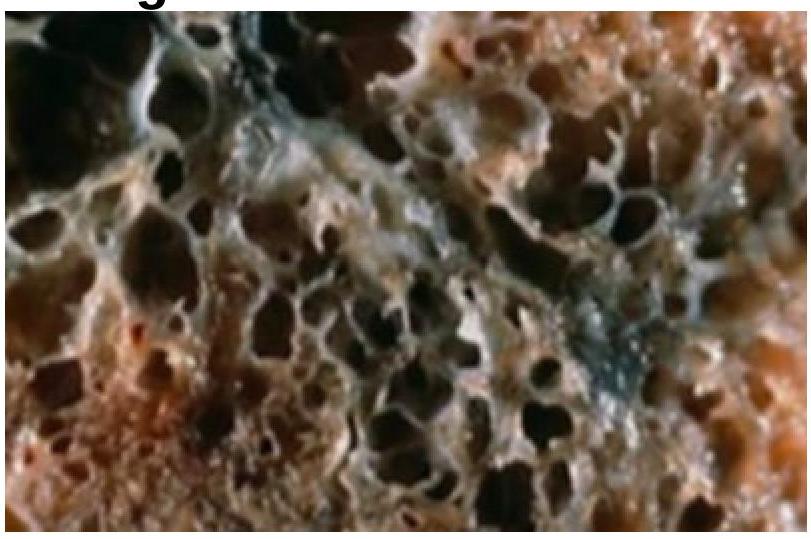
A 35-year-old woman with a long history of dyspnea, chronic cough, sputum production, and wheezing dies of respiratory failure following a bout of lobar pneumonia. She was not a smoker or an alcoholic. Which of the following underlying conditions is most likely associated with the pathologic changes shown in the lung autopsy?
Inactive precursors of enzymes are known as:
All of the following are true about blood coagulation, except which of the following?
Which of the following is an example of allosteric inhibition?
How do enzymes function in biochemical reactions?
Enzyme activity is expressed as?
Explanation: ***Pepsin*** - **Pepsin** is the primary enzyme responsible for initiating **protein digestion** in the **stomach**. - It cleaves proteins into smaller polypeptides, functioning optimally in the highly **acidic environment** of the stomach. *Amylase* - **Amylase** is responsible for the digestion of **carbohydrates**, breaking down starch into simpler sugars. - It is found in both saliva (salivary amylase) and pancreatic secretions (pancreatic amylase), and does not act on proteins. *Sucrase* - **Sucrase** is an enzyme located in the **small intestine** and is responsible for breaking down the disaccharide **sucrose** into glucose and fructose. - It plays no role in protein digestion. *Chymotrypsin* - **Chymotrypsin** is a proteolytic enzyme secreted by the **pancreas** that acts in the **small intestine** to further digest polypeptides into smaller peptides. - While it digests proteins, it is not the *initiating* enzyme; protein digestion is already underway by the time chymotrypsin acts.
Explanation: **Alpha-1 antitrypsin** * **Alpha-1 antitrypsin (A1AT) deficiency** is a genetic disorder that leads to the development of panacinar emphysema, especially in non-smokers or at a young age [1], [2]. * A1AT protects the lung tissue from destruction by **elastase** released by neutrophils; without it, this enzyme breaks down alveolar walls [1], [2]. *Surfactant* * **Surfactant** is responsible for reducing surface tension in the alveoli, preventing their collapse in the lungs. * A deficiency primarily causes **neonatal respiratory distress syndrome** or adult respiratory distress syndrome, not predominantly emphysema. *Albumin* * **Albumin** is a primary protein in plasma that maintains oncotic pressure and transports various substances in the blood. * A deficiency in albumin (e.g., in liver disease or malnutrition) typically leads to **edema** and impaired drug transport, not emphysema. *Type II pneumocytes* * **Type II pneumocytes** are responsible for producing and secreting surfactant, as well as acting as progenitor cells for Type I pneumocytes. * While abnormalities in these cells can lead to surfactant deficiency, the direct cause of genetic panacinar emphysema is the lack of protection against elastase, not a primary defect in pneumocyte number or function in this context.
Explanation: ***Insulin binds to a transmembrane receptor on the outer surface of the plasma membrane, activating the tyrosine kinase in the cytosolic domain of the receptor.*** - **Insulin** is a **peptide hormone** and cannot freely pass through the lipid bilayer, thus it binds to a **transmembrane receptor** on the cell surface. - This binding leads to the activation of the receptor's intrinsic **tyrosine kinase activity** in the intracellular domain, initiating a signaling cascade. *Insulin binds to a cytoplasmic receptor and is transferred as a hormone receptor complex to the nucleus to modulate gene expression.* - This mechanism describes the action of **steroid hormones**, which are lipid-soluble and can cross the cell membrane, binding to **intracellular receptors**. - **Insulin** acts via a **cell surface receptor** and its downstream effects are mediated through signal transduction pathways, not direct nuclear translocation. *Insulin binds to a receptor on the outer surface of the plasma membrane, activating adenylate cyclase through the Gs protein.* - This mechanism is characteristic of **G-protein coupled receptors (GPCRs)**, which activate or inhibit enzymes like adenylate cyclase via G-proteins to produce second messengers like cyclic AMP. - The **insulin receptor** is a **receptor tyrosine kinase**, not a GPCR, and does not directly activate adenylate cyclase via Gs protein. *Insulin enters the cell and causes the release of calcium ions from intracellular stores.* - While some hormones and neurotransmitters can trigger the release of intracellular **calcium ions**, this is typically mediated by specific pathways (e.g., GPCRs linked to phospholipase C). - **Insulin** does not directly enter target cells to cause calcium release; its actions are primarily mediated through receptor tyrosine kinase signaling pathways.
Explanation: ***Parietal cells*** - **Parietal cells** (also known as oxyntic cells) are responsible for secreting **intrinsic factor** and **hydrochloric acid (HCl)**. - Intrinsic factor is crucial for the absorption of **vitamin B12** in the terminal ileum. *Chief cells* - **Chief cells** primarily secrete **pepsinogen**, the precursor to the proteolytic enzyme pepsin. - They also produce **gastric lipase**, which aids in the digestion of fats. *Zymogen cells* - **Zymogen cells** are another name for **chief cells** in the gastric glands. - They are named for their production of **zymogens**, which are inactive enzyme precursors like pepsinogen. *Enterochromaffin cells* - **Enterochromaffin (EC) cells** are neuroendocrine cells found in the gastrointestinal tract. - They synthesize and secrete **serotonin** and other peptides that regulate gut motility and secretion.
Explanation: ***Alpha 1 antitrypsin deficiency*** - This condition leads to **accumulation of abnormal protein** in the liver and lungs, resulting in emphysema, which is consistent with chronic cough and dyspnea [1]. - Patients often develop **lung pathology** similar to what is seen in smokers, making it plausible given the patient's background [1]. *Mutation in dynein arms* - This is associated with **primary ciliary dyskinesia**, which presents with recurrent respiratory infections but is not typical in non-smokers or in the context of **dyspnea with chronic cough**. - Usually linked to **situs inversus** and **recurrent infections**, neither of which is highlighted here. *Antibodies against type 4 collagen* - This condition is related to **Goodpasture syndrome**, which typically results in **hemoptysis** and **renal failure**, rather than chronic cough and sputum production. - The predominant involvement in this syndrome does not align with the clinical presentation of **chronic lung disease** noted in this patient. *Cystic fibrosis* - While it causes **chronic respiratory symptoms**, it is usually seen in younger patients and is associated with **pancreatic insufficiency** and **salty sweat**. - The age of the patient and symptom progression does not fit well with a diagnosis of cystic fibrosis. **References:** [1] Kumar V, Abbas AK, et al.. Robbins and Cotran Pathologic Basis of Disease. 9th ed. The Lung, pp. 683-684.
Explanation: ***Proenzymes*** - **Proenzymes**, also known as **zymogens**, are inactive precursor forms of enzymes that require a biochemical change (e.g., proteolytic cleavage) to become active. - This mechanism allows for the **controlled activation** of enzymes, preventing premature or inappropriate enzymatic activity. *Apoenzymes* - An **apoenzyme** is the protein component of an enzyme that requires a **non-protein cofactor** (like a metal ion or coenzyme) to become active. - It describes the enzyme without its essential cofactor, making it inactive until the cofactor binds. *Coenzymes* - **Coenzymes** are small, non-protein organic molecules that bind to apoenzymes to assist in catalysis. - They often function as **carriers of electrons, atoms, or functional groups** during enzymatic reactions. *Holoenzymes* - A **holoenzyme** is the catalytically active form of an enzyme, consisting of an **apoenzyme** (protein part) combined with its essential **cofactor** (e.g., coenzyme or metal ion). - It represents the complete and functional enzyme complex.
Explanation: ***Extrinsic pathway is activated by contact with negatively charged surfaces*** - The **extrinsic pathway** is actually activated by tissue factor, not by contact with negatively charged surfaces [1]. - This statement is therefore **incorrect**, making it the exception among the other statements. *Factor X is part of both intrinsic and extrinsic pathways* - Factor X is indeed a key component involved in both the **intrinsic** and **extrinsic pathways** of coagulation, leading to the common pathway [1]. - The presence of Factor X is crucial for the conversion of prothrombin to thrombin in both pathways [2]. *Calcium is required in several steps of coagulation* - Calcium (**factor IV**) is essential for several reactions in the coagulation cascade, playing a pivotal role in both pathways [1]. - It acts as a cofactor that facilitates various enzyme-substrate interactions necessary for the coagulation process [2]. *Intrinsic pathway can be activated in vitro* - The **intrinsic pathway** can be activated in vitro using substances like kaolin or glass that promote contact activation [1]. - This means the statement is not an exception, as it's true regarding the properties of the intrinsic pathway. **References:** [1] Kumar V, Abbas AK, et al.. Robbins and Cotran Pathologic Basis of Disease. 9th ed. Hemodynamic Disorders, Thromboembolic Disease, and Shock, pp. 128-130. [2] Cross SS. Underwood's Pathology: A Clinical Approach. 6th ed. Common Clinical Problems From Blood And Bone Marrow Disease, pp. 582-583.
Explanation: ***Inhibition of PFK-1 by citrate*** - **Citrate** acts as an **allosteric inhibitor** of **phosphofructokinase-1 (PFK-1)**, a key enzyme in glycolysis. - Citrate binds to a site distinct from the active site, inducing a conformational change that reduces PFK-1's affinity for **fructose-6-phosphate**, thus slowing glycolysis. *Inactivation of glycogen synthase by phosphorylation* - This is an example of **covalent modification** (phosphorylation), not allosteric regulation. - Phosphorylation alters the enzyme's activity by adding a phosphate group, changing its structure and function. *Decreased synthesis of glucokinase by glucagon* - This describes **transcriptional regulation** or **gene expression control**, where glucagon affects the amount of enzyme produced. - It is not an example of allosteric regulation, which involves direct binding of a molecule to an enzyme to alter its activity. *None of the options* - This option is incorrect because the inhibition of PFK-1 by citrate is a classic example of allosteric inhibition.
Explanation: ***Decrease in activation energy*** - Enzymes act as **biological catalysts** by providing an alternative reaction pathway with a lower **transition state energy**. - This reduction in the **activation energy** allows a higher proportion of reactant molecules to overcome the energy barrier and react, thereby increasing the reaction rate. *Increase in activation energy* - This statement is incorrect as increasing activation energy would slow down the reaction rate, which is contrary to the function of enzymes. - Enzymes are designed to accelerate reactions, not inhibit them, by making them energetically more favorable to proceed. *Shift equilibrium constant* - Enzymes catalyze both the forward and reverse reactions equally, meaning they accelerate the rate at which equilibrium is reached but **do not alter the equilibrium constant (Keq)** of a reaction. - The equilibrium constant is determined by the difference in free energy between reactants and products, which enzymes do not change. *Provide energy to the reaction* - This statement is incorrect because enzymes do **not provide energy** to reactions; they only lower the activation energy barrier. - Enzymes facilitate reactions by stabilizing the transition state, not by adding energy to the system, which would violate thermodynamic principles.
Explanation: ***Micromoles/min*** - Enzyme activity is typically measured by the rate at which an enzyme converts its **substrate into product**. - This rate is often expressed as the amount of product formed (e.g., **micromoles**) or substrate consumed per unit of time (e.g., **per minute**). *Millimoles/lit* - This unit expresses **concentration** (moles per liter) rather than a rate of reaction. - While enzyme reactions involve changes in substrate/product concentration, this unit alone does not describe the **activity or catalytic speed** of the enzyme. *Milli gm/lit* - This unit also expresses **concentration by mass** (milligrams per liter), not enzyme activity. - It does not account for the **time-dependent nature** of enzyme catalysis or the molar quantity of reactants/products. *Mg/dl* - This unit represents **concentration by mass** (milligrams per deciliter), commonly used for measuring substances like glucose or cholesterol in blood. - It is not appropriate for expressing the **catalytic rate or activity** of an enzyme.
Get full access to all questions, explanations, and performance tracking.
Start For Free