In a village health survey, which indicator best reflects the quality of antenatal care services?
In a primary health care setting, which anticoagulant combination is recommended for sending blood samples for accurate blood glucose estimation?
In the primary survey, which of the following is not included?
Anticoagulant used to estimate glucose from a sample sent from PHC is:
Best marker for diagnosis of premature rupture of membranes (PROM)?
A resource-limited setting shows high rates of congenital syphilis despite antenatal screening programs. Lab records show stock-outs and delayed results. Which integrated approach is most cost-effective?
What is the freezing point of normal human plasma?
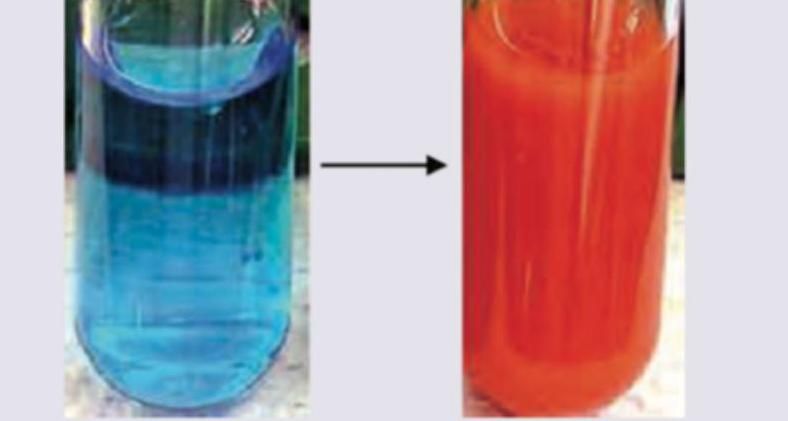
A 50-year-old male with family history for type 2 diabetes underwent a urine test for reducing substances. The test tube containing 0.5 ml of urine and 5 ml Benedict's reagent was put in a water bath for 2 minutes and change in colour of tube was noticed. Which is the correct statement about the concentration of sugar in the test tube?
Which of the following conditions masks low serum haptoglobin in hemolysis?
Which of the following vitamin deficiencies is found in patients with gastric cancer?
Explanation: ***Proportion of early ANC registrations*** - **Early antenatal care (ANC) registration** signifies that pregnant women are accessing care early in their pregnancy, allowing for timely interventions, screening, and health education that improve maternal and fetal outcomes. - This indicator directly reflects the **accessibility and utilization** of quality ANC services from the beginning, which is crucial for comprehensive care. *Number of ANC registrations* - This simply indicates the **total uptake of ANC services**, but doesn't provide insight into the timeliness or quality of the care received. - A high number of registrations could include many late registrations, which would limit the overall effectiveness of ANC. *Number of high-risk pregnancies identified* - While important for targeted interventions, this indicator primarily reflects the **screening capacity** of the health system, not the overall quality or comprehensiveness of routine ANC for all pregnancies. - It doesn't capture whether these high-risk women are receiving adequate follow-up or whether low-risk women are receiving appropriate preventive care. *Percentage of institutional deliveries* - This indicator is an excellent measure of **safe delivery practices** and access to skilled birth attendance, but it reflects the quality of delivery services rather than the quality of antenatal care services themselves. - A woman could have poor ANC but still deliver in an institution, thus it doesn't directly assess the care received *before* delivery.
Explanation: ***Potassium oxalate + sodium fluoride*** - This combination is crucial for **accurate glucose measurement** because **sodium fluoride prevents glycolysis** (glucose breakdown by red blood cells) by inhibiting enolase. - **Potassium oxalate** acts as an **anticoagulant** by precipitating calcium, preventing clotting without interfering with glucose stability. *EDTA (Ethylenediaminetetraacetic acid)* - While EDTA is a common **anticoagulant** that works by chelating calcium, it does not prevent **glycolysis**. - If glucose estimation is delayed, EDTA tubes will show **falsely low glucose levels** due to red blood cell metabolism. *Heparin (Unfractionated Heparin)* - **Heparin** is an anticoagulant that inhibits thrombin, but it also **does not prevent glycolysis**. - Samples collected in heparin tubes will experience **glucose degradation** over time, leading to inaccurate results if not processed immediately. *Potassium oxalate (alone)* - **Potassium oxalate** acts as an **anticoagulant**, but it **does not prevent glycolysis**. - Therefore, without a glycolytic inhibitor like sodium fluoride, glucose levels will **decrease over time** after blood collection.
Explanation: ***CECT to look for bleeding*** - A **CECT scan** is a detailed imaging study that is performed during the **secondary survey**, not during the primary survey. - The primary survey focuses on the immediate **ABCDE assessment** (Airway, Breathing, Circulation, Disability, Exposure) to identify and treat immediately life-threatening conditions. - While identifying bleeding is critical, detailed imaging like CECT is done only after initial stabilization is achieved in the primary survey. *ABC* - **Airway, Breathing, and Circulation (ABC)** are the fundamental first three components of the primary survey. - These represent the immediate priorities for life support in trauma management according to ATLS guidelines. - Ensuring a patent airway, adequate breathing, and circulatory stability are critical first steps. *Exposure of the whole body* - **Exposure** (the "E" in ABCDE) is an essential part of the primary survey. - Complete exposure allows full assessment for injuries and prevents missing critical external wounds. - This step also involves maintaining **thermoregulation** to prevent hypothermia. *Recording BP* - **Recording blood pressure** is a crucial part of assessing circulation (the "C") during the primary survey. - It helps quickly evaluate hemodynamic status and identify potential signs of shock or internal bleeding. - Vital signs monitoring is integral to the initial trauma assessment.
Explanation: ***Potassium oxalate + NaF*** - **Potassium oxalate** acts as an anticoagulant, while **sodium fluoride (NaF)** inhibits glycolysis, preserving the glucose concentration in the sample over time, which is critical for samples transported from remote locations like PHCs. - This combination ensures accurate glucose estimation by preventing the consumption of glucose by blood cells during transit. *Sodium citrate* - **Sodium citrate** is commonly used for coagulation studies (e.g., PT, aPTT) as it binds **calcium ions**, preventing clot formation. - While it acts as an anticoagulant, it does not inhibit glycolysis, allowing blood cells to continue consuming glucose, leading to falsely low glucose readings over time. *EDTA* - **EDTA (ethylenediaminetetraacetic acid)** is a strong anticoagulant used primarily for **hematology studies** (e.g., CBC) as it preserves cell morphology. - It works by chelating **calcium ions**, but it does not prevent glycolysis, making it unsuitable for glucose estimation, especially if there's a delay in processing. *Calcium oxalate* - **Calcium oxalate** is not commonly used as an anticoagulant in clinical laboratories. - It has limited anticoagulant properties and does not inhibit glycolysis, making it inappropriate for glucose estimation.
Explanation: ***Placental alpha microglobulin-1*** - **Placental alpha microglobulin-1 (PAMG-1)** is a protein found in high concentrations in **amniotic fluid** but not in cervicovaginal secretions, making it a highly specific and sensitive marker for **PROM**. - Its detection via a **rapid immunoassay (AmniSure)** provides a reliable and fast diagnosis of ruptured membranes, especially in equivocal cases. *Insulin-like growth factor binding protein-1* - **Insulin-like growth factor binding protein-1 (IGFBP-1)** is also present in amniotic fluid and used in some tests (e.g., **Actim PROM**), but PAMG-1 generally has slightly superior diagnostic accuracy. - While useful, its specificity can be affected by blood or other vaginal contaminants. *Fern test* - The **fern test** involves examining dried vaginal fluid under a microscope for a characteristic **ferning pattern** that indicates the presence of amniotic fluid. - This test has lower sensitivity and specificity compared to biochemical markers and can be influenced by cervical mucus, semen, or urine. *Vaginal pH >6.5* - Amniotic fluid is typically **alkaline (pH 7.0-7.5)**, so a vaginal pH greater than 6.5 suggests the presence of amniotic fluid. - However, vaginal pH can also be elevated by conditions like **bacterial vaginosis**, **semen**, or **blood**, leading to false positives.
Explanation: ***Implementation of point-of-care testing with same-day treatment*** - This approach directly addresses **stock-outs** and **delayed results** by providing immediate diagnosis and treatment, significantly reducing the window for mother-to-child transmission. - **Point-of-care testing (POCT)** eliminates the need for complex lab infrastructure and transport, making it highly cost-effective and efficient in resource-limited settings. *Enhanced partner notification only* - While important for controlling syphilis spread, **partner notification alone** does not solve the fundamental issues of delayed diagnosis and treatment for the pregnant woman. - It would not prevent congenital syphilis in cases where the mother's infection is already established and untreated due to diagnostic delays. *Universal prophylactic treatment* - Administering **universal prophylactic treatment** without a confirmed diagnosis is not cost-effective due to unnecessary drug use, potential for antibiotic resistance, and wastage of resources. - It would also not address the underlying systemic issues of screening program failures, only providing a broad, untargeted intervention. *Increased lab capacity with result tracking system* - This option addresses **delayed results** and **stock-outs** but requires significant financial investment in infrastructure, equipment, and personnel, which may not be feasible or as rapid in implementation as POCT. - Even with increased capacity, transport of samples and results can still introduce delays, and the cost-benefit might be lower compared to immediate POCT.
Explanation: ***–0.54° C*** - The **freezing point depression** of normal human plasma is approximately **–0.54° C**, which is a key physical property used to assess plasma osmolality. - This specific value reflects the **total concentration of solutes** (like electrolytes, glucose, and urea) in the plasma. *0° C* - This is the freezing point of **pure water**, which does not account for the dissolved solutes in human plasma. - Due to the presence of solutes, the freezing point of plasma is **depressed below 0° C**. *–1.54° C* - This value represents a significantly **lower freezing point depression**, suggesting a much higher concentration of solutes than found in normal human plasma. - Such a low freezing point would indicate a state of **severe hyperosmolality**. *4° C* - This temperature is above the freezing point of water and human plasma, typically used for **refrigeration** rather than indicating freezing point. - Plasma would be in a **liquid state** at this temperature.
Explanation: ***2 % sugar*** - A red or brick-red precipitate in Benedict's test indicates a **very high concentration of reducing sugars**, typically **2% or greater** - This represents the most intense positive reaction with **complete reduction of cupric ions (Cu²⁺) to cuprous oxide (Cu₂O)**, producing the characteristic brick-red color - In clinical context, such high urinary glucose indicates **severe hyperglycemia** requiring immediate evaluation *0.5 % sugar* - A 0.5% sugar concentration produces a **green or yellowish-green precipitate**, indicating a trace to moderate amount of reducing sugar - This represents **partial reduction** of the Benedict's reagent with less intense color change - Clinically significant but suggests better glycemic control than higher concentrations *1 % sugar* - A 1% sugar concentration produces an **orange or yellow-orange precipitate**, indicating significant glycosuria - This intermediate color reflects **moderate reduction** of cupric ions - While this indicates poor glycemic control, it is less severe than the 2% concentration *1.5 % sugar* - A 1.5% sugar concentration produces a **reddish-orange precipitate**, approaching but not reaching brick-red intensity - This represents **substantial but incomplete maximal reduction** of the reagent - The distinction from 2% lies in the color intensity - reddish-orange versus pure brick-red
Explanation: **Explanation:** The primary clinical utility of **Haptoglobin** is as a marker for **intravascular hemolysis**. Haptoglobin is an acute-phase reactant synthesized by the liver that binds free hemoglobin. During hemolysis, haptoglobin levels drop significantly as it is cleared by the reticuloendothelial system. **Why Bile Duct Obstruction is correct:** Haptoglobin is a **positive acute-phase reactant**. In conditions like **bile duct obstruction (obstructive jaundice)**, inflammation or biliary stasis triggers an increase in the hepatic synthesis of haptoglobin. This elevation can artificially "mask" or normalize the low levels typically seen in hemolysis, leading to a false-negative result for hemolytic anemia. **Analysis of Incorrect Options:** * **Liver Disease:** Since haptoglobin is synthesized in the liver, severe liver disease (e.g., cirrhosis) leads to **decreased** production. This would mimic or exacerbate low levels rather than masking them. * **Malnutrition:** Protein-energy malnutrition leads to a generalized decrease in plasma protein synthesis, including haptoglobin, resulting in **low** levels. * **Pregnancy:** Pregnancy is associated with a physiological decrease in haptoglobin levels (estrogen effect), which would not mask a hemolytic state. **NEET-PG High-Yield Pearls:** * **Gold Standard for Hemolysis:** A **decreased** serum haptoglobin level is one of the most sensitive markers for confirming hemolysis. * **Acute Phase Reactants:** Remember that haptoglobin levels rise in infection, trauma, and malignancy, which can confound the diagnosis of co-existing hemolysis. * **Neonate Fact:** Haptoglobin levels are naturally very low or absent in newborns (physiologic ahaptoglobinemia) and reach adult levels by 6 months of age.
Explanation: **Explanation:** The correct answer is **Vitamin B12**. **Why Vitamin B12 is the correct answer:** Gastric cancer often involves the destruction or surgical resection of the gastric mucosa, specifically the **parietal cells** located in the body and fundus of the stomach. These cells are responsible for secreting **Intrinsic Factor (IF)**. Vitamin B12 (cobalamin) requires IF to form a complex that survives the acidic environment of the stomach and allows for absorption in the **terminal ileum**. In gastric cancer, the loss of parietal cells leads to IF deficiency, resulting in secondary Vitamin B12 malabsorption and potentially megaloblastic anemia (pernicious-like state). Additionally, the achlorhydria (lack of HCl) associated with gastric atrophy prevents the release of B12 from dietary proteins. **Why the other options are incorrect:** * **Vitamin C:** While low levels are associated with an increased *risk* of developing gastric cancer due to reduced antioxidant protection, the cancer itself does not characteristically cause a deficiency through a specific physiological mechanism like B12. * **Vitamin A & D:** These are fat-soluble vitamins. Their deficiency is typically associated with fat malabsorption syndromes (e.g., pancreatic insufficiency, biliary obstruction, or celiac disease) rather than the specific loss of gastric intrinsic factor. **High-Yield Clinical Pearls for NEET-PG:** * **Site of Absorption:** Vitamin B12 is absorbed in the **terminal ileum**, while Iron is absorbed in the **duodenum**. * **Post-Gastrectomy:** Patients undergoing total gastrectomy for gastric cancer *must* receive lifelong parenteral Vitamin B12 supplementation. * **Schilling Test:** Historically used to differentiate between causes of B12 deficiency (though largely replaced by antibody testing and metabolite levels). * **Associated Finding:** Look for **hypersegmented neutrophils** on a peripheral smear in patients with B12 deficiency.
Get full access to all questions, explanations, and performance tracking.
Start For Free