Which of the following protein molecules is responsible for cell-to-cell adhesion?
Which of the following is the platinum-based chemotherapeutic agent used as first-line treatment for ovarian carcinoma?
Which carbon of glucose is oxidized to form glucuronic acid?
Glycogen storage disorders are primarily classified under which type of disorders?
GlcNAc-P-P-oligosaccharide is -
Which of the following binds to Tyrosine Kinase receptor?
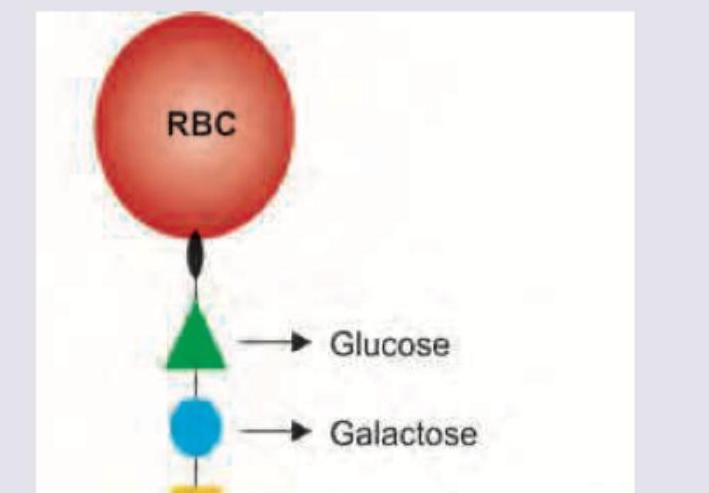
Name the antigen marked as X determining blood group A.
Protein segregation occurs in which organelle?
Insulin is essential for the entry of glucose into which of the following tissues?
Which carbohydrate is most lipogenic?
Explanation: ***Cadherin*** - **Cadherins** are transmembrane proteins that mediate **direct cell-to-cell adhesion** in a calcium-dependent manner - They form **adherens junctions** and **desmosomes**, which are essential for maintaining tissue integrity - Cadherins on adjacent cells bind to each other (**homophilic binding**), creating strong cell-cell connections - Critical for **embryonic development**, tissue architecture, and **epithelial barrier function** *Fibronectin* - **Fibronectin** is an extracellular matrix glycoprotein that mediates **cell-to-ECM adhesion**, not direct cell-to-cell adhesion - It binds to **integrins** on the cell surface, facilitating cell attachment to the extracellular matrix - Important for cell migration, wound healing, and embryonic development - Does not directly connect cells to each other *Collagen* - **Collagen** is the most abundant structural protein providing **tensile strength** to connective tissues - Primarily functions as **extracellular scaffolding**, not as an adhesion molecule - Provides mechanical support but does not mediate cell-cell adhesion *Laminin* - **Laminins** are major components of the **basal lamina** (basement membrane) - Mediate **cell-to-basal lamina adhesion** through integrin receptors - Important for cell differentiation, migration, and tissue organization - Function in cell-to-ECM adhesion, not cell-to-cell adhesion
Explanation: ***Cisplatin*** - **Cisplatin** is a platinum-based chemotherapy drug that forms **DNA cross-links**, inhibiting DNA synthesis and leading to the death of rapidly dividing cells, making it highly effective against **ovarian carcinoma**. - It is a cornerstone of chemotherapy regimens for ovarian cancer, often used in combination with other agents such as paclitaxel. *Methotrexate* - **Methotrexate** is an **antimetabolite** that inhibits dihydrofolate reductase, thereby interfering with DNA synthesis. - While it is used in various cancers like leukemia, lymphoma, and some solid tumors (e.g., breast cancer, gestational trophoblastic disease), it is **not a primary recommended drug for ovarian carcinoma**. *Cyclophosphamide* - **Cyclophosphamide** is an **alkylating agent** that causes DNA damage, leading to cell death. - It is used in many cancers, including lymphoma, breast cancer, and some leukemias, but it is **not a first-line or primary agent for ovarian carcinoma** in contemporary treatment guidelines. *Dacarbazine* - **Dacarbazine** is an **alkylating agent** primarily used in the treatment of **malignant melanoma** and Hodgkin lymphoma. - It is **not indicated for the treatment of ovarian carcinoma**.
Explanation: ***Oxidation of the terminal alcohol group only*** - Glucuronic acid is formed by the **oxidation of the C6 carbon (terminal alcohol group)** of glucose, while the aldehyde group (C1) remains intact. - This specific oxidation converts glucose into a **uronic acid**, essential for detoxification and connective tissue synthesis. *Oxidation of the aldehyde group only* - The oxidation of the **aldehyde group (C1)** of glucose would yield **gluconic acid**, not glucuronic acid. - This reaction typically occurs during the conversion of glucose to gluconolactone, a step in the pentose phosphate pathway for example. *No oxidation occurs* - The formation of glucuronic acid is explicitly an **oxidative process**, as a hydroxyl group is converted to a carboxyl group. - If no oxidation occurred, glucose would remain glucose, or undergo other non-oxidative transformations. *Oxidation of both the aldehyde and terminal alcohol groups* - Oxidation of **both the aldehyde (C1) and terminal alcohol (C6)** groups of glucose would lead to the formation of **glucaric acid (saccharic acid)**. - Glucaric acid has carboxyl groups at both ends, making it different from glucuronic acid, which only has a carboxyl group at C6.
Explanation: ***Metabolic disorders*** - Glycogen storage disorders involve defects in the enzymes responsible for **glycogen synthesis** or degradation. - These enzymatic defects lead to abnormal accumulation or breakdown of **glycogen**, thus affecting cellular metabolism. *Genetic disorders* - While glycogen storage disorders are **inherited** and thus genetic, their primary classification focuses on the **metabolic pathways** affected. - This category is too broad and refers to the origin, not the specific functional impairment. *Lysosomal storage disorders* - These disorders involve defective lysosomal enzymes leading to the accumulation of various **substrates within lysosomes**. - Glycogen storage disorders primarily involve enzymes in the **cytoplasm** (or sometimes lysosomes for Pompe disease, but the general classification is metabolic). *Endocrine disorders* - Endocrine disorders involve dysfunction of **hormone production** or regulation. - Glycogen storage diseases are disorders of **carbohydrate metabolism** and do not directly involve hormonal imbalance as their primary pathology.
Explanation: ***Glycoprotein*** - **GlcNAc-P-P-oligosaccharide** refers to the **N-linked oligosaccharide precursor** that is synthesized on a **dolichol pyrophosphate** carrier (`-P-P`). This complex is characteristic of the initial stages of **N-linked glycosylation**, a process that forms glycoproteins. - **N-acetylglucosamine (GlcNAc)** is a crucial sugar residue found at the reducing end of this precursor, linking it to the dolichol carrier. *Proteoglycan* - Proteoglycans consist of a **core protein** covalently attached to long, unbranched **glycosaminoglycan (GAG)** chains, such as chondroitin sulfate or heparin. - While they contain sugar units, their structure and synthesis pathway are distinct from the GlcNAc-P-P-oligosaccharide described, which is specific to N-linked glycoprotein synthesis. *Collagen* - **Collagen** is a fibrous protein, primarily composed of a triple helix of polypeptide chains rich in **glycine, proline, and hydroxyproline**. - Although collagen undergoes some post-translational modifications like **glycosylation**, it does not involve the GlcNAc-P-P-oligosaccharide precursor in its typical synthesis. *Phospholipid* - **Phospholipids** are a major component of cell membranes, composed of a **hydrophilic head** (containing a phosphate group) and two **hydrophobic fatty acid tails**. - They are lipids and do not contain carbohydrate structures like GlcNAc-P-P-oligosaccharide.
Explanation: ***Insulin*** - **Insulin** is a classic example of a hormone that binds to and activates a **tyrosine kinase receptor**, leading to a cascade of intracellular signaling events for glucose uptake and metabolism. - The **insulin receptor** is a heterodimeric protein with intrinsic tyrosine kinase activity that phosphorylates itself and other proteins upon insulin binding. *Glucagon* - **Glucagon** primarily acts on **G protein-coupled receptors (GPCRs)**, specifically the glucagon receptor, to increase cyclic AMP (cAMP) and activate protein kinase A. - Its main roles are to stimulate **glycogenolysis** and **gluconeogenesis** in the liver. *Prolactin* - **Prolactin** binds to a receptor that is a member of the **cytokine receptor superfamily**, which lacks intrinsic enzyme activity. - Upon ligand binding, these receptors associate with and activate **Janus kinases (JAKs)**, leading to the JAK-STAT signaling pathway. *Growth Hormone* - **Growth hormone (GH)** also binds to a receptor belonging to the **cytokine receptor superfamily** (similar to prolactin), which then associates with and activates **JAKs**. - This activation subsequently initiates the **JAK-STAT signaling pathway**, mediating its diverse growth-promoting and metabolic effects.
Explanation: ***N-Acetyl-Galactosamine*** - Blood group A antigens are formed by the addition of **N-acetylgalactosamine** to the H antigen precursor molecule on the surface of red blood cells. - This sugar modification is catalyzed by the **A transferase enzyme**, which is specific for N-acetylgalactosamine. *N-Acetyl-Glucosamine* - While N-acetylglucosamine is a component of many glycans, it is not the terminal sugar that defines the **blood group A antigen**. - **N-acetylglucosamine** is a key building block for the H antigen and other blood group precursors, but not the specific modifying sugar for A. *Dermatan sulphate* - **Dermatan sulfate** is a **glycosaminoglycan** primarily found in connective tissues, skin, and blood vessels. - It plays a role in wound healing and coagulation, but is not involved in **ABO blood group determination**. *Keratan sulfate* - **Keratan sulfate** is another **glycosaminoglycan** found in cartilage, cornea, and bone. - It contributes to tissue hydration and structural integrity, but it is not part of the **ABO blood group antigens**.
Explanation: ***Golgi apparatus*** - The **Golgi apparatus** is a central organelle for **protein modification, sorting, and packaging** into vesicles for delivery to various cellular destinations. - It acts as a "post office" of the cell, directing proteins to their correct locations through **segregation** into specific secretory or transport pathways. *Peroxisomes* - **Peroxisomes** are involved in **metabolic processes** such as fatty acid oxidation and detoxification. - While they import some proteins, their primary role is not in the overall **segregation** and trafficking of proteins for diverse cellular destinations. *ER* - The **endoplasmic reticulum (ER)** is where proteins are synthesized (rough ER) and undergo initial folding and modification, including glycosylation. - However, the ER's main function is protein synthesis and early modification, not the final **segregation** and sorting for transport to different cellular locations. *Mitochondria* - **Mitochondria** are primarily responsible for **ATP production** through cellular respiration and houses its own genome. - While mitochondria import specific proteins necessary for their function, they are not involved in the general **segregation** of proteins destined for other organelles or secretion.
Explanation: **Explanation:** The entry of glucose into cells is mediated by a family of glucose transporters known as **GLUT**. The correct answer is **Skeletal muscles** because they primarily express **GLUT-4**, which is the only insulin-dependent glucose transporter. 1. **Why Skeletal Muscle is Correct:** In the resting state, GLUT-4 transporters are sequestered in intracellular vesicles. When insulin binds to its receptor, it triggers a signaling cascade that translocates these vesicles to the plasma membrane, allowing glucose uptake. This mechanism is also found in **Adipose tissue** and the **Heart**. 2. **Why Other Options are Incorrect:** * **Neurons (Cerebral Cortex):** Use **GLUT-3** (and GLUT-1), which has a high affinity for glucose and is insulin-independent, ensuring the brain receives glucose even during fasting. * **Renal Tubular Cells & Intestinal Mucosa:** These tissues utilize **SGLT-1 and SGLT-2** (Sodium-Glucose Linked Transporters) for active transport against a concentration gradient, and **GLUT-2** for facilitated diffusion. Both are insulin-independent. **NEET-PG High-Yield Pearls:** * **GLUT-1:** Found in RBCs and the Blood-Brain Barrier (Basal uptake). * **GLUT-2:** Bidirectional transporter found in the **Liver, Pancreas (B-cells), and Kidney**. It acts as a glucose sensor. * **GLUT-4:** The only **insulin-responsive** transporter (Muscle, Fat). * **GLUT-5:** Specifically a **Fructose** transporter found in the small intestine and spermatozoa. * **Exercise** can also trigger GLUT-4 translocation in skeletal muscle independent of insulin, which is why exercise helps manage Blood Glucose in Type 2 Diabetes.
Explanation: **Explanation:** The correct answer is **Fructose**. Fructose is considered the most lipogenic carbohydrate because it bypasses the major rate-limiting step of glycolysis. **1. Why Fructose is the Correct Answer:** In the liver, glucose metabolism is strictly regulated by the enzyme **Phosphofructokinase-1 (PFK-1)**, which acts as a metabolic "gatekeeper." However, fructose enters glycolysis via the **fructose-1-phosphate pathway**, bypassing PFK-1. This leads to an unregulated, rapid influx of triose phosphates (DHAP and Glyceraldehyde-3-phosphate) into the glycolytic pathway. This "flooding" of the pathway results in an overproduction of **Acetyl-CoA**, which is then diverted toward **de novo lipogenesis** (fatty acid synthesis) and VLDL production, leading to hepatic steatosis and hypertriglyceridemia. **2. Why Other Options are Incorrect:** * **Glucose:** Its metabolism is tightly controlled by PFK-1. When ATP levels are high, PFK-1 is inhibited, slowing down the production of Acetyl-CoA and limiting lipogenesis. * **Galactose:** Galactose is primarily converted to Glucose-1-phosphate and enters the mainstream glucose metabolic pathway, thus remaining subject to the same regulatory constraints as glucose. * **Starch:** Starch is a complex polysaccharide composed of glucose units. Once digested, it is absorbed as glucose and follows the regulated glucose metabolic pathway. **3. High-Yield NEET-PG Clinical Pearls:** * **Essential Fructosuria:** Due to deficiency of **Fructokinase**; it is a benign condition. * **Hereditary Fructose Intolerance (HFI):** Due to deficiency of **Aldolase B**. It leads to intracellular trapping of Fructose-1-P, causing severe hypoglycemia and liver damage. * **Metabolic Syndrome:** High consumption of High-Fructose Corn Syrup (HFCS) is a major contributor to non-alcoholic fatty liver disease (NAFLD) and insulin resistance due to its high lipogenic potential.
Get full access to all questions, explanations, and performance tracking.
Start For Free