Which of the following reagents would be most useful in determining the N-terminal amino acid of a polypeptide?
Which test is used for detecting gunshot residue?
Which technique is used for protein separation based on molecular size?
Which of the following hormones is an example of a peptide hormone?
Which technique is used for the separation of proteins based on their mass?
Equilibrium potential for an ion is calculated by:
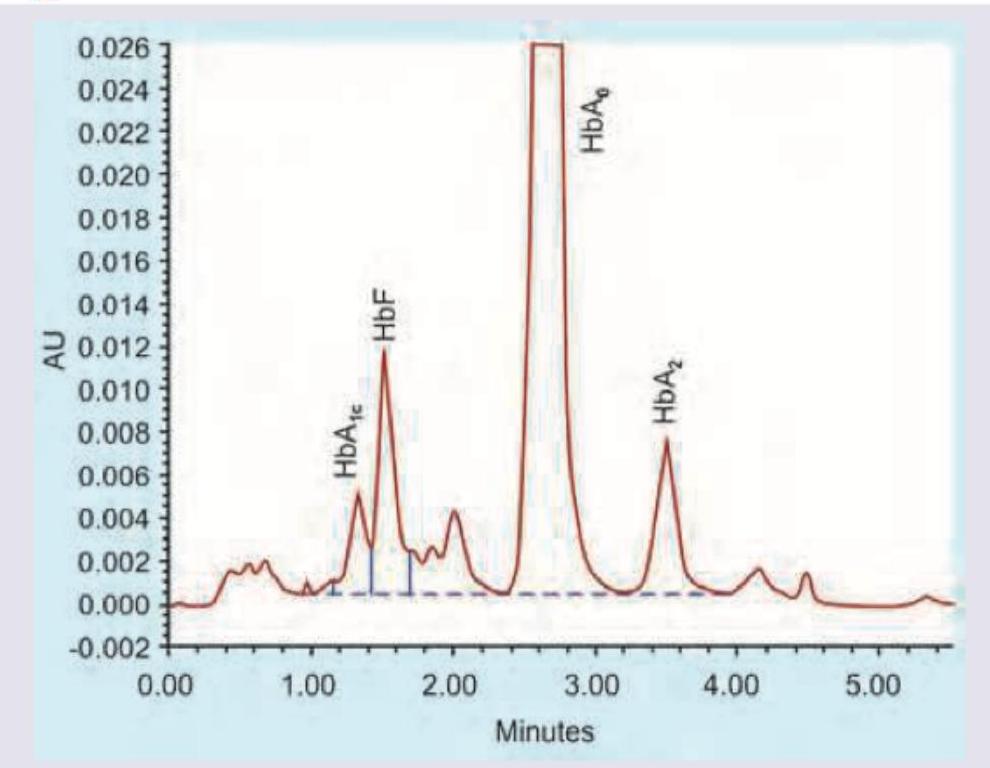
The technique shown in the image is:
A patient reports a change in colour of urine on air exposure. All are true about the condition shown below except:
Which of the following methods of protein separation is not dependent on molecular size?
Which of the following protein sources has the lowest biological value?
Explanation: ***Phenylisothiocyanate*** - **Phenylisothiocyanate** (PITC), also known as Edman's reagent, is used in the **Edman degradation** method to identify the N-terminal amino acid. - It sequentially cleaves the **N-terminal amino acid** without hydrolyzing the rest of the peptide chain, allowing for identification by chromatography. *Trypsin* - **Trypsin** is a protease that cleaves peptide bonds at the carboxyl side of **lysine** and **arginine** residues. - It is used for peptide fragmentation, not for determining the N-terminal amino acid. *Carboxypeptidase* - **Carboxypeptidases** are exopeptidases that cleave amino acids from the **C-terminal end** of a polypeptide chain. - They are used to identify the C-terminal amino acid, not the N-terminal. *Cyanogen bromide* - **Cyanogen bromide (CNBr)** is a chemical reagent that specifically cleaves peptide bonds on the C-terminal side of **methionine** residues. - It is used for specific peptide fragmentation and not for N-terminal sequencing.
Explanation: ***Neutron activation analysis for firearm use*** - **Neutron activation analysis (NAA)** is a highly sensitive and reliable method for detecting specific elements characteristic of **gunshot residue (GSR)**, such as **barium**, **antimony**, and **lead**. - This technique works by irradiating samples with neutrons, causing them to emit gamma rays that are unique to each element, allowing for precise identification and quantification of GSR particles. *Lie test for Firearm injury* - A "lie test" typically refers to a **polygraph test**, which assesses physiological responses to detect deception, not physical evidence like gunshot residue. - Polygraph tests are not used for identifying **firearm injury** or the presence of actual physical traces. *Toluidine blue test* - The **Toluidine blue test** is primarily used in dentistry to detect and delineate **dysplastic or malignant lesions** in the oral mucosa. - It has no application in the forensic analysis of gunshot residue or firearm use. *Benzidine test for blood stain* - The **Benzidine test** was historically used as a preliminary test for the presence of **blood stains**, as it reacts with the heme component of hemoglobin. - It is not used for detecting **gunshot residue** and has largely been replaced by safer and more specific tests due to its carcinogenic properties.
Explanation: ***Gel filtration chromatography*** - Also known as **size-exclusion chromatography**, this method separates proteins by passing them through a porous matrix. **Larger proteins** elute first as they cannot enter the pores, while smaller proteins get trapped and elute later. - This technique effectively separates proteins based solely on their **hydrodynamic radius**, which is closely related to their molecular size. *Affinity chromatography* - This method separates proteins based on their **specific binding affinity** to a ligand immobilized on a stationary phase, not molecular size. - It is used for purifying proteins that bind to a specific molecule, such as an antibody or substrate. *HPLC* - **High-performance liquid chromatography** is a general technique that can use various separation mechanisms (e.g., reverse-phase, ion-exchange, size-exclusion) under high pressure. - While it *can* be used for size-exclusion, HPLC itself describes the *method* of chromatographic performance rather than a specific separation principle based on molecular size alone. *Salting out* - This technique separates proteins based on their **solubility** in high salt concentrations. - As salt concentration increases, the proteins lose their hydration shells and precipitate out of solution, with different proteins precipitating at different salt concentrations.
Explanation: ***Parathormone (PTH)*** - **Parathormone (PTH)** is a **peptide hormone** composed of 84 amino acids, synthesized in the parathyroid glands. - Peptide hormones are typically **water-soluble** and bind to receptors on the cell surface to exert their effects. *Dopamine* - **Dopamine** is a **catecholamine** and a neurotransmitter, derived from the amino acid **tyrosine**. - It functions as a **neurotransmitter** and hormone, regulating various bodily functions but is not a peptide. *Thyroxine* - **Thyroxine** (T4) is an **amine hormone** derived from the amino acid **tyrosine**, produced by the thyroid gland. - It is an **iodinated amino acid derivative**, not a peptide. *Cortisol* - **Cortisol** is a **steroid hormone**, part of the glucocorticoid class, derived from **cholesterol**. - It is **lipid-soluble** and functions by binding to intracellular receptors, distinctly different from peptide hormones.
Explanation: ***Correct Option: SDS-PAGE*** - **SDS-PAGE (Sodium Dodecyl Sulfate Polyacrylamide Gel Electrophoresis)** separates **denatured proteins** almost exclusively by their **molecular mass**. - **SDS** binds to proteins, imparting a uniform negative charge-to-mass ratio, ensuring that separation is primarily based on their size as they migrate through a **polyacrylamide gel**. - This is the gold standard technique for analyzing proteins by molecular weight. *Incorrect Option: Electrophoresis* - This is a general technique that uses an **electric field** to separate molecules based on their **charge** and **size**. - While it can separate proteins, it doesn't exclusively rely on **mass** without additional modifications (like SDS). - Native electrophoresis separates by charge-to-mass ratio, not mass alone. *Incorrect Option: Salting out* - This technique separates proteins based on their **solubility** in high salt concentrations. - Proteins "salt out" or precipitate at different salt concentrations, which is not directly related to their **mass**. - Based on protein surface properties and hydrophobicity. *Incorrect Option: Ion exchange chromatography* - This method separates proteins based on their **net charge** at a particular pH. - Proteins bind to a charged resin and are eluted by changing the **ionic strength** or **pH** of the buffer. - Two types: cation exchange (negative resin) and anion exchange (positive resin).
Explanation: ***Nernst Equation*** - The **Nernst equation** is used to calculate the **equilibrium potential** for a **single ion** across a semi-permeable membrane. - It considers the **charge of the ion**, the **temperature**, and the **concentration gradient** of the ion across the membrane. *Gibbs Donnan Equilibrium* - The **Gibbs-Donnan equilibrium** describes the distribution of **permeable ions** when there is a **non-permeable charged molecule** on one side of a membrane. - It focuses on the **overall distribution of ions** and water, rather than the equilibrium potential of a *single* ion. *Goldman Equation* - The **Goldman-Hodgkin-Katz (GHK) equation**, often referred to as the **Goldman equation**, calculates the **resting membrane potential** of a cell. - It accounts for the **permeability and concentration gradients** of *multiple* ions (e.g., Na+, K+, Cl-) that contribute to the membrane potential. *None of the options* - This option is incorrect because the **Nernst Equation** is specifically designed for calculating the equilibrium potential of a single ion.
Explanation: ***High performance liquid chromatography*** - The image displays a **chromatogram** with distinct peaks labeled HbA1c, HbF, HbA0, and HbA2, separated based on their chemical properties. - This separation and detection method is characteristic of **High Performance Liquid Chromatography (HPLC)**, a technique used for quantifying different hemoglobin fractions. *Tandem mass spectrometry* - **Tandem mass spectrometry (MS/MS)** identifies compounds based on their mass-to-charge ratio and fragmentation patterns, which would look like mass spectra, not peaks on a time-based chromatogram. - While MS/MS is highly sensitive and specific, it doesn't produce the type of **elution profile** seen in the image. *Haemoglobin electrophoresis* - **Hemoglobin electrophoresis** separates hemoglobins based on their electrical charge, resulting in bands on a gel or a densitometric scan, not the **distinct chromatogram peaks** shown here. - While used for hemoglobin analysis, the visual representation is typically different, often displaying bands that reflect migration distance. *Gel electrophoresis* - **Gel electrophoresis** separates molecules, such as proteins or nucleic acids, by size and charge through a gel matrix, producing distinct **bands** that can be visualized. - This method would not produce the continuous **elution peaks over time** as observed in the provided graph, which indicates a liquid chromatography technique.
Explanation: ***Urine Benedict's test is negative*** - This is FALSE - Benedict's test is actually **POSITIVE** in alkaptonuria because **homogentisic acid** is a reducing agent. - Homogentisic acid readily **reduces Benedict's reagent**, giving a positive test result in alkaptonuria patients. *Blackening of urine is accelerated on exposure to sunlight* - This is TRUE - **UV light** and sunlight accelerate the **oxidation of homogentisic acid** in urine. - The characteristic **dark discoloration** occurs more rapidly when exposed to light and air. *Alkaptone bodies are deposited in intervertebral disc* - This is TRUE - **Homogentisic acid (alkaptone bodies)** polymerizes to form **ochronotic pigment** deposits. - These deposits accumulate in **cartilage** including intervertebral discs, causing degenerative changes and spondylosis. *The condition is caused by deficiency of homogentisate 1,2-dioxygenase* - This is TRUE - Alkaptonuria is caused by deficiency of **homogentisate 1,2-dioxygenase** enzyme in the **tyrosine metabolic pathway**. - This enzyme deficiency leads to accumulation of **homogentisic acid** in blood and urine, causing the characteristic symptoms.
Explanation: ***Ion-exchange chromatography*** - This method separates proteins based on their **net charge** at a specific pH. - Proteins bind to a charged resin based on their charge, independent of their size. *Gel filtration chromatography* - Separates proteins based on their **molecular size** and shape as they pass through a porous matrix. - **Larger molecules** elute first as they cannot enter the pores, while smaller molecules are retained. *SDS-PAGE* - **Sodium Dodecyl Sulfate Polyacrylamide Gel Electrophoresis** separates proteins primarily based on their **molecular weight**. - SDS denatures proteins and confers a uniform negative charge, allowing migration through a gel matrix based on size. *Ultracentrifugation* - Separates macromolecules and particles based on their **sedimentation rate**, which is influenced by **molecular mass**, density, and shape. - While molecular size is a factor, density and shape also play significant roles in the separation process.
Explanation: ***Gelatin*** - Gelatin is derived from collagen and is notably deficient in several **essential amino acids**, particularly **tryptophan**. - Its incomplete amino acid profile gives it a very **low biological value**, meaning it's poorly utilized by the body for protein synthesis. *Lactalbumin* - Lactalbumin is a **whey protein** found in milk, known for its **high biological value**. - It contains a **complete profile of essential amino acids** and is easily digestible. *Albumin* - Albumin, typically referring to **egg albumin** (egg white protein) or **serum albumin**, has an **excellent biological value**. - It is often used as a reference protein due to its well-balanced and **complete amino acid composition**. *Cashewnut protein* - While nuts like cashews provide protein, they generally have a **moderate to high biological value**, though typically not as high as animal proteins. - Cashew protein contains a good range of amino acids but might be slightly limited in one or two essential amino acids compared to a reference like egg or whey.
Get full access to all questions, explanations, and performance tracking.
Start For Free